Discover Dog Meadow & Dog Exercise in Bayreuth
Dog Meadow & Dog Exercise in Bayreuth: Tour Plan for the Coming Months (from Spring 2026)
Would you like to explore Bayreuth with your dog in the coming weeks and months? This planning guide compiles future excursions, seasonal route suggestions, and practical tips to help your walks in Bayreuth and the surrounding area be forward-thinking, considerate, and low-stress.
Stops for Your Next Walk: Riedelsgut/Wilhelminenaue, Eremitage, Röhrensee
For your upcoming excursions in Bayreuth, these three stops are particularly suitable as recurring building blocks. The following notes are deliberately formulated as planning aids: Rules and details (leash requirement, access, temporary restrictions) should be checked for updates before your visit.
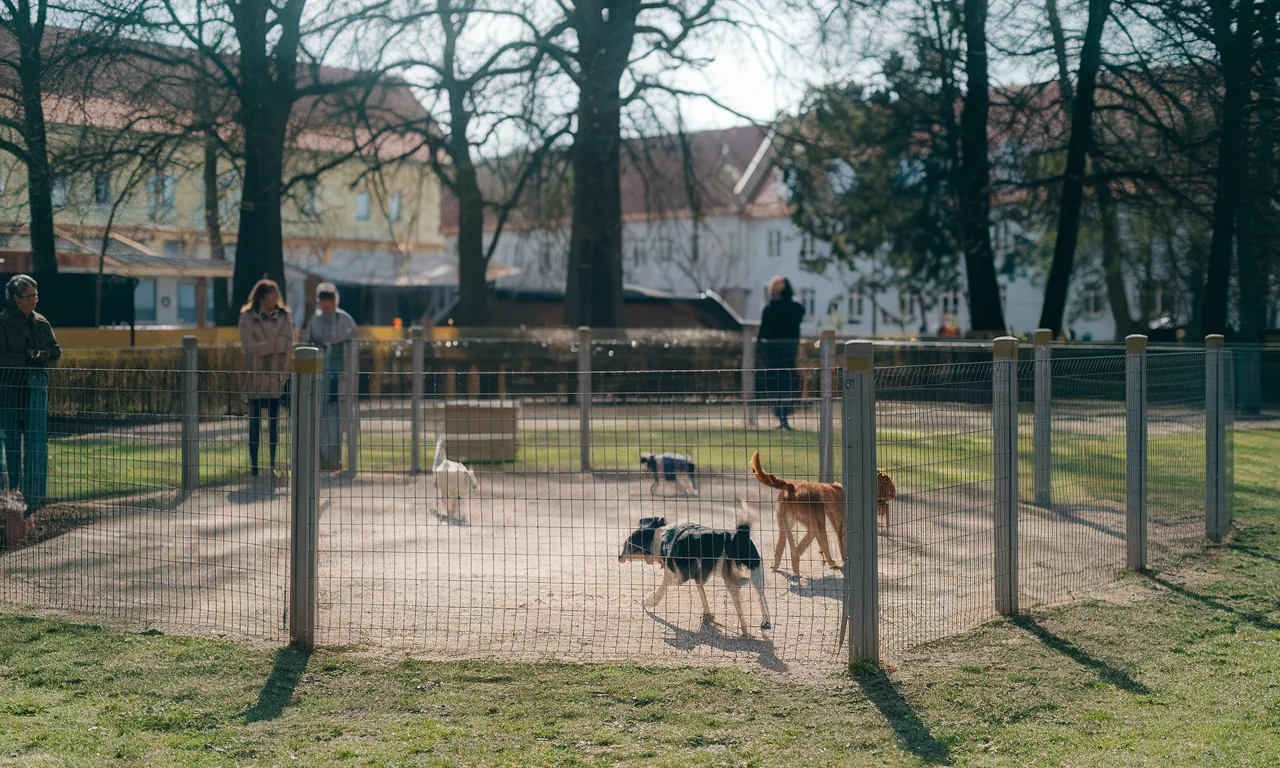
1) Wilhelminenaue (Riedelsgut Area): Off-Leash Session + Meadow Walk
If you are planning a walk with as much freedom of movement as possible for the next few weeks, combine a controlled off-leash session (where designated/allowed) with a leashed meadow walk on the paths. This is especially helpful if your dog needs to "let off steam" first and can then walk more calmly beside you.
- Recommended time window: Early morning or late afternoon to avoid peak times.
- Bring along: Water, bowl, poop bags, possibly a long line (for training phases outside clearly designated off-leash areas).
- Encounter management: Before unclipping/removing the leash, quickly scan: How many dogs are there? Are there insecure dogs, children, joggers?
2) Eremitage: Cultural Walk with Structure (proactively on the leash)
For the coming months, the Eremitage is an ideal place if you want to use leashed walks with many stimuli (people, sightlines, path layouts)—e.g., for impulse control, calm passing, and "staying with me" in a lively environment. Deliberately plan breaks so the excursion doesn't become just "walking through."
- Planning tip: Set a goal (e.g., 60–90 minutes, two rest breaks, three short training sessions of 2 minutes each).
- Consideration: In historic sites and when there are many visitors, leash handling is usually the least conflict-prone option—even if off-leash is possible elsewhere.
- Public transport option: If planning without a car, check current connections/stops in advance via local public transport.
3) Röhrenseepark: Everyday Walk with Clear Rules
For your upcoming weekly routines, Röhrenseepark is suitable as a "reliable" walk: easily combined with everyday life, but typically with many encounters. Therefore, plan extra time for controlled passing, sit-&-look breaks, and sufficient distance.
- Avoid peak times: Weekdays early or late evening (with sufficient light) is often more relaxed than weekend afternoons.
- Wildlife stimuli: If your dog reacts strongly to waterfowl, deliberately walk around the outside and reward eye contact with you.
- Cleanliness & respect: Consistently dispose of waste; do not feed animals in parks/enclosures and keep your distance.
Planned Excursions to the Surroundings: Fantaisie & Bindlacher Berg
If you are planning half-day excursions around Bayreuth for the coming months, choose destinations where you can combine exercise, scenery, and a clear leash strategy.
Schloss Fantaisie (Eckersdorf): Park Walk with Visiting Times in Mind
For a future weekend excursion, Schloss Fantaisie can be planned as a park walk at a leisurely pace. Check opening times, access, and current notices in advance (e.g., events, maintenance work) so you don't end up in front of closed areas.
- Planning: 60–120 minutes, depending on route; bring water and treats for training during encounters.
- Leash strategy: In park areas, a short leash at narrow points and a longer leash in quieter sections is often the best compromise.
Bindlacher Berg (Bindlach): Panoramic Walk with Wind & Wildlife Focus
For the coming months, Bindlacher Berg is especially attractive if you like open paths, wind, and views. In such landscapes, reliable control is important because wildlife and agricultural use can play a bigger role.
- Recommendation: Plan a long line for controlled "giving more space" if off-leash is not explicitly allowed.
- Safety: In strong winds: secure harness handling and a plan for recall/orientation (dogs may perceive stimuli differently).
Checklist for Your Next Visit (Equipment & Behavior)
Equipment You Should Plan for Your Next Excursion
- Leash + backup: Regular lead for encounters, optional long line for training phases.
- Well-fitting harness: Especially for unexpected stimuli or in busy parks.
- Water + bowl: Essential in warm weather and on longer tours.
- Poop bags: Always bring enough; dispose of in available trash bins.
- Rewards: High-value treats for recall, focus, and calm passing.
- First aid (small): Tick remover, paw check (small cloth), contact details of the nearest veterinary practice (saved on your phone).
Mini-Plan for a Successful Walk (30–90 Minutes)
- Start (5 minutes): Walk loosely, allow sniffing, then a short "check-in" (name → look → reward).
- Main part: Alternate between movement, sniffing time, and 2–3 mini training sessions (1–2 minutes each).
- Encounters: Avoid early, increase distance, reward calm behavior, don't "push through."
- Conclusion (5–10 minutes): Calm finish, offer water, possibly a short massage/"winding down."
Rules, Leash Requirement & Consideration: How to Avoid Conflicts
For your future excursions, the basic principle applies: Rules depend on location and situation. In parks, near bodies of water, in natural areas, or with many visitors, leash handling is often the safest and most socially acceptable choice—even if your dog has good recall.
Specific Behavioral Rules for Upcoming Walks
- Distance is friendliness: Actively plan detours instead of hoping for "contact" on narrow paths.
- No unsolicited contact: Always ask before approaching people or other dogs and pay attention to body language.
- Protection of nature & animals: In areas with wildlife or park animals: keep your dog close, don't let them chase, don't feed animals.
- Cleanliness: Pick up waste immediately and dispose of it properly—this is crucial for the long-term acceptance of dog exercise areas.
Note: If you are unsure which regulations apply to your next visit (e.g., leash requirement, protection periods, designated off-leash areas), refer to local signage and the official information from the city or operator.
Sources & Further Links
- City of Bayreuth (official website) — Information on municipal services, statutes, and notices; accessed on 2026-04-14
- Bavarian Palace Administration — Official information on historic sites (e.g., Eremitage) and visitor information; accessed on 2026-04-14
- BMEL: Animal Welfare & Pets (Federal Ministry of Food and Agriculture) — General information on responsible pet ownership; accessed on 2026-04-14