
Bayreuth
Bayerisches Geo-Institut, Universitätsstraße 30, 95447 Bayreuth, Deutschland
Bavarian Geo Institute Bayreuth | Events & Tickets
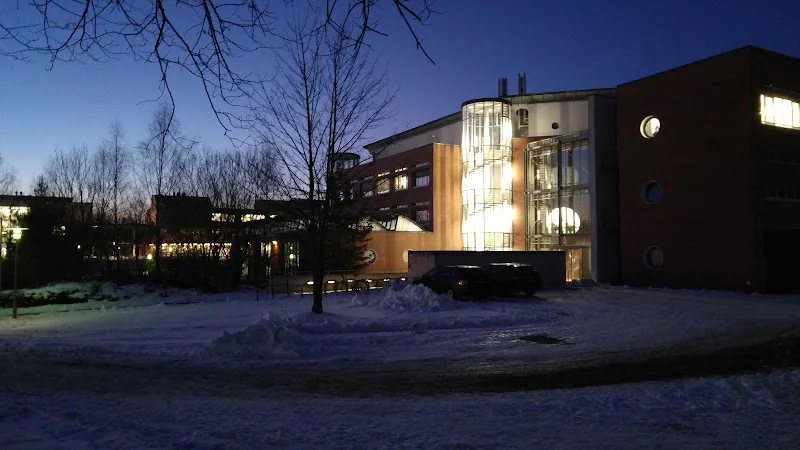
The Bavarian Geo Institute of the University of Bayreuth is a scientific location with an international profile and at the same time a place where research, teaching, and events are closely connected. Those looking for the BGI will not find a classic event arena here, but an institute that has stood for experimental high-pressure and high-temperature research since 1986, and whose building has been in operation since 1994. Its location on the campus at Universitätsstraße 30 makes it easily accessible for visitors, while the official pages of the institute and the university list both event and lecture areas. Additionally, there are bookable seminar rooms, a central room allocation, and a clear research focus on the Earth's interior. This combination makes the BGI interesting for guests who want to not only attend events but also experience them in a real research environment. ([uni-bayreuth.de](https://www.uni-bayreuth.de/bgi))
Events, Lectures, and Seminar Series
On the official BGI pages, events are not presented as loose individual dates but as part of a clear academic structure. The institute's menu leads to its own sections for events and lectures, including the summer semester 2026, the winter semester 2025/2026, and the DMG short course or doctoral course. This is important for visitors because it shows that the BGI presents itself as a lively teaching and research location where lectures, seminar series, and specialized courses are regularly integrated into the official schedule. The lecture pages provide concrete information on current teaching formats: For the summer semester 2026, topics such as Planetary Formation Special Topics, Geochemistry II, Planets, Crystal Chemistry of Geophysically Relevant Materials I, and the seminar series Experimental Geochemistry and Geophysics are listed. This shows that the BGI is not just an address in the university building plan but an active place for scientific events with an international orientation. ([bgi.uni-bayreuth.de](https://www.bgi.uni-bayreuth.de/index.php?lng=en&page=2&view=1&utm_source=openai))
Those looking for tickets should therefore read the BGI structure differently than that of a concert hall or theater. The official pages of the institute and the university primarily work with lecture lists, seminar announcements, and room allocations, not with a classic ticket logic. For the bookable rooms, they can only be used through the central room allocation of the University of Bayreuth. This is a strong indication that events at the BGI are mostly organized academically: participants inform themselves about schedules, teaching announcements, or the respective event pages instead of looking for a central box office. This is practical for guests because the structure remains clear and serious; at the same time, it means that dates can change, and one should always check the current status of the event or lecture page before traveling. This form of transparency is typical for a research institute that publishes its dates openly and does not act as a commercial ticket provider. ([uni-bayreuth.de](https://www.uni-bayreuth.de/bgi))
Directions and Parking at the Bavarian Geo Institute
The route to the Bavarian Geo Institute is well described for the campus of the University of Bayreuth and follows the same logic as many other buildings on the southern campus. Coming from the A9 motorway, the Bayreuth-Süd exit leads directly towards the university; according to the official campus description, the campus is only about 900 meters from this exit. Those arriving by public transport can reach the campus by bus: Line 316 goes directly from the main train station to the campus, while lines 304, 306, and 326 lead to the Mensa stop via the central bus stop ZOH. Additionally, the campus page lists the stops Mensa, Geosciences, and University Administration as the three stops on the premises. This is helpful for visitors to the BGI because the paths on the campus are clearly marked, and the area appears very organized with the signage for the university or the campus plans. ([ub.uni-bayreuth.de](https://www.ub.uni-bayreuth.de/de/infos_zur_ub/anfahrtsbeschreibung/index.html))
There are also official parking instructions that one should know before a visit. The directions page for physics describes that after entering the campus, you will see the bus stop on the right and shortly thereafter reach the BGI parking lots with two entrances; further ahead are the parking lots of NW II. This means that the BGI is well integrated into the campus both in content and logistically. At the same time, the campus map indicates that there may currently be parking restrictions due to construction work and that additional information pages on changes are available. Therefore, it is advisable to arrive a bit earlier for events or lectures and to check not only the destination address but also the current parking and path situation. Especially for academic events, this is sensible because traveling, walking through the campus, and orienting oneself in an institute with several building parts can quickly take several minutes. However, those arriving by car still have a good chance of reaching the BGI or the nearby parking areas quickly if the current campus guidance is followed. ([physik.uni-bayreuth.de](https://www.physik.uni-bayreuth.de/de/kontakt/index.php?utm_source=openai))
Rooms, Seats, and Technical Equipment
The BGI is not a huge event center but a building with clearly defined seminar and research rooms that are well suited for academic events. The official building page lists two rooms: Seminar Room 88 with room number 4.0.05 on the ground floor, an area of 82 m² and 42 seats, as well as Seminar Room 89 with room number 4.2.08 on the second floor, 50 m² and 20 seats. This information is helpful for both visitors and organizers because it allows for a realistic expectation of the atmosphere: This is about smaller to medium-sized scientific formats, not mass events. This is complemented by the mention of a multimedia database of the University of Bayreuth for the technical equipment of lecture halls, seminar, and conference rooms, including network connections. For events, this means a solid, university infrastructure designed for lectures, seminars, and scientific discussions. ([uni-bayreuth.de](https://www.uni-bayreuth.de/bgi))
Additionally, the building page does not isolate the BGI but presents it as part of a mixed-use facility. Besides the Bavarian Research Institute for Experimental Geochemistry and Geophysics, there are also parts of Experimental Physics, Crystallography, Biopolymers, and an electronics workshop located there. The building area is indicated with a main usable area of 4,552 m² and a total usable area of 8,687 m², and it has been in operation since 1994. In practice, this means: When attending an event at the BGI, one enters a place where research and teaching closely intertwine. The current lecture announcement for summer 2026 also illustrates this very clearly, as formats are held in room BGI 4.2.03, right in the building and not just in an external event area. This makes the location particularly attractive for guests who appreciate a focused academic atmosphere and prefer to experience a functional, well-organized campus space rather than large show architecture. ([uni-bayreuth.de](https://www.uni-bayreuth.de/bgi))
Research, History, and Profile
Historically, the Bavarian Geo Institute is closely linked to the development of experimental high-pressure research. The official profile page of the University of Bayreuth lists the BGI as a center for high-pressure and high-temperature research founded in 1986, which today ranks among the leading institutes in Europe. The scientific goals are described very clearly on the BGI page: The institute develops experimental high-temperature and high-pressure research in the fields of mineralogy, petrology, geochemistry, and geophysics and aims to enable a more complete understanding of geological processes through the structure, composition, and dynamics of the Earth's interior. This makes it clear why the BGI is of interest to many professionals and students worldwide: It is not just about abstract theory but about experimental methods under extreme conditions that have been built up in Bayreuth over decades. The core of the institute is thus a mixture of scientific tradition, methodological innovation, and international networking. ([profilfelder.uni-bayreuth.de](https://www.profilfelder.uni-bayreuth.de/en/advanced-fields/4_High_pressure-and-high--temperature-research/index.html?utm_source=openai))
Particularly noteworthy is the reference to the extraordinary technical capabilities of the institute. The profile page emphasizes that the BGI holds the world record in static high-pressure experiments with 7.5 million atmospheres. At the same time, the homepage refers to the DFG Core Facility, through which the high-pressure laboratories of the Bavarian Geo Institute are also open to external users with the support of the German Research Foundation. This makes the facility relevant not only for internal research but also for scientific collaborations from both domestic and international sources. The content ranges from work on the lower mantle region of the Earth to deep earthquakes and even to geochemical questions and transdisciplinary topics such as geoastronomy. The homepage mentions projects such as HYDROSPHEAR, QuakeID, and Geoastronomy. Viewing the BGI as an event location helps to understand why even small seminar formats carry special weight here: They take place in an environment where international top research, specialized equipment, and a long institutional experience come together directly. ([profilfelder.uni-bayreuth.de](https://www.profilfelder.uni-bayreuth.de/en/advanced-fields/4_High_pressure-and-high--temperature-research/index.html?utm_source=openai))
Tickets, Participation, and Practical Information
When looking for tickets at this location, having the right expectations is important. The Bavarian Geo Institute primarily functions on the official pages as an academic event location with lecture announcements, seminar series, and room allocations. Therefore, the obvious practice is not to search for a classic ticket shop but to look at the current schedule pages and the respective teaching or event announcements. For bookable rooms, the central room allocation of the University of Bayreuth is responsible, which underscores the character of the place as a university work and teaching location. For visitors, this means: If you want to attend a public lecture or a scientific series, you should check the date directly on the appropriate institute page and arrive early if necessary, as the rooms are more compact than large-scale. This compact structure fits a house that is oriented towards discussion, lecture, and research conversation. ([bgi.uni-bayreuth.de](https://www.bgi.uni-bayreuth.de/index.php?lng=en&page=2&view=1&utm_source=openai))
For external researchers, there is also a clearly regulated access to the laboratories at the BGI. The DFG Core Facility accepts applications four times a year, specifically by March 31, June 30, September 30, and December 31. According to official information, proposals are usually processed within a month after the deadline; special arrangements are also possible for urgent cases. While this is not ticket sales in the classical sense, it beautifully illustrates how open the facility is for professional collaboration. Therefore, those who come not as listeners but as scientific users will find a professionally organized access to infrastructure, consulting, and experiments at the BGI. For regular visitors, however, the most important practical insight remains the same: travel, parking, room size, and the current schedule should be checked in advance, as the institute is a functioning research site with ongoing teaching operations and not a static event backdrop. This is precisely what makes it appealing for inquiries about events, programs, and tickets: The BGI is a real university building with real research, and that is why every appointment here has a special authenticity. ([corefacility.uni-bayreuth.de](https://www.corefacility.uni-bayreuth.de/?utm_source=openai))
Sources:
Show moreShow less
Bavarian Geo Institute Bayreuth | Events & Tickets
The Bavarian Geo Institute of the University of Bayreuth is a scientific location with an international profile and at the same time a place where research, teaching, and events are closely connected. Those looking for the BGI will not find a classic event arena here, but an institute that has stood for experimental high-pressure and high-temperature research since 1986, and whose building has been in operation since 1994. Its location on the campus at Universitätsstraße 30 makes it easily accessible for visitors, while the official pages of the institute and the university list both event and lecture areas. Additionally, there are bookable seminar rooms, a central room allocation, and a clear research focus on the Earth's interior. This combination makes the BGI interesting for guests who want to not only attend events but also experience them in a real research environment. ([uni-bayreuth.de](https://www.uni-bayreuth.de/bgi))
Events, Lectures, and Seminar Series
On the official BGI pages, events are not presented as loose individual dates but as part of a clear academic structure. The institute's menu leads to its own sections for events and lectures, including the summer semester 2026, the winter semester 2025/2026, and the DMG short course or doctoral course. This is important for visitors because it shows that the BGI presents itself as a lively teaching and research location where lectures, seminar series, and specialized courses are regularly integrated into the official schedule. The lecture pages provide concrete information on current teaching formats: For the summer semester 2026, topics such as Planetary Formation Special Topics, Geochemistry II, Planets, Crystal Chemistry of Geophysically Relevant Materials I, and the seminar series Experimental Geochemistry and Geophysics are listed. This shows that the BGI is not just an address in the university building plan but an active place for scientific events with an international orientation. ([bgi.uni-bayreuth.de](https://www.bgi.uni-bayreuth.de/index.php?lng=en&page=2&view=1&utm_source=openai))
Those looking for tickets should therefore read the BGI structure differently than that of a concert hall or theater. The official pages of the institute and the university primarily work with lecture lists, seminar announcements, and room allocations, not with a classic ticket logic. For the bookable rooms, they can only be used through the central room allocation of the University of Bayreuth. This is a strong indication that events at the BGI are mostly organized academically: participants inform themselves about schedules, teaching announcements, or the respective event pages instead of looking for a central box office. This is practical for guests because the structure remains clear and serious; at the same time, it means that dates can change, and one should always check the current status of the event or lecture page before traveling. This form of transparency is typical for a research institute that publishes its dates openly and does not act as a commercial ticket provider. ([uni-bayreuth.de](https://www.uni-bayreuth.de/bgi))
Directions and Parking at the Bavarian Geo Institute
The route to the Bavarian Geo Institute is well described for the campus of the University of Bayreuth and follows the same logic as many other buildings on the southern campus. Coming from the A9 motorway, the Bayreuth-Süd exit leads directly towards the university; according to the official campus description, the campus is only about 900 meters from this exit. Those arriving by public transport can reach the campus by bus: Line 316 goes directly from the main train station to the campus, while lines 304, 306, and 326 lead to the Mensa stop via the central bus stop ZOH. Additionally, the campus page lists the stops Mensa, Geosciences, and University Administration as the three stops on the premises. This is helpful for visitors to the BGI because the paths on the campus are clearly marked, and the area appears very organized with the signage for the university or the campus plans. ([ub.uni-bayreuth.de](https://www.ub.uni-bayreuth.de/de/infos_zur_ub/anfahrtsbeschreibung/index.html))
There are also official parking instructions that one should know before a visit. The directions page for physics describes that after entering the campus, you will see the bus stop on the right and shortly thereafter reach the BGI parking lots with two entrances; further ahead are the parking lots of NW II. This means that the BGI is well integrated into the campus both in content and logistically. At the same time, the campus map indicates that there may currently be parking restrictions due to construction work and that additional information pages on changes are available. Therefore, it is advisable to arrive a bit earlier for events or lectures and to check not only the destination address but also the current parking and path situation. Especially for academic events, this is sensible because traveling, walking through the campus, and orienting oneself in an institute with several building parts can quickly take several minutes. However, those arriving by car still have a good chance of reaching the BGI or the nearby parking areas quickly if the current campus guidance is followed. ([physik.uni-bayreuth.de](https://www.physik.uni-bayreuth.de/de/kontakt/index.php?utm_source=openai))
Rooms, Seats, and Technical Equipment
The BGI is not a huge event center but a building with clearly defined seminar and research rooms that are well suited for academic events. The official building page lists two rooms: Seminar Room 88 with room number 4.0.05 on the ground floor, an area of 82 m² and 42 seats, as well as Seminar Room 89 with room number 4.2.08 on the second floor, 50 m² and 20 seats. This information is helpful for both visitors and organizers because it allows for a realistic expectation of the atmosphere: This is about smaller to medium-sized scientific formats, not mass events. This is complemented by the mention of a multimedia database of the University of Bayreuth for the technical equipment of lecture halls, seminar, and conference rooms, including network connections. For events, this means a solid, university infrastructure designed for lectures, seminars, and scientific discussions. ([uni-bayreuth.de](https://www.uni-bayreuth.de/bgi))
Additionally, the building page does not isolate the BGI but presents it as part of a mixed-use facility. Besides the Bavarian Research Institute for Experimental Geochemistry and Geophysics, there are also parts of Experimental Physics, Crystallography, Biopolymers, and an electronics workshop located there. The building area is indicated with a main usable area of 4,552 m² and a total usable area of 8,687 m², and it has been in operation since 1994. In practice, this means: When attending an event at the BGI, one enters a place where research and teaching closely intertwine. The current lecture announcement for summer 2026 also illustrates this very clearly, as formats are held in room BGI 4.2.03, right in the building and not just in an external event area. This makes the location particularly attractive for guests who appreciate a focused academic atmosphere and prefer to experience a functional, well-organized campus space rather than large show architecture. ([uni-bayreuth.de](https://www.uni-bayreuth.de/bgi))
Research, History, and Profile
Historically, the Bavarian Geo Institute is closely linked to the development of experimental high-pressure research. The official profile page of the University of Bayreuth lists the BGI as a center for high-pressure and high-temperature research founded in 1986, which today ranks among the leading institutes in Europe. The scientific goals are described very clearly on the BGI page: The institute develops experimental high-temperature and high-pressure research in the fields of mineralogy, petrology, geochemistry, and geophysics and aims to enable a more complete understanding of geological processes through the structure, composition, and dynamics of the Earth's interior. This makes it clear why the BGI is of interest to many professionals and students worldwide: It is not just about abstract theory but about experimental methods under extreme conditions that have been built up in Bayreuth over decades. The core of the institute is thus a mixture of scientific tradition, methodological innovation, and international networking. ([profilfelder.uni-bayreuth.de](https://www.profilfelder.uni-bayreuth.de/en/advanced-fields/4_High_pressure-and-high--temperature-research/index.html?utm_source=openai))
Particularly noteworthy is the reference to the extraordinary technical capabilities of the institute. The profile page emphasizes that the BGI holds the world record in static high-pressure experiments with 7.5 million atmospheres. At the same time, the homepage refers to the DFG Core Facility, through which the high-pressure laboratories of the Bavarian Geo Institute are also open to external users with the support of the German Research Foundation. This makes the facility relevant not only for internal research but also for scientific collaborations from both domestic and international sources. The content ranges from work on the lower mantle region of the Earth to deep earthquakes and even to geochemical questions and transdisciplinary topics such as geoastronomy. The homepage mentions projects such as HYDROSPHEAR, QuakeID, and Geoastronomy. Viewing the BGI as an event location helps to understand why even small seminar formats carry special weight here: They take place in an environment where international top research, specialized equipment, and a long institutional experience come together directly. ([profilfelder.uni-bayreuth.de](https://www.profilfelder.uni-bayreuth.de/en/advanced-fields/4_High_pressure-and-high--temperature-research/index.html?utm_source=openai))
Tickets, Participation, and Practical Information
When looking for tickets at this location, having the right expectations is important. The Bavarian Geo Institute primarily functions on the official pages as an academic event location with lecture announcements, seminar series, and room allocations. Therefore, the obvious practice is not to search for a classic ticket shop but to look at the current schedule pages and the respective teaching or event announcements. For bookable rooms, the central room allocation of the University of Bayreuth is responsible, which underscores the character of the place as a university work and teaching location. For visitors, this means: If you want to attend a public lecture or a scientific series, you should check the date directly on the appropriate institute page and arrive early if necessary, as the rooms are more compact than large-scale. This compact structure fits a house that is oriented towards discussion, lecture, and research conversation. ([bgi.uni-bayreuth.de](https://www.bgi.uni-bayreuth.de/index.php?lng=en&page=2&view=1&utm_source=openai))
For external researchers, there is also a clearly regulated access to the laboratories at the BGI. The DFG Core Facility accepts applications four times a year, specifically by March 31, June 30, September 30, and December 31. According to official information, proposals are usually processed within a month after the deadline; special arrangements are also possible for urgent cases. While this is not ticket sales in the classical sense, it beautifully illustrates how open the facility is for professional collaboration. Therefore, those who come not as listeners but as scientific users will find a professionally organized access to infrastructure, consulting, and experiments at the BGI. For regular visitors, however, the most important practical insight remains the same: travel, parking, room size, and the current schedule should be checked in advance, as the institute is a functioning research site with ongoing teaching operations and not a static event backdrop. This is precisely what makes it appealing for inquiries about events, programs, and tickets: The BGI is a real university building with real research, and that is why every appointment here has a special authenticity. ([corefacility.uni-bayreuth.de](https://www.corefacility.uni-bayreuth.de/?utm_source=openai))
Sources:
Bavarian Geo Institute Bayreuth | Events & Tickets
The Bavarian Geo Institute of the University of Bayreuth is a scientific location with an international profile and at the same time a place where research, teaching, and events are closely connected. Those looking for the BGI will not find a classic event arena here, but an institute that has stood for experimental high-pressure and high-temperature research since 1986, and whose building has been in operation since 1994. Its location on the campus at Universitätsstraße 30 makes it easily accessible for visitors, while the official pages of the institute and the university list both event and lecture areas. Additionally, there are bookable seminar rooms, a central room allocation, and a clear research focus on the Earth's interior. This combination makes the BGI interesting for guests who want to not only attend events but also experience them in a real research environment. ([uni-bayreuth.de](https://www.uni-bayreuth.de/bgi))
Events, Lectures, and Seminar Series
On the official BGI pages, events are not presented as loose individual dates but as part of a clear academic structure. The institute's menu leads to its own sections for events and lectures, including the summer semester 2026, the winter semester 2025/2026, and the DMG short course or doctoral course. This is important for visitors because it shows that the BGI presents itself as a lively teaching and research location where lectures, seminar series, and specialized courses are regularly integrated into the official schedule. The lecture pages provide concrete information on current teaching formats: For the summer semester 2026, topics such as Planetary Formation Special Topics, Geochemistry II, Planets, Crystal Chemistry of Geophysically Relevant Materials I, and the seminar series Experimental Geochemistry and Geophysics are listed. This shows that the BGI is not just an address in the university building plan but an active place for scientific events with an international orientation. ([bgi.uni-bayreuth.de](https://www.bgi.uni-bayreuth.de/index.php?lng=en&page=2&view=1&utm_source=openai))
Those looking for tickets should therefore read the BGI structure differently than that of a concert hall or theater. The official pages of the institute and the university primarily work with lecture lists, seminar announcements, and room allocations, not with a classic ticket logic. For the bookable rooms, they can only be used through the central room allocation of the University of Bayreuth. This is a strong indication that events at the BGI are mostly organized academically: participants inform themselves about schedules, teaching announcements, or the respective event pages instead of looking for a central box office. This is practical for guests because the structure remains clear and serious; at the same time, it means that dates can change, and one should always check the current status of the event or lecture page before traveling. This form of transparency is typical for a research institute that publishes its dates openly and does not act as a commercial ticket provider. ([uni-bayreuth.de](https://www.uni-bayreuth.de/bgi))
Directions and Parking at the Bavarian Geo Institute
The route to the Bavarian Geo Institute is well described for the campus of the University of Bayreuth and follows the same logic as many other buildings on the southern campus. Coming from the A9 motorway, the Bayreuth-Süd exit leads directly towards the university; according to the official campus description, the campus is only about 900 meters from this exit. Those arriving by public transport can reach the campus by bus: Line 316 goes directly from the main train station to the campus, while lines 304, 306, and 326 lead to the Mensa stop via the central bus stop ZOH. Additionally, the campus page lists the stops Mensa, Geosciences, and University Administration as the three stops on the premises. This is helpful for visitors to the BGI because the paths on the campus are clearly marked, and the area appears very organized with the signage for the university or the campus plans. ([ub.uni-bayreuth.de](https://www.ub.uni-bayreuth.de/de/infos_zur_ub/anfahrtsbeschreibung/index.html))
There are also official parking instructions that one should know before a visit. The directions page for physics describes that after entering the campus, you will see the bus stop on the right and shortly thereafter reach the BGI parking lots with two entrances; further ahead are the parking lots of NW II. This means that the BGI is well integrated into the campus both in content and logistically. At the same time, the campus map indicates that there may currently be parking restrictions due to construction work and that additional information pages on changes are available. Therefore, it is advisable to arrive a bit earlier for events or lectures and to check not only the destination address but also the current parking and path situation. Especially for academic events, this is sensible because traveling, walking through the campus, and orienting oneself in an institute with several building parts can quickly take several minutes. However, those arriving by car still have a good chance of reaching the BGI or the nearby parking areas quickly if the current campus guidance is followed. ([physik.uni-bayreuth.de](https://www.physik.uni-bayreuth.de/de/kontakt/index.php?utm_source=openai))
Rooms, Seats, and Technical Equipment
The BGI is not a huge event center but a building with clearly defined seminar and research rooms that are well suited for academic events. The official building page lists two rooms: Seminar Room 88 with room number 4.0.05 on the ground floor, an area of 82 m² and 42 seats, as well as Seminar Room 89 with room number 4.2.08 on the second floor, 50 m² and 20 seats. This information is helpful for both visitors and organizers because it allows for a realistic expectation of the atmosphere: This is about smaller to medium-sized scientific formats, not mass events. This is complemented by the mention of a multimedia database of the University of Bayreuth for the technical equipment of lecture halls, seminar, and conference rooms, including network connections. For events, this means a solid, university infrastructure designed for lectures, seminars, and scientific discussions. ([uni-bayreuth.de](https://www.uni-bayreuth.de/bgi))
Additionally, the building page does not isolate the BGI but presents it as part of a mixed-use facility. Besides the Bavarian Research Institute for Experimental Geochemistry and Geophysics, there are also parts of Experimental Physics, Crystallography, Biopolymers, and an electronics workshop located there. The building area is indicated with a main usable area of 4,552 m² and a total usable area of 8,687 m², and it has been in operation since 1994. In practice, this means: When attending an event at the BGI, one enters a place where research and teaching closely intertwine. The current lecture announcement for summer 2026 also illustrates this very clearly, as formats are held in room BGI 4.2.03, right in the building and not just in an external event area. This makes the location particularly attractive for guests who appreciate a focused academic atmosphere and prefer to experience a functional, well-organized campus space rather than large show architecture. ([uni-bayreuth.de](https://www.uni-bayreuth.de/bgi))
Research, History, and Profile
Historically, the Bavarian Geo Institute is closely linked to the development of experimental high-pressure research. The official profile page of the University of Bayreuth lists the BGI as a center for high-pressure and high-temperature research founded in 1986, which today ranks among the leading institutes in Europe. The scientific goals are described very clearly on the BGI page: The institute develops experimental high-temperature and high-pressure research in the fields of mineralogy, petrology, geochemistry, and geophysics and aims to enable a more complete understanding of geological processes through the structure, composition, and dynamics of the Earth's interior. This makes it clear why the BGI is of interest to many professionals and students worldwide: It is not just about abstract theory but about experimental methods under extreme conditions that have been built up in Bayreuth over decades. The core of the institute is thus a mixture of scientific tradition, methodological innovation, and international networking. ([profilfelder.uni-bayreuth.de](https://www.profilfelder.uni-bayreuth.de/en/advanced-fields/4_High_pressure-and-high--temperature-research/index.html?utm_source=openai))
Particularly noteworthy is the reference to the extraordinary technical capabilities of the institute. The profile page emphasizes that the BGI holds the world record in static high-pressure experiments with 7.5 million atmospheres. At the same time, the homepage refers to the DFG Core Facility, through which the high-pressure laboratories of the Bavarian Geo Institute are also open to external users with the support of the German Research Foundation. This makes the facility relevant not only for internal research but also for scientific collaborations from both domestic and international sources. The content ranges from work on the lower mantle region of the Earth to deep earthquakes and even to geochemical questions and transdisciplinary topics such as geoastronomy. The homepage mentions projects such as HYDROSPHEAR, QuakeID, and Geoastronomy. Viewing the BGI as an event location helps to understand why even small seminar formats carry special weight here: They take place in an environment where international top research, specialized equipment, and a long institutional experience come together directly. ([profilfelder.uni-bayreuth.de](https://www.profilfelder.uni-bayreuth.de/en/advanced-fields/4_High_pressure-and-high--temperature-research/index.html?utm_source=openai))
Tickets, Participation, and Practical Information
When looking for tickets at this location, having the right expectations is important. The Bavarian Geo Institute primarily functions on the official pages as an academic event location with lecture announcements, seminar series, and room allocations. Therefore, the obvious practice is not to search for a classic ticket shop but to look at the current schedule pages and the respective teaching or event announcements. For bookable rooms, the central room allocation of the University of Bayreuth is responsible, which underscores the character of the place as a university work and teaching location. For visitors, this means: If you want to attend a public lecture or a scientific series, you should check the date directly on the appropriate institute page and arrive early if necessary, as the rooms are more compact than large-scale. This compact structure fits a house that is oriented towards discussion, lecture, and research conversation. ([bgi.uni-bayreuth.de](https://www.bgi.uni-bayreuth.de/index.php?lng=en&page=2&view=1&utm_source=openai))
For external researchers, there is also a clearly regulated access to the laboratories at the BGI. The DFG Core Facility accepts applications four times a year, specifically by March 31, June 30, September 30, and December 31. According to official information, proposals are usually processed within a month after the deadline; special arrangements are also possible for urgent cases. While this is not ticket sales in the classical sense, it beautifully illustrates how open the facility is for professional collaboration. Therefore, those who come not as listeners but as scientific users will find a professionally organized access to infrastructure, consulting, and experiments at the BGI. For regular visitors, however, the most important practical insight remains the same: travel, parking, room size, and the current schedule should be checked in advance, as the institute is a functioning research site with ongoing teaching operations and not a static event backdrop. This is precisely what makes it appealing for inquiries about events, programs, and tickets: The BGI is a real university building with real research, and that is why every appointment here has a special authenticity. ([corefacility.uni-bayreuth.de](https://www.corefacility.uni-bayreuth.de/?utm_source=openai))
Sources:
Upcoming Events
No events found
Frequently Asked Questions
Reviews
No reviews found