
Bayreuth
Oberthiergärtner Str. 36a, 95448 Bayreuth, Deutschland
German Typewriter Museum | Opening Hours & Directions
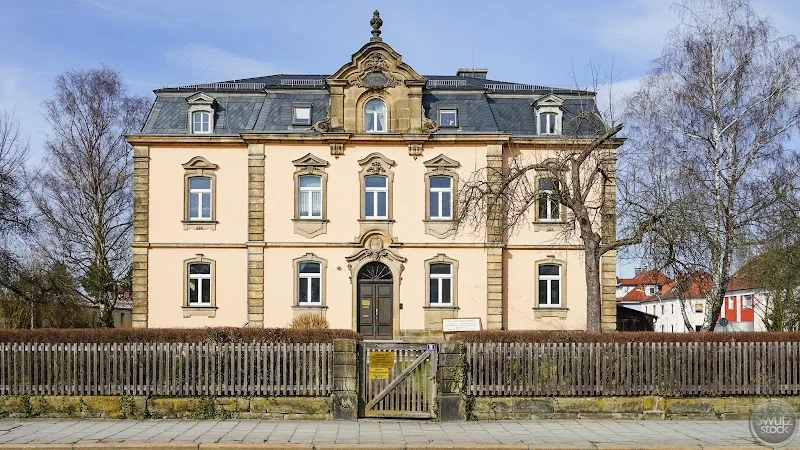
The German Typewriter Museum in Bayreuth is not an ordinary technology museum, but a place where inventive spirit, educational history, and everyday culture meet in an impressive way. Those who visit the house at its current location near Thiergarten Palace not only experience a collection of historical typewriters but also a curated journey through more than one and a half centuries of writing technology. The museum is connected to the research and training center for shorthand and word processing in Bayreuth and is led by Alexandra Blum. The current exhibition is based on a collection development that began in 1936 and shows why the typewriter was much more than just a working tool: it changed office work, education, communication, and ultimately the technological development towards the digital present. The current museum website mentions around 200 exhibits in the exhibition, while the museum page describes the total inventory as far exceeding 1,200 typewriters. Thus, the house is one of the most important addresses for anyone interested in typewriters, type technology, industrial history, and the culture of writing. The location in the former economic building of Thiergarten Palace additionally adds atmosphere to the visit and connects technical history with a historical ensemble in Bayreuth. ([deutsches-schreibmaschinenmuseum.de](https://deutsches-schreibmaschinenmuseum.de/?utm_source=openai))
Opening Hours, Admission, and Tours at the German Typewriter Museum
For planning a visit, the most important point is the clear but deliberately limited opening: The museum welcomes visitors on the 2nd Saturday of the month from 2 to 4 PM, with the tour starting at 2:30 PM. Additionally, further appointments are possible by telephone arrangement. So, anyone looking for a fixed visiting day should plan for the monthly Saturday appointment and inquire in advance if a group visit, special tour, or individual appointment is desired. Admission is based on donations, which underscores the character of the house as a museumally maintained but not commercially overloaded place. Especially for a specialized museum like the German Typewriter Museum, this model fits very well, as the focus is clearly on knowledge, communication, and the preservation of a special collection. The museum page also states that the collection continues to be supplemented as far as spatial conditions allow. This is a nice detail for all visitors who do not see museum work merely as exhibiting but also as ongoing care, documentation, and communication. The museum is also interesting for schools and groups, as the museum platform refers to tours and offerings for school classes. Those coming with children will also find a quiz for kids in the museum information. Thus, the visit is made attractive not only for technology fans but also for families and learning groups. ([deutsches-schreibmaschinenmuseum.de](https://www.deutsches-schreibmaschinenmuseum.de/museum.html))
The current opening logic makes the house particularly planning-conscious: It is not a museum where one can just casually stroll in during a long walk, but rather a destination that one targets specifically. This is often an advantage for a specialized museum. Visitors come with a specific expectation and then receive a concentrated insight into a topic that is otherwise hardly visible in everyday life. The tour at 2:30 PM structures the visit and makes it clear that the communication of knowledge plays a central role here. The museum page describes the exhibits as visual and teaching materials that played a role in the training of teachers for word processing for many years. Even today, this didactic orientation is still palpable. Those who visit the museum do not receive an anonymous row of display cases but access to the history of technology, people, and the working world. The donation-based admission fits with this, as it lowers the threshold for spontaneous and repeated visits. Those who inform themselves in advance can take advantage of the opening time on the second Saturday of the month, start with the tour, and then explore the collection at leisure. The museum thus recommends itself for all who wish to experience historical technology in a personal setting. ([deutsches-schreibmaschinenmuseum.de](https://www.deutsches-schreibmaschinenmuseum.de/museum.html))
History of the Collection Since 1936: From Educational Institution to Museum
The roots of the German Typewriter Museum date back to 1936. At that time, the former German Institute for Shorthand and Typewriting in Bayreuth began training the corresponding subject teachers. Over time, this educational work developed into a collection of historical typewriters, which initially arose from an educational context and then became a public museum institution. The museum presentation makes it clear that the collection is based on a foundation laid as early as 1934. This is an important point because it shows that a decorative technology museum did not emerge late here, but rather a collection with genuine historical depth. The typewriters served not only as exhibition pieces but also as teaching and visual objects for instruction and the training of teachers. Thus, the collection is closely linked to the development of writing culture, office work, and education. Today, anyone walking through the museum enters not only a gallery of devices but also a piece of German educational and technical history. The connection between shorthand, typewriting, and word processing is particularly well understood in this house because the collection is not presented detached from its institutional origin. It is part of a vibrant professional tradition that has been cultivated in Bayreuth for decades and remains visible to this day. ([deutsches-schreibmaschinenmuseum.de](https://www.deutsches-schreibmaschinenmuseum.de/museum.html?utm_source=openai))
A particularly formative chapter in recent history was the move. In March 2024, the museum publicly announced that it would have to vacate its previous location on Bernecker Straße because a new city archive was to be established there. The city of Bayreuth offered the adjacent building of Thiergarten Palace as a replacement. During the construction and renovation phase, the exhibits were stored before the museum could reopen in the fall of 2024 at the new location. The city of Bayreuth reported that after approximately two years of relocation-related pause, the reopening took place in the former economic building of Thiergarten Palace and the renovation costs amounted to around 1.15 million euros. This information is important because it explains the current situation of the museum and organizes today's visit: Those targeting Bayreuth with the goal of the typewriter museum are visiting a house that has only recently begun operating in its new domicile but builds on a significantly older museum tradition. It is precisely this connection of continuity and new beginnings that makes the charm of the museum. The exhibits are old, the method of communication has been modernized, and the place itself is historically charged. Thus, a museum is created that not only conserves the past but continues it in a new spatial form. ([deutsches-schreibmaschinenmuseum.de](https://www.deutsches-schreibmaschinenmuseum.de/neuigkeit-anzeigen/das-deutsche-schreibmaschinenmuseum-zieht-um.html?utm_source=openai))
What Visitors See in the Exhibition: Typewriters, Technology, and Development
The centerpiece of the house is, of course, the collection itself. The museum page speaks of well over 1,200 typewriters in the inventory, of which about 250 are displayed in glass showcases arranged according to technical aspects. The current homepage also mentions around 200 specimens in the ongoing exhibition. These numbers primarily show one thing: The museum has a substantial inventory from which a curated, technology-historically structured image is selected. For visitors, this means that they can not only see individual beautiful machines but also trace a development line from the early mechanical device to the electronic phase. The museum description explicitly emphasizes the history of development since 1864. Thus, the narrative begins with Peter Mitterhofer, a carpenter from Tyrol, whose first wooden model is considered an early milestone. The exhibition therefore spans the arc from the first functional writing apparatus through early series models and industrial variants to devices from later decades. For technology enthusiasts, this development is particularly appealing because it shows how mechanics, ergonomics, typography, and work speed have changed over generations. The exhibition also makes it visible that the typewriter is not to be viewed in isolation but is always part of larger social and economic processes. ([deutsches-schreibmaschinenmuseum.de](https://www.deutsches-schreibmaschinenmuseum.de/museum.html?utm_source=openai))
Especially exciting is that the museum presents the machines not only as objects but as evidence of technical solutions. The collection is organized according to technical aspects, and the museum pages refer to different types of typewriters and mechanisms. This allows for differences between mechanical and electric machines to be traced as well as construction principles that have emerged over time. Those interested in type levers, impact rod systems, pointer machines, or various striking methods will find not only individual examples here but a whole systematics of development. This technical diversity makes the museum interesting for professionals but also understandable for laypeople because the advancements become visible step by step. The museum also sees itself as a place of further learning: According to the official representation, the collection serves as both visual and teaching material. This sentence is important because it clarifies that it is about more than nostalgia. It is about reading technical development, understanding work processes, and connecting historical mechanics with today's digital certainties. Those who use a keyboard today can trace in the museum the long paths behind the seemingly simple idea of writing on the device. This is precisely what makes the visit in Bayreuth so sustainable. ([deutsches-schreibmaschinenmuseum.de](https://deutsches-schreibmaschinenmuseum.de/schreibmaschinen/arten-der-schreibmaschinen.html?utm_source=openai))
Another practical aspect is that the museum is not responsible for appraisals of private typewriters. The museum page explicitly points out that, for personnel and time reasons, no value assessments are made and that one should contact specialized auction houses. This is useful for visitors who may arrive with a find or an inherited device and wish for a classification. Instead, the house focuses on its actual task: preserving, showing, explaining. For visitors who simply want to be inspired by the variety of machines, this is ideal. Because the collection contains not only a few iconic models but a wide range of typewriters that make the development tangible over many decades. This mix of research, teaching, and museum experience is rare. It gives the German Typewriter Museum a clear profile and also explains why the house is referred to in museum directories as one of the most important German collections on the history of typewriters. So, anyone looking for a genuine typewriter museum in Germany will find in Bayreuth not just a place for collectors but an institutionally grown, professionally serious, and simultaneously well-visited address. ([deutsches-schreibmaschinenmuseum.de](https://www.deutsches-schreibmaschinenmuseum.de/museum.html))
Directions to Thiergarten Palace and Visit Planning in Bayreuth
The current location of the museum is in southern Bayreuth at Thiergarten Palace, specifically at Oberthiergärtner Straße 36 a or Oberthiergärtner Str. 36 a. For directions, the official museum page is very specific: With bus lines 310 or 312, one can reach the museum from the main train station and the city center in about 30 minutes. Additionally, one should plan for about 15 minutes of walking from the bus stop. This is important for planning because while the museum is well embedded in Bayreuth, it is not directly located in a classic city center with a quick stop in front of the door. Those coming by public transport can therefore organize their visit relatively relaxed but should keep in mind the walking time. Especially for an appointment at 2:30 PM for the tour, it makes sense to leave a bit earlier and not to calculate the last stretch too narrowly. The address and bus connection make the house easy to find, especially since the reference to Thiergarten Palace provides a clear spatial orientation. For travelers who do not know Bayreuth well, this is a practical advantage because it allows the museum visit to be combined with other destinations in the city area. ([deutsches-schreibmaschinenmuseum.de](https://deutsches-schreibmaschinenmuseum.de/anfahrt.html))
Regarding parking, the official museum page does not mention a dedicated visitor parking area but focuses primarily on the bus connection. Therefore, those arriving by car should check the current parking options in Bayreuth in advance and plan a small time buffer. This is not a restriction but rather a typical hint for a location that lies in a historical environment and operates with a relatively targeted visitor operation. The clear recommendation is therefore: Plan your arrival in good time, factor in the walking distance from the bus stop, and consider the museum visit as a deliberate destination rather than a spontaneous stopover. This fits well with the character of the house. The German Typewriter Museum is not a large event location with daily traffic but a specialized museum with a fixed tour rhythm. The journey is thus part of the visit experience: One consciously travels to a place that conveys technology history in a calm, concentrated form. Those who enjoy this type of museum visit will experience the location at Thiergarten Palace more as a plus than a disadvantage. The historical context, the somewhat remote address, and the clearly communicated opening hours together create a very coherent overall picture. ([deutsches-schreibmaschinenmuseum.de](https://deutsches-schreibmaschinenmuseum.de/anfahrt.html))
Photos, Gallery, and Online Impressions of the German Typewriter Museum
Those looking for photos before or as a supplement to their visit will find several resources online. The official museum website works with images, and the museum platform Museums in Bavaria shows a photo gallery with pictures of the house and the exhibition. This is particularly helpful for a specialized museum, as many people want to get an idea in advance of how the collection is presented and what atmosphere to expect. The museum page also features illustrated posts about news and special topics, such as the reopening at the new location or special exhibitions and media reports. This creates not only a sober catalog of facts online but also a visual impression of the house. Especially for a museum that documents the technology of the typewriter, images are particularly valuable: They show shapes, colors, fonts, cases, and technical details that are difficult to capture in pure texts. So, anyone searching for german typewriter museum photos will receive a good foundation through the official channels to get to know the exhibition in advance. The imagery supports the museum's central strength: making technical development tangible. ([museen-in-bayern.de](https://museen-in-bayern.de/museen/detailseite-museum/deutsches-schreibmaschinenmuseum))
Also important for the museum's external presentation is the gallery, as it makes the breadth of its collection and its special location visible. The house is now located in close proximity to Thiergarten Palace, and this historical context is well captured in photos. Those who discover the place digitally quickly realize that it is not an anonymous storage of historical devices but a museum with personal, professional, and spatial identity. The image material serves not only for advertising but also for classification: Visitors recognize that the exhibition is technically organized, that machines are displayed in showcases, and that the collection is presented within a clear museum framework. This is particularly useful for teachers, families, collectors, or technology enthusiasts who want to prepare their visit purposefully. Additionally, the museum pages and the Bayreuth information pages provide a look at special dates, changing content, and current notices. Thus, the digital presence becomes a practical companion to the real visit. Therefore, those who want to not only search for the museum but also understand it should view the image galleries in advance. They convey a good impression of how strongly the house mediates between technology, history, and personal museum work. ([museen-in-bayern.de](https://museen-in-bayern.de/museen/detailseite-museum/deutsches-schreibmaschinenmuseum))
Typewriter Museum in Germany: Significance, Research, and Special Features
In the larger context, the German Typewriter Museum is a remarkable place among typewriter museums in Germany. The museum platform Museums in Bavaria describes the collection as one of the most important German collections on the history of typewriters. This classification is plausible when considering the combination of historical inventory, long institutional tradition, educational origin, and public accessibility. The museum does not simply show a product showcase but the history of a working tool that has sustainably shaped office, administration, correspondence, and education. The temporal arc ranges from early mechanical writing devices through the industrial breakthrough in the 20th century to the 1990s, when the typewriter was already transitioning to the digital world. Herein lies the special significance of the house: It tells the history of technology not abstractly but through the interplay of inventors, designers, secretaries, mechanics, and educators. The museum description explicitly highlights that the exhibition also makes visible the people who used and maintained these devices in everyday life. Thus, an object history becomes a social history of writing. For visitors, this is valuable because they can understand the typewriter not as a nostalgic individual piece but as part of larger cultural processes. ([museen-in-bayern.de](https://museen-in-bayern.de/museen/detailseite-museum/deutsches-schreibmaschinenmuseum))
Another reason for the significance of the house lies in its connection between research and the public. The collection has been used as visual material for decades and continues to be maintained, supplemented, and communicated. This is a strong signal in the museum context because it shows that not only existing inventories are preserved here but also knowledge is passed on. Offers for school classes, tours, children's quizzes, and a museum shop illustrate that the house is geared towards different visitor groups. At the same time, it remains precise enough to cater to specialized interests. Those interested in the development of mechanical writing devices, type levers, top feed, front feed, or the transition to electric machines will find a solid foundation here. This makes the museum relevant not only for Bayreuth visitors but also for collectors, historians, and technology enthusiasts who are specifically looking for a typewriter museum in Germany. The combination of a historical core, public communication, and clear collection logic is rare and valuable. Therefore, a visit is worthwhile even if one originally searched only for keywords like photos, directions, opening hours, or reviews: On site, a search query becomes a genuine cultural experience. ([museen-in-bayern.de](https://museen-in-bayern.de/museen/detailseite-museum/deutsches-schreibmaschinenmuseum))
Finally, particularly impressive is the transition from mechanical writing to the digital present. The museum page itself poses the question of what the path from the first mechanical typewriters to the computer would have looked like if this development had not occurred. This is precisely the strength of the house: It connects the past and the present without tipping into mere nostalgia. Visitors see that technical innovation does not arise suddenly but from many small improvements, parallel inventions, and practical adjustments. The collection makes this development visible and thus offers a historical mirror for digital everyday life. Those who write on a keyboard today recognize in the museum the roots of their own working methods. This also explains why the German Typewriter Museum is more than a local attraction for Bayreuth. It is a place where the history of writing, office work, and technical standardization comes to life. In a country with many museums, this house has a very clear profile: it is specialized, authentic, and content-focused. This is precisely what makes its charm and explains why it is regularly mentioned in museum directories and tourist sites. ([deutsches-schreibmaschinenmuseum.de](https://deutsches-schreibmaschinenmuseum.de/?utm_source=openai))
Sources:
Show moreShow less
German Typewriter Museum | Opening Hours & Directions
The German Typewriter Museum in Bayreuth is not an ordinary technology museum, but a place where inventive spirit, educational history, and everyday culture meet in an impressive way. Those who visit the house at its current location near Thiergarten Palace not only experience a collection of historical typewriters but also a curated journey through more than one and a half centuries of writing technology. The museum is connected to the research and training center for shorthand and word processing in Bayreuth and is led by Alexandra Blum. The current exhibition is based on a collection development that began in 1936 and shows why the typewriter was much more than just a working tool: it changed office work, education, communication, and ultimately the technological development towards the digital present. The current museum website mentions around 200 exhibits in the exhibition, while the museum page describes the total inventory as far exceeding 1,200 typewriters. Thus, the house is one of the most important addresses for anyone interested in typewriters, type technology, industrial history, and the culture of writing. The location in the former economic building of Thiergarten Palace additionally adds atmosphere to the visit and connects technical history with a historical ensemble in Bayreuth. ([deutsches-schreibmaschinenmuseum.de](https://deutsches-schreibmaschinenmuseum.de/?utm_source=openai))
Opening Hours, Admission, and Tours at the German Typewriter Museum
For planning a visit, the most important point is the clear but deliberately limited opening: The museum welcomes visitors on the 2nd Saturday of the month from 2 to 4 PM, with the tour starting at 2:30 PM. Additionally, further appointments are possible by telephone arrangement. So, anyone looking for a fixed visiting day should plan for the monthly Saturday appointment and inquire in advance if a group visit, special tour, or individual appointment is desired. Admission is based on donations, which underscores the character of the house as a museumally maintained but not commercially overloaded place. Especially for a specialized museum like the German Typewriter Museum, this model fits very well, as the focus is clearly on knowledge, communication, and the preservation of a special collection. The museum page also states that the collection continues to be supplemented as far as spatial conditions allow. This is a nice detail for all visitors who do not see museum work merely as exhibiting but also as ongoing care, documentation, and communication. The museum is also interesting for schools and groups, as the museum platform refers to tours and offerings for school classes. Those coming with children will also find a quiz for kids in the museum information. Thus, the visit is made attractive not only for technology fans but also for families and learning groups. ([deutsches-schreibmaschinenmuseum.de](https://www.deutsches-schreibmaschinenmuseum.de/museum.html))
The current opening logic makes the house particularly planning-conscious: It is not a museum where one can just casually stroll in during a long walk, but rather a destination that one targets specifically. This is often an advantage for a specialized museum. Visitors come with a specific expectation and then receive a concentrated insight into a topic that is otherwise hardly visible in everyday life. The tour at 2:30 PM structures the visit and makes it clear that the communication of knowledge plays a central role here. The museum page describes the exhibits as visual and teaching materials that played a role in the training of teachers for word processing for many years. Even today, this didactic orientation is still palpable. Those who visit the museum do not receive an anonymous row of display cases but access to the history of technology, people, and the working world. The donation-based admission fits with this, as it lowers the threshold for spontaneous and repeated visits. Those who inform themselves in advance can take advantage of the opening time on the second Saturday of the month, start with the tour, and then explore the collection at leisure. The museum thus recommends itself for all who wish to experience historical technology in a personal setting. ([deutsches-schreibmaschinenmuseum.de](https://www.deutsches-schreibmaschinenmuseum.de/museum.html))
History of the Collection Since 1936: From Educational Institution to Museum
The roots of the German Typewriter Museum date back to 1936. At that time, the former German Institute for Shorthand and Typewriting in Bayreuth began training the corresponding subject teachers. Over time, this educational work developed into a collection of historical typewriters, which initially arose from an educational context and then became a public museum institution. The museum presentation makes it clear that the collection is based on a foundation laid as early as 1934. This is an important point because it shows that a decorative technology museum did not emerge late here, but rather a collection with genuine historical depth. The typewriters served not only as exhibition pieces but also as teaching and visual objects for instruction and the training of teachers. Thus, the collection is closely linked to the development of writing culture, office work, and education. Today, anyone walking through the museum enters not only a gallery of devices but also a piece of German educational and technical history. The connection between shorthand, typewriting, and word processing is particularly well understood in this house because the collection is not presented detached from its institutional origin. It is part of a vibrant professional tradition that has been cultivated in Bayreuth for decades and remains visible to this day. ([deutsches-schreibmaschinenmuseum.de](https://www.deutsches-schreibmaschinenmuseum.de/museum.html?utm_source=openai))
A particularly formative chapter in recent history was the move. In March 2024, the museum publicly announced that it would have to vacate its previous location on Bernecker Straße because a new city archive was to be established there. The city of Bayreuth offered the adjacent building of Thiergarten Palace as a replacement. During the construction and renovation phase, the exhibits were stored before the museum could reopen in the fall of 2024 at the new location. The city of Bayreuth reported that after approximately two years of relocation-related pause, the reopening took place in the former economic building of Thiergarten Palace and the renovation costs amounted to around 1.15 million euros. This information is important because it explains the current situation of the museum and organizes today's visit: Those targeting Bayreuth with the goal of the typewriter museum are visiting a house that has only recently begun operating in its new domicile but builds on a significantly older museum tradition. It is precisely this connection of continuity and new beginnings that makes the charm of the museum. The exhibits are old, the method of communication has been modernized, and the place itself is historically charged. Thus, a museum is created that not only conserves the past but continues it in a new spatial form. ([deutsches-schreibmaschinenmuseum.de](https://www.deutsches-schreibmaschinenmuseum.de/neuigkeit-anzeigen/das-deutsche-schreibmaschinenmuseum-zieht-um.html?utm_source=openai))
What Visitors See in the Exhibition: Typewriters, Technology, and Development
The centerpiece of the house is, of course, the collection itself. The museum page speaks of well over 1,200 typewriters in the inventory, of which about 250 are displayed in glass showcases arranged according to technical aspects. The current homepage also mentions around 200 specimens in the ongoing exhibition. These numbers primarily show one thing: The museum has a substantial inventory from which a curated, technology-historically structured image is selected. For visitors, this means that they can not only see individual beautiful machines but also trace a development line from the early mechanical device to the electronic phase. The museum description explicitly emphasizes the history of development since 1864. Thus, the narrative begins with Peter Mitterhofer, a carpenter from Tyrol, whose first wooden model is considered an early milestone. The exhibition therefore spans the arc from the first functional writing apparatus through early series models and industrial variants to devices from later decades. For technology enthusiasts, this development is particularly appealing because it shows how mechanics, ergonomics, typography, and work speed have changed over generations. The exhibition also makes it visible that the typewriter is not to be viewed in isolation but is always part of larger social and economic processes. ([deutsches-schreibmaschinenmuseum.de](https://www.deutsches-schreibmaschinenmuseum.de/museum.html?utm_source=openai))
Especially exciting is that the museum presents the machines not only as objects but as evidence of technical solutions. The collection is organized according to technical aspects, and the museum pages refer to different types of typewriters and mechanisms. This allows for differences between mechanical and electric machines to be traced as well as construction principles that have emerged over time. Those interested in type levers, impact rod systems, pointer machines, or various striking methods will find not only individual examples here but a whole systematics of development. This technical diversity makes the museum interesting for professionals but also understandable for laypeople because the advancements become visible step by step. The museum also sees itself as a place of further learning: According to the official representation, the collection serves as both visual and teaching material. This sentence is important because it clarifies that it is about more than nostalgia. It is about reading technical development, understanding work processes, and connecting historical mechanics with today's digital certainties. Those who use a keyboard today can trace in the museum the long paths behind the seemingly simple idea of writing on the device. This is precisely what makes the visit in Bayreuth so sustainable. ([deutsches-schreibmaschinenmuseum.de](https://deutsches-schreibmaschinenmuseum.de/schreibmaschinen/arten-der-schreibmaschinen.html?utm_source=openai))
Another practical aspect is that the museum is not responsible for appraisals of private typewriters. The museum page explicitly points out that, for personnel and time reasons, no value assessments are made and that one should contact specialized auction houses. This is useful for visitors who may arrive with a find or an inherited device and wish for a classification. Instead, the house focuses on its actual task: preserving, showing, explaining. For visitors who simply want to be inspired by the variety of machines, this is ideal. Because the collection contains not only a few iconic models but a wide range of typewriters that make the development tangible over many decades. This mix of research, teaching, and museum experience is rare. It gives the German Typewriter Museum a clear profile and also explains why the house is referred to in museum directories as one of the most important German collections on the history of typewriters. So, anyone looking for a genuine typewriter museum in Germany will find in Bayreuth not just a place for collectors but an institutionally grown, professionally serious, and simultaneously well-visited address. ([deutsches-schreibmaschinenmuseum.de](https://www.deutsches-schreibmaschinenmuseum.de/museum.html))
Directions to Thiergarten Palace and Visit Planning in Bayreuth
The current location of the museum is in southern Bayreuth at Thiergarten Palace, specifically at Oberthiergärtner Straße 36 a or Oberthiergärtner Str. 36 a. For directions, the official museum page is very specific: With bus lines 310 or 312, one can reach the museum from the main train station and the city center in about 30 minutes. Additionally, one should plan for about 15 minutes of walking from the bus stop. This is important for planning because while the museum is well embedded in Bayreuth, it is not directly located in a classic city center with a quick stop in front of the door. Those coming by public transport can therefore organize their visit relatively relaxed but should keep in mind the walking time. Especially for an appointment at 2:30 PM for the tour, it makes sense to leave a bit earlier and not to calculate the last stretch too narrowly. The address and bus connection make the house easy to find, especially since the reference to Thiergarten Palace provides a clear spatial orientation. For travelers who do not know Bayreuth well, this is a practical advantage because it allows the museum visit to be combined with other destinations in the city area. ([deutsches-schreibmaschinenmuseum.de](https://deutsches-schreibmaschinenmuseum.de/anfahrt.html))
Regarding parking, the official museum page does not mention a dedicated visitor parking area but focuses primarily on the bus connection. Therefore, those arriving by car should check the current parking options in Bayreuth in advance and plan a small time buffer. This is not a restriction but rather a typical hint for a location that lies in a historical environment and operates with a relatively targeted visitor operation. The clear recommendation is therefore: Plan your arrival in good time, factor in the walking distance from the bus stop, and consider the museum visit as a deliberate destination rather than a spontaneous stopover. This fits well with the character of the house. The German Typewriter Museum is not a large event location with daily traffic but a specialized museum with a fixed tour rhythm. The journey is thus part of the visit experience: One consciously travels to a place that conveys technology history in a calm, concentrated form. Those who enjoy this type of museum visit will experience the location at Thiergarten Palace more as a plus than a disadvantage. The historical context, the somewhat remote address, and the clearly communicated opening hours together create a very coherent overall picture. ([deutsches-schreibmaschinenmuseum.de](https://deutsches-schreibmaschinenmuseum.de/anfahrt.html))
Photos, Gallery, and Online Impressions of the German Typewriter Museum
Those looking for photos before or as a supplement to their visit will find several resources online. The official museum website works with images, and the museum platform Museums in Bavaria shows a photo gallery with pictures of the house and the exhibition. This is particularly helpful for a specialized museum, as many people want to get an idea in advance of how the collection is presented and what atmosphere to expect. The museum page also features illustrated posts about news and special topics, such as the reopening at the new location or special exhibitions and media reports. This creates not only a sober catalog of facts online but also a visual impression of the house. Especially for a museum that documents the technology of the typewriter, images are particularly valuable: They show shapes, colors, fonts, cases, and technical details that are difficult to capture in pure texts. So, anyone searching for german typewriter museum photos will receive a good foundation through the official channels to get to know the exhibition in advance. The imagery supports the museum's central strength: making technical development tangible. ([museen-in-bayern.de](https://museen-in-bayern.de/museen/detailseite-museum/deutsches-schreibmaschinenmuseum))
Also important for the museum's external presentation is the gallery, as it makes the breadth of its collection and its special location visible. The house is now located in close proximity to Thiergarten Palace, and this historical context is well captured in photos. Those who discover the place digitally quickly realize that it is not an anonymous storage of historical devices but a museum with personal, professional, and spatial identity. The image material serves not only for advertising but also for classification: Visitors recognize that the exhibition is technically organized, that machines are displayed in showcases, and that the collection is presented within a clear museum framework. This is particularly useful for teachers, families, collectors, or technology enthusiasts who want to prepare their visit purposefully. Additionally, the museum pages and the Bayreuth information pages provide a look at special dates, changing content, and current notices. Thus, the digital presence becomes a practical companion to the real visit. Therefore, those who want to not only search for the museum but also understand it should view the image galleries in advance. They convey a good impression of how strongly the house mediates between technology, history, and personal museum work. ([museen-in-bayern.de](https://museen-in-bayern.de/museen/detailseite-museum/deutsches-schreibmaschinenmuseum))
Typewriter Museum in Germany: Significance, Research, and Special Features
In the larger context, the German Typewriter Museum is a remarkable place among typewriter museums in Germany. The museum platform Museums in Bavaria describes the collection as one of the most important German collections on the history of typewriters. This classification is plausible when considering the combination of historical inventory, long institutional tradition, educational origin, and public accessibility. The museum does not simply show a product showcase but the history of a working tool that has sustainably shaped office, administration, correspondence, and education. The temporal arc ranges from early mechanical writing devices through the industrial breakthrough in the 20th century to the 1990s, when the typewriter was already transitioning to the digital world. Herein lies the special significance of the house: It tells the history of technology not abstractly but through the interplay of inventors, designers, secretaries, mechanics, and educators. The museum description explicitly highlights that the exhibition also makes visible the people who used and maintained these devices in everyday life. Thus, an object history becomes a social history of writing. For visitors, this is valuable because they can understand the typewriter not as a nostalgic individual piece but as part of larger cultural processes. ([museen-in-bayern.de](https://museen-in-bayern.de/museen/detailseite-museum/deutsches-schreibmaschinenmuseum))
Another reason for the significance of the house lies in its connection between research and the public. The collection has been used as visual material for decades and continues to be maintained, supplemented, and communicated. This is a strong signal in the museum context because it shows that not only existing inventories are preserved here but also knowledge is passed on. Offers for school classes, tours, children's quizzes, and a museum shop illustrate that the house is geared towards different visitor groups. At the same time, it remains precise enough to cater to specialized interests. Those interested in the development of mechanical writing devices, type levers, top feed, front feed, or the transition to electric machines will find a solid foundation here. This makes the museum relevant not only for Bayreuth visitors but also for collectors, historians, and technology enthusiasts who are specifically looking for a typewriter museum in Germany. The combination of a historical core, public communication, and clear collection logic is rare and valuable. Therefore, a visit is worthwhile even if one originally searched only for keywords like photos, directions, opening hours, or reviews: On site, a search query becomes a genuine cultural experience. ([museen-in-bayern.de](https://museen-in-bayern.de/museen/detailseite-museum/deutsches-schreibmaschinenmuseum))
Finally, particularly impressive is the transition from mechanical writing to the digital present. The museum page itself poses the question of what the path from the first mechanical typewriters to the computer would have looked like if this development had not occurred. This is precisely the strength of the house: It connects the past and the present without tipping into mere nostalgia. Visitors see that technical innovation does not arise suddenly but from many small improvements, parallel inventions, and practical adjustments. The collection makes this development visible and thus offers a historical mirror for digital everyday life. Those who write on a keyboard today recognize in the museum the roots of their own working methods. This also explains why the German Typewriter Museum is more than a local attraction for Bayreuth. It is a place where the history of writing, office work, and technical standardization comes to life. In a country with many museums, this house has a very clear profile: it is specialized, authentic, and content-focused. This is precisely what makes its charm and explains why it is regularly mentioned in museum directories and tourist sites. ([deutsches-schreibmaschinenmuseum.de](https://deutsches-schreibmaschinenmuseum.de/?utm_source=openai))
Sources:
German Typewriter Museum | Opening Hours & Directions
The German Typewriter Museum in Bayreuth is not an ordinary technology museum, but a place where inventive spirit, educational history, and everyday culture meet in an impressive way. Those who visit the house at its current location near Thiergarten Palace not only experience a collection of historical typewriters but also a curated journey through more than one and a half centuries of writing technology. The museum is connected to the research and training center for shorthand and word processing in Bayreuth and is led by Alexandra Blum. The current exhibition is based on a collection development that began in 1936 and shows why the typewriter was much more than just a working tool: it changed office work, education, communication, and ultimately the technological development towards the digital present. The current museum website mentions around 200 exhibits in the exhibition, while the museum page describes the total inventory as far exceeding 1,200 typewriters. Thus, the house is one of the most important addresses for anyone interested in typewriters, type technology, industrial history, and the culture of writing. The location in the former economic building of Thiergarten Palace additionally adds atmosphere to the visit and connects technical history with a historical ensemble in Bayreuth. ([deutsches-schreibmaschinenmuseum.de](https://deutsches-schreibmaschinenmuseum.de/?utm_source=openai))
Opening Hours, Admission, and Tours at the German Typewriter Museum
For planning a visit, the most important point is the clear but deliberately limited opening: The museum welcomes visitors on the 2nd Saturday of the month from 2 to 4 PM, with the tour starting at 2:30 PM. Additionally, further appointments are possible by telephone arrangement. So, anyone looking for a fixed visiting day should plan for the monthly Saturday appointment and inquire in advance if a group visit, special tour, or individual appointment is desired. Admission is based on donations, which underscores the character of the house as a museumally maintained but not commercially overloaded place. Especially for a specialized museum like the German Typewriter Museum, this model fits very well, as the focus is clearly on knowledge, communication, and the preservation of a special collection. The museum page also states that the collection continues to be supplemented as far as spatial conditions allow. This is a nice detail for all visitors who do not see museum work merely as exhibiting but also as ongoing care, documentation, and communication. The museum is also interesting for schools and groups, as the museum platform refers to tours and offerings for school classes. Those coming with children will also find a quiz for kids in the museum information. Thus, the visit is made attractive not only for technology fans but also for families and learning groups. ([deutsches-schreibmaschinenmuseum.de](https://www.deutsches-schreibmaschinenmuseum.de/museum.html))
The current opening logic makes the house particularly planning-conscious: It is not a museum where one can just casually stroll in during a long walk, but rather a destination that one targets specifically. This is often an advantage for a specialized museum. Visitors come with a specific expectation and then receive a concentrated insight into a topic that is otherwise hardly visible in everyday life. The tour at 2:30 PM structures the visit and makes it clear that the communication of knowledge plays a central role here. The museum page describes the exhibits as visual and teaching materials that played a role in the training of teachers for word processing for many years. Even today, this didactic orientation is still palpable. Those who visit the museum do not receive an anonymous row of display cases but access to the history of technology, people, and the working world. The donation-based admission fits with this, as it lowers the threshold for spontaneous and repeated visits. Those who inform themselves in advance can take advantage of the opening time on the second Saturday of the month, start with the tour, and then explore the collection at leisure. The museum thus recommends itself for all who wish to experience historical technology in a personal setting. ([deutsches-schreibmaschinenmuseum.de](https://www.deutsches-schreibmaschinenmuseum.de/museum.html))
History of the Collection Since 1936: From Educational Institution to Museum
The roots of the German Typewriter Museum date back to 1936. At that time, the former German Institute for Shorthand and Typewriting in Bayreuth began training the corresponding subject teachers. Over time, this educational work developed into a collection of historical typewriters, which initially arose from an educational context and then became a public museum institution. The museum presentation makes it clear that the collection is based on a foundation laid as early as 1934. This is an important point because it shows that a decorative technology museum did not emerge late here, but rather a collection with genuine historical depth. The typewriters served not only as exhibition pieces but also as teaching and visual objects for instruction and the training of teachers. Thus, the collection is closely linked to the development of writing culture, office work, and education. Today, anyone walking through the museum enters not only a gallery of devices but also a piece of German educational and technical history. The connection between shorthand, typewriting, and word processing is particularly well understood in this house because the collection is not presented detached from its institutional origin. It is part of a vibrant professional tradition that has been cultivated in Bayreuth for decades and remains visible to this day. ([deutsches-schreibmaschinenmuseum.de](https://www.deutsches-schreibmaschinenmuseum.de/museum.html?utm_source=openai))
A particularly formative chapter in recent history was the move. In March 2024, the museum publicly announced that it would have to vacate its previous location on Bernecker Straße because a new city archive was to be established there. The city of Bayreuth offered the adjacent building of Thiergarten Palace as a replacement. During the construction and renovation phase, the exhibits were stored before the museum could reopen in the fall of 2024 at the new location. The city of Bayreuth reported that after approximately two years of relocation-related pause, the reopening took place in the former economic building of Thiergarten Palace and the renovation costs amounted to around 1.15 million euros. This information is important because it explains the current situation of the museum and organizes today's visit: Those targeting Bayreuth with the goal of the typewriter museum are visiting a house that has only recently begun operating in its new domicile but builds on a significantly older museum tradition. It is precisely this connection of continuity and new beginnings that makes the charm of the museum. The exhibits are old, the method of communication has been modernized, and the place itself is historically charged. Thus, a museum is created that not only conserves the past but continues it in a new spatial form. ([deutsches-schreibmaschinenmuseum.de](https://www.deutsches-schreibmaschinenmuseum.de/neuigkeit-anzeigen/das-deutsche-schreibmaschinenmuseum-zieht-um.html?utm_source=openai))
What Visitors See in the Exhibition: Typewriters, Technology, and Development
The centerpiece of the house is, of course, the collection itself. The museum page speaks of well over 1,200 typewriters in the inventory, of which about 250 are displayed in glass showcases arranged according to technical aspects. The current homepage also mentions around 200 specimens in the ongoing exhibition. These numbers primarily show one thing: The museum has a substantial inventory from which a curated, technology-historically structured image is selected. For visitors, this means that they can not only see individual beautiful machines but also trace a development line from the early mechanical device to the electronic phase. The museum description explicitly emphasizes the history of development since 1864. Thus, the narrative begins with Peter Mitterhofer, a carpenter from Tyrol, whose first wooden model is considered an early milestone. The exhibition therefore spans the arc from the first functional writing apparatus through early series models and industrial variants to devices from later decades. For technology enthusiasts, this development is particularly appealing because it shows how mechanics, ergonomics, typography, and work speed have changed over generations. The exhibition also makes it visible that the typewriter is not to be viewed in isolation but is always part of larger social and economic processes. ([deutsches-schreibmaschinenmuseum.de](https://www.deutsches-schreibmaschinenmuseum.de/museum.html?utm_source=openai))
Especially exciting is that the museum presents the machines not only as objects but as evidence of technical solutions. The collection is organized according to technical aspects, and the museum pages refer to different types of typewriters and mechanisms. This allows for differences between mechanical and electric machines to be traced as well as construction principles that have emerged over time. Those interested in type levers, impact rod systems, pointer machines, or various striking methods will find not only individual examples here but a whole systematics of development. This technical diversity makes the museum interesting for professionals but also understandable for laypeople because the advancements become visible step by step. The museum also sees itself as a place of further learning: According to the official representation, the collection serves as both visual and teaching material. This sentence is important because it clarifies that it is about more than nostalgia. It is about reading technical development, understanding work processes, and connecting historical mechanics with today's digital certainties. Those who use a keyboard today can trace in the museum the long paths behind the seemingly simple idea of writing on the device. This is precisely what makes the visit in Bayreuth so sustainable. ([deutsches-schreibmaschinenmuseum.de](https://deutsches-schreibmaschinenmuseum.de/schreibmaschinen/arten-der-schreibmaschinen.html?utm_source=openai))
Another practical aspect is that the museum is not responsible for appraisals of private typewriters. The museum page explicitly points out that, for personnel and time reasons, no value assessments are made and that one should contact specialized auction houses. This is useful for visitors who may arrive with a find or an inherited device and wish for a classification. Instead, the house focuses on its actual task: preserving, showing, explaining. For visitors who simply want to be inspired by the variety of machines, this is ideal. Because the collection contains not only a few iconic models but a wide range of typewriters that make the development tangible over many decades. This mix of research, teaching, and museum experience is rare. It gives the German Typewriter Museum a clear profile and also explains why the house is referred to in museum directories as one of the most important German collections on the history of typewriters. So, anyone looking for a genuine typewriter museum in Germany will find in Bayreuth not just a place for collectors but an institutionally grown, professionally serious, and simultaneously well-visited address. ([deutsches-schreibmaschinenmuseum.de](https://www.deutsches-schreibmaschinenmuseum.de/museum.html))
Directions to Thiergarten Palace and Visit Planning in Bayreuth
The current location of the museum is in southern Bayreuth at Thiergarten Palace, specifically at Oberthiergärtner Straße 36 a or Oberthiergärtner Str. 36 a. For directions, the official museum page is very specific: With bus lines 310 or 312, one can reach the museum from the main train station and the city center in about 30 minutes. Additionally, one should plan for about 15 minutes of walking from the bus stop. This is important for planning because while the museum is well embedded in Bayreuth, it is not directly located in a classic city center with a quick stop in front of the door. Those coming by public transport can therefore organize their visit relatively relaxed but should keep in mind the walking time. Especially for an appointment at 2:30 PM for the tour, it makes sense to leave a bit earlier and not to calculate the last stretch too narrowly. The address and bus connection make the house easy to find, especially since the reference to Thiergarten Palace provides a clear spatial orientation. For travelers who do not know Bayreuth well, this is a practical advantage because it allows the museum visit to be combined with other destinations in the city area. ([deutsches-schreibmaschinenmuseum.de](https://deutsches-schreibmaschinenmuseum.de/anfahrt.html))
Regarding parking, the official museum page does not mention a dedicated visitor parking area but focuses primarily on the bus connection. Therefore, those arriving by car should check the current parking options in Bayreuth in advance and plan a small time buffer. This is not a restriction but rather a typical hint for a location that lies in a historical environment and operates with a relatively targeted visitor operation. The clear recommendation is therefore: Plan your arrival in good time, factor in the walking distance from the bus stop, and consider the museum visit as a deliberate destination rather than a spontaneous stopover. This fits well with the character of the house. The German Typewriter Museum is not a large event location with daily traffic but a specialized museum with a fixed tour rhythm. The journey is thus part of the visit experience: One consciously travels to a place that conveys technology history in a calm, concentrated form. Those who enjoy this type of museum visit will experience the location at Thiergarten Palace more as a plus than a disadvantage. The historical context, the somewhat remote address, and the clearly communicated opening hours together create a very coherent overall picture. ([deutsches-schreibmaschinenmuseum.de](https://deutsches-schreibmaschinenmuseum.de/anfahrt.html))
Photos, Gallery, and Online Impressions of the German Typewriter Museum
Those looking for photos before or as a supplement to their visit will find several resources online. The official museum website works with images, and the museum platform Museums in Bavaria shows a photo gallery with pictures of the house and the exhibition. This is particularly helpful for a specialized museum, as many people want to get an idea in advance of how the collection is presented and what atmosphere to expect. The museum page also features illustrated posts about news and special topics, such as the reopening at the new location or special exhibitions and media reports. This creates not only a sober catalog of facts online but also a visual impression of the house. Especially for a museum that documents the technology of the typewriter, images are particularly valuable: They show shapes, colors, fonts, cases, and technical details that are difficult to capture in pure texts. So, anyone searching for german typewriter museum photos will receive a good foundation through the official channels to get to know the exhibition in advance. The imagery supports the museum's central strength: making technical development tangible. ([museen-in-bayern.de](https://museen-in-bayern.de/museen/detailseite-museum/deutsches-schreibmaschinenmuseum))
Also important for the museum's external presentation is the gallery, as it makes the breadth of its collection and its special location visible. The house is now located in close proximity to Thiergarten Palace, and this historical context is well captured in photos. Those who discover the place digitally quickly realize that it is not an anonymous storage of historical devices but a museum with personal, professional, and spatial identity. The image material serves not only for advertising but also for classification: Visitors recognize that the exhibition is technically organized, that machines are displayed in showcases, and that the collection is presented within a clear museum framework. This is particularly useful for teachers, families, collectors, or technology enthusiasts who want to prepare their visit purposefully. Additionally, the museum pages and the Bayreuth information pages provide a look at special dates, changing content, and current notices. Thus, the digital presence becomes a practical companion to the real visit. Therefore, those who want to not only search for the museum but also understand it should view the image galleries in advance. They convey a good impression of how strongly the house mediates between technology, history, and personal museum work. ([museen-in-bayern.de](https://museen-in-bayern.de/museen/detailseite-museum/deutsches-schreibmaschinenmuseum))
Typewriter Museum in Germany: Significance, Research, and Special Features
In the larger context, the German Typewriter Museum is a remarkable place among typewriter museums in Germany. The museum platform Museums in Bavaria describes the collection as one of the most important German collections on the history of typewriters. This classification is plausible when considering the combination of historical inventory, long institutional tradition, educational origin, and public accessibility. The museum does not simply show a product showcase but the history of a working tool that has sustainably shaped office, administration, correspondence, and education. The temporal arc ranges from early mechanical writing devices through the industrial breakthrough in the 20th century to the 1990s, when the typewriter was already transitioning to the digital world. Herein lies the special significance of the house: It tells the history of technology not abstractly but through the interplay of inventors, designers, secretaries, mechanics, and educators. The museum description explicitly highlights that the exhibition also makes visible the people who used and maintained these devices in everyday life. Thus, an object history becomes a social history of writing. For visitors, this is valuable because they can understand the typewriter not as a nostalgic individual piece but as part of larger cultural processes. ([museen-in-bayern.de](https://museen-in-bayern.de/museen/detailseite-museum/deutsches-schreibmaschinenmuseum))
Another reason for the significance of the house lies in its connection between research and the public. The collection has been used as visual material for decades and continues to be maintained, supplemented, and communicated. This is a strong signal in the museum context because it shows that not only existing inventories are preserved here but also knowledge is passed on. Offers for school classes, tours, children's quizzes, and a museum shop illustrate that the house is geared towards different visitor groups. At the same time, it remains precise enough to cater to specialized interests. Those interested in the development of mechanical writing devices, type levers, top feed, front feed, or the transition to electric machines will find a solid foundation here. This makes the museum relevant not only for Bayreuth visitors but also for collectors, historians, and technology enthusiasts who are specifically looking for a typewriter museum in Germany. The combination of a historical core, public communication, and clear collection logic is rare and valuable. Therefore, a visit is worthwhile even if one originally searched only for keywords like photos, directions, opening hours, or reviews: On site, a search query becomes a genuine cultural experience. ([museen-in-bayern.de](https://museen-in-bayern.de/museen/detailseite-museum/deutsches-schreibmaschinenmuseum))
Finally, particularly impressive is the transition from mechanical writing to the digital present. The museum page itself poses the question of what the path from the first mechanical typewriters to the computer would have looked like if this development had not occurred. This is precisely the strength of the house: It connects the past and the present without tipping into mere nostalgia. Visitors see that technical innovation does not arise suddenly but from many small improvements, parallel inventions, and practical adjustments. The collection makes this development visible and thus offers a historical mirror for digital everyday life. Those who write on a keyboard today recognize in the museum the roots of their own working methods. This also explains why the German Typewriter Museum is more than a local attraction for Bayreuth. It is a place where the history of writing, office work, and technical standardization comes to life. In a country with many museums, this house has a very clear profile: it is specialized, authentic, and content-focused. This is precisely what makes its charm and explains why it is regularly mentioned in museum directories and tourist sites. ([deutsches-schreibmaschinenmuseum.de](https://deutsches-schreibmaschinenmuseum.de/?utm_source=openai))
Sources:
Frequently Asked Questions
Reviews
Ka Ha
6. October 2025
Our typewriters have found a new home here. Once they were THE inventions, and today we are glad they have found interest. We wish the operators good luck with all their businesses.
Kerstin Aldag
18. May 2025
So lovingly and passionately designed, so sweet and welcoming. Thank you for the delicious cake and your hospitality. It's great that my mom could reminisce about her past. Keep it up!!!
Matthias Reinwald
31. January 2026
A lovely museum. Very informative and charming tour.
Heinrich Moser
9. November 2019
11/09/2019 In a recent report by Bayerischer Rundfunk about the typewriter museum, one of the employees is shown stating that the typewriter has been replaced by the computer. This is not entirely accurate. While typewriters have largely disappeared due to computers, the computer has not replaced the typewriter. In the past, forms were usually filled out with a typewriter. Normally, you cannot fill out a form with a computer (unless it is specifically programmed). Therefore, forms are now still filled out by people who master the keyboard, always by hand. If you know the different handwriting styles of people, you understand how legibility is affected. This is clearly a step backward compared to the 'typewriter era.' So, we cannot speak of a replacement, but rather of a 'displacement' without offering an equivalent substitute. Perhaps the typewriter museum should also consider this aspect and point out this regression as 'typewriter nostalgists,' especially since many forms are filled out in daily life and this is mostly done primitively by hand nowadays. Moreover, it is commendable that there are volunteers dedicated to the development of the typewriter and ensuring this era is not forgotten. The city of Bayreuth should support this as much as possible and strive for better marketing in the interest of tourism. Wishing everyone involved here much success and determination.
Peter W
13. October 2017
Open by appointment! A recommendation for every nerd and tech fan! —- Since 1936, one of the most important German collections on the history of typewriters has been established at our institute in Bayreuth, based on a collection started in 1934. It provides a comprehensive picture of the development of typing technology over the last one and a half centuries. —- That's true and worth it!