
Universitätsstraße 30, Bayreuth-Frankengut
Universitätsstraße 30, 95447 Bayreuth, Germany
Ecological-Botanical Garden | Opening Hours & Directions
The Ecological-Botanical Garden of the University of Bayreuth is much more than a classic showcase for plants. It combines scientific work, teaching, species conservation, and recreation on a site that feels like a small botanical world atlas. On approximately 16 hectares of open space and about 6,000 square meters of greenhouse area, nature-oriented habitats from various climate zones are displayed, and around 12,000 plant species make the tour a dense but easily accessible journey of discovery. Since 1978, the garden has been firmly established as a central scientific institution of the University of Bayreuth and is also open to the public. The free admission makes it attractive not only for tourists but also for students, families, and spontaneous walks. Those seeking a quiet place where education and nature experience meaningfully connect will find an exceptionally strong offering here. ([obg.uni-bayreuth.de](https://www.obg.uni-bayreuth.de/de/ueber_uns/index.html?utm_source=openai))
Opening Hours, Admission, and Visit Planning
Those planning a visit should be aware of the seasonal opening hours, as they change significantly depending on the time of year. From November to February, the open area is accessible Monday to Friday from 8 AM to 4 PM, and on Saturdays, Sundays, and public holidays from 10 AM to 4 PM. From March to October, the times in the open area extend to 8 AM to 7 PM on weekdays and 10 AM to 7 PM on weekends and public holidays. The greenhouses have their own hours year-round: Monday to Friday from 10 AM to 3 PM and on Sundays and public holidays from 10 AM to 4 PM; they are closed on Saturdays. The free admission and clear time slots make planning very easy, as one can decide without purchasing a ticket whether to just take a quick look in a greenhouse or explore several areas in succession. At the same time, the garden is a place where a spontaneous walk can be just as easily realized as a planned family outing or a quiet stop on campus. ([obg.uni-bayreuth.de](https://www.obg.uni-bayreuth.de/de/gartenbesuch/?utm_source=openai))
It is also practical that the garden operates transparently: A webcam allows for a quick look at the current garden weather, and the weather station provides new data every ten minutes. This helps to better coordinate the stay according to temperature, sunlight, or precipitation, which is especially pleasant for children, groups, or a combined outdoor and greenhouse visit. Additionally, Sunday and holiday openings are made possible by the Friends of the Ecological-Botanical Garden Association. This is a nice indication that the garden is not only a university institution but also a regionally supported project. Those who like to travel with a flexible schedule benefit from this mix of fixed opening hours, digital orientation, and the opportunity to explore the grounds in several stages. ([obg.uni-bayreuth.de](https://www.obg.uni-bayreuth.de/de/gartenbesuch/?utm_source=openai))
Directions and Parking at the University of Bayreuth Campus
The Ecological-Botanical Garden is located at Universitätsstraße 30 in 95447 Bayreuth on the campus of the University of Bayreuth. By car, the official route is via the A9, exit Bayreuth South, then towards the university; on the university grounds, you should keep left. The parking spaces are located opposite the garden entrance on the right side, and there are also two designated disabled parking spaces. Those preferring public transport can take line 316 directly from Bayreuth main station to the campus or use lines 306 and 304 from the ZOH to the Universitätsverwaltung stop. The location on campus is pleasantly straightforward, as the garden integrates well into a larger visit to the university grounds or the city. Thus, the journey does not become an obstacle but rather a simple part of the day's planning. ([obg.uni-bayreuth.de](https://www.obg.uni-bayreuth.de/de/kontakt_anfahrt/index.html?utm_source=openai))
Open Area, Greenhouses, and Crop Garden
The Ecological-Botanical Garden covers about 16 hectares and is divided into four stations. These include vegetation areas for Asia, America, and Europe, a 1-hectare crop garden, the greenhouses, and the ecological experimental station. The scale of the greenhouses is impressive: around 3,000 square meters of demonstration houses and another 3,000 square meters for wintering and cultivation. This is complemented by experimental areas for the chairs of biology and geosciences, as well as a lysimeter system and a groundwater basin. These figures show that the garden is not only beautiful but also functionally and scientifically used very intensively. Those interested in ecological relationships quickly realize that here, individual plants do not simply stand next to each other, but that spaces, climate zones, and research questions are consciously interconnected. This clear structure makes the visit understandable, even for those with little botanical knowledge. ([obg.uni-bayreuth.de](https://www.obg.uni-bayreuth.de/de/gartenbesuch/?utm_source=openai))
In terms of content, the diversity is as great as the area. On the tours, one encounters tropical rainforests, Mediterranean plant communities, the prairies and forests of North America, the mountain vegetation of the Himalayas, and the steppes of Central Asia. In the crop garden and thematic exhibitions, plants are also explained with regard to their origin, culinary use, cultural history, and health significance. Those who take their time discover not only names and shapes but also ecological relationships, uses, and adaptations to climate and location. The garden thus conveys in a very vivid way why plants are not only beautiful but also culturally, economically, and ecologically important. For visitors, this creates a tour that offers both aesthetic and substantive value, making it worthwhile for repeated visits. ([obg.uni-bayreuth.de](https://www.obg.uni-bayreuth.de/de/gartenbesuch/fuehrungen/index.html?utm_source=openai))
Research, Teaching, and Species Conservation in the Ecological-Botanical Garden
The scientific mission of the garden is closely linked to the history of the University of Bayreuth. The institution has existed since 1978 and is considered a central scientific institution with a focus on ecology and environment in research and teaching. The focus is on nature-oriented vegetation types from around the world, which are not only presented but also studied. This makes it visible how plants function in communities, what requirements they have for location and climate, and how ecological relationships can be researched in the open field. The Ecological-Botanical Garden is therefore not just a showcase for beautiful flowerbeds, but a real part of university research, whose added value arises from the interplay of collection, experiment, and communication. For the University of Bayreuth, this is a defining characteristic, as science here does not hide behind closed doors but can be directly experienced on the grounds. ([obg.uni-bayreuth.de](https://www.obg.uni-bayreuth.de/de/ueber_uns/index.html?utm_source=openai))
That a botanical garden in Bayreuth is also a valuable habitat for animals is impressively demonstrated by a research example. In a study, 214 wild bee species were recorded in the Ecological-Botanical Garden, which is more than 40 percent of the bee species found in Bavaria. This is more than just a nice footnote: it illustrates that nature-oriented gardens can play an important role in securing biodiversity, especially in an intensively used cultural landscape. For visitors, this makes the difference between a purely aesthetic facility and a living ecosystem. Walking through the garden, one experiences plants not in isolation but always in connection with pollinators, microhabitats, and seasonal changes. This connection between research, species conservation, and vivid nature experience is one of the strongest reasons why the Ecological-Botanical Garden has significance far beyond Bayreuth. ([uni-bayreuth.de](https://www.uni-bayreuth.de/pressemitteilung/wildbienen?utm_source=openai))
Guided Tours, Exhibitions, and Special Events
For many people, the Ecological-Botanical Garden is particularly interesting because of its guided tours, and this is where its strength as an educational place is evident. The public tours introduce different habitats and climate zones, such as tropical rainforests, Mediterranean plant communities, the North American prairies and forests, the mountain vegetation of the Himalayas, or the steppes of Central Asia. There are also special formats such as tours on tropical water plants, evening visits to the greenhouses, or thematic tours focusing on historical figures, medicinal plants, or other botanical topics. The program ensures that even repeat visits do not feel the same, as different plants, questions, and perspectives are the focus each time. So, for those who want to not just look but understand, there is plenty of support here without the garden losing its tranquil atmosphere. This balance of knowledge and relaxation is a large part of its charm. ([obg.uni-bayreuth.de](https://www.obg.uni-bayreuth.de/de/gartenbesuch/fuehrungen/index.html?utm_source=openai))
Those who want to deepen their experience of the garden can rely on informational materials, brochures, and garden plans. This is particularly helpful for school classes, groups, and families, but also for individuals focusing on a specific plant family, a crop area, or an ecological question. Additionally, the Friends of the Ecological-Botanical Garden Association plays an important role, as it supports the opening on Sundays and public holidays and strengthens the garden's presence in the city and region. This creates a mix of university knowledge, civic engagement, and public accessibility that is exemplary in the best sense. Regular visitors quickly notice that the topics change frequently and that the perspective can be broadened with each tour. ([obg.uni-bayreuth.de](https://www.obg.uni-bayreuth.de/de/gartenbesuch/infomaterial/index.html?utm_source=openai))
Accessibility, Garden Rules, and Practical Tips
The garden also scores well in terms of accessibility. The paths in the open area and in the greenhouses are generally or largely suitable for wheelchair users. There are also two accessible restrooms, one in the entrance area and one in the crop garden, as well as two designated parking spaces. For practical purposes, it is also important that visitors should stay on the paths to avoid damaging plants. This may seem obvious, but it is crucial for a nature-oriented garden because many areas house sensitive stocks and scientifically used plants. Those visiting with older relatives, small children, or a group particularly benefit from this clear structure. The garden is thus not only beautiful but also pleasantly manageable and usable in everyday life. ([obg.uni-bayreuth.de](https://www.obg.uni-bayreuth.de/de/gartenbesuch/?utm_source=openai))
For planning a visit, it is worthwhile to tailor the tour to one's own time and interests. Those who only stop by briefly can focus on the greenhouses or the crop garden; those who stay longer experience the transition between open spaces, thematic stations, and protected houses particularly intensely. Since admission is free, it is easy to decide to come back for a short walk or a second round. The garden is therefore suitable not only as a destination for the entire afternoon but also as a spontaneous green break between two appointments on campus or in the city. At the same time, the clear path guidance, the open areas according to the season, and the good accessibility make the grounds a place that can be rediscovered with little effort time and again. ([obg.uni-bayreuth.de](https://www.obg.uni-bayreuth.de/de/gartenbesuch/?utm_source=openai))
Special Plants, Changing Impressions, and Botanical Highlights
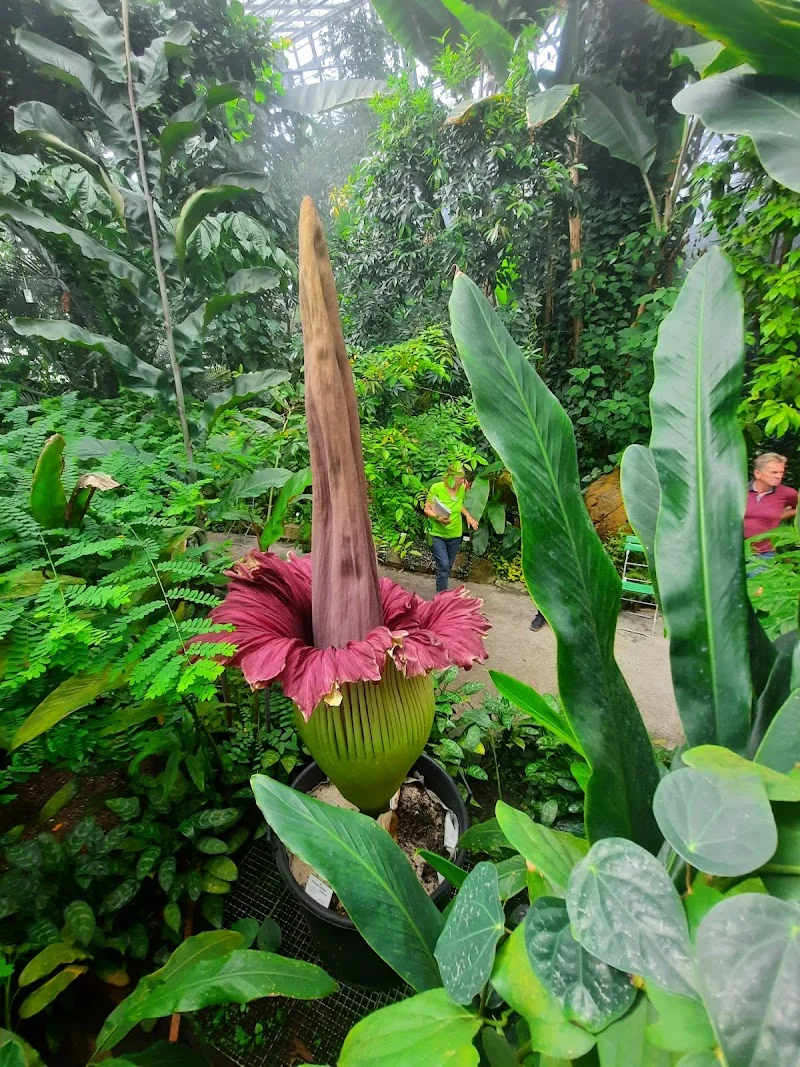
Among the special impressions in the Ecological-Botanical Garden are the plants that one might not immediately associate with a classic city garden. In the greenhouses and presentation areas, tropical spice plants, container plants, medicinal plants, and botanical rarities repeatedly appear, sharpening the view on use and origin. The combination of crop plants and showcase plants is particularly appealing because it bridges the gap between everyday life and research: what we eat, heal, spice, or use decoratively often has a long ecological and cultural history. Such focuses in the Ecological-Botanical Garden are not just decoration but part of the educational work that makes the garden a credible learning place. Extraordinary flowering events such as titan arum blooms are also part of this atmosphere and show that the garden constantly changes throughout the year. Those who enjoy observing nature rather than just passing by will be rewarded here multiple times. ([obg.uni-bayreuth.de](https://www.obg.uni-bayreuth.de/de/gartenbesuch/?utm_source=openai))
Sources:
- Ecological-Botanical Garden - Official Homepage
- Ecological-Botanical Garden - About Us: Tasks & Goals
- Ecological-Botanical Garden - Information for Visitors
- Ecological-Botanical Garden - Contact & Directions
- Ecological-Botanical Garden - Book Tours, Courses, and Projects
- University of Bayreuth - Wild Bees in the Ecological-Botanical Garden
Show moreShow less
Ecological-Botanical Garden | Opening Hours & Directions
The Ecological-Botanical Garden of the University of Bayreuth is much more than a classic showcase for plants. It combines scientific work, teaching, species conservation, and recreation on a site that feels like a small botanical world atlas. On approximately 16 hectares of open space and about 6,000 square meters of greenhouse area, nature-oriented habitats from various climate zones are displayed, and around 12,000 plant species make the tour a dense but easily accessible journey of discovery. Since 1978, the garden has been firmly established as a central scientific institution of the University of Bayreuth and is also open to the public. The free admission makes it attractive not only for tourists but also for students, families, and spontaneous walks. Those seeking a quiet place where education and nature experience meaningfully connect will find an exceptionally strong offering here. ([obg.uni-bayreuth.de](https://www.obg.uni-bayreuth.de/de/ueber_uns/index.html?utm_source=openai))
Opening Hours, Admission, and Visit Planning
Those planning a visit should be aware of the seasonal opening hours, as they change significantly depending on the time of year. From November to February, the open area is accessible Monday to Friday from 8 AM to 4 PM, and on Saturdays, Sundays, and public holidays from 10 AM to 4 PM. From March to October, the times in the open area extend to 8 AM to 7 PM on weekdays and 10 AM to 7 PM on weekends and public holidays. The greenhouses have their own hours year-round: Monday to Friday from 10 AM to 3 PM and on Sundays and public holidays from 10 AM to 4 PM; they are closed on Saturdays. The free admission and clear time slots make planning very easy, as one can decide without purchasing a ticket whether to just take a quick look in a greenhouse or explore several areas in succession. At the same time, the garden is a place where a spontaneous walk can be just as easily realized as a planned family outing or a quiet stop on campus. ([obg.uni-bayreuth.de](https://www.obg.uni-bayreuth.de/de/gartenbesuch/?utm_source=openai))
It is also practical that the garden operates transparently: A webcam allows for a quick look at the current garden weather, and the weather station provides new data every ten minutes. This helps to better coordinate the stay according to temperature, sunlight, or precipitation, which is especially pleasant for children, groups, or a combined outdoor and greenhouse visit. Additionally, Sunday and holiday openings are made possible by the Friends of the Ecological-Botanical Garden Association. This is a nice indication that the garden is not only a university institution but also a regionally supported project. Those who like to travel with a flexible schedule benefit from this mix of fixed opening hours, digital orientation, and the opportunity to explore the grounds in several stages. ([obg.uni-bayreuth.de](https://www.obg.uni-bayreuth.de/de/gartenbesuch/?utm_source=openai))
Directions and Parking at the University of Bayreuth Campus
The Ecological-Botanical Garden is located at Universitätsstraße 30 in 95447 Bayreuth on the campus of the University of Bayreuth. By car, the official route is via the A9, exit Bayreuth South, then towards the university; on the university grounds, you should keep left. The parking spaces are located opposite the garden entrance on the right side, and there are also two designated disabled parking spaces. Those preferring public transport can take line 316 directly from Bayreuth main station to the campus or use lines 306 and 304 from the ZOH to the Universitätsverwaltung stop. The location on campus is pleasantly straightforward, as the garden integrates well into a larger visit to the university grounds or the city. Thus, the journey does not become an obstacle but rather a simple part of the day's planning. ([obg.uni-bayreuth.de](https://www.obg.uni-bayreuth.de/de/kontakt_anfahrt/index.html?utm_source=openai))
Open Area, Greenhouses, and Crop Garden
The Ecological-Botanical Garden covers about 16 hectares and is divided into four stations. These include vegetation areas for Asia, America, and Europe, a 1-hectare crop garden, the greenhouses, and the ecological experimental station. The scale of the greenhouses is impressive: around 3,000 square meters of demonstration houses and another 3,000 square meters for wintering and cultivation. This is complemented by experimental areas for the chairs of biology and geosciences, as well as a lysimeter system and a groundwater basin. These figures show that the garden is not only beautiful but also functionally and scientifically used very intensively. Those interested in ecological relationships quickly realize that here, individual plants do not simply stand next to each other, but that spaces, climate zones, and research questions are consciously interconnected. This clear structure makes the visit understandable, even for those with little botanical knowledge. ([obg.uni-bayreuth.de](https://www.obg.uni-bayreuth.de/de/gartenbesuch/?utm_source=openai))
In terms of content, the diversity is as great as the area. On the tours, one encounters tropical rainforests, Mediterranean plant communities, the prairies and forests of North America, the mountain vegetation of the Himalayas, and the steppes of Central Asia. In the crop garden and thematic exhibitions, plants are also explained with regard to their origin, culinary use, cultural history, and health significance. Those who take their time discover not only names and shapes but also ecological relationships, uses, and adaptations to climate and location. The garden thus conveys in a very vivid way why plants are not only beautiful but also culturally, economically, and ecologically important. For visitors, this creates a tour that offers both aesthetic and substantive value, making it worthwhile for repeated visits. ([obg.uni-bayreuth.de](https://www.obg.uni-bayreuth.de/de/gartenbesuch/fuehrungen/index.html?utm_source=openai))
Research, Teaching, and Species Conservation in the Ecological-Botanical Garden
The scientific mission of the garden is closely linked to the history of the University of Bayreuth. The institution has existed since 1978 and is considered a central scientific institution with a focus on ecology and environment in research and teaching. The focus is on nature-oriented vegetation types from around the world, which are not only presented but also studied. This makes it visible how plants function in communities, what requirements they have for location and climate, and how ecological relationships can be researched in the open field. The Ecological-Botanical Garden is therefore not just a showcase for beautiful flowerbeds, but a real part of university research, whose added value arises from the interplay of collection, experiment, and communication. For the University of Bayreuth, this is a defining characteristic, as science here does not hide behind closed doors but can be directly experienced on the grounds. ([obg.uni-bayreuth.de](https://www.obg.uni-bayreuth.de/de/ueber_uns/index.html?utm_source=openai))
That a botanical garden in Bayreuth is also a valuable habitat for animals is impressively demonstrated by a research example. In a study, 214 wild bee species were recorded in the Ecological-Botanical Garden, which is more than 40 percent of the bee species found in Bavaria. This is more than just a nice footnote: it illustrates that nature-oriented gardens can play an important role in securing biodiversity, especially in an intensively used cultural landscape. For visitors, this makes the difference between a purely aesthetic facility and a living ecosystem. Walking through the garden, one experiences plants not in isolation but always in connection with pollinators, microhabitats, and seasonal changes. This connection between research, species conservation, and vivid nature experience is one of the strongest reasons why the Ecological-Botanical Garden has significance far beyond Bayreuth. ([uni-bayreuth.de](https://www.uni-bayreuth.de/pressemitteilung/wildbienen?utm_source=openai))
Guided Tours, Exhibitions, and Special Events
For many people, the Ecological-Botanical Garden is particularly interesting because of its guided tours, and this is where its strength as an educational place is evident. The public tours introduce different habitats and climate zones, such as tropical rainforests, Mediterranean plant communities, the North American prairies and forests, the mountain vegetation of the Himalayas, or the steppes of Central Asia. There are also special formats such as tours on tropical water plants, evening visits to the greenhouses, or thematic tours focusing on historical figures, medicinal plants, or other botanical topics. The program ensures that even repeat visits do not feel the same, as different plants, questions, and perspectives are the focus each time. So, for those who want to not just look but understand, there is plenty of support here without the garden losing its tranquil atmosphere. This balance of knowledge and relaxation is a large part of its charm. ([obg.uni-bayreuth.de](https://www.obg.uni-bayreuth.de/de/gartenbesuch/fuehrungen/index.html?utm_source=openai))
Those who want to deepen their experience of the garden can rely on informational materials, brochures, and garden plans. This is particularly helpful for school classes, groups, and families, but also for individuals focusing on a specific plant family, a crop area, or an ecological question. Additionally, the Friends of the Ecological-Botanical Garden Association plays an important role, as it supports the opening on Sundays and public holidays and strengthens the garden's presence in the city and region. This creates a mix of university knowledge, civic engagement, and public accessibility that is exemplary in the best sense. Regular visitors quickly notice that the topics change frequently and that the perspective can be broadened with each tour. ([obg.uni-bayreuth.de](https://www.obg.uni-bayreuth.de/de/gartenbesuch/infomaterial/index.html?utm_source=openai))
Accessibility, Garden Rules, and Practical Tips
The garden also scores well in terms of accessibility. The paths in the open area and in the greenhouses are generally or largely suitable for wheelchair users. There are also two accessible restrooms, one in the entrance area and one in the crop garden, as well as two designated parking spaces. For practical purposes, it is also important that visitors should stay on the paths to avoid damaging plants. This may seem obvious, but it is crucial for a nature-oriented garden because many areas house sensitive stocks and scientifically used plants. Those visiting with older relatives, small children, or a group particularly benefit from this clear structure. The garden is thus not only beautiful but also pleasantly manageable and usable in everyday life. ([obg.uni-bayreuth.de](https://www.obg.uni-bayreuth.de/de/gartenbesuch/?utm_source=openai))
For planning a visit, it is worthwhile to tailor the tour to one's own time and interests. Those who only stop by briefly can focus on the greenhouses or the crop garden; those who stay longer experience the transition between open spaces, thematic stations, and protected houses particularly intensely. Since admission is free, it is easy to decide to come back for a short walk or a second round. The garden is therefore suitable not only as a destination for the entire afternoon but also as a spontaneous green break between two appointments on campus or in the city. At the same time, the clear path guidance, the open areas according to the season, and the good accessibility make the grounds a place that can be rediscovered with little effort time and again. ([obg.uni-bayreuth.de](https://www.obg.uni-bayreuth.de/de/gartenbesuch/?utm_source=openai))
Special Plants, Changing Impressions, and Botanical Highlights
Among the special impressions in the Ecological-Botanical Garden are the plants that one might not immediately associate with a classic city garden. In the greenhouses and presentation areas, tropical spice plants, container plants, medicinal plants, and botanical rarities repeatedly appear, sharpening the view on use and origin. The combination of crop plants and showcase plants is particularly appealing because it bridges the gap between everyday life and research: what we eat, heal, spice, or use decoratively often has a long ecological and cultural history. Such focuses in the Ecological-Botanical Garden are not just decoration but part of the educational work that makes the garden a credible learning place. Extraordinary flowering events such as titan arum blooms are also part of this atmosphere and show that the garden constantly changes throughout the year. Those who enjoy observing nature rather than just passing by will be rewarded here multiple times. ([obg.uni-bayreuth.de](https://www.obg.uni-bayreuth.de/de/gartenbesuch/?utm_source=openai))
Sources:
- Ecological-Botanical Garden - Official Homepage
- Ecological-Botanical Garden - About Us: Tasks & Goals
- Ecological-Botanical Garden - Information for Visitors
- Ecological-Botanical Garden - Contact & Directions
- Ecological-Botanical Garden - Book Tours, Courses, and Projects
- University of Bayreuth - Wild Bees in the Ecological-Botanical Garden
Ecological-Botanical Garden | Opening Hours & Directions
The Ecological-Botanical Garden of the University of Bayreuth is much more than a classic showcase for plants. It combines scientific work, teaching, species conservation, and recreation on a site that feels like a small botanical world atlas. On approximately 16 hectares of open space and about 6,000 square meters of greenhouse area, nature-oriented habitats from various climate zones are displayed, and around 12,000 plant species make the tour a dense but easily accessible journey of discovery. Since 1978, the garden has been firmly established as a central scientific institution of the University of Bayreuth and is also open to the public. The free admission makes it attractive not only for tourists but also for students, families, and spontaneous walks. Those seeking a quiet place where education and nature experience meaningfully connect will find an exceptionally strong offering here. ([obg.uni-bayreuth.de](https://www.obg.uni-bayreuth.de/de/ueber_uns/index.html?utm_source=openai))
Opening Hours, Admission, and Visit Planning
Those planning a visit should be aware of the seasonal opening hours, as they change significantly depending on the time of year. From November to February, the open area is accessible Monday to Friday from 8 AM to 4 PM, and on Saturdays, Sundays, and public holidays from 10 AM to 4 PM. From March to October, the times in the open area extend to 8 AM to 7 PM on weekdays and 10 AM to 7 PM on weekends and public holidays. The greenhouses have their own hours year-round: Monday to Friday from 10 AM to 3 PM and on Sundays and public holidays from 10 AM to 4 PM; they are closed on Saturdays. The free admission and clear time slots make planning very easy, as one can decide without purchasing a ticket whether to just take a quick look in a greenhouse or explore several areas in succession. At the same time, the garden is a place where a spontaneous walk can be just as easily realized as a planned family outing or a quiet stop on campus. ([obg.uni-bayreuth.de](https://www.obg.uni-bayreuth.de/de/gartenbesuch/?utm_source=openai))
It is also practical that the garden operates transparently: A webcam allows for a quick look at the current garden weather, and the weather station provides new data every ten minutes. This helps to better coordinate the stay according to temperature, sunlight, or precipitation, which is especially pleasant for children, groups, or a combined outdoor and greenhouse visit. Additionally, Sunday and holiday openings are made possible by the Friends of the Ecological-Botanical Garden Association. This is a nice indication that the garden is not only a university institution but also a regionally supported project. Those who like to travel with a flexible schedule benefit from this mix of fixed opening hours, digital orientation, and the opportunity to explore the grounds in several stages. ([obg.uni-bayreuth.de](https://www.obg.uni-bayreuth.de/de/gartenbesuch/?utm_source=openai))
Directions and Parking at the University of Bayreuth Campus
The Ecological-Botanical Garden is located at Universitätsstraße 30 in 95447 Bayreuth on the campus of the University of Bayreuth. By car, the official route is via the A9, exit Bayreuth South, then towards the university; on the university grounds, you should keep left. The parking spaces are located opposite the garden entrance on the right side, and there are also two designated disabled parking spaces. Those preferring public transport can take line 316 directly from Bayreuth main station to the campus or use lines 306 and 304 from the ZOH to the Universitätsverwaltung stop. The location on campus is pleasantly straightforward, as the garden integrates well into a larger visit to the university grounds or the city. Thus, the journey does not become an obstacle but rather a simple part of the day's planning. ([obg.uni-bayreuth.de](https://www.obg.uni-bayreuth.de/de/kontakt_anfahrt/index.html?utm_source=openai))
Open Area, Greenhouses, and Crop Garden
The Ecological-Botanical Garden covers about 16 hectares and is divided into four stations. These include vegetation areas for Asia, America, and Europe, a 1-hectare crop garden, the greenhouses, and the ecological experimental station. The scale of the greenhouses is impressive: around 3,000 square meters of demonstration houses and another 3,000 square meters for wintering and cultivation. This is complemented by experimental areas for the chairs of biology and geosciences, as well as a lysimeter system and a groundwater basin. These figures show that the garden is not only beautiful but also functionally and scientifically used very intensively. Those interested in ecological relationships quickly realize that here, individual plants do not simply stand next to each other, but that spaces, climate zones, and research questions are consciously interconnected. This clear structure makes the visit understandable, even for those with little botanical knowledge. ([obg.uni-bayreuth.de](https://www.obg.uni-bayreuth.de/de/gartenbesuch/?utm_source=openai))
In terms of content, the diversity is as great as the area. On the tours, one encounters tropical rainforests, Mediterranean plant communities, the prairies and forests of North America, the mountain vegetation of the Himalayas, and the steppes of Central Asia. In the crop garden and thematic exhibitions, plants are also explained with regard to their origin, culinary use, cultural history, and health significance. Those who take their time discover not only names and shapes but also ecological relationships, uses, and adaptations to climate and location. The garden thus conveys in a very vivid way why plants are not only beautiful but also culturally, economically, and ecologically important. For visitors, this creates a tour that offers both aesthetic and substantive value, making it worthwhile for repeated visits. ([obg.uni-bayreuth.de](https://www.obg.uni-bayreuth.de/de/gartenbesuch/fuehrungen/index.html?utm_source=openai))
Research, Teaching, and Species Conservation in the Ecological-Botanical Garden
The scientific mission of the garden is closely linked to the history of the University of Bayreuth. The institution has existed since 1978 and is considered a central scientific institution with a focus on ecology and environment in research and teaching. The focus is on nature-oriented vegetation types from around the world, which are not only presented but also studied. This makes it visible how plants function in communities, what requirements they have for location and climate, and how ecological relationships can be researched in the open field. The Ecological-Botanical Garden is therefore not just a showcase for beautiful flowerbeds, but a real part of university research, whose added value arises from the interplay of collection, experiment, and communication. For the University of Bayreuth, this is a defining characteristic, as science here does not hide behind closed doors but can be directly experienced on the grounds. ([obg.uni-bayreuth.de](https://www.obg.uni-bayreuth.de/de/ueber_uns/index.html?utm_source=openai))
That a botanical garden in Bayreuth is also a valuable habitat for animals is impressively demonstrated by a research example. In a study, 214 wild bee species were recorded in the Ecological-Botanical Garden, which is more than 40 percent of the bee species found in Bavaria. This is more than just a nice footnote: it illustrates that nature-oriented gardens can play an important role in securing biodiversity, especially in an intensively used cultural landscape. For visitors, this makes the difference between a purely aesthetic facility and a living ecosystem. Walking through the garden, one experiences plants not in isolation but always in connection with pollinators, microhabitats, and seasonal changes. This connection between research, species conservation, and vivid nature experience is one of the strongest reasons why the Ecological-Botanical Garden has significance far beyond Bayreuth. ([uni-bayreuth.de](https://www.uni-bayreuth.de/pressemitteilung/wildbienen?utm_source=openai))
Guided Tours, Exhibitions, and Special Events
For many people, the Ecological-Botanical Garden is particularly interesting because of its guided tours, and this is where its strength as an educational place is evident. The public tours introduce different habitats and climate zones, such as tropical rainforests, Mediterranean plant communities, the North American prairies and forests, the mountain vegetation of the Himalayas, or the steppes of Central Asia. There are also special formats such as tours on tropical water plants, evening visits to the greenhouses, or thematic tours focusing on historical figures, medicinal plants, or other botanical topics. The program ensures that even repeat visits do not feel the same, as different plants, questions, and perspectives are the focus each time. So, for those who want to not just look but understand, there is plenty of support here without the garden losing its tranquil atmosphere. This balance of knowledge and relaxation is a large part of its charm. ([obg.uni-bayreuth.de](https://www.obg.uni-bayreuth.de/de/gartenbesuch/fuehrungen/index.html?utm_source=openai))
Those who want to deepen their experience of the garden can rely on informational materials, brochures, and garden plans. This is particularly helpful for school classes, groups, and families, but also for individuals focusing on a specific plant family, a crop area, or an ecological question. Additionally, the Friends of the Ecological-Botanical Garden Association plays an important role, as it supports the opening on Sundays and public holidays and strengthens the garden's presence in the city and region. This creates a mix of university knowledge, civic engagement, and public accessibility that is exemplary in the best sense. Regular visitors quickly notice that the topics change frequently and that the perspective can be broadened with each tour. ([obg.uni-bayreuth.de](https://www.obg.uni-bayreuth.de/de/gartenbesuch/infomaterial/index.html?utm_source=openai))
Accessibility, Garden Rules, and Practical Tips
The garden also scores well in terms of accessibility. The paths in the open area and in the greenhouses are generally or largely suitable for wheelchair users. There are also two accessible restrooms, one in the entrance area and one in the crop garden, as well as two designated parking spaces. For practical purposes, it is also important that visitors should stay on the paths to avoid damaging plants. This may seem obvious, but it is crucial for a nature-oriented garden because many areas house sensitive stocks and scientifically used plants. Those visiting with older relatives, small children, or a group particularly benefit from this clear structure. The garden is thus not only beautiful but also pleasantly manageable and usable in everyday life. ([obg.uni-bayreuth.de](https://www.obg.uni-bayreuth.de/de/gartenbesuch/?utm_source=openai))
For planning a visit, it is worthwhile to tailor the tour to one's own time and interests. Those who only stop by briefly can focus on the greenhouses or the crop garden; those who stay longer experience the transition between open spaces, thematic stations, and protected houses particularly intensely. Since admission is free, it is easy to decide to come back for a short walk or a second round. The garden is therefore suitable not only as a destination for the entire afternoon but also as a spontaneous green break between two appointments on campus or in the city. At the same time, the clear path guidance, the open areas according to the season, and the good accessibility make the grounds a place that can be rediscovered with little effort time and again. ([obg.uni-bayreuth.de](https://www.obg.uni-bayreuth.de/de/gartenbesuch/?utm_source=openai))
Special Plants, Changing Impressions, and Botanical Highlights
Among the special impressions in the Ecological-Botanical Garden are the plants that one might not immediately associate with a classic city garden. In the greenhouses and presentation areas, tropical spice plants, container plants, medicinal plants, and botanical rarities repeatedly appear, sharpening the view on use and origin. The combination of crop plants and showcase plants is particularly appealing because it bridges the gap between everyday life and research: what we eat, heal, spice, or use decoratively often has a long ecological and cultural history. Such focuses in the Ecological-Botanical Garden are not just decoration but part of the educational work that makes the garden a credible learning place. Extraordinary flowering events such as titan arum blooms are also part of this atmosphere and show that the garden constantly changes throughout the year. Those who enjoy observing nature rather than just passing by will be rewarded here multiple times. ([obg.uni-bayreuth.de](https://www.obg.uni-bayreuth.de/de/gartenbesuch/?utm_source=openai))
Sources:
- Ecological-Botanical Garden - Official Homepage
- Ecological-Botanical Garden - About Us: Tasks & Goals
- Ecological-Botanical Garden - Information for Visitors
- Ecological-Botanical Garden - Contact & Directions
- Ecological-Botanical Garden - Book Tours, Courses, and Projects
- University of Bayreuth - Wild Bees in the Ecological-Botanical Garden
Upcoming Events

Chat Round: Off to the South
A free summer afternoon in the green awaits seniors in Bayreuth: Chat round, botanical impulses, and relaxed encounters. #Seniors #Bayreuth

From Reed to Rice: What Grasses Can Do
Discover Bayreuth's green side with a free grass tour in the Ecological-Botanical Garden. From Reed to Rice succinctly brings botany and nature knowledge to the point. #Bayreuth #Botany #Nature

Herb Time: Discovering, Exchanging, Trying Out
Herb Time in the Ecological-Botanical Garden Bayreuth invites seniors to a calm summer afternoon with nature, memory, and exchange. Free, with a small contribution for trying. #Bayreuth #Seniors

A Hike Through Bayreuth's Lively South
Experience Bayreuth's South in a new way: free hike from ÖBG over Röhrensee to Lindenhof. Nature, biodiversity, and urban greenery on 06.09.2026. #Bayreuth
BayPilz: 3rd Bayreuth Mushroom Days
The program provides insight into the fascinating ways of life of fungi with exhibitions, guided tours, and workshops.
Frequently Asked Questions
Reviews
Thomas Mallek
13. May 2025
Very nice botanical garden of the university of Bayreuth. It's free and really interesting. Also a great place to bring your kids (especially if they love nature and all kinds of plants).
Аліна Осадча
12. January 2026
The Ecological Botanical Garden in Dresden is a true oasis of lush greenery in the middle of the city, which gives a sense of peace and relaxation for the soul. Visitors appreciate it for its wide variety of plants from all over the world, including huge collections of cacti and orchids in the greenhouses. It is a place that inspires pleasant walks and allows you to immerse yourself in the world of nature, forgetting about daily worries.
S Davis
13. August 2025
Really nice botanical garden. Unfortunately not much blooms in August when I was there. I recommend going in Spring.
Jonas
18. July 2021
Really nice experience. It is free, open air, with a wide variety of trees, flowers and cacti. Very relaxing and with enough resting benches along the many ways, you can easily get lost and forget your worries.
A Z
16. August 2022
I have not finished my walking through the whole garden meanwhile, but it is a very nice and calm place. I really love such places.