
Bayreuth
Universitätsstraße 30, 95447 Bayreuth, Deutschland
FZA University of Bayreuth | Events & Tickets
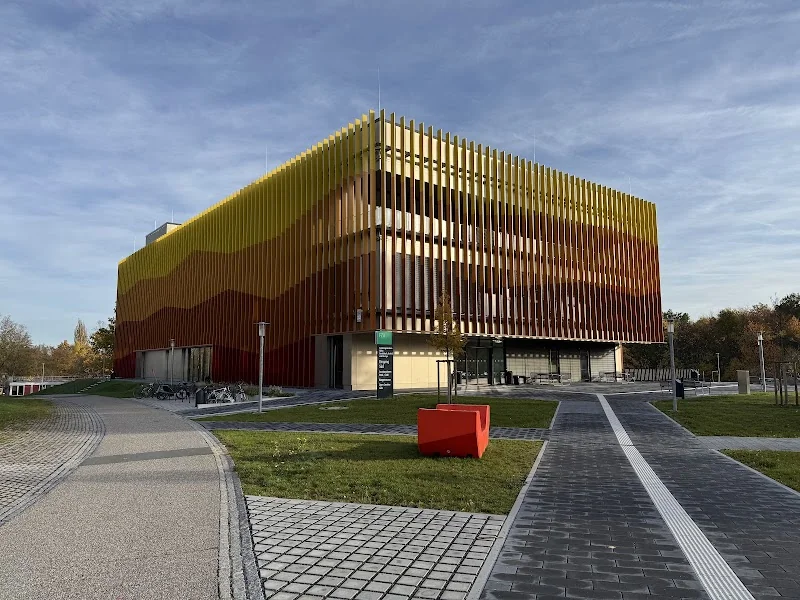
The Research Center for African Studies, abbreviated as FZA, is located on the campus of the University of Bayreuth, where research, teaching, exchange, and event formats visibly converge. Officially, the building is referred to as the Research Center for Society, Technology, and Ecology in Africa; however, in daily perception, the abbreviation FZA stands for a clearly recognizable location that unites African studies, international cooperation, and scientific infrastructure under one roof. On the university's website, the rooms, uses, and areas of the building are documented, as well as the fact that the building has been in operation since 2025. The FZA is located at Universitätsstraße 30 in 95447 Bayreuth and is part of the campus where the university organizes its research on Africa. For visitors, it serves as a research site, event venue, and point of contact for scientific networks. Those looking for events, tickets, directions, parking, or floor plans will find a building that meets these search intentions: it offers public appointments, bookable rooms, and an infrastructure designed not only for internal work but also for open encounters. ([ias.uni-bayreuth.de](https://www.ias.uni-bayreuth.de/de/))
For SEO considerations, the search terms surrounding the FZA primarily highlight four major thematic areas: events and public appointments, directions and parking, rooms and capacities, as well as practical questions regarding tickets and booking. These four areas also shape the public representation of the center. The University of Bayreuth describes the building as home to the Institute for African Studies, the Bayreuth International Graduate School of African Studies, and the Excellence Cluster Africa Multiple. Additionally, there is a gallery space for changing exhibitions, Open Creative Labs, media labs, and a congress hall, making the FZA suitable not only for research but also for lectures, exhibitions, and exchanges. This mix makes the building particularly interesting for search queries: those wishing to attend an event are more likely to look for programs and access; those planning an event themselves seek information on halls, technology, and room allocation; newcomers need clear guidance on buses, cars, and parking. The following presentation builds on exactly this. ([uni-bayreuth.de](https://www.uni-bayreuth.de/fza))
Events, Lectures, and Public Appointments at the FZA
The FZA is not only a research building but also a stage for public science communication. The official pages confirm that the building was used for an open house day with tours, exhibitions, hands-on activities, and author readings. Interactive stations focused on topics such as migration, conflicts, religious diversity, technologies, and ecology in the African context. This variety shows that the FZA can host events in several formats: compact and publicly accessible, scientifically grounded, and simultaneously low-threshold enough for a broad audience. For the search intent of events, this is particularly relevant because the FZA is not limited to a single event format but represents a house for various types of encounters. Therefore, those searching for the program should expect a mix of lectures, tours, exhibitions, and discussion formats that depend on the context of each appointment. ([uni-bayreuth.de](https://www.uni-bayreuth.de/50jahre/impressionen/fza-tag-der-offenen-tuer))
A second important format is the New Year Lecture of the Africa Multiple Cluster of Excellence, which took place in 2026 in the FZA Congress Hall and online simultaneously. The official announcement describes it as the public kickoff of the annual program with renowned guests and professional impulses, thus as an event that regularly integrates the center into international research and communication work. This blend of in-person events and digital transmission is characteristic of a modern research center. It shows that the FZA is not only a space for internal meetings but also for public formats with regional reach. Therefore, those searching for events at FZA Bayreuth will not find a classic concert or trade fair location but rather an academic venue with a scientific focus, whose programs can vary significantly depending on the occasion. ([africamultiple.uni-bayreuth.de](https://www.africamultiple.uni-bayreuth.de/en/Important-Dates/2026-01-22_NYL/index.html))
Additionally, the special role of the gallery space for changing exhibitions of the Iwalewahaus is noteworthy. The university explicitly names this space as a use of the building, and an official contribution describes an exhibition on the history of African studies that was opened in the exhibition space within the FZA. This is an important indication for search logic, as many users associate events at a location not only with lectures but also with exhibitions, readings, or curated shows. This is precisely where the FZA showcases its strength: it is not an isolated lecture hall building but a multifunctional research center with cultural connectivity. For visitors, this results in a diverse event profile that, in conjunction with the Institute for African Studies, Africa Multiple, and BIGSAS, continually produces new appointments. ([uni-bayreuth.de](https://www.uni-bayreuth.de/fza))
Directions, Address, and Parking on the Campus of the University of Bayreuth
The official visiting address of the FZA is Universitätsstraße 30, 95447 Bayreuth. The university describes the campus as located on the southern outskirts of the city, about 900 meters from the Bayreuth-Süd exit of the A9. Those arriving by car should follow the signs to the university after exiting Bayreuth-Süd; after the main entrance, it is explicitly recommended to keep right towards parking lot P1. For many visitors, this is the most important orientation, as the FZA is part of the campus and thus fits into the general traffic management of the university. Therefore, those searching for directions to FZA or parking at FZA will land on the official campus information of the university and not on an isolated building entrance. ([ias.uni-bayreuth.de](https://www.ias.uni-bayreuth.de/de/kontakt/))
The location is also well connected by public transport. The university mentions bus line 316 with limited trips between the main train station and the campus, as well as lines 304, 306, and 326 via the central bus stop to the Mensa stop. Additionally, there are stops on campus at Mensa, Geosciences, and University Administration. For orientation on-site, the university refers to the campus map and signage towards the central library. This is important in practice because visitors receive not only an address but also a clear movement sequence: arrive, use the campus axes, head to the central library, and then pay attention to the signage. Those with little local knowledge can reliably find the location this way without having to rely on unofficial hints. ([ub.uni-bayreuth.de](https://www.ub.uni-bayreuth.de/de/infos_zur_ub/anfahrtsbeschreibung/index.html))
When it comes to parking, the campus logic is crucial. The university directly names parking lot P1 as the first reference point after the main entrance on its directions page, and from the location of the FZA on the campus, it can be inferred that visitors should align their parking planning with the general campus system. Specific reserved parking spaces directly at the FZA are not described as standard advice on the cited pages. Therefore, the best recommendation is to use the official university directions, arrive early, and pay attention to campus signs and current notices. Those traveling with limited mobility or needing a specific entrance should also consider the campus map and the university's current building logic, as the FZA is integrated into the general campus infrastructure. ([ub.uni-bayreuth.de](https://www.ub.uni-bayreuth.de/de/infos_zur_ub/anfahrtsbeschreibung/index.html))
Rooms, Floor Plan, and Capacity in the Research Center
The official FZA page provides unusually precise room data, which is particularly valuable for the search intent of seating plans, floor plans, or capacities. Four seminar rooms on the ground floor are mentioned: S145 with 49 square meters and 14 seats, S146 with 54 square meters and 21 seats, S147 with 57 square meters and 20 seats, and S148 with 63 square meters and 21 seats. This is complemented by the conference room U.01 in the basement with 244 square meters and 249 seats. It is clear that the FZA not only offers smaller meeting rooms but also a larger congress hall for lectures, conferences, and public events. For SEO, this combination is relevant because users are looking for a place that can accommodate both small workshops and larger event formats. ([uni-bayreuth.de](https://www.uni-bayreuth.de/fza))
Equally important is the booking logic. The university explicitly points out that the mentioned lecture halls and seminar rooms can only be booked through the central room allocation. This means: the FZA is not a freely bookable event space in the simple sense but part of a centrally managed university room organization. This is helpful for planners because it clarifies responsibilities and provides a defined contact for allocations. The official page names the department I/6 as well as specific contacts and the email address for room allocation. Therefore, those wishing to hold a symposium, reading, or workshop format at the FZA must go through the formal process via the university. This makes the building attractive for professional event planning because capacity, responsibility, and technical infrastructure are transparently named. ([uni-bayreuth.de](https://www.uni-bayreuth.de/fza))
Technically, the location is also designed for event suitability. The university refers to a multimedia database for the equipment of lecture halls, seminar, and conference rooms, including network connections. Additionally, the official FZA page lists the uses of the building as the Institute for African Studies, BIGSAS, Africa Multiple, a gallery space for changing exhibitions, Open Creative Labs, and media labs of media studies. This shows that the building is designed for different usage profiles: scientific seminars, interactive formats, cultural exhibitions, and media practical work. For visitors, this means that an appointment at the FZA does not automatically look like a standard lecture but can be organized very differently depending on the room and format. This versatility makes the location strong from the perspective of search engines and users. ([uni-bayreuth.de](https://www.uni-bayreuth.de/fza))
History, Construction, and Special Features of the FZA
The FZA is a relatively new component of the University of Bayreuth. The official opening took place on May 14, 2025, and several university pages emphasize that the building was constructed in just two years. The university describes it as a new building on campus, financed by the federal and state governments, which provides space for all research and training activities related to Africa at the University of Bayreuth. Furthermore, the FZA is described as the first dedicated research building of the university. This is important for the history of the location because it establishes a new physical focus for African research that spatially consolidates the already existing structures. ([uni-bayreuth.de](https://www.uni-bayreuth.de/uninotizen-48-2025-eroeffnung-fza))
In terms of content, the FZA connects to a long tradition of Bayreuth African studies. The university and the Institute for African Studies describe African research as a constant since the founding of the University of Bayreuth in 1975 and as a profile area with around 45 professorships. In this context, the FZA should not be understood as an isolated new building but as a visible densification of a developed scientific landscape. It is a unit of the IAS, supports the establishment of a sustainable research infrastructure, and connects the university with partners in Germany, Africa, and worldwide. This gives the building a special significance: it is not only a place for current research but also a sign of how strongly the topic of Africa is anchored at the university. ([ias.uni-bayreuth.de](https://www.ias.uni-bayreuth.de/de/))
Architecturally and functionally, the building is designed for collaboration. The official texts emphasize that tours, open stations, and the architecture itself support collaborative research. On the open house day, visitors could not only view rooms but also experience technical possibilities, media areas, and the art-related design of the building. Additionally, there are interpreter booths, a media lab, and a recording studio for film productions, as well as Open Creative Labs, which extend the character of the building far beyond classic seminar architecture. This is one of the most important unique selling points: the FZA connects research, communication, and production in a form that is particularly suitable for interdisciplinary African studies. It is thus not only a place for content but also a place for new forms of working and exhibiting. ([uni-bayreuth.de](https://www.uni-bayreuth.de/uninotizen-48-2025-eroeffnung-fza))
Tickets, Booking, and Use for Research and the Public
Those searching for tickets for the FZA usually do not mean admission to a classic museum or concert hall but access to events, tours, or lectures. However, no regular ticket sales for the building itself are described on the official pages. Instead, the sources show a different pattern: public formats are announced as open house days, public lectures, or exhibitions, sometimes requiring registration or RSVP, while room usage occurs internally through the central room allocation. This leads to the search intent for tickets, indicating that the FZA operates more through appointment announcements, event pages, and registration information than through a fixed ticket office. This is an important differentiation as it clarifies expectations for the location and avoids misunderstandings. ([uni-bayreuth.de](https://www.uni-bayreuth.de/50jahre/impressionen/fza-tag-der-offenen-tuer))
For visitors, this means: when a public appointment takes place at the FZA, one should always check the respective event page. There it will state whether registration is required, whether admission is free, or whether only a limited number of participants is planned. This is particularly evident in the New Year Lecture, described as the public kickoff of the cluster's annual program, and in the open house event, which was aimed at all interested parties. For organizers, it applies: those planning a lecture, workshop, or reading at the FZA must go through the formal process via room allocation and consider the technical equipment of the building. This logic is relevant for search engines as it takes tickets as a user interest seriously without attributing a non-existent standard ticket system to the location. ([africamultiple.uni-bayreuth.de](https://www.africamultiple.uni-bayreuth.de/en/Important-Dates/2026-01-22_NYL/index.html))
In practical use, the FZA is thus a location with an academic focus and public openness. It is not a place for arbitrary mass events but a deliberately deployed campus component for research, dialogue, and selected cultural and scientific formats. Those interested in the program should particularly monitor the pages of the Institute for African Studies, Africa Multiple, and the University of Bayreuth, as relevant dates will appear there. Those planning a visit can orient themselves by the campus address. Those looking for a room must use the central allocation. And those simply wanting to understand what makes the FZA special will find its mix of research, exhibition space, media competence, and collaborative architecture to be the real added value. Thus, the FZA is not just a new building for Bayreuth but a precisely positioned scientific meeting point with an impact far beyond the campus. ([ias.uni-bayreuth.de](https://www.ias.uni-bayreuth.de/de/))
Sources:
- University of Bayreuth - Research Center Africa
- Institute for African Studies (IAS) - University of Bayreuth
- University of Bayreuth - Opening of the new Research Center for African Studies
- University of Bayreuth - Directions & Surroundings
- Institute for African Studies - Contact
- University of Bayreuth - Open House Day at the FZA
- Africa Multiple - New Year Lecture 2026
Show moreShow less
FZA University of Bayreuth | Events & Tickets
The Research Center for African Studies, abbreviated as FZA, is located on the campus of the University of Bayreuth, where research, teaching, exchange, and event formats visibly converge. Officially, the building is referred to as the Research Center for Society, Technology, and Ecology in Africa; however, in daily perception, the abbreviation FZA stands for a clearly recognizable location that unites African studies, international cooperation, and scientific infrastructure under one roof. On the university's website, the rooms, uses, and areas of the building are documented, as well as the fact that the building has been in operation since 2025. The FZA is located at Universitätsstraße 30 in 95447 Bayreuth and is part of the campus where the university organizes its research on Africa. For visitors, it serves as a research site, event venue, and point of contact for scientific networks. Those looking for events, tickets, directions, parking, or floor plans will find a building that meets these search intentions: it offers public appointments, bookable rooms, and an infrastructure designed not only for internal work but also for open encounters. ([ias.uni-bayreuth.de](https://www.ias.uni-bayreuth.de/de/))
For SEO considerations, the search terms surrounding the FZA primarily highlight four major thematic areas: events and public appointments, directions and parking, rooms and capacities, as well as practical questions regarding tickets and booking. These four areas also shape the public representation of the center. The University of Bayreuth describes the building as home to the Institute for African Studies, the Bayreuth International Graduate School of African Studies, and the Excellence Cluster Africa Multiple. Additionally, there is a gallery space for changing exhibitions, Open Creative Labs, media labs, and a congress hall, making the FZA suitable not only for research but also for lectures, exhibitions, and exchanges. This mix makes the building particularly interesting for search queries: those wishing to attend an event are more likely to look for programs and access; those planning an event themselves seek information on halls, technology, and room allocation; newcomers need clear guidance on buses, cars, and parking. The following presentation builds on exactly this. ([uni-bayreuth.de](https://www.uni-bayreuth.de/fza))
Events, Lectures, and Public Appointments at the FZA
The FZA is not only a research building but also a stage for public science communication. The official pages confirm that the building was used for an open house day with tours, exhibitions, hands-on activities, and author readings. Interactive stations focused on topics such as migration, conflicts, religious diversity, technologies, and ecology in the African context. This variety shows that the FZA can host events in several formats: compact and publicly accessible, scientifically grounded, and simultaneously low-threshold enough for a broad audience. For the search intent of events, this is particularly relevant because the FZA is not limited to a single event format but represents a house for various types of encounters. Therefore, those searching for the program should expect a mix of lectures, tours, exhibitions, and discussion formats that depend on the context of each appointment. ([uni-bayreuth.de](https://www.uni-bayreuth.de/50jahre/impressionen/fza-tag-der-offenen-tuer))
A second important format is the New Year Lecture of the Africa Multiple Cluster of Excellence, which took place in 2026 in the FZA Congress Hall and online simultaneously. The official announcement describes it as the public kickoff of the annual program with renowned guests and professional impulses, thus as an event that regularly integrates the center into international research and communication work. This blend of in-person events and digital transmission is characteristic of a modern research center. It shows that the FZA is not only a space for internal meetings but also for public formats with regional reach. Therefore, those searching for events at FZA Bayreuth will not find a classic concert or trade fair location but rather an academic venue with a scientific focus, whose programs can vary significantly depending on the occasion. ([africamultiple.uni-bayreuth.de](https://www.africamultiple.uni-bayreuth.de/en/Important-Dates/2026-01-22_NYL/index.html))
Additionally, the special role of the gallery space for changing exhibitions of the Iwalewahaus is noteworthy. The university explicitly names this space as a use of the building, and an official contribution describes an exhibition on the history of African studies that was opened in the exhibition space within the FZA. This is an important indication for search logic, as many users associate events at a location not only with lectures but also with exhibitions, readings, or curated shows. This is precisely where the FZA showcases its strength: it is not an isolated lecture hall building but a multifunctional research center with cultural connectivity. For visitors, this results in a diverse event profile that, in conjunction with the Institute for African Studies, Africa Multiple, and BIGSAS, continually produces new appointments. ([uni-bayreuth.de](https://www.uni-bayreuth.de/fza))
Directions, Address, and Parking on the Campus of the University of Bayreuth
The official visiting address of the FZA is Universitätsstraße 30, 95447 Bayreuth. The university describes the campus as located on the southern outskirts of the city, about 900 meters from the Bayreuth-Süd exit of the A9. Those arriving by car should follow the signs to the university after exiting Bayreuth-Süd; after the main entrance, it is explicitly recommended to keep right towards parking lot P1. For many visitors, this is the most important orientation, as the FZA is part of the campus and thus fits into the general traffic management of the university. Therefore, those searching for directions to FZA or parking at FZA will land on the official campus information of the university and not on an isolated building entrance. ([ias.uni-bayreuth.de](https://www.ias.uni-bayreuth.de/de/kontakt/))
The location is also well connected by public transport. The university mentions bus line 316 with limited trips between the main train station and the campus, as well as lines 304, 306, and 326 via the central bus stop to the Mensa stop. Additionally, there are stops on campus at Mensa, Geosciences, and University Administration. For orientation on-site, the university refers to the campus map and signage towards the central library. This is important in practice because visitors receive not only an address but also a clear movement sequence: arrive, use the campus axes, head to the central library, and then pay attention to the signage. Those with little local knowledge can reliably find the location this way without having to rely on unofficial hints. ([ub.uni-bayreuth.de](https://www.ub.uni-bayreuth.de/de/infos_zur_ub/anfahrtsbeschreibung/index.html))
When it comes to parking, the campus logic is crucial. The university directly names parking lot P1 as the first reference point after the main entrance on its directions page, and from the location of the FZA on the campus, it can be inferred that visitors should align their parking planning with the general campus system. Specific reserved parking spaces directly at the FZA are not described as standard advice on the cited pages. Therefore, the best recommendation is to use the official university directions, arrive early, and pay attention to campus signs and current notices. Those traveling with limited mobility or needing a specific entrance should also consider the campus map and the university's current building logic, as the FZA is integrated into the general campus infrastructure. ([ub.uni-bayreuth.de](https://www.ub.uni-bayreuth.de/de/infos_zur_ub/anfahrtsbeschreibung/index.html))
Rooms, Floor Plan, and Capacity in the Research Center
The official FZA page provides unusually precise room data, which is particularly valuable for the search intent of seating plans, floor plans, or capacities. Four seminar rooms on the ground floor are mentioned: S145 with 49 square meters and 14 seats, S146 with 54 square meters and 21 seats, S147 with 57 square meters and 20 seats, and S148 with 63 square meters and 21 seats. This is complemented by the conference room U.01 in the basement with 244 square meters and 249 seats. It is clear that the FZA not only offers smaller meeting rooms but also a larger congress hall for lectures, conferences, and public events. For SEO, this combination is relevant because users are looking for a place that can accommodate both small workshops and larger event formats. ([uni-bayreuth.de](https://www.uni-bayreuth.de/fza))
Equally important is the booking logic. The university explicitly points out that the mentioned lecture halls and seminar rooms can only be booked through the central room allocation. This means: the FZA is not a freely bookable event space in the simple sense but part of a centrally managed university room organization. This is helpful for planners because it clarifies responsibilities and provides a defined contact for allocations. The official page names the department I/6 as well as specific contacts and the email address for room allocation. Therefore, those wishing to hold a symposium, reading, or workshop format at the FZA must go through the formal process via the university. This makes the building attractive for professional event planning because capacity, responsibility, and technical infrastructure are transparently named. ([uni-bayreuth.de](https://www.uni-bayreuth.de/fza))
Technically, the location is also designed for event suitability. The university refers to a multimedia database for the equipment of lecture halls, seminar, and conference rooms, including network connections. Additionally, the official FZA page lists the uses of the building as the Institute for African Studies, BIGSAS, Africa Multiple, a gallery space for changing exhibitions, Open Creative Labs, and media labs of media studies. This shows that the building is designed for different usage profiles: scientific seminars, interactive formats, cultural exhibitions, and media practical work. For visitors, this means that an appointment at the FZA does not automatically look like a standard lecture but can be organized very differently depending on the room and format. This versatility makes the location strong from the perspective of search engines and users. ([uni-bayreuth.de](https://www.uni-bayreuth.de/fza))
History, Construction, and Special Features of the FZA
The FZA is a relatively new component of the University of Bayreuth. The official opening took place on May 14, 2025, and several university pages emphasize that the building was constructed in just two years. The university describes it as a new building on campus, financed by the federal and state governments, which provides space for all research and training activities related to Africa at the University of Bayreuth. Furthermore, the FZA is described as the first dedicated research building of the university. This is important for the history of the location because it establishes a new physical focus for African research that spatially consolidates the already existing structures. ([uni-bayreuth.de](https://www.uni-bayreuth.de/uninotizen-48-2025-eroeffnung-fza))
In terms of content, the FZA connects to a long tradition of Bayreuth African studies. The university and the Institute for African Studies describe African research as a constant since the founding of the University of Bayreuth in 1975 and as a profile area with around 45 professorships. In this context, the FZA should not be understood as an isolated new building but as a visible densification of a developed scientific landscape. It is a unit of the IAS, supports the establishment of a sustainable research infrastructure, and connects the university with partners in Germany, Africa, and worldwide. This gives the building a special significance: it is not only a place for current research but also a sign of how strongly the topic of Africa is anchored at the university. ([ias.uni-bayreuth.de](https://www.ias.uni-bayreuth.de/de/))
Architecturally and functionally, the building is designed for collaboration. The official texts emphasize that tours, open stations, and the architecture itself support collaborative research. On the open house day, visitors could not only view rooms but also experience technical possibilities, media areas, and the art-related design of the building. Additionally, there are interpreter booths, a media lab, and a recording studio for film productions, as well as Open Creative Labs, which extend the character of the building far beyond classic seminar architecture. This is one of the most important unique selling points: the FZA connects research, communication, and production in a form that is particularly suitable for interdisciplinary African studies. It is thus not only a place for content but also a place for new forms of working and exhibiting. ([uni-bayreuth.de](https://www.uni-bayreuth.de/uninotizen-48-2025-eroeffnung-fza))
Tickets, Booking, and Use for Research and the Public
Those searching for tickets for the FZA usually do not mean admission to a classic museum or concert hall but access to events, tours, or lectures. However, no regular ticket sales for the building itself are described on the official pages. Instead, the sources show a different pattern: public formats are announced as open house days, public lectures, or exhibitions, sometimes requiring registration or RSVP, while room usage occurs internally through the central room allocation. This leads to the search intent for tickets, indicating that the FZA operates more through appointment announcements, event pages, and registration information than through a fixed ticket office. This is an important differentiation as it clarifies expectations for the location and avoids misunderstandings. ([uni-bayreuth.de](https://www.uni-bayreuth.de/50jahre/impressionen/fza-tag-der-offenen-tuer))
For visitors, this means: when a public appointment takes place at the FZA, one should always check the respective event page. There it will state whether registration is required, whether admission is free, or whether only a limited number of participants is planned. This is particularly evident in the New Year Lecture, described as the public kickoff of the cluster's annual program, and in the open house event, which was aimed at all interested parties. For organizers, it applies: those planning a lecture, workshop, or reading at the FZA must go through the formal process via room allocation and consider the technical equipment of the building. This logic is relevant for search engines as it takes tickets as a user interest seriously without attributing a non-existent standard ticket system to the location. ([africamultiple.uni-bayreuth.de](https://www.africamultiple.uni-bayreuth.de/en/Important-Dates/2026-01-22_NYL/index.html))
In practical use, the FZA is thus a location with an academic focus and public openness. It is not a place for arbitrary mass events but a deliberately deployed campus component for research, dialogue, and selected cultural and scientific formats. Those interested in the program should particularly monitor the pages of the Institute for African Studies, Africa Multiple, and the University of Bayreuth, as relevant dates will appear there. Those planning a visit can orient themselves by the campus address. Those looking for a room must use the central allocation. And those simply wanting to understand what makes the FZA special will find its mix of research, exhibition space, media competence, and collaborative architecture to be the real added value. Thus, the FZA is not just a new building for Bayreuth but a precisely positioned scientific meeting point with an impact far beyond the campus. ([ias.uni-bayreuth.de](https://www.ias.uni-bayreuth.de/de/))
Sources:
- University of Bayreuth - Research Center Africa
- Institute for African Studies (IAS) - University of Bayreuth
- University of Bayreuth - Opening of the new Research Center for African Studies
- University of Bayreuth - Directions & Surroundings
- Institute for African Studies - Contact
- University of Bayreuth - Open House Day at the FZA
- Africa Multiple - New Year Lecture 2026
FZA University of Bayreuth | Events & Tickets
The Research Center for African Studies, abbreviated as FZA, is located on the campus of the University of Bayreuth, where research, teaching, exchange, and event formats visibly converge. Officially, the building is referred to as the Research Center for Society, Technology, and Ecology in Africa; however, in daily perception, the abbreviation FZA stands for a clearly recognizable location that unites African studies, international cooperation, and scientific infrastructure under one roof. On the university's website, the rooms, uses, and areas of the building are documented, as well as the fact that the building has been in operation since 2025. The FZA is located at Universitätsstraße 30 in 95447 Bayreuth and is part of the campus where the university organizes its research on Africa. For visitors, it serves as a research site, event venue, and point of contact for scientific networks. Those looking for events, tickets, directions, parking, or floor plans will find a building that meets these search intentions: it offers public appointments, bookable rooms, and an infrastructure designed not only for internal work but also for open encounters. ([ias.uni-bayreuth.de](https://www.ias.uni-bayreuth.de/de/))
For SEO considerations, the search terms surrounding the FZA primarily highlight four major thematic areas: events and public appointments, directions and parking, rooms and capacities, as well as practical questions regarding tickets and booking. These four areas also shape the public representation of the center. The University of Bayreuth describes the building as home to the Institute for African Studies, the Bayreuth International Graduate School of African Studies, and the Excellence Cluster Africa Multiple. Additionally, there is a gallery space for changing exhibitions, Open Creative Labs, media labs, and a congress hall, making the FZA suitable not only for research but also for lectures, exhibitions, and exchanges. This mix makes the building particularly interesting for search queries: those wishing to attend an event are more likely to look for programs and access; those planning an event themselves seek information on halls, technology, and room allocation; newcomers need clear guidance on buses, cars, and parking. The following presentation builds on exactly this. ([uni-bayreuth.de](https://www.uni-bayreuth.de/fza))
Events, Lectures, and Public Appointments at the FZA
The FZA is not only a research building but also a stage for public science communication. The official pages confirm that the building was used for an open house day with tours, exhibitions, hands-on activities, and author readings. Interactive stations focused on topics such as migration, conflicts, religious diversity, technologies, and ecology in the African context. This variety shows that the FZA can host events in several formats: compact and publicly accessible, scientifically grounded, and simultaneously low-threshold enough for a broad audience. For the search intent of events, this is particularly relevant because the FZA is not limited to a single event format but represents a house for various types of encounters. Therefore, those searching for the program should expect a mix of lectures, tours, exhibitions, and discussion formats that depend on the context of each appointment. ([uni-bayreuth.de](https://www.uni-bayreuth.de/50jahre/impressionen/fza-tag-der-offenen-tuer))
A second important format is the New Year Lecture of the Africa Multiple Cluster of Excellence, which took place in 2026 in the FZA Congress Hall and online simultaneously. The official announcement describes it as the public kickoff of the annual program with renowned guests and professional impulses, thus as an event that regularly integrates the center into international research and communication work. This blend of in-person events and digital transmission is characteristic of a modern research center. It shows that the FZA is not only a space for internal meetings but also for public formats with regional reach. Therefore, those searching for events at FZA Bayreuth will not find a classic concert or trade fair location but rather an academic venue with a scientific focus, whose programs can vary significantly depending on the occasion. ([africamultiple.uni-bayreuth.de](https://www.africamultiple.uni-bayreuth.de/en/Important-Dates/2026-01-22_NYL/index.html))
Additionally, the special role of the gallery space for changing exhibitions of the Iwalewahaus is noteworthy. The university explicitly names this space as a use of the building, and an official contribution describes an exhibition on the history of African studies that was opened in the exhibition space within the FZA. This is an important indication for search logic, as many users associate events at a location not only with lectures but also with exhibitions, readings, or curated shows. This is precisely where the FZA showcases its strength: it is not an isolated lecture hall building but a multifunctional research center with cultural connectivity. For visitors, this results in a diverse event profile that, in conjunction with the Institute for African Studies, Africa Multiple, and BIGSAS, continually produces new appointments. ([uni-bayreuth.de](https://www.uni-bayreuth.de/fza))
Directions, Address, and Parking on the Campus of the University of Bayreuth
The official visiting address of the FZA is Universitätsstraße 30, 95447 Bayreuth. The university describes the campus as located on the southern outskirts of the city, about 900 meters from the Bayreuth-Süd exit of the A9. Those arriving by car should follow the signs to the university after exiting Bayreuth-Süd; after the main entrance, it is explicitly recommended to keep right towards parking lot P1. For many visitors, this is the most important orientation, as the FZA is part of the campus and thus fits into the general traffic management of the university. Therefore, those searching for directions to FZA or parking at FZA will land on the official campus information of the university and not on an isolated building entrance. ([ias.uni-bayreuth.de](https://www.ias.uni-bayreuth.de/de/kontakt/))
The location is also well connected by public transport. The university mentions bus line 316 with limited trips between the main train station and the campus, as well as lines 304, 306, and 326 via the central bus stop to the Mensa stop. Additionally, there are stops on campus at Mensa, Geosciences, and University Administration. For orientation on-site, the university refers to the campus map and signage towards the central library. This is important in practice because visitors receive not only an address but also a clear movement sequence: arrive, use the campus axes, head to the central library, and then pay attention to the signage. Those with little local knowledge can reliably find the location this way without having to rely on unofficial hints. ([ub.uni-bayreuth.de](https://www.ub.uni-bayreuth.de/de/infos_zur_ub/anfahrtsbeschreibung/index.html))
When it comes to parking, the campus logic is crucial. The university directly names parking lot P1 as the first reference point after the main entrance on its directions page, and from the location of the FZA on the campus, it can be inferred that visitors should align their parking planning with the general campus system. Specific reserved parking spaces directly at the FZA are not described as standard advice on the cited pages. Therefore, the best recommendation is to use the official university directions, arrive early, and pay attention to campus signs and current notices. Those traveling with limited mobility or needing a specific entrance should also consider the campus map and the university's current building logic, as the FZA is integrated into the general campus infrastructure. ([ub.uni-bayreuth.de](https://www.ub.uni-bayreuth.de/de/infos_zur_ub/anfahrtsbeschreibung/index.html))
Rooms, Floor Plan, and Capacity in the Research Center
The official FZA page provides unusually precise room data, which is particularly valuable for the search intent of seating plans, floor plans, or capacities. Four seminar rooms on the ground floor are mentioned: S145 with 49 square meters and 14 seats, S146 with 54 square meters and 21 seats, S147 with 57 square meters and 20 seats, and S148 with 63 square meters and 21 seats. This is complemented by the conference room U.01 in the basement with 244 square meters and 249 seats. It is clear that the FZA not only offers smaller meeting rooms but also a larger congress hall for lectures, conferences, and public events. For SEO, this combination is relevant because users are looking for a place that can accommodate both small workshops and larger event formats. ([uni-bayreuth.de](https://www.uni-bayreuth.de/fza))
Equally important is the booking logic. The university explicitly points out that the mentioned lecture halls and seminar rooms can only be booked through the central room allocation. This means: the FZA is not a freely bookable event space in the simple sense but part of a centrally managed university room organization. This is helpful for planners because it clarifies responsibilities and provides a defined contact for allocations. The official page names the department I/6 as well as specific contacts and the email address for room allocation. Therefore, those wishing to hold a symposium, reading, or workshop format at the FZA must go through the formal process via the university. This makes the building attractive for professional event planning because capacity, responsibility, and technical infrastructure are transparently named. ([uni-bayreuth.de](https://www.uni-bayreuth.de/fza))
Technically, the location is also designed for event suitability. The university refers to a multimedia database for the equipment of lecture halls, seminar, and conference rooms, including network connections. Additionally, the official FZA page lists the uses of the building as the Institute for African Studies, BIGSAS, Africa Multiple, a gallery space for changing exhibitions, Open Creative Labs, and media labs of media studies. This shows that the building is designed for different usage profiles: scientific seminars, interactive formats, cultural exhibitions, and media practical work. For visitors, this means that an appointment at the FZA does not automatically look like a standard lecture but can be organized very differently depending on the room and format. This versatility makes the location strong from the perspective of search engines and users. ([uni-bayreuth.de](https://www.uni-bayreuth.de/fza))
History, Construction, and Special Features of the FZA
The FZA is a relatively new component of the University of Bayreuth. The official opening took place on May 14, 2025, and several university pages emphasize that the building was constructed in just two years. The university describes it as a new building on campus, financed by the federal and state governments, which provides space for all research and training activities related to Africa at the University of Bayreuth. Furthermore, the FZA is described as the first dedicated research building of the university. This is important for the history of the location because it establishes a new physical focus for African research that spatially consolidates the already existing structures. ([uni-bayreuth.de](https://www.uni-bayreuth.de/uninotizen-48-2025-eroeffnung-fza))
In terms of content, the FZA connects to a long tradition of Bayreuth African studies. The university and the Institute for African Studies describe African research as a constant since the founding of the University of Bayreuth in 1975 and as a profile area with around 45 professorships. In this context, the FZA should not be understood as an isolated new building but as a visible densification of a developed scientific landscape. It is a unit of the IAS, supports the establishment of a sustainable research infrastructure, and connects the university with partners in Germany, Africa, and worldwide. This gives the building a special significance: it is not only a place for current research but also a sign of how strongly the topic of Africa is anchored at the university. ([ias.uni-bayreuth.de](https://www.ias.uni-bayreuth.de/de/))
Architecturally and functionally, the building is designed for collaboration. The official texts emphasize that tours, open stations, and the architecture itself support collaborative research. On the open house day, visitors could not only view rooms but also experience technical possibilities, media areas, and the art-related design of the building. Additionally, there are interpreter booths, a media lab, and a recording studio for film productions, as well as Open Creative Labs, which extend the character of the building far beyond classic seminar architecture. This is one of the most important unique selling points: the FZA connects research, communication, and production in a form that is particularly suitable for interdisciplinary African studies. It is thus not only a place for content but also a place for new forms of working and exhibiting. ([uni-bayreuth.de](https://www.uni-bayreuth.de/uninotizen-48-2025-eroeffnung-fza))
Tickets, Booking, and Use for Research and the Public
Those searching for tickets for the FZA usually do not mean admission to a classic museum or concert hall but access to events, tours, or lectures. However, no regular ticket sales for the building itself are described on the official pages. Instead, the sources show a different pattern: public formats are announced as open house days, public lectures, or exhibitions, sometimes requiring registration or RSVP, while room usage occurs internally through the central room allocation. This leads to the search intent for tickets, indicating that the FZA operates more through appointment announcements, event pages, and registration information than through a fixed ticket office. This is an important differentiation as it clarifies expectations for the location and avoids misunderstandings. ([uni-bayreuth.de](https://www.uni-bayreuth.de/50jahre/impressionen/fza-tag-der-offenen-tuer))
For visitors, this means: when a public appointment takes place at the FZA, one should always check the respective event page. There it will state whether registration is required, whether admission is free, or whether only a limited number of participants is planned. This is particularly evident in the New Year Lecture, described as the public kickoff of the cluster's annual program, and in the open house event, which was aimed at all interested parties. For organizers, it applies: those planning a lecture, workshop, or reading at the FZA must go through the formal process via room allocation and consider the technical equipment of the building. This logic is relevant for search engines as it takes tickets as a user interest seriously without attributing a non-existent standard ticket system to the location. ([africamultiple.uni-bayreuth.de](https://www.africamultiple.uni-bayreuth.de/en/Important-Dates/2026-01-22_NYL/index.html))
In practical use, the FZA is thus a location with an academic focus and public openness. It is not a place for arbitrary mass events but a deliberately deployed campus component for research, dialogue, and selected cultural and scientific formats. Those interested in the program should particularly monitor the pages of the Institute for African Studies, Africa Multiple, and the University of Bayreuth, as relevant dates will appear there. Those planning a visit can orient themselves by the campus address. Those looking for a room must use the central allocation. And those simply wanting to understand what makes the FZA special will find its mix of research, exhibition space, media competence, and collaborative architecture to be the real added value. Thus, the FZA is not just a new building for Bayreuth but a precisely positioned scientific meeting point with an impact far beyond the campus. ([ias.uni-bayreuth.de](https://www.ias.uni-bayreuth.de/de/))
Sources:
- University of Bayreuth - Research Center Africa
- Institute for African Studies (IAS) - University of Bayreuth
- University of Bayreuth - Opening of the new Research Center for African Studies
- University of Bayreuth - Directions & Surroundings
- Institute for African Studies - Contact
- University of Bayreuth - Open House Day at the FZA
- Africa Multiple - New Year Lecture 2026
Upcoming Events
No events found
Frequently Asked Questions
Reviews
No reviews found