
Bayreuth
Universitätsstraße 4, 95447 Bayreuth, Deutschland
Glashaus e. V. | Events & Tickets
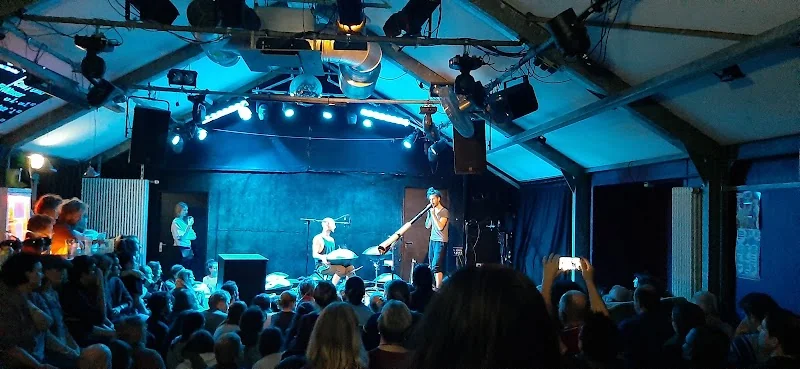
The Glashaus e. V. is more than just a classic concert venue in Bayreuth: The non-profit, volunteer-run association is located on the West Campus, between the GEO building and the new NW III building, and uses a building that previously served as a cafeteria. Today, it has become a vibrant place for concerts, parties, theater performances, movie nights, jam sessions, salsa, karaoke, and much more. Those looking for a location that combines student energy with open cultural work will find a mix of event space, meeting point, café, and scene location here. The house is closely connected to the campus but has long radiated far beyond the university into the city. At the same time, practical topics such as tickets, membership, directions, and parking remain an important part of the visitor experience because the Glashaus consciously functions as a community space and not like an anonymous large event center. ([glashaus.org](https://www.glashaus.org/ueber-uns/das-glashaus?utm_source=openai))
Events, Program and Cultural Diversity
The heart of the Glashaus is its program, and this is exactly where it shows why the location has been so strongly anchored in the regional cultural scene for decades. The official homepage continuously announces current events and recurring formats, including concerts, pub nights, salsa nights, cinema screenings, jam sessions, open stages, pub quizzes, karaoke, and creative meeting points. This mix is no coincidence but an expression of a house that consciously works in a versatile manner and brings together different scenes. Those who only think of classical live concerts underestimate the character of the place: The Glashaus is just as much a meeting point for student formats, social engagement, film culture, and spontaneous evenings at the bar. Particularly exciting is that the website not only presents individual events but also portrays the entire house as a cultural platform where music, conversation, movement, and subculture can coexist. This creates an atmosphere that always feels a little improvised but never arbitrary. This is attractive for visitors because each format gets its own tone while still being clearly anchored in the same environment. ([glashaus.org](https://www.glashaus.org/?utm_source=openai))
That this diversity is not just a self-presentation is also shown by the retrospective on the 30th anniversary. There, the association describes the Glashaus as a cultural association that has developed a radiance far beyond the city and names big names like Kraftklub, Little Big, Milky Chance, Sportfreunde Stiller, or the Leoniden as examples. At the same time, the Hall of Fame on the website emphasizes how broad the spectrum of artists who have performed there is. From the local scene to internationally known acts, the range is wide, and that is exactly what makes the program search engine relevant: Those looking for events in Bayreuth will find not just a single music style but a location that thinks openly about pop, rock, metal, indie, electronics, cabaret, and crossover formats. This also explains why terms like events, program, concerts, cinema, jam session, and open stage are so important for this address. The Glashaus is not a static hall but a program space with changing uses, where culture is constantly reassembled. ([glashaus.org](https://www.glashaus.org/programm/30-jahre-glashaus?utm_source=openai))
From an SEO perspective, it is also interesting that the website itself uses a very active, almost community-oriented program language. Events are not only announced but embedded in a narrative: Who is coming, why the format is special, and what atmosphere the evening promises. This creates a recognizable tone that sets the Glashaus apart from purely commercial event spaces. The mix of free admission, small ticket prices, advance sales, box office, and participatory formats is part of the character. The house thus functions not only as a stage but also as a social pace-setter on campus. For visitors, this is practical because they quickly understand what kind of evening they can expect: intimate, approachable, diverse, and often surprising. This combination of reliability and surprise makes the program one of the strongest arguments for the location. ([glashaus.org](https://www.glashaus.org/?utm_source=openai))
Tickets, Membership, and Admission from 18 Years
At Glashaus e. V., tickets and membership are inseparably linked, and this should be considered in every search query for this location. The official website explicitly points out that for almost all events, advance tickets are available not only at the Glashaus itself but also online via etix. Many individual event pages also specify a concrete advance sale price and a box office, allowing visitors to plan early or decide spontaneously. For some formats, admission is free, while for others it is chargeable, and this mix makes the house attractive to a wide audience within the student and urban scene. However, it is important to note: The Glashaus does not consider itself an open all-ages location but rather as an association with clear rules. In principle, events may only be attended from the age of 18, and membership is required for admission. This membership can be purchased according to the website as a monthly or annual membership, either at the box office or during café hours. This is not just an organizational point but part of the association's ethos that supports and finances the house. ([glashaus.org](https://www.glashaus.org/ueber-uns/das-glashaus?utm_source=openai))
For those planning or booking an event, the structure is also clear: The booking page lists genre-specific contact addresses, such as for electronic music, rock, metal, indie, singer-songwriter, jazz, hip-hop, cabaret, world music, or FLINTA*-artists. This shows that the location does not function as a general rental space but works curated and stylistically differentiated. For the average visitor, it is especially important that almost all information about admission, start times, entry fees, and ticket options is directly available on the respective event page. This makes the search for tickets, programs, and box office very user-friendly. So, those looking for Glashaus tickets will encounter a combination of online purchase, on-site sales, and clearly communicated conditions. This is particularly helpful for students, guests from Bayreuth, and people who decide spontaneously whether to attend a concert, cinema, or party. The 18+ rule and membership are not obstacles but part of an identity-forming association logic that has kept the place stable for years. ([glashaus.org](https://www.glashaus.org/booking?utm_source=openai))
It is also search engine relevant that the Glashaus openly explains its admission logic. Various pages contain the note that memberships can be purchased at the box office or in the café and that visitors should inform themselves in advance whether an event has free spots, box office, or advance sales. This builds trust and reduces uncertainty upon arrival. For SEO content, this is important: Tickets, membership, and admission are not side topics for this location but core terms that precisely meet search intent and user expectations. So, those searching for Glashaus tickets, membership, or admission do not need a general description of the association but clear answers regarding purchasing methods, age limits, and access. This information is available on the website and can be easily translated into organic search terms. ([glashaus.org](https://www.glashaus.org/ueber-uns/das-glashaus?utm_source=openai))
Directions and Parking at Campus West
The Glashaus is located on the West Campus of the University of Bayreuth and should therefore be thought of logistically differently than a location in the city center. According to the official description, the house is situated between the GEO building and the new NW III building, right in the middle of a campus area that can be heavily influenced by teaching activities during the day and becomes quieter in the evening. This also leads to the practical note on the website: In the evenings, there are often many free parking spaces nearby on campus, while during the day, especially during lecture times, it is less relaxed. For visitors, this mainly means that the best arrival time depends not only on the start of the event but also on university operations. Therefore, those coming by car should always plan a little buffer, especially for concerts, movie nights, or special formats with fixed admission times. The location on campus is also an advantage because the place is clearly identifiable in the urban structure and not hidden in an inaccessible backyard. ([glashaus.org](https://www.glashaus.org/ueber-uns/das-glashaus?utm_source=openai))
For a well-readable location description, it is sensible to think of the Glashaus not just as an address but as a campus place. The official page emphasizes the proximity to the university, the previous use as a cafeteria, and the relaxed atmosphere on the terrace or during summer boules. This means: Directions and parking are not just practical functions but part of the visitor experience. Those who arrive on time experience a place that mediates between university life and evening culture. For many guests, this is pleasant precisely because one does not have to navigate through complicated parking garages or long walks but can find the location immediately in the campus context. At the same time, one should not underestimate that the parking situation can vary during the semester. The best strategy is therefore to plan the arrival in good time, especially if a concert starts on time or if one wants to resolve the membership on site. This way, searching for parking does not become a stress factor but a manageable part of the evening. ([glashaus.org](https://www.glashaus.org/ueber-uns/das-glashaus?utm_source=openai))
For the search intent around directions and parking, it is also important that the Glashaus is not an isolated event hall but a campus house. This makes the location attractive for students, university staff, and visitors from the city who want to attend a cultural format on the premises. In practice, this means: Those searching for Glashaus Bayreuth directions or parking receive the best short, direct recommendation that names the West Campus as the location and describes the evening parking situation as significantly better than during the day. This clarity is valuable for local SEO because it answers the real user question while preserving the uniqueness of the place. ([glashaus.org](https://www.glashaus.org/ueber-uns/das-glashaus?utm_source=openai))
History from Former Cafeteria to Cultural Association
The history of the Glashaus is one of the reasons why the location seems so culturally credible. The official website explains that the building was previously used as a cafeteria and has developed over the years into a place for events, community, and student life. On the occasion of its 30th anniversary, the association describes how a former glass cafeteria has grown into a cultural association that not only invites students for coffee but has also developed a radiance far beyond the city. In a contribution from the University of Bayreuth, the development is placed in a bit more detail: The first concert took place in 1995, and in 1997, the Glashaus e. V. was founded as a pragmatic response to bureaucratic hurdles. This makes it clear that the house did not arise from a marketing idea but from a genuine need for cultural space. This origin continues to shape the identity of the place to this day. ([glashaus.org](https://www.glashaus.org/programm/30-jahre-glashaus?utm_source=openai))
This grown history is also palpable in today's program. The Glashaus sees itself not only as a concert location but as a social space where people with various interests come together. The official anniversary page tells of big names that have played there and of countless parties, pub nights, and theater performances. The Bayreuther Tagblatt article adds that the place has been awarded multiple times for its continuous cultural work, including the APPLAUS Award from the Initiative Musik, the Culture Prize of the City of Bayreuth, and the Klaus-Dieter-Wolff Prize. Such awards are more than just a nice detail from an SEO perspective: They prove that the Glashaus is a recognized entity in the regional cultural landscape. So, those looking for an established event location in Bayreuth will find not only a program here but also cultural substance and public recognition. ([bayreuther-tagblatt.de](https://www.bayreuther-tagblatt.de/bayreuther_tagblatt/allgemein/30-jahre-glashaus-bayreuth-ein-brennend-lebendiger-kulturraum/?utm_source=openai))
That the Glashaus has grown out of a student and volunteer structure also explains its current tone. Many offerings are low-threshold, some are deliberately freely accessible, and much is designed for participation. The website invites not only to visit but also to participate, help, and explore. In a time when many venues seem interchangeable, this history is a unique selling point. It connects campus, city, and club life in a way that can be felt on-site. The Glashaus is thus not just an address but a piece of Bayreuth's cultural history that has turned a functional building into a lively meeting point. ([glashaus.org](https://www.glashaus.org/ueber-uns/das-glashaus?utm_source=openai))
Stage, Technology, and Capacity
Those interested in the practical features of the Glashaus will find a surprisingly clear technical basis in the available sources. The institution is listed in the music and information database as a concert and socio-cultural center with a visitor capacity of 199 people. At the same time, a city PDF mentions 180 standing places for the Glashaus, which shows well that capacity specifications can vary slightly depending on the reference framework. For visitors, this difference is less a contradiction than an indication that it is a flexibly used space that does not function like a fixed-seated theater. This is complemented by the venue specs of the house, which describe the stage as approximately 7 meters wide, 3 meters deep, and 0.3 meters high. These dimensions explain why the Glashaus is so well suited for concerts, DJ formats, and small-scale performance evenings. ([miz.org](https://miz.org/de/institutionen/glashaus-i35724?utm_source=openai))
The technology also shows that professional work is done here. The venue spec document lists a KV2 audio PA, Dynacord monitoring, a Midas M32 FOH console, various microphones, DI boxes, DJ equipment, backline instruments, and lighting technology. For concert organizers and musicians, this means a solid foundation for putting on a show with manageable space but serious technical infrastructure. For visitors, this is interesting because good technology often correlates directly with better sound, clean volume distribution, and a harmonious atmosphere. A room of this size thrives on not feeling oversized but still being professionally managed. The Glashaus achieves exactly this balance: It is large enough for real concert moments but small enough to maintain closeness between the stage and the audience. This clearly distinguishes the location from anonymous large spaces and explains why many bands and guests experience the place as immediate and characterful. ([glashaus.org](https://www.glashaus.org/wp-content/uploads/2022/02/Glashaus_VenueSpecs2022.pdf?utm_source=openai))
For the search intent regarding seating plans, seats, or capacity, it is important that the Glashaus is not a classic large seating hall. The publicly documented numbers rather indicate a flexible club and event space than a standardized seating plan. So, those searching for the seating plan will most sensibly receive information about the event format, capacity, and technical equipment rather than about numbered rows. This also fits with the program structure of the house: Concerts, cinema, karaoke, jam sessions, or readings can each feel slightly different in the same room. From an SEO perspective, terms like capacity, stage, technology, room, and seating plan are relevant, even if the place itself focuses more on flexible use than on rigid seating. ([miz.org](https://miz.org/de/institutionen/glashaus-i35724?utm_source=openai))
Café Operations, Community, and Volunteering
A central part of the identity of the Glashaus is the café operation. During the semester, the café is usually open from Monday to Friday between 10 AM and 4 PM, depending on the availability of volunteer café helpers. This volunteer approach shapes the entire place: The Glashaus is an association that would hardly function so vibrantly without voluntary engagement. This is also reflected in the café card, which allows one to buy ten coffees or teas for 6 euros and redeem them individually through a stamp card system. The coffee itself comes as FairTrade organic coffee from the World Shop Bayreuth e. V., which underscores the conscious, community-oriented orientation of the house. For visitors, this is more than just a nice additional info. It shows that the Glashaus is a place where culture and everyday life intertwine and where even a coffee is part of a larger association structure. ([glashaus.org](https://www.glashaus.org/ueber-uns/das-glashaus?utm_source=openai))
The internal organization is also strongly community-oriented. The website points out that the Glashaus always needs people to help, such as with cooking, band accommodation, behind the bar, or at the entrance. Additionally, a regular meeting takes place on Wednesdays at 6 PM, to which everyone is welcome who wants to present a concern or simply get to know the association structures. This makes it clear that the house is not only open for events but also for co-design. From an SEO perspective, this is relevant because search queries regarding membership, café, volunteering, or community all converge on the same core: The Glashaus is a place created by people for people. This social openness is a large part of its appeal, especially in a university town where many visitors seek not only to consume but also to connect, participate, and find identity. ([glashaus.org](https://www.glashaus.org/ueber-uns/das-glashaus?utm_source=openai))
Therefore, those evaluating the Glashaus as a location should not only look at the events but also at the way work and life are conducted here. The mix of café operations, evening programs, voluntary engagement, and clear association logic creates a special atmosphere that is rarely found in pure event spaces. Precisely because the house is located on campus, it is close to student everyday life while also being open to the city. This makes the place interesting for visitors, organizers, and search engines alike: It is practical, vibrant, historically grown, and culturally strong. This combination is what makes Glashaus e. V. in Bayreuth one of the most distinctive addresses for events and tickets. ([glashaus.org](https://www.glashaus.org/ueber-uns/das-glashaus?utm_source=openai))
Sources:
- Official homepage of Glashaus e. V. and current program information ([glashaus.org](https://www.glashaus.org/?utm_source=openai))
- About us: The Glashaus, membership, café operations, and parking information ([glashaus.org](https://www.glashaus.org/ueber-uns/das-glashaus?utm_source=openai))
- Booking page with genre-specific contact addresses ([glashaus.org](https://www.glashaus.org/booking?utm_source=openai))
- Venue Specification Glashaus 2022 and technical equipment ([glashaus.org](https://www.glashaus.org/wp-content/uploads/2022/02/Glashaus_VenueSpecs2022.pdf?utm_source=openai))
- City directory with capacity information and standing places ([bayreuth.de](https://www.bayreuth.de/wp-content/uploads/2017/12/Kapitel_VII.pdf?utm_source=openai))
- MIZ entry and cultural portal Bavaria on location and profile ([miz.org](https://miz.org/de/institutionen/glashaus-i35724?utm_source=openai))
- Bayreuther Tagblatt and University of Bayreuth on history and development ([bayreuther-tagblatt.de](https://www.bayreuther-tagblatt.de/bayreuther_tagblatt/allgemein/30-jahre-glashaus-bayreuth-ein-brennend-lebendiger-kulturraum/?utm_source=openai))
Show moreShow less
Glashaus e. V. | Events & Tickets
The Glashaus e. V. is more than just a classic concert venue in Bayreuth: The non-profit, volunteer-run association is located on the West Campus, between the GEO building and the new NW III building, and uses a building that previously served as a cafeteria. Today, it has become a vibrant place for concerts, parties, theater performances, movie nights, jam sessions, salsa, karaoke, and much more. Those looking for a location that combines student energy with open cultural work will find a mix of event space, meeting point, café, and scene location here. The house is closely connected to the campus but has long radiated far beyond the university into the city. At the same time, practical topics such as tickets, membership, directions, and parking remain an important part of the visitor experience because the Glashaus consciously functions as a community space and not like an anonymous large event center. ([glashaus.org](https://www.glashaus.org/ueber-uns/das-glashaus?utm_source=openai))
Events, Program and Cultural Diversity
The heart of the Glashaus is its program, and this is exactly where it shows why the location has been so strongly anchored in the regional cultural scene for decades. The official homepage continuously announces current events and recurring formats, including concerts, pub nights, salsa nights, cinema screenings, jam sessions, open stages, pub quizzes, karaoke, and creative meeting points. This mix is no coincidence but an expression of a house that consciously works in a versatile manner and brings together different scenes. Those who only think of classical live concerts underestimate the character of the place: The Glashaus is just as much a meeting point for student formats, social engagement, film culture, and spontaneous evenings at the bar. Particularly exciting is that the website not only presents individual events but also portrays the entire house as a cultural platform where music, conversation, movement, and subculture can coexist. This creates an atmosphere that always feels a little improvised but never arbitrary. This is attractive for visitors because each format gets its own tone while still being clearly anchored in the same environment. ([glashaus.org](https://www.glashaus.org/?utm_source=openai))
That this diversity is not just a self-presentation is also shown by the retrospective on the 30th anniversary. There, the association describes the Glashaus as a cultural association that has developed a radiance far beyond the city and names big names like Kraftklub, Little Big, Milky Chance, Sportfreunde Stiller, or the Leoniden as examples. At the same time, the Hall of Fame on the website emphasizes how broad the spectrum of artists who have performed there is. From the local scene to internationally known acts, the range is wide, and that is exactly what makes the program search engine relevant: Those looking for events in Bayreuth will find not just a single music style but a location that thinks openly about pop, rock, metal, indie, electronics, cabaret, and crossover formats. This also explains why terms like events, program, concerts, cinema, jam session, and open stage are so important for this address. The Glashaus is not a static hall but a program space with changing uses, where culture is constantly reassembled. ([glashaus.org](https://www.glashaus.org/programm/30-jahre-glashaus?utm_source=openai))
From an SEO perspective, it is also interesting that the website itself uses a very active, almost community-oriented program language. Events are not only announced but embedded in a narrative: Who is coming, why the format is special, and what atmosphere the evening promises. This creates a recognizable tone that sets the Glashaus apart from purely commercial event spaces. The mix of free admission, small ticket prices, advance sales, box office, and participatory formats is part of the character. The house thus functions not only as a stage but also as a social pace-setter on campus. For visitors, this is practical because they quickly understand what kind of evening they can expect: intimate, approachable, diverse, and often surprising. This combination of reliability and surprise makes the program one of the strongest arguments for the location. ([glashaus.org](https://www.glashaus.org/?utm_source=openai))
Tickets, Membership, and Admission from 18 Years
At Glashaus e. V., tickets and membership are inseparably linked, and this should be considered in every search query for this location. The official website explicitly points out that for almost all events, advance tickets are available not only at the Glashaus itself but also online via etix. Many individual event pages also specify a concrete advance sale price and a box office, allowing visitors to plan early or decide spontaneously. For some formats, admission is free, while for others it is chargeable, and this mix makes the house attractive to a wide audience within the student and urban scene. However, it is important to note: The Glashaus does not consider itself an open all-ages location but rather as an association with clear rules. In principle, events may only be attended from the age of 18, and membership is required for admission. This membership can be purchased according to the website as a monthly or annual membership, either at the box office or during café hours. This is not just an organizational point but part of the association's ethos that supports and finances the house. ([glashaus.org](https://www.glashaus.org/ueber-uns/das-glashaus?utm_source=openai))
For those planning or booking an event, the structure is also clear: The booking page lists genre-specific contact addresses, such as for electronic music, rock, metal, indie, singer-songwriter, jazz, hip-hop, cabaret, world music, or FLINTA*-artists. This shows that the location does not function as a general rental space but works curated and stylistically differentiated. For the average visitor, it is especially important that almost all information about admission, start times, entry fees, and ticket options is directly available on the respective event page. This makes the search for tickets, programs, and box office very user-friendly. So, those looking for Glashaus tickets will encounter a combination of online purchase, on-site sales, and clearly communicated conditions. This is particularly helpful for students, guests from Bayreuth, and people who decide spontaneously whether to attend a concert, cinema, or party. The 18+ rule and membership are not obstacles but part of an identity-forming association logic that has kept the place stable for years. ([glashaus.org](https://www.glashaus.org/booking?utm_source=openai))
It is also search engine relevant that the Glashaus openly explains its admission logic. Various pages contain the note that memberships can be purchased at the box office or in the café and that visitors should inform themselves in advance whether an event has free spots, box office, or advance sales. This builds trust and reduces uncertainty upon arrival. For SEO content, this is important: Tickets, membership, and admission are not side topics for this location but core terms that precisely meet search intent and user expectations. So, those searching for Glashaus tickets, membership, or admission do not need a general description of the association but clear answers regarding purchasing methods, age limits, and access. This information is available on the website and can be easily translated into organic search terms. ([glashaus.org](https://www.glashaus.org/ueber-uns/das-glashaus?utm_source=openai))
Directions and Parking at Campus West
The Glashaus is located on the West Campus of the University of Bayreuth and should therefore be thought of logistically differently than a location in the city center. According to the official description, the house is situated between the GEO building and the new NW III building, right in the middle of a campus area that can be heavily influenced by teaching activities during the day and becomes quieter in the evening. This also leads to the practical note on the website: In the evenings, there are often many free parking spaces nearby on campus, while during the day, especially during lecture times, it is less relaxed. For visitors, this mainly means that the best arrival time depends not only on the start of the event but also on university operations. Therefore, those coming by car should always plan a little buffer, especially for concerts, movie nights, or special formats with fixed admission times. The location on campus is also an advantage because the place is clearly identifiable in the urban structure and not hidden in an inaccessible backyard. ([glashaus.org](https://www.glashaus.org/ueber-uns/das-glashaus?utm_source=openai))
For a well-readable location description, it is sensible to think of the Glashaus not just as an address but as a campus place. The official page emphasizes the proximity to the university, the previous use as a cafeteria, and the relaxed atmosphere on the terrace or during summer boules. This means: Directions and parking are not just practical functions but part of the visitor experience. Those who arrive on time experience a place that mediates between university life and evening culture. For many guests, this is pleasant precisely because one does not have to navigate through complicated parking garages or long walks but can find the location immediately in the campus context. At the same time, one should not underestimate that the parking situation can vary during the semester. The best strategy is therefore to plan the arrival in good time, especially if a concert starts on time or if one wants to resolve the membership on site. This way, searching for parking does not become a stress factor but a manageable part of the evening. ([glashaus.org](https://www.glashaus.org/ueber-uns/das-glashaus?utm_source=openai))
For the search intent around directions and parking, it is also important that the Glashaus is not an isolated event hall but a campus house. This makes the location attractive for students, university staff, and visitors from the city who want to attend a cultural format on the premises. In practice, this means: Those searching for Glashaus Bayreuth directions or parking receive the best short, direct recommendation that names the West Campus as the location and describes the evening parking situation as significantly better than during the day. This clarity is valuable for local SEO because it answers the real user question while preserving the uniqueness of the place. ([glashaus.org](https://www.glashaus.org/ueber-uns/das-glashaus?utm_source=openai))
History from Former Cafeteria to Cultural Association
The history of the Glashaus is one of the reasons why the location seems so culturally credible. The official website explains that the building was previously used as a cafeteria and has developed over the years into a place for events, community, and student life. On the occasion of its 30th anniversary, the association describes how a former glass cafeteria has grown into a cultural association that not only invites students for coffee but has also developed a radiance far beyond the city. In a contribution from the University of Bayreuth, the development is placed in a bit more detail: The first concert took place in 1995, and in 1997, the Glashaus e. V. was founded as a pragmatic response to bureaucratic hurdles. This makes it clear that the house did not arise from a marketing idea but from a genuine need for cultural space. This origin continues to shape the identity of the place to this day. ([glashaus.org](https://www.glashaus.org/programm/30-jahre-glashaus?utm_source=openai))
This grown history is also palpable in today's program. The Glashaus sees itself not only as a concert location but as a social space where people with various interests come together. The official anniversary page tells of big names that have played there and of countless parties, pub nights, and theater performances. The Bayreuther Tagblatt article adds that the place has been awarded multiple times for its continuous cultural work, including the APPLAUS Award from the Initiative Musik, the Culture Prize of the City of Bayreuth, and the Klaus-Dieter-Wolff Prize. Such awards are more than just a nice detail from an SEO perspective: They prove that the Glashaus is a recognized entity in the regional cultural landscape. So, those looking for an established event location in Bayreuth will find not only a program here but also cultural substance and public recognition. ([bayreuther-tagblatt.de](https://www.bayreuther-tagblatt.de/bayreuther_tagblatt/allgemein/30-jahre-glashaus-bayreuth-ein-brennend-lebendiger-kulturraum/?utm_source=openai))
That the Glashaus has grown out of a student and volunteer structure also explains its current tone. Many offerings are low-threshold, some are deliberately freely accessible, and much is designed for participation. The website invites not only to visit but also to participate, help, and explore. In a time when many venues seem interchangeable, this history is a unique selling point. It connects campus, city, and club life in a way that can be felt on-site. The Glashaus is thus not just an address but a piece of Bayreuth's cultural history that has turned a functional building into a lively meeting point. ([glashaus.org](https://www.glashaus.org/ueber-uns/das-glashaus?utm_source=openai))
Stage, Technology, and Capacity
Those interested in the practical features of the Glashaus will find a surprisingly clear technical basis in the available sources. The institution is listed in the music and information database as a concert and socio-cultural center with a visitor capacity of 199 people. At the same time, a city PDF mentions 180 standing places for the Glashaus, which shows well that capacity specifications can vary slightly depending on the reference framework. For visitors, this difference is less a contradiction than an indication that it is a flexibly used space that does not function like a fixed-seated theater. This is complemented by the venue specs of the house, which describe the stage as approximately 7 meters wide, 3 meters deep, and 0.3 meters high. These dimensions explain why the Glashaus is so well suited for concerts, DJ formats, and small-scale performance evenings. ([miz.org](https://miz.org/de/institutionen/glashaus-i35724?utm_source=openai))
The technology also shows that professional work is done here. The venue spec document lists a KV2 audio PA, Dynacord monitoring, a Midas M32 FOH console, various microphones, DI boxes, DJ equipment, backline instruments, and lighting technology. For concert organizers and musicians, this means a solid foundation for putting on a show with manageable space but serious technical infrastructure. For visitors, this is interesting because good technology often correlates directly with better sound, clean volume distribution, and a harmonious atmosphere. A room of this size thrives on not feeling oversized but still being professionally managed. The Glashaus achieves exactly this balance: It is large enough for real concert moments but small enough to maintain closeness between the stage and the audience. This clearly distinguishes the location from anonymous large spaces and explains why many bands and guests experience the place as immediate and characterful. ([glashaus.org](https://www.glashaus.org/wp-content/uploads/2022/02/Glashaus_VenueSpecs2022.pdf?utm_source=openai))
For the search intent regarding seating plans, seats, or capacity, it is important that the Glashaus is not a classic large seating hall. The publicly documented numbers rather indicate a flexible club and event space than a standardized seating plan. So, those searching for the seating plan will most sensibly receive information about the event format, capacity, and technical equipment rather than about numbered rows. This also fits with the program structure of the house: Concerts, cinema, karaoke, jam sessions, or readings can each feel slightly different in the same room. From an SEO perspective, terms like capacity, stage, technology, room, and seating plan are relevant, even if the place itself focuses more on flexible use than on rigid seating. ([miz.org](https://miz.org/de/institutionen/glashaus-i35724?utm_source=openai))
Café Operations, Community, and Volunteering
A central part of the identity of the Glashaus is the café operation. During the semester, the café is usually open from Monday to Friday between 10 AM and 4 PM, depending on the availability of volunteer café helpers. This volunteer approach shapes the entire place: The Glashaus is an association that would hardly function so vibrantly without voluntary engagement. This is also reflected in the café card, which allows one to buy ten coffees or teas for 6 euros and redeem them individually through a stamp card system. The coffee itself comes as FairTrade organic coffee from the World Shop Bayreuth e. V., which underscores the conscious, community-oriented orientation of the house. For visitors, this is more than just a nice additional info. It shows that the Glashaus is a place where culture and everyday life intertwine and where even a coffee is part of a larger association structure. ([glashaus.org](https://www.glashaus.org/ueber-uns/das-glashaus?utm_source=openai))
The internal organization is also strongly community-oriented. The website points out that the Glashaus always needs people to help, such as with cooking, band accommodation, behind the bar, or at the entrance. Additionally, a regular meeting takes place on Wednesdays at 6 PM, to which everyone is welcome who wants to present a concern or simply get to know the association structures. This makes it clear that the house is not only open for events but also for co-design. From an SEO perspective, this is relevant because search queries regarding membership, café, volunteering, or community all converge on the same core: The Glashaus is a place created by people for people. This social openness is a large part of its appeal, especially in a university town where many visitors seek not only to consume but also to connect, participate, and find identity. ([glashaus.org](https://www.glashaus.org/ueber-uns/das-glashaus?utm_source=openai))
Therefore, those evaluating the Glashaus as a location should not only look at the events but also at the way work and life are conducted here. The mix of café operations, evening programs, voluntary engagement, and clear association logic creates a special atmosphere that is rarely found in pure event spaces. Precisely because the house is located on campus, it is close to student everyday life while also being open to the city. This makes the place interesting for visitors, organizers, and search engines alike: It is practical, vibrant, historically grown, and culturally strong. This combination is what makes Glashaus e. V. in Bayreuth one of the most distinctive addresses for events and tickets. ([glashaus.org](https://www.glashaus.org/ueber-uns/das-glashaus?utm_source=openai))
Sources:
- Official homepage of Glashaus e. V. and current program information ([glashaus.org](https://www.glashaus.org/?utm_source=openai))
- About us: The Glashaus, membership, café operations, and parking information ([glashaus.org](https://www.glashaus.org/ueber-uns/das-glashaus?utm_source=openai))
- Booking page with genre-specific contact addresses ([glashaus.org](https://www.glashaus.org/booking?utm_source=openai))
- Venue Specification Glashaus 2022 and technical equipment ([glashaus.org](https://www.glashaus.org/wp-content/uploads/2022/02/Glashaus_VenueSpecs2022.pdf?utm_source=openai))
- City directory with capacity information and standing places ([bayreuth.de](https://www.bayreuth.de/wp-content/uploads/2017/12/Kapitel_VII.pdf?utm_source=openai))
- MIZ entry and cultural portal Bavaria on location and profile ([miz.org](https://miz.org/de/institutionen/glashaus-i35724?utm_source=openai))
- Bayreuther Tagblatt and University of Bayreuth on history and development ([bayreuther-tagblatt.de](https://www.bayreuther-tagblatt.de/bayreuther_tagblatt/allgemein/30-jahre-glashaus-bayreuth-ein-brennend-lebendiger-kulturraum/?utm_source=openai))
Glashaus e. V. | Events & Tickets
The Glashaus e. V. is more than just a classic concert venue in Bayreuth: The non-profit, volunteer-run association is located on the West Campus, between the GEO building and the new NW III building, and uses a building that previously served as a cafeteria. Today, it has become a vibrant place for concerts, parties, theater performances, movie nights, jam sessions, salsa, karaoke, and much more. Those looking for a location that combines student energy with open cultural work will find a mix of event space, meeting point, café, and scene location here. The house is closely connected to the campus but has long radiated far beyond the university into the city. At the same time, practical topics such as tickets, membership, directions, and parking remain an important part of the visitor experience because the Glashaus consciously functions as a community space and not like an anonymous large event center. ([glashaus.org](https://www.glashaus.org/ueber-uns/das-glashaus?utm_source=openai))
Events, Program and Cultural Diversity
The heart of the Glashaus is its program, and this is exactly where it shows why the location has been so strongly anchored in the regional cultural scene for decades. The official homepage continuously announces current events and recurring formats, including concerts, pub nights, salsa nights, cinema screenings, jam sessions, open stages, pub quizzes, karaoke, and creative meeting points. This mix is no coincidence but an expression of a house that consciously works in a versatile manner and brings together different scenes. Those who only think of classical live concerts underestimate the character of the place: The Glashaus is just as much a meeting point for student formats, social engagement, film culture, and spontaneous evenings at the bar. Particularly exciting is that the website not only presents individual events but also portrays the entire house as a cultural platform where music, conversation, movement, and subculture can coexist. This creates an atmosphere that always feels a little improvised but never arbitrary. This is attractive for visitors because each format gets its own tone while still being clearly anchored in the same environment. ([glashaus.org](https://www.glashaus.org/?utm_source=openai))
That this diversity is not just a self-presentation is also shown by the retrospective on the 30th anniversary. There, the association describes the Glashaus as a cultural association that has developed a radiance far beyond the city and names big names like Kraftklub, Little Big, Milky Chance, Sportfreunde Stiller, or the Leoniden as examples. At the same time, the Hall of Fame on the website emphasizes how broad the spectrum of artists who have performed there is. From the local scene to internationally known acts, the range is wide, and that is exactly what makes the program search engine relevant: Those looking for events in Bayreuth will find not just a single music style but a location that thinks openly about pop, rock, metal, indie, electronics, cabaret, and crossover formats. This also explains why terms like events, program, concerts, cinema, jam session, and open stage are so important for this address. The Glashaus is not a static hall but a program space with changing uses, where culture is constantly reassembled. ([glashaus.org](https://www.glashaus.org/programm/30-jahre-glashaus?utm_source=openai))
From an SEO perspective, it is also interesting that the website itself uses a very active, almost community-oriented program language. Events are not only announced but embedded in a narrative: Who is coming, why the format is special, and what atmosphere the evening promises. This creates a recognizable tone that sets the Glashaus apart from purely commercial event spaces. The mix of free admission, small ticket prices, advance sales, box office, and participatory formats is part of the character. The house thus functions not only as a stage but also as a social pace-setter on campus. For visitors, this is practical because they quickly understand what kind of evening they can expect: intimate, approachable, diverse, and often surprising. This combination of reliability and surprise makes the program one of the strongest arguments for the location. ([glashaus.org](https://www.glashaus.org/?utm_source=openai))
Tickets, Membership, and Admission from 18 Years
At Glashaus e. V., tickets and membership are inseparably linked, and this should be considered in every search query for this location. The official website explicitly points out that for almost all events, advance tickets are available not only at the Glashaus itself but also online via etix. Many individual event pages also specify a concrete advance sale price and a box office, allowing visitors to plan early or decide spontaneously. For some formats, admission is free, while for others it is chargeable, and this mix makes the house attractive to a wide audience within the student and urban scene. However, it is important to note: The Glashaus does not consider itself an open all-ages location but rather as an association with clear rules. In principle, events may only be attended from the age of 18, and membership is required for admission. This membership can be purchased according to the website as a monthly or annual membership, either at the box office or during café hours. This is not just an organizational point but part of the association's ethos that supports and finances the house. ([glashaus.org](https://www.glashaus.org/ueber-uns/das-glashaus?utm_source=openai))
For those planning or booking an event, the structure is also clear: The booking page lists genre-specific contact addresses, such as for electronic music, rock, metal, indie, singer-songwriter, jazz, hip-hop, cabaret, world music, or FLINTA*-artists. This shows that the location does not function as a general rental space but works curated and stylistically differentiated. For the average visitor, it is especially important that almost all information about admission, start times, entry fees, and ticket options is directly available on the respective event page. This makes the search for tickets, programs, and box office very user-friendly. So, those looking for Glashaus tickets will encounter a combination of online purchase, on-site sales, and clearly communicated conditions. This is particularly helpful for students, guests from Bayreuth, and people who decide spontaneously whether to attend a concert, cinema, or party. The 18+ rule and membership are not obstacles but part of an identity-forming association logic that has kept the place stable for years. ([glashaus.org](https://www.glashaus.org/booking?utm_source=openai))
It is also search engine relevant that the Glashaus openly explains its admission logic. Various pages contain the note that memberships can be purchased at the box office or in the café and that visitors should inform themselves in advance whether an event has free spots, box office, or advance sales. This builds trust and reduces uncertainty upon arrival. For SEO content, this is important: Tickets, membership, and admission are not side topics for this location but core terms that precisely meet search intent and user expectations. So, those searching for Glashaus tickets, membership, or admission do not need a general description of the association but clear answers regarding purchasing methods, age limits, and access. This information is available on the website and can be easily translated into organic search terms. ([glashaus.org](https://www.glashaus.org/ueber-uns/das-glashaus?utm_source=openai))
Directions and Parking at Campus West
The Glashaus is located on the West Campus of the University of Bayreuth and should therefore be thought of logistically differently than a location in the city center. According to the official description, the house is situated between the GEO building and the new NW III building, right in the middle of a campus area that can be heavily influenced by teaching activities during the day and becomes quieter in the evening. This also leads to the practical note on the website: In the evenings, there are often many free parking spaces nearby on campus, while during the day, especially during lecture times, it is less relaxed. For visitors, this mainly means that the best arrival time depends not only on the start of the event but also on university operations. Therefore, those coming by car should always plan a little buffer, especially for concerts, movie nights, or special formats with fixed admission times. The location on campus is also an advantage because the place is clearly identifiable in the urban structure and not hidden in an inaccessible backyard. ([glashaus.org](https://www.glashaus.org/ueber-uns/das-glashaus?utm_source=openai))
For a well-readable location description, it is sensible to think of the Glashaus not just as an address but as a campus place. The official page emphasizes the proximity to the university, the previous use as a cafeteria, and the relaxed atmosphere on the terrace or during summer boules. This means: Directions and parking are not just practical functions but part of the visitor experience. Those who arrive on time experience a place that mediates between university life and evening culture. For many guests, this is pleasant precisely because one does not have to navigate through complicated parking garages or long walks but can find the location immediately in the campus context. At the same time, one should not underestimate that the parking situation can vary during the semester. The best strategy is therefore to plan the arrival in good time, especially if a concert starts on time or if one wants to resolve the membership on site. This way, searching for parking does not become a stress factor but a manageable part of the evening. ([glashaus.org](https://www.glashaus.org/ueber-uns/das-glashaus?utm_source=openai))
For the search intent around directions and parking, it is also important that the Glashaus is not an isolated event hall but a campus house. This makes the location attractive for students, university staff, and visitors from the city who want to attend a cultural format on the premises. In practice, this means: Those searching for Glashaus Bayreuth directions or parking receive the best short, direct recommendation that names the West Campus as the location and describes the evening parking situation as significantly better than during the day. This clarity is valuable for local SEO because it answers the real user question while preserving the uniqueness of the place. ([glashaus.org](https://www.glashaus.org/ueber-uns/das-glashaus?utm_source=openai))
History from Former Cafeteria to Cultural Association
The history of the Glashaus is one of the reasons why the location seems so culturally credible. The official website explains that the building was previously used as a cafeteria and has developed over the years into a place for events, community, and student life. On the occasion of its 30th anniversary, the association describes how a former glass cafeteria has grown into a cultural association that not only invites students for coffee but has also developed a radiance far beyond the city. In a contribution from the University of Bayreuth, the development is placed in a bit more detail: The first concert took place in 1995, and in 1997, the Glashaus e. V. was founded as a pragmatic response to bureaucratic hurdles. This makes it clear that the house did not arise from a marketing idea but from a genuine need for cultural space. This origin continues to shape the identity of the place to this day. ([glashaus.org](https://www.glashaus.org/programm/30-jahre-glashaus?utm_source=openai))
This grown history is also palpable in today's program. The Glashaus sees itself not only as a concert location but as a social space where people with various interests come together. The official anniversary page tells of big names that have played there and of countless parties, pub nights, and theater performances. The Bayreuther Tagblatt article adds that the place has been awarded multiple times for its continuous cultural work, including the APPLAUS Award from the Initiative Musik, the Culture Prize of the City of Bayreuth, and the Klaus-Dieter-Wolff Prize. Such awards are more than just a nice detail from an SEO perspective: They prove that the Glashaus is a recognized entity in the regional cultural landscape. So, those looking for an established event location in Bayreuth will find not only a program here but also cultural substance and public recognition. ([bayreuther-tagblatt.de](https://www.bayreuther-tagblatt.de/bayreuther_tagblatt/allgemein/30-jahre-glashaus-bayreuth-ein-brennend-lebendiger-kulturraum/?utm_source=openai))
That the Glashaus has grown out of a student and volunteer structure also explains its current tone. Many offerings are low-threshold, some are deliberately freely accessible, and much is designed for participation. The website invites not only to visit but also to participate, help, and explore. In a time when many venues seem interchangeable, this history is a unique selling point. It connects campus, city, and club life in a way that can be felt on-site. The Glashaus is thus not just an address but a piece of Bayreuth's cultural history that has turned a functional building into a lively meeting point. ([glashaus.org](https://www.glashaus.org/ueber-uns/das-glashaus?utm_source=openai))
Stage, Technology, and Capacity
Those interested in the practical features of the Glashaus will find a surprisingly clear technical basis in the available sources. The institution is listed in the music and information database as a concert and socio-cultural center with a visitor capacity of 199 people. At the same time, a city PDF mentions 180 standing places for the Glashaus, which shows well that capacity specifications can vary slightly depending on the reference framework. For visitors, this difference is less a contradiction than an indication that it is a flexibly used space that does not function like a fixed-seated theater. This is complemented by the venue specs of the house, which describe the stage as approximately 7 meters wide, 3 meters deep, and 0.3 meters high. These dimensions explain why the Glashaus is so well suited for concerts, DJ formats, and small-scale performance evenings. ([miz.org](https://miz.org/de/institutionen/glashaus-i35724?utm_source=openai))
The technology also shows that professional work is done here. The venue spec document lists a KV2 audio PA, Dynacord monitoring, a Midas M32 FOH console, various microphones, DI boxes, DJ equipment, backline instruments, and lighting technology. For concert organizers and musicians, this means a solid foundation for putting on a show with manageable space but serious technical infrastructure. For visitors, this is interesting because good technology often correlates directly with better sound, clean volume distribution, and a harmonious atmosphere. A room of this size thrives on not feeling oversized but still being professionally managed. The Glashaus achieves exactly this balance: It is large enough for real concert moments but small enough to maintain closeness between the stage and the audience. This clearly distinguishes the location from anonymous large spaces and explains why many bands and guests experience the place as immediate and characterful. ([glashaus.org](https://www.glashaus.org/wp-content/uploads/2022/02/Glashaus_VenueSpecs2022.pdf?utm_source=openai))
For the search intent regarding seating plans, seats, or capacity, it is important that the Glashaus is not a classic large seating hall. The publicly documented numbers rather indicate a flexible club and event space than a standardized seating plan. So, those searching for the seating plan will most sensibly receive information about the event format, capacity, and technical equipment rather than about numbered rows. This also fits with the program structure of the house: Concerts, cinema, karaoke, jam sessions, or readings can each feel slightly different in the same room. From an SEO perspective, terms like capacity, stage, technology, room, and seating plan are relevant, even if the place itself focuses more on flexible use than on rigid seating. ([miz.org](https://miz.org/de/institutionen/glashaus-i35724?utm_source=openai))
Café Operations, Community, and Volunteering
A central part of the identity of the Glashaus is the café operation. During the semester, the café is usually open from Monday to Friday between 10 AM and 4 PM, depending on the availability of volunteer café helpers. This volunteer approach shapes the entire place: The Glashaus is an association that would hardly function so vibrantly without voluntary engagement. This is also reflected in the café card, which allows one to buy ten coffees or teas for 6 euros and redeem them individually through a stamp card system. The coffee itself comes as FairTrade organic coffee from the World Shop Bayreuth e. V., which underscores the conscious, community-oriented orientation of the house. For visitors, this is more than just a nice additional info. It shows that the Glashaus is a place where culture and everyday life intertwine and where even a coffee is part of a larger association structure. ([glashaus.org](https://www.glashaus.org/ueber-uns/das-glashaus?utm_source=openai))
The internal organization is also strongly community-oriented. The website points out that the Glashaus always needs people to help, such as with cooking, band accommodation, behind the bar, or at the entrance. Additionally, a regular meeting takes place on Wednesdays at 6 PM, to which everyone is welcome who wants to present a concern or simply get to know the association structures. This makes it clear that the house is not only open for events but also for co-design. From an SEO perspective, this is relevant because search queries regarding membership, café, volunteering, or community all converge on the same core: The Glashaus is a place created by people for people. This social openness is a large part of its appeal, especially in a university town where many visitors seek not only to consume but also to connect, participate, and find identity. ([glashaus.org](https://www.glashaus.org/ueber-uns/das-glashaus?utm_source=openai))
Therefore, those evaluating the Glashaus as a location should not only look at the events but also at the way work and life are conducted here. The mix of café operations, evening programs, voluntary engagement, and clear association logic creates a special atmosphere that is rarely found in pure event spaces. Precisely because the house is located on campus, it is close to student everyday life while also being open to the city. This makes the place interesting for visitors, organizers, and search engines alike: It is practical, vibrant, historically grown, and culturally strong. This combination is what makes Glashaus e. V. in Bayreuth one of the most distinctive addresses for events and tickets. ([glashaus.org](https://www.glashaus.org/ueber-uns/das-glashaus?utm_source=openai))
Sources:
- Official homepage of Glashaus e. V. and current program information ([glashaus.org](https://www.glashaus.org/?utm_source=openai))
- About us: The Glashaus, membership, café operations, and parking information ([glashaus.org](https://www.glashaus.org/ueber-uns/das-glashaus?utm_source=openai))
- Booking page with genre-specific contact addresses ([glashaus.org](https://www.glashaus.org/booking?utm_source=openai))
- Venue Specification Glashaus 2022 and technical equipment ([glashaus.org](https://www.glashaus.org/wp-content/uploads/2022/02/Glashaus_VenueSpecs2022.pdf?utm_source=openai))
- City directory with capacity information and standing places ([bayreuth.de](https://www.bayreuth.de/wp-content/uploads/2017/12/Kapitel_VII.pdf?utm_source=openai))
- MIZ entry and cultural portal Bavaria on location and profile ([miz.org](https://miz.org/de/institutionen/glashaus-i35724?utm_source=openai))
- Bayreuther Tagblatt and University of Bayreuth on history and development ([bayreuther-tagblatt.de](https://www.bayreuther-tagblatt.de/bayreuther_tagblatt/allgemein/30-jahre-glashaus-bayreuth-ein-brennend-lebendiger-kulturraum/?utm_source=openai))
Upcoming Events
No events found
Frequently Asked Questions
Reviews
Tristan Heck
24. August 2018
You meet interesting, intelligent people who want to have fun. Prices are pretty okay. €1.50 for a beer. €0-6 for entry. Be aware that there is usually no bus after 11 PM and most events go longer than this. You can usually park your car or bike easily. There isn’t a lot of space to put your clothing inside.
Jhonnatan Romero Huertas
21. April 2018
Great place, every Wednesday there are salsa classes. So you can go there, dance, and meet new people.
Marcel M.
10. April 2025
Meet new people, have a coffee or party 🎉
Amama Bushra Jahangir
20. August 2018
It is a good place to have coffee and hang out with friends. Not so clean though.
Imani Shayo
5. June 2018
A very nice place to hang out with friends, the best in Bayreuth.