
Bayreuth
Richard-Wagner-Straße 48, 95444 Bayreuth, Deutschland
House Wahnfried | Opening Hours & Parking
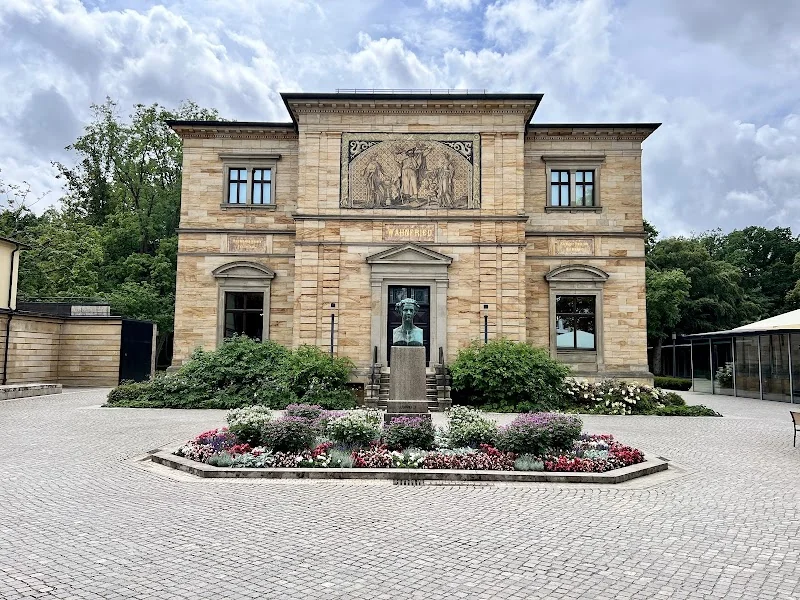
House Wahnfried is much more than a well-known historic residence in Bayreuth. It is an authentic memorial site, a museum complex, an archive, a research institution, and a cultural meeting point where Richard Wagner's life, his work, and the history of the Bayreuth Festival can be experienced on multiple levels. The house was built between 1872 and 1874 in the Hofgarten gardens of Bayreuth, where Richard Wagner lived with his family, and after his death in 1883, he was buried in the garden. Since 1976, the house has housed the Richard Wagner Museum; after extensive renovation and expansion, the site was reopened in 2015 and complemented by a modern museum building. Today, visitors encounter not only Wagner's living and working environment but also an exhibition that consciously combines historical depth with critical contextualization. The charm of this place lies in the interplay between the original site, museum mediation, and the special atmosphere created by the historic garden, representative rooms, and modern exhibition design. Thus, those who visit House Wahnfried experience not just a beautiful building but a place where cultural history, music history, and political memory are intertwined. ([wagnermuseum.de](https://www.wagnermuseum.de/en/museum/))
House Wahnfried Opening Hours, Tickets, and Admission
For planning a visit, the opening hours are particularly important, as the Richard Wagner Museum operates seasonally. From September to June, the museum is open from Tuesday to Sunday from 10:00 AM to 5:00 PM. In the summer months of July and August, longer opening hours apply: House Wahnfried can then be visited daily from Monday to Sunday between 10:00 AM and 6:00 PM. Additionally, there are specific holiday regulations that may vary depending on the date, so a quick look at the official information page is recommended before visiting. The admission prices are also clearly structured, making the visit easy to plan: Adults pay 10 euros, students 8 euros, and the so-called Blue Hour from 4 PM costs 8 euros from September to June. Groups of ten or more also receive a reduced admission price. Particularly convenient is that the admission already includes a media guide available in German, English, and French, which facilitates orientation in the house. Moreover, special exhibitions are included in the admission price, making repeated visits worthwhile. Those staying longer in Bayreuth also benefit from the combination ticket, which provides access to the Richard Wagner Museum, the Franz Liszt Museum, and the Jean Paul Museum. This quickly turns a single visit into a whole cultural stroll through the city. For SEO-relevant queries such as House Wahnfried opening hours, Richard Wagner Museum opening hours, or House Wahnfried tickets, the official museum website provides the most reliable foundation. ([wagnermuseum.de](https://www.wagnermuseum.de/en/information/opening-hours-and-information/))
House Wahnfried Parking and Directions in Bayreuth
Those arriving by car or public transport will find well-described and practical routes to House Wahnfried. The museum can be reached by bus from Bayreuth's main train station using line 302 towards Sankt Johannis; alternatively, line 307 from the central bus station ZOH goes towards Aichig to the Wahnfried stop. For drivers, the museum lists the nearest parking options, primarily the open parking lot P6 Stadthalle or Am Geißmarkt, as well as the parking garage P7 Badstraße. Additionally, further parking garages and spaces are signposted, including the underground garage Sternplatz P8 and the parking lot Münzgasse P13. There are also paid street parking spaces around the museum, such as on Wahnfriedstraße, Richard-Wagner-Straße, Lisztstraße, and Rathstraße, usually with a maximum parking duration of two hours. This is helpful for those planning only a short museum visit or wishing to combine their stay with a walk through Bayreuth. The location in the city center is particularly pleasant: House Wahnfried is situated in a historically influenced district, making it easy to combine the visit with other attractions. For guests with mobility restrictions, the museum also points out special disabled parking spaces, such as on Wahnfriedstraße, Lisztstraße, and Rathstraße. This not only makes access practical but also more inclusive. Therefore, those searching for House Wahnfried parking, House Wahnfried directions, or Richard Wagner Museum parking will find clear and up-to-date guidance here. ([wagnermuseum.de](https://www.wagnermuseum.de/en/contact/contact-and-directions/?utm_source=openai))
House Wahnfried Interior: Tour, Photos, and Rooms
The appeal of House Wahnfried lies not only in its historical exterior but especially in its interior and the thoughtful tripartite division of the entire museum ensemble. House Wahnfried itself showcases Richard Wagner's living environment in representative rooms with numerous original objects from the composer's surroundings. The official presentation emphasizes that visitors experience an authentic place of documentation here, focusing on Wagner's life, work, and impact. Particularly impressive is the view of the ground floor, which, according to museum information, provides an immediate insight into the time around 1880, thereby making the private and social dimensions of the house palpable. This is complemented by changing presentations in the intermediate area, where manuscripts, graphics, and other documents are displayed. The new building of the museum expands this historical core with an exhibition on the history of the Bayreuth Festival. There, historical stage models, costumes, and technical materials can be seen, and there is also a museum cinema station, a shop, special exhibition areas, and a depot area. A visit to the Siegfried Wagner House is also worthwhile: the listed building preserves an original atmosphere from the 1930s on the ground floor and makes another part of the family history accessible. Those searching for House Wahnfried interior, House Wahnfried photos, or House Wahnfried floor plan usually want to understand this combination of architecture, spatial effect, and museum presentation. The museum offers a multifaceted tour that sensibly combines classic showcases, historical rooms, and modern mediation. ([bayreuth-tourismus.de](https://www.bayreuth-tourismus.de/wp-content/uploads/2023/10/Richard-Wagner-Museum_English_20250102.pdf))
Especially for visitors who see museums not just as collections of objects but as experiential spaces, the internal structure of House Wahnfried is interesting. The exhibition is not limited to a single thematic thread but aims to make visible the life and work of Wagner, the history of the Bayreuth Festival, and the ideological history in a common structure. The media guide supports this approach and is available in three languages, making the tour easier for international guests. Additionally, the different parts of the building create different atmospheres: the historic house conveys closeness to the original site, the new building stands for museum clarity and openness, and the Siegfried Wagner House opens the view to family history, reception, and later use. From a photographic perspective, this is exciting, as the architecture offers both classic facade motifs and tranquil courtyards, historical window axes, and contrasting exhibition spaces. Even though search terms like House Wahnfried interior or House Wahnfried photos often aim only at visual impressions, a visit quickly reveals that the internal structure reaches much deeper in content than just a beautiful first impression. It is designed to make the history of the house comprehensible, to appreciate the original substance, and at the same time to think critically about the history of the site's impact. ([wagnermuseum.de](https://www.wagnermuseum.de/en/information/opening-hours-and-information/))
House Wahnfried Events, Concerts, and Café Wahnfried
House Wahnfried is not only a museum but also a vibrant event venue. The official museum presentation explicitly mentions chamber concerts, lectures, conferences, and book presentations as part of the offerings, especially during the Bayreuth Festival season. This regularly integrates the site into current cultural use that goes far beyond the classic museum visit. Those searching for House Wahnfried events or House Wahnfried concerts will indeed find a program that connects science, music, and mediation. Additionally, museum-owned spaces can be rented upon request by companies, associations, and organizations; however, private individuals are not intended as a target group. This makes sense, as the ensemble possesses a special aura due to its history and location, making it particularly suitable for cultural and institutional occasions. Another plus is Café Wahnfried, which is located in the former gardener's house directly next to House Wahnfried. According to official information, it can even be used for events outside museum opening hours. This creates an additional offering for guests who want to combine their museum visit with a break, a conversation, or a smaller event. For queries such as House Wahnfried Café or Café Wahnfried, this proximity to the museum is relevant. The gastronomic environment significantly contributes to ensuring that the visit is not merely functional but can be experienced as a relaxed cultural stay. Thus, House Wahnfried combines quiet historical contemplation with a lively use in the present. ([bayreuth-tourismus.de](https://www.bayreuth-tourismus.de/en/the-richard-wagner-museum/))
House Wahnfried History: From Residence to Museum
The history of House Wahnfried is closely linked to Richard Wagner himself and begins with his desire for a house of his own in Bayreuth. Wagner was significantly involved in the planning; the financing was supported by his royal patron Ludwig II of Bavaria. Between 1872 and 1874, the residence was built, which later became not only a family center but also a symbol of Wagner's self-understanding. After his death in 1883, the house remained in the family's possession until 1966, thus serving for decades as a place of personal memory and artistic continuity. However, World War II left severe destruction: in 1945, the building was heavily damaged. It was not until between 1974 and 1976 that the faithful reconstruction took place, before the Richard Wagner Museum could be opened in 1976. This step was more than a restoration; it transformed the house into a public place of remembrance, research, and exhibition. Later, the ensemble was fundamentally renewed again: between 2010 and 2015, a modern new building was created on a neighboring property, and the museum was newly presented in 2015 after renovation and expansion. Today, House Wahnfried stands for the connection of monument protection, museum innovation, and historical authenticity. The place is not only a historical monument but also a key to the cultural history of Bayreuth, which is particularly impressively showcased in the interplay of Wagner's residence, Hofgarten, museum, and the city as a festival location. ([wagnermuseum.de](https://www.wagnermuseum.de/museum/richard-wagner-museum/))
For many visitors, it is precisely this historical continuity that makes House Wahnfried leave such a strong impression. The house is not a reconstructed theme museum but a historically documented original site whose history encompasses loss, reconstruction, and reinterpretation. The museum information also emphasizes that the ensemble has been one of the most important attractions in the city and region from the very beginning and was awarded as a place of ideas in 2006. This shows that House Wahnfried is perceived not only locally but also culturally on a broader scale. Its location at the Hofgarten and in close proximity to other art-historical sites further enhances this impression. Those visiting Bayreuth experience a city where several significant memorial sites are located close together. This makes House Wahnfried particularly attractive for culture-interested travelers who want to understand not just a single exhibition but a larger historical context. The connection between private living space, public museum, and research institution is also remarkable: it shows how a place can take on new meanings over time without losing its authenticity. It is precisely this tension between personal history and public memory that defines the charm of the house and explains why interest in House Wahnfried Bayreuth, Richard Wagner Museum Bayreuth, and House Wahnfried history remains so strong to this day. ([wagnermuseum.de](https://www.wagnermuseum.de/museum/richard-wagner-museum/))
House Wahnfried, Hitler, and Ideology History
Those searching for House Wahnfried Hitler usually mean the critical engagement with the political and ideological history of the site. And this engagement is a central component of the museum. The official exhibition practice explicitly emphasizes that not only the life and work of Richard Wagner are presented in the house, but also Wagner's ideological history, the close connection between Bayreuth and the National Socialist dictatorship, as well as the personal relationships of the Wagner family with the National Socialists and Adolf Hitler are documented. The museum thus avoids any trivialization and instead opts for a modern, didactically reflected presentation that reveals historical ambiguities. This critical perspective is important because Wagner's cultural rank is inseparably linked to the problematic reception and impact history of his legacy. Therefore, the institution sees itself not only as an exhibition site but also as a research and educational institution. The national archive holds extensive collections, including autographs, letters, images, a scientific library, and an image and sound archive. Thus, the archive is one of the most significant research institutions of its kind and supports a well-founded historical contextualization. Therefore, those visiting the house experience not only a monument but also a place for reflection on art, ideology, appropriation, and memory politics. This is precisely why the historical contextualization in House Wahnfried is so valuable: it makes visible that cultural sites not only possess beautiful facades but also carry difficult histories that need to be explained and discussed. ([wagnermuseum.de](https://www.wagnermuseum.de/en/museum/permanent-exhibition/?utm_source=openai))
This critical reading also shapes the overall external perception of the museum. The new permanent exhibition works with original documents and modern museum didactics to make the various levels of Wagner's reception understandable. This includes the biography of the composer as well as the festival history and the view of the political appropriations of the 20th century. Particularly in the Siegfried Wagner House, the closeness between family history, festival tradition, and National Socialist appropriation is documented. The museum thus offers a form of remembrance that neither evades nor simplifies. For visitors, this is often the most important added value: one receives not only historical data but also a framework to understand the site in all its ambivalence. This makes House Wahnfried a cultural site that still sparks discussions and raises new questions today. Therefore, those who want to truly understand Bayreuth should not only see the musical greatness of the city but also the critical museum work being done here. It is precisely in this tension that the special significance of House Wahnfried lies: it is a memorial site that connects the fascination for Wagner with the necessary historical distance, thus enabling a responsible approach to cultural history. ([wagnermuseum.de](https://www.wagnermuseum.de/en/museum/permanent-exhibition/?utm_source=openai))
For concrete visit planning, it is also interesting that several other cultural stations are located in the immediate vicinity. On Wahnfriedstraße are the Franz Liszt Museum and the Jean Paul Museum, and the Hofgarten begins directly around the house. This allows for a whole cultural stroll that connects museum, garden, and city history. Therefore, those wishing to visit House Wahnfried should not only plan for the pure museum time but ideally reserve half or a whole day for Bayreuth. The museum is an excellent starting point to experience the city as a cultural ensemble: historical architecture, literary and musical memory, and a carefully curated museum space interconnect here. This is precisely why the place is also interesting for repeated visits. New details can be discovered each time, whether in the historical rooms, in the special exhibitions, or in the critical view of the history of impact. House Wahnfried is thus not simply a destination for fans of Richard Wagner but a nuanced place for all who wish to experience cultural history in its depth. ([bayreuth-tourismus.de](https://www.bayreuth-tourismus.de/wp-content/uploads/2023/10/Richard-Wagner-Museum_English_20250102.pdf))
Sources:
Show moreShow less
House Wahnfried | Opening Hours & Parking
House Wahnfried is much more than a well-known historic residence in Bayreuth. It is an authentic memorial site, a museum complex, an archive, a research institution, and a cultural meeting point where Richard Wagner's life, his work, and the history of the Bayreuth Festival can be experienced on multiple levels. The house was built between 1872 and 1874 in the Hofgarten gardens of Bayreuth, where Richard Wagner lived with his family, and after his death in 1883, he was buried in the garden. Since 1976, the house has housed the Richard Wagner Museum; after extensive renovation and expansion, the site was reopened in 2015 and complemented by a modern museum building. Today, visitors encounter not only Wagner's living and working environment but also an exhibition that consciously combines historical depth with critical contextualization. The charm of this place lies in the interplay between the original site, museum mediation, and the special atmosphere created by the historic garden, representative rooms, and modern exhibition design. Thus, those who visit House Wahnfried experience not just a beautiful building but a place where cultural history, music history, and political memory are intertwined. ([wagnermuseum.de](https://www.wagnermuseum.de/en/museum/))
House Wahnfried Opening Hours, Tickets, and Admission
For planning a visit, the opening hours are particularly important, as the Richard Wagner Museum operates seasonally. From September to June, the museum is open from Tuesday to Sunday from 10:00 AM to 5:00 PM. In the summer months of July and August, longer opening hours apply: House Wahnfried can then be visited daily from Monday to Sunday between 10:00 AM and 6:00 PM. Additionally, there are specific holiday regulations that may vary depending on the date, so a quick look at the official information page is recommended before visiting. The admission prices are also clearly structured, making the visit easy to plan: Adults pay 10 euros, students 8 euros, and the so-called Blue Hour from 4 PM costs 8 euros from September to June. Groups of ten or more also receive a reduced admission price. Particularly convenient is that the admission already includes a media guide available in German, English, and French, which facilitates orientation in the house. Moreover, special exhibitions are included in the admission price, making repeated visits worthwhile. Those staying longer in Bayreuth also benefit from the combination ticket, which provides access to the Richard Wagner Museum, the Franz Liszt Museum, and the Jean Paul Museum. This quickly turns a single visit into a whole cultural stroll through the city. For SEO-relevant queries such as House Wahnfried opening hours, Richard Wagner Museum opening hours, or House Wahnfried tickets, the official museum website provides the most reliable foundation. ([wagnermuseum.de](https://www.wagnermuseum.de/en/information/opening-hours-and-information/))
House Wahnfried Parking and Directions in Bayreuth
Those arriving by car or public transport will find well-described and practical routes to House Wahnfried. The museum can be reached by bus from Bayreuth's main train station using line 302 towards Sankt Johannis; alternatively, line 307 from the central bus station ZOH goes towards Aichig to the Wahnfried stop. For drivers, the museum lists the nearest parking options, primarily the open parking lot P6 Stadthalle or Am Geißmarkt, as well as the parking garage P7 Badstraße. Additionally, further parking garages and spaces are signposted, including the underground garage Sternplatz P8 and the parking lot Münzgasse P13. There are also paid street parking spaces around the museum, such as on Wahnfriedstraße, Richard-Wagner-Straße, Lisztstraße, and Rathstraße, usually with a maximum parking duration of two hours. This is helpful for those planning only a short museum visit or wishing to combine their stay with a walk through Bayreuth. The location in the city center is particularly pleasant: House Wahnfried is situated in a historically influenced district, making it easy to combine the visit with other attractions. For guests with mobility restrictions, the museum also points out special disabled parking spaces, such as on Wahnfriedstraße, Lisztstraße, and Rathstraße. This not only makes access practical but also more inclusive. Therefore, those searching for House Wahnfried parking, House Wahnfried directions, or Richard Wagner Museum parking will find clear and up-to-date guidance here. ([wagnermuseum.de](https://www.wagnermuseum.de/en/contact/contact-and-directions/?utm_source=openai))
House Wahnfried Interior: Tour, Photos, and Rooms
The appeal of House Wahnfried lies not only in its historical exterior but especially in its interior and the thoughtful tripartite division of the entire museum ensemble. House Wahnfried itself showcases Richard Wagner's living environment in representative rooms with numerous original objects from the composer's surroundings. The official presentation emphasizes that visitors experience an authentic place of documentation here, focusing on Wagner's life, work, and impact. Particularly impressive is the view of the ground floor, which, according to museum information, provides an immediate insight into the time around 1880, thereby making the private and social dimensions of the house palpable. This is complemented by changing presentations in the intermediate area, where manuscripts, graphics, and other documents are displayed. The new building of the museum expands this historical core with an exhibition on the history of the Bayreuth Festival. There, historical stage models, costumes, and technical materials can be seen, and there is also a museum cinema station, a shop, special exhibition areas, and a depot area. A visit to the Siegfried Wagner House is also worthwhile: the listed building preserves an original atmosphere from the 1930s on the ground floor and makes another part of the family history accessible. Those searching for House Wahnfried interior, House Wahnfried photos, or House Wahnfried floor plan usually want to understand this combination of architecture, spatial effect, and museum presentation. The museum offers a multifaceted tour that sensibly combines classic showcases, historical rooms, and modern mediation. ([bayreuth-tourismus.de](https://www.bayreuth-tourismus.de/wp-content/uploads/2023/10/Richard-Wagner-Museum_English_20250102.pdf))
Especially for visitors who see museums not just as collections of objects but as experiential spaces, the internal structure of House Wahnfried is interesting. The exhibition is not limited to a single thematic thread but aims to make visible the life and work of Wagner, the history of the Bayreuth Festival, and the ideological history in a common structure. The media guide supports this approach and is available in three languages, making the tour easier for international guests. Additionally, the different parts of the building create different atmospheres: the historic house conveys closeness to the original site, the new building stands for museum clarity and openness, and the Siegfried Wagner House opens the view to family history, reception, and later use. From a photographic perspective, this is exciting, as the architecture offers both classic facade motifs and tranquil courtyards, historical window axes, and contrasting exhibition spaces. Even though search terms like House Wahnfried interior or House Wahnfried photos often aim only at visual impressions, a visit quickly reveals that the internal structure reaches much deeper in content than just a beautiful first impression. It is designed to make the history of the house comprehensible, to appreciate the original substance, and at the same time to think critically about the history of the site's impact. ([wagnermuseum.de](https://www.wagnermuseum.de/en/information/opening-hours-and-information/))
House Wahnfried Events, Concerts, and Café Wahnfried
House Wahnfried is not only a museum but also a vibrant event venue. The official museum presentation explicitly mentions chamber concerts, lectures, conferences, and book presentations as part of the offerings, especially during the Bayreuth Festival season. This regularly integrates the site into current cultural use that goes far beyond the classic museum visit. Those searching for House Wahnfried events or House Wahnfried concerts will indeed find a program that connects science, music, and mediation. Additionally, museum-owned spaces can be rented upon request by companies, associations, and organizations; however, private individuals are not intended as a target group. This makes sense, as the ensemble possesses a special aura due to its history and location, making it particularly suitable for cultural and institutional occasions. Another plus is Café Wahnfried, which is located in the former gardener's house directly next to House Wahnfried. According to official information, it can even be used for events outside museum opening hours. This creates an additional offering for guests who want to combine their museum visit with a break, a conversation, or a smaller event. For queries such as House Wahnfried Café or Café Wahnfried, this proximity to the museum is relevant. The gastronomic environment significantly contributes to ensuring that the visit is not merely functional but can be experienced as a relaxed cultural stay. Thus, House Wahnfried combines quiet historical contemplation with a lively use in the present. ([bayreuth-tourismus.de](https://www.bayreuth-tourismus.de/en/the-richard-wagner-museum/))
House Wahnfried History: From Residence to Museum
The history of House Wahnfried is closely linked to Richard Wagner himself and begins with his desire for a house of his own in Bayreuth. Wagner was significantly involved in the planning; the financing was supported by his royal patron Ludwig II of Bavaria. Between 1872 and 1874, the residence was built, which later became not only a family center but also a symbol of Wagner's self-understanding. After his death in 1883, the house remained in the family's possession until 1966, thus serving for decades as a place of personal memory and artistic continuity. However, World War II left severe destruction: in 1945, the building was heavily damaged. It was not until between 1974 and 1976 that the faithful reconstruction took place, before the Richard Wagner Museum could be opened in 1976. This step was more than a restoration; it transformed the house into a public place of remembrance, research, and exhibition. Later, the ensemble was fundamentally renewed again: between 2010 and 2015, a modern new building was created on a neighboring property, and the museum was newly presented in 2015 after renovation and expansion. Today, House Wahnfried stands for the connection of monument protection, museum innovation, and historical authenticity. The place is not only a historical monument but also a key to the cultural history of Bayreuth, which is particularly impressively showcased in the interplay of Wagner's residence, Hofgarten, museum, and the city as a festival location. ([wagnermuseum.de](https://www.wagnermuseum.de/museum/richard-wagner-museum/))
For many visitors, it is precisely this historical continuity that makes House Wahnfried leave such a strong impression. The house is not a reconstructed theme museum but a historically documented original site whose history encompasses loss, reconstruction, and reinterpretation. The museum information also emphasizes that the ensemble has been one of the most important attractions in the city and region from the very beginning and was awarded as a place of ideas in 2006. This shows that House Wahnfried is perceived not only locally but also culturally on a broader scale. Its location at the Hofgarten and in close proximity to other art-historical sites further enhances this impression. Those visiting Bayreuth experience a city where several significant memorial sites are located close together. This makes House Wahnfried particularly attractive for culture-interested travelers who want to understand not just a single exhibition but a larger historical context. The connection between private living space, public museum, and research institution is also remarkable: it shows how a place can take on new meanings over time without losing its authenticity. It is precisely this tension between personal history and public memory that defines the charm of the house and explains why interest in House Wahnfried Bayreuth, Richard Wagner Museum Bayreuth, and House Wahnfried history remains so strong to this day. ([wagnermuseum.de](https://www.wagnermuseum.de/museum/richard-wagner-museum/))
House Wahnfried, Hitler, and Ideology History
Those searching for House Wahnfried Hitler usually mean the critical engagement with the political and ideological history of the site. And this engagement is a central component of the museum. The official exhibition practice explicitly emphasizes that not only the life and work of Richard Wagner are presented in the house, but also Wagner's ideological history, the close connection between Bayreuth and the National Socialist dictatorship, as well as the personal relationships of the Wagner family with the National Socialists and Adolf Hitler are documented. The museum thus avoids any trivialization and instead opts for a modern, didactically reflected presentation that reveals historical ambiguities. This critical perspective is important because Wagner's cultural rank is inseparably linked to the problematic reception and impact history of his legacy. Therefore, the institution sees itself not only as an exhibition site but also as a research and educational institution. The national archive holds extensive collections, including autographs, letters, images, a scientific library, and an image and sound archive. Thus, the archive is one of the most significant research institutions of its kind and supports a well-founded historical contextualization. Therefore, those visiting the house experience not only a monument but also a place for reflection on art, ideology, appropriation, and memory politics. This is precisely why the historical contextualization in House Wahnfried is so valuable: it makes visible that cultural sites not only possess beautiful facades but also carry difficult histories that need to be explained and discussed. ([wagnermuseum.de](https://www.wagnermuseum.de/en/museum/permanent-exhibition/?utm_source=openai))
This critical reading also shapes the overall external perception of the museum. The new permanent exhibition works with original documents and modern museum didactics to make the various levels of Wagner's reception understandable. This includes the biography of the composer as well as the festival history and the view of the political appropriations of the 20th century. Particularly in the Siegfried Wagner House, the closeness between family history, festival tradition, and National Socialist appropriation is documented. The museum thus offers a form of remembrance that neither evades nor simplifies. For visitors, this is often the most important added value: one receives not only historical data but also a framework to understand the site in all its ambivalence. This makes House Wahnfried a cultural site that still sparks discussions and raises new questions today. Therefore, those who want to truly understand Bayreuth should not only see the musical greatness of the city but also the critical museum work being done here. It is precisely in this tension that the special significance of House Wahnfried lies: it is a memorial site that connects the fascination for Wagner with the necessary historical distance, thus enabling a responsible approach to cultural history. ([wagnermuseum.de](https://www.wagnermuseum.de/en/museum/permanent-exhibition/?utm_source=openai))
For concrete visit planning, it is also interesting that several other cultural stations are located in the immediate vicinity. On Wahnfriedstraße are the Franz Liszt Museum and the Jean Paul Museum, and the Hofgarten begins directly around the house. This allows for a whole cultural stroll that connects museum, garden, and city history. Therefore, those wishing to visit House Wahnfried should not only plan for the pure museum time but ideally reserve half or a whole day for Bayreuth. The museum is an excellent starting point to experience the city as a cultural ensemble: historical architecture, literary and musical memory, and a carefully curated museum space interconnect here. This is precisely why the place is also interesting for repeated visits. New details can be discovered each time, whether in the historical rooms, in the special exhibitions, or in the critical view of the history of impact. House Wahnfried is thus not simply a destination for fans of Richard Wagner but a nuanced place for all who wish to experience cultural history in its depth. ([bayreuth-tourismus.de](https://www.bayreuth-tourismus.de/wp-content/uploads/2023/10/Richard-Wagner-Museum_English_20250102.pdf))
Sources:
House Wahnfried | Opening Hours & Parking
House Wahnfried is much more than a well-known historic residence in Bayreuth. It is an authentic memorial site, a museum complex, an archive, a research institution, and a cultural meeting point where Richard Wagner's life, his work, and the history of the Bayreuth Festival can be experienced on multiple levels. The house was built between 1872 and 1874 in the Hofgarten gardens of Bayreuth, where Richard Wagner lived with his family, and after his death in 1883, he was buried in the garden. Since 1976, the house has housed the Richard Wagner Museum; after extensive renovation and expansion, the site was reopened in 2015 and complemented by a modern museum building. Today, visitors encounter not only Wagner's living and working environment but also an exhibition that consciously combines historical depth with critical contextualization. The charm of this place lies in the interplay between the original site, museum mediation, and the special atmosphere created by the historic garden, representative rooms, and modern exhibition design. Thus, those who visit House Wahnfried experience not just a beautiful building but a place where cultural history, music history, and political memory are intertwined. ([wagnermuseum.de](https://www.wagnermuseum.de/en/museum/))
House Wahnfried Opening Hours, Tickets, and Admission
For planning a visit, the opening hours are particularly important, as the Richard Wagner Museum operates seasonally. From September to June, the museum is open from Tuesday to Sunday from 10:00 AM to 5:00 PM. In the summer months of July and August, longer opening hours apply: House Wahnfried can then be visited daily from Monday to Sunday between 10:00 AM and 6:00 PM. Additionally, there are specific holiday regulations that may vary depending on the date, so a quick look at the official information page is recommended before visiting. The admission prices are also clearly structured, making the visit easy to plan: Adults pay 10 euros, students 8 euros, and the so-called Blue Hour from 4 PM costs 8 euros from September to June. Groups of ten or more also receive a reduced admission price. Particularly convenient is that the admission already includes a media guide available in German, English, and French, which facilitates orientation in the house. Moreover, special exhibitions are included in the admission price, making repeated visits worthwhile. Those staying longer in Bayreuth also benefit from the combination ticket, which provides access to the Richard Wagner Museum, the Franz Liszt Museum, and the Jean Paul Museum. This quickly turns a single visit into a whole cultural stroll through the city. For SEO-relevant queries such as House Wahnfried opening hours, Richard Wagner Museum opening hours, or House Wahnfried tickets, the official museum website provides the most reliable foundation. ([wagnermuseum.de](https://www.wagnermuseum.de/en/information/opening-hours-and-information/))
House Wahnfried Parking and Directions in Bayreuth
Those arriving by car or public transport will find well-described and practical routes to House Wahnfried. The museum can be reached by bus from Bayreuth's main train station using line 302 towards Sankt Johannis; alternatively, line 307 from the central bus station ZOH goes towards Aichig to the Wahnfried stop. For drivers, the museum lists the nearest parking options, primarily the open parking lot P6 Stadthalle or Am Geißmarkt, as well as the parking garage P7 Badstraße. Additionally, further parking garages and spaces are signposted, including the underground garage Sternplatz P8 and the parking lot Münzgasse P13. There are also paid street parking spaces around the museum, such as on Wahnfriedstraße, Richard-Wagner-Straße, Lisztstraße, and Rathstraße, usually with a maximum parking duration of two hours. This is helpful for those planning only a short museum visit or wishing to combine their stay with a walk through Bayreuth. The location in the city center is particularly pleasant: House Wahnfried is situated in a historically influenced district, making it easy to combine the visit with other attractions. For guests with mobility restrictions, the museum also points out special disabled parking spaces, such as on Wahnfriedstraße, Lisztstraße, and Rathstraße. This not only makes access practical but also more inclusive. Therefore, those searching for House Wahnfried parking, House Wahnfried directions, or Richard Wagner Museum parking will find clear and up-to-date guidance here. ([wagnermuseum.de](https://www.wagnermuseum.de/en/contact/contact-and-directions/?utm_source=openai))
House Wahnfried Interior: Tour, Photos, and Rooms
The appeal of House Wahnfried lies not only in its historical exterior but especially in its interior and the thoughtful tripartite division of the entire museum ensemble. House Wahnfried itself showcases Richard Wagner's living environment in representative rooms with numerous original objects from the composer's surroundings. The official presentation emphasizes that visitors experience an authentic place of documentation here, focusing on Wagner's life, work, and impact. Particularly impressive is the view of the ground floor, which, according to museum information, provides an immediate insight into the time around 1880, thereby making the private and social dimensions of the house palpable. This is complemented by changing presentations in the intermediate area, where manuscripts, graphics, and other documents are displayed. The new building of the museum expands this historical core with an exhibition on the history of the Bayreuth Festival. There, historical stage models, costumes, and technical materials can be seen, and there is also a museum cinema station, a shop, special exhibition areas, and a depot area. A visit to the Siegfried Wagner House is also worthwhile: the listed building preserves an original atmosphere from the 1930s on the ground floor and makes another part of the family history accessible. Those searching for House Wahnfried interior, House Wahnfried photos, or House Wahnfried floor plan usually want to understand this combination of architecture, spatial effect, and museum presentation. The museum offers a multifaceted tour that sensibly combines classic showcases, historical rooms, and modern mediation. ([bayreuth-tourismus.de](https://www.bayreuth-tourismus.de/wp-content/uploads/2023/10/Richard-Wagner-Museum_English_20250102.pdf))
Especially for visitors who see museums not just as collections of objects but as experiential spaces, the internal structure of House Wahnfried is interesting. The exhibition is not limited to a single thematic thread but aims to make visible the life and work of Wagner, the history of the Bayreuth Festival, and the ideological history in a common structure. The media guide supports this approach and is available in three languages, making the tour easier for international guests. Additionally, the different parts of the building create different atmospheres: the historic house conveys closeness to the original site, the new building stands for museum clarity and openness, and the Siegfried Wagner House opens the view to family history, reception, and later use. From a photographic perspective, this is exciting, as the architecture offers both classic facade motifs and tranquil courtyards, historical window axes, and contrasting exhibition spaces. Even though search terms like House Wahnfried interior or House Wahnfried photos often aim only at visual impressions, a visit quickly reveals that the internal structure reaches much deeper in content than just a beautiful first impression. It is designed to make the history of the house comprehensible, to appreciate the original substance, and at the same time to think critically about the history of the site's impact. ([wagnermuseum.de](https://www.wagnermuseum.de/en/information/opening-hours-and-information/))
House Wahnfried Events, Concerts, and Café Wahnfried
House Wahnfried is not only a museum but also a vibrant event venue. The official museum presentation explicitly mentions chamber concerts, lectures, conferences, and book presentations as part of the offerings, especially during the Bayreuth Festival season. This regularly integrates the site into current cultural use that goes far beyond the classic museum visit. Those searching for House Wahnfried events or House Wahnfried concerts will indeed find a program that connects science, music, and mediation. Additionally, museum-owned spaces can be rented upon request by companies, associations, and organizations; however, private individuals are not intended as a target group. This makes sense, as the ensemble possesses a special aura due to its history and location, making it particularly suitable for cultural and institutional occasions. Another plus is Café Wahnfried, which is located in the former gardener's house directly next to House Wahnfried. According to official information, it can even be used for events outside museum opening hours. This creates an additional offering for guests who want to combine their museum visit with a break, a conversation, or a smaller event. For queries such as House Wahnfried Café or Café Wahnfried, this proximity to the museum is relevant. The gastronomic environment significantly contributes to ensuring that the visit is not merely functional but can be experienced as a relaxed cultural stay. Thus, House Wahnfried combines quiet historical contemplation with a lively use in the present. ([bayreuth-tourismus.de](https://www.bayreuth-tourismus.de/en/the-richard-wagner-museum/))
House Wahnfried History: From Residence to Museum
The history of House Wahnfried is closely linked to Richard Wagner himself and begins with his desire for a house of his own in Bayreuth. Wagner was significantly involved in the planning; the financing was supported by his royal patron Ludwig II of Bavaria. Between 1872 and 1874, the residence was built, which later became not only a family center but also a symbol of Wagner's self-understanding. After his death in 1883, the house remained in the family's possession until 1966, thus serving for decades as a place of personal memory and artistic continuity. However, World War II left severe destruction: in 1945, the building was heavily damaged. It was not until between 1974 and 1976 that the faithful reconstruction took place, before the Richard Wagner Museum could be opened in 1976. This step was more than a restoration; it transformed the house into a public place of remembrance, research, and exhibition. Later, the ensemble was fundamentally renewed again: between 2010 and 2015, a modern new building was created on a neighboring property, and the museum was newly presented in 2015 after renovation and expansion. Today, House Wahnfried stands for the connection of monument protection, museum innovation, and historical authenticity. The place is not only a historical monument but also a key to the cultural history of Bayreuth, which is particularly impressively showcased in the interplay of Wagner's residence, Hofgarten, museum, and the city as a festival location. ([wagnermuseum.de](https://www.wagnermuseum.de/museum/richard-wagner-museum/))
For many visitors, it is precisely this historical continuity that makes House Wahnfried leave such a strong impression. The house is not a reconstructed theme museum but a historically documented original site whose history encompasses loss, reconstruction, and reinterpretation. The museum information also emphasizes that the ensemble has been one of the most important attractions in the city and region from the very beginning and was awarded as a place of ideas in 2006. This shows that House Wahnfried is perceived not only locally but also culturally on a broader scale. Its location at the Hofgarten and in close proximity to other art-historical sites further enhances this impression. Those visiting Bayreuth experience a city where several significant memorial sites are located close together. This makes House Wahnfried particularly attractive for culture-interested travelers who want to understand not just a single exhibition but a larger historical context. The connection between private living space, public museum, and research institution is also remarkable: it shows how a place can take on new meanings over time without losing its authenticity. It is precisely this tension between personal history and public memory that defines the charm of the house and explains why interest in House Wahnfried Bayreuth, Richard Wagner Museum Bayreuth, and House Wahnfried history remains so strong to this day. ([wagnermuseum.de](https://www.wagnermuseum.de/museum/richard-wagner-museum/))
House Wahnfried, Hitler, and Ideology History
Those searching for House Wahnfried Hitler usually mean the critical engagement with the political and ideological history of the site. And this engagement is a central component of the museum. The official exhibition practice explicitly emphasizes that not only the life and work of Richard Wagner are presented in the house, but also Wagner's ideological history, the close connection between Bayreuth and the National Socialist dictatorship, as well as the personal relationships of the Wagner family with the National Socialists and Adolf Hitler are documented. The museum thus avoids any trivialization and instead opts for a modern, didactically reflected presentation that reveals historical ambiguities. This critical perspective is important because Wagner's cultural rank is inseparably linked to the problematic reception and impact history of his legacy. Therefore, the institution sees itself not only as an exhibition site but also as a research and educational institution. The national archive holds extensive collections, including autographs, letters, images, a scientific library, and an image and sound archive. Thus, the archive is one of the most significant research institutions of its kind and supports a well-founded historical contextualization. Therefore, those visiting the house experience not only a monument but also a place for reflection on art, ideology, appropriation, and memory politics. This is precisely why the historical contextualization in House Wahnfried is so valuable: it makes visible that cultural sites not only possess beautiful facades but also carry difficult histories that need to be explained and discussed. ([wagnermuseum.de](https://www.wagnermuseum.de/en/museum/permanent-exhibition/?utm_source=openai))
This critical reading also shapes the overall external perception of the museum. The new permanent exhibition works with original documents and modern museum didactics to make the various levels of Wagner's reception understandable. This includes the biography of the composer as well as the festival history and the view of the political appropriations of the 20th century. Particularly in the Siegfried Wagner House, the closeness between family history, festival tradition, and National Socialist appropriation is documented. The museum thus offers a form of remembrance that neither evades nor simplifies. For visitors, this is often the most important added value: one receives not only historical data but also a framework to understand the site in all its ambivalence. This makes House Wahnfried a cultural site that still sparks discussions and raises new questions today. Therefore, those who want to truly understand Bayreuth should not only see the musical greatness of the city but also the critical museum work being done here. It is precisely in this tension that the special significance of House Wahnfried lies: it is a memorial site that connects the fascination for Wagner with the necessary historical distance, thus enabling a responsible approach to cultural history. ([wagnermuseum.de](https://www.wagnermuseum.de/en/museum/permanent-exhibition/?utm_source=openai))
For concrete visit planning, it is also interesting that several other cultural stations are located in the immediate vicinity. On Wahnfriedstraße are the Franz Liszt Museum and the Jean Paul Museum, and the Hofgarten begins directly around the house. This allows for a whole cultural stroll that connects museum, garden, and city history. Therefore, those wishing to visit House Wahnfried should not only plan for the pure museum time but ideally reserve half or a whole day for Bayreuth. The museum is an excellent starting point to experience the city as a cultural ensemble: historical architecture, literary and musical memory, and a carefully curated museum space interconnect here. This is precisely why the place is also interesting for repeated visits. New details can be discovered each time, whether in the historical rooms, in the special exhibitions, or in the critical view of the history of impact. House Wahnfried is thus not simply a destination for fans of Richard Wagner but a nuanced place for all who wish to experience cultural history in its depth. ([bayreuth-tourismus.de](https://www.bayreuth-tourismus.de/wp-content/uploads/2023/10/Richard-Wagner-Museum_English_20250102.pdf))
Sources:
Upcoming Events

"50/150 – Utopia and Echo" | Reflections: "Festivals! Yesterday – Today – Tomorrow" | Symposium
International conference in cooperation with the University of Bayreuth and the TU Dortmund
50/150 – Utopia and Echo | Resonances: Wahnfried Tetralogy I
Bayreuth gets a special song evening in the Wahnfried House: “50/150 – Utopia and Echo” unites great names and young voices. 07/29/2026, 30 €. #Bayreuth #Concert
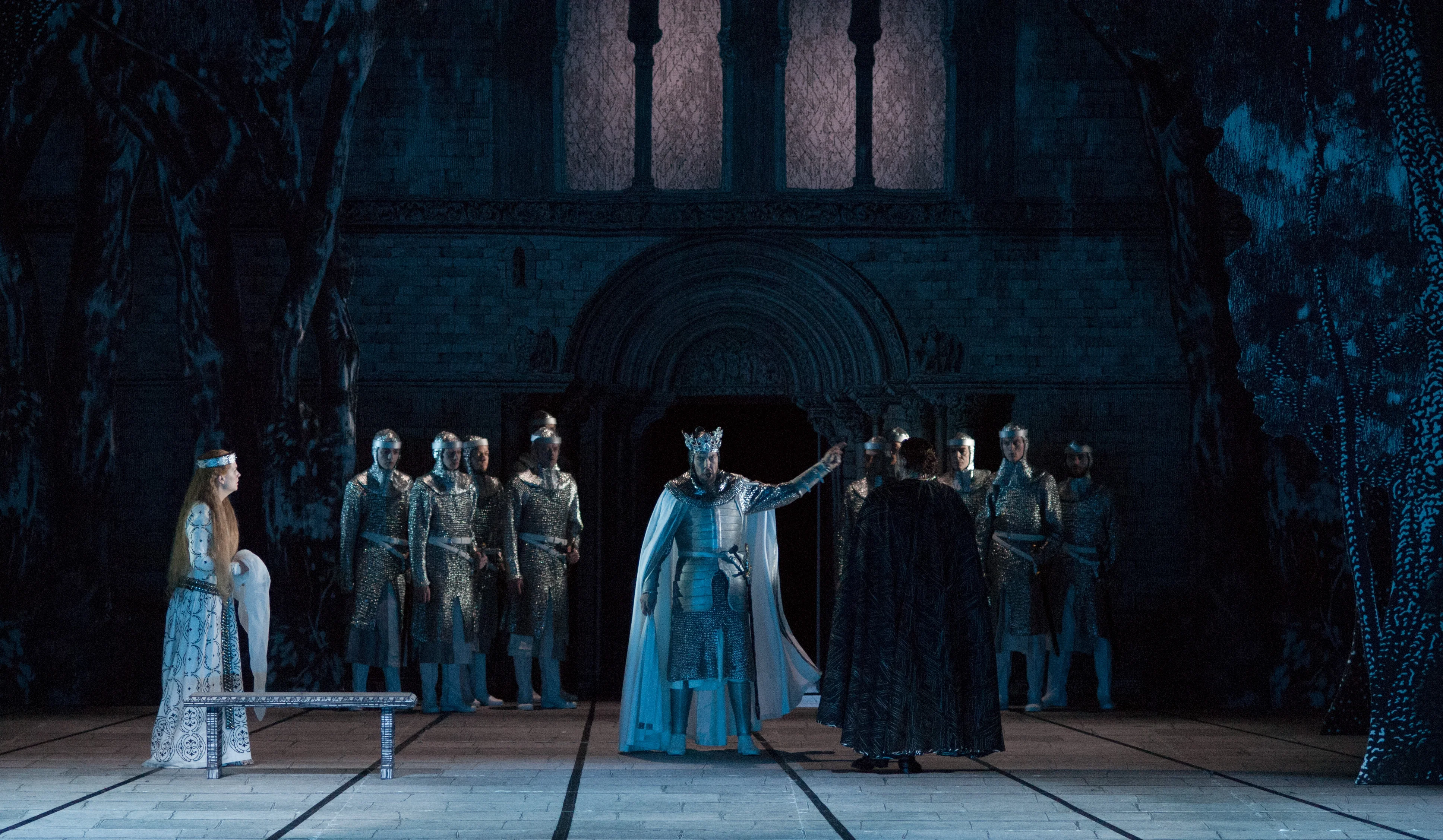
Georg Zeppenfeld: Wahnfried-Konzerte 2026 in Bayreuth
Ein Abend voller Balladen, Tiefe und Bayreuther Geschichte: Georg Zeppenfeld singt Carl Loewe im Haus Wahnfried. 4.8.2026, Tickets ab 15 Euro. Jetzt Plätze sichern! #Bayreuth #Konzert
Wahnfried Concerts 2026: Katharina Konradi and Joseph Middleton in Bayreuth
A special song evening in Bayreuth: Katharina Konradi and Joseph Middleton bring Liszt, Mahler, Schubert, and Strauss to Haus Wahnfried. 08.08.2026, tickets from 15 Euros. #Bayreuth #Classics
Wahnfried Concerts 2026: Johannes Martin Kränzle with Schubert, Mahler and Frank Martin
An evening full of song art in the historic Haus Wahnfried: Kränzle and Dumno present Schubert, Mahler, and Frank Martin. 8/9/2026, from 15 Euro. #Bayreuth #Concert
Wahnfried Concerts 2026 | Evening of Songs with Schubert
Schubert's Swansong at Wahnfried House: Alexander Grassauer and Stephan Matthias Lademann bring Bayreuth to listen. 11.08.2026, 7:30 PM. #Bayreuth

Erika Baikoff and Daniel Heide
Bayreuth gets an extraordinary song evening at Haus Wahnfried: Erika Baikoff and Daniel Heide combine great expressiveness and intimate closeness. 20.09.2026, tickets from 25 Euros. #Bayreuth

Rafael Fingerlos and Sascha El Mouissi
An evening full of song artistry and romance at the Haus Wahnfried in Bayreuth: Fingerlos and El Mouissi celebrate Mozart to Brahms. On 04.10.2026 from 25 euros. #Classical

Martin Häßler and Akemi Murakami in Bayreuth
Romantic song art in the historic Haus Wahnfried: Martin Häßler and Akemi Murakami interpret Schumann in Bayreuth. An evening full of closeness and expression. #Bayreuth #Concert
Frequently Asked Questions
Reviews
david antoun
6. October 2024
Wagner's house. The underground floor is a collection of books and original opera scripts and his signature. The ground floor is the statues hall, the piano/library room, and the dining/painting room. Between floors, there's the costumes cabinet and the opera cabinet. The first floor showcases Wagner's life stages with collectibles and sculptures. The garden house is an extension of this house with a large dining room and library room where documentaries are played all the time.
Alice K
22. September 2025
A really in-depth museum that does great justice to Wagner! It did a good job of covering his life and gave lots of interesting insights into him and his family. Occasionally there was info only in German, and I wish there were English translations for all the info boards, but it’s still super enjoyable for a Wagner fan regardless of your language. I think the entry price is fair when compared to other museums I’ve visited around Europe so far. This was my favourite day of my Europe trip and I’m very glad I got to visit.
Michiel Fokkema
7. August 2024
Great place to visit and learn more about Wagner. But ONLY if you're interested in Wagner. Basically, it's 3 museums. Wahnfried, where he lived, is about his life. Then the house next to it where his son Siegfried lived with his wife Winnifred, showing the darker side of the Wagner family history. Then there is the latest modern addition which houses an exhibition of costumes from the Wagner operas and temporary exhibitions. There is also a silent movie made for his 100th birthday. All in all, very interesting and informative.
T Z
28. December 2023
Way above my anticipation! I was gonna visit the Liszt museum but RWM was on the way, in the end this one trumped the Liszt museum from a non-German speaker, non-Wagner fan's viewpoint. To start with, impressive collections of costumes and opera set design down the -1 floor, with helpful staff who gave me an informative explanation when my tour guide stopped working. (sidenote: it's a bit sad to see the conductor wall swarming with nothing but white men) The museum buildings have been renovated in recent years in a fancy but not extravagant way. And they have the most comfortable sofa seat of all the museums that I've been to. P4 is Wagner's study/workplace, what a view!
elad hadad
17. August 2018
There are 2 parts in this museum: 1. The museum itself, where you can see Wagner's arts: his scripts, the opera house that he built, and costumes from his works. 2. The place where Wagner lived part of his life. You can find information about his history and see things related to him and his family. It was educational and interesting.