
Vordergeiersberg 30, Warmensteinach
Vordergeiersberg 30, 95485 Warmensteinach, Germany
Beekeeping Association Hohes Fichtelgebirge e.V. | Honey Festival & Tickets
The Beekeeping Association Hohes Fichtelgebirge e.V. is much more than a classic association for beekeepers: it connects regional community, educational work, honey culture, and nature experiences in the Hohes Fichtelgebirge. On the official website, a vibrant association is presented with thematic focuses such as wild bees, honey bees, beekeeping, themed trails, public relations, and the association's home. At the same time, it is firmly rooted in Warmensteinach and the surrounding region, where members from several municipalities come together to make their work around beekeeping, environmental education, and regional honey visible. The combination of club life, educational offerings, and events makes the location equally interesting for visitors, families, school groups, and nature enthusiasts. Those looking for events, honey festivals, directions, parking, or the association's home will find here not an anonymous event address, but a place with history, volunteer work, and a clear mission. ([imkerverein-hohesfichtelgebirge.com](https://www.imkerverein-hohesfichtelgebirge.com/))
Events, Honey Festival, and Current Dates
In the search queries related to the Beekeeping Association Hohes Fichtelgebirge e.V., events and tickets are at the forefront, and this is precisely where the association provides concrete points of connection. A central example is the 11th Bavarian Honey Festival 2025 in Bischofsgrün, which is extensively documented on the association's page. It was not only about honey sales but also about information on bee forage plants, wild bees, the demonstration bee colony, honey tasting, lecture topics, and family-friendly activities. The event showcased very well how the association brings together the public, expertise, and regional products. For visitors, this is important because here, no isolated club program is created, but a publicly visible format with exhibitor stands, lectures, and moments of enjoyment. So, those looking for events from the association will find not just individual dates but a clearly defined profile with a connection to nature and regional presence. ([imkerverein-hohesfichtelgebirge.com](https://www.imkerverein-hohesfichtelgebirge.com/11.bayerisches-honigfest.html))
The Honey Festival also clearly indicates what type of events the association typically supports: information, education, and regional value creation. In addition to the sale of regional honey, wild bees, seeds, and bee forage plants were also presented at the festival, along with lectures from experts such as Renate Frank and Prof. Dr. Stephan Schwarzinger. On the official page, such content is not presented as mere entertainment but as part of a larger educational effort around beekeeping, nature, and food safety. This is exactly where the strength of the association lies: events here are not just dates in the calendar but meeting places for knowledge, enjoyment, and engagement. Anyone attending an event learns about the association, its topics, and its environment. This also explains why search queries for events, honey festivals, and tickets are so closely related. ([imkerverein-hohesfichtelgebirge.com](https://www.imkerverein-hohesfichtelgebirge.com/11.bayerisches-honigfest.html))
Association Home in Fleckl: Renovation, Teaching Bee Stand, and Wild Bee Friendly Area
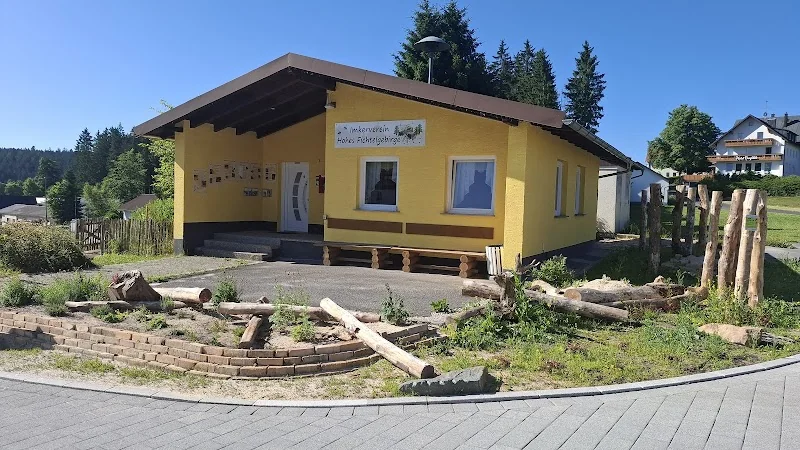
The association's home is one of the most important unique features of the Beekeeping Association. In 2021, the municipality of Warmensteinach leased the former reading hall in Fleckl to the association, and since then, the building has been gradually converted into the association's home. According to the association's page, the project was created in about 800 hours of voluntary work, supplemented by necessary work on electrical connections, doors, and windows. Particularly noteworthy is the design of the outdoor area: the north and west sides have been constructed to be wild bee-friendly with sandarium, flowering plants, sand compensation, dry stone walls, and hardwood logs. This makes the association's home not only a meeting point but also a practical example of ecological design in terms of promoting insects. Those looking for a location with character will find here not a neutral hall but a place where the content of the association becomes spatially visible. ([imkerverein-hohesfichtelgebirge.com](https://www.imkerverein-hohesfichtelgebirge.com/vereinsheim.html))
Additionally, there is the teaching bee stand on the east and south sides of the building. According to the website, trial beekeepers are trained there annually, meaning people who want to learn or deepen their knowledge of beekeeping. This is particularly relevant for SEO topics related to beekeeping, bee knowledge, and trial beekeeping, as it shows that the association does not just talk about bees but actively imparts knowledge. The outdoor area is also professionally thought out: the soil was depleted with a sand and compost mixture to create species-rich meadows, and at the same time, habitats for ground-nesting wild bees were created. The project was supported by junior rangers from the Fichtelgebirge Nature Park as well as several institutions and funding programs. Thus, a location is created that connects nature conservation, education, and club life into a coherent overall picture. ([imkerverein-hohesfichtelgebirge.com](https://www.imkerverein-hohesfichtelgebirge.com/vereinsheim.html))
For visitors, it is also important that the association's home is contextually embedded in the overall picture of the region. The association names the municipality of Warmensteinach as its seat, while the event location is listed in the regional event portal with Vordergeiersberg 30, 95485 Oberwarmensteinach. This makes the association's home easy to find and clearly distinguishable from other association addresses. This dual classification is practical because seekers often have to differentiate between the association address, contact person, and actual event location. Especially for local associations, this is a crucial SEO point: people want to know where something is taking place, where it can be contacted, and which place is used for events. In the case of the Beekeeping Association Hohes Fichtelgebirge e.V., this structure is easily understandable thanks to the association's home and portal information. ([imkerverein-hohesfichtelgebirge.com](https://www.imkerverein-hohesfichtelgebirge.com/aktuelle-situation.html))
History Since 1945: From the Warmensteinach Beekeeping Association to Hohes Fichtelgebirge
The history of the association goes back much further than the current name suggests. On the page about its development since 1945, the association describes that a founding already existed before World War II, even though many documents were lost in the turmoil of war. The oldest usable document dates back to 1940. From 1950 onwards, terms such as Small Animal Breeding Association Warmensteinach and Beekeeping, Fruit Growing, and Goat Breeding Association Warmensteinach appear in the documents. In 1952, an official membership list was created, which recorded 39 members and 160 bee colonies; the official name at that time was Beekeeping Association Warmensteinach. This development shows that the association did not only emerge with its current external impact but is deeply rooted in local association history. ([imkerverein-hohesfichtelgebirge.com](https://www.imkerverein-hohesfichtelgebirge.com/entwicklung-seit-1945.html))
The later development is also interesting. In 1959, a contract was concluded with the Weidenberg Forestry Office, which allowed the association to operate a queen bee breeding station. This was located in the state forest department of Langenschlag at an altitude of about 620 meters. In 1960, the active members managed a total of 317 bee colonies, and from 1981, the association was led by the state association under the name Beekeeping Association Warmensteinach. According to the association's page, since the first reliable records from 1951 to the present, 134 beekeepers have been officially listed as members. This history is therefore relevant for visitors and seekers because it makes the credibility and continuity of the association visible. The current name Beekeeping Association Hohes Fichtelgebirge e.V. thus stands on a very long foundation of association work, breeding, training, and regional bee culture. ([imkerverein-hohesfichtelgebirge.com](https://www.imkerverein-hohesfichtelgebirge.com/entwicklung-seit-1945.html))
Directions, Parking, and the Themed Trail Bee & Forest
Those looking for directions and parking will particularly encounter the themed trail Bee & Forest at the Beekeeping Association. According to the association's page, the trail starts at the Grünstein parking lot at an altitude of 733 meters, about 700 meters west of the village exit of Fichtelberg towards Warmensteinach. Parking is available there, and for buses, the panoramic road towards Silbereisen-Bergwerk is mentioned as a stopping and parking option. The trail itself is 2.6 kilometers long, barrier-free, and gravelled, making it easily walkable even on wet days. This is a great advantage for families, school classes, and nature enthusiasts because the themed trail is not only informative but also practically accessible. Those who experience the association through its nature offerings thus receive helpful visitor information at the same time. ([imkerverein-hohesfichtelgebirge.com](https://www.imkerverein-hohesfichtelgebirge.com/themenweg-biene---wald.html))
The themed trail focuses on four key areas: phenology, wild and honey bees, beekeeping, and bee forage plants. Along the way, visitors encounter four bee colonies in different hives, one of which is even in a tree trunk. This makes the themed trail not only didactic but also visually appealing. Particularly exciting is the location on the European watershed: from the parking lot to the turning point, visitors walk directly on the watershed, with waters flowing east through the Naab-Danube system into the Black Sea and west through the Steinach and Main-Rhine systems into the North Sea or the Atlantic. Such peculiarities give the place a strong recognition value and are valuable for SEO and user experience alike. ([imkerverein-hohesfichtelgebirge.com](https://www.imkerverein-hohesfichtelgebirge.com/themenweg-biene---wald.html))
Another plus is the historical context of the trail. A section of about 540 meters was part of the rally scoring test 48 during the 1972 Olympics; according to the association, this is where the career of the later two-time rally world champion Walter Röhrl even began. Thus, the themed trail connects nature education with regional sports history. For families, the association also notes that the trail is recommended for children from the end of the second grade, and younger children might find visiting the bee colonies at the association's home more meaningful. This honest visitor orientation appears trustworthy and shows that the association not only offers a beautiful excursion destination but also provides concrete recommendations for different target groups. ([imkerverein-hohesfichtelgebirge.com](https://www.imkerverein-hohesfichtelgebirge.com/themenweg-biene---wald.html))
Wild Bees, Trial Beekeeping, and Public Relations
A central theme of the association's work is the connection between beekeeping and nature conservation. On the page about the current situation, it states that the association currently has 51 members and manages around 360 bee colonies. The members come from many municipalities in the region, from Bad Berneck and Bischofsgrün to Wunsiedel and Warmensteinach. The bee colonies are located around Ochsenkopf and Schneeberg at altitudes between 450 and 838 meters. These data show how strongly the association is anchored in the Fichtelgebirge and that its work is not limited to a single location. For search queries related to beekeeping, bee knowledge, or regional honey, this is a strong signal: this is an active, large community with concrete regional impact. ([imkerverein-hohesfichtelgebirge.com](https://www.imkerverein-hohesfichtelgebirge.com/aktuelle-situation.html))
Public relations are particularly important. The association describes that it wants to be present at public events in the Hohes Fichtelgebirge and should feel addressed in good time when markets, school projects, or association events need beekeepers. Among other things, a sales stand, small exhibitions with display boards, the pouring of beeswax tea lights, demonstrations of beekeeping activities, as well as lectures and presentations are offered. These offerings make the association accessible to schools, kindergartens, senior groups, hiking groups, and company outings. The combination of practical demonstration and expert information is particularly interesting for visitors who want to better understand the topic of beekeeping, not just buy products. ([imkerverein-hohesfichtelgebirge.com](https://www.imkerverein-hohesfichtelgebirge.com/oeffentlichkeitsarbeit.html))
The mobile demonstration bee colony is also a strong element of this public relations work. The association's page emphasizes that it is ideally suited to educate customers or visitors in lectures and presentations. Additionally, PowerPoint presentations with topics such as beekeeping as a hobby or the fascination of bees are included. The association even provides time estimates and costs for certain formats, which underscores the professionalism of the educational work. For the keyword logic surrounding trial beekeeping, bee knowledge, and wild bees, this is particularly valuable because seekers can quickly recognize that the association not only informs about beekeeping but also provides learning opportunities and concrete programs. The association's home and public relations work interlink here and create a clear positioning as an educational and nature association. ([imkerverein-hohesfichtelgebirge.com](https://www.imkerverein-hohesfichtelgebirge.com/oeffentlichkeitsarbeit.html))
Honey Sales, Awards, and Regional Presence
That honey and regional products play a significant role is also shown by the page on the specialty competition. There, the forest honey of the Beekeeping Association Hohes Fichtelgebirge is explicitly mentioned as the winner of the Bayreuth district. This fits perfectly with the association's environment, as forest honey is particularly suitable for a region like the Fichtelgebirge with its forests and elevations. The award not only underscores product quality but also the connection between landscape, beekeeping, and regional identity. For visitors, this is interesting because the association's work is expressed not abstractly but in a concrete food product and an award. ([imkerverein-hohesfichtelgebirge.com](https://www.imkerverein-hohesfichtelgebirge.com/spezialitaetenwettbewerb.html))
This focus is also visible at the Honey Festival. On the official event page, the sale of regional honey, honey tasting, information on bee forage plants and wild bees, as well as the adjustment of refractometers are mentioned. It is clear that the association not only organizes events but also places professional standards and product quality at the center. Additionally, the website shows various product areas such as honey varieties, propolis, pollen, as well as wax and candles. This variety appeals to seekers who are not only interested in attending an event but also in the products and the beekeeping practices of the association. This strengthens the perception as a regional provider with competence and tradition. ([imkerverein-hohesfichtelgebirge.com](https://www.imkerverein-hohesfichtelgebirge.com/11.bayerisches-honigfest.html))
Regional presence also includes public visibility in communities, media, and partner networks. The association refers to supporters, sponsors, and partners as well as appearances at public events. This shows that it does not operate in isolation in the Hohes Fichtelgebirge but is part of a larger regional network. For SEO texts, this means: those searching for beekeeping associations, honey sales, bee knowledge, or regional events receive not just an address but a whole ecosystem of education, product culture, and nature conservation. This mix makes the association interesting for families, excursionists, schools, and nature lovers. ([imkerverein-hohesfichtelgebirge.com](https://www.imkerverein-hohesfichtelgebirge.com/oeffentlichkeitsarbeit.html))
Tickets and Admission: What Visitors Should Know
The search term tickets is interpreted somewhat differently for an association of this kind than for a classic concert or sports arena. For the 11th Bavarian Honey Festival 2025, the municipality and event page explicitly advertised free admission. This is important information for visitors because it shows that access to many offerings works more through open events than through a classic ticket model. At the same time, the content is very clearly structured: lectures, information stands, honey sales, children's activities, and participation programs. So, those looking for tickets should primarily check the respective event page and refer to the date and admission information provided there. ([fichtelberg.de](https://www.fichtelberg.de/veranstaltungen/2768316/2025/11/02/11.-bayerisches-honigfest-in-bischofsgr%C3%BCn.html))
For individual educational offerings, the association, on the other hand, specifies concrete costs, for example, for lectures or the presentation of beekeeping for interested groups. This is an important difference: not everything runs through admission tickets, but some through group offerings or lecture bookings. This makes the association's structure so flexible. Visitors can experience open-access formats like the themed trail or the honey festival while schools, associations, or groups can book specialized programs as needed. Therefore, the best answer to the search intention behind tickets is: the association works with public events, free admissions, and bookable educational offerings. Those wishing to participate should always read the specific event description instead of assuming a ticket shop. This saves time and leads directly to the relevant information. ([imkerverein-hohesfichtelgebirge.com](https://www.imkerverein-hohesfichtelgebirge.com/oeffentlichkeitsarbeit.html))
Sources:
- Beekeeping Association Hohes Fichtelgebirge - Homepage
- Beekeeping Association Hohes Fichtelgebirge - Association Home
- Beekeeping Association Hohes Fichtelgebirge - Themed Trail Bee & Forest
- Beekeeping Association Hohes Fichtelgebirge - 11th Bavarian Honey Festival 2025
- Beekeeping Association Hohes Fichtelgebirge - Development Since 1945
- City Country Life - Organizer Profile Beekeeping Association Hohes Fichtelgebirge e.V.
Show moreShow less
Beekeeping Association Hohes Fichtelgebirge e.V. | Honey Festival & Tickets
The Beekeeping Association Hohes Fichtelgebirge e.V. is much more than a classic association for beekeepers: it connects regional community, educational work, honey culture, and nature experiences in the Hohes Fichtelgebirge. On the official website, a vibrant association is presented with thematic focuses such as wild bees, honey bees, beekeeping, themed trails, public relations, and the association's home. At the same time, it is firmly rooted in Warmensteinach and the surrounding region, where members from several municipalities come together to make their work around beekeeping, environmental education, and regional honey visible. The combination of club life, educational offerings, and events makes the location equally interesting for visitors, families, school groups, and nature enthusiasts. Those looking for events, honey festivals, directions, parking, or the association's home will find here not an anonymous event address, but a place with history, volunteer work, and a clear mission. ([imkerverein-hohesfichtelgebirge.com](https://www.imkerverein-hohesfichtelgebirge.com/))
Events, Honey Festival, and Current Dates
In the search queries related to the Beekeeping Association Hohes Fichtelgebirge e.V., events and tickets are at the forefront, and this is precisely where the association provides concrete points of connection. A central example is the 11th Bavarian Honey Festival 2025 in Bischofsgrün, which is extensively documented on the association's page. It was not only about honey sales but also about information on bee forage plants, wild bees, the demonstration bee colony, honey tasting, lecture topics, and family-friendly activities. The event showcased very well how the association brings together the public, expertise, and regional products. For visitors, this is important because here, no isolated club program is created, but a publicly visible format with exhibitor stands, lectures, and moments of enjoyment. So, those looking for events from the association will find not just individual dates but a clearly defined profile with a connection to nature and regional presence. ([imkerverein-hohesfichtelgebirge.com](https://www.imkerverein-hohesfichtelgebirge.com/11.bayerisches-honigfest.html))
The Honey Festival also clearly indicates what type of events the association typically supports: information, education, and regional value creation. In addition to the sale of regional honey, wild bees, seeds, and bee forage plants were also presented at the festival, along with lectures from experts such as Renate Frank and Prof. Dr. Stephan Schwarzinger. On the official page, such content is not presented as mere entertainment but as part of a larger educational effort around beekeeping, nature, and food safety. This is exactly where the strength of the association lies: events here are not just dates in the calendar but meeting places for knowledge, enjoyment, and engagement. Anyone attending an event learns about the association, its topics, and its environment. This also explains why search queries for events, honey festivals, and tickets are so closely related. ([imkerverein-hohesfichtelgebirge.com](https://www.imkerverein-hohesfichtelgebirge.com/11.bayerisches-honigfest.html))
Association Home in Fleckl: Renovation, Teaching Bee Stand, and Wild Bee Friendly Area
The association's home is one of the most important unique features of the Beekeeping Association. In 2021, the municipality of Warmensteinach leased the former reading hall in Fleckl to the association, and since then, the building has been gradually converted into the association's home. According to the association's page, the project was created in about 800 hours of voluntary work, supplemented by necessary work on electrical connections, doors, and windows. Particularly noteworthy is the design of the outdoor area: the north and west sides have been constructed to be wild bee-friendly with sandarium, flowering plants, sand compensation, dry stone walls, and hardwood logs. This makes the association's home not only a meeting point but also a practical example of ecological design in terms of promoting insects. Those looking for a location with character will find here not a neutral hall but a place where the content of the association becomes spatially visible. ([imkerverein-hohesfichtelgebirge.com](https://www.imkerverein-hohesfichtelgebirge.com/vereinsheim.html))
Additionally, there is the teaching bee stand on the east and south sides of the building. According to the website, trial beekeepers are trained there annually, meaning people who want to learn or deepen their knowledge of beekeeping. This is particularly relevant for SEO topics related to beekeeping, bee knowledge, and trial beekeeping, as it shows that the association does not just talk about bees but actively imparts knowledge. The outdoor area is also professionally thought out: the soil was depleted with a sand and compost mixture to create species-rich meadows, and at the same time, habitats for ground-nesting wild bees were created. The project was supported by junior rangers from the Fichtelgebirge Nature Park as well as several institutions and funding programs. Thus, a location is created that connects nature conservation, education, and club life into a coherent overall picture. ([imkerverein-hohesfichtelgebirge.com](https://www.imkerverein-hohesfichtelgebirge.com/vereinsheim.html))
For visitors, it is also important that the association's home is contextually embedded in the overall picture of the region. The association names the municipality of Warmensteinach as its seat, while the event location is listed in the regional event portal with Vordergeiersberg 30, 95485 Oberwarmensteinach. This makes the association's home easy to find and clearly distinguishable from other association addresses. This dual classification is practical because seekers often have to differentiate between the association address, contact person, and actual event location. Especially for local associations, this is a crucial SEO point: people want to know where something is taking place, where it can be contacted, and which place is used for events. In the case of the Beekeeping Association Hohes Fichtelgebirge e.V., this structure is easily understandable thanks to the association's home and portal information. ([imkerverein-hohesfichtelgebirge.com](https://www.imkerverein-hohesfichtelgebirge.com/aktuelle-situation.html))
History Since 1945: From the Warmensteinach Beekeeping Association to Hohes Fichtelgebirge
The history of the association goes back much further than the current name suggests. On the page about its development since 1945, the association describes that a founding already existed before World War II, even though many documents were lost in the turmoil of war. The oldest usable document dates back to 1940. From 1950 onwards, terms such as Small Animal Breeding Association Warmensteinach and Beekeeping, Fruit Growing, and Goat Breeding Association Warmensteinach appear in the documents. In 1952, an official membership list was created, which recorded 39 members and 160 bee colonies; the official name at that time was Beekeeping Association Warmensteinach. This development shows that the association did not only emerge with its current external impact but is deeply rooted in local association history. ([imkerverein-hohesfichtelgebirge.com](https://www.imkerverein-hohesfichtelgebirge.com/entwicklung-seit-1945.html))
The later development is also interesting. In 1959, a contract was concluded with the Weidenberg Forestry Office, which allowed the association to operate a queen bee breeding station. This was located in the state forest department of Langenschlag at an altitude of about 620 meters. In 1960, the active members managed a total of 317 bee colonies, and from 1981, the association was led by the state association under the name Beekeeping Association Warmensteinach. According to the association's page, since the first reliable records from 1951 to the present, 134 beekeepers have been officially listed as members. This history is therefore relevant for visitors and seekers because it makes the credibility and continuity of the association visible. The current name Beekeeping Association Hohes Fichtelgebirge e.V. thus stands on a very long foundation of association work, breeding, training, and regional bee culture. ([imkerverein-hohesfichtelgebirge.com](https://www.imkerverein-hohesfichtelgebirge.com/entwicklung-seit-1945.html))
Directions, Parking, and the Themed Trail Bee & Forest
Those looking for directions and parking will particularly encounter the themed trail Bee & Forest at the Beekeeping Association. According to the association's page, the trail starts at the Grünstein parking lot at an altitude of 733 meters, about 700 meters west of the village exit of Fichtelberg towards Warmensteinach. Parking is available there, and for buses, the panoramic road towards Silbereisen-Bergwerk is mentioned as a stopping and parking option. The trail itself is 2.6 kilometers long, barrier-free, and gravelled, making it easily walkable even on wet days. This is a great advantage for families, school classes, and nature enthusiasts because the themed trail is not only informative but also practically accessible. Those who experience the association through its nature offerings thus receive helpful visitor information at the same time. ([imkerverein-hohesfichtelgebirge.com](https://www.imkerverein-hohesfichtelgebirge.com/themenweg-biene---wald.html))
The themed trail focuses on four key areas: phenology, wild and honey bees, beekeeping, and bee forage plants. Along the way, visitors encounter four bee colonies in different hives, one of which is even in a tree trunk. This makes the themed trail not only didactic but also visually appealing. Particularly exciting is the location on the European watershed: from the parking lot to the turning point, visitors walk directly on the watershed, with waters flowing east through the Naab-Danube system into the Black Sea and west through the Steinach and Main-Rhine systems into the North Sea or the Atlantic. Such peculiarities give the place a strong recognition value and are valuable for SEO and user experience alike. ([imkerverein-hohesfichtelgebirge.com](https://www.imkerverein-hohesfichtelgebirge.com/themenweg-biene---wald.html))
Another plus is the historical context of the trail. A section of about 540 meters was part of the rally scoring test 48 during the 1972 Olympics; according to the association, this is where the career of the later two-time rally world champion Walter Röhrl even began. Thus, the themed trail connects nature education with regional sports history. For families, the association also notes that the trail is recommended for children from the end of the second grade, and younger children might find visiting the bee colonies at the association's home more meaningful. This honest visitor orientation appears trustworthy and shows that the association not only offers a beautiful excursion destination but also provides concrete recommendations for different target groups. ([imkerverein-hohesfichtelgebirge.com](https://www.imkerverein-hohesfichtelgebirge.com/themenweg-biene---wald.html))
Wild Bees, Trial Beekeeping, and Public Relations
A central theme of the association's work is the connection between beekeeping and nature conservation. On the page about the current situation, it states that the association currently has 51 members and manages around 360 bee colonies. The members come from many municipalities in the region, from Bad Berneck and Bischofsgrün to Wunsiedel and Warmensteinach. The bee colonies are located around Ochsenkopf and Schneeberg at altitudes between 450 and 838 meters. These data show how strongly the association is anchored in the Fichtelgebirge and that its work is not limited to a single location. For search queries related to beekeeping, bee knowledge, or regional honey, this is a strong signal: this is an active, large community with concrete regional impact. ([imkerverein-hohesfichtelgebirge.com](https://www.imkerverein-hohesfichtelgebirge.com/aktuelle-situation.html))
Public relations are particularly important. The association describes that it wants to be present at public events in the Hohes Fichtelgebirge and should feel addressed in good time when markets, school projects, or association events need beekeepers. Among other things, a sales stand, small exhibitions with display boards, the pouring of beeswax tea lights, demonstrations of beekeeping activities, as well as lectures and presentations are offered. These offerings make the association accessible to schools, kindergartens, senior groups, hiking groups, and company outings. The combination of practical demonstration and expert information is particularly interesting for visitors who want to better understand the topic of beekeeping, not just buy products. ([imkerverein-hohesfichtelgebirge.com](https://www.imkerverein-hohesfichtelgebirge.com/oeffentlichkeitsarbeit.html))
The mobile demonstration bee colony is also a strong element of this public relations work. The association's page emphasizes that it is ideally suited to educate customers or visitors in lectures and presentations. Additionally, PowerPoint presentations with topics such as beekeeping as a hobby or the fascination of bees are included. The association even provides time estimates and costs for certain formats, which underscores the professionalism of the educational work. For the keyword logic surrounding trial beekeeping, bee knowledge, and wild bees, this is particularly valuable because seekers can quickly recognize that the association not only informs about beekeeping but also provides learning opportunities and concrete programs. The association's home and public relations work interlink here and create a clear positioning as an educational and nature association. ([imkerverein-hohesfichtelgebirge.com](https://www.imkerverein-hohesfichtelgebirge.com/oeffentlichkeitsarbeit.html))
Honey Sales, Awards, and Regional Presence
That honey and regional products play a significant role is also shown by the page on the specialty competition. There, the forest honey of the Beekeeping Association Hohes Fichtelgebirge is explicitly mentioned as the winner of the Bayreuth district. This fits perfectly with the association's environment, as forest honey is particularly suitable for a region like the Fichtelgebirge with its forests and elevations. The award not only underscores product quality but also the connection between landscape, beekeeping, and regional identity. For visitors, this is interesting because the association's work is expressed not abstractly but in a concrete food product and an award. ([imkerverein-hohesfichtelgebirge.com](https://www.imkerverein-hohesfichtelgebirge.com/spezialitaetenwettbewerb.html))
This focus is also visible at the Honey Festival. On the official event page, the sale of regional honey, honey tasting, information on bee forage plants and wild bees, as well as the adjustment of refractometers are mentioned. It is clear that the association not only organizes events but also places professional standards and product quality at the center. Additionally, the website shows various product areas such as honey varieties, propolis, pollen, as well as wax and candles. This variety appeals to seekers who are not only interested in attending an event but also in the products and the beekeeping practices of the association. This strengthens the perception as a regional provider with competence and tradition. ([imkerverein-hohesfichtelgebirge.com](https://www.imkerverein-hohesfichtelgebirge.com/11.bayerisches-honigfest.html))
Regional presence also includes public visibility in communities, media, and partner networks. The association refers to supporters, sponsors, and partners as well as appearances at public events. This shows that it does not operate in isolation in the Hohes Fichtelgebirge but is part of a larger regional network. For SEO texts, this means: those searching for beekeeping associations, honey sales, bee knowledge, or regional events receive not just an address but a whole ecosystem of education, product culture, and nature conservation. This mix makes the association interesting for families, excursionists, schools, and nature lovers. ([imkerverein-hohesfichtelgebirge.com](https://www.imkerverein-hohesfichtelgebirge.com/oeffentlichkeitsarbeit.html))
Tickets and Admission: What Visitors Should Know
The search term tickets is interpreted somewhat differently for an association of this kind than for a classic concert or sports arena. For the 11th Bavarian Honey Festival 2025, the municipality and event page explicitly advertised free admission. This is important information for visitors because it shows that access to many offerings works more through open events than through a classic ticket model. At the same time, the content is very clearly structured: lectures, information stands, honey sales, children's activities, and participation programs. So, those looking for tickets should primarily check the respective event page and refer to the date and admission information provided there. ([fichtelberg.de](https://www.fichtelberg.de/veranstaltungen/2768316/2025/11/02/11.-bayerisches-honigfest-in-bischofsgr%C3%BCn.html))
For individual educational offerings, the association, on the other hand, specifies concrete costs, for example, for lectures or the presentation of beekeeping for interested groups. This is an important difference: not everything runs through admission tickets, but some through group offerings or lecture bookings. This makes the association's structure so flexible. Visitors can experience open-access formats like the themed trail or the honey festival while schools, associations, or groups can book specialized programs as needed. Therefore, the best answer to the search intention behind tickets is: the association works with public events, free admissions, and bookable educational offerings. Those wishing to participate should always read the specific event description instead of assuming a ticket shop. This saves time and leads directly to the relevant information. ([imkerverein-hohesfichtelgebirge.com](https://www.imkerverein-hohesfichtelgebirge.com/oeffentlichkeitsarbeit.html))
Sources:
- Beekeeping Association Hohes Fichtelgebirge - Homepage
- Beekeeping Association Hohes Fichtelgebirge - Association Home
- Beekeeping Association Hohes Fichtelgebirge - Themed Trail Bee & Forest
- Beekeeping Association Hohes Fichtelgebirge - 11th Bavarian Honey Festival 2025
- Beekeeping Association Hohes Fichtelgebirge - Development Since 1945
- City Country Life - Organizer Profile Beekeeping Association Hohes Fichtelgebirge e.V.
Beekeeping Association Hohes Fichtelgebirge e.V. | Honey Festival & Tickets
The Beekeeping Association Hohes Fichtelgebirge e.V. is much more than a classic association for beekeepers: it connects regional community, educational work, honey culture, and nature experiences in the Hohes Fichtelgebirge. On the official website, a vibrant association is presented with thematic focuses such as wild bees, honey bees, beekeeping, themed trails, public relations, and the association's home. At the same time, it is firmly rooted in Warmensteinach and the surrounding region, where members from several municipalities come together to make their work around beekeeping, environmental education, and regional honey visible. The combination of club life, educational offerings, and events makes the location equally interesting for visitors, families, school groups, and nature enthusiasts. Those looking for events, honey festivals, directions, parking, or the association's home will find here not an anonymous event address, but a place with history, volunteer work, and a clear mission. ([imkerverein-hohesfichtelgebirge.com](https://www.imkerverein-hohesfichtelgebirge.com/))
Events, Honey Festival, and Current Dates
In the search queries related to the Beekeeping Association Hohes Fichtelgebirge e.V., events and tickets are at the forefront, and this is precisely where the association provides concrete points of connection. A central example is the 11th Bavarian Honey Festival 2025 in Bischofsgrün, which is extensively documented on the association's page. It was not only about honey sales but also about information on bee forage plants, wild bees, the demonstration bee colony, honey tasting, lecture topics, and family-friendly activities. The event showcased very well how the association brings together the public, expertise, and regional products. For visitors, this is important because here, no isolated club program is created, but a publicly visible format with exhibitor stands, lectures, and moments of enjoyment. So, those looking for events from the association will find not just individual dates but a clearly defined profile with a connection to nature and regional presence. ([imkerverein-hohesfichtelgebirge.com](https://www.imkerverein-hohesfichtelgebirge.com/11.bayerisches-honigfest.html))
The Honey Festival also clearly indicates what type of events the association typically supports: information, education, and regional value creation. In addition to the sale of regional honey, wild bees, seeds, and bee forage plants were also presented at the festival, along with lectures from experts such as Renate Frank and Prof. Dr. Stephan Schwarzinger. On the official page, such content is not presented as mere entertainment but as part of a larger educational effort around beekeeping, nature, and food safety. This is exactly where the strength of the association lies: events here are not just dates in the calendar but meeting places for knowledge, enjoyment, and engagement. Anyone attending an event learns about the association, its topics, and its environment. This also explains why search queries for events, honey festivals, and tickets are so closely related. ([imkerverein-hohesfichtelgebirge.com](https://www.imkerverein-hohesfichtelgebirge.com/11.bayerisches-honigfest.html))
Association Home in Fleckl: Renovation, Teaching Bee Stand, and Wild Bee Friendly Area
The association's home is one of the most important unique features of the Beekeeping Association. In 2021, the municipality of Warmensteinach leased the former reading hall in Fleckl to the association, and since then, the building has been gradually converted into the association's home. According to the association's page, the project was created in about 800 hours of voluntary work, supplemented by necessary work on electrical connections, doors, and windows. Particularly noteworthy is the design of the outdoor area: the north and west sides have been constructed to be wild bee-friendly with sandarium, flowering plants, sand compensation, dry stone walls, and hardwood logs. This makes the association's home not only a meeting point but also a practical example of ecological design in terms of promoting insects. Those looking for a location with character will find here not a neutral hall but a place where the content of the association becomes spatially visible. ([imkerverein-hohesfichtelgebirge.com](https://www.imkerverein-hohesfichtelgebirge.com/vereinsheim.html))
Additionally, there is the teaching bee stand on the east and south sides of the building. According to the website, trial beekeepers are trained there annually, meaning people who want to learn or deepen their knowledge of beekeeping. This is particularly relevant for SEO topics related to beekeeping, bee knowledge, and trial beekeeping, as it shows that the association does not just talk about bees but actively imparts knowledge. The outdoor area is also professionally thought out: the soil was depleted with a sand and compost mixture to create species-rich meadows, and at the same time, habitats for ground-nesting wild bees were created. The project was supported by junior rangers from the Fichtelgebirge Nature Park as well as several institutions and funding programs. Thus, a location is created that connects nature conservation, education, and club life into a coherent overall picture. ([imkerverein-hohesfichtelgebirge.com](https://www.imkerverein-hohesfichtelgebirge.com/vereinsheim.html))
For visitors, it is also important that the association's home is contextually embedded in the overall picture of the region. The association names the municipality of Warmensteinach as its seat, while the event location is listed in the regional event portal with Vordergeiersberg 30, 95485 Oberwarmensteinach. This makes the association's home easy to find and clearly distinguishable from other association addresses. This dual classification is practical because seekers often have to differentiate between the association address, contact person, and actual event location. Especially for local associations, this is a crucial SEO point: people want to know where something is taking place, where it can be contacted, and which place is used for events. In the case of the Beekeeping Association Hohes Fichtelgebirge e.V., this structure is easily understandable thanks to the association's home and portal information. ([imkerverein-hohesfichtelgebirge.com](https://www.imkerverein-hohesfichtelgebirge.com/aktuelle-situation.html))
History Since 1945: From the Warmensteinach Beekeeping Association to Hohes Fichtelgebirge
The history of the association goes back much further than the current name suggests. On the page about its development since 1945, the association describes that a founding already existed before World War II, even though many documents were lost in the turmoil of war. The oldest usable document dates back to 1940. From 1950 onwards, terms such as Small Animal Breeding Association Warmensteinach and Beekeeping, Fruit Growing, and Goat Breeding Association Warmensteinach appear in the documents. In 1952, an official membership list was created, which recorded 39 members and 160 bee colonies; the official name at that time was Beekeeping Association Warmensteinach. This development shows that the association did not only emerge with its current external impact but is deeply rooted in local association history. ([imkerverein-hohesfichtelgebirge.com](https://www.imkerverein-hohesfichtelgebirge.com/entwicklung-seit-1945.html))
The later development is also interesting. In 1959, a contract was concluded with the Weidenberg Forestry Office, which allowed the association to operate a queen bee breeding station. This was located in the state forest department of Langenschlag at an altitude of about 620 meters. In 1960, the active members managed a total of 317 bee colonies, and from 1981, the association was led by the state association under the name Beekeeping Association Warmensteinach. According to the association's page, since the first reliable records from 1951 to the present, 134 beekeepers have been officially listed as members. This history is therefore relevant for visitors and seekers because it makes the credibility and continuity of the association visible. The current name Beekeeping Association Hohes Fichtelgebirge e.V. thus stands on a very long foundation of association work, breeding, training, and regional bee culture. ([imkerverein-hohesfichtelgebirge.com](https://www.imkerverein-hohesfichtelgebirge.com/entwicklung-seit-1945.html))
Directions, Parking, and the Themed Trail Bee & Forest
Those looking for directions and parking will particularly encounter the themed trail Bee & Forest at the Beekeeping Association. According to the association's page, the trail starts at the Grünstein parking lot at an altitude of 733 meters, about 700 meters west of the village exit of Fichtelberg towards Warmensteinach. Parking is available there, and for buses, the panoramic road towards Silbereisen-Bergwerk is mentioned as a stopping and parking option. The trail itself is 2.6 kilometers long, barrier-free, and gravelled, making it easily walkable even on wet days. This is a great advantage for families, school classes, and nature enthusiasts because the themed trail is not only informative but also practically accessible. Those who experience the association through its nature offerings thus receive helpful visitor information at the same time. ([imkerverein-hohesfichtelgebirge.com](https://www.imkerverein-hohesfichtelgebirge.com/themenweg-biene---wald.html))
The themed trail focuses on four key areas: phenology, wild and honey bees, beekeeping, and bee forage plants. Along the way, visitors encounter four bee colonies in different hives, one of which is even in a tree trunk. This makes the themed trail not only didactic but also visually appealing. Particularly exciting is the location on the European watershed: from the parking lot to the turning point, visitors walk directly on the watershed, with waters flowing east through the Naab-Danube system into the Black Sea and west through the Steinach and Main-Rhine systems into the North Sea or the Atlantic. Such peculiarities give the place a strong recognition value and are valuable for SEO and user experience alike. ([imkerverein-hohesfichtelgebirge.com](https://www.imkerverein-hohesfichtelgebirge.com/themenweg-biene---wald.html))
Another plus is the historical context of the trail. A section of about 540 meters was part of the rally scoring test 48 during the 1972 Olympics; according to the association, this is where the career of the later two-time rally world champion Walter Röhrl even began. Thus, the themed trail connects nature education with regional sports history. For families, the association also notes that the trail is recommended for children from the end of the second grade, and younger children might find visiting the bee colonies at the association's home more meaningful. This honest visitor orientation appears trustworthy and shows that the association not only offers a beautiful excursion destination but also provides concrete recommendations for different target groups. ([imkerverein-hohesfichtelgebirge.com](https://www.imkerverein-hohesfichtelgebirge.com/themenweg-biene---wald.html))
Wild Bees, Trial Beekeeping, and Public Relations
A central theme of the association's work is the connection between beekeeping and nature conservation. On the page about the current situation, it states that the association currently has 51 members and manages around 360 bee colonies. The members come from many municipalities in the region, from Bad Berneck and Bischofsgrün to Wunsiedel and Warmensteinach. The bee colonies are located around Ochsenkopf and Schneeberg at altitudes between 450 and 838 meters. These data show how strongly the association is anchored in the Fichtelgebirge and that its work is not limited to a single location. For search queries related to beekeeping, bee knowledge, or regional honey, this is a strong signal: this is an active, large community with concrete regional impact. ([imkerverein-hohesfichtelgebirge.com](https://www.imkerverein-hohesfichtelgebirge.com/aktuelle-situation.html))
Public relations are particularly important. The association describes that it wants to be present at public events in the Hohes Fichtelgebirge and should feel addressed in good time when markets, school projects, or association events need beekeepers. Among other things, a sales stand, small exhibitions with display boards, the pouring of beeswax tea lights, demonstrations of beekeeping activities, as well as lectures and presentations are offered. These offerings make the association accessible to schools, kindergartens, senior groups, hiking groups, and company outings. The combination of practical demonstration and expert information is particularly interesting for visitors who want to better understand the topic of beekeeping, not just buy products. ([imkerverein-hohesfichtelgebirge.com](https://www.imkerverein-hohesfichtelgebirge.com/oeffentlichkeitsarbeit.html))
The mobile demonstration bee colony is also a strong element of this public relations work. The association's page emphasizes that it is ideally suited to educate customers or visitors in lectures and presentations. Additionally, PowerPoint presentations with topics such as beekeeping as a hobby or the fascination of bees are included. The association even provides time estimates and costs for certain formats, which underscores the professionalism of the educational work. For the keyword logic surrounding trial beekeeping, bee knowledge, and wild bees, this is particularly valuable because seekers can quickly recognize that the association not only informs about beekeeping but also provides learning opportunities and concrete programs. The association's home and public relations work interlink here and create a clear positioning as an educational and nature association. ([imkerverein-hohesfichtelgebirge.com](https://www.imkerverein-hohesfichtelgebirge.com/oeffentlichkeitsarbeit.html))
Honey Sales, Awards, and Regional Presence
That honey and regional products play a significant role is also shown by the page on the specialty competition. There, the forest honey of the Beekeeping Association Hohes Fichtelgebirge is explicitly mentioned as the winner of the Bayreuth district. This fits perfectly with the association's environment, as forest honey is particularly suitable for a region like the Fichtelgebirge with its forests and elevations. The award not only underscores product quality but also the connection between landscape, beekeeping, and regional identity. For visitors, this is interesting because the association's work is expressed not abstractly but in a concrete food product and an award. ([imkerverein-hohesfichtelgebirge.com](https://www.imkerverein-hohesfichtelgebirge.com/spezialitaetenwettbewerb.html))
This focus is also visible at the Honey Festival. On the official event page, the sale of regional honey, honey tasting, information on bee forage plants and wild bees, as well as the adjustment of refractometers are mentioned. It is clear that the association not only organizes events but also places professional standards and product quality at the center. Additionally, the website shows various product areas such as honey varieties, propolis, pollen, as well as wax and candles. This variety appeals to seekers who are not only interested in attending an event but also in the products and the beekeeping practices of the association. This strengthens the perception as a regional provider with competence and tradition. ([imkerverein-hohesfichtelgebirge.com](https://www.imkerverein-hohesfichtelgebirge.com/11.bayerisches-honigfest.html))
Regional presence also includes public visibility in communities, media, and partner networks. The association refers to supporters, sponsors, and partners as well as appearances at public events. This shows that it does not operate in isolation in the Hohes Fichtelgebirge but is part of a larger regional network. For SEO texts, this means: those searching for beekeeping associations, honey sales, bee knowledge, or regional events receive not just an address but a whole ecosystem of education, product culture, and nature conservation. This mix makes the association interesting for families, excursionists, schools, and nature lovers. ([imkerverein-hohesfichtelgebirge.com](https://www.imkerverein-hohesfichtelgebirge.com/oeffentlichkeitsarbeit.html))
Tickets and Admission: What Visitors Should Know
The search term tickets is interpreted somewhat differently for an association of this kind than for a classic concert or sports arena. For the 11th Bavarian Honey Festival 2025, the municipality and event page explicitly advertised free admission. This is important information for visitors because it shows that access to many offerings works more through open events than through a classic ticket model. At the same time, the content is very clearly structured: lectures, information stands, honey sales, children's activities, and participation programs. So, those looking for tickets should primarily check the respective event page and refer to the date and admission information provided there. ([fichtelberg.de](https://www.fichtelberg.de/veranstaltungen/2768316/2025/11/02/11.-bayerisches-honigfest-in-bischofsgr%C3%BCn.html))
For individual educational offerings, the association, on the other hand, specifies concrete costs, for example, for lectures or the presentation of beekeeping for interested groups. This is an important difference: not everything runs through admission tickets, but some through group offerings or lecture bookings. This makes the association's structure so flexible. Visitors can experience open-access formats like the themed trail or the honey festival while schools, associations, or groups can book specialized programs as needed. Therefore, the best answer to the search intention behind tickets is: the association works with public events, free admissions, and bookable educational offerings. Those wishing to participate should always read the specific event description instead of assuming a ticket shop. This saves time and leads directly to the relevant information. ([imkerverein-hohesfichtelgebirge.com](https://www.imkerverein-hohesfichtelgebirge.com/oeffentlichkeitsarbeit.html))
Sources:
- Beekeeping Association Hohes Fichtelgebirge - Homepage
- Beekeeping Association Hohes Fichtelgebirge - Association Home
- Beekeeping Association Hohes Fichtelgebirge - Themed Trail Bee & Forest
- Beekeeping Association Hohes Fichtelgebirge - 11th Bavarian Honey Festival 2025
- Beekeeping Association Hohes Fichtelgebirge - Development Since 1945
- City Country Life - Organizer Profile Beekeeping Association Hohes Fichtelgebirge e.V.
Frequently Asked Questions
Reviews
No reviews found