
Bayreuth
Hohe Warte 8, 95445 Bayreuth-Schießhaus, Deutschland
Klinikum Bayreuth - Clinic Hohe Warte | Neurology & Access
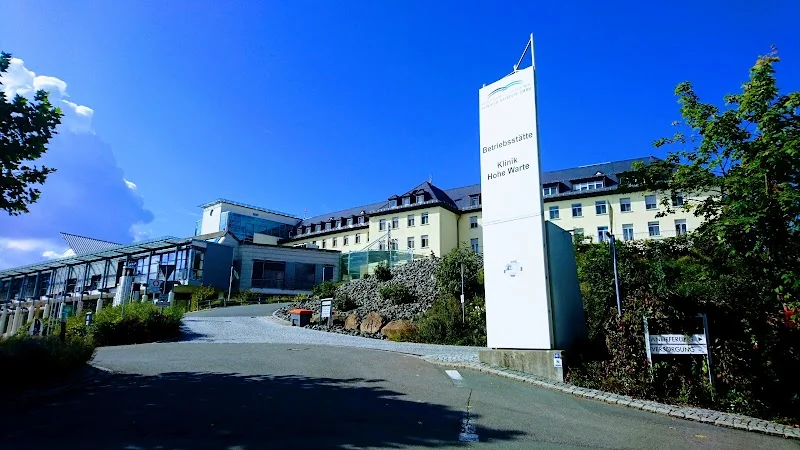
The Clinic Hohe Warte is one of the two operational sites of Klinikum Bayreuth GmbH and stands for highly specialized medicine, interdisciplinary collaboration, and a long development towards today's maximum care provider in Upper Franconia. The Hohe Warte site currently has 316 inpatient beds and 30 day clinic places; moreover, the site is officially described as one of the powerful centers for inpatient and outpatient care in the region. Klinikum Bayreuth GmbH is an academic teaching hospital of the University Hospital Erlangen and connects care, research, and teaching. For patients, this means not only medical competence but also clearly structured processes, modern diagnostics, and a site profile that is particularly convincing in neurological, neurosurgical, orthopedic, and rehabilitative issues. Therefore, those looking for the Clinic Hohe Warte will find much more than just a hospital location here: it is a center with history, specialization, and a very broad therapeutic offer. ([klinikum-bayreuth.de](https://klinikum-bayreuth.de/aktuell/news/artikel/verpachtung-des-gastronomiebetriebes-aufforderung-zur-abgabe-eines-betriebskonzeptes))
Access, Parking, and Barrier-Free Access
Orientation at the Clinic Hohe Warte is relatively simple for visitors because the site is well connected to the city bus, and the stop is located directly in front of the main entrance. For the Hohe Warte operational site, the official site mentions line 305 towards ZOH - Hohe Warte. Access through the main entrance is barrier-free, which is particularly advantageous for patients with mobility impairments, relatives with strollers, or people with aids. Additionally, visitor information points out that parking spaces at both operational sites are subject to fees. This means that the clinic is not only medically but also organizationally designed for a smooth visit. Those using public transport have a direct, uncomplicated journey without long walks or complicated transfers. This is particularly helpful in the everyday clinic life, as visits often occur under time pressure, with luggage, or under emotional stress. ([klinikum-bayreuth.de](https://klinikum-bayreuth.de/aufenthalt/standorte))
The parking rules are also clearly communicated: The first 30 minutes are free with a parking ticket, each additional hour costs 1 Euro, and a day ticket is 6 Euros. Payment can be made in cash, by EC card, SMS, or app. This transparency facilitates planning for short visits, outpatient appointments, or longer stays. For example, those coming for a consultation, admission, or a visit to Hohe Warte can calculate their journey well in advance. For a clinic with a high frequency of inpatient and outpatient patients, this is an important service factor. The official visitor information also adds that there is a barrier-free main entrance at the Hohe Warte operational site and that there are clear signs for access and parking on the premises. This combination of city bus, clear parking rates, and barrier-free access makes the Clinic Hohe Warte particularly practical for many people. ([klinikum-bayreuth.de](https://klinikum-bayreuth.de/aufenthalt/besucherinformation?utm_source=openai))
Neurology and Neurosurgery in the Neuro Center
The Clinic Hohe Warte is primarily known medically as a Neuro Center. The integration of neurology, neurosurgery, radiology with neuroradiology, orthopedics with spinal cord center, and urology with neurourology is particularly strong. The neurology department has 140 inpatient and 10 partial inpatient beds at the Hohe Warte site and in the associated areas, making it one of the largest acute neurology departments in Germany according to its own representation. The focus areas include stroke treatment, multiple sclerosis and neuroimmunology, clinical neurophysiology, as well as neurointensive care with early rehabilitation. In addition, inpatient neurology is closely linked with the therapy areas of physiotherapy, occupational therapy, neuropsychology, speech therapy, sports therapy, and bathing department. This proximity of acute medicine and rehabilitation is a central feature of Hohe Warte, as it allows diagnostics, treatment, and recovery to occur in a coordinated manner rather than separately. This is particularly relevant for many patient groups, such as after a stroke or in chronic neurological diseases. ([klinikum-bayreuth.de](https://klinikum-bayreuth.de/neurologie?utm_source=openai))
Neurosurgery is also firmly established at the Hohe Warte site. According to the official specialty page, the Clinic for Neurosurgery and Pediatric Neurosurgery is located at the Hohe Warte operational site on Station 6A and on the interdisciplinary intensive care unit 1; additionally, patients are also cared for at the second site of the hospital. The department has a total of 40 normal station or IMC beds and ten intensive care beds at both locations and performs more than 1,600 surgeries annually. For the care of patients with aneurysmal, vascular, or spinal issues, close collaboration with neurology and neuroradiology is central. The clinic describes modern diagnostics, innovative therapy, and a wide range of neurosurgical spectrum, from spinal surgery to minimally invasive procedures. Therefore, those searching for terms like neurology, neurosurgery, or spinal cord center will not find a single department but a powerful network that is medically visible at the Hohe Warte site. ([klinikum-bayreuth.de](https://klinikum-bayreuth.de/neurochirurgie))
Spinal Cord, Urology, and Other Specialties
The connection of Hohe Warte with the topic of spinal cord dates back far into the clinic's history. As early as 1957, treatment of paraplegics began there, and between 1960 and 1975, the center for spinal cord injuries was further expanded. Later, the site developed into one of the significant centers for spinal cord injuries in Germany. The clinic itself describes itself in current contributions as one of the leading treatment centers and reports around 150 new cases annually for spinal cord injuries. In this context, Hohe Warte is not just a hospital but a place where surgical, intensive medical, and rehabilitative competence are interconnected. This is important for those affected and their relatives because spinal cord care means much more than acute treatment: it includes mobilization, therapy, counseling, provision of aids, and often long-term support. The official communication of the institution clearly shows that here the combination of highly specialized medicine and daily participation is at the forefront. ([klinikum-bayreuth.de](https://klinikum-bayreuth.de/unternehmen/daten-fakten))
In addition, the broad professional structure of the site is noteworthy. The clinic's website lists, among others, neurosurgery, neurology, orthopedics, spinal cord, radiology, neuroradiology, rheumatology, urology, ILMH, hospital hygiene, and interdisciplinary emergency medicine for the Hohe Warte operational site. Additionally, the urology page explicitly refers to the Clinic for Urology and Pediatric Urology at the Hohe Warte operational site. This is relevant for the search terms urology, pediatric urology, and also for complex tumor or stone therapy. Particularly helpful is that the specialties do not stand isolated next to each other but work functionally together. For example, those being treated for neurological, orthopedic, or urological complaints benefit from the same site logic: short distances, coordinated processes, and an environment designed for complex diseases. This is why the Clinic Hohe Warte is for many people not just a search term but a concrete medical care network within Bayreuth. ([klinikum-bayreuth.de](https://klinikum-bayreuth.de/kliniken-hohe-warte))
Therapies, Sports Therapy, and Water Therapy
A strong unique feature of the Clinic Hohe Warte is its pronounced therapeutic character. The site has a broad rehabilitative environment with physiotherapy, occupational therapy, speech therapy, neuropsychology, sports therapy, and bathing and massage medicine. The official representation emphasizes that the therapy areas are closely linked with neurological and neurosurgical care. This is medically sensible because patients with neurological diseases, after surgeries, or with movement disorders do not require pure acute treatment but often need an early, multiprofessional therapeutic approach. Sports therapy is offered exclusively at the Clinic Hohe Warte and supports with individual and group therapies. Speech therapy also works across locations but explicitly treats inpatient and day clinic patients of Hohe Warte, for example, with speech, language, and voice disorders after a stroke. This interconnection of specialties ensures that therapy is understood not as an addition but as an integral part of treatment. ([klinikum-bayreuth.de](https://klinikum-bayreuth.de/einrichtungen/andere/sporttherapie))
Particularly impressive is the swimming and therapy pool at the Clinic Hohe Warte. According to the official description, it measures 20 x 9 meters, has a water temperature of 33.3 degrees Celsius, and a depth of 1 to 1.5 meters. Individual and group therapies for various indications take place there; they are mainly supervised by physiotherapy and sports therapy. Additionally, the Rheumaliga holds its exercise sessions there, and outpatient therapies are also possible. In a second step, a swimming hall, a medical training therapy area, and a completely renovated gymnasium were put into operation as part of the new therapy center. The clinic also describes the forest-close location as advantageous for walking, Nordic walking, and running offers. Together, this creates a picture of a clinic where therapy is taken seriously both spatially and conceptually. Therefore, those searching for terms like therapy center, swimming pool, or sports therapy will find at Hohe Warte not a footnote but a central part of the medical profile. ([klinikum-bayreuth.de](https://klinikum-bayreuth.de/einrichtungen/andere/baeder-massagemedizin))
Beds, Day Clinic, and Maximum Care at the Site
Klinikum Bayreuth GmbH describes itself as a maximum care hospital and refers to a total of 27 specialized clinics and institutes as well as twelve certified centers. Across both locations, there are 1,096 beds and places distributed between Klinikum Bayreuth and the operational site Clinic Hohe Warte. For the Hohe Warte site itself, a current tender mentions 316 inpatient beds and 30 day clinic places. At the same time, around 9,500 inpatient and about 12,000 outpatient treatments are carried out there annually. About 1,000 employees work at the site. These figures show that the Clinic Hohe Warte is not just a specialized hospital but a high-frequency care site with significant regional importance. The combination of inpatient care, day clinic, and outpatient support is particularly valuable for patients with neurological, orthopedic, or rehabilitative diseases as it facilitates the transition between acute treatment and aftercare. ([klinikum-bayreuth.de](https://klinikum-bayreuth.de/aktuell/news/artikel/verpachtung-des-gastronomiebetriebes-aufforderung-zur-abgabe-eines-betriebskonzeptes))
Maximum care also includes the organizational embedding in research and teaching. Klinikum Bayreuth GmbH is an academic teaching hospital of the University Hospital Erlangen and has been working together since 2022 with the University Hospital Erlangen, Friedrich-Alexander University Erlangen-Nuremberg, and the University of Bayreuth in the Medical Campus Upper Franconia. This is particularly significant for the Hohe Warte site because neurological and neurosurgical topics benefit from interdisciplinary exchange. Additionally, modern diagnostics, a close connection of the departments, and the possibility of caring for complex cases within one house and across locations are emphasized. The official pages repeatedly stress that diagnostics, therapy, research, and teaching play together at a university level here. Thus, a picture emerges of a site that convinces not only through individual departments but through its entire structure: efficient, specialized, networked, and relevant for many medical issues in Bayreuth and Upper Franconia. ([klinikum-bayreuth.de](https://klinikum-bayreuth.de/aktuell/news/artikel/verpachtung-des-gastronomiebetriebes-aufforderung-zur-abgabe-eines-betriebskonzeptes))
History, Development, and Visual Material of the Clinic Hohe Warte
The history of the Clinic Hohe Warte dates back to the 1930s. The official history mentions the laying of the foundation stone on May 14, 1938, the opening of the Winifred Wagner Home in 1942, and later its use as a Luftwaffe hospital and as the 120th Station Hospital of the US Army in 1945. In the 1950s, it was renamed the Disabled Hospital and later the Bayreuth Care Hospital. From 1957, the treatment of paraplegics began, and from 1960 to 1975, the center for spinal cord injuries was expanded. This development is formative because it explains why Hohe Warte is so strongly associated today with spinal cord, neurology, and rehabilitation. Later milestones were added: the establishment of a urology department in 1974, the transformation into a hospital with a rehabilitation clinic for spinal cord injuries in 1975, expansion throughout the 1980s, and the later merger with Klinikum Bayreuth. ([klinikum-bayreuth.de](https://klinikum-bayreuth.de/unternehmen/daten-fakten))
In recent years, further investments have been made. The clinic describes the modernization of bed areas, the expansion of the therapy center, new operating areas, and ongoing renovations as part of its site development. Historical and current visual materials on the official pages help to visually trace the development and provide insights into buildings, rooms, and medical structures. Therefore, those searching for photos of the Clinic Hohe Warte will find numerous images and visual anchors on the pages about the site, history, and individual specialties that facilitate orientation. This is particularly helpful for people who want to get an impression before an admission, a visit, or a first consultation. The Clinic Hohe Warte thus does not appear as a static place but as a developed medical center that visibly preserves its history while simultaneously putting modern care, therapy, and university collaboration in the foreground. ([klinikum-bayreuth.de](https://klinikum-bayreuth.de/aktuell/news/artikel/jetzt-sind-alle-bettenbereiche-der-klinik-hohe-warte-auf-dem-modernsten-klinikstandard-gebracht?utm_source=openai))
Sources:
- Klinikum Bayreuth - Clinic Hohe Warte
- Klinikum Bayreuth - Locations
- Klinikum Bayreuth - Data & Facts | History
- Klinikum Bayreuth - Neurology
- Klinikum Bayreuth - Neurosurgery
- Klinikum Bayreuth - Urology and Pediatric Urology
- Klinikum Bayreuth - Bathing and Massage Medicine
- Klinikum Bayreuth - Sports Therapy
Show moreShow less
Klinikum Bayreuth - Clinic Hohe Warte | Neurology & Access
The Clinic Hohe Warte is one of the two operational sites of Klinikum Bayreuth GmbH and stands for highly specialized medicine, interdisciplinary collaboration, and a long development towards today's maximum care provider in Upper Franconia. The Hohe Warte site currently has 316 inpatient beds and 30 day clinic places; moreover, the site is officially described as one of the powerful centers for inpatient and outpatient care in the region. Klinikum Bayreuth GmbH is an academic teaching hospital of the University Hospital Erlangen and connects care, research, and teaching. For patients, this means not only medical competence but also clearly structured processes, modern diagnostics, and a site profile that is particularly convincing in neurological, neurosurgical, orthopedic, and rehabilitative issues. Therefore, those looking for the Clinic Hohe Warte will find much more than just a hospital location here: it is a center with history, specialization, and a very broad therapeutic offer. ([klinikum-bayreuth.de](https://klinikum-bayreuth.de/aktuell/news/artikel/verpachtung-des-gastronomiebetriebes-aufforderung-zur-abgabe-eines-betriebskonzeptes))
Access, Parking, and Barrier-Free Access
Orientation at the Clinic Hohe Warte is relatively simple for visitors because the site is well connected to the city bus, and the stop is located directly in front of the main entrance. For the Hohe Warte operational site, the official site mentions line 305 towards ZOH - Hohe Warte. Access through the main entrance is barrier-free, which is particularly advantageous for patients with mobility impairments, relatives with strollers, or people with aids. Additionally, visitor information points out that parking spaces at both operational sites are subject to fees. This means that the clinic is not only medically but also organizationally designed for a smooth visit. Those using public transport have a direct, uncomplicated journey without long walks or complicated transfers. This is particularly helpful in the everyday clinic life, as visits often occur under time pressure, with luggage, or under emotional stress. ([klinikum-bayreuth.de](https://klinikum-bayreuth.de/aufenthalt/standorte))
The parking rules are also clearly communicated: The first 30 minutes are free with a parking ticket, each additional hour costs 1 Euro, and a day ticket is 6 Euros. Payment can be made in cash, by EC card, SMS, or app. This transparency facilitates planning for short visits, outpatient appointments, or longer stays. For example, those coming for a consultation, admission, or a visit to Hohe Warte can calculate their journey well in advance. For a clinic with a high frequency of inpatient and outpatient patients, this is an important service factor. The official visitor information also adds that there is a barrier-free main entrance at the Hohe Warte operational site and that there are clear signs for access and parking on the premises. This combination of city bus, clear parking rates, and barrier-free access makes the Clinic Hohe Warte particularly practical for many people. ([klinikum-bayreuth.de](https://klinikum-bayreuth.de/aufenthalt/besucherinformation?utm_source=openai))
Neurology and Neurosurgery in the Neuro Center
The Clinic Hohe Warte is primarily known medically as a Neuro Center. The integration of neurology, neurosurgery, radiology with neuroradiology, orthopedics with spinal cord center, and urology with neurourology is particularly strong. The neurology department has 140 inpatient and 10 partial inpatient beds at the Hohe Warte site and in the associated areas, making it one of the largest acute neurology departments in Germany according to its own representation. The focus areas include stroke treatment, multiple sclerosis and neuroimmunology, clinical neurophysiology, as well as neurointensive care with early rehabilitation. In addition, inpatient neurology is closely linked with the therapy areas of physiotherapy, occupational therapy, neuropsychology, speech therapy, sports therapy, and bathing department. This proximity of acute medicine and rehabilitation is a central feature of Hohe Warte, as it allows diagnostics, treatment, and recovery to occur in a coordinated manner rather than separately. This is particularly relevant for many patient groups, such as after a stroke or in chronic neurological diseases. ([klinikum-bayreuth.de](https://klinikum-bayreuth.de/neurologie?utm_source=openai))
Neurosurgery is also firmly established at the Hohe Warte site. According to the official specialty page, the Clinic for Neurosurgery and Pediatric Neurosurgery is located at the Hohe Warte operational site on Station 6A and on the interdisciplinary intensive care unit 1; additionally, patients are also cared for at the second site of the hospital. The department has a total of 40 normal station or IMC beds and ten intensive care beds at both locations and performs more than 1,600 surgeries annually. For the care of patients with aneurysmal, vascular, or spinal issues, close collaboration with neurology and neuroradiology is central. The clinic describes modern diagnostics, innovative therapy, and a wide range of neurosurgical spectrum, from spinal surgery to minimally invasive procedures. Therefore, those searching for terms like neurology, neurosurgery, or spinal cord center will not find a single department but a powerful network that is medically visible at the Hohe Warte site. ([klinikum-bayreuth.de](https://klinikum-bayreuth.de/neurochirurgie))
Spinal Cord, Urology, and Other Specialties
The connection of Hohe Warte with the topic of spinal cord dates back far into the clinic's history. As early as 1957, treatment of paraplegics began there, and between 1960 and 1975, the center for spinal cord injuries was further expanded. Later, the site developed into one of the significant centers for spinal cord injuries in Germany. The clinic itself describes itself in current contributions as one of the leading treatment centers and reports around 150 new cases annually for spinal cord injuries. In this context, Hohe Warte is not just a hospital but a place where surgical, intensive medical, and rehabilitative competence are interconnected. This is important for those affected and their relatives because spinal cord care means much more than acute treatment: it includes mobilization, therapy, counseling, provision of aids, and often long-term support. The official communication of the institution clearly shows that here the combination of highly specialized medicine and daily participation is at the forefront. ([klinikum-bayreuth.de](https://klinikum-bayreuth.de/unternehmen/daten-fakten))
In addition, the broad professional structure of the site is noteworthy. The clinic's website lists, among others, neurosurgery, neurology, orthopedics, spinal cord, radiology, neuroradiology, rheumatology, urology, ILMH, hospital hygiene, and interdisciplinary emergency medicine for the Hohe Warte operational site. Additionally, the urology page explicitly refers to the Clinic for Urology and Pediatric Urology at the Hohe Warte operational site. This is relevant for the search terms urology, pediatric urology, and also for complex tumor or stone therapy. Particularly helpful is that the specialties do not stand isolated next to each other but work functionally together. For example, those being treated for neurological, orthopedic, or urological complaints benefit from the same site logic: short distances, coordinated processes, and an environment designed for complex diseases. This is why the Clinic Hohe Warte is for many people not just a search term but a concrete medical care network within Bayreuth. ([klinikum-bayreuth.de](https://klinikum-bayreuth.de/kliniken-hohe-warte))
Therapies, Sports Therapy, and Water Therapy
A strong unique feature of the Clinic Hohe Warte is its pronounced therapeutic character. The site has a broad rehabilitative environment with physiotherapy, occupational therapy, speech therapy, neuropsychology, sports therapy, and bathing and massage medicine. The official representation emphasizes that the therapy areas are closely linked with neurological and neurosurgical care. This is medically sensible because patients with neurological diseases, after surgeries, or with movement disorders do not require pure acute treatment but often need an early, multiprofessional therapeutic approach. Sports therapy is offered exclusively at the Clinic Hohe Warte and supports with individual and group therapies. Speech therapy also works across locations but explicitly treats inpatient and day clinic patients of Hohe Warte, for example, with speech, language, and voice disorders after a stroke. This interconnection of specialties ensures that therapy is understood not as an addition but as an integral part of treatment. ([klinikum-bayreuth.de](https://klinikum-bayreuth.de/einrichtungen/andere/sporttherapie))
Particularly impressive is the swimming and therapy pool at the Clinic Hohe Warte. According to the official description, it measures 20 x 9 meters, has a water temperature of 33.3 degrees Celsius, and a depth of 1 to 1.5 meters. Individual and group therapies for various indications take place there; they are mainly supervised by physiotherapy and sports therapy. Additionally, the Rheumaliga holds its exercise sessions there, and outpatient therapies are also possible. In a second step, a swimming hall, a medical training therapy area, and a completely renovated gymnasium were put into operation as part of the new therapy center. The clinic also describes the forest-close location as advantageous for walking, Nordic walking, and running offers. Together, this creates a picture of a clinic where therapy is taken seriously both spatially and conceptually. Therefore, those searching for terms like therapy center, swimming pool, or sports therapy will find at Hohe Warte not a footnote but a central part of the medical profile. ([klinikum-bayreuth.de](https://klinikum-bayreuth.de/einrichtungen/andere/baeder-massagemedizin))
Beds, Day Clinic, and Maximum Care at the Site
Klinikum Bayreuth GmbH describes itself as a maximum care hospital and refers to a total of 27 specialized clinics and institutes as well as twelve certified centers. Across both locations, there are 1,096 beds and places distributed between Klinikum Bayreuth and the operational site Clinic Hohe Warte. For the Hohe Warte site itself, a current tender mentions 316 inpatient beds and 30 day clinic places. At the same time, around 9,500 inpatient and about 12,000 outpatient treatments are carried out there annually. About 1,000 employees work at the site. These figures show that the Clinic Hohe Warte is not just a specialized hospital but a high-frequency care site with significant regional importance. The combination of inpatient care, day clinic, and outpatient support is particularly valuable for patients with neurological, orthopedic, or rehabilitative diseases as it facilitates the transition between acute treatment and aftercare. ([klinikum-bayreuth.de](https://klinikum-bayreuth.de/aktuell/news/artikel/verpachtung-des-gastronomiebetriebes-aufforderung-zur-abgabe-eines-betriebskonzeptes))
Maximum care also includes the organizational embedding in research and teaching. Klinikum Bayreuth GmbH is an academic teaching hospital of the University Hospital Erlangen and has been working together since 2022 with the University Hospital Erlangen, Friedrich-Alexander University Erlangen-Nuremberg, and the University of Bayreuth in the Medical Campus Upper Franconia. This is particularly significant for the Hohe Warte site because neurological and neurosurgical topics benefit from interdisciplinary exchange. Additionally, modern diagnostics, a close connection of the departments, and the possibility of caring for complex cases within one house and across locations are emphasized. The official pages repeatedly stress that diagnostics, therapy, research, and teaching play together at a university level here. Thus, a picture emerges of a site that convinces not only through individual departments but through its entire structure: efficient, specialized, networked, and relevant for many medical issues in Bayreuth and Upper Franconia. ([klinikum-bayreuth.de](https://klinikum-bayreuth.de/aktuell/news/artikel/verpachtung-des-gastronomiebetriebes-aufforderung-zur-abgabe-eines-betriebskonzeptes))
History, Development, and Visual Material of the Clinic Hohe Warte
The history of the Clinic Hohe Warte dates back to the 1930s. The official history mentions the laying of the foundation stone on May 14, 1938, the opening of the Winifred Wagner Home in 1942, and later its use as a Luftwaffe hospital and as the 120th Station Hospital of the US Army in 1945. In the 1950s, it was renamed the Disabled Hospital and later the Bayreuth Care Hospital. From 1957, the treatment of paraplegics began, and from 1960 to 1975, the center for spinal cord injuries was expanded. This development is formative because it explains why Hohe Warte is so strongly associated today with spinal cord, neurology, and rehabilitation. Later milestones were added: the establishment of a urology department in 1974, the transformation into a hospital with a rehabilitation clinic for spinal cord injuries in 1975, expansion throughout the 1980s, and the later merger with Klinikum Bayreuth. ([klinikum-bayreuth.de](https://klinikum-bayreuth.de/unternehmen/daten-fakten))
In recent years, further investments have been made. The clinic describes the modernization of bed areas, the expansion of the therapy center, new operating areas, and ongoing renovations as part of its site development. Historical and current visual materials on the official pages help to visually trace the development and provide insights into buildings, rooms, and medical structures. Therefore, those searching for photos of the Clinic Hohe Warte will find numerous images and visual anchors on the pages about the site, history, and individual specialties that facilitate orientation. This is particularly helpful for people who want to get an impression before an admission, a visit, or a first consultation. The Clinic Hohe Warte thus does not appear as a static place but as a developed medical center that visibly preserves its history while simultaneously putting modern care, therapy, and university collaboration in the foreground. ([klinikum-bayreuth.de](https://klinikum-bayreuth.de/aktuell/news/artikel/jetzt-sind-alle-bettenbereiche-der-klinik-hohe-warte-auf-dem-modernsten-klinikstandard-gebracht?utm_source=openai))
Sources:
- Klinikum Bayreuth - Clinic Hohe Warte
- Klinikum Bayreuth - Locations
- Klinikum Bayreuth - Data & Facts | History
- Klinikum Bayreuth - Neurology
- Klinikum Bayreuth - Neurosurgery
- Klinikum Bayreuth - Urology and Pediatric Urology
- Klinikum Bayreuth - Bathing and Massage Medicine
- Klinikum Bayreuth - Sports Therapy
Klinikum Bayreuth - Clinic Hohe Warte | Neurology & Access
The Clinic Hohe Warte is one of the two operational sites of Klinikum Bayreuth GmbH and stands for highly specialized medicine, interdisciplinary collaboration, and a long development towards today's maximum care provider in Upper Franconia. The Hohe Warte site currently has 316 inpatient beds and 30 day clinic places; moreover, the site is officially described as one of the powerful centers for inpatient and outpatient care in the region. Klinikum Bayreuth GmbH is an academic teaching hospital of the University Hospital Erlangen and connects care, research, and teaching. For patients, this means not only medical competence but also clearly structured processes, modern diagnostics, and a site profile that is particularly convincing in neurological, neurosurgical, orthopedic, and rehabilitative issues. Therefore, those looking for the Clinic Hohe Warte will find much more than just a hospital location here: it is a center with history, specialization, and a very broad therapeutic offer. ([klinikum-bayreuth.de](https://klinikum-bayreuth.de/aktuell/news/artikel/verpachtung-des-gastronomiebetriebes-aufforderung-zur-abgabe-eines-betriebskonzeptes))
Access, Parking, and Barrier-Free Access
Orientation at the Clinic Hohe Warte is relatively simple for visitors because the site is well connected to the city bus, and the stop is located directly in front of the main entrance. For the Hohe Warte operational site, the official site mentions line 305 towards ZOH - Hohe Warte. Access through the main entrance is barrier-free, which is particularly advantageous for patients with mobility impairments, relatives with strollers, or people with aids. Additionally, visitor information points out that parking spaces at both operational sites are subject to fees. This means that the clinic is not only medically but also organizationally designed for a smooth visit. Those using public transport have a direct, uncomplicated journey without long walks or complicated transfers. This is particularly helpful in the everyday clinic life, as visits often occur under time pressure, with luggage, or under emotional stress. ([klinikum-bayreuth.de](https://klinikum-bayreuth.de/aufenthalt/standorte))
The parking rules are also clearly communicated: The first 30 minutes are free with a parking ticket, each additional hour costs 1 Euro, and a day ticket is 6 Euros. Payment can be made in cash, by EC card, SMS, or app. This transparency facilitates planning for short visits, outpatient appointments, or longer stays. For example, those coming for a consultation, admission, or a visit to Hohe Warte can calculate their journey well in advance. For a clinic with a high frequency of inpatient and outpatient patients, this is an important service factor. The official visitor information also adds that there is a barrier-free main entrance at the Hohe Warte operational site and that there are clear signs for access and parking on the premises. This combination of city bus, clear parking rates, and barrier-free access makes the Clinic Hohe Warte particularly practical for many people. ([klinikum-bayreuth.de](https://klinikum-bayreuth.de/aufenthalt/besucherinformation?utm_source=openai))
Neurology and Neurosurgery in the Neuro Center
The Clinic Hohe Warte is primarily known medically as a Neuro Center. The integration of neurology, neurosurgery, radiology with neuroradiology, orthopedics with spinal cord center, and urology with neurourology is particularly strong. The neurology department has 140 inpatient and 10 partial inpatient beds at the Hohe Warte site and in the associated areas, making it one of the largest acute neurology departments in Germany according to its own representation. The focus areas include stroke treatment, multiple sclerosis and neuroimmunology, clinical neurophysiology, as well as neurointensive care with early rehabilitation. In addition, inpatient neurology is closely linked with the therapy areas of physiotherapy, occupational therapy, neuropsychology, speech therapy, sports therapy, and bathing department. This proximity of acute medicine and rehabilitation is a central feature of Hohe Warte, as it allows diagnostics, treatment, and recovery to occur in a coordinated manner rather than separately. This is particularly relevant for many patient groups, such as after a stroke or in chronic neurological diseases. ([klinikum-bayreuth.de](https://klinikum-bayreuth.de/neurologie?utm_source=openai))
Neurosurgery is also firmly established at the Hohe Warte site. According to the official specialty page, the Clinic for Neurosurgery and Pediatric Neurosurgery is located at the Hohe Warte operational site on Station 6A and on the interdisciplinary intensive care unit 1; additionally, patients are also cared for at the second site of the hospital. The department has a total of 40 normal station or IMC beds and ten intensive care beds at both locations and performs more than 1,600 surgeries annually. For the care of patients with aneurysmal, vascular, or spinal issues, close collaboration with neurology and neuroradiology is central. The clinic describes modern diagnostics, innovative therapy, and a wide range of neurosurgical spectrum, from spinal surgery to minimally invasive procedures. Therefore, those searching for terms like neurology, neurosurgery, or spinal cord center will not find a single department but a powerful network that is medically visible at the Hohe Warte site. ([klinikum-bayreuth.de](https://klinikum-bayreuth.de/neurochirurgie))
Spinal Cord, Urology, and Other Specialties
The connection of Hohe Warte with the topic of spinal cord dates back far into the clinic's history. As early as 1957, treatment of paraplegics began there, and between 1960 and 1975, the center for spinal cord injuries was further expanded. Later, the site developed into one of the significant centers for spinal cord injuries in Germany. The clinic itself describes itself in current contributions as one of the leading treatment centers and reports around 150 new cases annually for spinal cord injuries. In this context, Hohe Warte is not just a hospital but a place where surgical, intensive medical, and rehabilitative competence are interconnected. This is important for those affected and their relatives because spinal cord care means much more than acute treatment: it includes mobilization, therapy, counseling, provision of aids, and often long-term support. The official communication of the institution clearly shows that here the combination of highly specialized medicine and daily participation is at the forefront. ([klinikum-bayreuth.de](https://klinikum-bayreuth.de/unternehmen/daten-fakten))
In addition, the broad professional structure of the site is noteworthy. The clinic's website lists, among others, neurosurgery, neurology, orthopedics, spinal cord, radiology, neuroradiology, rheumatology, urology, ILMH, hospital hygiene, and interdisciplinary emergency medicine for the Hohe Warte operational site. Additionally, the urology page explicitly refers to the Clinic for Urology and Pediatric Urology at the Hohe Warte operational site. This is relevant for the search terms urology, pediatric urology, and also for complex tumor or stone therapy. Particularly helpful is that the specialties do not stand isolated next to each other but work functionally together. For example, those being treated for neurological, orthopedic, or urological complaints benefit from the same site logic: short distances, coordinated processes, and an environment designed for complex diseases. This is why the Clinic Hohe Warte is for many people not just a search term but a concrete medical care network within Bayreuth. ([klinikum-bayreuth.de](https://klinikum-bayreuth.de/kliniken-hohe-warte))
Therapies, Sports Therapy, and Water Therapy
A strong unique feature of the Clinic Hohe Warte is its pronounced therapeutic character. The site has a broad rehabilitative environment with physiotherapy, occupational therapy, speech therapy, neuropsychology, sports therapy, and bathing and massage medicine. The official representation emphasizes that the therapy areas are closely linked with neurological and neurosurgical care. This is medically sensible because patients with neurological diseases, after surgeries, or with movement disorders do not require pure acute treatment but often need an early, multiprofessional therapeutic approach. Sports therapy is offered exclusively at the Clinic Hohe Warte and supports with individual and group therapies. Speech therapy also works across locations but explicitly treats inpatient and day clinic patients of Hohe Warte, for example, with speech, language, and voice disorders after a stroke. This interconnection of specialties ensures that therapy is understood not as an addition but as an integral part of treatment. ([klinikum-bayreuth.de](https://klinikum-bayreuth.de/einrichtungen/andere/sporttherapie))
Particularly impressive is the swimming and therapy pool at the Clinic Hohe Warte. According to the official description, it measures 20 x 9 meters, has a water temperature of 33.3 degrees Celsius, and a depth of 1 to 1.5 meters. Individual and group therapies for various indications take place there; they are mainly supervised by physiotherapy and sports therapy. Additionally, the Rheumaliga holds its exercise sessions there, and outpatient therapies are also possible. In a second step, a swimming hall, a medical training therapy area, and a completely renovated gymnasium were put into operation as part of the new therapy center. The clinic also describes the forest-close location as advantageous for walking, Nordic walking, and running offers. Together, this creates a picture of a clinic where therapy is taken seriously both spatially and conceptually. Therefore, those searching for terms like therapy center, swimming pool, or sports therapy will find at Hohe Warte not a footnote but a central part of the medical profile. ([klinikum-bayreuth.de](https://klinikum-bayreuth.de/einrichtungen/andere/baeder-massagemedizin))
Beds, Day Clinic, and Maximum Care at the Site
Klinikum Bayreuth GmbH describes itself as a maximum care hospital and refers to a total of 27 specialized clinics and institutes as well as twelve certified centers. Across both locations, there are 1,096 beds and places distributed between Klinikum Bayreuth and the operational site Clinic Hohe Warte. For the Hohe Warte site itself, a current tender mentions 316 inpatient beds and 30 day clinic places. At the same time, around 9,500 inpatient and about 12,000 outpatient treatments are carried out there annually. About 1,000 employees work at the site. These figures show that the Clinic Hohe Warte is not just a specialized hospital but a high-frequency care site with significant regional importance. The combination of inpatient care, day clinic, and outpatient support is particularly valuable for patients with neurological, orthopedic, or rehabilitative diseases as it facilitates the transition between acute treatment and aftercare. ([klinikum-bayreuth.de](https://klinikum-bayreuth.de/aktuell/news/artikel/verpachtung-des-gastronomiebetriebes-aufforderung-zur-abgabe-eines-betriebskonzeptes))
Maximum care also includes the organizational embedding in research and teaching. Klinikum Bayreuth GmbH is an academic teaching hospital of the University Hospital Erlangen and has been working together since 2022 with the University Hospital Erlangen, Friedrich-Alexander University Erlangen-Nuremberg, and the University of Bayreuth in the Medical Campus Upper Franconia. This is particularly significant for the Hohe Warte site because neurological and neurosurgical topics benefit from interdisciplinary exchange. Additionally, modern diagnostics, a close connection of the departments, and the possibility of caring for complex cases within one house and across locations are emphasized. The official pages repeatedly stress that diagnostics, therapy, research, and teaching play together at a university level here. Thus, a picture emerges of a site that convinces not only through individual departments but through its entire structure: efficient, specialized, networked, and relevant for many medical issues in Bayreuth and Upper Franconia. ([klinikum-bayreuth.de](https://klinikum-bayreuth.de/aktuell/news/artikel/verpachtung-des-gastronomiebetriebes-aufforderung-zur-abgabe-eines-betriebskonzeptes))
History, Development, and Visual Material of the Clinic Hohe Warte
The history of the Clinic Hohe Warte dates back to the 1930s. The official history mentions the laying of the foundation stone on May 14, 1938, the opening of the Winifred Wagner Home in 1942, and later its use as a Luftwaffe hospital and as the 120th Station Hospital of the US Army in 1945. In the 1950s, it was renamed the Disabled Hospital and later the Bayreuth Care Hospital. From 1957, the treatment of paraplegics began, and from 1960 to 1975, the center for spinal cord injuries was expanded. This development is formative because it explains why Hohe Warte is so strongly associated today with spinal cord, neurology, and rehabilitation. Later milestones were added: the establishment of a urology department in 1974, the transformation into a hospital with a rehabilitation clinic for spinal cord injuries in 1975, expansion throughout the 1980s, and the later merger with Klinikum Bayreuth. ([klinikum-bayreuth.de](https://klinikum-bayreuth.de/unternehmen/daten-fakten))
In recent years, further investments have been made. The clinic describes the modernization of bed areas, the expansion of the therapy center, new operating areas, and ongoing renovations as part of its site development. Historical and current visual materials on the official pages help to visually trace the development and provide insights into buildings, rooms, and medical structures. Therefore, those searching for photos of the Clinic Hohe Warte will find numerous images and visual anchors on the pages about the site, history, and individual specialties that facilitate orientation. This is particularly helpful for people who want to get an impression before an admission, a visit, or a first consultation. The Clinic Hohe Warte thus does not appear as a static place but as a developed medical center that visibly preserves its history while simultaneously putting modern care, therapy, and university collaboration in the foreground. ([klinikum-bayreuth.de](https://klinikum-bayreuth.de/aktuell/news/artikel/jetzt-sind-alle-bettenbereiche-der-klinik-hohe-warte-auf-dem-modernsten-klinikstandard-gebracht?utm_source=openai))
Sources:
- Klinikum Bayreuth - Clinic Hohe Warte
- Klinikum Bayreuth - Locations
- Klinikum Bayreuth - Data & Facts | History
- Klinikum Bayreuth - Neurology
- Klinikum Bayreuth - Neurosurgery
- Klinikum Bayreuth - Urology and Pediatric Urology
- Klinikum Bayreuth - Bathing and Massage Medicine
- Klinikum Bayreuth - Sports Therapy

Frequently Asked Questions
Reviews
No reviews found