
Bayreuth
Adolf-Wächter-Straße 17, 95447 Bayreuth, Deutschland
Museum of Agricultural Tools | Opening Hours & Admission
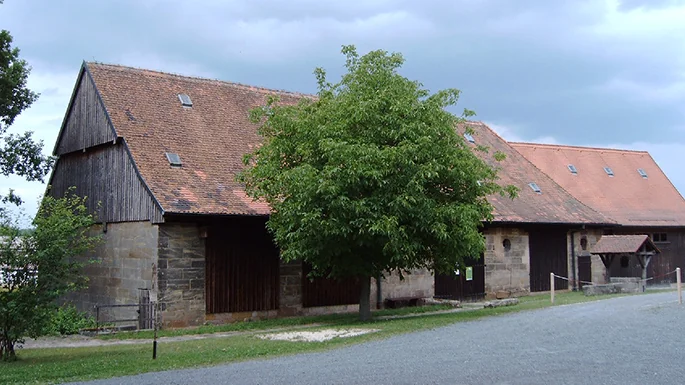
The Museum of Agricultural Tools of the District of Upper Franconia in Bayreuth is a place where regional history is not only displayed but also directly experienced. The collection is housed in the historic barn of the Lettenhof, a building ensemble on the western outskirts of Bayreuth, which itself already possesses a strong historical character. It is precisely this connection of an authentic building, everyday culture, and agricultural technology that makes the charm of the house. Those looking for a museum of agricultural tools in Bayreuth will find here not a sterile showcase, but a grown collection with a real connection to the Franconian way of life, complemented by a learning workshop, holiday programs, offerings for seniors, and possibilities for celebrations and groups. Therefore, the visit is suitable for anyone interested in agricultural working worlds, home economics, regional technology history, and practical mediation. The fact that admission is free and a visit on weekdays is possible by prior arrangement makes the house additionally attractive and easy to plan. ([bezirk-oberfranken.de](https://www.bezirk-oberfranken.de/lettenhof?utm_source=openai))
Opening Hours, Admission, and Visit Planning
For practical planning, the official opening hours page is the most important orientation. There, the Museum of Agricultural Tools is mentioned on weekdays from 09:00 to 15:00 by prior arrangement, which is especially important for individual visitors, families, school classes, and groups. The character of a museum that is open by appointment is not a disadvantage here, but rather an advantage: The visit can be prepared more calmly, and many guests experience the house in a concentrated, almost personal atmosphere. Especially because the museum is not geared towards mass operation but functions as a cultural and learning place, it is worthwhile to coordinate in advance. Those coming with children, in a group, or for a specific occasion can better adjust the appointment to their own schedule. Additionally, free admission is a strong plus, as it lowers the threshold for spontaneous cultural visits and makes repeated visits attractive. This fits well with the profile of the house as an open, low-threshold museum location with educational aspirations. ([bezirk-oberfranken.de](https://www.bezirk-oberfranken.de/lettenhof/oeffnungszeiten-und-eintritt?utm_source=openai))
In terms of content, this visit logic also means that the museum functions more as a consciously chosen destination than as a random stop. This strengthens the impression of a reliable, calm institution where consultation and museum mediation still have time. For seekers looking for terms like opening hours museum Bayreuth, free admission museum Bayreuth, or museum of agricultural tools Bayreuth, this is a clear message: The house is not only present but well organized and accessible by prior arrangement. The official page also names the head of the cultural and heritage preservation department as a contact person, which reinforces the impression of a personal, regionally anchored operation. For search engines and users alike, this is ideal because it indicates concrete planning security and a real institutional framework. The visit thus becomes less anonymous and rather appears as a consciously supervised cultural offering with historical claims. ([bezirk-oberfranken.de](https://www.bezirk-oberfranken.de/lettenhof/oeffnungszeiten-und-eintritt?utm_source=openai))
History of the Lettenhof and the Establishment of the Museum
The history of the museum is closely linked to the person Günter Schmidt, an agricultural teacher who collected agricultural tools and rural household devices since the late 1950s. The District of Upper Franconia took over this private collection in 1973 and finally opened the museum in 1975. This is important for classification because the collection did not arise abstractly but from a concrete interest in preserving rural technology and everyday culture. The Lettenhof itself also significantly contributes to the museum's impact. The museum is housed in a historic barn of the Lettenhof, which dates back to 1745 and is located on the western outskirts of Bayreuth. From a collection of personal initiative, a public museum with regional outreach was created. Later expansions, such as a new barn in the mid-1980s and a horse-powered mill in 1987, also show that the house has grown over the decades and has been repeatedly adapted to new museum educational and conservational requirements. ([bezirk-oberfranken.de](https://www.bezirk-oberfranken.de/lettenhof?utm_source=openai))
This development tells more than just a founding story. It shows how a private collecting passion became a place for public cultural mediation. The reference to regional agriculture is not romanticizing but factual and illustrative: The objects predominantly come from the Bayreuth surrounding area and are presented in such a way that work processes become comprehensible. This constitutes the historical added value of the museum. Instead of showing individual tools in isolation, connections become visible, for example, between harvesting, processing, storage, and household work. The location in the Lettenhof also supports this narrative because a historic agricultural building can convey much better than a neutral new building how closely agriculture, living, and working were once interconnected. Those searching for the history of the Lettenhof or the museum of agricultural tools of the District of Upper Franconia will therefore not discover a random museum location but an ensemble that forms a coherent unit from collection, building history, and educational mandate. ([kulturportal-bayern.de](https://kulturportal-bayern.de/veranstalter/museum-fuer-baeuerliche-arbeitsgeraete-des-bezirks-oberfranken/?utm_source=openai))
Collection, Thematic Rooms, and Special Exhibits
The collection of the museum covers a wide range of agricultural and household work. The focal points include tools for field preparation, grain harvesting, flax processing, laundry care, and food preparation. This is complemented by a vintage tractor section as well as carts, carriages, and other vehicles from rural everyday life. Particularly exciting is that many objects are not only collected but are shown in working sequences or thematic contexts. This makes work processes comprehensible, for example, from dealing with the field to harvesting or from flax to linen. This makes the visit interesting not only for people who are interested in individual machines but also for those interested in historical ways of life and production. The museum does not merely convey technology history but the structure of an entire rural everyday life in which craftsmanship, household, and agriculture were closely intertwined. ([bezirk-oberfranken.de](https://www.bezirk-oberfranken.de/lettenhof?utm_source=openai))
Special features also include a functioning horse-powered mill and a forge. These two elements are particularly valuable for the impression of the museum because they do not only appear as static exhibits but make the principle of historical drive technology and craftsmanship visible. In combination with the sections on food preparation, butter making, or meat salting, a multifaceted picture of rural life emerges. Especially the household areas show that agricultural history should not only be reduced to field work. It also encompasses preservation, nutrition, hygiene, and seasonal storage. For visitors looking for photos, details, or comprehensible motifs, the historic barn with its factually arranged objects also offers a very strong visual level: tools, vehicles, and working sequences together create a vivid picture of pre-industrial and early industrial agriculture. Thus, the strength of the museum lies not in spectacular staging but in the comprehensible, credible representation of a past working world. ([museen-in-bayern.de](https://museen-in-bayern.de/museen/detailseite-museum/museum-fuer-baeuerliche-arbeitsgeraete?utm_source=openai))
Learning Workshop, Holiday Programs, and Offers for Groups
A large part of the museum's current relevance lies in the learning workshop. The District of Upper Franconia describes it as a project that reconsiders the collection from its origin story and has newly structured it for students and other target groups. Since 2020, the learning workshop has been established as a modern learning location. This is an important point for anyone searching for learning workshop Bayreuth, museum and school, or museum offerings for children, as it is not about dry knowledge transfer but about active participation. The museum educational modules are designed to connect with objects, working methods, and everyday experiences. This makes the museum a place where traditional topics like agriculture, home economics, craftsmanship, and sustainability are linked with current questions. This connection between historical material and current educational aspirations makes the location interesting for schools and extracurricular education. ([bezirk-oberfranken.de](https://www.bezirk-oberfranken.de/lernwerkstatt?utm_source=openai))
The offerings are diverse and range from holiday programs for children and youth to programs for seniors. The District of Upper Franconia regularly mentions changing actions with cooperation partners, including guided tours, lectures, joint baking days, or making sauerkraut. The learning workshop works across generations and free of charge, which underscores its social character. Even during the holidays, the museum becomes a place of participation: The corresponding programs explicitly include creative workshops, craft topics, and joint experimentation. This makes the term learning workshop Bayreuth not only an SEO title but an accurate description of a house that thinks education practically. For families, grandparents with grandchildren, school groups, or those interested in experiencing historical working techniques, this is a real added value. The mix of object reference, educational concept, and free offerings is remarkable in the region and ensures that the museum has an impact beyond its pure exhibition. ([bezirk-oberfranken.de](https://www.bezirk-oberfranken.de/programme-fuer-seniorinnen-und-senioren?utm_source=openai))
It is also particularly interesting that the learning workshop consciously works with everyday experiences. This can involve baking, preserving, binding, or processing materials. This not only creates Aha moments but also conversations between generations. A museum that offers such formats becomes a social meeting point and not just an exhibition space. This fits very well with the cultural work of the District of Upper Franconia, as here heritage preservation, education, and practical mediation come together. For search intentions around programs, children, youth, school classes, or seniors, this means: The Museum of Agricultural Tools is not only suitable for a quiet tour but also for active participation, joint learning, and repeated visits. The learning workshop gives the location a modern core without overshadowing the historical character. This balance is one of the most important reasons why the house remains relevant in the long term. ([bezirk-oberfranken.de](https://www.bezirk-oberfranken.de/lernwerkstatt?utm_source=openai))
Rental, Celebrations, and Room Capacity
The museum is not only an exhibition and learning place but also a usable event venue. The guest room in the former residential barn of the Lettenhof can be rented for celebrations and is suitable for up to 50 people. This is a very concrete advantage for those looking for rental Lettenhof, celebration location Bayreuth, or space for smaller private events. The historic ambiance creates a special atmosphere that clearly differs from normal event spaces. At the same time, the use is clearly regulated, ensuring safety and order. The official rental page points out that certain rules apply on the premises, and smoking, open flames, and overnight stays are not permitted. This keeps the historical site protected without losing its practical usability. For birthdays, weddings, or smaller social occasions, this combination of authenticity and organization is particularly attractive. ([bezirk-oberfranken.de](https://www.bezirk-oberfranken.de/lettenhof?utm_source=openai))
The size of the guest room with a maximum of 50 people makes the place particularly interesting for manageable, personal celebrations. This is a strength of the house because it does not rely on large event dramaturgy but on an intimate historical setting. Those looking for a special location but do not need an oversized hall will find a suitable setting here. Additionally, the site is not only museum-like but also institutionally well integrated: The cultural service office of the District of Upper Franconia is also located on the premises. This underscores the function of the location as a cultural center with multiple tasks. For the user, it is important that celebrations and events are not possible by chance but are managed through a clearly designated contact point. This is a serious signal and speaks for a professionally organized operation. So, anyone looking for a small, characterful location in Bayreuth should definitely consider the Museum of Agricultural Tools and the Lettenhof. ([bezirk-oberfranken.de](https://www.bezirk-oberfranken.de/lettenhof?utm_source=openai))
Directions, Address, and Parking in Bayreuth
The address of the museum is Adolf-Wächter-Straße 17, 95447 Bayreuth. Officially, the District of Upper Franconia locates the house in the barn of the historic Lettenhof on the western outskirts of the city. So, anyone searching for directions museum Bayreuth or Adolf-Wächter-Straße 17 gets a very clear orientation. The location is interesting for visitors because it places the museum not in the middle of a tourist-overrun center but in a grown historical environment. This supports the calm atmosphere of the house and fits the content of the collection. At the same time, the location is described in such a way that it can be easily connected with other destinations in Bayreuth. The combination of historic barn, museum use, and cultural anchoring is an essential part of the location identity. Therefore, those visiting the museum not only experience exhibits but also a place where regional history can be spatially comprehended. ([bezirk-oberfranken.de](https://www.bezirk-oberfranken.de/lettenhof?utm_source=openai))
Regarding parking, it is important that the rental page for events explicitly states that only the parking lot in front of the barn should be used and not the courtyard area. This is a practical note that becomes particularly important for celebrations, group events, and deliveries. For normal museum visits, one should plan in advance due to the prior arrangement and coordinate the appointment accordingly. This avoids stress upon arrival and ensures that the visit runs smoothly. Therefore, anyone inquiring about parking Lettenhof or parking museum of agricultural tools should take the event notes seriously and prepare the visit well in advance. The official communication clearly emphasizes appointment organization rather than spontaneous public traffic. This corresponds to the characteristic of the house as a personally supervised museum and learning place. For the visitor, this means: register in time, note the address, plan the journey, and then enjoy the historical site in peace. ([bezirk-oberfranken.de](https://www.bezirk-oberfranken.de/lettenhof/vermietung?utm_source=openai))
In summary, the Museum of Agricultural Tools of the District of Upper Franconia is a location that connects history, education, and usability in a rare balance. The collection tells of the working life of the rural region, the learning workshop opens the place for the present and future, and the rental creates additional opportunities for small events. Those searching for museum Bayreuth, photos, history, opening hours, or learning workshop will find here an authentic, well-anchored, and very versatile destination. Especially because the house consciously does not appear loudly but convinces with substance, it remains sustainably interesting for visitors who appreciate genuine regional culture. ([bezirk-oberfranken.de](https://www.bezirk-oberfranken.de/lettenhof?utm_source=openai))
Sources:
Show moreShow less
Museum of Agricultural Tools | Opening Hours & Admission
The Museum of Agricultural Tools of the District of Upper Franconia in Bayreuth is a place where regional history is not only displayed but also directly experienced. The collection is housed in the historic barn of the Lettenhof, a building ensemble on the western outskirts of Bayreuth, which itself already possesses a strong historical character. It is precisely this connection of an authentic building, everyday culture, and agricultural technology that makes the charm of the house. Those looking for a museum of agricultural tools in Bayreuth will find here not a sterile showcase, but a grown collection with a real connection to the Franconian way of life, complemented by a learning workshop, holiday programs, offerings for seniors, and possibilities for celebrations and groups. Therefore, the visit is suitable for anyone interested in agricultural working worlds, home economics, regional technology history, and practical mediation. The fact that admission is free and a visit on weekdays is possible by prior arrangement makes the house additionally attractive and easy to plan. ([bezirk-oberfranken.de](https://www.bezirk-oberfranken.de/lettenhof?utm_source=openai))
Opening Hours, Admission, and Visit Planning
For practical planning, the official opening hours page is the most important orientation. There, the Museum of Agricultural Tools is mentioned on weekdays from 09:00 to 15:00 by prior arrangement, which is especially important for individual visitors, families, school classes, and groups. The character of a museum that is open by appointment is not a disadvantage here, but rather an advantage: The visit can be prepared more calmly, and many guests experience the house in a concentrated, almost personal atmosphere. Especially because the museum is not geared towards mass operation but functions as a cultural and learning place, it is worthwhile to coordinate in advance. Those coming with children, in a group, or for a specific occasion can better adjust the appointment to their own schedule. Additionally, free admission is a strong plus, as it lowers the threshold for spontaneous cultural visits and makes repeated visits attractive. This fits well with the profile of the house as an open, low-threshold museum location with educational aspirations. ([bezirk-oberfranken.de](https://www.bezirk-oberfranken.de/lettenhof/oeffnungszeiten-und-eintritt?utm_source=openai))
In terms of content, this visit logic also means that the museum functions more as a consciously chosen destination than as a random stop. This strengthens the impression of a reliable, calm institution where consultation and museum mediation still have time. For seekers looking for terms like opening hours museum Bayreuth, free admission museum Bayreuth, or museum of agricultural tools Bayreuth, this is a clear message: The house is not only present but well organized and accessible by prior arrangement. The official page also names the head of the cultural and heritage preservation department as a contact person, which reinforces the impression of a personal, regionally anchored operation. For search engines and users alike, this is ideal because it indicates concrete planning security and a real institutional framework. The visit thus becomes less anonymous and rather appears as a consciously supervised cultural offering with historical claims. ([bezirk-oberfranken.de](https://www.bezirk-oberfranken.de/lettenhof/oeffnungszeiten-und-eintritt?utm_source=openai))
History of the Lettenhof and the Establishment of the Museum
The history of the museum is closely linked to the person Günter Schmidt, an agricultural teacher who collected agricultural tools and rural household devices since the late 1950s. The District of Upper Franconia took over this private collection in 1973 and finally opened the museum in 1975. This is important for classification because the collection did not arise abstractly but from a concrete interest in preserving rural technology and everyday culture. The Lettenhof itself also significantly contributes to the museum's impact. The museum is housed in a historic barn of the Lettenhof, which dates back to 1745 and is located on the western outskirts of Bayreuth. From a collection of personal initiative, a public museum with regional outreach was created. Later expansions, such as a new barn in the mid-1980s and a horse-powered mill in 1987, also show that the house has grown over the decades and has been repeatedly adapted to new museum educational and conservational requirements. ([bezirk-oberfranken.de](https://www.bezirk-oberfranken.de/lettenhof?utm_source=openai))
This development tells more than just a founding story. It shows how a private collecting passion became a place for public cultural mediation. The reference to regional agriculture is not romanticizing but factual and illustrative: The objects predominantly come from the Bayreuth surrounding area and are presented in such a way that work processes become comprehensible. This constitutes the historical added value of the museum. Instead of showing individual tools in isolation, connections become visible, for example, between harvesting, processing, storage, and household work. The location in the Lettenhof also supports this narrative because a historic agricultural building can convey much better than a neutral new building how closely agriculture, living, and working were once interconnected. Those searching for the history of the Lettenhof or the museum of agricultural tools of the District of Upper Franconia will therefore not discover a random museum location but an ensemble that forms a coherent unit from collection, building history, and educational mandate. ([kulturportal-bayern.de](https://kulturportal-bayern.de/veranstalter/museum-fuer-baeuerliche-arbeitsgeraete-des-bezirks-oberfranken/?utm_source=openai))
Collection, Thematic Rooms, and Special Exhibits
The collection of the museum covers a wide range of agricultural and household work. The focal points include tools for field preparation, grain harvesting, flax processing, laundry care, and food preparation. This is complemented by a vintage tractor section as well as carts, carriages, and other vehicles from rural everyday life. Particularly exciting is that many objects are not only collected but are shown in working sequences or thematic contexts. This makes work processes comprehensible, for example, from dealing with the field to harvesting or from flax to linen. This makes the visit interesting not only for people who are interested in individual machines but also for those interested in historical ways of life and production. The museum does not merely convey technology history but the structure of an entire rural everyday life in which craftsmanship, household, and agriculture were closely intertwined. ([bezirk-oberfranken.de](https://www.bezirk-oberfranken.de/lettenhof?utm_source=openai))
Special features also include a functioning horse-powered mill and a forge. These two elements are particularly valuable for the impression of the museum because they do not only appear as static exhibits but make the principle of historical drive technology and craftsmanship visible. In combination with the sections on food preparation, butter making, or meat salting, a multifaceted picture of rural life emerges. Especially the household areas show that agricultural history should not only be reduced to field work. It also encompasses preservation, nutrition, hygiene, and seasonal storage. For visitors looking for photos, details, or comprehensible motifs, the historic barn with its factually arranged objects also offers a very strong visual level: tools, vehicles, and working sequences together create a vivid picture of pre-industrial and early industrial agriculture. Thus, the strength of the museum lies not in spectacular staging but in the comprehensible, credible representation of a past working world. ([museen-in-bayern.de](https://museen-in-bayern.de/museen/detailseite-museum/museum-fuer-baeuerliche-arbeitsgeraete?utm_source=openai))
Learning Workshop, Holiday Programs, and Offers for Groups
A large part of the museum's current relevance lies in the learning workshop. The District of Upper Franconia describes it as a project that reconsiders the collection from its origin story and has newly structured it for students and other target groups. Since 2020, the learning workshop has been established as a modern learning location. This is an important point for anyone searching for learning workshop Bayreuth, museum and school, or museum offerings for children, as it is not about dry knowledge transfer but about active participation. The museum educational modules are designed to connect with objects, working methods, and everyday experiences. This makes the museum a place where traditional topics like agriculture, home economics, craftsmanship, and sustainability are linked with current questions. This connection between historical material and current educational aspirations makes the location interesting for schools and extracurricular education. ([bezirk-oberfranken.de](https://www.bezirk-oberfranken.de/lernwerkstatt?utm_source=openai))
The offerings are diverse and range from holiday programs for children and youth to programs for seniors. The District of Upper Franconia regularly mentions changing actions with cooperation partners, including guided tours, lectures, joint baking days, or making sauerkraut. The learning workshop works across generations and free of charge, which underscores its social character. Even during the holidays, the museum becomes a place of participation: The corresponding programs explicitly include creative workshops, craft topics, and joint experimentation. This makes the term learning workshop Bayreuth not only an SEO title but an accurate description of a house that thinks education practically. For families, grandparents with grandchildren, school groups, or those interested in experiencing historical working techniques, this is a real added value. The mix of object reference, educational concept, and free offerings is remarkable in the region and ensures that the museum has an impact beyond its pure exhibition. ([bezirk-oberfranken.de](https://www.bezirk-oberfranken.de/programme-fuer-seniorinnen-und-senioren?utm_source=openai))
It is also particularly interesting that the learning workshop consciously works with everyday experiences. This can involve baking, preserving, binding, or processing materials. This not only creates Aha moments but also conversations between generations. A museum that offers such formats becomes a social meeting point and not just an exhibition space. This fits very well with the cultural work of the District of Upper Franconia, as here heritage preservation, education, and practical mediation come together. For search intentions around programs, children, youth, school classes, or seniors, this means: The Museum of Agricultural Tools is not only suitable for a quiet tour but also for active participation, joint learning, and repeated visits. The learning workshop gives the location a modern core without overshadowing the historical character. This balance is one of the most important reasons why the house remains relevant in the long term. ([bezirk-oberfranken.de](https://www.bezirk-oberfranken.de/lernwerkstatt?utm_source=openai))
Rental, Celebrations, and Room Capacity
The museum is not only an exhibition and learning place but also a usable event venue. The guest room in the former residential barn of the Lettenhof can be rented for celebrations and is suitable for up to 50 people. This is a very concrete advantage for those looking for rental Lettenhof, celebration location Bayreuth, or space for smaller private events. The historic ambiance creates a special atmosphere that clearly differs from normal event spaces. At the same time, the use is clearly regulated, ensuring safety and order. The official rental page points out that certain rules apply on the premises, and smoking, open flames, and overnight stays are not permitted. This keeps the historical site protected without losing its practical usability. For birthdays, weddings, or smaller social occasions, this combination of authenticity and organization is particularly attractive. ([bezirk-oberfranken.de](https://www.bezirk-oberfranken.de/lettenhof?utm_source=openai))
The size of the guest room with a maximum of 50 people makes the place particularly interesting for manageable, personal celebrations. This is a strength of the house because it does not rely on large event dramaturgy but on an intimate historical setting. Those looking for a special location but do not need an oversized hall will find a suitable setting here. Additionally, the site is not only museum-like but also institutionally well integrated: The cultural service office of the District of Upper Franconia is also located on the premises. This underscores the function of the location as a cultural center with multiple tasks. For the user, it is important that celebrations and events are not possible by chance but are managed through a clearly designated contact point. This is a serious signal and speaks for a professionally organized operation. So, anyone looking for a small, characterful location in Bayreuth should definitely consider the Museum of Agricultural Tools and the Lettenhof. ([bezirk-oberfranken.de](https://www.bezirk-oberfranken.de/lettenhof?utm_source=openai))
Directions, Address, and Parking in Bayreuth
The address of the museum is Adolf-Wächter-Straße 17, 95447 Bayreuth. Officially, the District of Upper Franconia locates the house in the barn of the historic Lettenhof on the western outskirts of the city. So, anyone searching for directions museum Bayreuth or Adolf-Wächter-Straße 17 gets a very clear orientation. The location is interesting for visitors because it places the museum not in the middle of a tourist-overrun center but in a grown historical environment. This supports the calm atmosphere of the house and fits the content of the collection. At the same time, the location is described in such a way that it can be easily connected with other destinations in Bayreuth. The combination of historic barn, museum use, and cultural anchoring is an essential part of the location identity. Therefore, those visiting the museum not only experience exhibits but also a place where regional history can be spatially comprehended. ([bezirk-oberfranken.de](https://www.bezirk-oberfranken.de/lettenhof?utm_source=openai))
Regarding parking, it is important that the rental page for events explicitly states that only the parking lot in front of the barn should be used and not the courtyard area. This is a practical note that becomes particularly important for celebrations, group events, and deliveries. For normal museum visits, one should plan in advance due to the prior arrangement and coordinate the appointment accordingly. This avoids stress upon arrival and ensures that the visit runs smoothly. Therefore, anyone inquiring about parking Lettenhof or parking museum of agricultural tools should take the event notes seriously and prepare the visit well in advance. The official communication clearly emphasizes appointment organization rather than spontaneous public traffic. This corresponds to the characteristic of the house as a personally supervised museum and learning place. For the visitor, this means: register in time, note the address, plan the journey, and then enjoy the historical site in peace. ([bezirk-oberfranken.de](https://www.bezirk-oberfranken.de/lettenhof/vermietung?utm_source=openai))
In summary, the Museum of Agricultural Tools of the District of Upper Franconia is a location that connects history, education, and usability in a rare balance. The collection tells of the working life of the rural region, the learning workshop opens the place for the present and future, and the rental creates additional opportunities for small events. Those searching for museum Bayreuth, photos, history, opening hours, or learning workshop will find here an authentic, well-anchored, and very versatile destination. Especially because the house consciously does not appear loudly but convinces with substance, it remains sustainably interesting for visitors who appreciate genuine regional culture. ([bezirk-oberfranken.de](https://www.bezirk-oberfranken.de/lettenhof?utm_source=openai))
Sources:
Museum of Agricultural Tools | Opening Hours & Admission
The Museum of Agricultural Tools of the District of Upper Franconia in Bayreuth is a place where regional history is not only displayed but also directly experienced. The collection is housed in the historic barn of the Lettenhof, a building ensemble on the western outskirts of Bayreuth, which itself already possesses a strong historical character. It is precisely this connection of an authentic building, everyday culture, and agricultural technology that makes the charm of the house. Those looking for a museum of agricultural tools in Bayreuth will find here not a sterile showcase, but a grown collection with a real connection to the Franconian way of life, complemented by a learning workshop, holiday programs, offerings for seniors, and possibilities for celebrations and groups. Therefore, the visit is suitable for anyone interested in agricultural working worlds, home economics, regional technology history, and practical mediation. The fact that admission is free and a visit on weekdays is possible by prior arrangement makes the house additionally attractive and easy to plan. ([bezirk-oberfranken.de](https://www.bezirk-oberfranken.de/lettenhof?utm_source=openai))
Opening Hours, Admission, and Visit Planning
For practical planning, the official opening hours page is the most important orientation. There, the Museum of Agricultural Tools is mentioned on weekdays from 09:00 to 15:00 by prior arrangement, which is especially important for individual visitors, families, school classes, and groups. The character of a museum that is open by appointment is not a disadvantage here, but rather an advantage: The visit can be prepared more calmly, and many guests experience the house in a concentrated, almost personal atmosphere. Especially because the museum is not geared towards mass operation but functions as a cultural and learning place, it is worthwhile to coordinate in advance. Those coming with children, in a group, or for a specific occasion can better adjust the appointment to their own schedule. Additionally, free admission is a strong plus, as it lowers the threshold for spontaneous cultural visits and makes repeated visits attractive. This fits well with the profile of the house as an open, low-threshold museum location with educational aspirations. ([bezirk-oberfranken.de](https://www.bezirk-oberfranken.de/lettenhof/oeffnungszeiten-und-eintritt?utm_source=openai))
In terms of content, this visit logic also means that the museum functions more as a consciously chosen destination than as a random stop. This strengthens the impression of a reliable, calm institution where consultation and museum mediation still have time. For seekers looking for terms like opening hours museum Bayreuth, free admission museum Bayreuth, or museum of agricultural tools Bayreuth, this is a clear message: The house is not only present but well organized and accessible by prior arrangement. The official page also names the head of the cultural and heritage preservation department as a contact person, which reinforces the impression of a personal, regionally anchored operation. For search engines and users alike, this is ideal because it indicates concrete planning security and a real institutional framework. The visit thus becomes less anonymous and rather appears as a consciously supervised cultural offering with historical claims. ([bezirk-oberfranken.de](https://www.bezirk-oberfranken.de/lettenhof/oeffnungszeiten-und-eintritt?utm_source=openai))
History of the Lettenhof and the Establishment of the Museum
The history of the museum is closely linked to the person Günter Schmidt, an agricultural teacher who collected agricultural tools and rural household devices since the late 1950s. The District of Upper Franconia took over this private collection in 1973 and finally opened the museum in 1975. This is important for classification because the collection did not arise abstractly but from a concrete interest in preserving rural technology and everyday culture. The Lettenhof itself also significantly contributes to the museum's impact. The museum is housed in a historic barn of the Lettenhof, which dates back to 1745 and is located on the western outskirts of Bayreuth. From a collection of personal initiative, a public museum with regional outreach was created. Later expansions, such as a new barn in the mid-1980s and a horse-powered mill in 1987, also show that the house has grown over the decades and has been repeatedly adapted to new museum educational and conservational requirements. ([bezirk-oberfranken.de](https://www.bezirk-oberfranken.de/lettenhof?utm_source=openai))
This development tells more than just a founding story. It shows how a private collecting passion became a place for public cultural mediation. The reference to regional agriculture is not romanticizing but factual and illustrative: The objects predominantly come from the Bayreuth surrounding area and are presented in such a way that work processes become comprehensible. This constitutes the historical added value of the museum. Instead of showing individual tools in isolation, connections become visible, for example, between harvesting, processing, storage, and household work. The location in the Lettenhof also supports this narrative because a historic agricultural building can convey much better than a neutral new building how closely agriculture, living, and working were once interconnected. Those searching for the history of the Lettenhof or the museum of agricultural tools of the District of Upper Franconia will therefore not discover a random museum location but an ensemble that forms a coherent unit from collection, building history, and educational mandate. ([kulturportal-bayern.de](https://kulturportal-bayern.de/veranstalter/museum-fuer-baeuerliche-arbeitsgeraete-des-bezirks-oberfranken/?utm_source=openai))
Collection, Thematic Rooms, and Special Exhibits
The collection of the museum covers a wide range of agricultural and household work. The focal points include tools for field preparation, grain harvesting, flax processing, laundry care, and food preparation. This is complemented by a vintage tractor section as well as carts, carriages, and other vehicles from rural everyday life. Particularly exciting is that many objects are not only collected but are shown in working sequences or thematic contexts. This makes work processes comprehensible, for example, from dealing with the field to harvesting or from flax to linen. This makes the visit interesting not only for people who are interested in individual machines but also for those interested in historical ways of life and production. The museum does not merely convey technology history but the structure of an entire rural everyday life in which craftsmanship, household, and agriculture were closely intertwined. ([bezirk-oberfranken.de](https://www.bezirk-oberfranken.de/lettenhof?utm_source=openai))
Special features also include a functioning horse-powered mill and a forge. These two elements are particularly valuable for the impression of the museum because they do not only appear as static exhibits but make the principle of historical drive technology and craftsmanship visible. In combination with the sections on food preparation, butter making, or meat salting, a multifaceted picture of rural life emerges. Especially the household areas show that agricultural history should not only be reduced to field work. It also encompasses preservation, nutrition, hygiene, and seasonal storage. For visitors looking for photos, details, or comprehensible motifs, the historic barn with its factually arranged objects also offers a very strong visual level: tools, vehicles, and working sequences together create a vivid picture of pre-industrial and early industrial agriculture. Thus, the strength of the museum lies not in spectacular staging but in the comprehensible, credible representation of a past working world. ([museen-in-bayern.de](https://museen-in-bayern.de/museen/detailseite-museum/museum-fuer-baeuerliche-arbeitsgeraete?utm_source=openai))
Learning Workshop, Holiday Programs, and Offers for Groups
A large part of the museum's current relevance lies in the learning workshop. The District of Upper Franconia describes it as a project that reconsiders the collection from its origin story and has newly structured it for students and other target groups. Since 2020, the learning workshop has been established as a modern learning location. This is an important point for anyone searching for learning workshop Bayreuth, museum and school, or museum offerings for children, as it is not about dry knowledge transfer but about active participation. The museum educational modules are designed to connect with objects, working methods, and everyday experiences. This makes the museum a place where traditional topics like agriculture, home economics, craftsmanship, and sustainability are linked with current questions. This connection between historical material and current educational aspirations makes the location interesting for schools and extracurricular education. ([bezirk-oberfranken.de](https://www.bezirk-oberfranken.de/lernwerkstatt?utm_source=openai))
The offerings are diverse and range from holiday programs for children and youth to programs for seniors. The District of Upper Franconia regularly mentions changing actions with cooperation partners, including guided tours, lectures, joint baking days, or making sauerkraut. The learning workshop works across generations and free of charge, which underscores its social character. Even during the holidays, the museum becomes a place of participation: The corresponding programs explicitly include creative workshops, craft topics, and joint experimentation. This makes the term learning workshop Bayreuth not only an SEO title but an accurate description of a house that thinks education practically. For families, grandparents with grandchildren, school groups, or those interested in experiencing historical working techniques, this is a real added value. The mix of object reference, educational concept, and free offerings is remarkable in the region and ensures that the museum has an impact beyond its pure exhibition. ([bezirk-oberfranken.de](https://www.bezirk-oberfranken.de/programme-fuer-seniorinnen-und-senioren?utm_source=openai))
It is also particularly interesting that the learning workshop consciously works with everyday experiences. This can involve baking, preserving, binding, or processing materials. This not only creates Aha moments but also conversations between generations. A museum that offers such formats becomes a social meeting point and not just an exhibition space. This fits very well with the cultural work of the District of Upper Franconia, as here heritage preservation, education, and practical mediation come together. For search intentions around programs, children, youth, school classes, or seniors, this means: The Museum of Agricultural Tools is not only suitable for a quiet tour but also for active participation, joint learning, and repeated visits. The learning workshop gives the location a modern core without overshadowing the historical character. This balance is one of the most important reasons why the house remains relevant in the long term. ([bezirk-oberfranken.de](https://www.bezirk-oberfranken.de/lernwerkstatt?utm_source=openai))
Rental, Celebrations, and Room Capacity
The museum is not only an exhibition and learning place but also a usable event venue. The guest room in the former residential barn of the Lettenhof can be rented for celebrations and is suitable for up to 50 people. This is a very concrete advantage for those looking for rental Lettenhof, celebration location Bayreuth, or space for smaller private events. The historic ambiance creates a special atmosphere that clearly differs from normal event spaces. At the same time, the use is clearly regulated, ensuring safety and order. The official rental page points out that certain rules apply on the premises, and smoking, open flames, and overnight stays are not permitted. This keeps the historical site protected without losing its practical usability. For birthdays, weddings, or smaller social occasions, this combination of authenticity and organization is particularly attractive. ([bezirk-oberfranken.de](https://www.bezirk-oberfranken.de/lettenhof?utm_source=openai))
The size of the guest room with a maximum of 50 people makes the place particularly interesting for manageable, personal celebrations. This is a strength of the house because it does not rely on large event dramaturgy but on an intimate historical setting. Those looking for a special location but do not need an oversized hall will find a suitable setting here. Additionally, the site is not only museum-like but also institutionally well integrated: The cultural service office of the District of Upper Franconia is also located on the premises. This underscores the function of the location as a cultural center with multiple tasks. For the user, it is important that celebrations and events are not possible by chance but are managed through a clearly designated contact point. This is a serious signal and speaks for a professionally organized operation. So, anyone looking for a small, characterful location in Bayreuth should definitely consider the Museum of Agricultural Tools and the Lettenhof. ([bezirk-oberfranken.de](https://www.bezirk-oberfranken.de/lettenhof?utm_source=openai))
Directions, Address, and Parking in Bayreuth
The address of the museum is Adolf-Wächter-Straße 17, 95447 Bayreuth. Officially, the District of Upper Franconia locates the house in the barn of the historic Lettenhof on the western outskirts of the city. So, anyone searching for directions museum Bayreuth or Adolf-Wächter-Straße 17 gets a very clear orientation. The location is interesting for visitors because it places the museum not in the middle of a tourist-overrun center but in a grown historical environment. This supports the calm atmosphere of the house and fits the content of the collection. At the same time, the location is described in such a way that it can be easily connected with other destinations in Bayreuth. The combination of historic barn, museum use, and cultural anchoring is an essential part of the location identity. Therefore, those visiting the museum not only experience exhibits but also a place where regional history can be spatially comprehended. ([bezirk-oberfranken.de](https://www.bezirk-oberfranken.de/lettenhof?utm_source=openai))
Regarding parking, it is important that the rental page for events explicitly states that only the parking lot in front of the barn should be used and not the courtyard area. This is a practical note that becomes particularly important for celebrations, group events, and deliveries. For normal museum visits, one should plan in advance due to the prior arrangement and coordinate the appointment accordingly. This avoids stress upon arrival and ensures that the visit runs smoothly. Therefore, anyone inquiring about parking Lettenhof or parking museum of agricultural tools should take the event notes seriously and prepare the visit well in advance. The official communication clearly emphasizes appointment organization rather than spontaneous public traffic. This corresponds to the characteristic of the house as a personally supervised museum and learning place. For the visitor, this means: register in time, note the address, plan the journey, and then enjoy the historical site in peace. ([bezirk-oberfranken.de](https://www.bezirk-oberfranken.de/lettenhof/vermietung?utm_source=openai))
In summary, the Museum of Agricultural Tools of the District of Upper Franconia is a location that connects history, education, and usability in a rare balance. The collection tells of the working life of the rural region, the learning workshop opens the place for the present and future, and the rental creates additional opportunities for small events. Those searching for museum Bayreuth, photos, history, opening hours, or learning workshop will find here an authentic, well-anchored, and very versatile destination. Especially because the house consciously does not appear loudly but convinces with substance, it remains sustainably interesting for visitors who appreciate genuine regional culture. ([bezirk-oberfranken.de](https://www.bezirk-oberfranken.de/lettenhof?utm_source=openai))
Sources:
Upcoming Events
Senior Program: Baking Day with the Wood Oven
A warm afternoon for seniors in Bayreuth: baking in the wood oven, trying together, and genuine encounters. Free, lively, and heartfelt. #Seniors #Bayreuth #Community

Holiday Program in the Learning Workshop: Forest Researchers
Holiday time for little explorers: Forest Researchers in the Learning Workshop in Bayreuth brings together nature, hands-on fun, and learning joy. Free for families. #Bayreuth #FamilyExperience
Action for Grandparents and Grandchildren: Candle Making
Creative holiday time for grandparents and grandchildren in Bayreuth: Candle making creates shared learning fun in the museum. Free, child-friendly, and full of family moments. #FamilyTime
Senior Program: Make Sauerkraut Yourself - Like in the Old Days!
A cozy afternoon for seniors in Bayreuth: Make sauerkraut like in the old days, free and communal. 09.12.2026 from 1:30 PM. #Bayreuth #Seniors
Frequently Asked Questions
Reviews
Dylan Cam
11. March 2019
Interesting
samo only
25. May 2026
It needs better attention and care. (Thank you for that)
Michael Maier
29. July 2023
The museum was the destination of a project day and I was absolutely thrilled by it. We visited with a rather lively 6th grade class. All the students had a great time during the tour of the museum, and making butter afterwards was a total highlight of the whole week. A big thank you goes to all the staff who were able to act flexibly (unfortunately we arrived late) and had a fantastic way of interacting with the students (and teachers). It also had a positive effect on the dynamics within the class. As a teacher, it was very interesting for me, and I would love to come again. Absolutely recommendable! Thanks again!
Anastasiya D.
8. November 2021
There was again a wonderful opportunity for the children to spend their time interactively during the holidays. My sister cooked a potato soup together with the other kids and was very proud of herself. Those three hours flew by incredibly fast and with great mood. Thank you for your work and unforgettable moments for the children.
Natallia Damaratskaya
9. September 2021
Thank you very much for the wonderful summer holiday program. The child was very excited and impressed. We look forward to your new offerings and will definitely recommend your museum to everyone.