
Bayreuth
Maximilianstraße 13, 95444 Bayreuth, Deutschland
New Fountain Bayreuth | Water Feature & Pedestrian Zone
The New Fountain in Bayreuth is not a classic representative monumental fountain, but a consciously modern urban element that combines quality of stay, water experience, and city life. It was decided by the city of Bayreuth on March 24, 2010, located on Maximilianstraße in front of the Ehrenhof of the Old Castle, and designed as a walkable, playable water element. This mix of function and open design makes the place so interesting: the fountain is not just an object to look at, but a place to sit, breathe, and observe. It also feeds the open stream that runs through the redesigned Bayreuth pedestrian zone, integrating it into a larger urban planning concept. Those walking through the city center encounter a place where water, movement, and historical surroundings come together directly. Its central location, the reference to the Old Castle, and its integration into the pedestrian zone give the New Fountain a function that goes beyond mere urban furniture. It is an example of how Bayreuth has further developed its city center as a place for shopping, lingering, and meeting. ([bayreuth.de](https://www.bayreuth.de/rathaus-buergerservice/planen-bauen/konzepte/innenstadtgestaltung/neuer-brunnen/?utm_source=openai))
Location on Maximilianstraße and at the Old Castle
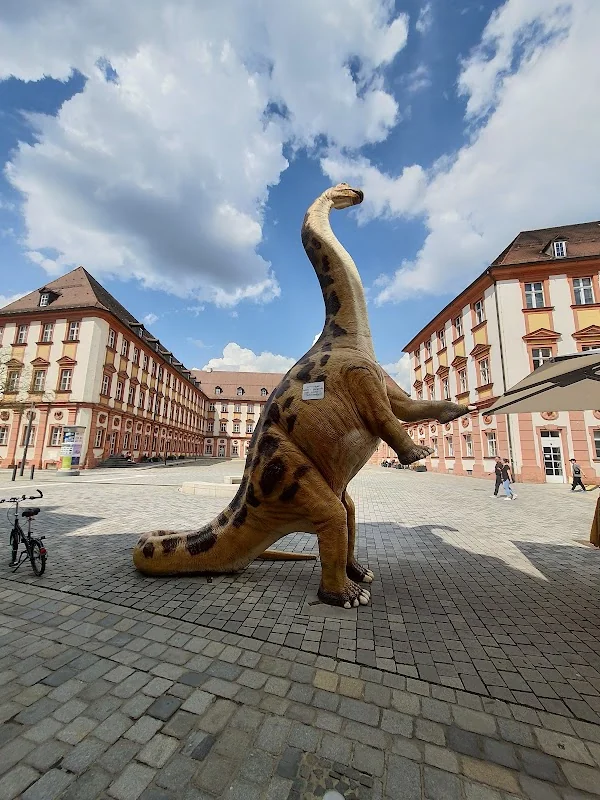
The most important location factor of the New Fountain is its position in the heart of Bayreuth's city center. The city names the location as Maximilianstraße and explicitly refers to the area in front of the Ehrenhof of the Old Castle. Thus, the fountain is not located at an edge site, but at one of the most prominent urban axes of Bayreuth. The city describes Maximilianstraße in connection with the urban renewal as the street that many Bayreuth residents simply call the market; during the redesign, this area was developed into a city park. This is important for visitors, as it explains why the New Fountain appears so seamlessly integrated into the urban environment: it does not stand isolated, but in a newly organized public space that is focused on staying, movement, and usability. Therefore, on-site, one experiences not only the fountain itself but also the typical mix of promenade zone, historical backdrop, and everyday activity. The proximity to the Old Castle also creates a strong visual contrast between baroque urban history and modern urban design. The official city center tour also passes by this point and marks the Old Castle as an important orientation point. Those exploring the sights of Bayreuth on foot will inevitably come into contact with the fountain and the entire environment of Maximilianstraße at this point. ([bayreuth.de](https://www.bayreuth.de/rathaus-buergerservice/planen-bauen/konzepte/innenstadtgestaltung/neuer-brunnen/?utm_source=openai))
This context makes the New Fountain attractive to different visitor groups. Those seeking history find the direct neighborhood to the Old Castle and the historical city center. Those interested in urban planning recognize the connection between the pedestrian zone, quality of stay, and water flow. And those simply strolling through Bayreuth experience the fountain as a pleasant place to stop without feeling like they are lingering at a strictly museum-like monument. The city of Bayreuth describes the city center as a space for shopping, lingering, and much more; the New Fountain is, in this sense, a usable part of the public space. Additionally, the official tour incorporates Maximilianstraße as part of a small pedestrian loop through the city center, which continues at the end via the Old Castle, Richard-Wagner-Straße, Haus Wahnfried, and the New Castle. Thus, the fountain is not just a single point, but a node in a cityscape-defining pathway network. This is particularly valuable for guests who want to discover Bayreuth in half a day or a full day and are looking for clear orientation between the most important places. ([bayreuth.de](https://www.bayreuth.de/wirtschaft-forschung/wirtschaftsstandort/stadtteile/innenstadt/?utm_source=openai))
Water Feature for Sitting and Playing: Design, Use, and Family Friendliness
The design of the New Fountain is explicitly geared towards use. The city of Bayreuth describes it as simply constructed, walkable, and playable. It was developed by the architectural firm Hirner and Riehl from Munich, which was commissioned to redesign the pedestrian zone, and aims primarily to enhance the quality of stay. Particularly important is the three-quarter circle made of natural stone, which serves as a boundary and seating area. This creates a form that not only holds water but also allows for staying. The fountain is thus simultaneously an edge of space, a seating area, and a play zone. This multifunctionality is crucial for modern city centers because it allows people not just to pass by but to stop. The official goal was to attract families and children. This explains why the fountain does not appear monumental or distant, but open and close to everyday life. The water is also fed into the open stream in the context of the redesigned pedestrian zone, making the fountain not appear as an isolated basin but as part of a larger watercourse in the city center. This creates a lively impression that changes throughout the day depending on light, movement, and use. ([bayreuth.de](https://www.bayreuth.de/rathaus-buergerservice/planen-bauen/konzepte/innenstadtgestaltung/neuer-brunnen/?utm_source=openai))
For visitors with children, this design is a real advantage. Instead of a purely visual object, the New Fountain offers an area that can be touched, navigated around, and experienced. Especially in summer, this is pleasant because water in the urban space always means cooling, movement, and visual freshness. The city wanted to create not just a beautiful image with the fountain but a concrete attraction. Its walkability makes it a part of everyday urban life: one can sit down, observe the water flow, let children play, and use the surroundings as a place of calm in the midst of the city center. This concept fits with the Bayreuth city center image, which focuses on staying and revitalization. Those who know Bayreuth understand that the public space here is strongly characterized by pedestrian zones, historical facades, and a well-utilized center. The New Fountain integrates into this as a friendly, accessible, and surprisingly modern building block. Precisely because it is not staged like a traditional fountain, it remains memorable. It stands for an understanding of the city that respects history but does not hide the present. ([bayreuth.de](https://www.bayreuth.de/rathaus-buergerservice/planen-bauen/konzepte/innenstadtgestaltung/neuer-brunnen/?utm_source=openai))
Access, Parking, and Orientation in the Bayreuth City Center
Those wishing to visit the New Fountain can easily reach it via the Bayreuth city center. For drivers, it is important that the city mentions over 6,000 public and private parking spaces within 500 meters of the center. This includes parking garages, underground garages, parking lots, and street-side parking spaces. This offer is remarkable for a city center with high visitor frequency and facilitates access even when one cannot stop directly on Maximilianstraße. The city also points out that paid municipal parking spaces allow for mobile parking via EasyPark. For electric vehicles with E-plates, parking on public municipal spaces is free of charge, although maximum parking duration and parking disc must be observed. This makes access manageable and flexible. For the New Fountain itself, the direct approach is less crucial than the good accessibility of the surrounding parking options. Those experiencing the city center as a pedestrian will anyway cover the last section on foot. This is part of the concept: the city center is intended not as a transit area but as a space for staying. ([bayreuth.de](https://www.bayreuth.de/rathaus-buergerservice/verkehr-oepnv/parken-in-der-innenstadt/?utm_source=openai))
The rules in the pedestrian zone are also clearly defined. The city of Bayreuth points out that pedestrian zones are fundamentally reserved for pedestrians, and only authorized delivery traffic as well as bicycles and motor vehicles may exceptionally drive through. In such cases, walking speed applies. For visitors, this means: Maximilianstraße is not a place for fast traffic, but a space that one consciously perceives on foot. This is exactly how the New Fountain can unfold its effect. The pathways in the city center are also well orientable because Bayreuth uses an official pedestrian guidance system that marks important sights such as the Old Castle, the City Church, the Hofgarten area, the New Castle, Haus Wahnfried, and the Markgräfliche Opera House. Those coming from the main train station are best advised to follow the official city center route or the signs towards Maximilianstraße. This way, the path is not only practical but also meaningful in content: one moves along the most important city axes and automatically ends up in the area where the New Fountain has its strongest effect. For guests, this is particularly pleasant because parking, orientation, and sightseeing are closely interconnected here. ([bayreuth.de](https://www.bayreuth.de/rathaus-buergerservice/verkehr-oepnv/parken-in-der-innenstadt/?utm_source=openai))
The New Fountain in the City Center Tour
Those who want to discover Bayreuth on foot can excellently incorporate the New Fountain into a city center tour. The official Max route through the city center begins at the main train station, leads over Luitpoldplatz and Opernstraße to Sternplatz, and then runs along Maximilianstraße. Right there lies the area where one looks out onto the marketplace and experiences the New Fountain or the environment of the Old Castle. The tour thus shows that the fountain is not an isolated destination but part of a coherent historical urban experience. After the section on Maximilianstraße, it continues past the Old Castle towards Richard-Wagner-Straße, Haus Wahnfried, Hofgarten, and the New Castle. This makes the New Fountain a well-placed stop: one can linger here briefly, let the water and architecture take effect, and then continue with renewed energy. The route is indicated as 5.1 kilometers and about 1:18 hours long and is described as largely barrier-free, even though cobblestones are present in the city center. This helps with planning because one can either incorporate the visit to the fountain as part of a whole city walk or as a targeted short visit. ([bayreuth-tourismus.de](https://www.bayreuth-tourismus.de/touren/maxroute-durch-die-innenstadt/))
For culture enthusiasts, it is particularly exciting how closely the fountain is connected to the classic sights of Bayreuth. In the official guidance system, the Old Castle, the City Church, the Hofgarten area, the New Castle, and the Markgräfliche Opera House are listed as important destinations. This gives the New Fountain a kind of hinge function between everyday city and monument city. One does not walk from one attraction to the next, but moves through a lively urban space where historical and modern elements intertwine. This is a typical charm of the Bayreuth city center: the paths are short but densely packed with content. Those who continue from Maximilianstraße experience very different atmospheres in a small space, from the open city square to baroque castle proximity to the green Hofgarten. The New Fountain integrates into this dramaturgy because it interrupts walking without disturbing the flow of the tour. It is a place for a short stop, but also a place where one can understand the city center anew. This is precisely where its appeal lies for visitors who want to not just photograph Bayreuth but truly experience it. ([bayreuth-tourismus.de](https://www.bayreuth-tourismus.de/touren/maxroute-durch-die-innenstadt/))
What Makes the New Fountain Special Today: Quality of Stay, Urban Image, and Everyday Life
The New Fountain is a good example of how urban development can work in a historical environment without overshadowing the memory of earlier epochs. The city of Bayreuth explicitly formulated the goal in 2010 to enhance the quality of stay in the redesigned pedestrian zone and primarily to appeal to families and children. At the same time, the fountain is integrated into a larger urban planning idea through the open stream, which aims to give the city center more atmosphere and usability. Bayreuth describes the city center itself as a place for shopping, lingering, and much more. This is exactly what the New Fountain accomplishes in everyday life: it does not offer a formal event framework but an open, flexibly usable place to stay. People sit on the natural stone edge, observe the water, meet for a brief moment, or use the fountain as a reference point during their city tour. In a city center characterized by historical sights, such an element creates an important pause between the stations. It brings movement into the picture and calm into the process. As a result, the fountain is often remembered in the city’s memory more through experience than through its pure form. ([bayreuth.de](https://www.bayreuth.de/rathaus-buergerservice/planen-bauen/konzepte/innenstadtgestaltung/neuer-brunnen/?utm_source=openai))
The development of the surroundings also shows that the fountain is part of a larger process. The Bayreuth pedestrian zone was redesigned in sections and described as completed in 2020. Maximilianstraße and the adjacent areas were strengthened as central building blocks of this development, and the area has since become a popular place for strolling, celebrating, playing, and much more. The New Fountain benefits directly from this enhancement because it is located right in this space and translates its idea into a water form. It is thus not only a cityscape-defining object but also an indication of how Bayreuth handles its public spaces: historically sensitive, but functional and open to different uses. Those standing here experience not just a water feature but a small piece of Bayreuth's city identity. The connection of the historical castle environment, pedestrian zone, watercourse, and movement space makes the New Fountain a location suitable for both quick visits and conscious stays. This is precisely why it is such a useful point for city visitors, families, photography fans, and all those who want to discover Bayreuth on foot. ([bayreuth.de](https://www.bayreuth.de/umgestaltung-der-fussgaengerzone-in-bayreuth-ist-abgeschlossen/?utm_source=openai))
Sources:
- City of Bayreuth – New Fountain ([bayreuth.de](https://www.bayreuth.de/rathaus-buergerservice/planen-bauen/konzepte/innenstadtgestaltung/neuer-brunnen/?utm_source=openai))
- City of Bayreuth – Parking in the City Center ([bayreuth.de](https://www.bayreuth.de/rathaus-buergerservice/verkehr-oepnv/parken-in-der-innenstadt/?utm_source=openai))
- Bayreuth Tourism – Max Route through the City Center ([bayreuth-tourismus.de](https://www.bayreuth-tourismus.de/touren/maxroute-durch-die-innenstadt/))
- City of Bayreuth – Destination Points / Guidance ([bayreuth.de](https://www.bayreuth.de/rathaus-buergerservice/planen-bauen/verkehrsplanungen/fussgaengerleitsystem/zielorte-zielfuehrung/))
- City of Bayreuth – City Center, Place for Shopping and Lingering ([bayreuth.de](https://www.bayreuth.de/wirtschaft-forschung/wirtschaftsstandort/stadtteile/innenstadt/?utm_source=openai))
- City of Bayreuth – Redesign of the Pedestrian Zone is Completed ([bayreuth.de](https://www.bayreuth.de/umgestaltung-der-fussgaengerzone-in-bayreuth-ist-abgeschlossen/?utm_source=openai))
Show moreShow less
New Fountain Bayreuth | Water Feature & Pedestrian Zone
The New Fountain in Bayreuth is not a classic representative monumental fountain, but a consciously modern urban element that combines quality of stay, water experience, and city life. It was decided by the city of Bayreuth on March 24, 2010, located on Maximilianstraße in front of the Ehrenhof of the Old Castle, and designed as a walkable, playable water element. This mix of function and open design makes the place so interesting: the fountain is not just an object to look at, but a place to sit, breathe, and observe. It also feeds the open stream that runs through the redesigned Bayreuth pedestrian zone, integrating it into a larger urban planning concept. Those walking through the city center encounter a place where water, movement, and historical surroundings come together directly. Its central location, the reference to the Old Castle, and its integration into the pedestrian zone give the New Fountain a function that goes beyond mere urban furniture. It is an example of how Bayreuth has further developed its city center as a place for shopping, lingering, and meeting. ([bayreuth.de](https://www.bayreuth.de/rathaus-buergerservice/planen-bauen/konzepte/innenstadtgestaltung/neuer-brunnen/?utm_source=openai))
Location on Maximilianstraße and at the Old Castle
The most important location factor of the New Fountain is its position in the heart of Bayreuth's city center. The city names the location as Maximilianstraße and explicitly refers to the area in front of the Ehrenhof of the Old Castle. Thus, the fountain is not located at an edge site, but at one of the most prominent urban axes of Bayreuth. The city describes Maximilianstraße in connection with the urban renewal as the street that many Bayreuth residents simply call the market; during the redesign, this area was developed into a city park. This is important for visitors, as it explains why the New Fountain appears so seamlessly integrated into the urban environment: it does not stand isolated, but in a newly organized public space that is focused on staying, movement, and usability. Therefore, on-site, one experiences not only the fountain itself but also the typical mix of promenade zone, historical backdrop, and everyday activity. The proximity to the Old Castle also creates a strong visual contrast between baroque urban history and modern urban design. The official city center tour also passes by this point and marks the Old Castle as an important orientation point. Those exploring the sights of Bayreuth on foot will inevitably come into contact with the fountain and the entire environment of Maximilianstraße at this point. ([bayreuth.de](https://www.bayreuth.de/rathaus-buergerservice/planen-bauen/konzepte/innenstadtgestaltung/neuer-brunnen/?utm_source=openai))
This context makes the New Fountain attractive to different visitor groups. Those seeking history find the direct neighborhood to the Old Castle and the historical city center. Those interested in urban planning recognize the connection between the pedestrian zone, quality of stay, and water flow. And those simply strolling through Bayreuth experience the fountain as a pleasant place to stop without feeling like they are lingering at a strictly museum-like monument. The city of Bayreuth describes the city center as a space for shopping, lingering, and much more; the New Fountain is, in this sense, a usable part of the public space. Additionally, the official tour incorporates Maximilianstraße as part of a small pedestrian loop through the city center, which continues at the end via the Old Castle, Richard-Wagner-Straße, Haus Wahnfried, and the New Castle. Thus, the fountain is not just a single point, but a node in a cityscape-defining pathway network. This is particularly valuable for guests who want to discover Bayreuth in half a day or a full day and are looking for clear orientation between the most important places. ([bayreuth.de](https://www.bayreuth.de/wirtschaft-forschung/wirtschaftsstandort/stadtteile/innenstadt/?utm_source=openai))
Water Feature for Sitting and Playing: Design, Use, and Family Friendliness
The design of the New Fountain is explicitly geared towards use. The city of Bayreuth describes it as simply constructed, walkable, and playable. It was developed by the architectural firm Hirner and Riehl from Munich, which was commissioned to redesign the pedestrian zone, and aims primarily to enhance the quality of stay. Particularly important is the three-quarter circle made of natural stone, which serves as a boundary and seating area. This creates a form that not only holds water but also allows for staying. The fountain is thus simultaneously an edge of space, a seating area, and a play zone. This multifunctionality is crucial for modern city centers because it allows people not just to pass by but to stop. The official goal was to attract families and children. This explains why the fountain does not appear monumental or distant, but open and close to everyday life. The water is also fed into the open stream in the context of the redesigned pedestrian zone, making the fountain not appear as an isolated basin but as part of a larger watercourse in the city center. This creates a lively impression that changes throughout the day depending on light, movement, and use. ([bayreuth.de](https://www.bayreuth.de/rathaus-buergerservice/planen-bauen/konzepte/innenstadtgestaltung/neuer-brunnen/?utm_source=openai))
For visitors with children, this design is a real advantage. Instead of a purely visual object, the New Fountain offers an area that can be touched, navigated around, and experienced. Especially in summer, this is pleasant because water in the urban space always means cooling, movement, and visual freshness. The city wanted to create not just a beautiful image with the fountain but a concrete attraction. Its walkability makes it a part of everyday urban life: one can sit down, observe the water flow, let children play, and use the surroundings as a place of calm in the midst of the city center. This concept fits with the Bayreuth city center image, which focuses on staying and revitalization. Those who know Bayreuth understand that the public space here is strongly characterized by pedestrian zones, historical facades, and a well-utilized center. The New Fountain integrates into this as a friendly, accessible, and surprisingly modern building block. Precisely because it is not staged like a traditional fountain, it remains memorable. It stands for an understanding of the city that respects history but does not hide the present. ([bayreuth.de](https://www.bayreuth.de/rathaus-buergerservice/planen-bauen/konzepte/innenstadtgestaltung/neuer-brunnen/?utm_source=openai))
Access, Parking, and Orientation in the Bayreuth City Center
Those wishing to visit the New Fountain can easily reach it via the Bayreuth city center. For drivers, it is important that the city mentions over 6,000 public and private parking spaces within 500 meters of the center. This includes parking garages, underground garages, parking lots, and street-side parking spaces. This offer is remarkable for a city center with high visitor frequency and facilitates access even when one cannot stop directly on Maximilianstraße. The city also points out that paid municipal parking spaces allow for mobile parking via EasyPark. For electric vehicles with E-plates, parking on public municipal spaces is free of charge, although maximum parking duration and parking disc must be observed. This makes access manageable and flexible. For the New Fountain itself, the direct approach is less crucial than the good accessibility of the surrounding parking options. Those experiencing the city center as a pedestrian will anyway cover the last section on foot. This is part of the concept: the city center is intended not as a transit area but as a space for staying. ([bayreuth.de](https://www.bayreuth.de/rathaus-buergerservice/verkehr-oepnv/parken-in-der-innenstadt/?utm_source=openai))
The rules in the pedestrian zone are also clearly defined. The city of Bayreuth points out that pedestrian zones are fundamentally reserved for pedestrians, and only authorized delivery traffic as well as bicycles and motor vehicles may exceptionally drive through. In such cases, walking speed applies. For visitors, this means: Maximilianstraße is not a place for fast traffic, but a space that one consciously perceives on foot. This is exactly how the New Fountain can unfold its effect. The pathways in the city center are also well orientable because Bayreuth uses an official pedestrian guidance system that marks important sights such as the Old Castle, the City Church, the Hofgarten area, the New Castle, Haus Wahnfried, and the Markgräfliche Opera House. Those coming from the main train station are best advised to follow the official city center route or the signs towards Maximilianstraße. This way, the path is not only practical but also meaningful in content: one moves along the most important city axes and automatically ends up in the area where the New Fountain has its strongest effect. For guests, this is particularly pleasant because parking, orientation, and sightseeing are closely interconnected here. ([bayreuth.de](https://www.bayreuth.de/rathaus-buergerservice/verkehr-oepnv/parken-in-der-innenstadt/?utm_source=openai))
The New Fountain in the City Center Tour
Those who want to discover Bayreuth on foot can excellently incorporate the New Fountain into a city center tour. The official Max route through the city center begins at the main train station, leads over Luitpoldplatz and Opernstraße to Sternplatz, and then runs along Maximilianstraße. Right there lies the area where one looks out onto the marketplace and experiences the New Fountain or the environment of the Old Castle. The tour thus shows that the fountain is not an isolated destination but part of a coherent historical urban experience. After the section on Maximilianstraße, it continues past the Old Castle towards Richard-Wagner-Straße, Haus Wahnfried, Hofgarten, and the New Castle. This makes the New Fountain a well-placed stop: one can linger here briefly, let the water and architecture take effect, and then continue with renewed energy. The route is indicated as 5.1 kilometers and about 1:18 hours long and is described as largely barrier-free, even though cobblestones are present in the city center. This helps with planning because one can either incorporate the visit to the fountain as part of a whole city walk or as a targeted short visit. ([bayreuth-tourismus.de](https://www.bayreuth-tourismus.de/touren/maxroute-durch-die-innenstadt/))
For culture enthusiasts, it is particularly exciting how closely the fountain is connected to the classic sights of Bayreuth. In the official guidance system, the Old Castle, the City Church, the Hofgarten area, the New Castle, and the Markgräfliche Opera House are listed as important destinations. This gives the New Fountain a kind of hinge function between everyday city and monument city. One does not walk from one attraction to the next, but moves through a lively urban space where historical and modern elements intertwine. This is a typical charm of the Bayreuth city center: the paths are short but densely packed with content. Those who continue from Maximilianstraße experience very different atmospheres in a small space, from the open city square to baroque castle proximity to the green Hofgarten. The New Fountain integrates into this dramaturgy because it interrupts walking without disturbing the flow of the tour. It is a place for a short stop, but also a place where one can understand the city center anew. This is precisely where its appeal lies for visitors who want to not just photograph Bayreuth but truly experience it. ([bayreuth-tourismus.de](https://www.bayreuth-tourismus.de/touren/maxroute-durch-die-innenstadt/))
What Makes the New Fountain Special Today: Quality of Stay, Urban Image, and Everyday Life
The New Fountain is a good example of how urban development can work in a historical environment without overshadowing the memory of earlier epochs. The city of Bayreuth explicitly formulated the goal in 2010 to enhance the quality of stay in the redesigned pedestrian zone and primarily to appeal to families and children. At the same time, the fountain is integrated into a larger urban planning idea through the open stream, which aims to give the city center more atmosphere and usability. Bayreuth describes the city center itself as a place for shopping, lingering, and much more. This is exactly what the New Fountain accomplishes in everyday life: it does not offer a formal event framework but an open, flexibly usable place to stay. People sit on the natural stone edge, observe the water, meet for a brief moment, or use the fountain as a reference point during their city tour. In a city center characterized by historical sights, such an element creates an important pause between the stations. It brings movement into the picture and calm into the process. As a result, the fountain is often remembered in the city’s memory more through experience than through its pure form. ([bayreuth.de](https://www.bayreuth.de/rathaus-buergerservice/planen-bauen/konzepte/innenstadtgestaltung/neuer-brunnen/?utm_source=openai))
The development of the surroundings also shows that the fountain is part of a larger process. The Bayreuth pedestrian zone was redesigned in sections and described as completed in 2020. Maximilianstraße and the adjacent areas were strengthened as central building blocks of this development, and the area has since become a popular place for strolling, celebrating, playing, and much more. The New Fountain benefits directly from this enhancement because it is located right in this space and translates its idea into a water form. It is thus not only a cityscape-defining object but also an indication of how Bayreuth handles its public spaces: historically sensitive, but functional and open to different uses. Those standing here experience not just a water feature but a small piece of Bayreuth's city identity. The connection of the historical castle environment, pedestrian zone, watercourse, and movement space makes the New Fountain a location suitable for both quick visits and conscious stays. This is precisely why it is such a useful point for city visitors, families, photography fans, and all those who want to discover Bayreuth on foot. ([bayreuth.de](https://www.bayreuth.de/umgestaltung-der-fussgaengerzone-in-bayreuth-ist-abgeschlossen/?utm_source=openai))
Sources:
- City of Bayreuth – New Fountain ([bayreuth.de](https://www.bayreuth.de/rathaus-buergerservice/planen-bauen/konzepte/innenstadtgestaltung/neuer-brunnen/?utm_source=openai))
- City of Bayreuth – Parking in the City Center ([bayreuth.de](https://www.bayreuth.de/rathaus-buergerservice/verkehr-oepnv/parken-in-der-innenstadt/?utm_source=openai))
- Bayreuth Tourism – Max Route through the City Center ([bayreuth-tourismus.de](https://www.bayreuth-tourismus.de/touren/maxroute-durch-die-innenstadt/))
- City of Bayreuth – Destination Points / Guidance ([bayreuth.de](https://www.bayreuth.de/rathaus-buergerservice/planen-bauen/verkehrsplanungen/fussgaengerleitsystem/zielorte-zielfuehrung/))
- City of Bayreuth – City Center, Place for Shopping and Lingering ([bayreuth.de](https://www.bayreuth.de/wirtschaft-forschung/wirtschaftsstandort/stadtteile/innenstadt/?utm_source=openai))
- City of Bayreuth – Redesign of the Pedestrian Zone is Completed ([bayreuth.de](https://www.bayreuth.de/umgestaltung-der-fussgaengerzone-in-bayreuth-ist-abgeschlossen/?utm_source=openai))
New Fountain Bayreuth | Water Feature & Pedestrian Zone
The New Fountain in Bayreuth is not a classic representative monumental fountain, but a consciously modern urban element that combines quality of stay, water experience, and city life. It was decided by the city of Bayreuth on March 24, 2010, located on Maximilianstraße in front of the Ehrenhof of the Old Castle, and designed as a walkable, playable water element. This mix of function and open design makes the place so interesting: the fountain is not just an object to look at, but a place to sit, breathe, and observe. It also feeds the open stream that runs through the redesigned Bayreuth pedestrian zone, integrating it into a larger urban planning concept. Those walking through the city center encounter a place where water, movement, and historical surroundings come together directly. Its central location, the reference to the Old Castle, and its integration into the pedestrian zone give the New Fountain a function that goes beyond mere urban furniture. It is an example of how Bayreuth has further developed its city center as a place for shopping, lingering, and meeting. ([bayreuth.de](https://www.bayreuth.de/rathaus-buergerservice/planen-bauen/konzepte/innenstadtgestaltung/neuer-brunnen/?utm_source=openai))
Location on Maximilianstraße and at the Old Castle
The most important location factor of the New Fountain is its position in the heart of Bayreuth's city center. The city names the location as Maximilianstraße and explicitly refers to the area in front of the Ehrenhof of the Old Castle. Thus, the fountain is not located at an edge site, but at one of the most prominent urban axes of Bayreuth. The city describes Maximilianstraße in connection with the urban renewal as the street that many Bayreuth residents simply call the market; during the redesign, this area was developed into a city park. This is important for visitors, as it explains why the New Fountain appears so seamlessly integrated into the urban environment: it does not stand isolated, but in a newly organized public space that is focused on staying, movement, and usability. Therefore, on-site, one experiences not only the fountain itself but also the typical mix of promenade zone, historical backdrop, and everyday activity. The proximity to the Old Castle also creates a strong visual contrast between baroque urban history and modern urban design. The official city center tour also passes by this point and marks the Old Castle as an important orientation point. Those exploring the sights of Bayreuth on foot will inevitably come into contact with the fountain and the entire environment of Maximilianstraße at this point. ([bayreuth.de](https://www.bayreuth.de/rathaus-buergerservice/planen-bauen/konzepte/innenstadtgestaltung/neuer-brunnen/?utm_source=openai))
This context makes the New Fountain attractive to different visitor groups. Those seeking history find the direct neighborhood to the Old Castle and the historical city center. Those interested in urban planning recognize the connection between the pedestrian zone, quality of stay, and water flow. And those simply strolling through Bayreuth experience the fountain as a pleasant place to stop without feeling like they are lingering at a strictly museum-like monument. The city of Bayreuth describes the city center as a space for shopping, lingering, and much more; the New Fountain is, in this sense, a usable part of the public space. Additionally, the official tour incorporates Maximilianstraße as part of a small pedestrian loop through the city center, which continues at the end via the Old Castle, Richard-Wagner-Straße, Haus Wahnfried, and the New Castle. Thus, the fountain is not just a single point, but a node in a cityscape-defining pathway network. This is particularly valuable for guests who want to discover Bayreuth in half a day or a full day and are looking for clear orientation between the most important places. ([bayreuth.de](https://www.bayreuth.de/wirtschaft-forschung/wirtschaftsstandort/stadtteile/innenstadt/?utm_source=openai))
Water Feature for Sitting and Playing: Design, Use, and Family Friendliness
The design of the New Fountain is explicitly geared towards use. The city of Bayreuth describes it as simply constructed, walkable, and playable. It was developed by the architectural firm Hirner and Riehl from Munich, which was commissioned to redesign the pedestrian zone, and aims primarily to enhance the quality of stay. Particularly important is the three-quarter circle made of natural stone, which serves as a boundary and seating area. This creates a form that not only holds water but also allows for staying. The fountain is thus simultaneously an edge of space, a seating area, and a play zone. This multifunctionality is crucial for modern city centers because it allows people not just to pass by but to stop. The official goal was to attract families and children. This explains why the fountain does not appear monumental or distant, but open and close to everyday life. The water is also fed into the open stream in the context of the redesigned pedestrian zone, making the fountain not appear as an isolated basin but as part of a larger watercourse in the city center. This creates a lively impression that changes throughout the day depending on light, movement, and use. ([bayreuth.de](https://www.bayreuth.de/rathaus-buergerservice/planen-bauen/konzepte/innenstadtgestaltung/neuer-brunnen/?utm_source=openai))
For visitors with children, this design is a real advantage. Instead of a purely visual object, the New Fountain offers an area that can be touched, navigated around, and experienced. Especially in summer, this is pleasant because water in the urban space always means cooling, movement, and visual freshness. The city wanted to create not just a beautiful image with the fountain but a concrete attraction. Its walkability makes it a part of everyday urban life: one can sit down, observe the water flow, let children play, and use the surroundings as a place of calm in the midst of the city center. This concept fits with the Bayreuth city center image, which focuses on staying and revitalization. Those who know Bayreuth understand that the public space here is strongly characterized by pedestrian zones, historical facades, and a well-utilized center. The New Fountain integrates into this as a friendly, accessible, and surprisingly modern building block. Precisely because it is not staged like a traditional fountain, it remains memorable. It stands for an understanding of the city that respects history but does not hide the present. ([bayreuth.de](https://www.bayreuth.de/rathaus-buergerservice/planen-bauen/konzepte/innenstadtgestaltung/neuer-brunnen/?utm_source=openai))
Access, Parking, and Orientation in the Bayreuth City Center
Those wishing to visit the New Fountain can easily reach it via the Bayreuth city center. For drivers, it is important that the city mentions over 6,000 public and private parking spaces within 500 meters of the center. This includes parking garages, underground garages, parking lots, and street-side parking spaces. This offer is remarkable for a city center with high visitor frequency and facilitates access even when one cannot stop directly on Maximilianstraße. The city also points out that paid municipal parking spaces allow for mobile parking via EasyPark. For electric vehicles with E-plates, parking on public municipal spaces is free of charge, although maximum parking duration and parking disc must be observed. This makes access manageable and flexible. For the New Fountain itself, the direct approach is less crucial than the good accessibility of the surrounding parking options. Those experiencing the city center as a pedestrian will anyway cover the last section on foot. This is part of the concept: the city center is intended not as a transit area but as a space for staying. ([bayreuth.de](https://www.bayreuth.de/rathaus-buergerservice/verkehr-oepnv/parken-in-der-innenstadt/?utm_source=openai))
The rules in the pedestrian zone are also clearly defined. The city of Bayreuth points out that pedestrian zones are fundamentally reserved for pedestrians, and only authorized delivery traffic as well as bicycles and motor vehicles may exceptionally drive through. In such cases, walking speed applies. For visitors, this means: Maximilianstraße is not a place for fast traffic, but a space that one consciously perceives on foot. This is exactly how the New Fountain can unfold its effect. The pathways in the city center are also well orientable because Bayreuth uses an official pedestrian guidance system that marks important sights such as the Old Castle, the City Church, the Hofgarten area, the New Castle, Haus Wahnfried, and the Markgräfliche Opera House. Those coming from the main train station are best advised to follow the official city center route or the signs towards Maximilianstraße. This way, the path is not only practical but also meaningful in content: one moves along the most important city axes and automatically ends up in the area where the New Fountain has its strongest effect. For guests, this is particularly pleasant because parking, orientation, and sightseeing are closely interconnected here. ([bayreuth.de](https://www.bayreuth.de/rathaus-buergerservice/verkehr-oepnv/parken-in-der-innenstadt/?utm_source=openai))
The New Fountain in the City Center Tour
Those who want to discover Bayreuth on foot can excellently incorporate the New Fountain into a city center tour. The official Max route through the city center begins at the main train station, leads over Luitpoldplatz and Opernstraße to Sternplatz, and then runs along Maximilianstraße. Right there lies the area where one looks out onto the marketplace and experiences the New Fountain or the environment of the Old Castle. The tour thus shows that the fountain is not an isolated destination but part of a coherent historical urban experience. After the section on Maximilianstraße, it continues past the Old Castle towards Richard-Wagner-Straße, Haus Wahnfried, Hofgarten, and the New Castle. This makes the New Fountain a well-placed stop: one can linger here briefly, let the water and architecture take effect, and then continue with renewed energy. The route is indicated as 5.1 kilometers and about 1:18 hours long and is described as largely barrier-free, even though cobblestones are present in the city center. This helps with planning because one can either incorporate the visit to the fountain as part of a whole city walk or as a targeted short visit. ([bayreuth-tourismus.de](https://www.bayreuth-tourismus.de/touren/maxroute-durch-die-innenstadt/))
For culture enthusiasts, it is particularly exciting how closely the fountain is connected to the classic sights of Bayreuth. In the official guidance system, the Old Castle, the City Church, the Hofgarten area, the New Castle, and the Markgräfliche Opera House are listed as important destinations. This gives the New Fountain a kind of hinge function between everyday city and monument city. One does not walk from one attraction to the next, but moves through a lively urban space where historical and modern elements intertwine. This is a typical charm of the Bayreuth city center: the paths are short but densely packed with content. Those who continue from Maximilianstraße experience very different atmospheres in a small space, from the open city square to baroque castle proximity to the green Hofgarten. The New Fountain integrates into this dramaturgy because it interrupts walking without disturbing the flow of the tour. It is a place for a short stop, but also a place where one can understand the city center anew. This is precisely where its appeal lies for visitors who want to not just photograph Bayreuth but truly experience it. ([bayreuth-tourismus.de](https://www.bayreuth-tourismus.de/touren/maxroute-durch-die-innenstadt/))
What Makes the New Fountain Special Today: Quality of Stay, Urban Image, and Everyday Life
The New Fountain is a good example of how urban development can work in a historical environment without overshadowing the memory of earlier epochs. The city of Bayreuth explicitly formulated the goal in 2010 to enhance the quality of stay in the redesigned pedestrian zone and primarily to appeal to families and children. At the same time, the fountain is integrated into a larger urban planning idea through the open stream, which aims to give the city center more atmosphere and usability. Bayreuth describes the city center itself as a place for shopping, lingering, and much more. This is exactly what the New Fountain accomplishes in everyday life: it does not offer a formal event framework but an open, flexibly usable place to stay. People sit on the natural stone edge, observe the water, meet for a brief moment, or use the fountain as a reference point during their city tour. In a city center characterized by historical sights, such an element creates an important pause between the stations. It brings movement into the picture and calm into the process. As a result, the fountain is often remembered in the city’s memory more through experience than through its pure form. ([bayreuth.de](https://www.bayreuth.de/rathaus-buergerservice/planen-bauen/konzepte/innenstadtgestaltung/neuer-brunnen/?utm_source=openai))
The development of the surroundings also shows that the fountain is part of a larger process. The Bayreuth pedestrian zone was redesigned in sections and described as completed in 2020. Maximilianstraße and the adjacent areas were strengthened as central building blocks of this development, and the area has since become a popular place for strolling, celebrating, playing, and much more. The New Fountain benefits directly from this enhancement because it is located right in this space and translates its idea into a water form. It is thus not only a cityscape-defining object but also an indication of how Bayreuth handles its public spaces: historically sensitive, but functional and open to different uses. Those standing here experience not just a water feature but a small piece of Bayreuth's city identity. The connection of the historical castle environment, pedestrian zone, watercourse, and movement space makes the New Fountain a location suitable for both quick visits and conscious stays. This is precisely why it is such a useful point for city visitors, families, photography fans, and all those who want to discover Bayreuth on foot. ([bayreuth.de](https://www.bayreuth.de/umgestaltung-der-fussgaengerzone-in-bayreuth-ist-abgeschlossen/?utm_source=openai))
Sources:
- City of Bayreuth – New Fountain ([bayreuth.de](https://www.bayreuth.de/rathaus-buergerservice/planen-bauen/konzepte/innenstadtgestaltung/neuer-brunnen/?utm_source=openai))
- City of Bayreuth – Parking in the City Center ([bayreuth.de](https://www.bayreuth.de/rathaus-buergerservice/verkehr-oepnv/parken-in-der-innenstadt/?utm_source=openai))
- Bayreuth Tourism – Max Route through the City Center ([bayreuth-tourismus.de](https://www.bayreuth-tourismus.de/touren/maxroute-durch-die-innenstadt/))
- City of Bayreuth – Destination Points / Guidance ([bayreuth.de](https://www.bayreuth.de/rathaus-buergerservice/planen-bauen/verkehrsplanungen/fussgaengerleitsystem/zielorte-zielfuehrung/))
- City of Bayreuth – City Center, Place for Shopping and Lingering ([bayreuth.de](https://www.bayreuth.de/wirtschaft-forschung/wirtschaftsstandort/stadtteile/innenstadt/?utm_source=openai))
- City of Bayreuth – Redesign of the Pedestrian Zone is Completed ([bayreuth.de](https://www.bayreuth.de/umgestaltung-der-fussgaengerzone-in-bayreuth-ist-abgeschlossen/?utm_source=openai))
Frequently Asked Questions
Reviews
Gibson Ncube
12. November 2022
A lovely place to hang out and enjoy some local gastronomic delicacies. I particularly enjoyed the warm wine and the pancakes.
Dennis Waldon
2. November 2024
This is a wonderful place to sit, relax, and soak in the vibrant atmosphere of Bayreuth. A tip for summer visits: bring an extra set of clothes for the kids so they can enjoy playing in the water channel, which features small water mills and various activities. It's a great spot to watch the lively happenings in Bayreuth.
david antoun
8. October 2024
a new fountain of stone and marble facing the old castle and located at the beginning of Maximilian street.
I D
4. November 2023
Fantastic!!!
Marco Rubertelli
8. October 2024
A modern fountain along the main street I saw this fountain with my girlfriend during a day in Bayreuth. The artwork is located along Maximilianstraße in front of the old residential palace of the city, right in the historic pedestrian center. The base is a large "C" that forms a big stone bench where you can sit. In the center, there are several jets that constantly spray water. Being close here during the summer season guarantees a bit of refreshment.