
Bayreuth
Universitätsstraße 30, 95447 Bayreuth-Frankengut, Deutschland
Ecological-Botanical Garden | Opening Hours & Directions
The Ecological-Botanical Garden of the University of Bayreuth is a place where science, nature experience, and urban identity connect in remarkable ways. Visitors to the garden do not enter a mere exhibition area, but a central scientific institution with a public mandate. On 16 hectares of outdoor space and 6,000 m² of greenhouse area, around 12,000 plant species from all over the world are displayed in nature-oriented habitats. Since 1978, the ÖBG has shaped the University of Bayreuth, regional environmental education, and leisure offerings in the city. For many inquiries regarding opening hours, directions, parking, photos, weather, and the southern entrance, the garden is therefore a particularly well-documented and versatile point of contact. The official website provides clear visitor information, accessibility notes, a webcam for the current weather view, garden portraits, and a comprehensive event program. Those who understand the garden not just as a destination for excursions but as a vibrant space for learning and research will find an exceptionally dense mix of botanical diversity, ecological education, and quiet paths for exploration. ([obg.uni-bayreuth.de](https://www.obg.uni-bayreuth.de/de/ueber_uns/index.html?utm_source=openai))
Opening Hours, Admission, and Visitor Information
A particularly frequently searched topic is the opening hours of the ÖBG, and this is where the good structure of the garden becomes evident. Admission is free, and donations are welcome. The outdoor area is open from November to February, Monday to Friday from 8 AM to 4 PM, as well as Saturdays, Sundays, and public holidays from 10 AM to 4 PM. From March to October, longer hours apply: then the outdoor area is accessible Monday to Friday from 8 AM to 7 PM and Saturdays, Sundays, and public holidays from 10 AM to 7 PM. The greenhouses are open year-round, Monday to Friday from 10 AM to 3 PM and on Sundays and public holidays from 10 AM to 4 PM; they are closed on Saturdays. These clear time slots make planning uncomplicated, whether you are just planning a short walk, a longer tour, or a visit with children, a school class, or a professional group. The Sunday and holiday openings are also expressly made possible by members of the Friends of the ÖBG e.V. ([obg.uni-bayreuth.de](https://www.obg.uni-bayreuth.de/de/gartenbesuch/index.php))
Equally important for visitors are the practical tips on site. The garden points out that the paths in the outdoor area and in the greenhouses are largely suitable for wheelchair users. There are two accessible toilets, one in the entrance area and one in the vegetable garden, as well as two designated parking spaces. Additionally, a wheelchair is available for free loan. Clear rules apply for garden protection: dogs are not allowed, cycling is not permitted, plants and plant parts may not be removed, and in both the outdoor area and the greenhouses, one should stay on the paths. This is not only a matter of order but also protects the sensitive habitats that characterize the garden. This combination of open accessibility and careful protection makes the ÖBG a place where nature experience and consideration go hand in hand. ([obg.uni-bayreuth.de](https://www.obg.uni-bayreuth.de/de/gartenbesuch/index.php))
Directions, Parking, and Southern Entrance in Bayreuth-Frankengut
For directions, the location of the garden on the campus of the University of Bayreuth is a clear advantage. The address is Universitätsstraße 30, 95447 Bayreuth. Those arriving by public transport can reach the campus from the main train station via bus line 316. From the Central Bus Station (ZOH), lines 306 and 304 also operate. The correct stop for the Botanical Garden is called “University Administration” on these lines. This makes it easy to integrate a visit without a car into a city stroll or a campus stay. Especially for guests searching for “Ecological-Botanical Garden Bayreuth Directions” or “Universitätsstraße Bayreuth Frankengut,” this clear public transport connection is an important plus. It reduces planning time, facilitates orientation, and makes the garden as attractive for spontaneous outings as for targeted visits. ([obg.uni-bayreuth.de](https://www.obg.uni-bayreuth.de/de/kontakt_anfahrt/index.html))
By car, the route leads via the A9 motorway, exit Bayreuth South, further towards the university, which is signposted. On the university campus, you should keep left; the parking spaces are located opposite the garden entrance on the right side. Additionally, the visitor information mentions two designated disabled parking spaces. Another important point of orientation is the southern entrance of the garden: through it, a green axis has been created as part of new access paths, connecting the ÖBG with the Röhrensee, the animal park, and the environmental center Lindenhof. The southern entrance also offers an interesting view of nature-oriented wetlands and scientific experimental areas, thus emphasizing the special character of the garden as a research and recreation space. For people who want to experience the garden from a quieter, more open landscape side, the southern entrance is therefore more than just an additional access point. It is a separate exploration path that meaningfully links the ÖBG with the southern urban area and the surroundings of Bayreuth. ([obg.uni-bayreuth.de](https://www.obg.uni-bayreuth.de/de/kontakt_anfahrt/index.html))
Plant Worlds, Greenhouses, and Garden Areas
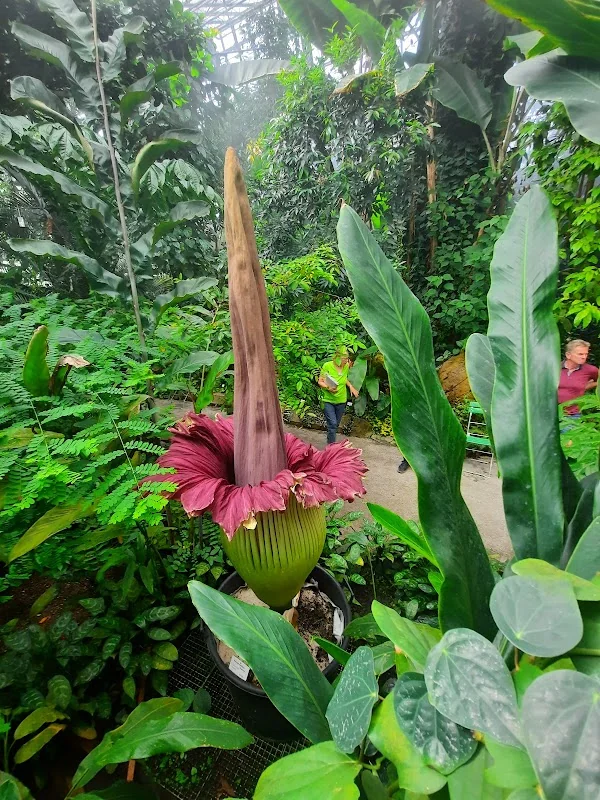
What makes the ÖBG special is the density of its plant worlds. On 16 hectares of outdoor space and in 6,000 m² of greenhouse area, the garden showcases nature-oriented vegetation types from around the world. Around 12,000 plant species make it a botanical journey around the globe that can be experienced in just a few hours. This number is not only impressive but also explains the high search incentive for terms like photos, images, or garden portraits: the ÖBG constantly offers new motifs, changing flower images, and very different atmospheric spaces. The greenhouses complement the outdoor area with tropical and subtropical themes, while the outdoor spaces develop their own moods depending on the season. In the visitor area, the garden is described as a place where plants are not shown in isolation but together with their ecological relationships and functions. This creates a lively overall impression that distinguishes the garden from a mere show garden. ([nachhaltigkeit.uni-bayreuth.de](https://www.nachhaltigkeit.uni-bayreuth.de/de/infrastruktur/oekologisch-botanischer-garten/index.html))
The phytogeographical sections of the garden lead through Asia, America, and Europe, as well as through other climate zones that are described in tours and educational offerings. Mentioned are, among others, tropical rainforests, Mediterranean regions, the prairies and forests of North America, the mountain vegetation of the Himalayas, and the steppes of Central Asia. This makes the tour rich in content and easily understandable for laypeople. Those interested in crops will find an extensive vegetable garden in the southern part of the garden area with over a hundred old and new fruit varieties on the orchard meadow. During the summer months, several hundred crop species and varieties from vegetables, grains, pseudocereals, fiber, oil, and dye plants, as well as spice and medicinal plants, are displayed there. The garden also portrays specialized themes such as Mediterranean plants, alpine vegetation, and various tropical plants. This creates a picture of botanical diversity that is not only aesthetically pleasing but also didactically and ecologically very convincing. ([obg.uni-bayreuth.de](https://www.obg.uni-bayreuth.de/de/gartenbesuch/fuehrungen/index.html?utm_source=openai))
Another core aspect of the ÖBG is the connection of cultivated plants, biodiversity, and nature observation. According to the official information materials, the garden presents more than 800 different species and varieties of traditional and modern crops on over 2 hectares each year, along with more than 130 fruit varieties. This spectrum is complemented by the nature-oriented biotopes in the garden, which create habitats for many animal species. Thus, the ÖBG becomes not only a place for plant observation but also a small, species-rich landscape area with ponds, wetlands, dry grasslands, forest sections, and open spaces. The official materials also mention different types of rocks used in landscape design that provide a glimpse into the geological history of the region. This mix of botanical collection, ecological learning, and landscape design makes the garden particularly interesting for visitors with search intentions for photos, images, reviews, or special features, as here there is not only a beautiful backdrop but also substantive depth behind each section of the tour. ([obg.uni-bayreuth.de](https://www.obg.uni-bayreuth.de/pool/PDFs-u-Dokumente/Faltblaetter/OEBG_General-Leaflet.pdf))
Research, Teaching, and Education for Sustainable Development
The Ecological-Botanical Garden has been closely linked to the University of Bayreuth since its founding in 1978 and fulfills a clear scientific mandate. It is a central scientific institution with a focus on ecology and the environment in research and teaching. The official texts emphasize that the garden offers excellent opportunities for modern ecological field research, that it takes on tasks of species protection as far as possible, and that it serves the university in research, teaching, and public educational work. This connection between scientific practice and public accessibility is a key reason why the ÖBG is more than just a beautiful green space. Here, ecological relationships become visible, plants are not only collected but thought of in habitats, and research is presented in a way that remains understandable for visitors. For inquiries regarding history, special features, and background, this point provides the core of relevance. ([obg.uni-bayreuth.de](https://www.obg.uni-bayreuth.de/de/ueber_uns/index.html?utm_source=openai))
In teaching and environmental education, the garden also plays an active role. The University of Bayreuth describes the ÖBG as an ideal extracurricular learning location for students of all ages because botanical, zoological, ecological, and gardening skills come together there. Educational offerings include tours and projects on crops, climate, water strategies, fair trade, soil, and other topics. A green classroom in the cedar house supports this work with a screen, projector, and flip charts. For educational work in the area of education for sustainable development, the ÖBG has also been awarded the quality seal “Environmental Education.Bavaria” since 2021. Students can take on sustainable and participatory tasks in the garden, such as caring for the permaculture bed, conducting species surveys, or in environmental education. This makes the garden a place where not only knowledge is imparted but also attitudes, responsibility, and scientific curiosity are fostered. ([obg.uni-bayreuth.de](https://www.obg.uni-bayreuth.de/de/Bildungsangebote/index.php?utm_source=openai))
Tours, Events, Weather View, and UNIKAT 2025
For those looking for more than just a free walk, the ÖBG offers a remarkably versatile program of tours and events. Public tours are regularly offered, mostly in German; upon request, English garden tours are also possible. Groups can book individual tours, provided guides are available. The descriptions make it clear that not only individual plants are shown but entire climate zones and habitats are explained. These include, among others, tropical rainforests, Mediterranean areas, prairies and forests of North America, Himalayan vegetation, and Central Asian steppes. Several guides are available for larger groups, and children, school classes, clubs, or birthday groups are also explicitly addressed. This way, the visitor experience adapts to different target groups without losing the scientific claim of the garden. For inquiries such as “tours,” “program,” or “opening hours,” this is an important added value because the garden is not only open but is also actively developed. ([obg.uni-bayreuth.de](https://www.obg.uni-bayreuth.de/en/gartenbesuch/fuehrungen/index.html?utm_source=openai))
The event page of the ÖBG becomes particularly visible during the summer format UNIKAT. The University of Bayreuth describes the garden as a versatile event location for music, art, culinary experiences, and an atmospheric evening program. The seventh edition took place on July 19, 2025, starting at 5 PM; it was themed “50UND OF CELEBRATION.” UNIKAT is thus an example of how the ÖBG also serves as a cultural meeting point in the city and connects the campus with the region. Those searching for “UNIKAT 2025 Ecological-Botanical Garden July 19” will therefore come across a specific, well-documented summer event with culinary offerings, stage programs, and a special garden atmosphere. In parallel, it is also worthwhile to take a look at the official garden portraits and current special features, as they showcase photos, thematic focuses, and changing impressions. Combined with the webcam, this creates a very practical mix of advance information and visual impression, making planning easier for visitors and increasing anticipation. ([uni-bayreuth.de](https://www.uni-bayreuth.de/pressemitteilung/unikat-2025?utm_source=openai))
Finally, the ÖBG is particularly convincing because it answers many search inquiries simultaneously: it is a garden with free opening hours, clear directions, good public transport connections, free use, accessible paths, scientific depth, and regular event life. Those specifically searching for photos, weather, southern entrance, reviews, or current dates quickly get a complete picture on the official pages. Those who simply want to take a walk will find quiet paths, thematic plant segments, and large greenhouses. Botanically interested visitors will discover crops, climate zones, and ecological connections. And those seeking cultural impulses will find tours, lectures, and large events like UNIKAT. This very complexity makes the Ecological-Botanical Garden of the University of Bayreuth a place where a short visit easily turns into a longer exploration tour. ([obg.uni-bayreuth.de](https://www.obg.uni-bayreuth.de/de/gartenbesuch/index.php))
Sources:
Show moreShow less
Ecological-Botanical Garden | Opening Hours & Directions
The Ecological-Botanical Garden of the University of Bayreuth is a place where science, nature experience, and urban identity connect in remarkable ways. Visitors to the garden do not enter a mere exhibition area, but a central scientific institution with a public mandate. On 16 hectares of outdoor space and 6,000 m² of greenhouse area, around 12,000 plant species from all over the world are displayed in nature-oriented habitats. Since 1978, the ÖBG has shaped the University of Bayreuth, regional environmental education, and leisure offerings in the city. For many inquiries regarding opening hours, directions, parking, photos, weather, and the southern entrance, the garden is therefore a particularly well-documented and versatile point of contact. The official website provides clear visitor information, accessibility notes, a webcam for the current weather view, garden portraits, and a comprehensive event program. Those who understand the garden not just as a destination for excursions but as a vibrant space for learning and research will find an exceptionally dense mix of botanical diversity, ecological education, and quiet paths for exploration. ([obg.uni-bayreuth.de](https://www.obg.uni-bayreuth.de/de/ueber_uns/index.html?utm_source=openai))
Opening Hours, Admission, and Visitor Information
A particularly frequently searched topic is the opening hours of the ÖBG, and this is where the good structure of the garden becomes evident. Admission is free, and donations are welcome. The outdoor area is open from November to February, Monday to Friday from 8 AM to 4 PM, as well as Saturdays, Sundays, and public holidays from 10 AM to 4 PM. From March to October, longer hours apply: then the outdoor area is accessible Monday to Friday from 8 AM to 7 PM and Saturdays, Sundays, and public holidays from 10 AM to 7 PM. The greenhouses are open year-round, Monday to Friday from 10 AM to 3 PM and on Sundays and public holidays from 10 AM to 4 PM; they are closed on Saturdays. These clear time slots make planning uncomplicated, whether you are just planning a short walk, a longer tour, or a visit with children, a school class, or a professional group. The Sunday and holiday openings are also expressly made possible by members of the Friends of the ÖBG e.V. ([obg.uni-bayreuth.de](https://www.obg.uni-bayreuth.de/de/gartenbesuch/index.php))
Equally important for visitors are the practical tips on site. The garden points out that the paths in the outdoor area and in the greenhouses are largely suitable for wheelchair users. There are two accessible toilets, one in the entrance area and one in the vegetable garden, as well as two designated parking spaces. Additionally, a wheelchair is available for free loan. Clear rules apply for garden protection: dogs are not allowed, cycling is not permitted, plants and plant parts may not be removed, and in both the outdoor area and the greenhouses, one should stay on the paths. This is not only a matter of order but also protects the sensitive habitats that characterize the garden. This combination of open accessibility and careful protection makes the ÖBG a place where nature experience and consideration go hand in hand. ([obg.uni-bayreuth.de](https://www.obg.uni-bayreuth.de/de/gartenbesuch/index.php))
Directions, Parking, and Southern Entrance in Bayreuth-Frankengut
For directions, the location of the garden on the campus of the University of Bayreuth is a clear advantage. The address is Universitätsstraße 30, 95447 Bayreuth. Those arriving by public transport can reach the campus from the main train station via bus line 316. From the Central Bus Station (ZOH), lines 306 and 304 also operate. The correct stop for the Botanical Garden is called “University Administration” on these lines. This makes it easy to integrate a visit without a car into a city stroll or a campus stay. Especially for guests searching for “Ecological-Botanical Garden Bayreuth Directions” or “Universitätsstraße Bayreuth Frankengut,” this clear public transport connection is an important plus. It reduces planning time, facilitates orientation, and makes the garden as attractive for spontaneous outings as for targeted visits. ([obg.uni-bayreuth.de](https://www.obg.uni-bayreuth.de/de/kontakt_anfahrt/index.html))
By car, the route leads via the A9 motorway, exit Bayreuth South, further towards the university, which is signposted. On the university campus, you should keep left; the parking spaces are located opposite the garden entrance on the right side. Additionally, the visitor information mentions two designated disabled parking spaces. Another important point of orientation is the southern entrance of the garden: through it, a green axis has been created as part of new access paths, connecting the ÖBG with the Röhrensee, the animal park, and the environmental center Lindenhof. The southern entrance also offers an interesting view of nature-oriented wetlands and scientific experimental areas, thus emphasizing the special character of the garden as a research and recreation space. For people who want to experience the garden from a quieter, more open landscape side, the southern entrance is therefore more than just an additional access point. It is a separate exploration path that meaningfully links the ÖBG with the southern urban area and the surroundings of Bayreuth. ([obg.uni-bayreuth.de](https://www.obg.uni-bayreuth.de/de/kontakt_anfahrt/index.html))
Plant Worlds, Greenhouses, and Garden Areas
What makes the ÖBG special is the density of its plant worlds. On 16 hectares of outdoor space and in 6,000 m² of greenhouse area, the garden showcases nature-oriented vegetation types from around the world. Around 12,000 plant species make it a botanical journey around the globe that can be experienced in just a few hours. This number is not only impressive but also explains the high search incentive for terms like photos, images, or garden portraits: the ÖBG constantly offers new motifs, changing flower images, and very different atmospheric spaces. The greenhouses complement the outdoor area with tropical and subtropical themes, while the outdoor spaces develop their own moods depending on the season. In the visitor area, the garden is described as a place where plants are not shown in isolation but together with their ecological relationships and functions. This creates a lively overall impression that distinguishes the garden from a mere show garden. ([nachhaltigkeit.uni-bayreuth.de](https://www.nachhaltigkeit.uni-bayreuth.de/de/infrastruktur/oekologisch-botanischer-garten/index.html))
The phytogeographical sections of the garden lead through Asia, America, and Europe, as well as through other climate zones that are described in tours and educational offerings. Mentioned are, among others, tropical rainforests, Mediterranean regions, the prairies and forests of North America, the mountain vegetation of the Himalayas, and the steppes of Central Asia. This makes the tour rich in content and easily understandable for laypeople. Those interested in crops will find an extensive vegetable garden in the southern part of the garden area with over a hundred old and new fruit varieties on the orchard meadow. During the summer months, several hundred crop species and varieties from vegetables, grains, pseudocereals, fiber, oil, and dye plants, as well as spice and medicinal plants, are displayed there. The garden also portrays specialized themes such as Mediterranean plants, alpine vegetation, and various tropical plants. This creates a picture of botanical diversity that is not only aesthetically pleasing but also didactically and ecologically very convincing. ([obg.uni-bayreuth.de](https://www.obg.uni-bayreuth.de/de/gartenbesuch/fuehrungen/index.html?utm_source=openai))
Another core aspect of the ÖBG is the connection of cultivated plants, biodiversity, and nature observation. According to the official information materials, the garden presents more than 800 different species and varieties of traditional and modern crops on over 2 hectares each year, along with more than 130 fruit varieties. This spectrum is complemented by the nature-oriented biotopes in the garden, which create habitats for many animal species. Thus, the ÖBG becomes not only a place for plant observation but also a small, species-rich landscape area with ponds, wetlands, dry grasslands, forest sections, and open spaces. The official materials also mention different types of rocks used in landscape design that provide a glimpse into the geological history of the region. This mix of botanical collection, ecological learning, and landscape design makes the garden particularly interesting for visitors with search intentions for photos, images, reviews, or special features, as here there is not only a beautiful backdrop but also substantive depth behind each section of the tour. ([obg.uni-bayreuth.de](https://www.obg.uni-bayreuth.de/pool/PDFs-u-Dokumente/Faltblaetter/OEBG_General-Leaflet.pdf))
Research, Teaching, and Education for Sustainable Development
The Ecological-Botanical Garden has been closely linked to the University of Bayreuth since its founding in 1978 and fulfills a clear scientific mandate. It is a central scientific institution with a focus on ecology and the environment in research and teaching. The official texts emphasize that the garden offers excellent opportunities for modern ecological field research, that it takes on tasks of species protection as far as possible, and that it serves the university in research, teaching, and public educational work. This connection between scientific practice and public accessibility is a key reason why the ÖBG is more than just a beautiful green space. Here, ecological relationships become visible, plants are not only collected but thought of in habitats, and research is presented in a way that remains understandable for visitors. For inquiries regarding history, special features, and background, this point provides the core of relevance. ([obg.uni-bayreuth.de](https://www.obg.uni-bayreuth.de/de/ueber_uns/index.html?utm_source=openai))
In teaching and environmental education, the garden also plays an active role. The University of Bayreuth describes the ÖBG as an ideal extracurricular learning location for students of all ages because botanical, zoological, ecological, and gardening skills come together there. Educational offerings include tours and projects on crops, climate, water strategies, fair trade, soil, and other topics. A green classroom in the cedar house supports this work with a screen, projector, and flip charts. For educational work in the area of education for sustainable development, the ÖBG has also been awarded the quality seal “Environmental Education.Bavaria” since 2021. Students can take on sustainable and participatory tasks in the garden, such as caring for the permaculture bed, conducting species surveys, or in environmental education. This makes the garden a place where not only knowledge is imparted but also attitudes, responsibility, and scientific curiosity are fostered. ([obg.uni-bayreuth.de](https://www.obg.uni-bayreuth.de/de/Bildungsangebote/index.php?utm_source=openai))
Tours, Events, Weather View, and UNIKAT 2025
For those looking for more than just a free walk, the ÖBG offers a remarkably versatile program of tours and events. Public tours are regularly offered, mostly in German; upon request, English garden tours are also possible. Groups can book individual tours, provided guides are available. The descriptions make it clear that not only individual plants are shown but entire climate zones and habitats are explained. These include, among others, tropical rainforests, Mediterranean areas, prairies and forests of North America, Himalayan vegetation, and Central Asian steppes. Several guides are available for larger groups, and children, school classes, clubs, or birthday groups are also explicitly addressed. This way, the visitor experience adapts to different target groups without losing the scientific claim of the garden. For inquiries such as “tours,” “program,” or “opening hours,” this is an important added value because the garden is not only open but is also actively developed. ([obg.uni-bayreuth.de](https://www.obg.uni-bayreuth.de/en/gartenbesuch/fuehrungen/index.html?utm_source=openai))
The event page of the ÖBG becomes particularly visible during the summer format UNIKAT. The University of Bayreuth describes the garden as a versatile event location for music, art, culinary experiences, and an atmospheric evening program. The seventh edition took place on July 19, 2025, starting at 5 PM; it was themed “50UND OF CELEBRATION.” UNIKAT is thus an example of how the ÖBG also serves as a cultural meeting point in the city and connects the campus with the region. Those searching for “UNIKAT 2025 Ecological-Botanical Garden July 19” will therefore come across a specific, well-documented summer event with culinary offerings, stage programs, and a special garden atmosphere. In parallel, it is also worthwhile to take a look at the official garden portraits and current special features, as they showcase photos, thematic focuses, and changing impressions. Combined with the webcam, this creates a very practical mix of advance information and visual impression, making planning easier for visitors and increasing anticipation. ([uni-bayreuth.de](https://www.uni-bayreuth.de/pressemitteilung/unikat-2025?utm_source=openai))
Finally, the ÖBG is particularly convincing because it answers many search inquiries simultaneously: it is a garden with free opening hours, clear directions, good public transport connections, free use, accessible paths, scientific depth, and regular event life. Those specifically searching for photos, weather, southern entrance, reviews, or current dates quickly get a complete picture on the official pages. Those who simply want to take a walk will find quiet paths, thematic plant segments, and large greenhouses. Botanically interested visitors will discover crops, climate zones, and ecological connections. And those seeking cultural impulses will find tours, lectures, and large events like UNIKAT. This very complexity makes the Ecological-Botanical Garden of the University of Bayreuth a place where a short visit easily turns into a longer exploration tour. ([obg.uni-bayreuth.de](https://www.obg.uni-bayreuth.de/de/gartenbesuch/index.php))
Sources:
Ecological-Botanical Garden | Opening Hours & Directions
The Ecological-Botanical Garden of the University of Bayreuth is a place where science, nature experience, and urban identity connect in remarkable ways. Visitors to the garden do not enter a mere exhibition area, but a central scientific institution with a public mandate. On 16 hectares of outdoor space and 6,000 m² of greenhouse area, around 12,000 plant species from all over the world are displayed in nature-oriented habitats. Since 1978, the ÖBG has shaped the University of Bayreuth, regional environmental education, and leisure offerings in the city. For many inquiries regarding opening hours, directions, parking, photos, weather, and the southern entrance, the garden is therefore a particularly well-documented and versatile point of contact. The official website provides clear visitor information, accessibility notes, a webcam for the current weather view, garden portraits, and a comprehensive event program. Those who understand the garden not just as a destination for excursions but as a vibrant space for learning and research will find an exceptionally dense mix of botanical diversity, ecological education, and quiet paths for exploration. ([obg.uni-bayreuth.de](https://www.obg.uni-bayreuth.de/de/ueber_uns/index.html?utm_source=openai))
Opening Hours, Admission, and Visitor Information
A particularly frequently searched topic is the opening hours of the ÖBG, and this is where the good structure of the garden becomes evident. Admission is free, and donations are welcome. The outdoor area is open from November to February, Monday to Friday from 8 AM to 4 PM, as well as Saturdays, Sundays, and public holidays from 10 AM to 4 PM. From March to October, longer hours apply: then the outdoor area is accessible Monday to Friday from 8 AM to 7 PM and Saturdays, Sundays, and public holidays from 10 AM to 7 PM. The greenhouses are open year-round, Monday to Friday from 10 AM to 3 PM and on Sundays and public holidays from 10 AM to 4 PM; they are closed on Saturdays. These clear time slots make planning uncomplicated, whether you are just planning a short walk, a longer tour, or a visit with children, a school class, or a professional group. The Sunday and holiday openings are also expressly made possible by members of the Friends of the ÖBG e.V. ([obg.uni-bayreuth.de](https://www.obg.uni-bayreuth.de/de/gartenbesuch/index.php))
Equally important for visitors are the practical tips on site. The garden points out that the paths in the outdoor area and in the greenhouses are largely suitable for wheelchair users. There are two accessible toilets, one in the entrance area and one in the vegetable garden, as well as two designated parking spaces. Additionally, a wheelchair is available for free loan. Clear rules apply for garden protection: dogs are not allowed, cycling is not permitted, plants and plant parts may not be removed, and in both the outdoor area and the greenhouses, one should stay on the paths. This is not only a matter of order but also protects the sensitive habitats that characterize the garden. This combination of open accessibility and careful protection makes the ÖBG a place where nature experience and consideration go hand in hand. ([obg.uni-bayreuth.de](https://www.obg.uni-bayreuth.de/de/gartenbesuch/index.php))
Directions, Parking, and Southern Entrance in Bayreuth-Frankengut
For directions, the location of the garden on the campus of the University of Bayreuth is a clear advantage. The address is Universitätsstraße 30, 95447 Bayreuth. Those arriving by public transport can reach the campus from the main train station via bus line 316. From the Central Bus Station (ZOH), lines 306 and 304 also operate. The correct stop for the Botanical Garden is called “University Administration” on these lines. This makes it easy to integrate a visit without a car into a city stroll or a campus stay. Especially for guests searching for “Ecological-Botanical Garden Bayreuth Directions” or “Universitätsstraße Bayreuth Frankengut,” this clear public transport connection is an important plus. It reduces planning time, facilitates orientation, and makes the garden as attractive for spontaneous outings as for targeted visits. ([obg.uni-bayreuth.de](https://www.obg.uni-bayreuth.de/de/kontakt_anfahrt/index.html))
By car, the route leads via the A9 motorway, exit Bayreuth South, further towards the university, which is signposted. On the university campus, you should keep left; the parking spaces are located opposite the garden entrance on the right side. Additionally, the visitor information mentions two designated disabled parking spaces. Another important point of orientation is the southern entrance of the garden: through it, a green axis has been created as part of new access paths, connecting the ÖBG with the Röhrensee, the animal park, and the environmental center Lindenhof. The southern entrance also offers an interesting view of nature-oriented wetlands and scientific experimental areas, thus emphasizing the special character of the garden as a research and recreation space. For people who want to experience the garden from a quieter, more open landscape side, the southern entrance is therefore more than just an additional access point. It is a separate exploration path that meaningfully links the ÖBG with the southern urban area and the surroundings of Bayreuth. ([obg.uni-bayreuth.de](https://www.obg.uni-bayreuth.de/de/kontakt_anfahrt/index.html))
Plant Worlds, Greenhouses, and Garden Areas
What makes the ÖBG special is the density of its plant worlds. On 16 hectares of outdoor space and in 6,000 m² of greenhouse area, the garden showcases nature-oriented vegetation types from around the world. Around 12,000 plant species make it a botanical journey around the globe that can be experienced in just a few hours. This number is not only impressive but also explains the high search incentive for terms like photos, images, or garden portraits: the ÖBG constantly offers new motifs, changing flower images, and very different atmospheric spaces. The greenhouses complement the outdoor area with tropical and subtropical themes, while the outdoor spaces develop their own moods depending on the season. In the visitor area, the garden is described as a place where plants are not shown in isolation but together with their ecological relationships and functions. This creates a lively overall impression that distinguishes the garden from a mere show garden. ([nachhaltigkeit.uni-bayreuth.de](https://www.nachhaltigkeit.uni-bayreuth.de/de/infrastruktur/oekologisch-botanischer-garten/index.html))
The phytogeographical sections of the garden lead through Asia, America, and Europe, as well as through other climate zones that are described in tours and educational offerings. Mentioned are, among others, tropical rainforests, Mediterranean regions, the prairies and forests of North America, the mountain vegetation of the Himalayas, and the steppes of Central Asia. This makes the tour rich in content and easily understandable for laypeople. Those interested in crops will find an extensive vegetable garden in the southern part of the garden area with over a hundred old and new fruit varieties on the orchard meadow. During the summer months, several hundred crop species and varieties from vegetables, grains, pseudocereals, fiber, oil, and dye plants, as well as spice and medicinal plants, are displayed there. The garden also portrays specialized themes such as Mediterranean plants, alpine vegetation, and various tropical plants. This creates a picture of botanical diversity that is not only aesthetically pleasing but also didactically and ecologically very convincing. ([obg.uni-bayreuth.de](https://www.obg.uni-bayreuth.de/de/gartenbesuch/fuehrungen/index.html?utm_source=openai))
Another core aspect of the ÖBG is the connection of cultivated plants, biodiversity, and nature observation. According to the official information materials, the garden presents more than 800 different species and varieties of traditional and modern crops on over 2 hectares each year, along with more than 130 fruit varieties. This spectrum is complemented by the nature-oriented biotopes in the garden, which create habitats for many animal species. Thus, the ÖBG becomes not only a place for plant observation but also a small, species-rich landscape area with ponds, wetlands, dry grasslands, forest sections, and open spaces. The official materials also mention different types of rocks used in landscape design that provide a glimpse into the geological history of the region. This mix of botanical collection, ecological learning, and landscape design makes the garden particularly interesting for visitors with search intentions for photos, images, reviews, or special features, as here there is not only a beautiful backdrop but also substantive depth behind each section of the tour. ([obg.uni-bayreuth.de](https://www.obg.uni-bayreuth.de/pool/PDFs-u-Dokumente/Faltblaetter/OEBG_General-Leaflet.pdf))
Research, Teaching, and Education for Sustainable Development
The Ecological-Botanical Garden has been closely linked to the University of Bayreuth since its founding in 1978 and fulfills a clear scientific mandate. It is a central scientific institution with a focus on ecology and the environment in research and teaching. The official texts emphasize that the garden offers excellent opportunities for modern ecological field research, that it takes on tasks of species protection as far as possible, and that it serves the university in research, teaching, and public educational work. This connection between scientific practice and public accessibility is a key reason why the ÖBG is more than just a beautiful green space. Here, ecological relationships become visible, plants are not only collected but thought of in habitats, and research is presented in a way that remains understandable for visitors. For inquiries regarding history, special features, and background, this point provides the core of relevance. ([obg.uni-bayreuth.de](https://www.obg.uni-bayreuth.de/de/ueber_uns/index.html?utm_source=openai))
In teaching and environmental education, the garden also plays an active role. The University of Bayreuth describes the ÖBG as an ideal extracurricular learning location for students of all ages because botanical, zoological, ecological, and gardening skills come together there. Educational offerings include tours and projects on crops, climate, water strategies, fair trade, soil, and other topics. A green classroom in the cedar house supports this work with a screen, projector, and flip charts. For educational work in the area of education for sustainable development, the ÖBG has also been awarded the quality seal “Environmental Education.Bavaria” since 2021. Students can take on sustainable and participatory tasks in the garden, such as caring for the permaculture bed, conducting species surveys, or in environmental education. This makes the garden a place where not only knowledge is imparted but also attitudes, responsibility, and scientific curiosity are fostered. ([obg.uni-bayreuth.de](https://www.obg.uni-bayreuth.de/de/Bildungsangebote/index.php?utm_source=openai))
Tours, Events, Weather View, and UNIKAT 2025
For those looking for more than just a free walk, the ÖBG offers a remarkably versatile program of tours and events. Public tours are regularly offered, mostly in German; upon request, English garden tours are also possible. Groups can book individual tours, provided guides are available. The descriptions make it clear that not only individual plants are shown but entire climate zones and habitats are explained. These include, among others, tropical rainforests, Mediterranean areas, prairies and forests of North America, Himalayan vegetation, and Central Asian steppes. Several guides are available for larger groups, and children, school classes, clubs, or birthday groups are also explicitly addressed. This way, the visitor experience adapts to different target groups without losing the scientific claim of the garden. For inquiries such as “tours,” “program,” or “opening hours,” this is an important added value because the garden is not only open but is also actively developed. ([obg.uni-bayreuth.de](https://www.obg.uni-bayreuth.de/en/gartenbesuch/fuehrungen/index.html?utm_source=openai))
The event page of the ÖBG becomes particularly visible during the summer format UNIKAT. The University of Bayreuth describes the garden as a versatile event location for music, art, culinary experiences, and an atmospheric evening program. The seventh edition took place on July 19, 2025, starting at 5 PM; it was themed “50UND OF CELEBRATION.” UNIKAT is thus an example of how the ÖBG also serves as a cultural meeting point in the city and connects the campus with the region. Those searching for “UNIKAT 2025 Ecological-Botanical Garden July 19” will therefore come across a specific, well-documented summer event with culinary offerings, stage programs, and a special garden atmosphere. In parallel, it is also worthwhile to take a look at the official garden portraits and current special features, as they showcase photos, thematic focuses, and changing impressions. Combined with the webcam, this creates a very practical mix of advance information and visual impression, making planning easier for visitors and increasing anticipation. ([uni-bayreuth.de](https://www.uni-bayreuth.de/pressemitteilung/unikat-2025?utm_source=openai))
Finally, the ÖBG is particularly convincing because it answers many search inquiries simultaneously: it is a garden with free opening hours, clear directions, good public transport connections, free use, accessible paths, scientific depth, and regular event life. Those specifically searching for photos, weather, southern entrance, reviews, or current dates quickly get a complete picture on the official pages. Those who simply want to take a walk will find quiet paths, thematic plant segments, and large greenhouses. Botanically interested visitors will discover crops, climate zones, and ecological connections. And those seeking cultural impulses will find tours, lectures, and large events like UNIKAT. This very complexity makes the Ecological-Botanical Garden of the University of Bayreuth a place where a short visit easily turns into a longer exploration tour. ([obg.uni-bayreuth.de](https://www.obg.uni-bayreuth.de/de/gartenbesuch/index.php))
Sources:
Upcoming Events
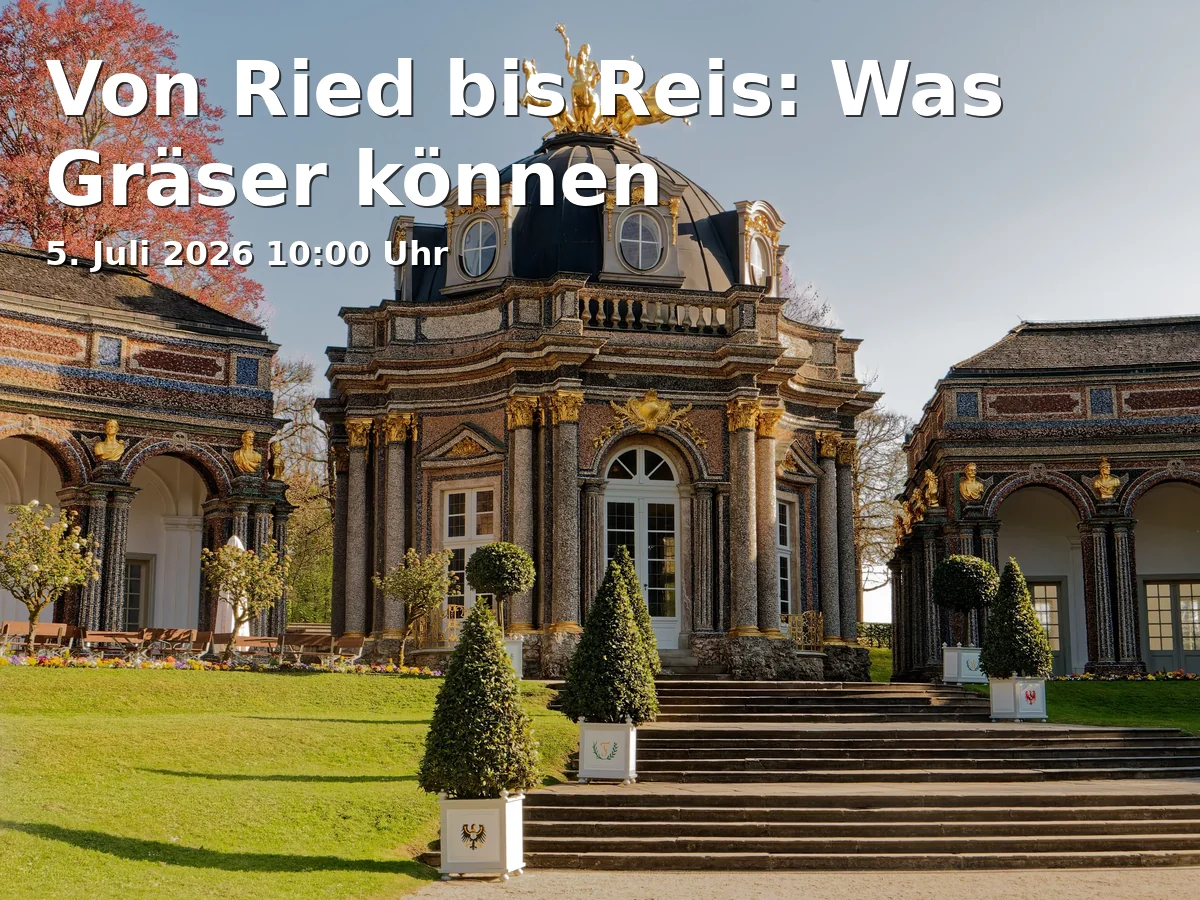
From Reed to Rice: What Grasses Can Do
Discover Bayreuth's green side with a free grass tour in the Ecological-Botanical Garden. From Reed to Rice succinctly brings botany and nature knowledge to the point. #Bayreuth #Botany #Nature

Plant Hunting with Your Smartphone: Participatory Project Launches in Bayreuth
Bayreuth becomes a Plant Workshop in the Open Air: Free participatory project in the Ecological Botanical Garden with digital exploration, biodiversity, and nature experience. #Bayreuth #Biodiversity

Herb Time: Discovering, Exchanging, Trying Out
Herb Time in the Ecological-Botanical Garden Bayreuth invites seniors to a calm summer afternoon with nature, memory, and exchange. Free, with a small contribution for trying. #Bayreuth #Seniors
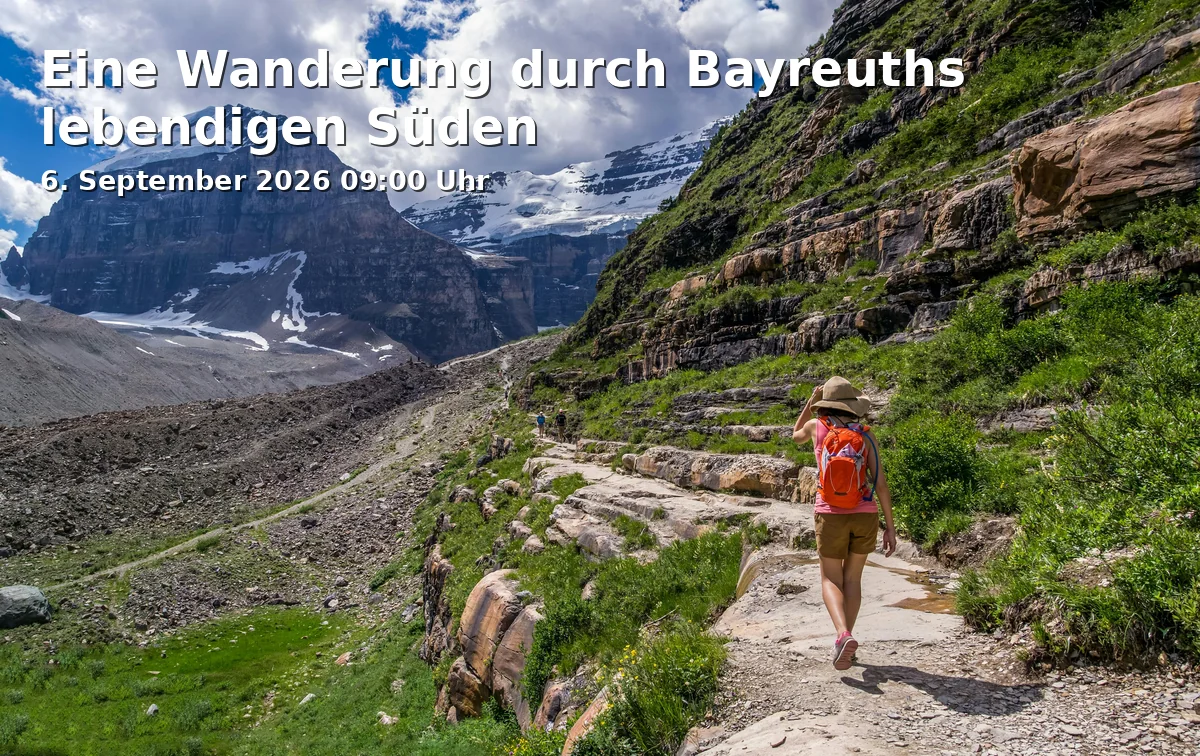
A Hike Through Bayreuth's Lively South
Experience Bayreuth's South in a new way: free hike from ÖBG over Röhrensee to Lindenhof. Nature, biodiversity, and urban greenery on 06.09.2026. #Bayreuth
BayPilz: 3rd Bayreuth Mushroom Days
The program provides insight into the fascinating ways of life of fungi with exhibitions, guided tours, and workshops.
Frequently Asked Questions
Reviews
No reviews found