
Bayreuth
Schloßberglein 3, 95444 Bayreuth-Schießhaus, Deutschland
Castle Church - Our Lady | History & Music
The Castle Church - Our Lady is one of those places that immediately creates a special atmosphere in Bayreuth: historical, tranquil, artistic, and yet lively through services and church music. It is located at Schlossberglein in the heart of the city, has been part of the community as a Catholic parish church since 1813, and is today the only Catholic margrave church in Bayreuth. Those who arrive here find not a loud tourist destination, but a building that connects history, faith, music, and Rococo aesthetics in a compact space. This very mix makes the church interesting for visitors, photographers, music lovers, and city walkers. The church is open daily, it is accessible without barriers, and it is in close proximity to other margravial sights, making a visit easily combined with a tour of the historic city center. The official parish describes the church as a quiet place of prayer in the center; at the same time, it is a musical center with concerts, choirs, and special liturgical celebrations. ([schlosskirche-bayreuth.kirche-bamberg.de](https://schlosskirche-bayreuth.kirche-bamberg.de/schlosskirche/))
History of the Castle Church as a Margravial Court Church
The history of the Castle Church is closely linked to the courtly Bayreuth of the 18th century. The current place of worship was built as a new church for the court community in the Old Castle after the old chapel from 1668 burned down along with the building. The new building was constructed between 1753 and 1756; the architect is named as J. S. Pierre. The list of margrave churches describes the church as a hall building with surrounding galleries on three sides, with ceiling stucco by J. Pedrozzi and ceiling paintings by W. E. Wunder. Thus, it stylistically belongs to those Bayreuth churches that clearly show the margrave style: a spacious, bright room, representative yet not monumental in the sense of a cathedral, but designed for closeness, sightlines, and courtly representation. The fact that the same era also shaped the Margravial Opera House, the New Castle, and other architectural monuments explains why the Castle Church today fits so seamlessly into the ensemble of the margravial city. ([markgrafenkirchen.de](https://www.markgrafenkirchen.de/wp-content/uploads/2024/03/Liste_Markgrafenkirchen_Fuerstentum_Bayreuth.pdf))
Later, the building had a varied use. In 1791, when the rule passed to Prussia, the church served as a garrison church; during the French occupation, it was used as an arsenal. In 1810 and 1813, the church came into the possession of the Catholic community, which had been elevated to a parish in 1812. Since then, it has been a parish church and became the mother church of all Catholic parishes in Bayreuth and the surrounding area after World War II. This is crucial for the current significance of the place: The Castle Church is not only a monument but also a sacred space still in use with a functioning community, vibrant liturgy, and everyday church music. Additionally, there is the above-ground crypt where Margravine Wilhelmine, her husband, and her daughter are buried. This historical depth makes the church so appealing: visitors experience not just a beautiful interior but a place where Bayreuth's city, religious, and music history converge directly. ([schlosskirche-bayreuth.kirche-bamberg.de](https://schlosskirche-bayreuth.kirche-bamberg.de/schlosskirche/die-schlosskirche-als-katholische-pfarrkirche-?utm_source=openai))
Rococo Furnishings, Galleries, and Prince's Crypt
Upon entering the Castle Church, one first experiences the large, bright hall, which the official parish describes as spacious and light. The inserted galleries give the interior an almost basilica-like effect, even though it is a hall building. According to the parish, the French court architect Josef St. Pierre was responsible for the architecture of the space. The Italian Giovanni Battista Pedrozzi created the ceiling stucco, which is considered one of the finest Rococo works in the region. This combination is typical of Bayreuth's courtly building culture: French planning, Italian stucco art, German execution, and a representative yet spiritual overall effect. The church thus does not appear overloaded but balanced. This is particularly important for visitors looking for photos or a first impression: The interior lives from its proportions, bright surfaces, galleries, and decorative stucco, not from a single spectacular component. ([schlosskirche-bayreuth.kirche-bamberg.de](https://schlosskirche-bayreuth.kirche-bamberg.de/schlosskirche/))
Especially impressive is the connection of art and dynasty. Beneath the organ gallery lies the above-ground crypt of the margravial family, where Wilhelmine, her husband, and her daughter rest. The Castle Church is thus not only a parish church but also a memorial site of Bayreuth's court history. In 2018 and 2019, the church was renovated again; the aim was to gently relativize later alterations and make the character of the court church more visible again. New ceiling paintings were adapted to the Baroque style and replaced the previously destroyed originals. The liturgical order was also changed, for example, by relocating the altar and adjusting the interior effect. For visitors, this means: The church is not a museum in the classical sense but a historically matured sacred space that has been restored, used, and continued. This combination of preservation and vibrant use is what makes it particularly appealing. ([markgrafenkirchen.de](https://www.markgrafenkirchen.de/markgrafenkirchen/schlosskirche-unsere-liebe-frau-bayreuth/))
Opening Hours, Visit, and Barrier-Free Access
Practically, the Castle Church is very well planned. According to Markgrafenkirchen, it is open daily from 07:30 to 16:00; from April to October, the hours extend to 19:00. The official parish also mentions the parish office at Schlossberglein 3 in 95444 Bayreuth and lists specific office hours there. Those who want to combine a visit with organizational questions will find a clear contact person on-site. The fact that the church is located in the city center is an additional advantage: it can easily be integrated into a city walk without the need for a long journey or complicated access. For a location that is often sought after for photos, history, or a quiet visit, this uncomplicated accessibility is an important plus. The data also shows that it is not only a tourist destination but also a regularly used place to this day. ([markgrafenkirchen.de](https://www.markgrafenkirchen.de/markgrafenkirchen/schlosskirche-unsere-liebe-frau-bayreuth/))
Accessibility is also well documented. The Bayreuth event venue directory lists the Castle Church as spatially barrier-free; additionally, a barrier-free entrance is noted at the side of Schlossberglein. This is helpful for visitors with limited mobility as well as for groups with strollers or for guests who prefer the easiest access possible. The location in the historic city center is also practical: the church is easily reachable on foot from downtown, and those planning a longer city tour can conveniently combine the visit with other sights. Because the Castle Church is not an isolated tourist destination on the outskirts but a central component of the old town, visitors experience a pleasant flow: arrive, enter, linger, and then move on directly. The combination of central location, clear opening hours, and barrier-free access is therefore a real advantage for all those looking for practical information in advance. ([bayreuth.de](https://www.bayreuth.de/wp-content/uploads/2026/03/Veranstaltungsorte-Bayreuth_2026.pdf))
Church Music, Concerts, and Spiritual Life
The Castle Church is not only a building for quiet visits but also an active place of music. On the official site of the Castle Church music, it states that the church's ensembles shape liturgical celebrations with chants ranging from Gregorian to classical vocal polyphony to contemporary choral music. In addition, various concerts take place here, both a cappella and in collaboration with soloists, instrumental ensembles, and orchestras. Since February 2021, regional cantor Sebastian Ruf has been responsible for church music and shapes the concert life at the Castle Church. For visitors, this is important because the location thus has a dual character: a quiet sacred space during the day, an acoustically and musically shaped event venue in the evenings and on special occasions. So, those looking for concerts or church music at Castle Church Bayreuth will not encounter a marginal phenomenon but a core area of today's use. ([schlosskirchenmusik-bayreuth.de](https://schlosskirchenmusik-bayreuth.de/))
The Bayreuth event venue directory also clearly shows this use. It explicitly notes that the Castle Church is intended only for spiritual concerts. This fits well with its character as a sacred space and explains why the musical use remains so strongly connected to the religious profile. For SEO and search intent, this is particularly exciting: users searching for programs, concerts, church music, or events often mean exactly this connection between culture and sacrality. At the same time, the official church music page shows that the church is not a rigid space but a lively center with ensemble work, education, and regular musical life. This creates a profile that goes beyond the classic church visit. Experiencing a concert in the Castle Church means not only experiencing music but also spatial impact, acoustics, and historical atmosphere in an ensemble typical for Bayreuth. ([bayreuth.de](https://www.bayreuth.de/wp-content/uploads/2026/03/Veranstaltungsorte-Bayreuth_2026.pdf))
Directions, Parking, and Location in the Historic Center
The location of the Castle Church is one of its greatest advantages. It stands at Schlossberglein in the heart of Bayreuth and is thus situated in the middle of the historic city area, where margravial architecture, old town, and cultural sights are closely interwoven. For visitors, this means: The church is easily reachable on foot, and it is an excellent focal point for a walk through old Bayreuth. Those arriving by car must consider the downtown logic, as the church does not have a large visitor parking lot but is integrated into the general inner-city parking system. The city of Bayreuth provides information on parking options in the city center on its tourism page and also points out mobile parking for fee-based municipal parking spaces. Practically, this means: Before the visit, one should briefly inform themselves about the downtown parking spaces, especially if traveling during peak times or on event days. ([schlosskirche-bayreuth.kirche-bamberg.de](https://schlosskirche-bayreuth.kirche-bamberg.de/schlosskirche/))
Additionally, the documented barrier-free access also helps with directions. The barrier-free entrance at the side of Schlossberglein facilitates orientation once on-site. Surrounding attractions can be well connected, so a visit to the Castle Church rarely remains at just one destination. This location is ideal for travelers wanting to get to know Bayreuth as a cultural city: one can combine historical architecture, church art, music, and city walking in a single tour. The parking situation in the city center can also be planned better than before through municipal offers and digital payment systems. So, those looking for directions to Castle Church Bayreuth or parking at Castle Church Bayreuth usually do not need a complicated special solution but just a brief plan for the city center. The advantage is clear: The church is central, well embedded, and located in a city structure that offers visitors many connection options. ([bayreuth.de](https://www.bayreuth.de/wp-content/uploads/2026/03/Veranstaltungsorte-Bayreuth_2026.pdf))
Photos, Sightlines, and the Most Beautiful Impressions on Site
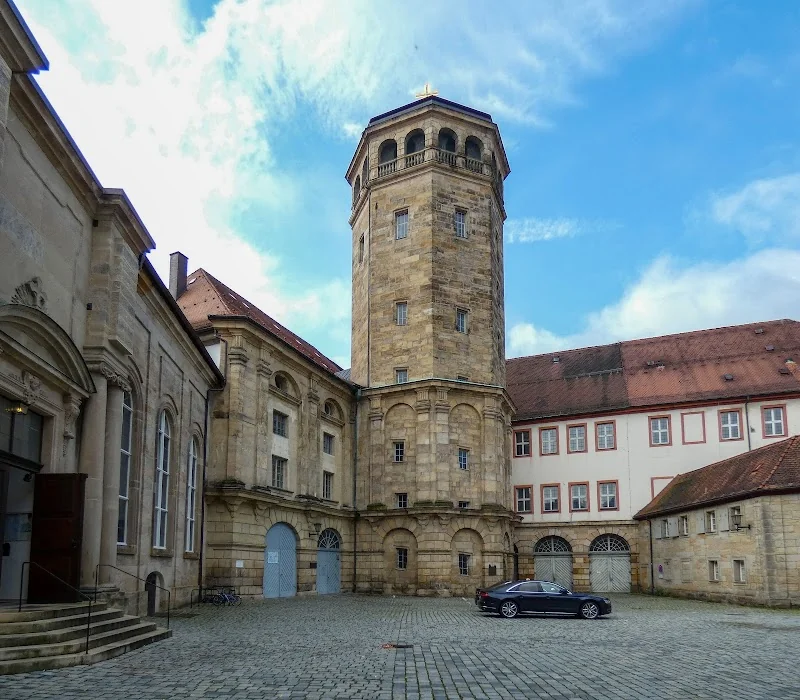
Those searching for photos of the Castle Church quickly discover why the place is so popular: even the exterior view with the distinctive tower, the Schlossberglein, and the historic surroundings looks very photogenic. The Margrave Churches page additionally offers a 360° view and refers to images of the church, allowing one to get a good impression before the visit. Particularly appealing is the terrace of the Castle Church with the bust of the art-loving Margravine Wilhelmine. From there, the view, according to Margrave Churches, goes directly to the Margravial Opera House, and this sightline is a strong motif for many visitors and photographers. The church is thus not only an interior space but also part of an urban staging that connects historical architecture. Those with a camera or smartphone will find motifs for detail shots, panoramic impressions, and margravial city views. ([markgrafenkirchen.de](https://www.markgrafenkirchen.de/markgrafenkirchen/schlosskirche-unsere-liebe-frau-bayreuth/))
There are also strong image motifs in the surroundings. The castle tower, that is, the octagonal bell tower of the Catholic Castle Church, has long been one of Bayreuth's landmarks. It symbolizes how closely the church is connected to the perception of the city center. Especially visitors searching for Castle Church Bayreuth photos or the typical Bayreuth cityscape will find here: church, tower, castle ensemble, and opera house form a visual whole. The church is also not a place where everything disappears behind barriers; rather, it is designed for visitors and can be experienced very well from both the outside and inside. This also explains why many search queries related to images, impressions, and reviews are associated with this location. The first impression is usually calm, bright, and art-historical, while the second impression comes through the details in the space and the connection to the city history. ([bayreuth-tourismus.de](https://www.bayreuth-tourismus.de/der-schlossturm/?utm_source=openai))
Sights Around the Castle Church
A visit to the Castle Church is particularly worthwhile because it is part of a whole historical urban space. Directly in the vicinity are the Margravial Opera House and the castle tower; both are among the defining landmarks of Bayreuth's city center. The Bavarian Palace Administration and other official sites classify the opera house as a UNESCO World Heritage Site and museum, while the castle tower is described as a landmark of the city. For visitors, this results in a very coherent tour: church, tower, opera house, and old town can be experienced in a compact area. Especially if one is visiting Bayreuth anyway, the Castle Church is therefore an ideal starting or stopping point. It does not complement the large well-known sights; it connects them. This makes it interesting for cultural travelers as well as for those specifically looking for a quiet, historical church in the city center. ([markgrafenkirchen.de](https://www.markgrafenkirchen.de/markgrafenkirchen/schlosskirche-unsere-liebe-frau-bayreuth/))
The larger margravial history of Bayreuth is also visible at this place. The Castle Church is the only Catholic margrave church in the city, and this gives it a special position within the Bayreuth building and cultural ensemble. When one continues to walk through the city center after the visit, one quickly understands how closely religious, courtly, and urban history intertwine here. The Castle Church is therefore interesting not only for believers but also for all who want to experience Bayreuth as a cultural place: architecture, music, history, and cityscape merge so clearly at hardly any other point. Those visiting the location as part of a city walk will get a particularly condensed impression of Bayreuth's identity. And this explains why search queries often focus on photos, reviews, history, directions, and music: this church is not an isolated object but a key place for understanding the entire city center. ([schlosskirche-bayreuth.kirche-bamberg.de](https://schlosskirche-bayreuth.kirche-bamberg.de/schlosskirche/))
Sources:
Show moreShow less
Castle Church - Our Lady | History & Music
The Castle Church - Our Lady is one of those places that immediately creates a special atmosphere in Bayreuth: historical, tranquil, artistic, and yet lively through services and church music. It is located at Schlossberglein in the heart of the city, has been part of the community as a Catholic parish church since 1813, and is today the only Catholic margrave church in Bayreuth. Those who arrive here find not a loud tourist destination, but a building that connects history, faith, music, and Rococo aesthetics in a compact space. This very mix makes the church interesting for visitors, photographers, music lovers, and city walkers. The church is open daily, it is accessible without barriers, and it is in close proximity to other margravial sights, making a visit easily combined with a tour of the historic city center. The official parish describes the church as a quiet place of prayer in the center; at the same time, it is a musical center with concerts, choirs, and special liturgical celebrations. ([schlosskirche-bayreuth.kirche-bamberg.de](https://schlosskirche-bayreuth.kirche-bamberg.de/schlosskirche/))
History of the Castle Church as a Margravial Court Church
The history of the Castle Church is closely linked to the courtly Bayreuth of the 18th century. The current place of worship was built as a new church for the court community in the Old Castle after the old chapel from 1668 burned down along with the building. The new building was constructed between 1753 and 1756; the architect is named as J. S. Pierre. The list of margrave churches describes the church as a hall building with surrounding galleries on three sides, with ceiling stucco by J. Pedrozzi and ceiling paintings by W. E. Wunder. Thus, it stylistically belongs to those Bayreuth churches that clearly show the margrave style: a spacious, bright room, representative yet not monumental in the sense of a cathedral, but designed for closeness, sightlines, and courtly representation. The fact that the same era also shaped the Margravial Opera House, the New Castle, and other architectural monuments explains why the Castle Church today fits so seamlessly into the ensemble of the margravial city. ([markgrafenkirchen.de](https://www.markgrafenkirchen.de/wp-content/uploads/2024/03/Liste_Markgrafenkirchen_Fuerstentum_Bayreuth.pdf))
Later, the building had a varied use. In 1791, when the rule passed to Prussia, the church served as a garrison church; during the French occupation, it was used as an arsenal. In 1810 and 1813, the church came into the possession of the Catholic community, which had been elevated to a parish in 1812. Since then, it has been a parish church and became the mother church of all Catholic parishes in Bayreuth and the surrounding area after World War II. This is crucial for the current significance of the place: The Castle Church is not only a monument but also a sacred space still in use with a functioning community, vibrant liturgy, and everyday church music. Additionally, there is the above-ground crypt where Margravine Wilhelmine, her husband, and her daughter are buried. This historical depth makes the church so appealing: visitors experience not just a beautiful interior but a place where Bayreuth's city, religious, and music history converge directly. ([schlosskirche-bayreuth.kirche-bamberg.de](https://schlosskirche-bayreuth.kirche-bamberg.de/schlosskirche/die-schlosskirche-als-katholische-pfarrkirche-?utm_source=openai))
Rococo Furnishings, Galleries, and Prince's Crypt
Upon entering the Castle Church, one first experiences the large, bright hall, which the official parish describes as spacious and light. The inserted galleries give the interior an almost basilica-like effect, even though it is a hall building. According to the parish, the French court architect Josef St. Pierre was responsible for the architecture of the space. The Italian Giovanni Battista Pedrozzi created the ceiling stucco, which is considered one of the finest Rococo works in the region. This combination is typical of Bayreuth's courtly building culture: French planning, Italian stucco art, German execution, and a representative yet spiritual overall effect. The church thus does not appear overloaded but balanced. This is particularly important for visitors looking for photos or a first impression: The interior lives from its proportions, bright surfaces, galleries, and decorative stucco, not from a single spectacular component. ([schlosskirche-bayreuth.kirche-bamberg.de](https://schlosskirche-bayreuth.kirche-bamberg.de/schlosskirche/))
Especially impressive is the connection of art and dynasty. Beneath the organ gallery lies the above-ground crypt of the margravial family, where Wilhelmine, her husband, and her daughter rest. The Castle Church is thus not only a parish church but also a memorial site of Bayreuth's court history. In 2018 and 2019, the church was renovated again; the aim was to gently relativize later alterations and make the character of the court church more visible again. New ceiling paintings were adapted to the Baroque style and replaced the previously destroyed originals. The liturgical order was also changed, for example, by relocating the altar and adjusting the interior effect. For visitors, this means: The church is not a museum in the classical sense but a historically matured sacred space that has been restored, used, and continued. This combination of preservation and vibrant use is what makes it particularly appealing. ([markgrafenkirchen.de](https://www.markgrafenkirchen.de/markgrafenkirchen/schlosskirche-unsere-liebe-frau-bayreuth/))
Opening Hours, Visit, and Barrier-Free Access
Practically, the Castle Church is very well planned. According to Markgrafenkirchen, it is open daily from 07:30 to 16:00; from April to October, the hours extend to 19:00. The official parish also mentions the parish office at Schlossberglein 3 in 95444 Bayreuth and lists specific office hours there. Those who want to combine a visit with organizational questions will find a clear contact person on-site. The fact that the church is located in the city center is an additional advantage: it can easily be integrated into a city walk without the need for a long journey or complicated access. For a location that is often sought after for photos, history, or a quiet visit, this uncomplicated accessibility is an important plus. The data also shows that it is not only a tourist destination but also a regularly used place to this day. ([markgrafenkirchen.de](https://www.markgrafenkirchen.de/markgrafenkirchen/schlosskirche-unsere-liebe-frau-bayreuth/))
Accessibility is also well documented. The Bayreuth event venue directory lists the Castle Church as spatially barrier-free; additionally, a barrier-free entrance is noted at the side of Schlossberglein. This is helpful for visitors with limited mobility as well as for groups with strollers or for guests who prefer the easiest access possible. The location in the historic city center is also practical: the church is easily reachable on foot from downtown, and those planning a longer city tour can conveniently combine the visit with other sights. Because the Castle Church is not an isolated tourist destination on the outskirts but a central component of the old town, visitors experience a pleasant flow: arrive, enter, linger, and then move on directly. The combination of central location, clear opening hours, and barrier-free access is therefore a real advantage for all those looking for practical information in advance. ([bayreuth.de](https://www.bayreuth.de/wp-content/uploads/2026/03/Veranstaltungsorte-Bayreuth_2026.pdf))
Church Music, Concerts, and Spiritual Life
The Castle Church is not only a building for quiet visits but also an active place of music. On the official site of the Castle Church music, it states that the church's ensembles shape liturgical celebrations with chants ranging from Gregorian to classical vocal polyphony to contemporary choral music. In addition, various concerts take place here, both a cappella and in collaboration with soloists, instrumental ensembles, and orchestras. Since February 2021, regional cantor Sebastian Ruf has been responsible for church music and shapes the concert life at the Castle Church. For visitors, this is important because the location thus has a dual character: a quiet sacred space during the day, an acoustically and musically shaped event venue in the evenings and on special occasions. So, those looking for concerts or church music at Castle Church Bayreuth will not encounter a marginal phenomenon but a core area of today's use. ([schlosskirchenmusik-bayreuth.de](https://schlosskirchenmusik-bayreuth.de/))
The Bayreuth event venue directory also clearly shows this use. It explicitly notes that the Castle Church is intended only for spiritual concerts. This fits well with its character as a sacred space and explains why the musical use remains so strongly connected to the religious profile. For SEO and search intent, this is particularly exciting: users searching for programs, concerts, church music, or events often mean exactly this connection between culture and sacrality. At the same time, the official church music page shows that the church is not a rigid space but a lively center with ensemble work, education, and regular musical life. This creates a profile that goes beyond the classic church visit. Experiencing a concert in the Castle Church means not only experiencing music but also spatial impact, acoustics, and historical atmosphere in an ensemble typical for Bayreuth. ([bayreuth.de](https://www.bayreuth.de/wp-content/uploads/2026/03/Veranstaltungsorte-Bayreuth_2026.pdf))
Directions, Parking, and Location in the Historic Center
The location of the Castle Church is one of its greatest advantages. It stands at Schlossberglein in the heart of Bayreuth and is thus situated in the middle of the historic city area, where margravial architecture, old town, and cultural sights are closely interwoven. For visitors, this means: The church is easily reachable on foot, and it is an excellent focal point for a walk through old Bayreuth. Those arriving by car must consider the downtown logic, as the church does not have a large visitor parking lot but is integrated into the general inner-city parking system. The city of Bayreuth provides information on parking options in the city center on its tourism page and also points out mobile parking for fee-based municipal parking spaces. Practically, this means: Before the visit, one should briefly inform themselves about the downtown parking spaces, especially if traveling during peak times or on event days. ([schlosskirche-bayreuth.kirche-bamberg.de](https://schlosskirche-bayreuth.kirche-bamberg.de/schlosskirche/))
Additionally, the documented barrier-free access also helps with directions. The barrier-free entrance at the side of Schlossberglein facilitates orientation once on-site. Surrounding attractions can be well connected, so a visit to the Castle Church rarely remains at just one destination. This location is ideal for travelers wanting to get to know Bayreuth as a cultural city: one can combine historical architecture, church art, music, and city walking in a single tour. The parking situation in the city center can also be planned better than before through municipal offers and digital payment systems. So, those looking for directions to Castle Church Bayreuth or parking at Castle Church Bayreuth usually do not need a complicated special solution but just a brief plan for the city center. The advantage is clear: The church is central, well embedded, and located in a city structure that offers visitors many connection options. ([bayreuth.de](https://www.bayreuth.de/wp-content/uploads/2026/03/Veranstaltungsorte-Bayreuth_2026.pdf))
Photos, Sightlines, and the Most Beautiful Impressions on Site
Those searching for photos of the Castle Church quickly discover why the place is so popular: even the exterior view with the distinctive tower, the Schlossberglein, and the historic surroundings looks very photogenic. The Margrave Churches page additionally offers a 360° view and refers to images of the church, allowing one to get a good impression before the visit. Particularly appealing is the terrace of the Castle Church with the bust of the art-loving Margravine Wilhelmine. From there, the view, according to Margrave Churches, goes directly to the Margravial Opera House, and this sightline is a strong motif for many visitors and photographers. The church is thus not only an interior space but also part of an urban staging that connects historical architecture. Those with a camera or smartphone will find motifs for detail shots, panoramic impressions, and margravial city views. ([markgrafenkirchen.de](https://www.markgrafenkirchen.de/markgrafenkirchen/schlosskirche-unsere-liebe-frau-bayreuth/))
There are also strong image motifs in the surroundings. The castle tower, that is, the octagonal bell tower of the Catholic Castle Church, has long been one of Bayreuth's landmarks. It symbolizes how closely the church is connected to the perception of the city center. Especially visitors searching for Castle Church Bayreuth photos or the typical Bayreuth cityscape will find here: church, tower, castle ensemble, and opera house form a visual whole. The church is also not a place where everything disappears behind barriers; rather, it is designed for visitors and can be experienced very well from both the outside and inside. This also explains why many search queries related to images, impressions, and reviews are associated with this location. The first impression is usually calm, bright, and art-historical, while the second impression comes through the details in the space and the connection to the city history. ([bayreuth-tourismus.de](https://www.bayreuth-tourismus.de/der-schlossturm/?utm_source=openai))
Sights Around the Castle Church
A visit to the Castle Church is particularly worthwhile because it is part of a whole historical urban space. Directly in the vicinity are the Margravial Opera House and the castle tower; both are among the defining landmarks of Bayreuth's city center. The Bavarian Palace Administration and other official sites classify the opera house as a UNESCO World Heritage Site and museum, while the castle tower is described as a landmark of the city. For visitors, this results in a very coherent tour: church, tower, opera house, and old town can be experienced in a compact area. Especially if one is visiting Bayreuth anyway, the Castle Church is therefore an ideal starting or stopping point. It does not complement the large well-known sights; it connects them. This makes it interesting for cultural travelers as well as for those specifically looking for a quiet, historical church in the city center. ([markgrafenkirchen.de](https://www.markgrafenkirchen.de/markgrafenkirchen/schlosskirche-unsere-liebe-frau-bayreuth/))
The larger margravial history of Bayreuth is also visible at this place. The Castle Church is the only Catholic margrave church in the city, and this gives it a special position within the Bayreuth building and cultural ensemble. When one continues to walk through the city center after the visit, one quickly understands how closely religious, courtly, and urban history intertwine here. The Castle Church is therefore interesting not only for believers but also for all who want to experience Bayreuth as a cultural place: architecture, music, history, and cityscape merge so clearly at hardly any other point. Those visiting the location as part of a city walk will get a particularly condensed impression of Bayreuth's identity. And this explains why search queries often focus on photos, reviews, history, directions, and music: this church is not an isolated object but a key place for understanding the entire city center. ([schlosskirche-bayreuth.kirche-bamberg.de](https://schlosskirche-bayreuth.kirche-bamberg.de/schlosskirche/))
Sources:
Castle Church - Our Lady | History & Music
The Castle Church - Our Lady is one of those places that immediately creates a special atmosphere in Bayreuth: historical, tranquil, artistic, and yet lively through services and church music. It is located at Schlossberglein in the heart of the city, has been part of the community as a Catholic parish church since 1813, and is today the only Catholic margrave church in Bayreuth. Those who arrive here find not a loud tourist destination, but a building that connects history, faith, music, and Rococo aesthetics in a compact space. This very mix makes the church interesting for visitors, photographers, music lovers, and city walkers. The church is open daily, it is accessible without barriers, and it is in close proximity to other margravial sights, making a visit easily combined with a tour of the historic city center. The official parish describes the church as a quiet place of prayer in the center; at the same time, it is a musical center with concerts, choirs, and special liturgical celebrations. ([schlosskirche-bayreuth.kirche-bamberg.de](https://schlosskirche-bayreuth.kirche-bamberg.de/schlosskirche/))
History of the Castle Church as a Margravial Court Church
The history of the Castle Church is closely linked to the courtly Bayreuth of the 18th century. The current place of worship was built as a new church for the court community in the Old Castle after the old chapel from 1668 burned down along with the building. The new building was constructed between 1753 and 1756; the architect is named as J. S. Pierre. The list of margrave churches describes the church as a hall building with surrounding galleries on three sides, with ceiling stucco by J. Pedrozzi and ceiling paintings by W. E. Wunder. Thus, it stylistically belongs to those Bayreuth churches that clearly show the margrave style: a spacious, bright room, representative yet not monumental in the sense of a cathedral, but designed for closeness, sightlines, and courtly representation. The fact that the same era also shaped the Margravial Opera House, the New Castle, and other architectural monuments explains why the Castle Church today fits so seamlessly into the ensemble of the margravial city. ([markgrafenkirchen.de](https://www.markgrafenkirchen.de/wp-content/uploads/2024/03/Liste_Markgrafenkirchen_Fuerstentum_Bayreuth.pdf))
Later, the building had a varied use. In 1791, when the rule passed to Prussia, the church served as a garrison church; during the French occupation, it was used as an arsenal. In 1810 and 1813, the church came into the possession of the Catholic community, which had been elevated to a parish in 1812. Since then, it has been a parish church and became the mother church of all Catholic parishes in Bayreuth and the surrounding area after World War II. This is crucial for the current significance of the place: The Castle Church is not only a monument but also a sacred space still in use with a functioning community, vibrant liturgy, and everyday church music. Additionally, there is the above-ground crypt where Margravine Wilhelmine, her husband, and her daughter are buried. This historical depth makes the church so appealing: visitors experience not just a beautiful interior but a place where Bayreuth's city, religious, and music history converge directly. ([schlosskirche-bayreuth.kirche-bamberg.de](https://schlosskirche-bayreuth.kirche-bamberg.de/schlosskirche/die-schlosskirche-als-katholische-pfarrkirche-?utm_source=openai))
Rococo Furnishings, Galleries, and Prince's Crypt
Upon entering the Castle Church, one first experiences the large, bright hall, which the official parish describes as spacious and light. The inserted galleries give the interior an almost basilica-like effect, even though it is a hall building. According to the parish, the French court architect Josef St. Pierre was responsible for the architecture of the space. The Italian Giovanni Battista Pedrozzi created the ceiling stucco, which is considered one of the finest Rococo works in the region. This combination is typical of Bayreuth's courtly building culture: French planning, Italian stucco art, German execution, and a representative yet spiritual overall effect. The church thus does not appear overloaded but balanced. This is particularly important for visitors looking for photos or a first impression: The interior lives from its proportions, bright surfaces, galleries, and decorative stucco, not from a single spectacular component. ([schlosskirche-bayreuth.kirche-bamberg.de](https://schlosskirche-bayreuth.kirche-bamberg.de/schlosskirche/))
Especially impressive is the connection of art and dynasty. Beneath the organ gallery lies the above-ground crypt of the margravial family, where Wilhelmine, her husband, and her daughter rest. The Castle Church is thus not only a parish church but also a memorial site of Bayreuth's court history. In 2018 and 2019, the church was renovated again; the aim was to gently relativize later alterations and make the character of the court church more visible again. New ceiling paintings were adapted to the Baroque style and replaced the previously destroyed originals. The liturgical order was also changed, for example, by relocating the altar and adjusting the interior effect. For visitors, this means: The church is not a museum in the classical sense but a historically matured sacred space that has been restored, used, and continued. This combination of preservation and vibrant use is what makes it particularly appealing. ([markgrafenkirchen.de](https://www.markgrafenkirchen.de/markgrafenkirchen/schlosskirche-unsere-liebe-frau-bayreuth/))
Opening Hours, Visit, and Barrier-Free Access
Practically, the Castle Church is very well planned. According to Markgrafenkirchen, it is open daily from 07:30 to 16:00; from April to October, the hours extend to 19:00. The official parish also mentions the parish office at Schlossberglein 3 in 95444 Bayreuth and lists specific office hours there. Those who want to combine a visit with organizational questions will find a clear contact person on-site. The fact that the church is located in the city center is an additional advantage: it can easily be integrated into a city walk without the need for a long journey or complicated access. For a location that is often sought after for photos, history, or a quiet visit, this uncomplicated accessibility is an important plus. The data also shows that it is not only a tourist destination but also a regularly used place to this day. ([markgrafenkirchen.de](https://www.markgrafenkirchen.de/markgrafenkirchen/schlosskirche-unsere-liebe-frau-bayreuth/))
Accessibility is also well documented. The Bayreuth event venue directory lists the Castle Church as spatially barrier-free; additionally, a barrier-free entrance is noted at the side of Schlossberglein. This is helpful for visitors with limited mobility as well as for groups with strollers or for guests who prefer the easiest access possible. The location in the historic city center is also practical: the church is easily reachable on foot from downtown, and those planning a longer city tour can conveniently combine the visit with other sights. Because the Castle Church is not an isolated tourist destination on the outskirts but a central component of the old town, visitors experience a pleasant flow: arrive, enter, linger, and then move on directly. The combination of central location, clear opening hours, and barrier-free access is therefore a real advantage for all those looking for practical information in advance. ([bayreuth.de](https://www.bayreuth.de/wp-content/uploads/2026/03/Veranstaltungsorte-Bayreuth_2026.pdf))
Church Music, Concerts, and Spiritual Life
The Castle Church is not only a building for quiet visits but also an active place of music. On the official site of the Castle Church music, it states that the church's ensembles shape liturgical celebrations with chants ranging from Gregorian to classical vocal polyphony to contemporary choral music. In addition, various concerts take place here, both a cappella and in collaboration with soloists, instrumental ensembles, and orchestras. Since February 2021, regional cantor Sebastian Ruf has been responsible for church music and shapes the concert life at the Castle Church. For visitors, this is important because the location thus has a dual character: a quiet sacred space during the day, an acoustically and musically shaped event venue in the evenings and on special occasions. So, those looking for concerts or church music at Castle Church Bayreuth will not encounter a marginal phenomenon but a core area of today's use. ([schlosskirchenmusik-bayreuth.de](https://schlosskirchenmusik-bayreuth.de/))
The Bayreuth event venue directory also clearly shows this use. It explicitly notes that the Castle Church is intended only for spiritual concerts. This fits well with its character as a sacred space and explains why the musical use remains so strongly connected to the religious profile. For SEO and search intent, this is particularly exciting: users searching for programs, concerts, church music, or events often mean exactly this connection between culture and sacrality. At the same time, the official church music page shows that the church is not a rigid space but a lively center with ensemble work, education, and regular musical life. This creates a profile that goes beyond the classic church visit. Experiencing a concert in the Castle Church means not only experiencing music but also spatial impact, acoustics, and historical atmosphere in an ensemble typical for Bayreuth. ([bayreuth.de](https://www.bayreuth.de/wp-content/uploads/2026/03/Veranstaltungsorte-Bayreuth_2026.pdf))
Directions, Parking, and Location in the Historic Center
The location of the Castle Church is one of its greatest advantages. It stands at Schlossberglein in the heart of Bayreuth and is thus situated in the middle of the historic city area, where margravial architecture, old town, and cultural sights are closely interwoven. For visitors, this means: The church is easily reachable on foot, and it is an excellent focal point for a walk through old Bayreuth. Those arriving by car must consider the downtown logic, as the church does not have a large visitor parking lot but is integrated into the general inner-city parking system. The city of Bayreuth provides information on parking options in the city center on its tourism page and also points out mobile parking for fee-based municipal parking spaces. Practically, this means: Before the visit, one should briefly inform themselves about the downtown parking spaces, especially if traveling during peak times or on event days. ([schlosskirche-bayreuth.kirche-bamberg.de](https://schlosskirche-bayreuth.kirche-bamberg.de/schlosskirche/))
Additionally, the documented barrier-free access also helps with directions. The barrier-free entrance at the side of Schlossberglein facilitates orientation once on-site. Surrounding attractions can be well connected, so a visit to the Castle Church rarely remains at just one destination. This location is ideal for travelers wanting to get to know Bayreuth as a cultural city: one can combine historical architecture, church art, music, and city walking in a single tour. The parking situation in the city center can also be planned better than before through municipal offers and digital payment systems. So, those looking for directions to Castle Church Bayreuth or parking at Castle Church Bayreuth usually do not need a complicated special solution but just a brief plan for the city center. The advantage is clear: The church is central, well embedded, and located in a city structure that offers visitors many connection options. ([bayreuth.de](https://www.bayreuth.de/wp-content/uploads/2026/03/Veranstaltungsorte-Bayreuth_2026.pdf))
Photos, Sightlines, and the Most Beautiful Impressions on Site
Those searching for photos of the Castle Church quickly discover why the place is so popular: even the exterior view with the distinctive tower, the Schlossberglein, and the historic surroundings looks very photogenic. The Margrave Churches page additionally offers a 360° view and refers to images of the church, allowing one to get a good impression before the visit. Particularly appealing is the terrace of the Castle Church with the bust of the art-loving Margravine Wilhelmine. From there, the view, according to Margrave Churches, goes directly to the Margravial Opera House, and this sightline is a strong motif for many visitors and photographers. The church is thus not only an interior space but also part of an urban staging that connects historical architecture. Those with a camera or smartphone will find motifs for detail shots, panoramic impressions, and margravial city views. ([markgrafenkirchen.de](https://www.markgrafenkirchen.de/markgrafenkirchen/schlosskirche-unsere-liebe-frau-bayreuth/))
There are also strong image motifs in the surroundings. The castle tower, that is, the octagonal bell tower of the Catholic Castle Church, has long been one of Bayreuth's landmarks. It symbolizes how closely the church is connected to the perception of the city center. Especially visitors searching for Castle Church Bayreuth photos or the typical Bayreuth cityscape will find here: church, tower, castle ensemble, and opera house form a visual whole. The church is also not a place where everything disappears behind barriers; rather, it is designed for visitors and can be experienced very well from both the outside and inside. This also explains why many search queries related to images, impressions, and reviews are associated with this location. The first impression is usually calm, bright, and art-historical, while the second impression comes through the details in the space and the connection to the city history. ([bayreuth-tourismus.de](https://www.bayreuth-tourismus.de/der-schlossturm/?utm_source=openai))
Sights Around the Castle Church
A visit to the Castle Church is particularly worthwhile because it is part of a whole historical urban space. Directly in the vicinity are the Margravial Opera House and the castle tower; both are among the defining landmarks of Bayreuth's city center. The Bavarian Palace Administration and other official sites classify the opera house as a UNESCO World Heritage Site and museum, while the castle tower is described as a landmark of the city. For visitors, this results in a very coherent tour: church, tower, opera house, and old town can be experienced in a compact area. Especially if one is visiting Bayreuth anyway, the Castle Church is therefore an ideal starting or stopping point. It does not complement the large well-known sights; it connects them. This makes it interesting for cultural travelers as well as for those specifically looking for a quiet, historical church in the city center. ([markgrafenkirchen.de](https://www.markgrafenkirchen.de/markgrafenkirchen/schlosskirche-unsere-liebe-frau-bayreuth/))
The larger margravial history of Bayreuth is also visible at this place. The Castle Church is the only Catholic margrave church in the city, and this gives it a special position within the Bayreuth building and cultural ensemble. When one continues to walk through the city center after the visit, one quickly understands how closely religious, courtly, and urban history intertwine here. The Castle Church is therefore interesting not only for believers but also for all who want to experience Bayreuth as a cultural place: architecture, music, history, and cityscape merge so clearly at hardly any other point. Those visiting the location as part of a city walk will get a particularly condensed impression of Bayreuth's identity. And this explains why search queries often focus on photos, reviews, history, directions, and music: this church is not an isolated object but a key place for understanding the entire city center. ([schlosskirche-bayreuth.kirche-bamberg.de](https://schlosskirche-bayreuth.kirche-bamberg.de/schlosskirche/))
Sources:
Upcoming Events
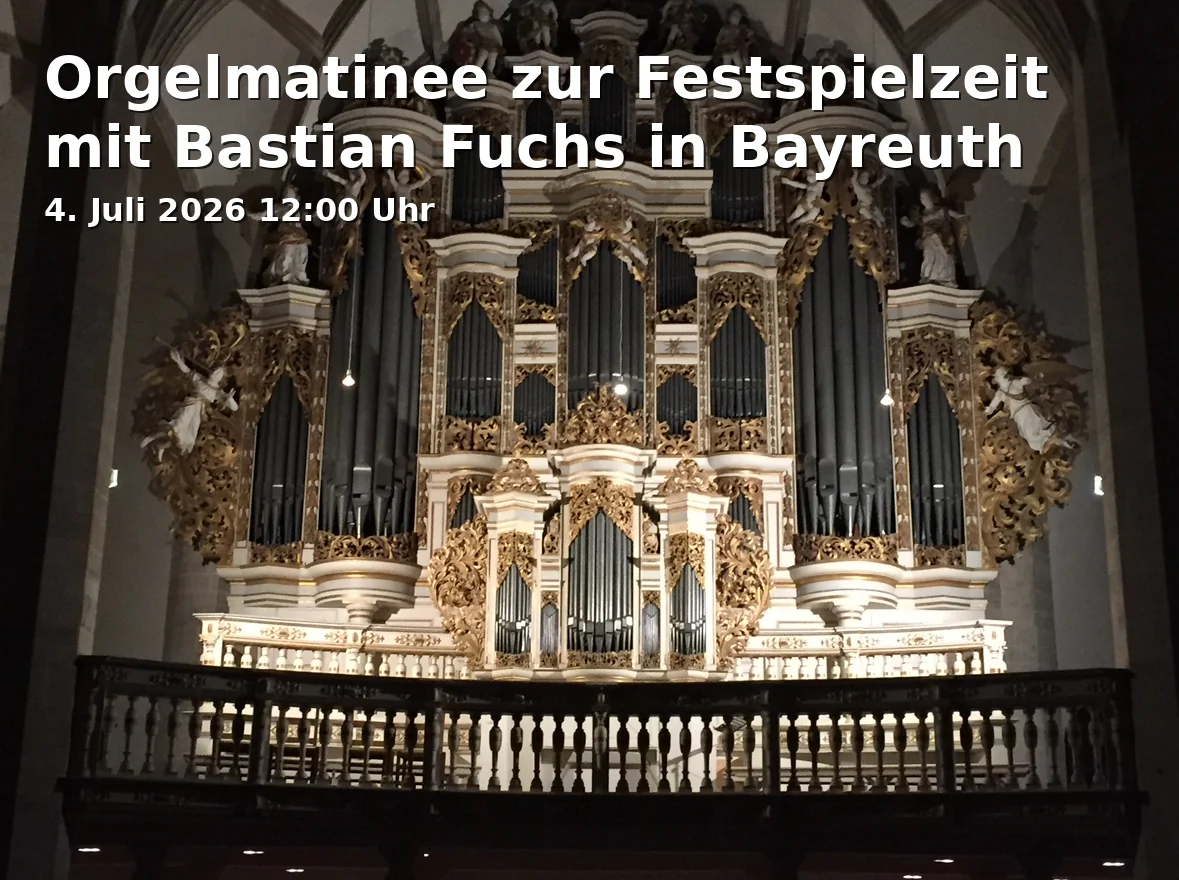
Organ Matinee for the Festival Season with Bastian Fuchs in Bayreuth
Bayreuth sounds particularly special at noon: Bastian Fuchs plays free organ art in the Castle Church. On 04.07.2026 at 12 p.m., admission free. #Bayreuth #Organ

Summer Concert of the Young Vocal Ensemble
A summer evening full of choral sound in Bayreuth: The Young Vocal Ensemble sings a cappella in the Castle Church. Free admission, strong live atmosphere. #Bayreuth #ChoralConcert
Maximiliano Danta: Chaos and Order in Bayreuth
Pure baroque tension in Bayreuth: Maximiliano Danta sings Chaos and Order in the Castle Church. Historical timbres, great emotions, 05.09.2026, 29 euros. #BayreuthBaroque
Journey in Europe - Petr Nekoranec
A rare classical moment in Bayreuth: Petr Nekoranec sings Journey in Europe in the Castle Church. Historical acoustics, great voice, 29 Euro. #BayreuthBaroque
Frequently Asked Questions
Reviews
A. K.
24. March 2026
Beautiful, stunning, bright place with amazing aura. History: From the terrace of the Palace Church with its bust of Margravine Wilhelmine, who appreciated art so much, you can see across to the world heritage margrave Opera house. The same architects and artists were employed when Margrave Friedrich and his wife had a new church built in the Old Palace for the court community. The old chapel of 1668 had been burnt down, together with the rest of the building. It is said that at least the princes were not angry – and the new building had the space for a prestigious tomb. When in 1791 control of the region passed to Prussia, the church was used as a weapon store. In 1810, after the annexation of the margravate to Bavaria, the Bavarian king transferred the church to the catholic community, and so the Palace Church is today the only example of a catholic margrave church. It was re-ordered accordingly: the pulpit altar was removed, and the organ was moved from the side of the altar up to where the prince’s box had been. The artistic plasterwork of J.B. Pedrozzi on the ceiling was preserved, in which Man’s salvation through the suffering and death of Christ is symbolically represented. The tombs of the Margrave and his wife, and of their daughter Friederike Sophie may be seen in their vault, which is above ground. During restoration work in 2019, the ceiling paintings by the court painter E.W. Wunder were replaced by new paintings which complement the baroque style. As did the original paintings, they represent the Birth and Ascension of Christ, as well as the four Evangelists. And now, instead of the initial ‘F’ for Margrave Friedrich which was there before, the golden triangle shines out over the altar area, in a halo of rays of light: the symbol of the glory of the triune God.
david antoun
8. October 2024
The church dated to the middle of 18th century, simple stone exterior and baroque interior. It contains also the tombs of the Margrave famous couple and their daughter. The paintings on the ceiling are impressive.
Liz T
12. January 2022
Always love visiting this beautiful church whenever in Bayreuth. Great job with the renovations, it looks spectacular!
Holger Schölzel
10. August 2019
Top
Regina Maggiani
29. August 2019
Nice and pretty, a must if you are visiting Bayreuth