
Bayreuther Str. 2, Eckersdorf
Bayreuther Str. 2, 95488 Eckersdorf, Germany
Schlosspark Fantaisie | Parking & Opening Hours
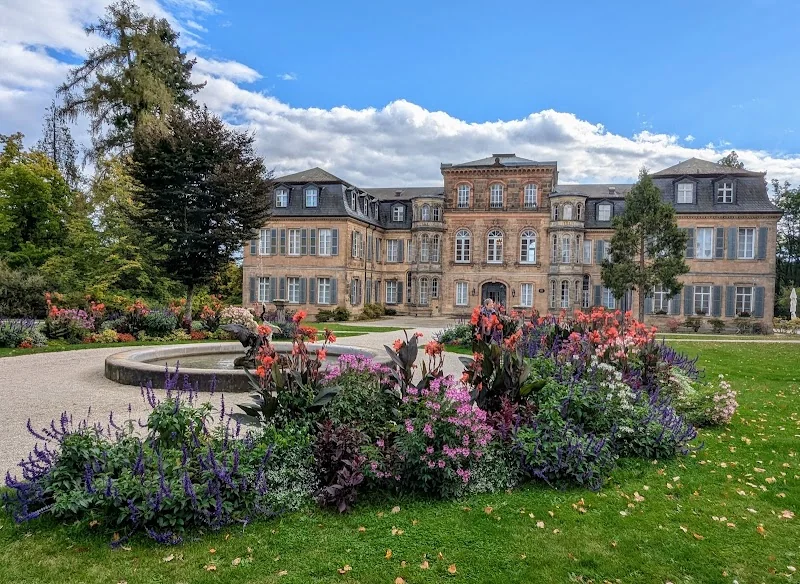
Schlosspark Fantaisie in Eckersdorf/Donndorf near Bayreuth is not an ordinary park, but a historical ensemble of a palace, a garden art museum, and a vast park area. The history begins in 1761 with the construction of a palace by Margrave Friedrich; his daughter Elisabeth Friederike Sophie named the estate Fantaisie in 1763 and completed the palace. Since 2000, Fantaisie has housed Germany's first garden art museum. Visitors to the site experience not only a walk in the greenery but also a multifaceted connection of architecture, art history, and garden culture. The uniqueness lies in the mix of late Baroque elements, later landscape expansions, and original preserved traces of various stylistic phases. This combination makes Schlosspark Fantaisie a destination for culture enthusiasts, walkers, families, day-trippers, and people looking for a quiet yet historically rich place near Bayreuth. ([schloss.bayern.de](https://www.schloss.bayern.de/englisch/palace/objects/bay_fant.htm))
Parking and Directions to Schlosspark Fantaisie
The directions to Schlosspark Fantaisie are clearly described on the official pages. The address is Bayreuther Straße 2 in 95488 Eckersdorf/Donndorf near Bayreuth. There is a parking lot available for visitors arriving by car; currently, there are no bus parking spaces available. Those using public transport can take the bus to the stop Donndorf Hotel Fantaisie, according to official information. Additionally, the palace administration refers to the train connection to Bayreuth. This makes the location easily accessible for day visitors traveling from the city center or the region. For SEO search queries like parking Schlosspark Fantaisie, directions, or Bayreuther Straße Eckersdorf, it is especially important that the parking situation on-site is uncomplicated but not designed for large tour buses. Therefore, the visit is best started with a short route planning, especially on busy days or during family outings with multiple people. ([schloss.bayern.de](https://www.schloss.bayern.de/englisch/palace/objects/bay_fant.htm))
The official map also shows that Schloss and Park Fantaisie are well integrated into the traffic system. Among other things, the federal highways B22 and B85 as well as the motorways A70 and A9 are mentioned, which makes orientation for trips from the Bayreuth, Bamberg, Kulmbach, Hof, or Nuremberg area easier. This practical aspect is relevant for many users searching for Schlosspark Fantaisie Bayreuth or Schlosspark Fantaisie Donndorf who want to quickly know how to get there before their visit. Those arriving by car can combine their visit with a walk in the park, a museum tour, or a coffee at Café Schloss Fantaisie. It is also interesting for people with mobility restrictions that an elevator is mentioned in the official flyer. This shows that the administration not only considers the approach but also the comfort inside the ensemble. ([schloesser.bayern.de](https://www.schloesser.bayern.de/deutsch/service/infomat/screen-pdf/fantaisie_dt.pdf))
Tickets, Opening Hours, and Park Access
When it comes to tickets for Schlosspark Fantaisie, it is worth taking a close look at the official distinction between park and museum. The palace administration states that for 2026, admission prices are 4.50 euros regular and 4 euros reduced. Children and teenagers up to the age of 18 receive free admission. Additionally, there is a total ticket titled The World of Wilhelmine for all Bayreuth objects, which is interesting for visitors who want to combine several historical sites in the region. This pricing structure is relevant for search queries like tickets for Schlosspark Fantaisie or admission Schloss Fantaisie. Therefore, those who primarily want to visit the museum and the interior rooms should plan for the admission regulations. For pure walks in the park, it is important that the park is open year-round according to the official flyer. This allows Fantaisie to be experienced as a garden facility even outside museum hours. ([schloss.bayern.de](https://www.schloss.bayern.de/englisch/palace/objects/bay_fant.htm))
The opening hours of the palace are regulated seasonally and clearly communicated. According to the official German site, the museum is open daily from April to September from 9 am to 6 pm. From October 1 to 18, the opening hours are from 10 am to 4 pm. The palace is closed on Mondays, with exceptions on Easter Monday, May 1, Whit Monday, and October 3. From October 19 to March, the palace is closed. The official flyer adds that the water features can be seen from May to October daily from 9 am to 6 pm. For visitors specifically searching for opening hours Schlosspark Fantaisie, tickets, or park access, this distinction is crucial: the museum follows a seasonal rhythm, while the park itself remains accessible year-round as a landscape space. This creates a flexible excursion destination that works both in summer and in the quieter season. ([schloesser.bayern.de](https://www.schloesser.bayern.de/deutsch/schloss/objekte/bay_fant.htm))
The Garden Art Museum and the Spindler Cabinet
The central unique feature of Schloss Fantaisie is the Garden Art Museum. Since July 2000, the palace has been home to Germany's first museum for garden art or garden history. The exhibition dedicates numerous exhibits to the development of garden art from the 17th to the 19th century, making a topic visible that only appears on the fringes in many classical palace facilities. In Fantaisie, however, garden art itself is the content of the museum. Visitors encounter not only historical objects but also a curated narrative about how taste, representation, and landscape design have changed over generations. According to the official presentation, the tour also includes the White Hall and the reconstructed version of the famous Spindler Cabinet. Those searching for Garden Art Museum Schloss Fantaisie or Spindler Cabinet will find here a true specialized museum with a strong regional and cultural historical identity. ([schloss.bayern.de](https://www.schloss.bayern.de/englisch/palace/objects/bay_fant.htm))
It is particularly noteworthy that the museum does not simply display objects in the historical rooms but conveys an entire way of thinking about garden art. The official city site describes that exhibits, installations, and short films bring the history of garden art to life. The museum's site adds that in 18 themed rooms, important aspects of garden history are presented through selected examples. This makes Schlosspark Fantaisie suitable for both professional audiences and visitors without prior knowledge, as the content is presented in an understandable way. The reconstructed Spindler Cabinet also refers to the fine art of marquetry, an exceptionally precise inlay craft. Together with the White Hall, a tour is created that is not only informative but also atmospherically rich. For this reason, the house is more than just an excursion destination: it is a place where garden, furniture art, and court culture come together in a narrative space. ([bayreuth.de](https://www.bayreuth.de/markgraefliche-sehenswuerdigkeiten/schloss-und-park-fantaisie-mit-gartenkunst-museum/))
History and Stylistic Phases in Schlosspark Fantaisie
The history of Schlosspark Fantaisie is closely linked to the margravial building and garden projects around Bayreuth. It began with Margrave Friedrich in 1761 with the construction of the palace in Donndorf. After his daughter Elisabeth Friederike Sophie took over the estate in 1763, she named it Fantaisie and completed the palace. By 1780, a late Baroque garden was created, of which the pavilion, the cascade, and the Neptune fountain have been preserved to this day. Later, starting in 1793, Friederike Dorothee Sophie of Württemberg expanded the gardens in the style of the sentimentally influenced landscape garden and added, among other things, a catacomb and the Column of Concord. From 1839 to 1881, Duke Alexander of Württemberg shaped the park with landscaped spaces, sculptures, fountains, and terraces into its present form. Thus, Schlosspark Fantaisie is a true history book in the open air. ([schloss.bayern.de](https://www.schloss.bayern.de/englisch/palace/objects/bay_fant.htm))
For visitors, this development is now discernible on the grounds. The park combines original design elements from three important stylistic phases: Rococo, Sensibility, and Historicism. This makes Schlosspark Fantaisie academically fascinating, as it does not only showcase a single garden ideal but a succession of historical tastes that overlap and complement each other. The Bayreuth tourism site also emphasizes that the park is characterized by a lovingly designed mix of large water features, winding corners, small crypts, rock formations, and sculptures. Restoration work was carried out in the 1990s, through which the facility regained its former radiance. Thus, Fantaisie is a place where historical substance has not been frozen but continues to live on through careful maintenance. Therefore, those searching for Schloss Fantaisie, Park Fantaisie, or Baroque garden art will find here not only a monument but a landscape ensemble that can be read in many ways. ([bayreuth-tourismus.de](https://www.bayreuth-tourismus.de/en/places-of-interest/stage-set-for-gardens-and-parks/palace-fantaisie/))
Café Schloss Fantaisie, Photos, and Walks
A visit to Schlosspark Fantaisie can be well combined with a break at Café Schloss Fantaisie. The palace administration lists the café in the service area and explicitly notes that it is closed on Mondays. For many day-trippers, this is the practical added value of such a place: one can combine the museum visit, the walk through the park, and a stop at a single location. Those searching for Schlosspark Fantaisie Café will thus find a clear indication of gastronomy directly at the ensemble. Especially in summer, this fits well with the water features, which, according to the flyer, run from May to October. Together with the well-maintained paths and the historical sightlines, a destination is created that is suitable for cozy afternoons as well as for a quick detour on a Bayreuth tour. ([schloss.bayern.de](https://www.schloss.bayern.de/englisch/palace/objects/bay_fant.htm))
Fantaisie is also interesting for the topic of photos. The facility offers many motifs with its sculptures, terraces, fountains, and historical buildings, and the official palace administration even points out photo libraries as well as photo and film permits in the service area. For search queries like Schlosspark Fantaisie photos, this is a good signal, as it shows that the place is not only visually appealing but also organizationally prepared for image material and documentary use. At the same time, an atmosphere is created here that is suitable for quiet walks: the grounds are spacious, historically charged, and yet not as crowded as large inner-city attractions. Those who consciously visit the park at different times of the day experience different moods between light, water, and architecture. This makes Schlosspark Fantaisie an excellent place for people who want to not only look at historical sites but also experience them photographically and atmospherically. ([schloss.bayern.de](https://www.schloss.bayern.de/englisch/palace/objects/bay_fant.htm))
Guided Tours, Event Rooms, and Practical Tips
Schlosspark Fantaisie is not only an excursion destination but also a place for cultural events and special occasions. According to the official palace administration, guided tours are available upon request. In addition, there are two clearly defined event rooms in the palace: the White Hall is suitable for concerts and lectures with up to 100 people, and the garden pavilion for exhibitions, civil weddings, and receptions with up to 60 people. This information is important for anyone searching for guided tours Schlosspark Fantaisie or rentable spaces. The combination of historical ambiance and modern usability is particularly appealing. Those looking for a small, culturally shaped setting for a celebration or presentation will find a very specific backdrop here. At the same time, the character of the place is preserved, as the use of the rooms is closely linked to the monument and its history. ([schloss.bayern.de](https://www.schloss.bayern.de/englisch/rooms/ueb_obj/bay_fan.htm))
Practical tips for the visit arise directly from the official information. The flyer mentions an elevator, and the administration refers to the website The World of Wilhelmine regarding accessibility. This shows that while Fantaisie is historically shaped, it still considers visitor comfort. For planning, it is worthwhile to check the seasonal opening hours against one's own travel dates, as the palace is closed in winter, but the park remains open year-round. Those planning a longer stay can combine the visit with other Bayreuth attractions and check the total ticket The World of Wilhelmine if needed. This way, a single walk quickly turns into a whole cultural day. This mix of history, landscape, museum, café, and event options makes Schlosspark Fantaisie one of the most versatile facilities in the Bayreuth area. ([schloesser.bayern.de](https://www.schloesser.bayern.de/deutsch/service/infomat/screen-pdf/fantaisie_dt.pdf))
Sources:
- Bavarian Palace Administration – Schloss Fantaisie (official)
- Bavarian Palace Administration – Fantaisie Palace (official)
- Bavarian Palace Administration – Flyer Schloss und Park Fantaisie
- City of Bayreuth – Schloss und Park Fantaisie with Garden Art Museum
- Bayreuth Tourism – Palace Fantaisie
- Museums in Bavaria – Garden Art Museum Schloss Fantaisie
Show moreShow less
Schlosspark Fantaisie | Parking & Opening Hours
Schlosspark Fantaisie in Eckersdorf/Donndorf near Bayreuth is not an ordinary park, but a historical ensemble of a palace, a garden art museum, and a vast park area. The history begins in 1761 with the construction of a palace by Margrave Friedrich; his daughter Elisabeth Friederike Sophie named the estate Fantaisie in 1763 and completed the palace. Since 2000, Fantaisie has housed Germany's first garden art museum. Visitors to the site experience not only a walk in the greenery but also a multifaceted connection of architecture, art history, and garden culture. The uniqueness lies in the mix of late Baroque elements, later landscape expansions, and original preserved traces of various stylistic phases. This combination makes Schlosspark Fantaisie a destination for culture enthusiasts, walkers, families, day-trippers, and people looking for a quiet yet historically rich place near Bayreuth. ([schloss.bayern.de](https://www.schloss.bayern.de/englisch/palace/objects/bay_fant.htm))
Parking and Directions to Schlosspark Fantaisie
The directions to Schlosspark Fantaisie are clearly described on the official pages. The address is Bayreuther Straße 2 in 95488 Eckersdorf/Donndorf near Bayreuth. There is a parking lot available for visitors arriving by car; currently, there are no bus parking spaces available. Those using public transport can take the bus to the stop Donndorf Hotel Fantaisie, according to official information. Additionally, the palace administration refers to the train connection to Bayreuth. This makes the location easily accessible for day visitors traveling from the city center or the region. For SEO search queries like parking Schlosspark Fantaisie, directions, or Bayreuther Straße Eckersdorf, it is especially important that the parking situation on-site is uncomplicated but not designed for large tour buses. Therefore, the visit is best started with a short route planning, especially on busy days or during family outings with multiple people. ([schloss.bayern.de](https://www.schloss.bayern.de/englisch/palace/objects/bay_fant.htm))
The official map also shows that Schloss and Park Fantaisie are well integrated into the traffic system. Among other things, the federal highways B22 and B85 as well as the motorways A70 and A9 are mentioned, which makes orientation for trips from the Bayreuth, Bamberg, Kulmbach, Hof, or Nuremberg area easier. This practical aspect is relevant for many users searching for Schlosspark Fantaisie Bayreuth or Schlosspark Fantaisie Donndorf who want to quickly know how to get there before their visit. Those arriving by car can combine their visit with a walk in the park, a museum tour, or a coffee at Café Schloss Fantaisie. It is also interesting for people with mobility restrictions that an elevator is mentioned in the official flyer. This shows that the administration not only considers the approach but also the comfort inside the ensemble. ([schloesser.bayern.de](https://www.schloesser.bayern.de/deutsch/service/infomat/screen-pdf/fantaisie_dt.pdf))
Tickets, Opening Hours, and Park Access
When it comes to tickets for Schlosspark Fantaisie, it is worth taking a close look at the official distinction between park and museum. The palace administration states that for 2026, admission prices are 4.50 euros regular and 4 euros reduced. Children and teenagers up to the age of 18 receive free admission. Additionally, there is a total ticket titled The World of Wilhelmine for all Bayreuth objects, which is interesting for visitors who want to combine several historical sites in the region. This pricing structure is relevant for search queries like tickets for Schlosspark Fantaisie or admission Schloss Fantaisie. Therefore, those who primarily want to visit the museum and the interior rooms should plan for the admission regulations. For pure walks in the park, it is important that the park is open year-round according to the official flyer. This allows Fantaisie to be experienced as a garden facility even outside museum hours. ([schloss.bayern.de](https://www.schloss.bayern.de/englisch/palace/objects/bay_fant.htm))
The opening hours of the palace are regulated seasonally and clearly communicated. According to the official German site, the museum is open daily from April to September from 9 am to 6 pm. From October 1 to 18, the opening hours are from 10 am to 4 pm. The palace is closed on Mondays, with exceptions on Easter Monday, May 1, Whit Monday, and October 3. From October 19 to March, the palace is closed. The official flyer adds that the water features can be seen from May to October daily from 9 am to 6 pm. For visitors specifically searching for opening hours Schlosspark Fantaisie, tickets, or park access, this distinction is crucial: the museum follows a seasonal rhythm, while the park itself remains accessible year-round as a landscape space. This creates a flexible excursion destination that works both in summer and in the quieter season. ([schloesser.bayern.de](https://www.schloesser.bayern.de/deutsch/schloss/objekte/bay_fant.htm))
The Garden Art Museum and the Spindler Cabinet
The central unique feature of Schloss Fantaisie is the Garden Art Museum. Since July 2000, the palace has been home to Germany's first museum for garden art or garden history. The exhibition dedicates numerous exhibits to the development of garden art from the 17th to the 19th century, making a topic visible that only appears on the fringes in many classical palace facilities. In Fantaisie, however, garden art itself is the content of the museum. Visitors encounter not only historical objects but also a curated narrative about how taste, representation, and landscape design have changed over generations. According to the official presentation, the tour also includes the White Hall and the reconstructed version of the famous Spindler Cabinet. Those searching for Garden Art Museum Schloss Fantaisie or Spindler Cabinet will find here a true specialized museum with a strong regional and cultural historical identity. ([schloss.bayern.de](https://www.schloss.bayern.de/englisch/palace/objects/bay_fant.htm))
It is particularly noteworthy that the museum does not simply display objects in the historical rooms but conveys an entire way of thinking about garden art. The official city site describes that exhibits, installations, and short films bring the history of garden art to life. The museum's site adds that in 18 themed rooms, important aspects of garden history are presented through selected examples. This makes Schlosspark Fantaisie suitable for both professional audiences and visitors without prior knowledge, as the content is presented in an understandable way. The reconstructed Spindler Cabinet also refers to the fine art of marquetry, an exceptionally precise inlay craft. Together with the White Hall, a tour is created that is not only informative but also atmospherically rich. For this reason, the house is more than just an excursion destination: it is a place where garden, furniture art, and court culture come together in a narrative space. ([bayreuth.de](https://www.bayreuth.de/markgraefliche-sehenswuerdigkeiten/schloss-und-park-fantaisie-mit-gartenkunst-museum/))
History and Stylistic Phases in Schlosspark Fantaisie
The history of Schlosspark Fantaisie is closely linked to the margravial building and garden projects around Bayreuth. It began with Margrave Friedrich in 1761 with the construction of the palace in Donndorf. After his daughter Elisabeth Friederike Sophie took over the estate in 1763, she named it Fantaisie and completed the palace. By 1780, a late Baroque garden was created, of which the pavilion, the cascade, and the Neptune fountain have been preserved to this day. Later, starting in 1793, Friederike Dorothee Sophie of Württemberg expanded the gardens in the style of the sentimentally influenced landscape garden and added, among other things, a catacomb and the Column of Concord. From 1839 to 1881, Duke Alexander of Württemberg shaped the park with landscaped spaces, sculptures, fountains, and terraces into its present form. Thus, Schlosspark Fantaisie is a true history book in the open air. ([schloss.bayern.de](https://www.schloss.bayern.de/englisch/palace/objects/bay_fant.htm))
For visitors, this development is now discernible on the grounds. The park combines original design elements from three important stylistic phases: Rococo, Sensibility, and Historicism. This makes Schlosspark Fantaisie academically fascinating, as it does not only showcase a single garden ideal but a succession of historical tastes that overlap and complement each other. The Bayreuth tourism site also emphasizes that the park is characterized by a lovingly designed mix of large water features, winding corners, small crypts, rock formations, and sculptures. Restoration work was carried out in the 1990s, through which the facility regained its former radiance. Thus, Fantaisie is a place where historical substance has not been frozen but continues to live on through careful maintenance. Therefore, those searching for Schloss Fantaisie, Park Fantaisie, or Baroque garden art will find here not only a monument but a landscape ensemble that can be read in many ways. ([bayreuth-tourismus.de](https://www.bayreuth-tourismus.de/en/places-of-interest/stage-set-for-gardens-and-parks/palace-fantaisie/))
Café Schloss Fantaisie, Photos, and Walks
A visit to Schlosspark Fantaisie can be well combined with a break at Café Schloss Fantaisie. The palace administration lists the café in the service area and explicitly notes that it is closed on Mondays. For many day-trippers, this is the practical added value of such a place: one can combine the museum visit, the walk through the park, and a stop at a single location. Those searching for Schlosspark Fantaisie Café will thus find a clear indication of gastronomy directly at the ensemble. Especially in summer, this fits well with the water features, which, according to the flyer, run from May to October. Together with the well-maintained paths and the historical sightlines, a destination is created that is suitable for cozy afternoons as well as for a quick detour on a Bayreuth tour. ([schloss.bayern.de](https://www.schloss.bayern.de/englisch/palace/objects/bay_fant.htm))
Fantaisie is also interesting for the topic of photos. The facility offers many motifs with its sculptures, terraces, fountains, and historical buildings, and the official palace administration even points out photo libraries as well as photo and film permits in the service area. For search queries like Schlosspark Fantaisie photos, this is a good signal, as it shows that the place is not only visually appealing but also organizationally prepared for image material and documentary use. At the same time, an atmosphere is created here that is suitable for quiet walks: the grounds are spacious, historically charged, and yet not as crowded as large inner-city attractions. Those who consciously visit the park at different times of the day experience different moods between light, water, and architecture. This makes Schlosspark Fantaisie an excellent place for people who want to not only look at historical sites but also experience them photographically and atmospherically. ([schloss.bayern.de](https://www.schloss.bayern.de/englisch/palace/objects/bay_fant.htm))
Guided Tours, Event Rooms, and Practical Tips
Schlosspark Fantaisie is not only an excursion destination but also a place for cultural events and special occasions. According to the official palace administration, guided tours are available upon request. In addition, there are two clearly defined event rooms in the palace: the White Hall is suitable for concerts and lectures with up to 100 people, and the garden pavilion for exhibitions, civil weddings, and receptions with up to 60 people. This information is important for anyone searching for guided tours Schlosspark Fantaisie or rentable spaces. The combination of historical ambiance and modern usability is particularly appealing. Those looking for a small, culturally shaped setting for a celebration or presentation will find a very specific backdrop here. At the same time, the character of the place is preserved, as the use of the rooms is closely linked to the monument and its history. ([schloss.bayern.de](https://www.schloss.bayern.de/englisch/rooms/ueb_obj/bay_fan.htm))
Practical tips for the visit arise directly from the official information. The flyer mentions an elevator, and the administration refers to the website The World of Wilhelmine regarding accessibility. This shows that while Fantaisie is historically shaped, it still considers visitor comfort. For planning, it is worthwhile to check the seasonal opening hours against one's own travel dates, as the palace is closed in winter, but the park remains open year-round. Those planning a longer stay can combine the visit with other Bayreuth attractions and check the total ticket The World of Wilhelmine if needed. This way, a single walk quickly turns into a whole cultural day. This mix of history, landscape, museum, café, and event options makes Schlosspark Fantaisie one of the most versatile facilities in the Bayreuth area. ([schloesser.bayern.de](https://www.schloesser.bayern.de/deutsch/service/infomat/screen-pdf/fantaisie_dt.pdf))
Sources:
- Bavarian Palace Administration – Schloss Fantaisie (official)
- Bavarian Palace Administration – Fantaisie Palace (official)
- Bavarian Palace Administration – Flyer Schloss und Park Fantaisie
- City of Bayreuth – Schloss und Park Fantaisie with Garden Art Museum
- Bayreuth Tourism – Palace Fantaisie
- Museums in Bavaria – Garden Art Museum Schloss Fantaisie
Schlosspark Fantaisie | Parking & Opening Hours
Schlosspark Fantaisie in Eckersdorf/Donndorf near Bayreuth is not an ordinary park, but a historical ensemble of a palace, a garden art museum, and a vast park area. The history begins in 1761 with the construction of a palace by Margrave Friedrich; his daughter Elisabeth Friederike Sophie named the estate Fantaisie in 1763 and completed the palace. Since 2000, Fantaisie has housed Germany's first garden art museum. Visitors to the site experience not only a walk in the greenery but also a multifaceted connection of architecture, art history, and garden culture. The uniqueness lies in the mix of late Baroque elements, later landscape expansions, and original preserved traces of various stylistic phases. This combination makes Schlosspark Fantaisie a destination for culture enthusiasts, walkers, families, day-trippers, and people looking for a quiet yet historically rich place near Bayreuth. ([schloss.bayern.de](https://www.schloss.bayern.de/englisch/palace/objects/bay_fant.htm))
Parking and Directions to Schlosspark Fantaisie
The directions to Schlosspark Fantaisie are clearly described on the official pages. The address is Bayreuther Straße 2 in 95488 Eckersdorf/Donndorf near Bayreuth. There is a parking lot available for visitors arriving by car; currently, there are no bus parking spaces available. Those using public transport can take the bus to the stop Donndorf Hotel Fantaisie, according to official information. Additionally, the palace administration refers to the train connection to Bayreuth. This makes the location easily accessible for day visitors traveling from the city center or the region. For SEO search queries like parking Schlosspark Fantaisie, directions, or Bayreuther Straße Eckersdorf, it is especially important that the parking situation on-site is uncomplicated but not designed for large tour buses. Therefore, the visit is best started with a short route planning, especially on busy days or during family outings with multiple people. ([schloss.bayern.de](https://www.schloss.bayern.de/englisch/palace/objects/bay_fant.htm))
The official map also shows that Schloss and Park Fantaisie are well integrated into the traffic system. Among other things, the federal highways B22 and B85 as well as the motorways A70 and A9 are mentioned, which makes orientation for trips from the Bayreuth, Bamberg, Kulmbach, Hof, or Nuremberg area easier. This practical aspect is relevant for many users searching for Schlosspark Fantaisie Bayreuth or Schlosspark Fantaisie Donndorf who want to quickly know how to get there before their visit. Those arriving by car can combine their visit with a walk in the park, a museum tour, or a coffee at Café Schloss Fantaisie. It is also interesting for people with mobility restrictions that an elevator is mentioned in the official flyer. This shows that the administration not only considers the approach but also the comfort inside the ensemble. ([schloesser.bayern.de](https://www.schloesser.bayern.de/deutsch/service/infomat/screen-pdf/fantaisie_dt.pdf))
Tickets, Opening Hours, and Park Access
When it comes to tickets for Schlosspark Fantaisie, it is worth taking a close look at the official distinction between park and museum. The palace administration states that for 2026, admission prices are 4.50 euros regular and 4 euros reduced. Children and teenagers up to the age of 18 receive free admission. Additionally, there is a total ticket titled The World of Wilhelmine for all Bayreuth objects, which is interesting for visitors who want to combine several historical sites in the region. This pricing structure is relevant for search queries like tickets for Schlosspark Fantaisie or admission Schloss Fantaisie. Therefore, those who primarily want to visit the museum and the interior rooms should plan for the admission regulations. For pure walks in the park, it is important that the park is open year-round according to the official flyer. This allows Fantaisie to be experienced as a garden facility even outside museum hours. ([schloss.bayern.de](https://www.schloss.bayern.de/englisch/palace/objects/bay_fant.htm))
The opening hours of the palace are regulated seasonally and clearly communicated. According to the official German site, the museum is open daily from April to September from 9 am to 6 pm. From October 1 to 18, the opening hours are from 10 am to 4 pm. The palace is closed on Mondays, with exceptions on Easter Monday, May 1, Whit Monday, and October 3. From October 19 to March, the palace is closed. The official flyer adds that the water features can be seen from May to October daily from 9 am to 6 pm. For visitors specifically searching for opening hours Schlosspark Fantaisie, tickets, or park access, this distinction is crucial: the museum follows a seasonal rhythm, while the park itself remains accessible year-round as a landscape space. This creates a flexible excursion destination that works both in summer and in the quieter season. ([schloesser.bayern.de](https://www.schloesser.bayern.de/deutsch/schloss/objekte/bay_fant.htm))
The Garden Art Museum and the Spindler Cabinet
The central unique feature of Schloss Fantaisie is the Garden Art Museum. Since July 2000, the palace has been home to Germany's first museum for garden art or garden history. The exhibition dedicates numerous exhibits to the development of garden art from the 17th to the 19th century, making a topic visible that only appears on the fringes in many classical palace facilities. In Fantaisie, however, garden art itself is the content of the museum. Visitors encounter not only historical objects but also a curated narrative about how taste, representation, and landscape design have changed over generations. According to the official presentation, the tour also includes the White Hall and the reconstructed version of the famous Spindler Cabinet. Those searching for Garden Art Museum Schloss Fantaisie or Spindler Cabinet will find here a true specialized museum with a strong regional and cultural historical identity. ([schloss.bayern.de](https://www.schloss.bayern.de/englisch/palace/objects/bay_fant.htm))
It is particularly noteworthy that the museum does not simply display objects in the historical rooms but conveys an entire way of thinking about garden art. The official city site describes that exhibits, installations, and short films bring the history of garden art to life. The museum's site adds that in 18 themed rooms, important aspects of garden history are presented through selected examples. This makes Schlosspark Fantaisie suitable for both professional audiences and visitors without prior knowledge, as the content is presented in an understandable way. The reconstructed Spindler Cabinet also refers to the fine art of marquetry, an exceptionally precise inlay craft. Together with the White Hall, a tour is created that is not only informative but also atmospherically rich. For this reason, the house is more than just an excursion destination: it is a place where garden, furniture art, and court culture come together in a narrative space. ([bayreuth.de](https://www.bayreuth.de/markgraefliche-sehenswuerdigkeiten/schloss-und-park-fantaisie-mit-gartenkunst-museum/))
History and Stylistic Phases in Schlosspark Fantaisie
The history of Schlosspark Fantaisie is closely linked to the margravial building and garden projects around Bayreuth. It began with Margrave Friedrich in 1761 with the construction of the palace in Donndorf. After his daughter Elisabeth Friederike Sophie took over the estate in 1763, she named it Fantaisie and completed the palace. By 1780, a late Baroque garden was created, of which the pavilion, the cascade, and the Neptune fountain have been preserved to this day. Later, starting in 1793, Friederike Dorothee Sophie of Württemberg expanded the gardens in the style of the sentimentally influenced landscape garden and added, among other things, a catacomb and the Column of Concord. From 1839 to 1881, Duke Alexander of Württemberg shaped the park with landscaped spaces, sculptures, fountains, and terraces into its present form. Thus, Schlosspark Fantaisie is a true history book in the open air. ([schloss.bayern.de](https://www.schloss.bayern.de/englisch/palace/objects/bay_fant.htm))
For visitors, this development is now discernible on the grounds. The park combines original design elements from three important stylistic phases: Rococo, Sensibility, and Historicism. This makes Schlosspark Fantaisie academically fascinating, as it does not only showcase a single garden ideal but a succession of historical tastes that overlap and complement each other. The Bayreuth tourism site also emphasizes that the park is characterized by a lovingly designed mix of large water features, winding corners, small crypts, rock formations, and sculptures. Restoration work was carried out in the 1990s, through which the facility regained its former radiance. Thus, Fantaisie is a place where historical substance has not been frozen but continues to live on through careful maintenance. Therefore, those searching for Schloss Fantaisie, Park Fantaisie, or Baroque garden art will find here not only a monument but a landscape ensemble that can be read in many ways. ([bayreuth-tourismus.de](https://www.bayreuth-tourismus.de/en/places-of-interest/stage-set-for-gardens-and-parks/palace-fantaisie/))
Café Schloss Fantaisie, Photos, and Walks
A visit to Schlosspark Fantaisie can be well combined with a break at Café Schloss Fantaisie. The palace administration lists the café in the service area and explicitly notes that it is closed on Mondays. For many day-trippers, this is the practical added value of such a place: one can combine the museum visit, the walk through the park, and a stop at a single location. Those searching for Schlosspark Fantaisie Café will thus find a clear indication of gastronomy directly at the ensemble. Especially in summer, this fits well with the water features, which, according to the flyer, run from May to October. Together with the well-maintained paths and the historical sightlines, a destination is created that is suitable for cozy afternoons as well as for a quick detour on a Bayreuth tour. ([schloss.bayern.de](https://www.schloss.bayern.de/englisch/palace/objects/bay_fant.htm))
Fantaisie is also interesting for the topic of photos. The facility offers many motifs with its sculptures, terraces, fountains, and historical buildings, and the official palace administration even points out photo libraries as well as photo and film permits in the service area. For search queries like Schlosspark Fantaisie photos, this is a good signal, as it shows that the place is not only visually appealing but also organizationally prepared for image material and documentary use. At the same time, an atmosphere is created here that is suitable for quiet walks: the grounds are spacious, historically charged, and yet not as crowded as large inner-city attractions. Those who consciously visit the park at different times of the day experience different moods between light, water, and architecture. This makes Schlosspark Fantaisie an excellent place for people who want to not only look at historical sites but also experience them photographically and atmospherically. ([schloss.bayern.de](https://www.schloss.bayern.de/englisch/palace/objects/bay_fant.htm))
Guided Tours, Event Rooms, and Practical Tips
Schlosspark Fantaisie is not only an excursion destination but also a place for cultural events and special occasions. According to the official palace administration, guided tours are available upon request. In addition, there are two clearly defined event rooms in the palace: the White Hall is suitable for concerts and lectures with up to 100 people, and the garden pavilion for exhibitions, civil weddings, and receptions with up to 60 people. This information is important for anyone searching for guided tours Schlosspark Fantaisie or rentable spaces. The combination of historical ambiance and modern usability is particularly appealing. Those looking for a small, culturally shaped setting for a celebration or presentation will find a very specific backdrop here. At the same time, the character of the place is preserved, as the use of the rooms is closely linked to the monument and its history. ([schloss.bayern.de](https://www.schloss.bayern.de/englisch/rooms/ueb_obj/bay_fan.htm))
Practical tips for the visit arise directly from the official information. The flyer mentions an elevator, and the administration refers to the website The World of Wilhelmine regarding accessibility. This shows that while Fantaisie is historically shaped, it still considers visitor comfort. For planning, it is worthwhile to check the seasonal opening hours against one's own travel dates, as the palace is closed in winter, but the park remains open year-round. Those planning a longer stay can combine the visit with other Bayreuth attractions and check the total ticket The World of Wilhelmine if needed. This way, a single walk quickly turns into a whole cultural day. This mix of history, landscape, museum, café, and event options makes Schlosspark Fantaisie one of the most versatile facilities in the Bayreuth area. ([schloesser.bayern.de](https://www.schloesser.bayern.de/deutsch/service/infomat/screen-pdf/fantaisie_dt.pdf))
Sources:
- Bavarian Palace Administration – Schloss Fantaisie (official)
- Bavarian Palace Administration – Fantaisie Palace (official)
- Bavarian Palace Administration – Flyer Schloss und Park Fantaisie
- City of Bayreuth – Schloss und Park Fantaisie with Garden Art Museum
- Bayreuth Tourism – Palace Fantaisie
- Museums in Bavaria – Garden Art Museum Schloss Fantaisie
Upcoming Events
No events found
Frequently Asked Questions
Reviews
Carmen J.
18. June 2025
One of my favorite places to take a walk with my dog. It’s spacious, surrounded by nature, and features a beautiful, well-maintained garden. The atmosphere is just right — lively but never too crowded — which makes every visit really enjoyable. It’s always clean and has a peaceful charm that makes it perfect for a summer stroll. Whether you live in Bayreuth or are just visiting, this place is definitely worth seeing. Highly recommended — especially if you have a dog!
Yuriy Ch
28. April 2025
Nice place. Good weather makes it more lovely. A little bit of effort to climb back. Walk and relax.
Shannon Allen
23. April 2025
Beautiful place to walk around. If you are into some German history, you'll enjoy this. There is a magnificent ball room on the 2nd floor.
Otec Riju
26. April 2025
Polite ladies at the cash desk in the chateau, but you can still feel the Bavarian detachment of the older people. The chateau is really a little chateau. The park is huge, but I expected more flowers, arrangements, etc. It doesn't excite, it doesn't offend.
Steve Dymoke
10. September 2022
More than a historic building with a garden and parkland. If you are into gardening the interior is well worth a look to see the exhibition, which is very informative on the history and evolution of styles and techniques and planning of gardens and parks. Cafe is great too.