
Bayreuth
Seestraße 1, 95448 Bayreuth, Deutschland
City Archive Bayreuth | Finding Aids & Opening Hours
The City Archive Bayreuth is the central memory institution of the city and, together with the Historical Museum, belongs to the Culture and Tourism Department of the City of Bayreuth. It currently preserves around 1300 shelf meters of archival materials from the 15th to the 20th century and complements these with collections of newspapers, maps, plans, photos, postcards, estates, and theater programs. Since the move to the new building at Seestraße 1, the archive has increasingly focused on being a modern place for research, inquiries, and reproductions, while the pages of the archive simultaneously document the journey from the old accommodation in the Spitalhof to the new location. For visitors, contact, research opportunities, and the new infrastructure are crucial, as the archive aims to make historical materials accessible while protecting the originals. ([bayreuth.de](https://www.bayreuth.de/rathaus-buergerservice/bildung-wissen/stadtarchiv/wir-ueber-uns/))
New Building of the City Archive Bayreuth at Seestraße 1
The new building of the City Archive Bayreuth is much more than just a new storage location for documents. According to the official information from the city, the building is being constructed on the rear property of the former Leers Villa and encompasses approximately 2,300 square meters of usable space. At the center of the cubic new building are the magazine rooms for the long-term storage of archival materials; on the ground floor at Seestraße, a glass foyer welcomes visitors and connects to the reading room and seminar room. Additionally, storage space for municipal museums is to be provided. This combination of magazine, service area, and supplementary use shows that the archive in Bayreuth is not only a storage place but also a workplace and a place for mediation. ([bayreuth.de](https://www.bayreuth.de/rathaus-buergerservice/planen-bauen/aktuelle-bauprojekte/neubau-stadtarchiv/))
Particularly important is the connection between the new building and the renovated old building. In the Leers Villa, the offices of the staff will be housed in the future, additional workspaces will be created in the attic, and a meeting room will be established on the upper floor. Both buildings are connected barrier-free through a connecting structure. The city also points out that the former archive building was no longer sufficient in terms of space and fire safety, which is why the new location became necessary. The planning and construction history ranges from the commissioning of the architectural firm Hartmann + Helm in 2018 to the building permit in 2022 and the laying of the foundation stone on October 13, 2023. The current pages of the archive mark the new beginning with the address Seestraße 1 and the note that the opening hours will follow from June 16, 2026. ([bayreuth.de](https://www.bayreuth.de/rathaus-buergerservice/planen-bauen/aktuelle-bauprojekte/neubau-stadtarchiv/))
Opening Hours, Contact, and Visit to the City Archive Bayreuth
Those who wish to visit the City Archive Bayreuth will find the new contact address Seestr. 1, 95448 Bayreuth on the official archive page, as well as the postal address, the phone number 0921 150 833 0, and the email address stadtarchiv@stadt.bayreuth.de. It is also noted there that the opening hours are to apply from June 16, 2026, but the exact times will be announced later. This is important for planning, as the page makes it clear that while the archive is again accessible, the public hours have not yet been published in detail. Therefore, those with a specific concern are best advised to contact by phone or email in advance. This is particularly useful for research, reproductions, or personal inquiries. ([bayreuth.de](https://www.bayreuth.de/rathaus-buergerservice/bildung-wissen/stadtarchiv/?utm_source=openai))
The moving situation explains why the lead time for visitors is currently so important. The city has already closed the archive to the public from October 13, 2025, to allow preparations for the move to the new building. The announcement also points out that written inquiries, especially requests for civil status entries for legal purposes, will continue to be answered by email or post, as long as the documents are accessible, but with a longer processing time. For non-urgent inquiries, restraint is expressly requested. This shows: The archive continues to work, but the processes are currently still aligned with the new infrastructure and the move. ([bayreuth.de](https://www.bayreuth.de/rathaus-buergerservice/bildung-wissen/stadtarchiv/neuigkeiten-aus-dem-archiv/umzug-stadtarchiv/?utm_source=openai))
Finding Aids, Inventory Overview, and Online Research
A central search interest for many users are the finding aids. Here, the City Archive Bayreuth already offers several ways. On the inventory overview with links to online finding aids, the city points out that the indexing information is currently being transferred into an archive database, a so-called archive information system. Because the online availability is still delayed, the city initially provides an excerpt of the current inventory overview, which mainly refers to the available online finding aids. This is particularly useful for research, as the overview facilitates entry and shows which inventories are already digitally accessible. ([bayreuth.de](https://www.bayreuth.de/wp-content/uploads/2022/03/Bestaendeuebersicht_mitLinkszuFindhilfsmitteln_Stand_23022022.pdf))
The official website also explains how research in the archive generally works. It points to existing or prepared digital finding aids and refers to further transcriptions and digitized materials. For systematic searching, this is important because not every inventory is structured the same way: some are already maintained as a database, others through a retro-converted card index, and others through special inventories and aids. Particularly helpful is that the inventory overview not only lists administrative records and historical series but also includes further collections of photos, maps, plans, theater programs, and newspapers. Therefore, those researching in the City Archive Bayreuth can use very different paths depending on the topic, from classic document requests to civil status documents to images and collection objects. ([bayreuth.de](https://www.bayreuth.de/wp-content/uploads/2022/03/Bestaendeuebersicht_mitLinkszuFindhilfsmitteln_Stand_23022022.pdf))
Civil Status Registers, Reproductions, and Reading Room Service
A large part of the specific user inquiries concerns civil status documents. The City Archive Bayreuth preserves the corresponding registers of the registry office after the statutory retention periods have expired, and the FAQ page clearly names the areas: birth registers from 1876 to 1914, marriage registers from 1876 to 1944, and death registers from 1876 to 1994, including death notices from 1945. Additionally, registers from incorporated municipalities are also preserved. Those who need a copy or reproduction can use the online form for this purpose. The city points out that for simple, non-certified reproductions, a fee of 5.00 euros applies, and for certified copies, 10.00 euros; additional costs may arise for shipping. At the same time, it is clearly stated that for further research or inquiries, the archive should be contacted by email. ([bayreuth.de](https://www.bayreuth.de/rathaus-buergerservice/bildung-wissen/stadtarchiv/haeufige-fragen/))
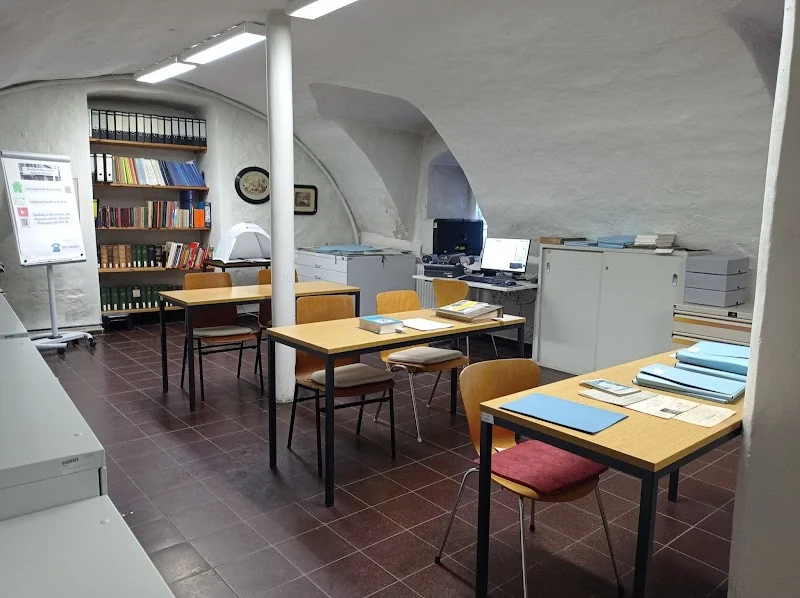
The on-site service is also specifically regulated. For direct use, a reading room with 3 workstations is available, as well as a digitization tent, a microfilm workstation, and a research PC. Archival materials and books cannot be borrowed, but use on-site is free of charge. The fee schedule of the archive applies to reproductions, and the staff points out that reproductions are only possible under legal and conservation conditions. Particularly practical is the scanning tent available since 2022, which allows historical documents and books up to A3 size to be digitized independently via smartphone. This equipment shows that the archive focuses not only on storage but also on user-friendly, modern research. ([bayreuth.de](https://www.bayreuth.de/rathaus-buergerservice/bildung-wissen/stadtarchiv/angebot-und-service/))
Photos, Images, and Collection Material from Bayreuth's City History
Those searching for photos, images, or visual material related to the City Archive Bayreuth will encounter a rich collection of materials. The city explicitly mentions photos, postcards, maps, and plans as parts of the records. The inventory overview also includes photo albums, photo collections, postcard collections, poster collections, as well as film and audio material. Additionally, there are newspaper collections and microfilm holdings that are important supplements for local history and urban development. Particularly interesting is that the collection not only contains official records but also material that documents urban life and would otherwise not be visible in municipal archival materials. This very mix makes the archive a valuable source for topics such as urban image, social development, club life, and everyday history. ([bayreuth.de](https://www.bayreuth.de/rathaus-buergerservice/bildung-wissen/stadtarchiv/wir-ueber-uns/))
In content, the archive clearly goes beyond classic administrative records. The inventory overview mentions, for example, historical city maps, special inventories, evaluations, and transcriptions, as well as a variety of documentation forms that make Bayreuth's history visible from different perspectives. The presence library is also included: it offers literature on the city and the district of Bayreuth as well as on Upper Franconia and thus complements the records and collection situation. For users with search terms like images from the City Archive Bayreuth or photos from the City Archive Bayreuth, this point is particularly important: the archive is not just a place where images are stored, but also a place where visual records are systematically explored and embedded in the larger context of the city's history. ([bayreuth.de](https://www.bayreuth.de/rathaus-buergerservice/bildung-wissen/stadtarchiv/wir-ueber-uns/))
Archive History from the Beginnings to the New Location
The history of the City Archive Bayreuth dates back a long way. As early as 1609, the city clerk Wolf Heller suggested placing the archive in the vaulted room of the hospital building and also prepared a list of the documents and certificates stored there. After the city fires of the early 17th century, the Spitalhof was used to store the city registry. In 1923, the historical documents were first organized and recorded, and in 1963, a full-time management of the archive was established with Dr. Wilhelm Müller; previously, it had been managed on a voluntary basis by Dr. Karl Hartmann. These key dates show that the archive did not suddenly come into existence but has grown over centuries and has gradually professionalized. ([bayreuth.de](https://www.bayreuth.de/rathaus-buergerservice/bildung-wissen/stadtarchiv/wir-ueber-uns/))
The history of records is also a history of loss. The oldest archival materials date back to 1430, but a large part of the even older documents was lost during the Hussite storm. Further significant losses occurred due to the city fires of 1605 and 1621, as well as in April 1945 when the city registry burned in the town hall during the bombing of Bayreuth. Especially against this background, the new building of the City Archive is so significant: it finally creates a purpose-built house for the preservation of the city's records. Until early 2026, the archive was housed in the Spitalhof, a historical ensemble with roots in the 16th and 17th centuries. With the new location at Seestraße 1, a piece of Bayreuth's memory culture is connected with a contemporary infrastructure for research, use, and long-term preservation. ([bayreuth.de](https://www.bayreuth.de/rathaus-buergerservice/bildung-wissen/stadtarchiv/wir-ueber-uns/))
Sources:
- City Archive Bayreuth - Official Website
- City Archive Bayreuth - About Us
- City Archive Bayreuth - Offer and Service
- City Archive Bayreuth - Inventory Overview
- City of Bayreuth - New Building of the City Archive
- City Archive Bayreuth - Frequently Asked Questions
- City of Bayreuth - Request for Copies from Civil Status Registers
- City Archive Bayreuth - Inventory Overview with Links to Online Finding Aids (PDF)
- City Archive Bayreuth - Archive History
- City Archive Bayreuth - Move of the City Archive
Show moreShow less
City Archive Bayreuth | Finding Aids & Opening Hours
The City Archive Bayreuth is the central memory institution of the city and, together with the Historical Museum, belongs to the Culture and Tourism Department of the City of Bayreuth. It currently preserves around 1300 shelf meters of archival materials from the 15th to the 20th century and complements these with collections of newspapers, maps, plans, photos, postcards, estates, and theater programs. Since the move to the new building at Seestraße 1, the archive has increasingly focused on being a modern place for research, inquiries, and reproductions, while the pages of the archive simultaneously document the journey from the old accommodation in the Spitalhof to the new location. For visitors, contact, research opportunities, and the new infrastructure are crucial, as the archive aims to make historical materials accessible while protecting the originals. ([bayreuth.de](https://www.bayreuth.de/rathaus-buergerservice/bildung-wissen/stadtarchiv/wir-ueber-uns/))
New Building of the City Archive Bayreuth at Seestraße 1
The new building of the City Archive Bayreuth is much more than just a new storage location for documents. According to the official information from the city, the building is being constructed on the rear property of the former Leers Villa and encompasses approximately 2,300 square meters of usable space. At the center of the cubic new building are the magazine rooms for the long-term storage of archival materials; on the ground floor at Seestraße, a glass foyer welcomes visitors and connects to the reading room and seminar room. Additionally, storage space for municipal museums is to be provided. This combination of magazine, service area, and supplementary use shows that the archive in Bayreuth is not only a storage place but also a workplace and a place for mediation. ([bayreuth.de](https://www.bayreuth.de/rathaus-buergerservice/planen-bauen/aktuelle-bauprojekte/neubau-stadtarchiv/))
Particularly important is the connection between the new building and the renovated old building. In the Leers Villa, the offices of the staff will be housed in the future, additional workspaces will be created in the attic, and a meeting room will be established on the upper floor. Both buildings are connected barrier-free through a connecting structure. The city also points out that the former archive building was no longer sufficient in terms of space and fire safety, which is why the new location became necessary. The planning and construction history ranges from the commissioning of the architectural firm Hartmann + Helm in 2018 to the building permit in 2022 and the laying of the foundation stone on October 13, 2023. The current pages of the archive mark the new beginning with the address Seestraße 1 and the note that the opening hours will follow from June 16, 2026. ([bayreuth.de](https://www.bayreuth.de/rathaus-buergerservice/planen-bauen/aktuelle-bauprojekte/neubau-stadtarchiv/))
Opening Hours, Contact, and Visit to the City Archive Bayreuth
Those who wish to visit the City Archive Bayreuth will find the new contact address Seestr. 1, 95448 Bayreuth on the official archive page, as well as the postal address, the phone number 0921 150 833 0, and the email address stadtarchiv@stadt.bayreuth.de. It is also noted there that the opening hours are to apply from June 16, 2026, but the exact times will be announced later. This is important for planning, as the page makes it clear that while the archive is again accessible, the public hours have not yet been published in detail. Therefore, those with a specific concern are best advised to contact by phone or email in advance. This is particularly useful for research, reproductions, or personal inquiries. ([bayreuth.de](https://www.bayreuth.de/rathaus-buergerservice/bildung-wissen/stadtarchiv/?utm_source=openai))
The moving situation explains why the lead time for visitors is currently so important. The city has already closed the archive to the public from October 13, 2025, to allow preparations for the move to the new building. The announcement also points out that written inquiries, especially requests for civil status entries for legal purposes, will continue to be answered by email or post, as long as the documents are accessible, but with a longer processing time. For non-urgent inquiries, restraint is expressly requested. This shows: The archive continues to work, but the processes are currently still aligned with the new infrastructure and the move. ([bayreuth.de](https://www.bayreuth.de/rathaus-buergerservice/bildung-wissen/stadtarchiv/neuigkeiten-aus-dem-archiv/umzug-stadtarchiv/?utm_source=openai))
Finding Aids, Inventory Overview, and Online Research
A central search interest for many users are the finding aids. Here, the City Archive Bayreuth already offers several ways. On the inventory overview with links to online finding aids, the city points out that the indexing information is currently being transferred into an archive database, a so-called archive information system. Because the online availability is still delayed, the city initially provides an excerpt of the current inventory overview, which mainly refers to the available online finding aids. This is particularly useful for research, as the overview facilitates entry and shows which inventories are already digitally accessible. ([bayreuth.de](https://www.bayreuth.de/wp-content/uploads/2022/03/Bestaendeuebersicht_mitLinkszuFindhilfsmitteln_Stand_23022022.pdf))
The official website also explains how research in the archive generally works. It points to existing or prepared digital finding aids and refers to further transcriptions and digitized materials. For systematic searching, this is important because not every inventory is structured the same way: some are already maintained as a database, others through a retro-converted card index, and others through special inventories and aids. Particularly helpful is that the inventory overview not only lists administrative records and historical series but also includes further collections of photos, maps, plans, theater programs, and newspapers. Therefore, those researching in the City Archive Bayreuth can use very different paths depending on the topic, from classic document requests to civil status documents to images and collection objects. ([bayreuth.de](https://www.bayreuth.de/wp-content/uploads/2022/03/Bestaendeuebersicht_mitLinkszuFindhilfsmitteln_Stand_23022022.pdf))
Civil Status Registers, Reproductions, and Reading Room Service
A large part of the specific user inquiries concerns civil status documents. The City Archive Bayreuth preserves the corresponding registers of the registry office after the statutory retention periods have expired, and the FAQ page clearly names the areas: birth registers from 1876 to 1914, marriage registers from 1876 to 1944, and death registers from 1876 to 1994, including death notices from 1945. Additionally, registers from incorporated municipalities are also preserved. Those who need a copy or reproduction can use the online form for this purpose. The city points out that for simple, non-certified reproductions, a fee of 5.00 euros applies, and for certified copies, 10.00 euros; additional costs may arise for shipping. At the same time, it is clearly stated that for further research or inquiries, the archive should be contacted by email. ([bayreuth.de](https://www.bayreuth.de/rathaus-buergerservice/bildung-wissen/stadtarchiv/haeufige-fragen/))
The on-site service is also specifically regulated. For direct use, a reading room with 3 workstations is available, as well as a digitization tent, a microfilm workstation, and a research PC. Archival materials and books cannot be borrowed, but use on-site is free of charge. The fee schedule of the archive applies to reproductions, and the staff points out that reproductions are only possible under legal and conservation conditions. Particularly practical is the scanning tent available since 2022, which allows historical documents and books up to A3 size to be digitized independently via smartphone. This equipment shows that the archive focuses not only on storage but also on user-friendly, modern research. ([bayreuth.de](https://www.bayreuth.de/rathaus-buergerservice/bildung-wissen/stadtarchiv/angebot-und-service/))
Photos, Images, and Collection Material from Bayreuth's City History
Those searching for photos, images, or visual material related to the City Archive Bayreuth will encounter a rich collection of materials. The city explicitly mentions photos, postcards, maps, and plans as parts of the records. The inventory overview also includes photo albums, photo collections, postcard collections, poster collections, as well as film and audio material. Additionally, there are newspaper collections and microfilm holdings that are important supplements for local history and urban development. Particularly interesting is that the collection not only contains official records but also material that documents urban life and would otherwise not be visible in municipal archival materials. This very mix makes the archive a valuable source for topics such as urban image, social development, club life, and everyday history. ([bayreuth.de](https://www.bayreuth.de/rathaus-buergerservice/bildung-wissen/stadtarchiv/wir-ueber-uns/))
In content, the archive clearly goes beyond classic administrative records. The inventory overview mentions, for example, historical city maps, special inventories, evaluations, and transcriptions, as well as a variety of documentation forms that make Bayreuth's history visible from different perspectives. The presence library is also included: it offers literature on the city and the district of Bayreuth as well as on Upper Franconia and thus complements the records and collection situation. For users with search terms like images from the City Archive Bayreuth or photos from the City Archive Bayreuth, this point is particularly important: the archive is not just a place where images are stored, but also a place where visual records are systematically explored and embedded in the larger context of the city's history. ([bayreuth.de](https://www.bayreuth.de/rathaus-buergerservice/bildung-wissen/stadtarchiv/wir-ueber-uns/))
Archive History from the Beginnings to the New Location
The history of the City Archive Bayreuth dates back a long way. As early as 1609, the city clerk Wolf Heller suggested placing the archive in the vaulted room of the hospital building and also prepared a list of the documents and certificates stored there. After the city fires of the early 17th century, the Spitalhof was used to store the city registry. In 1923, the historical documents were first organized and recorded, and in 1963, a full-time management of the archive was established with Dr. Wilhelm Müller; previously, it had been managed on a voluntary basis by Dr. Karl Hartmann. These key dates show that the archive did not suddenly come into existence but has grown over centuries and has gradually professionalized. ([bayreuth.de](https://www.bayreuth.de/rathaus-buergerservice/bildung-wissen/stadtarchiv/wir-ueber-uns/))
The history of records is also a history of loss. The oldest archival materials date back to 1430, but a large part of the even older documents was lost during the Hussite storm. Further significant losses occurred due to the city fires of 1605 and 1621, as well as in April 1945 when the city registry burned in the town hall during the bombing of Bayreuth. Especially against this background, the new building of the City Archive is so significant: it finally creates a purpose-built house for the preservation of the city's records. Until early 2026, the archive was housed in the Spitalhof, a historical ensemble with roots in the 16th and 17th centuries. With the new location at Seestraße 1, a piece of Bayreuth's memory culture is connected with a contemporary infrastructure for research, use, and long-term preservation. ([bayreuth.de](https://www.bayreuth.de/rathaus-buergerservice/bildung-wissen/stadtarchiv/wir-ueber-uns/))
Sources:
- City Archive Bayreuth - Official Website
- City Archive Bayreuth - About Us
- City Archive Bayreuth - Offer and Service
- City Archive Bayreuth - Inventory Overview
- City of Bayreuth - New Building of the City Archive
- City Archive Bayreuth - Frequently Asked Questions
- City of Bayreuth - Request for Copies from Civil Status Registers
- City Archive Bayreuth - Inventory Overview with Links to Online Finding Aids (PDF)
- City Archive Bayreuth - Archive History
- City Archive Bayreuth - Move of the City Archive
City Archive Bayreuth | Finding Aids & Opening Hours
The City Archive Bayreuth is the central memory institution of the city and, together with the Historical Museum, belongs to the Culture and Tourism Department of the City of Bayreuth. It currently preserves around 1300 shelf meters of archival materials from the 15th to the 20th century and complements these with collections of newspapers, maps, plans, photos, postcards, estates, and theater programs. Since the move to the new building at Seestraße 1, the archive has increasingly focused on being a modern place for research, inquiries, and reproductions, while the pages of the archive simultaneously document the journey from the old accommodation in the Spitalhof to the new location. For visitors, contact, research opportunities, and the new infrastructure are crucial, as the archive aims to make historical materials accessible while protecting the originals. ([bayreuth.de](https://www.bayreuth.de/rathaus-buergerservice/bildung-wissen/stadtarchiv/wir-ueber-uns/))
New Building of the City Archive Bayreuth at Seestraße 1
The new building of the City Archive Bayreuth is much more than just a new storage location for documents. According to the official information from the city, the building is being constructed on the rear property of the former Leers Villa and encompasses approximately 2,300 square meters of usable space. At the center of the cubic new building are the magazine rooms for the long-term storage of archival materials; on the ground floor at Seestraße, a glass foyer welcomes visitors and connects to the reading room and seminar room. Additionally, storage space for municipal museums is to be provided. This combination of magazine, service area, and supplementary use shows that the archive in Bayreuth is not only a storage place but also a workplace and a place for mediation. ([bayreuth.de](https://www.bayreuth.de/rathaus-buergerservice/planen-bauen/aktuelle-bauprojekte/neubau-stadtarchiv/))
Particularly important is the connection between the new building and the renovated old building. In the Leers Villa, the offices of the staff will be housed in the future, additional workspaces will be created in the attic, and a meeting room will be established on the upper floor. Both buildings are connected barrier-free through a connecting structure. The city also points out that the former archive building was no longer sufficient in terms of space and fire safety, which is why the new location became necessary. The planning and construction history ranges from the commissioning of the architectural firm Hartmann + Helm in 2018 to the building permit in 2022 and the laying of the foundation stone on October 13, 2023. The current pages of the archive mark the new beginning with the address Seestraße 1 and the note that the opening hours will follow from June 16, 2026. ([bayreuth.de](https://www.bayreuth.de/rathaus-buergerservice/planen-bauen/aktuelle-bauprojekte/neubau-stadtarchiv/))
Opening Hours, Contact, and Visit to the City Archive Bayreuth
Those who wish to visit the City Archive Bayreuth will find the new contact address Seestr. 1, 95448 Bayreuth on the official archive page, as well as the postal address, the phone number 0921 150 833 0, and the email address stadtarchiv@stadt.bayreuth.de. It is also noted there that the opening hours are to apply from June 16, 2026, but the exact times will be announced later. This is important for planning, as the page makes it clear that while the archive is again accessible, the public hours have not yet been published in detail. Therefore, those with a specific concern are best advised to contact by phone or email in advance. This is particularly useful for research, reproductions, or personal inquiries. ([bayreuth.de](https://www.bayreuth.de/rathaus-buergerservice/bildung-wissen/stadtarchiv/?utm_source=openai))
The moving situation explains why the lead time for visitors is currently so important. The city has already closed the archive to the public from October 13, 2025, to allow preparations for the move to the new building. The announcement also points out that written inquiries, especially requests for civil status entries for legal purposes, will continue to be answered by email or post, as long as the documents are accessible, but with a longer processing time. For non-urgent inquiries, restraint is expressly requested. This shows: The archive continues to work, but the processes are currently still aligned with the new infrastructure and the move. ([bayreuth.de](https://www.bayreuth.de/rathaus-buergerservice/bildung-wissen/stadtarchiv/neuigkeiten-aus-dem-archiv/umzug-stadtarchiv/?utm_source=openai))
Finding Aids, Inventory Overview, and Online Research
A central search interest for many users are the finding aids. Here, the City Archive Bayreuth already offers several ways. On the inventory overview with links to online finding aids, the city points out that the indexing information is currently being transferred into an archive database, a so-called archive information system. Because the online availability is still delayed, the city initially provides an excerpt of the current inventory overview, which mainly refers to the available online finding aids. This is particularly useful for research, as the overview facilitates entry and shows which inventories are already digitally accessible. ([bayreuth.de](https://www.bayreuth.de/wp-content/uploads/2022/03/Bestaendeuebersicht_mitLinkszuFindhilfsmitteln_Stand_23022022.pdf))
The official website also explains how research in the archive generally works. It points to existing or prepared digital finding aids and refers to further transcriptions and digitized materials. For systematic searching, this is important because not every inventory is structured the same way: some are already maintained as a database, others through a retro-converted card index, and others through special inventories and aids. Particularly helpful is that the inventory overview not only lists administrative records and historical series but also includes further collections of photos, maps, plans, theater programs, and newspapers. Therefore, those researching in the City Archive Bayreuth can use very different paths depending on the topic, from classic document requests to civil status documents to images and collection objects. ([bayreuth.de](https://www.bayreuth.de/wp-content/uploads/2022/03/Bestaendeuebersicht_mitLinkszuFindhilfsmitteln_Stand_23022022.pdf))
Civil Status Registers, Reproductions, and Reading Room Service
A large part of the specific user inquiries concerns civil status documents. The City Archive Bayreuth preserves the corresponding registers of the registry office after the statutory retention periods have expired, and the FAQ page clearly names the areas: birth registers from 1876 to 1914, marriage registers from 1876 to 1944, and death registers from 1876 to 1994, including death notices from 1945. Additionally, registers from incorporated municipalities are also preserved. Those who need a copy or reproduction can use the online form for this purpose. The city points out that for simple, non-certified reproductions, a fee of 5.00 euros applies, and for certified copies, 10.00 euros; additional costs may arise for shipping. At the same time, it is clearly stated that for further research or inquiries, the archive should be contacted by email. ([bayreuth.de](https://www.bayreuth.de/rathaus-buergerservice/bildung-wissen/stadtarchiv/haeufige-fragen/))
The on-site service is also specifically regulated. For direct use, a reading room with 3 workstations is available, as well as a digitization tent, a microfilm workstation, and a research PC. Archival materials and books cannot be borrowed, but use on-site is free of charge. The fee schedule of the archive applies to reproductions, and the staff points out that reproductions are only possible under legal and conservation conditions. Particularly practical is the scanning tent available since 2022, which allows historical documents and books up to A3 size to be digitized independently via smartphone. This equipment shows that the archive focuses not only on storage but also on user-friendly, modern research. ([bayreuth.de](https://www.bayreuth.de/rathaus-buergerservice/bildung-wissen/stadtarchiv/angebot-und-service/))
Photos, Images, and Collection Material from Bayreuth's City History
Those searching for photos, images, or visual material related to the City Archive Bayreuth will encounter a rich collection of materials. The city explicitly mentions photos, postcards, maps, and plans as parts of the records. The inventory overview also includes photo albums, photo collections, postcard collections, poster collections, as well as film and audio material. Additionally, there are newspaper collections and microfilm holdings that are important supplements for local history and urban development. Particularly interesting is that the collection not only contains official records but also material that documents urban life and would otherwise not be visible in municipal archival materials. This very mix makes the archive a valuable source for topics such as urban image, social development, club life, and everyday history. ([bayreuth.de](https://www.bayreuth.de/rathaus-buergerservice/bildung-wissen/stadtarchiv/wir-ueber-uns/))
In content, the archive clearly goes beyond classic administrative records. The inventory overview mentions, for example, historical city maps, special inventories, evaluations, and transcriptions, as well as a variety of documentation forms that make Bayreuth's history visible from different perspectives. The presence library is also included: it offers literature on the city and the district of Bayreuth as well as on Upper Franconia and thus complements the records and collection situation. For users with search terms like images from the City Archive Bayreuth or photos from the City Archive Bayreuth, this point is particularly important: the archive is not just a place where images are stored, but also a place where visual records are systematically explored and embedded in the larger context of the city's history. ([bayreuth.de](https://www.bayreuth.de/rathaus-buergerservice/bildung-wissen/stadtarchiv/wir-ueber-uns/))
Archive History from the Beginnings to the New Location
The history of the City Archive Bayreuth dates back a long way. As early as 1609, the city clerk Wolf Heller suggested placing the archive in the vaulted room of the hospital building and also prepared a list of the documents and certificates stored there. After the city fires of the early 17th century, the Spitalhof was used to store the city registry. In 1923, the historical documents were first organized and recorded, and in 1963, a full-time management of the archive was established with Dr. Wilhelm Müller; previously, it had been managed on a voluntary basis by Dr. Karl Hartmann. These key dates show that the archive did not suddenly come into existence but has grown over centuries and has gradually professionalized. ([bayreuth.de](https://www.bayreuth.de/rathaus-buergerservice/bildung-wissen/stadtarchiv/wir-ueber-uns/))
The history of records is also a history of loss. The oldest archival materials date back to 1430, but a large part of the even older documents was lost during the Hussite storm. Further significant losses occurred due to the city fires of 1605 and 1621, as well as in April 1945 when the city registry burned in the town hall during the bombing of Bayreuth. Especially against this background, the new building of the City Archive is so significant: it finally creates a purpose-built house for the preservation of the city's records. Until early 2026, the archive was housed in the Spitalhof, a historical ensemble with roots in the 16th and 17th centuries. With the new location at Seestraße 1, a piece of Bayreuth's memory culture is connected with a contemporary infrastructure for research, use, and long-term preservation. ([bayreuth.de](https://www.bayreuth.de/rathaus-buergerservice/bildung-wissen/stadtarchiv/wir-ueber-uns/))
Sources:
- City Archive Bayreuth - Official Website
- City Archive Bayreuth - About Us
- City Archive Bayreuth - Offer and Service
- City Archive Bayreuth - Inventory Overview
- City of Bayreuth - New Building of the City Archive
- City Archive Bayreuth - Frequently Asked Questions
- City of Bayreuth - Request for Copies from Civil Status Registers
- City Archive Bayreuth - Inventory Overview with Links to Online Finding Aids (PDF)
- City Archive Bayreuth - Archive History
- City Archive Bayreuth - Move of the City Archive

Frequently Asked Questions
Reviews
No reviews found