
Bayreuth
Friedrichstraße 2, 95444 Bayreuth, Deutschland
Steingraeber Bayreuth - Piano World | Manufacture & Museum
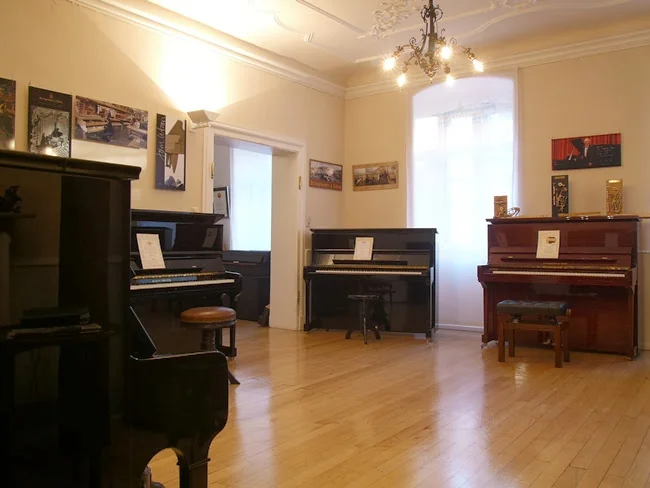
Steingraeber Bayreuth - Piano World is one of those places where a visit immediately feels different from a regular appointment in an exhibition or a quick stop in a showroom. It is not just about instruments, but about a vibrant cultural address in the heart of Bayreuth, where craftsmanship, history, and music have belonged together for generations. The provided location data indicates 4.6 stars from 43 reviews, and this blend of tradition, quality, and experience explains why the name Steingraeber instantly piques the interest of many music lovers. Those heading to Friedrichstraße 2 or Steingraeberpassage 1 enter a building that functions as a manufacture, museum, concert venue, and meeting space. Steingraeber describes the building as a largely original Rococo house with strong historical roots, while simultaneously offering modern concert and service facilities. Thus, the Piano World is not merely a brand space but a developed place with real substance that makes Bayreuth's musical identity visible and allows visitors direct access to piano making. ([steingraeber.de](https://www.steingraeber.de/en/about-us/portrait/))
Experience Piano World, Manufacture, and Museum
The keyword analysis clearly shows that people primarily search for the Steingraeber Piano World, the piano manufacture, and the piano itself. That is precisely why the connection between workshop, exhibition, and instrument is at the center. Steingraeber & Söhne has been manufacturing grand pianos and pianos in Bayreuth since 1852 and works, according to its own account, with around 35 top-notch craftsmen as a family business. On the website, the manufacture also emphasizes that production takes place entirely in Bayreuth and that one can learn about pianos and grand pianos from the great tradition of artisanal piano making here. For those searching for Piano World, this is crucial: it is not about a random product presentation, but about a genuine insight into a business where wood, mechanics, sound, and individual production come together. Additionally, Steingraeber refers to its own innovations and historical playing ideas such as Mozart Rail, Sordino, or various special equipment that connect classical piano making with modern practice. This creates a profile that works for both professional pianists and curious visitors and culture-interested guests in Bayreuth. ([steingraeber.de](https://www.steingraeber.de/en/about-us/portrait/))
Those who want to not only see the Piano World but understand it particularly benefit from the regular tours. According to the FAQ, Steingraeber offers a tour of the house and manufacture every first Thursday of the month at 4:00 PM. During the Bayreuth Festival season, tours take place on all non-performance days and non-performance Ring days also at 4:00 PM, without the need for prior registration. This fits perfectly with a location that consciously keeps access low-threshold while still going deep into the subject matter. Visitors experience the historic house, the workshops in the adjacent building part, and the rooms where piano-specific selection, repair, and restoration come together. The service page also shows how broad the offering is: concert rentals, concert services, CD recordings in a specially designed concert hall, as well as repairs and restorations are part of everyday life. The Piano World is thus not just a showcase but a functioning place of production and care where one can trace the journey from raw material to finished instrument. ([steingraeber.de](https://www.steingraeber.de/kontakt/faq-haeufig-gestellte-fragen/?utm_source=openai))
History of the Steingraeber House in Bayreuth
The history of Steingraeber is a central theme for almost every search query related to the brand, as without the historical background, today's Piano World would hardly be understandable. The official company history begins in the 1820s in Thuringia, but the actual Bayreuth path starts in 1852 when Eduard Steingraeber, a representative of the second family generation, moved his work to Bayreuth. There he developed his Opus 1, a revolutionary masterpiece in which he combined Viennese and English mechanics. Since 1867, Steingraeber has regularly received international awards, and in 1906, well-known designers began to design the cases of the instruments. The company management has also remained consistently family-bound: Udo Schmidt-Steingraeber has been at the helm since 1980, and the next generation is already prepared according to the company portrait. For those searching for history, it is particularly important that Steingraeber is not only a traditional family business but also a manufacturer with a proven long development line. The company thus demonstrates how craftsmanship continuity and technical advancement can be connected over more than a century. ([steingraeber.de](https://www.steingraeber.de/en/about-us/history/))
Equally influential is the building itself. The current Steingraeber House on Friedrichstraße dates back to 1754 and was built as a Rococo palace. According to the company portrait, it is one of the few buildings of this style that have largely remained original in Bayreuth. Eduard Steingraeber purchased the palace in 1871 and made it a representative company headquarters that still visibly carries the history of the house today. Particularly well-known is the so-called Rococo Hall, which has remained in its original form and is connected to the Liszt grand piano because Franz Liszt played there frequently as a guest. The house is still ideally suited for the presentation of instruments, and the former service rooms have also been sensibly integrated into today's structure, including three halls for piano selection. So, those searching for the history of the place discover not only company data but also an urban and culturally significant ensemble that tells Bayreuth's music history in a very concrete way. ([steingraeber.de](https://www.steingraeber.de/en/about-us/portrait/))
Events, Concerts, and Artists at the Steingraeber House
The search terms related to events and concerts show that Steingraeber is perceived not only as a piano manufacture but also as an active performance venue. According to the official representation, around 70 events take place each year in the two concert halls of the house. This makes the location a fixed part of the Bayreuth cultural calendar and a meeting point for artists and music lovers. Steingraeber also points out that Eduard Steingraeber already utilized the location in the festival city of Bayreuth for contacts with composers and interpreters, and Richard Wagner explicitly praised the pianos of the house. Today, the spectrum ranges from classical concerts to matinees and festival formats to exhibitions. The events page shows that the program remains lively and diverse, with formats that closely connect to Bayreuth's musical tradition. This is important for visitors because a Piano World becomes particularly attractive when it does not remain static but is regularly filled with musical life. This is exactly the case with Steingraeber: the historic house is a place where instruments, artists, and audiences regularly come together. ([steingraeber.de](https://www.steingraeber.de/konzerte-kuenstler/))
Even behind the scenes, the event character is strongly pronounced. In the service and application information, Steingraeber explains that the house hosts numerous musical activities each year and makes the chamber music hall available for certain projects outside of business hours, such as for young artists with non-commercial first productions or for experimental recordings. This underscores that here not only programs are consumed, but new artistic works are made possible. At the same time, the company refers to CD recordings in the specially designed concert hall and to a concert service that extends beyond Bayreuth. This profile is complemented by the annual program PianoTime and various exhibitions that profile the house as a cultural-historical site. So, those searching for Steingraeber Bayreuth events or concerts should not only think of classical evenings but of a whole ecosystem of music production, encounters, and presence. This is a strong SEO factor because it directly addresses the search intent for programs, program calendars, and cultural added value. ([steingraeber.de](https://www.steingraeber.de/konzertbewerbungen-kuenstlersponsoring/?utm_source=openai))
Piano Museum, Liszt Exhibition, and Special Instruments
A large part of the organic demand revolves around the piano museum, and here Steingraeber offers very concrete facts. The museum in the Steingraeber House opens on every performance day of the Wagner Festival, except Sundays, between 12 and 1 PM. Visitors can see and partially play historical grand pianos and pianos from different eras, including the first Steingraeber concert instrument with serial number 1 and the original Liszt grand piano from 1873. Additional rare instruments include a Pape piano with celeste pedal, a harpsichord, and a ribbed grand piano with aluminum cast frame. Those searching for piano museum, Liszt exhibition, or Piano World thus find not only a collection but a very specific connection of music history, collection objects, and playable instrument culture. Especially in the context of the Bayreuth Festival, this is particularly strong because the historical reference to Wagner and Liszt elevates the exhibition far beyond mere technique. The museum is therefore not a side show but a core part of the visitor experience. ([steingraeber.de](https://www.steingraeber.de/en/2019/07/open-piano-museum/))
The instrument page is also relevant for the search because Steingraeber shows a clearly profiled product portfolio alongside the museum. Among the pianos, the company names models such as 122 T, 130 T, and 138 K, with the 138 K described as a concert piano with the resonance surface area of a salon grand piano. Among the grand pianos, the spectrum ranges from the D-232 as a semi-concert grand to the concert grand E with a length of 275 centimeters. According to the official description, the concert grand E is one of the most distinctive constructions on the market and is based on a predecessor idea from 1895. Particularly striking are the technical features such as sound-reflecting body, reduced treble resonance board, special bridge constructions, high sound transparency, and playing stability. For visitors with search intent around Steingraeber Bayreuth piano, this is an important plus point because one immediately recognizes that it is not only about tradition but also about concrete sound and structural solutions. This also applies to special models, many wood variants, and individual fittings that position Steingraeber as a manufacture with high customer proximity. ([steingraeber.de](https://www.steingraeber.de/instrumente/pianos/))
Directions, City Center Location, and Parking in Bayreuth
For search terms like directions and parking, the location is the most important practical factor. Steingraeber is located centrally in Bayreuth at Friedrichstraße 2 or Steingraeberpassage 1, right in the city center and close to other cultural destinations in the festival city. The company describes Bayreuth itself as a city with an attractive cultural offering, with the World Heritage Opera House, the Wagner Museum, and historic parks. The website also points out that Bayreuth is conveniently located in Europe, on the highway between Munich and Berlin, and that Nuremberg International Airport is only about 50 minutes away. For visitors, this means: the Piano World is not a remote specialty place but well integrated into a city visit. Those who want to combine music, architecture, or city strolls can use Steingraeber very well as a starting or destination point. This is particularly important for festival or concert visits because a good location noticeably increases the quality of stay and simplifies travel planning. ([steingraeber.de](https://www.steingraeber.de/))
When it comes to parking, Bayreuth Tourism provides very helpful information. In the city center, there are parking garages, underground garages, and over 6,000 public and private parking spaces available. Those arriving by car should note that paid parking is usually required on weekdays and Saturdays between 8:00 AM and 7:00 PM, and some spaces have a maximum parking duration of 2 hours or even 30 minutes. Additionally, mobile parking via the EasyPark app is possible, and many public city parking areas allow vehicles with E-plates to park free of charge, provided the respective maximum parking times are adhered to. For SEO planning, this block is particularly valuable because the actual user experience often hinges on such questions. Those searching for Steingraeber Bayreuth parking need quick, reliable information about city center logic, and that is precisely what the city tourism information provides. This makes travel not a hindrance but a well-planned part of the visit. ([bayreuth-tourismus.de](https://www.bayreuth-tourismus.de/innenstadt/parken/))
Reviews and Why Visitors Come Back
The provided location data indicates 4.6 stars from 43 reviews, and this number fits a place that is not only well-maintained but also exceptionally rich in content. Those who visit the Piano World experience a rare mix of a vibrant manufacture, an original Rococo house, a museum, a concert venue, and historical Bayreuth music history. According to the official representation, the house is one of the few largely original buildings of this era, and it is regularly filled with concerts, tours, and exhibitions. This combination explains why many visitors do not perceive the place merely as a sales address but as a cultural experience with artisanal depth. The regular tours through the house and manufacture also contribute to ensuring that the visit is not superficial but provides genuine insight. Those searching for reviews usually expect authenticity, competence, and a special atmosphere. Steingraeber provides good conditions for this because the brand does not appear staged but has grown historically and is actively producing at the same time. This makes the place credible and relatable for many target groups. ([steingraeber.de](https://www.steingraeber.de/en/about-us/portrait/))
Additionally, it is particularly strong that different visitor interests converge here. Music lovers are interested in the Liszt grand piano, the museum, and the concerts. Architecture enthusiasts appreciate the Rococo house from 1754 and the almost original substance. Professionals and pianists pay attention to sound, mechanics, special models, and the manufacture's performance. And all together benefit from the location in the Bayreuth city center, which allows for an uncomplicated visit. When all available information is put together, a very coherent picture emerges: Steingraeber Bayreuth is not only a well-known piano brand but a developed cultural address with a real logic of return. That is precisely why the site is worthwhile for those searching for Piano World, piano manufacture, museum, events, directions, parking, and reviews alike. The brand not only answers the question of what is sold here but, more importantly, the question of why a visit is personally worthwhile. ([steingraeber.de](https://www.steingraeber.de/))
Sources:
Show moreShow less
Steingraeber Bayreuth - Piano World | Manufacture & Museum
Steingraeber Bayreuth - Piano World is one of those places where a visit immediately feels different from a regular appointment in an exhibition or a quick stop in a showroom. It is not just about instruments, but about a vibrant cultural address in the heart of Bayreuth, where craftsmanship, history, and music have belonged together for generations. The provided location data indicates 4.6 stars from 43 reviews, and this blend of tradition, quality, and experience explains why the name Steingraeber instantly piques the interest of many music lovers. Those heading to Friedrichstraße 2 or Steingraeberpassage 1 enter a building that functions as a manufacture, museum, concert venue, and meeting space. Steingraeber describes the building as a largely original Rococo house with strong historical roots, while simultaneously offering modern concert and service facilities. Thus, the Piano World is not merely a brand space but a developed place with real substance that makes Bayreuth's musical identity visible and allows visitors direct access to piano making. ([steingraeber.de](https://www.steingraeber.de/en/about-us/portrait/))
Experience Piano World, Manufacture, and Museum
The keyword analysis clearly shows that people primarily search for the Steingraeber Piano World, the piano manufacture, and the piano itself. That is precisely why the connection between workshop, exhibition, and instrument is at the center. Steingraeber & Söhne has been manufacturing grand pianos and pianos in Bayreuth since 1852 and works, according to its own account, with around 35 top-notch craftsmen as a family business. On the website, the manufacture also emphasizes that production takes place entirely in Bayreuth and that one can learn about pianos and grand pianos from the great tradition of artisanal piano making here. For those searching for Piano World, this is crucial: it is not about a random product presentation, but about a genuine insight into a business where wood, mechanics, sound, and individual production come together. Additionally, Steingraeber refers to its own innovations and historical playing ideas such as Mozart Rail, Sordino, or various special equipment that connect classical piano making with modern practice. This creates a profile that works for both professional pianists and curious visitors and culture-interested guests in Bayreuth. ([steingraeber.de](https://www.steingraeber.de/en/about-us/portrait/))
Those who want to not only see the Piano World but understand it particularly benefit from the regular tours. According to the FAQ, Steingraeber offers a tour of the house and manufacture every first Thursday of the month at 4:00 PM. During the Bayreuth Festival season, tours take place on all non-performance days and non-performance Ring days also at 4:00 PM, without the need for prior registration. This fits perfectly with a location that consciously keeps access low-threshold while still going deep into the subject matter. Visitors experience the historic house, the workshops in the adjacent building part, and the rooms where piano-specific selection, repair, and restoration come together. The service page also shows how broad the offering is: concert rentals, concert services, CD recordings in a specially designed concert hall, as well as repairs and restorations are part of everyday life. The Piano World is thus not just a showcase but a functioning place of production and care where one can trace the journey from raw material to finished instrument. ([steingraeber.de](https://www.steingraeber.de/kontakt/faq-haeufig-gestellte-fragen/?utm_source=openai))
History of the Steingraeber House in Bayreuth
The history of Steingraeber is a central theme for almost every search query related to the brand, as without the historical background, today's Piano World would hardly be understandable. The official company history begins in the 1820s in Thuringia, but the actual Bayreuth path starts in 1852 when Eduard Steingraeber, a representative of the second family generation, moved his work to Bayreuth. There he developed his Opus 1, a revolutionary masterpiece in which he combined Viennese and English mechanics. Since 1867, Steingraeber has regularly received international awards, and in 1906, well-known designers began to design the cases of the instruments. The company management has also remained consistently family-bound: Udo Schmidt-Steingraeber has been at the helm since 1980, and the next generation is already prepared according to the company portrait. For those searching for history, it is particularly important that Steingraeber is not only a traditional family business but also a manufacturer with a proven long development line. The company thus demonstrates how craftsmanship continuity and technical advancement can be connected over more than a century. ([steingraeber.de](https://www.steingraeber.de/en/about-us/history/))
Equally influential is the building itself. The current Steingraeber House on Friedrichstraße dates back to 1754 and was built as a Rococo palace. According to the company portrait, it is one of the few buildings of this style that have largely remained original in Bayreuth. Eduard Steingraeber purchased the palace in 1871 and made it a representative company headquarters that still visibly carries the history of the house today. Particularly well-known is the so-called Rococo Hall, which has remained in its original form and is connected to the Liszt grand piano because Franz Liszt played there frequently as a guest. The house is still ideally suited for the presentation of instruments, and the former service rooms have also been sensibly integrated into today's structure, including three halls for piano selection. So, those searching for the history of the place discover not only company data but also an urban and culturally significant ensemble that tells Bayreuth's music history in a very concrete way. ([steingraeber.de](https://www.steingraeber.de/en/about-us/portrait/))
Events, Concerts, and Artists at the Steingraeber House
The search terms related to events and concerts show that Steingraeber is perceived not only as a piano manufacture but also as an active performance venue. According to the official representation, around 70 events take place each year in the two concert halls of the house. This makes the location a fixed part of the Bayreuth cultural calendar and a meeting point for artists and music lovers. Steingraeber also points out that Eduard Steingraeber already utilized the location in the festival city of Bayreuth for contacts with composers and interpreters, and Richard Wagner explicitly praised the pianos of the house. Today, the spectrum ranges from classical concerts to matinees and festival formats to exhibitions. The events page shows that the program remains lively and diverse, with formats that closely connect to Bayreuth's musical tradition. This is important for visitors because a Piano World becomes particularly attractive when it does not remain static but is regularly filled with musical life. This is exactly the case with Steingraeber: the historic house is a place where instruments, artists, and audiences regularly come together. ([steingraeber.de](https://www.steingraeber.de/konzerte-kuenstler/))
Even behind the scenes, the event character is strongly pronounced. In the service and application information, Steingraeber explains that the house hosts numerous musical activities each year and makes the chamber music hall available for certain projects outside of business hours, such as for young artists with non-commercial first productions or for experimental recordings. This underscores that here not only programs are consumed, but new artistic works are made possible. At the same time, the company refers to CD recordings in the specially designed concert hall and to a concert service that extends beyond Bayreuth. This profile is complemented by the annual program PianoTime and various exhibitions that profile the house as a cultural-historical site. So, those searching for Steingraeber Bayreuth events or concerts should not only think of classical evenings but of a whole ecosystem of music production, encounters, and presence. This is a strong SEO factor because it directly addresses the search intent for programs, program calendars, and cultural added value. ([steingraeber.de](https://www.steingraeber.de/konzertbewerbungen-kuenstlersponsoring/?utm_source=openai))
Piano Museum, Liszt Exhibition, and Special Instruments
A large part of the organic demand revolves around the piano museum, and here Steingraeber offers very concrete facts. The museum in the Steingraeber House opens on every performance day of the Wagner Festival, except Sundays, between 12 and 1 PM. Visitors can see and partially play historical grand pianos and pianos from different eras, including the first Steingraeber concert instrument with serial number 1 and the original Liszt grand piano from 1873. Additional rare instruments include a Pape piano with celeste pedal, a harpsichord, and a ribbed grand piano with aluminum cast frame. Those searching for piano museum, Liszt exhibition, or Piano World thus find not only a collection but a very specific connection of music history, collection objects, and playable instrument culture. Especially in the context of the Bayreuth Festival, this is particularly strong because the historical reference to Wagner and Liszt elevates the exhibition far beyond mere technique. The museum is therefore not a side show but a core part of the visitor experience. ([steingraeber.de](https://www.steingraeber.de/en/2019/07/open-piano-museum/))
The instrument page is also relevant for the search because Steingraeber shows a clearly profiled product portfolio alongside the museum. Among the pianos, the company names models such as 122 T, 130 T, and 138 K, with the 138 K described as a concert piano with the resonance surface area of a salon grand piano. Among the grand pianos, the spectrum ranges from the D-232 as a semi-concert grand to the concert grand E with a length of 275 centimeters. According to the official description, the concert grand E is one of the most distinctive constructions on the market and is based on a predecessor idea from 1895. Particularly striking are the technical features such as sound-reflecting body, reduced treble resonance board, special bridge constructions, high sound transparency, and playing stability. For visitors with search intent around Steingraeber Bayreuth piano, this is an important plus point because one immediately recognizes that it is not only about tradition but also about concrete sound and structural solutions. This also applies to special models, many wood variants, and individual fittings that position Steingraeber as a manufacture with high customer proximity. ([steingraeber.de](https://www.steingraeber.de/instrumente/pianos/))
Directions, City Center Location, and Parking in Bayreuth
For search terms like directions and parking, the location is the most important practical factor. Steingraeber is located centrally in Bayreuth at Friedrichstraße 2 or Steingraeberpassage 1, right in the city center and close to other cultural destinations in the festival city. The company describes Bayreuth itself as a city with an attractive cultural offering, with the World Heritage Opera House, the Wagner Museum, and historic parks. The website also points out that Bayreuth is conveniently located in Europe, on the highway between Munich and Berlin, and that Nuremberg International Airport is only about 50 minutes away. For visitors, this means: the Piano World is not a remote specialty place but well integrated into a city visit. Those who want to combine music, architecture, or city strolls can use Steingraeber very well as a starting or destination point. This is particularly important for festival or concert visits because a good location noticeably increases the quality of stay and simplifies travel planning. ([steingraeber.de](https://www.steingraeber.de/))
When it comes to parking, Bayreuth Tourism provides very helpful information. In the city center, there are parking garages, underground garages, and over 6,000 public and private parking spaces available. Those arriving by car should note that paid parking is usually required on weekdays and Saturdays between 8:00 AM and 7:00 PM, and some spaces have a maximum parking duration of 2 hours or even 30 minutes. Additionally, mobile parking via the EasyPark app is possible, and many public city parking areas allow vehicles with E-plates to park free of charge, provided the respective maximum parking times are adhered to. For SEO planning, this block is particularly valuable because the actual user experience often hinges on such questions. Those searching for Steingraeber Bayreuth parking need quick, reliable information about city center logic, and that is precisely what the city tourism information provides. This makes travel not a hindrance but a well-planned part of the visit. ([bayreuth-tourismus.de](https://www.bayreuth-tourismus.de/innenstadt/parken/))
Reviews and Why Visitors Come Back
The provided location data indicates 4.6 stars from 43 reviews, and this number fits a place that is not only well-maintained but also exceptionally rich in content. Those who visit the Piano World experience a rare mix of a vibrant manufacture, an original Rococo house, a museum, a concert venue, and historical Bayreuth music history. According to the official representation, the house is one of the few largely original buildings of this era, and it is regularly filled with concerts, tours, and exhibitions. This combination explains why many visitors do not perceive the place merely as a sales address but as a cultural experience with artisanal depth. The regular tours through the house and manufacture also contribute to ensuring that the visit is not superficial but provides genuine insight. Those searching for reviews usually expect authenticity, competence, and a special atmosphere. Steingraeber provides good conditions for this because the brand does not appear staged but has grown historically and is actively producing at the same time. This makes the place credible and relatable for many target groups. ([steingraeber.de](https://www.steingraeber.de/en/about-us/portrait/))
Additionally, it is particularly strong that different visitor interests converge here. Music lovers are interested in the Liszt grand piano, the museum, and the concerts. Architecture enthusiasts appreciate the Rococo house from 1754 and the almost original substance. Professionals and pianists pay attention to sound, mechanics, special models, and the manufacture's performance. And all together benefit from the location in the Bayreuth city center, which allows for an uncomplicated visit. When all available information is put together, a very coherent picture emerges: Steingraeber Bayreuth is not only a well-known piano brand but a developed cultural address with a real logic of return. That is precisely why the site is worthwhile for those searching for Piano World, piano manufacture, museum, events, directions, parking, and reviews alike. The brand not only answers the question of what is sold here but, more importantly, the question of why a visit is personally worthwhile. ([steingraeber.de](https://www.steingraeber.de/))
Sources:
Steingraeber Bayreuth - Piano World | Manufacture & Museum
Steingraeber Bayreuth - Piano World is one of those places where a visit immediately feels different from a regular appointment in an exhibition or a quick stop in a showroom. It is not just about instruments, but about a vibrant cultural address in the heart of Bayreuth, where craftsmanship, history, and music have belonged together for generations. The provided location data indicates 4.6 stars from 43 reviews, and this blend of tradition, quality, and experience explains why the name Steingraeber instantly piques the interest of many music lovers. Those heading to Friedrichstraße 2 or Steingraeberpassage 1 enter a building that functions as a manufacture, museum, concert venue, and meeting space. Steingraeber describes the building as a largely original Rococo house with strong historical roots, while simultaneously offering modern concert and service facilities. Thus, the Piano World is not merely a brand space but a developed place with real substance that makes Bayreuth's musical identity visible and allows visitors direct access to piano making. ([steingraeber.de](https://www.steingraeber.de/en/about-us/portrait/))
Experience Piano World, Manufacture, and Museum
The keyword analysis clearly shows that people primarily search for the Steingraeber Piano World, the piano manufacture, and the piano itself. That is precisely why the connection between workshop, exhibition, and instrument is at the center. Steingraeber & Söhne has been manufacturing grand pianos and pianos in Bayreuth since 1852 and works, according to its own account, with around 35 top-notch craftsmen as a family business. On the website, the manufacture also emphasizes that production takes place entirely in Bayreuth and that one can learn about pianos and grand pianos from the great tradition of artisanal piano making here. For those searching for Piano World, this is crucial: it is not about a random product presentation, but about a genuine insight into a business where wood, mechanics, sound, and individual production come together. Additionally, Steingraeber refers to its own innovations and historical playing ideas such as Mozart Rail, Sordino, or various special equipment that connect classical piano making with modern practice. This creates a profile that works for both professional pianists and curious visitors and culture-interested guests in Bayreuth. ([steingraeber.de](https://www.steingraeber.de/en/about-us/portrait/))
Those who want to not only see the Piano World but understand it particularly benefit from the regular tours. According to the FAQ, Steingraeber offers a tour of the house and manufacture every first Thursday of the month at 4:00 PM. During the Bayreuth Festival season, tours take place on all non-performance days and non-performance Ring days also at 4:00 PM, without the need for prior registration. This fits perfectly with a location that consciously keeps access low-threshold while still going deep into the subject matter. Visitors experience the historic house, the workshops in the adjacent building part, and the rooms where piano-specific selection, repair, and restoration come together. The service page also shows how broad the offering is: concert rentals, concert services, CD recordings in a specially designed concert hall, as well as repairs and restorations are part of everyday life. The Piano World is thus not just a showcase but a functioning place of production and care where one can trace the journey from raw material to finished instrument. ([steingraeber.de](https://www.steingraeber.de/kontakt/faq-haeufig-gestellte-fragen/?utm_source=openai))
History of the Steingraeber House in Bayreuth
The history of Steingraeber is a central theme for almost every search query related to the brand, as without the historical background, today's Piano World would hardly be understandable. The official company history begins in the 1820s in Thuringia, but the actual Bayreuth path starts in 1852 when Eduard Steingraeber, a representative of the second family generation, moved his work to Bayreuth. There he developed his Opus 1, a revolutionary masterpiece in which he combined Viennese and English mechanics. Since 1867, Steingraeber has regularly received international awards, and in 1906, well-known designers began to design the cases of the instruments. The company management has also remained consistently family-bound: Udo Schmidt-Steingraeber has been at the helm since 1980, and the next generation is already prepared according to the company portrait. For those searching for history, it is particularly important that Steingraeber is not only a traditional family business but also a manufacturer with a proven long development line. The company thus demonstrates how craftsmanship continuity and technical advancement can be connected over more than a century. ([steingraeber.de](https://www.steingraeber.de/en/about-us/history/))
Equally influential is the building itself. The current Steingraeber House on Friedrichstraße dates back to 1754 and was built as a Rococo palace. According to the company portrait, it is one of the few buildings of this style that have largely remained original in Bayreuth. Eduard Steingraeber purchased the palace in 1871 and made it a representative company headquarters that still visibly carries the history of the house today. Particularly well-known is the so-called Rococo Hall, which has remained in its original form and is connected to the Liszt grand piano because Franz Liszt played there frequently as a guest. The house is still ideally suited for the presentation of instruments, and the former service rooms have also been sensibly integrated into today's structure, including three halls for piano selection. So, those searching for the history of the place discover not only company data but also an urban and culturally significant ensemble that tells Bayreuth's music history in a very concrete way. ([steingraeber.de](https://www.steingraeber.de/en/about-us/portrait/))
Events, Concerts, and Artists at the Steingraeber House
The search terms related to events and concerts show that Steingraeber is perceived not only as a piano manufacture but also as an active performance venue. According to the official representation, around 70 events take place each year in the two concert halls of the house. This makes the location a fixed part of the Bayreuth cultural calendar and a meeting point for artists and music lovers. Steingraeber also points out that Eduard Steingraeber already utilized the location in the festival city of Bayreuth for contacts with composers and interpreters, and Richard Wagner explicitly praised the pianos of the house. Today, the spectrum ranges from classical concerts to matinees and festival formats to exhibitions. The events page shows that the program remains lively and diverse, with formats that closely connect to Bayreuth's musical tradition. This is important for visitors because a Piano World becomes particularly attractive when it does not remain static but is regularly filled with musical life. This is exactly the case with Steingraeber: the historic house is a place where instruments, artists, and audiences regularly come together. ([steingraeber.de](https://www.steingraeber.de/konzerte-kuenstler/))
Even behind the scenes, the event character is strongly pronounced. In the service and application information, Steingraeber explains that the house hosts numerous musical activities each year and makes the chamber music hall available for certain projects outside of business hours, such as for young artists with non-commercial first productions or for experimental recordings. This underscores that here not only programs are consumed, but new artistic works are made possible. At the same time, the company refers to CD recordings in the specially designed concert hall and to a concert service that extends beyond Bayreuth. This profile is complemented by the annual program PianoTime and various exhibitions that profile the house as a cultural-historical site. So, those searching for Steingraeber Bayreuth events or concerts should not only think of classical evenings but of a whole ecosystem of music production, encounters, and presence. This is a strong SEO factor because it directly addresses the search intent for programs, program calendars, and cultural added value. ([steingraeber.de](https://www.steingraeber.de/konzertbewerbungen-kuenstlersponsoring/?utm_source=openai))
Piano Museum, Liszt Exhibition, and Special Instruments
A large part of the organic demand revolves around the piano museum, and here Steingraeber offers very concrete facts. The museum in the Steingraeber House opens on every performance day of the Wagner Festival, except Sundays, between 12 and 1 PM. Visitors can see and partially play historical grand pianos and pianos from different eras, including the first Steingraeber concert instrument with serial number 1 and the original Liszt grand piano from 1873. Additional rare instruments include a Pape piano with celeste pedal, a harpsichord, and a ribbed grand piano with aluminum cast frame. Those searching for piano museum, Liszt exhibition, or Piano World thus find not only a collection but a very specific connection of music history, collection objects, and playable instrument culture. Especially in the context of the Bayreuth Festival, this is particularly strong because the historical reference to Wagner and Liszt elevates the exhibition far beyond mere technique. The museum is therefore not a side show but a core part of the visitor experience. ([steingraeber.de](https://www.steingraeber.de/en/2019/07/open-piano-museum/))
The instrument page is also relevant for the search because Steingraeber shows a clearly profiled product portfolio alongside the museum. Among the pianos, the company names models such as 122 T, 130 T, and 138 K, with the 138 K described as a concert piano with the resonance surface area of a salon grand piano. Among the grand pianos, the spectrum ranges from the D-232 as a semi-concert grand to the concert grand E with a length of 275 centimeters. According to the official description, the concert grand E is one of the most distinctive constructions on the market and is based on a predecessor idea from 1895. Particularly striking are the technical features such as sound-reflecting body, reduced treble resonance board, special bridge constructions, high sound transparency, and playing stability. For visitors with search intent around Steingraeber Bayreuth piano, this is an important plus point because one immediately recognizes that it is not only about tradition but also about concrete sound and structural solutions. This also applies to special models, many wood variants, and individual fittings that position Steingraeber as a manufacture with high customer proximity. ([steingraeber.de](https://www.steingraeber.de/instrumente/pianos/))
Directions, City Center Location, and Parking in Bayreuth
For search terms like directions and parking, the location is the most important practical factor. Steingraeber is located centrally in Bayreuth at Friedrichstraße 2 or Steingraeberpassage 1, right in the city center and close to other cultural destinations in the festival city. The company describes Bayreuth itself as a city with an attractive cultural offering, with the World Heritage Opera House, the Wagner Museum, and historic parks. The website also points out that Bayreuth is conveniently located in Europe, on the highway between Munich and Berlin, and that Nuremberg International Airport is only about 50 minutes away. For visitors, this means: the Piano World is not a remote specialty place but well integrated into a city visit. Those who want to combine music, architecture, or city strolls can use Steingraeber very well as a starting or destination point. This is particularly important for festival or concert visits because a good location noticeably increases the quality of stay and simplifies travel planning. ([steingraeber.de](https://www.steingraeber.de/))
When it comes to parking, Bayreuth Tourism provides very helpful information. In the city center, there are parking garages, underground garages, and over 6,000 public and private parking spaces available. Those arriving by car should note that paid parking is usually required on weekdays and Saturdays between 8:00 AM and 7:00 PM, and some spaces have a maximum parking duration of 2 hours or even 30 minutes. Additionally, mobile parking via the EasyPark app is possible, and many public city parking areas allow vehicles with E-plates to park free of charge, provided the respective maximum parking times are adhered to. For SEO planning, this block is particularly valuable because the actual user experience often hinges on such questions. Those searching for Steingraeber Bayreuth parking need quick, reliable information about city center logic, and that is precisely what the city tourism information provides. This makes travel not a hindrance but a well-planned part of the visit. ([bayreuth-tourismus.de](https://www.bayreuth-tourismus.de/innenstadt/parken/))
Reviews and Why Visitors Come Back
The provided location data indicates 4.6 stars from 43 reviews, and this number fits a place that is not only well-maintained but also exceptionally rich in content. Those who visit the Piano World experience a rare mix of a vibrant manufacture, an original Rococo house, a museum, a concert venue, and historical Bayreuth music history. According to the official representation, the house is one of the few largely original buildings of this era, and it is regularly filled with concerts, tours, and exhibitions. This combination explains why many visitors do not perceive the place merely as a sales address but as a cultural experience with artisanal depth. The regular tours through the house and manufacture also contribute to ensuring that the visit is not superficial but provides genuine insight. Those searching for reviews usually expect authenticity, competence, and a special atmosphere. Steingraeber provides good conditions for this because the brand does not appear staged but has grown historically and is actively producing at the same time. This makes the place credible and relatable for many target groups. ([steingraeber.de](https://www.steingraeber.de/en/about-us/portrait/))
Additionally, it is particularly strong that different visitor interests converge here. Music lovers are interested in the Liszt grand piano, the museum, and the concerts. Architecture enthusiasts appreciate the Rococo house from 1754 and the almost original substance. Professionals and pianists pay attention to sound, mechanics, special models, and the manufacture's performance. And all together benefit from the location in the Bayreuth city center, which allows for an uncomplicated visit. When all available information is put together, a very coherent picture emerges: Steingraeber Bayreuth is not only a well-known piano brand but a developed cultural address with a real logic of return. That is precisely why the site is worthwhile for those searching for Piano World, piano manufacture, museum, events, directions, parking, and reviews alike. The brand not only answers the question of what is sold here but, more importantly, the question of why a visit is personally worthwhile. ([steingraeber.de](https://www.steingraeber.de/))
Sources:
Upcoming Events

Vernissage for the exhibition by Antoine Wagner at the Steingraeber Gallery
Contemporary art in the special acoustic space of Steingraeber: Antoine Wagner opens a poetic exhibition in Bayreuth on 22.07.2026. Free entry. #Bayreuth #Art

Antoine Wagner: Resonance at the Steingraeber Gallery
A piano as a work of art, wood as memory, sound as image: Antoine Wagner opens RESONANCE in Bayreuth. Free entry, 22.07.2026. #Art
How is a piano built? – Steingraeber House Bayreuth 2026
Experience piano building live at Steingraeber House Bayreuth: Manufacturing, museum, and sound history in one place. 24.07.2026, 8 €. #Bayreuth #Culture
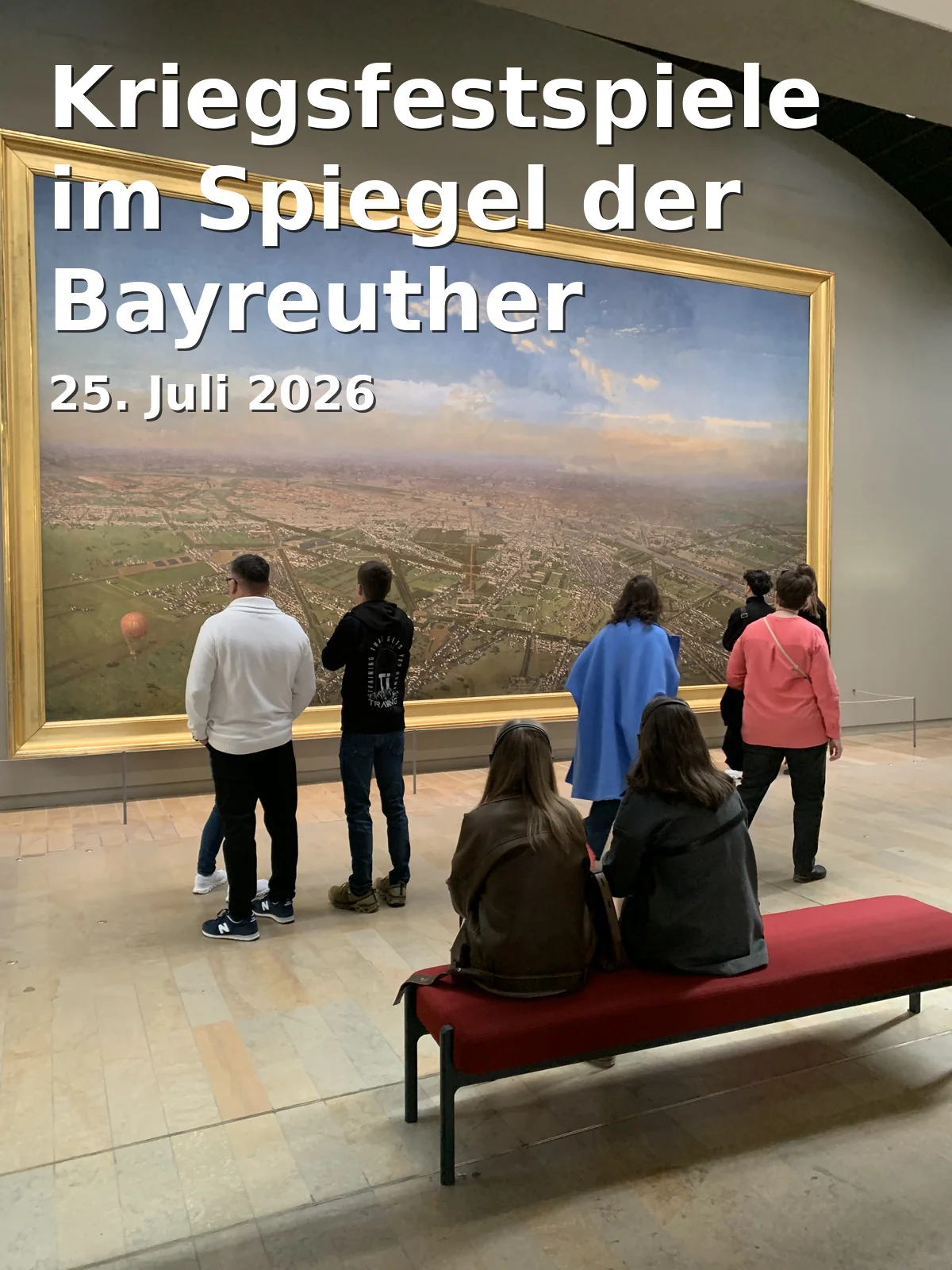
War Festival in the Mirror of the Bayreuth Press
Explore the Bayreuth Festival during World War II in an exciting exhibition.
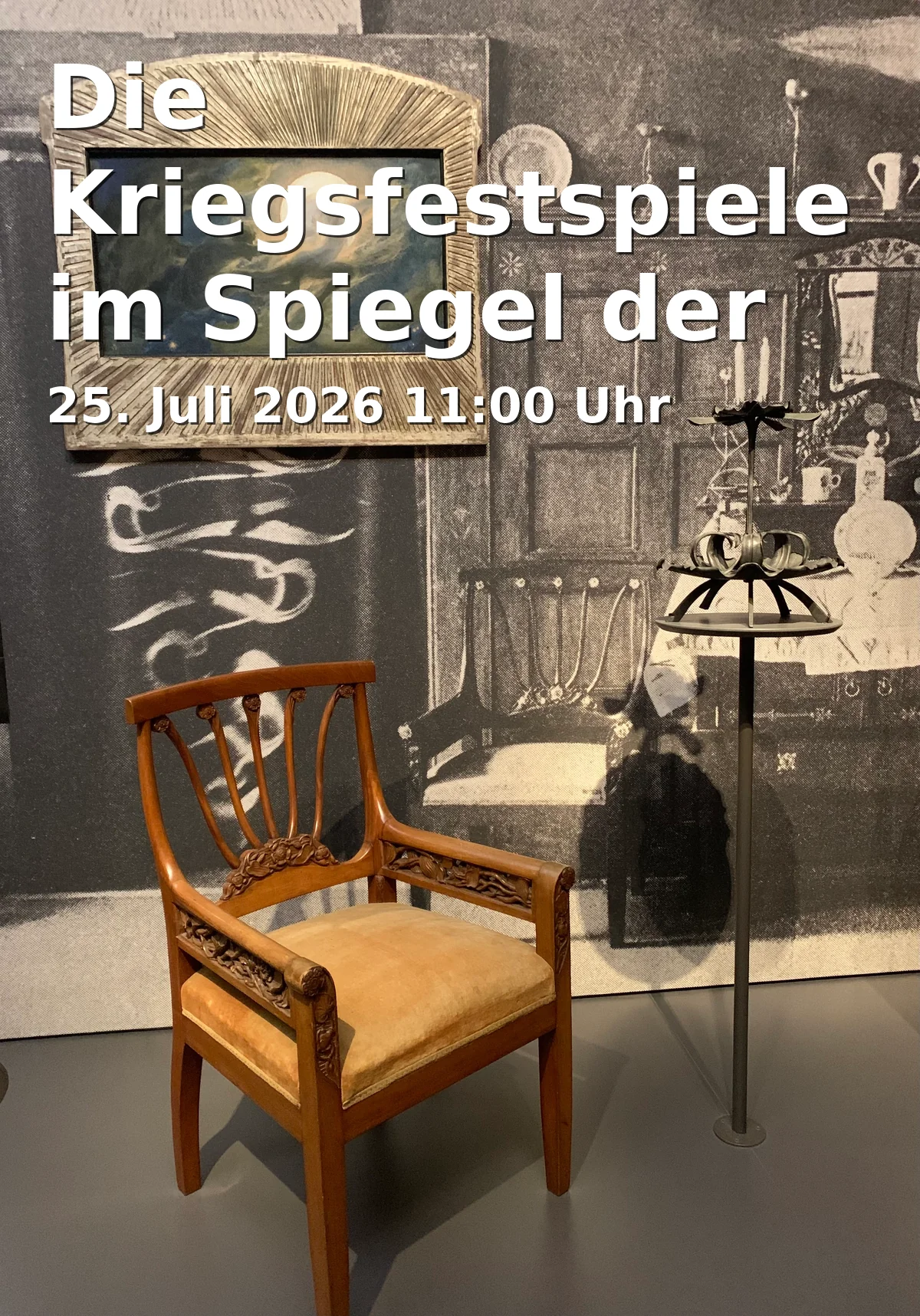
The War Festivals in the Reflection of the Bayreuth Press
An exciting look at Bayreuth's festival history: The vernissage shows press, power, and memory during World War II. Free on July 25, 2026. #Bayreuth #Exhibition
How to build a piano? Manufactory & Museum Tour.
Bayreuth from its most sonorous side: The Steingraeber Tour leads through manufactory, museum, and music history. On 26.07.2026 from 12:30 PM, from 8 €. #Bayreuth #Culture
Frequently Asked Questions
Reviews
Jeffrey Sun
20. August 2025
Absolutely amazing place and amazing staff, would give 10 stars if I could. I was allowed to try all the pianos without any nagging or pressure. If I ever purchase a piano, I will do so here.
Mihaela Vasiliu
7. October 2024
This summer, my family of five had the pleasure of visiting Steingraeber in Bayreuth, Bavaria, and it was an unforgettable experience. Our son, the pianist in the family, was especially excited, and the entire team welcomed us with warmth and enthusiasm. We opted for the private factory tour, which was well worth it! The level of care and attention to detail that goes into crafting each piano is extraordinary. My son had the unique opportunity to play several pianos during our visit, including the one once especially built for Liszt, which made the experience even more special. The hospitality we received and the insights into the piano-making process made for a truly memorable day. Thank you for creating such a wonderful experience for us and for making our visit so memorable!
Andre Delgado
10. August 2025
Historic pianos including Franz Liszt's piano. Also saw an exposition of 19th century pictures.
Ding ding
28. August 2024
Awesome!!!
Svyatoslav Levin
22. October 2017
Incredible pianos!