
Bayreuth
Steingraeberpassage, 95444 Bayreuth, Deutschland
Steingraeber Chamber Music Hall | Concerts & Events
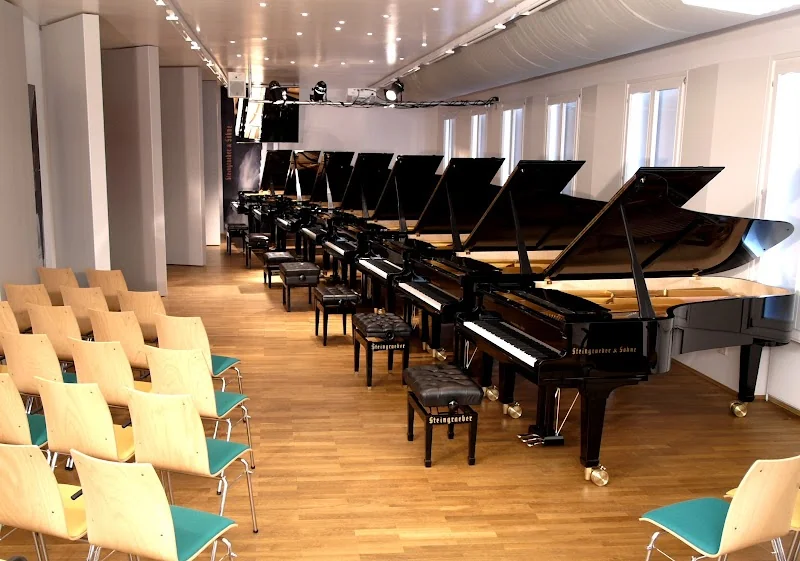
The Steingraeber Chamber Music Hall is one of the most traditional music venues in Bayreuth and is closely connected to the Steingraeber House. The house itself is a Rococo palace from 1754, which has largely been preserved in its original state and, along with salons, a grand piano hall, a gallery, exhibition levels, and the courtyard theater used in summer, forms a vibrant cultural center. Visitors to the Chamber Music Hall thus experience not just a concert venue, but a house where music, craftsmanship, historical architecture, and lived culture come together in very close proximity. The piano manufacturer Steingraeber & Söhne has been based in Bayreuth since 1852, with its roots tracing back to Rudolstadt in 1820 according to company history. Additionally, the immediate proximity to Bayreuth's music history is notable: the Steingraeber House is located just about 40 meters from Richard Wagner's first residence in Bayreuth, firmly anchoring it in the musical topography of the city. ([steingraeber.de](https://www.steingraeber.de/en/world-heritage/festival-town-bayreuth/))
Concerts and Events in the Steingraeber Chamber Music Hall
The primary search impulse behind the topic is clear: visitors want to know which concerts and events take place in the Steingraeber Chamber Music Hall. This is where the venue shows its strength, as the hall is not designed as an arbitrary multipurpose room, but as a stage for concentrated musical formats. Steingraeber hosts around 70 concerts and events annually featuring renowned artists and aspiring master pianists in the Chamber Music Hall. The current homepage also lists specific dates such as the tour “PIANO WORLD: Manufacture and Museum” as well as the “Upper Franconian Young Talent Concerts” at the Steingraeber House. It quickly becomes clear that the hall is part of a larger, continuously active cultural program and is not just used sporadically. For those searching for “steingraeber concert” or “steingraeber events,” this is important because the location is not an empty shell, but a place with a regular, active program. ([steingraeber.de](https://www.steingraeber.de/ueber-uns/kurzportrait/?utm_source=openai))
The range of events is broad, ranging from young talent concerts to master classes, discussion concerts, readings, and thematically curated festival formats. The program announcements for PianoTime 2025/26 mention the Chamber Music Hall, the Rococo Hall, the Courtyard Theater, the Museum, the Manufacture, and the Gallery as performance venues; collaborations with the Bayreuth cultural scene are also highlighted, including the Mozart Society Bayreuth, the Jazz Forum, the Studio Stage, and the “Time for New Music” festival. During the same period, Steingraeber speaks of 118 instances of “curtain up” throughout the house from February 2025 to January 2026. This shows that the Chamber Music Hall is part of a very dense concert landscape, where classical chamber music, new music, jazz, and music education formats coexist. Especially for guests specifically searching for a current program, this is a strong signal: there is almost always something happening here, and the range is significantly broader than that of a purely classical concert hall. ([steingraeber.de](https://www.steingraeber.de/2025/02/feuerwerk-feuerwerk-x-118-steingraeber-stellt-ein-furioses-jahresprogramm-vor-pianotime-2025-26/))
The specific examples on the homepage are also helpful for understanding the character of the place. Currently, there are events that position the space as a venue for concerts, tours, and musical discoveries. The formats are often designed to be deliberately approachable and personal, which fits very well with a house culture that does not present art distantly but makes it directly experienceable. For visitors, this means: choosing a Steingraeber concert usually means opting for a more intimate experience focused on sound, interpretation, and closeness to the audience. This aligns with the search terms “steingraeber concert” and “steingraeber events,” as the focus is not on a large arena, but on concentrated musical encounters. In Bayreuth, a city with a strong musical tradition, this blend of historical surroundings and current cultural programming is particularly appealing. ([steingraeber.de](https://www.steingraeber.de/))
CD Recordings and Acoustics in the Chamber Music Hall
Another central theme is the acoustics. The official Steingraeber site explicitly recommends the Chamber Music Hall for CD recordings and emphasizes that a perfectly prepared premium grand piano, quietness, and ideal spatial and technical conditions are provided there. The reverberation time is particularly noted: it can be adjusted from 0.9 to 2.1 seconds. This is a very important value for pianists, ensembles, and producers, as it allows for fine acoustic adjustments to different musical situations. In practice, this means that the hall is suitable not only for public concerts but also for productions that require sonic precision and a controlled atmosphere. This is precisely why the Chamber Music Hall appears in various contexts ranging from CD recordings to rehearsals, seminars, workshops, and recitals. ([steingraeber.de](https://www.steingraeber.de/service/cd-aufnahmen/?utm_source=openai))
However, acoustics are not the only quality feature. The room is integrated into the grand piano house of Steingraeber, which has a selection of concert grand pianos designated for the Chamber Music Hall. This is relevant for visitors as well as for artists, as a hall with suitable instruments and an established technical environment shortens the distance between idea and sound. Therefore, the Chamber Music Hall is described on the Steingraeber site as a place where one can work undisturbed and can also rely on technical support and tuning services if needed. This creates a profile that is both artistic and practical: a space that not only looks beautiful but primarily supports listening, recording, and concentrated work. Those searching for “cd recordings bayreuth” will find here not a generic rental hall, but a specialized sound space with a clear focus on professional performance and recording conditions. ([steingraeber.de](https://www.steingraeber.de/service/cd-aufnahmen/?utm_source=openai))
Additionally, Steingraeber has also visually and organizationally well developed the space. The website refers to a virtual tour so that interested parties can get an impression of the Chamber Music Hall in advance. This is particularly practical for artists, organizers, and producers who want to assess the spatial feeling, proportions, and atmosphere before making a reservation. Additionally, the “Open Space” note indicates that Steingraeber opens the Chamber Music Hall and the Rococo Hall for social media posts and video productions outside of classical concert use. This underscores how flexible the space is conceived: not as a purely static hall, but as a stage for various formats between music, media, and creative production. For SEO analysis, this is important because it derives not only the main terms “concert” and “events,” but also complementary search terms such as “recording,” “rehearsals,” and “acoustics.” ([steingraeber.de](https://www.steingraeber.de/service/cd-aufnahmen/?utm_source=openai))
History of the Steingraeber House and the Liszt Grand Pianos
The history of the place is one of the strongest reasons why the Steingraeber Chamber Music Hall is so special for Bayreuth. The company history refers to the family's roots in 1820 in Rudolstadt and the beginning of Bayreuth's piano history in 1852. The Steingraeber House itself was built in 1754 as Liebhardt's Palace in the style of Bayreuth Rococo. Eduard Steingraeber purchased the building in 1871 and transformed it into a culturally minded company headquarters, which has remained private family property to this day. This historical depth is not just a backdrop, but an essential part of the brand: the house is considered one of the few largely original Rococo buildings in the city and is described in several official texts as the soul of the company. For visitors, this means that every concert visit is also a visit to a living piece of Bayreuth's cultural history. ([steingraeber.de](https://www.steingraeber.de/service/restaurierung-in-der-steingraeber-manufaktur/))
Particularly influential is the role of the Rococo Hall with the so-called Liszt grand piano. Sources describe that the hall is still preserved in its original state and is equipped with a corresponding historical grand piano, which is now known as the Liszt grand piano. Franz Liszt frequently visited Bayreuth and preferred to play on Steingraeber instruments. This is culturally historical more than just a charming detail: it shows the close connection between Bayreuth, the piano manufacturer, and European music history of the 19th century. This connection is also emphasized on the official Bayreuth tourism site, as well as the fact that the Steingraeber company headquarters has been a fixed part of Bayreuth's music tradition since 1852. The Chamber Music Hall should therefore not be viewed in isolation, but as a modern part of a house where historical instruments, artist references, and current performance practices intersect. ([bayreuth-tourismus.de](https://www.bayreuth-tourismus.de/die-pianomanufaktur-steingraeber/))
The history also includes the craft dimension. In 1906, the Steingraeber family expanded the company with the large manufacturing building Dammwäldchen, where, according to the company site, all workshops are still united today – from raw wood to finished instrument, from repair work to historical restoration. This creates the rare combination of production, restoration, and performance culture in one place. This is significant for the Chamber Music Hall because the hall is not just a concert or recording space, but remains directly embedded in a functioning manufacture. Therefore, anyone attending a concert there also experiences the material side of piano making: the workshop, the instrument, the historical substance, and the care of the sounding heritage. This makes the place unmistakable and explains why the term “Steingraeber concert” is so often associated with tradition, quality, and closeness to the instrument. ([steingraeber.de](https://www.steingraeber.de/service/restaurierung-in-der-steingraeber-manufaktur/))
Directions, Parking, and Visitor Information in Bayreuth
For practical planning, directions and parking are, of course, an important topic. The Steingraeber House is very centrally located in Bayreuth, and the official website emphasizes that Bayreuth is located in the middle of Europe, almost exactly halfway on the highway between Munich and Berlin. It is also noted that the international airport in Nuremberg is about 50 minutes away. This makes the location easily accessible not only for local visitors but also for guests and artists from outside. The Bayreuth tourism site adds that the city has a dense inner-city parking offer. In the city center, there are parking garages, underground garages, and over 6,000 public and private parking spaces available; additionally, there are extra spaces for buses, two-wheelers, and motorhomes. This is a real advantage for visitors to concerts or events, as travel remains manageable even with larger crowds. ([steingraeber.de](https://www.steingraeber.de/))
It is important to keep an eye on the time windows. The tourism site points out that paid parking spaces in the city center are marked with street signs and that parking is usually chargeable on weekdays and Saturdays between 08:00 and 19:00. Additionally, some areas may be limited to two hours or even 30 minutes. For concertgoers, this means: if you want to arrive relaxed, you should not wait until just before the start to look for a parking space, but should consider the parking situation in the city center in advance. Especially for evening events or matinees, it is worth planning a little buffer. The practical position of the Steingraeber House in the urban space and its good accessibility make the location attractive, but as in any inner-city location, a little preparation is the best way to ensure a calm visit. ([bayreuth-tourismus.de](https://www.bayreuth-tourismus.de/innenstadt/parken/))
Opening hours also help with orientation. The bbkult entry lists the piano house as open Monday to Friday from 10 AM to 6 PM and Saturday from 10 AM to 2 PM. The official contact page confirms the same business hours and additionally provides the phone number and the possibility of making an appointment outside of business hours. For people buying tickets, trying out instruments, attending a tour, or wanting to get brief information before a concert, these are useful details. The combination of a central location, fixed opening hours, and clear contact options indicates that the place is not only culturally attractive but also practically organized for everyday use. This is exactly what many users searching for “directions bayreuth” or “parking bayreuth” in connection with an event venue are looking for: not romantic phrases, but reliable visitor information. ([bbkult.net](https://www.bbkult.net/addresses/182118-kammermusiksaal-steingraeber-haus/))
Program, Tickets, and Visitor Experience
Those visiting the Steingraeber Chamber Music Hall usually experience more than just a single hall event. The program pages and event announcements show that the house is conceived as a whole: concerts, tours, festivals, young talent formats, master classes, and thematic series run in parallel and complement each other. The homepage features current dates that directly refer to the cultural happenings in the house, and the seasonal programs also mention advance sale information. Thus, the program documents state that tickets are available partly through the Steingraeber site and partly through external ticket vendors or the theater box office. For visitors, this means that when attending a Steingraeber event, it is best not to focus solely on the hall name but always to check the respective event type, ticket information, and possible registration notes. This is especially important for smaller, artistically curated formats. ([steingraeber.de](https://www.steingraeber.de/))
It is particularly interesting that Steingraeber opens the space not only for public events but also for artistic use in a broader sense. The “Open Space” note makes it clear that the Chamber Music Hall and the Rococo Hall can also be made available to artists, associations, and initiatives for social media posts and videos. Additionally, the company history indicates that instruments are available for trying out in the rooms and that rental instruments as well as practice and playing opportunities are offered. This shows a very rare form of openness: the place is simultaneously a stage, workspace, presentation area, and visitor destination. For those who want to experience not only a concert but also the atmosphere, instruments, and music history, this is a significant added value. Therefore, those searching for “steingraeber events” will find here not just a calendar, but an entire cultural ecosystem. ([steingraeber.de](https://www.steingraeber.de/2020/03/open-space-das-steingraeber-haus-bayreuth-als-spielwiese/?utm_source=openai))
In the end, the Steingraeber Chamber Music Hall remains particularly interesting because it precisely addresses typical search concerns: concert dates, events, acoustics, history, directions, parking, and tickets. The place is small enough for concentrated closeness and large enough to carry an extraordinarily dense program variety. The blend of Rococo palace, manufacture, Liszt connection, and modern use makes it one of the most characteristic music venues in Bayreuth. Those attending a chamber music concert, planning a CD recording, or simply wanting to get to know a historically charged house with vibrant presence will find here a location with a clear identity and real recognition value. Especially in a city like Bayreuth, which is strongly connected to music history, the Chamber Music Hall does not feel like an additional room, but like a concentrated core of this tradition. ([steingraeber.de](https://www.steingraeber.de/en/world-heritage/festival-town-bayreuth/))
Sources:
- Steingraeber & Söhne – Official Website ([steingraeber.de](https://www.steingraeber.de/?utm_source=openai))
- Steingraeber & Söhne – Company Portrait / Short Portrait ([steingraeber.de](https://www.steingraeber.de/ueber-uns/kurzportrait/?utm_source=openai))
- Steingraeber & Söhne – CD Recordings in the Chamber Music Hall ([steingraeber.de](https://www.steingraeber.de/service/cd-aufnahmen/?utm_source=openai))
- Steingraeber & Söhne – Rococo Palace / Steingraeber House ([klavierhaussteingraeber.de](https://www.klavierhaussteingraeber.de/ueber-uns/rokokopalais/))
- Bayreuth Tourism – The Piano Manufacturer Steingraeber / Parking in Bayreuth ([bayreuth-tourismus.de](https://www.bayreuth-tourismus.de/die-pianomanufaktur-steingraeber/?utm_source=openai))
- bbkult.net – Chamber Music Hall Steingraeber House ([bbkult.net](https://www.bbkult.net/addresses/182118-kammermusiksaal-steingraeber-haus/))
- Steingraeber & Söhne – PianoTime / Festival Season Programs ([steingraeber.de](https://www.steingraeber.de/2025/02/feuerwerk-feuerwerk-x-118-steingraeber-stellt-ein-furioses-jahresprogramm-vor-pianotime-2025-26/))
Show moreShow less
Steingraeber Chamber Music Hall | Concerts & Events
The Steingraeber Chamber Music Hall is one of the most traditional music venues in Bayreuth and is closely connected to the Steingraeber House. The house itself is a Rococo palace from 1754, which has largely been preserved in its original state and, along with salons, a grand piano hall, a gallery, exhibition levels, and the courtyard theater used in summer, forms a vibrant cultural center. Visitors to the Chamber Music Hall thus experience not just a concert venue, but a house where music, craftsmanship, historical architecture, and lived culture come together in very close proximity. The piano manufacturer Steingraeber & Söhne has been based in Bayreuth since 1852, with its roots tracing back to Rudolstadt in 1820 according to company history. Additionally, the immediate proximity to Bayreuth's music history is notable: the Steingraeber House is located just about 40 meters from Richard Wagner's first residence in Bayreuth, firmly anchoring it in the musical topography of the city. ([steingraeber.de](https://www.steingraeber.de/en/world-heritage/festival-town-bayreuth/))
Concerts and Events in the Steingraeber Chamber Music Hall
The primary search impulse behind the topic is clear: visitors want to know which concerts and events take place in the Steingraeber Chamber Music Hall. This is where the venue shows its strength, as the hall is not designed as an arbitrary multipurpose room, but as a stage for concentrated musical formats. Steingraeber hosts around 70 concerts and events annually featuring renowned artists and aspiring master pianists in the Chamber Music Hall. The current homepage also lists specific dates such as the tour “PIANO WORLD: Manufacture and Museum” as well as the “Upper Franconian Young Talent Concerts” at the Steingraeber House. It quickly becomes clear that the hall is part of a larger, continuously active cultural program and is not just used sporadically. For those searching for “steingraeber concert” or “steingraeber events,” this is important because the location is not an empty shell, but a place with a regular, active program. ([steingraeber.de](https://www.steingraeber.de/ueber-uns/kurzportrait/?utm_source=openai))
The range of events is broad, ranging from young talent concerts to master classes, discussion concerts, readings, and thematically curated festival formats. The program announcements for PianoTime 2025/26 mention the Chamber Music Hall, the Rococo Hall, the Courtyard Theater, the Museum, the Manufacture, and the Gallery as performance venues; collaborations with the Bayreuth cultural scene are also highlighted, including the Mozart Society Bayreuth, the Jazz Forum, the Studio Stage, and the “Time for New Music” festival. During the same period, Steingraeber speaks of 118 instances of “curtain up” throughout the house from February 2025 to January 2026. This shows that the Chamber Music Hall is part of a very dense concert landscape, where classical chamber music, new music, jazz, and music education formats coexist. Especially for guests specifically searching for a current program, this is a strong signal: there is almost always something happening here, and the range is significantly broader than that of a purely classical concert hall. ([steingraeber.de](https://www.steingraeber.de/2025/02/feuerwerk-feuerwerk-x-118-steingraeber-stellt-ein-furioses-jahresprogramm-vor-pianotime-2025-26/))
The specific examples on the homepage are also helpful for understanding the character of the place. Currently, there are events that position the space as a venue for concerts, tours, and musical discoveries. The formats are often designed to be deliberately approachable and personal, which fits very well with a house culture that does not present art distantly but makes it directly experienceable. For visitors, this means: choosing a Steingraeber concert usually means opting for a more intimate experience focused on sound, interpretation, and closeness to the audience. This aligns with the search terms “steingraeber concert” and “steingraeber events,” as the focus is not on a large arena, but on concentrated musical encounters. In Bayreuth, a city with a strong musical tradition, this blend of historical surroundings and current cultural programming is particularly appealing. ([steingraeber.de](https://www.steingraeber.de/))
CD Recordings and Acoustics in the Chamber Music Hall
Another central theme is the acoustics. The official Steingraeber site explicitly recommends the Chamber Music Hall for CD recordings and emphasizes that a perfectly prepared premium grand piano, quietness, and ideal spatial and technical conditions are provided there. The reverberation time is particularly noted: it can be adjusted from 0.9 to 2.1 seconds. This is a very important value for pianists, ensembles, and producers, as it allows for fine acoustic adjustments to different musical situations. In practice, this means that the hall is suitable not only for public concerts but also for productions that require sonic precision and a controlled atmosphere. This is precisely why the Chamber Music Hall appears in various contexts ranging from CD recordings to rehearsals, seminars, workshops, and recitals. ([steingraeber.de](https://www.steingraeber.de/service/cd-aufnahmen/?utm_source=openai))
However, acoustics are not the only quality feature. The room is integrated into the grand piano house of Steingraeber, which has a selection of concert grand pianos designated for the Chamber Music Hall. This is relevant for visitors as well as for artists, as a hall with suitable instruments and an established technical environment shortens the distance between idea and sound. Therefore, the Chamber Music Hall is described on the Steingraeber site as a place where one can work undisturbed and can also rely on technical support and tuning services if needed. This creates a profile that is both artistic and practical: a space that not only looks beautiful but primarily supports listening, recording, and concentrated work. Those searching for “cd recordings bayreuth” will find here not a generic rental hall, but a specialized sound space with a clear focus on professional performance and recording conditions. ([steingraeber.de](https://www.steingraeber.de/service/cd-aufnahmen/?utm_source=openai))
Additionally, Steingraeber has also visually and organizationally well developed the space. The website refers to a virtual tour so that interested parties can get an impression of the Chamber Music Hall in advance. This is particularly practical for artists, organizers, and producers who want to assess the spatial feeling, proportions, and atmosphere before making a reservation. Additionally, the “Open Space” note indicates that Steingraeber opens the Chamber Music Hall and the Rococo Hall for social media posts and video productions outside of classical concert use. This underscores how flexible the space is conceived: not as a purely static hall, but as a stage for various formats between music, media, and creative production. For SEO analysis, this is important because it derives not only the main terms “concert” and “events,” but also complementary search terms such as “recording,” “rehearsals,” and “acoustics.” ([steingraeber.de](https://www.steingraeber.de/service/cd-aufnahmen/?utm_source=openai))
History of the Steingraeber House and the Liszt Grand Pianos
The history of the place is one of the strongest reasons why the Steingraeber Chamber Music Hall is so special for Bayreuth. The company history refers to the family's roots in 1820 in Rudolstadt and the beginning of Bayreuth's piano history in 1852. The Steingraeber House itself was built in 1754 as Liebhardt's Palace in the style of Bayreuth Rococo. Eduard Steingraeber purchased the building in 1871 and transformed it into a culturally minded company headquarters, which has remained private family property to this day. This historical depth is not just a backdrop, but an essential part of the brand: the house is considered one of the few largely original Rococo buildings in the city and is described in several official texts as the soul of the company. For visitors, this means that every concert visit is also a visit to a living piece of Bayreuth's cultural history. ([steingraeber.de](https://www.steingraeber.de/service/restaurierung-in-der-steingraeber-manufaktur/))
Particularly influential is the role of the Rococo Hall with the so-called Liszt grand piano. Sources describe that the hall is still preserved in its original state and is equipped with a corresponding historical grand piano, which is now known as the Liszt grand piano. Franz Liszt frequently visited Bayreuth and preferred to play on Steingraeber instruments. This is culturally historical more than just a charming detail: it shows the close connection between Bayreuth, the piano manufacturer, and European music history of the 19th century. This connection is also emphasized on the official Bayreuth tourism site, as well as the fact that the Steingraeber company headquarters has been a fixed part of Bayreuth's music tradition since 1852. The Chamber Music Hall should therefore not be viewed in isolation, but as a modern part of a house where historical instruments, artist references, and current performance practices intersect. ([bayreuth-tourismus.de](https://www.bayreuth-tourismus.de/die-pianomanufaktur-steingraeber/))
The history also includes the craft dimension. In 1906, the Steingraeber family expanded the company with the large manufacturing building Dammwäldchen, where, according to the company site, all workshops are still united today – from raw wood to finished instrument, from repair work to historical restoration. This creates the rare combination of production, restoration, and performance culture in one place. This is significant for the Chamber Music Hall because the hall is not just a concert or recording space, but remains directly embedded in a functioning manufacture. Therefore, anyone attending a concert there also experiences the material side of piano making: the workshop, the instrument, the historical substance, and the care of the sounding heritage. This makes the place unmistakable and explains why the term “Steingraeber concert” is so often associated with tradition, quality, and closeness to the instrument. ([steingraeber.de](https://www.steingraeber.de/service/restaurierung-in-der-steingraeber-manufaktur/))
Directions, Parking, and Visitor Information in Bayreuth
For practical planning, directions and parking are, of course, an important topic. The Steingraeber House is very centrally located in Bayreuth, and the official website emphasizes that Bayreuth is located in the middle of Europe, almost exactly halfway on the highway between Munich and Berlin. It is also noted that the international airport in Nuremberg is about 50 minutes away. This makes the location easily accessible not only for local visitors but also for guests and artists from outside. The Bayreuth tourism site adds that the city has a dense inner-city parking offer. In the city center, there are parking garages, underground garages, and over 6,000 public and private parking spaces available; additionally, there are extra spaces for buses, two-wheelers, and motorhomes. This is a real advantage for visitors to concerts or events, as travel remains manageable even with larger crowds. ([steingraeber.de](https://www.steingraeber.de/))
It is important to keep an eye on the time windows. The tourism site points out that paid parking spaces in the city center are marked with street signs and that parking is usually chargeable on weekdays and Saturdays between 08:00 and 19:00. Additionally, some areas may be limited to two hours or even 30 minutes. For concertgoers, this means: if you want to arrive relaxed, you should not wait until just before the start to look for a parking space, but should consider the parking situation in the city center in advance. Especially for evening events or matinees, it is worth planning a little buffer. The practical position of the Steingraeber House in the urban space and its good accessibility make the location attractive, but as in any inner-city location, a little preparation is the best way to ensure a calm visit. ([bayreuth-tourismus.de](https://www.bayreuth-tourismus.de/innenstadt/parken/))
Opening hours also help with orientation. The bbkult entry lists the piano house as open Monday to Friday from 10 AM to 6 PM and Saturday from 10 AM to 2 PM. The official contact page confirms the same business hours and additionally provides the phone number and the possibility of making an appointment outside of business hours. For people buying tickets, trying out instruments, attending a tour, or wanting to get brief information before a concert, these are useful details. The combination of a central location, fixed opening hours, and clear contact options indicates that the place is not only culturally attractive but also practically organized for everyday use. This is exactly what many users searching for “directions bayreuth” or “parking bayreuth” in connection with an event venue are looking for: not romantic phrases, but reliable visitor information. ([bbkult.net](https://www.bbkult.net/addresses/182118-kammermusiksaal-steingraeber-haus/))
Program, Tickets, and Visitor Experience
Those visiting the Steingraeber Chamber Music Hall usually experience more than just a single hall event. The program pages and event announcements show that the house is conceived as a whole: concerts, tours, festivals, young talent formats, master classes, and thematic series run in parallel and complement each other. The homepage features current dates that directly refer to the cultural happenings in the house, and the seasonal programs also mention advance sale information. Thus, the program documents state that tickets are available partly through the Steingraeber site and partly through external ticket vendors or the theater box office. For visitors, this means that when attending a Steingraeber event, it is best not to focus solely on the hall name but always to check the respective event type, ticket information, and possible registration notes. This is especially important for smaller, artistically curated formats. ([steingraeber.de](https://www.steingraeber.de/))
It is particularly interesting that Steingraeber opens the space not only for public events but also for artistic use in a broader sense. The “Open Space” note makes it clear that the Chamber Music Hall and the Rococo Hall can also be made available to artists, associations, and initiatives for social media posts and videos. Additionally, the company history indicates that instruments are available for trying out in the rooms and that rental instruments as well as practice and playing opportunities are offered. This shows a very rare form of openness: the place is simultaneously a stage, workspace, presentation area, and visitor destination. For those who want to experience not only a concert but also the atmosphere, instruments, and music history, this is a significant added value. Therefore, those searching for “steingraeber events” will find here not just a calendar, but an entire cultural ecosystem. ([steingraeber.de](https://www.steingraeber.de/2020/03/open-space-das-steingraeber-haus-bayreuth-als-spielwiese/?utm_source=openai))
In the end, the Steingraeber Chamber Music Hall remains particularly interesting because it precisely addresses typical search concerns: concert dates, events, acoustics, history, directions, parking, and tickets. The place is small enough for concentrated closeness and large enough to carry an extraordinarily dense program variety. The blend of Rococo palace, manufacture, Liszt connection, and modern use makes it one of the most characteristic music venues in Bayreuth. Those attending a chamber music concert, planning a CD recording, or simply wanting to get to know a historically charged house with vibrant presence will find here a location with a clear identity and real recognition value. Especially in a city like Bayreuth, which is strongly connected to music history, the Chamber Music Hall does not feel like an additional room, but like a concentrated core of this tradition. ([steingraeber.de](https://www.steingraeber.de/en/world-heritage/festival-town-bayreuth/))
Sources:
- Steingraeber & Söhne – Official Website ([steingraeber.de](https://www.steingraeber.de/?utm_source=openai))
- Steingraeber & Söhne – Company Portrait / Short Portrait ([steingraeber.de](https://www.steingraeber.de/ueber-uns/kurzportrait/?utm_source=openai))
- Steingraeber & Söhne – CD Recordings in the Chamber Music Hall ([steingraeber.de](https://www.steingraeber.de/service/cd-aufnahmen/?utm_source=openai))
- Steingraeber & Söhne – Rococo Palace / Steingraeber House ([klavierhaussteingraeber.de](https://www.klavierhaussteingraeber.de/ueber-uns/rokokopalais/))
- Bayreuth Tourism – The Piano Manufacturer Steingraeber / Parking in Bayreuth ([bayreuth-tourismus.de](https://www.bayreuth-tourismus.de/die-pianomanufaktur-steingraeber/?utm_source=openai))
- bbkult.net – Chamber Music Hall Steingraeber House ([bbkult.net](https://www.bbkult.net/addresses/182118-kammermusiksaal-steingraeber-haus/))
- Steingraeber & Söhne – PianoTime / Festival Season Programs ([steingraeber.de](https://www.steingraeber.de/2025/02/feuerwerk-feuerwerk-x-118-steingraeber-stellt-ein-furioses-jahresprogramm-vor-pianotime-2025-26/))
Steingraeber Chamber Music Hall | Concerts & Events
The Steingraeber Chamber Music Hall is one of the most traditional music venues in Bayreuth and is closely connected to the Steingraeber House. The house itself is a Rococo palace from 1754, which has largely been preserved in its original state and, along with salons, a grand piano hall, a gallery, exhibition levels, and the courtyard theater used in summer, forms a vibrant cultural center. Visitors to the Chamber Music Hall thus experience not just a concert venue, but a house where music, craftsmanship, historical architecture, and lived culture come together in very close proximity. The piano manufacturer Steingraeber & Söhne has been based in Bayreuth since 1852, with its roots tracing back to Rudolstadt in 1820 according to company history. Additionally, the immediate proximity to Bayreuth's music history is notable: the Steingraeber House is located just about 40 meters from Richard Wagner's first residence in Bayreuth, firmly anchoring it in the musical topography of the city. ([steingraeber.de](https://www.steingraeber.de/en/world-heritage/festival-town-bayreuth/))
Concerts and Events in the Steingraeber Chamber Music Hall
The primary search impulse behind the topic is clear: visitors want to know which concerts and events take place in the Steingraeber Chamber Music Hall. This is where the venue shows its strength, as the hall is not designed as an arbitrary multipurpose room, but as a stage for concentrated musical formats. Steingraeber hosts around 70 concerts and events annually featuring renowned artists and aspiring master pianists in the Chamber Music Hall. The current homepage also lists specific dates such as the tour “PIANO WORLD: Manufacture and Museum” as well as the “Upper Franconian Young Talent Concerts” at the Steingraeber House. It quickly becomes clear that the hall is part of a larger, continuously active cultural program and is not just used sporadically. For those searching for “steingraeber concert” or “steingraeber events,” this is important because the location is not an empty shell, but a place with a regular, active program. ([steingraeber.de](https://www.steingraeber.de/ueber-uns/kurzportrait/?utm_source=openai))
The range of events is broad, ranging from young talent concerts to master classes, discussion concerts, readings, and thematically curated festival formats. The program announcements for PianoTime 2025/26 mention the Chamber Music Hall, the Rococo Hall, the Courtyard Theater, the Museum, the Manufacture, and the Gallery as performance venues; collaborations with the Bayreuth cultural scene are also highlighted, including the Mozart Society Bayreuth, the Jazz Forum, the Studio Stage, and the “Time for New Music” festival. During the same period, Steingraeber speaks of 118 instances of “curtain up” throughout the house from February 2025 to January 2026. This shows that the Chamber Music Hall is part of a very dense concert landscape, where classical chamber music, new music, jazz, and music education formats coexist. Especially for guests specifically searching for a current program, this is a strong signal: there is almost always something happening here, and the range is significantly broader than that of a purely classical concert hall. ([steingraeber.de](https://www.steingraeber.de/2025/02/feuerwerk-feuerwerk-x-118-steingraeber-stellt-ein-furioses-jahresprogramm-vor-pianotime-2025-26/))
The specific examples on the homepage are also helpful for understanding the character of the place. Currently, there are events that position the space as a venue for concerts, tours, and musical discoveries. The formats are often designed to be deliberately approachable and personal, which fits very well with a house culture that does not present art distantly but makes it directly experienceable. For visitors, this means: choosing a Steingraeber concert usually means opting for a more intimate experience focused on sound, interpretation, and closeness to the audience. This aligns with the search terms “steingraeber concert” and “steingraeber events,” as the focus is not on a large arena, but on concentrated musical encounters. In Bayreuth, a city with a strong musical tradition, this blend of historical surroundings and current cultural programming is particularly appealing. ([steingraeber.de](https://www.steingraeber.de/))
CD Recordings and Acoustics in the Chamber Music Hall
Another central theme is the acoustics. The official Steingraeber site explicitly recommends the Chamber Music Hall for CD recordings and emphasizes that a perfectly prepared premium grand piano, quietness, and ideal spatial and technical conditions are provided there. The reverberation time is particularly noted: it can be adjusted from 0.9 to 2.1 seconds. This is a very important value for pianists, ensembles, and producers, as it allows for fine acoustic adjustments to different musical situations. In practice, this means that the hall is suitable not only for public concerts but also for productions that require sonic precision and a controlled atmosphere. This is precisely why the Chamber Music Hall appears in various contexts ranging from CD recordings to rehearsals, seminars, workshops, and recitals. ([steingraeber.de](https://www.steingraeber.de/service/cd-aufnahmen/?utm_source=openai))
However, acoustics are not the only quality feature. The room is integrated into the grand piano house of Steingraeber, which has a selection of concert grand pianos designated for the Chamber Music Hall. This is relevant for visitors as well as for artists, as a hall with suitable instruments and an established technical environment shortens the distance between idea and sound. Therefore, the Chamber Music Hall is described on the Steingraeber site as a place where one can work undisturbed and can also rely on technical support and tuning services if needed. This creates a profile that is both artistic and practical: a space that not only looks beautiful but primarily supports listening, recording, and concentrated work. Those searching for “cd recordings bayreuth” will find here not a generic rental hall, but a specialized sound space with a clear focus on professional performance and recording conditions. ([steingraeber.de](https://www.steingraeber.de/service/cd-aufnahmen/?utm_source=openai))
Additionally, Steingraeber has also visually and organizationally well developed the space. The website refers to a virtual tour so that interested parties can get an impression of the Chamber Music Hall in advance. This is particularly practical for artists, organizers, and producers who want to assess the spatial feeling, proportions, and atmosphere before making a reservation. Additionally, the “Open Space” note indicates that Steingraeber opens the Chamber Music Hall and the Rococo Hall for social media posts and video productions outside of classical concert use. This underscores how flexible the space is conceived: not as a purely static hall, but as a stage for various formats between music, media, and creative production. For SEO analysis, this is important because it derives not only the main terms “concert” and “events,” but also complementary search terms such as “recording,” “rehearsals,” and “acoustics.” ([steingraeber.de](https://www.steingraeber.de/service/cd-aufnahmen/?utm_source=openai))
History of the Steingraeber House and the Liszt Grand Pianos
The history of the place is one of the strongest reasons why the Steingraeber Chamber Music Hall is so special for Bayreuth. The company history refers to the family's roots in 1820 in Rudolstadt and the beginning of Bayreuth's piano history in 1852. The Steingraeber House itself was built in 1754 as Liebhardt's Palace in the style of Bayreuth Rococo. Eduard Steingraeber purchased the building in 1871 and transformed it into a culturally minded company headquarters, which has remained private family property to this day. This historical depth is not just a backdrop, but an essential part of the brand: the house is considered one of the few largely original Rococo buildings in the city and is described in several official texts as the soul of the company. For visitors, this means that every concert visit is also a visit to a living piece of Bayreuth's cultural history. ([steingraeber.de](https://www.steingraeber.de/service/restaurierung-in-der-steingraeber-manufaktur/))
Particularly influential is the role of the Rococo Hall with the so-called Liszt grand piano. Sources describe that the hall is still preserved in its original state and is equipped with a corresponding historical grand piano, which is now known as the Liszt grand piano. Franz Liszt frequently visited Bayreuth and preferred to play on Steingraeber instruments. This is culturally historical more than just a charming detail: it shows the close connection between Bayreuth, the piano manufacturer, and European music history of the 19th century. This connection is also emphasized on the official Bayreuth tourism site, as well as the fact that the Steingraeber company headquarters has been a fixed part of Bayreuth's music tradition since 1852. The Chamber Music Hall should therefore not be viewed in isolation, but as a modern part of a house where historical instruments, artist references, and current performance practices intersect. ([bayreuth-tourismus.de](https://www.bayreuth-tourismus.de/die-pianomanufaktur-steingraeber/))
The history also includes the craft dimension. In 1906, the Steingraeber family expanded the company with the large manufacturing building Dammwäldchen, where, according to the company site, all workshops are still united today – from raw wood to finished instrument, from repair work to historical restoration. This creates the rare combination of production, restoration, and performance culture in one place. This is significant for the Chamber Music Hall because the hall is not just a concert or recording space, but remains directly embedded in a functioning manufacture. Therefore, anyone attending a concert there also experiences the material side of piano making: the workshop, the instrument, the historical substance, and the care of the sounding heritage. This makes the place unmistakable and explains why the term “Steingraeber concert” is so often associated with tradition, quality, and closeness to the instrument. ([steingraeber.de](https://www.steingraeber.de/service/restaurierung-in-der-steingraeber-manufaktur/))
Directions, Parking, and Visitor Information in Bayreuth
For practical planning, directions and parking are, of course, an important topic. The Steingraeber House is very centrally located in Bayreuth, and the official website emphasizes that Bayreuth is located in the middle of Europe, almost exactly halfway on the highway between Munich and Berlin. It is also noted that the international airport in Nuremberg is about 50 minutes away. This makes the location easily accessible not only for local visitors but also for guests and artists from outside. The Bayreuth tourism site adds that the city has a dense inner-city parking offer. In the city center, there are parking garages, underground garages, and over 6,000 public and private parking spaces available; additionally, there are extra spaces for buses, two-wheelers, and motorhomes. This is a real advantage for visitors to concerts or events, as travel remains manageable even with larger crowds. ([steingraeber.de](https://www.steingraeber.de/))
It is important to keep an eye on the time windows. The tourism site points out that paid parking spaces in the city center are marked with street signs and that parking is usually chargeable on weekdays and Saturdays between 08:00 and 19:00. Additionally, some areas may be limited to two hours or even 30 minutes. For concertgoers, this means: if you want to arrive relaxed, you should not wait until just before the start to look for a parking space, but should consider the parking situation in the city center in advance. Especially for evening events or matinees, it is worth planning a little buffer. The practical position of the Steingraeber House in the urban space and its good accessibility make the location attractive, but as in any inner-city location, a little preparation is the best way to ensure a calm visit. ([bayreuth-tourismus.de](https://www.bayreuth-tourismus.de/innenstadt/parken/))
Opening hours also help with orientation. The bbkult entry lists the piano house as open Monday to Friday from 10 AM to 6 PM and Saturday from 10 AM to 2 PM. The official contact page confirms the same business hours and additionally provides the phone number and the possibility of making an appointment outside of business hours. For people buying tickets, trying out instruments, attending a tour, or wanting to get brief information before a concert, these are useful details. The combination of a central location, fixed opening hours, and clear contact options indicates that the place is not only culturally attractive but also practically organized for everyday use. This is exactly what many users searching for “directions bayreuth” or “parking bayreuth” in connection with an event venue are looking for: not romantic phrases, but reliable visitor information. ([bbkult.net](https://www.bbkult.net/addresses/182118-kammermusiksaal-steingraeber-haus/))
Program, Tickets, and Visitor Experience
Those visiting the Steingraeber Chamber Music Hall usually experience more than just a single hall event. The program pages and event announcements show that the house is conceived as a whole: concerts, tours, festivals, young talent formats, master classes, and thematic series run in parallel and complement each other. The homepage features current dates that directly refer to the cultural happenings in the house, and the seasonal programs also mention advance sale information. Thus, the program documents state that tickets are available partly through the Steingraeber site and partly through external ticket vendors or the theater box office. For visitors, this means that when attending a Steingraeber event, it is best not to focus solely on the hall name but always to check the respective event type, ticket information, and possible registration notes. This is especially important for smaller, artistically curated formats. ([steingraeber.de](https://www.steingraeber.de/))
It is particularly interesting that Steingraeber opens the space not only for public events but also for artistic use in a broader sense. The “Open Space” note makes it clear that the Chamber Music Hall and the Rococo Hall can also be made available to artists, associations, and initiatives for social media posts and videos. Additionally, the company history indicates that instruments are available for trying out in the rooms and that rental instruments as well as practice and playing opportunities are offered. This shows a very rare form of openness: the place is simultaneously a stage, workspace, presentation area, and visitor destination. For those who want to experience not only a concert but also the atmosphere, instruments, and music history, this is a significant added value. Therefore, those searching for “steingraeber events” will find here not just a calendar, but an entire cultural ecosystem. ([steingraeber.de](https://www.steingraeber.de/2020/03/open-space-das-steingraeber-haus-bayreuth-als-spielwiese/?utm_source=openai))
In the end, the Steingraeber Chamber Music Hall remains particularly interesting because it precisely addresses typical search concerns: concert dates, events, acoustics, history, directions, parking, and tickets. The place is small enough for concentrated closeness and large enough to carry an extraordinarily dense program variety. The blend of Rococo palace, manufacture, Liszt connection, and modern use makes it one of the most characteristic music venues in Bayreuth. Those attending a chamber music concert, planning a CD recording, or simply wanting to get to know a historically charged house with vibrant presence will find here a location with a clear identity and real recognition value. Especially in a city like Bayreuth, which is strongly connected to music history, the Chamber Music Hall does not feel like an additional room, but like a concentrated core of this tradition. ([steingraeber.de](https://www.steingraeber.de/en/world-heritage/festival-town-bayreuth/))
Sources:
- Steingraeber & Söhne – Official Website ([steingraeber.de](https://www.steingraeber.de/?utm_source=openai))
- Steingraeber & Söhne – Company Portrait / Short Portrait ([steingraeber.de](https://www.steingraeber.de/ueber-uns/kurzportrait/?utm_source=openai))
- Steingraeber & Söhne – CD Recordings in the Chamber Music Hall ([steingraeber.de](https://www.steingraeber.de/service/cd-aufnahmen/?utm_source=openai))
- Steingraeber & Söhne – Rococo Palace / Steingraeber House ([klavierhaussteingraeber.de](https://www.klavierhaussteingraeber.de/ueber-uns/rokokopalais/))
- Bayreuth Tourism – The Piano Manufacturer Steingraeber / Parking in Bayreuth ([bayreuth-tourismus.de](https://www.bayreuth-tourismus.de/die-pianomanufaktur-steingraeber/?utm_source=openai))
- bbkult.net – Chamber Music Hall Steingraeber House ([bbkult.net](https://www.bbkult.net/addresses/182118-kammermusiksaal-steingraeber-haus/))
- Steingraeber & Söhne – PianoTime / Festival Season Programs ([steingraeber.de](https://www.steingraeber.de/2025/02/feuerwerk-feuerwerk-x-118-steingraeber-stellt-ein-furioses-jahresprogramm-vor-pianotime-2025-26/))
Frequently Asked Questions
Reviews
No reviews found