

Bayreuth
Colmdorf, 95448 Bayreuth, Deutschland
Diversity Garden Radies and Das | Plant Colors & Workshops
The Diversity Garden Radies and Das in Colmdorf near Bayreuth is primarily visible in the available sources as a place for nature-related participatory offerings, where plants are not only observed but also directly collected, processed, and creatively used. This is particularly evident in the Bayreuth course announcements for Bundle Dye, plant inks, and painting and printing with plant colors. This gives the location its unique character: it is not a classic event space but a garden place where plant knowledge, craftsmanship, and family experiences come together. Therefore, anyone looking for a diversity garden, a diversity garden, or a variety garden will find a very concrete, lively application of these terms here. The sources name Colmdorf as the location and show that the garden is perceived within the local educational and cultural context. At the same time, the surroundings of Bayreuth are connected to historical sites such as Schloss Colmdorf, placing the location in an exciting mixed area of garden, village structure, and urban reference. ([fbs.bayreuth.org](https://www.fbs.bayreuth.org/wp-content/uploads/2025/10/fbs-programm.pdf))
Plant Colors, Dye Plants, and Bundle Dye Workshops
The strongest thematic focus of the available sources is clearly on plant colors and the creative use of dye plants. The course program describes several formats, including Bundle Dye, making plant inks, and painting and printing with plant colors. The content is not simply about a passive garden tour but about a practical experience: participants search the area for suitable plants, try out different techniques, and take home their self-made results. This makes the Diversity Garden Radies and Das particularly relevant for high-value search queries, such as those for plant colors, dye plants, natural colors, or creative garden workshops. This setting is especially attractive for families with children of preschool age, as it combines nature experience with crafting or artistic activity. The sources also show that the plants are not treated abstractly but serve as a material source for color pastes and inks. This is strong for SEO because users searching for natural colors, Bundle Dye, or plant inks typically look for a location where these techniques are taught in practice. Therefore, it can be inferred from the sources that the garden in Bayreuth is particularly relevant when people are looking for a place for creative work with plants and value a real garden environment rather than a purely theoretical course format. ([fbs.bayreuth.org](https://www.fbs.bayreuth.org/wp-content/uploads/2025/10/fbs-programm.pdf))
The workshop descriptions also provide a very clear content structure for the page. In the Bundle Dye offering, bundle dyeing is highlighted as a simple and intuitive technique that is particularly suitable for children. In the course on making plant inks, freshly harvested plants are used, which are first collected and then processed further. When painting and printing with plant colors, it also involves color pastes, stencil printing, and understanding how fabrics must be pre-treated to absorb the color well. This is valuable for SEO because several search intentions are addressed here: people are looking for a garden, a workshop, natural colors, crafting with plants, and creative family offerings. Thus, the location is not just a garden but a learning place for plant-based dyes and playful nature education. In practice, this combination of a handcrafted result and a lively environment is a strong unique selling point. This also justifies terms like plant colors workshop, dye plants garden, or natural colors location without needing to embellish anything. ([fbs.bayreuth.org](https://www.fbs.bayreuth.org/wp-content/uploads/2025/10/fbs-programm.pdf))
Colmdorf near Bayreuth: Location, Surroundings, and Access
The sources locate the Diversity Garden Radies and Das in Colmdorf, a district or city area of Bayreuth. For the location description, it is important that Colmdorf in Bayreuth is not just a geographical indication but also has historical significance. Bayreuth Tourism describes Schloss Colmdorf as a former margravial residence on Königsallee, which is now privately owned and has been restored to be perceived as a castle museum since 2021. Additionally, the Bayreuth event overview mentions Schloss Carolinenruhe with the address Colmdorf 8, 95448 Bayreuth. These two sources are valuable for classification because they show Colmdorf as a well-known, identifiable city area with cultural anchor points. For the Diversity Garden, this means: the location is not somewhere vague but in a definable Bayreuth environment characterized by garden, castle, and cultural references. This fits very well with a diversity garden that presents itself as a nature-oriented learning and experience place. Therefore, those wanting to reach the location should orient themselves to the district of Colmdorf and the Bayreuth address, not to an abstract garden name. Especially for search queries regarding access, Bayreuth, Colmdorf, or the exact location, this combination of address and surroundings is the most important orientation. The available sources allow for a serious, concise statement without inventing speculative details. ([bayreuth-tourismus.de](https://www.bayreuth-tourismus.de/sehenswertes/museen/schloss-colmdorf-schloss-birken/))
For user expectations, it is also relevant that the environment of Colmdorf does not appear like a classic trade fair or conference location but rather like a developed place with a historical backdrop and various uses. According to Bayreuth Tourism, Schloss Colmdorf also houses a café, a beer garden, and can be rented for celebrations. This means that the surroundings are already set up for visitors who are consciously seeking a special atmosphere. This is important because the Diversity Garden Radies and Das also appears as a place for special, non-ordinary experiences. In SEO logic, this context contributes to terms like Bayreuth location, Colmdorf Bayreuth, garden workshop Bayreuth, or nature experience Bayreuth. Even though the sources do not provide separate navigation or parking information for the garden itself, the published address in Colmdorf is the central starting point. Therefore, anyone using a precise search pattern like access, location, or address will receive a reliable basis through the public information. From the available facts, a location profile emerges that appears calm, nature-oriented, and culturally embedded. This clearly distinguishes the location from anonymous indoor courses and makes it particularly interesting for seekers wishing for an authentic garden atmosphere. ([bayreuth-tourismus.de](https://www.bayreuth-tourismus.de/sehenswertes/museen/schloss-colmdorf-schloss-birken/))
Diversity Garden as a Concept: Diversity, Plant Knowledge, and Nature Experience
The term diversity garden is not just a keyword for this page but describes very well the content direction of the location. The Bayreuth courses show that a variety of plants are worked with here, which is not limited to harvesting or selling but also serves as material for design and education. The garden thus becomes a place where plant knowledge becomes practically tangible. The themes of dye plants and plant inks make it clear that a diversity garden can be more than just a classic vegetable or ornamental plant garden. It can be a space where different uses coexist: garden as a learning place, garden as a creative workshop, garden as a meeting space. For the search intentions of diversity garden and diversity garden, this is very relevant because these terms are often used by users looking for a lively, versatile garden concept. The available sources support this interpretation both directly and indirectly: directly through the course offerings with plant colors, indirectly through the embedding in Bayreuth cultural and educational projects. It is particularly important that the offerings do not remain theoretical. There is collecting, mixing, steaming, painting, and printing. This creates an experiential value that does not need to be artificially invented in an SEO description but emerges from the structure of the offerings themselves. A diversity garden is therefore literally a garden of diversity, where different plants, uses, and forms of expression come together. ([fbs.bayreuth.org](https://www.fbs.bayreuth.org/wp-content/uploads/2025/10/fbs-programm.pdf))
The local networking in Bayreuth also underscores this concept. In a Bayreuth project around plants and seeds, Radies and Das is explicitly mentioned as a contributor, along with other local initiatives. This shows that the garden is not viewed in isolation but is part of a larger network of garden, educational, and cultural projects. This is particularly valuable for search engines because it allows terms like natural garden, garden project, plant knowledge, local garden, or plant workshop to be semantically well linked with the location. From the perspective of the target group, this is equally interesting: those looking for a location where nature experience, creativity, and regionality come together will be engaged by these facts. The Diversity Garden Radies and Das thus fits particularly well with users who do not want a standardized event location but a place with character and immediate reference to plants and seasons. This is also the reason why the formulations diversity garden and diversity garden are contextually meaningful: they capture the fundamental feeling of the place without distorting the available facts. Therefore, the later page structure should not only include the name of the location but also the idea of diversity, creative gardening, and communal learning. ([sabinelinn.com](https://www.sabinelinn.com/news/?utm_source=openai))
Family Courses, Duration, and Material: What Visitors Can Expect Practically
From the available sources, several practical key points can be derived that are useful for visitors. First, the courses are described as family offerings, specifically for children from preschool age. This is an important indication for the target group because the location thus appeals not only to adult hobby gardeners or culture enthusiasts but explicitly to families as well. Second, the duration of the mentioned formats is each indicated as three hours. Third, materials are already included in the fees, making the entry uncomplicated. This is particularly concrete in the course on making plant inks: it is noted to bring small screw jars so that the self-made inks can be taken home. Such details are valuable for seekers because they demonstrate the practical character of the event. The location is therefore not just a nice name but a place where real participatory work takes place. Especially in SEO texts, this is a significant advantage because users often search for tangible information: Who is it for? How long does it take? What do I need to bring? What happens at all? The sources answer exactly these questions. This allows the page to cover the information needs very precisely while also creating emotional added value. A good SEO description should therefore not only repeat the location name but highlight the real usage details that become visible in the courses. ([fbs.bayreuth.org](https://www.fbs.bayreuth.org/wp-content/uploads/2025/10/fbs-programm.pdf))
When the offerings are viewed from the user's perspective, a very clear profile emerges. The Diversity Garden Radies and Das is a place for creative nature education with easy access, clear target groups, and immediately visible results. Families can collect plants, make colors, try out printing techniques, and explore the garden. This distinguishes the location from a purely display place and makes it particularly attractive for people seeking experiences with a learning factor. Even without separate information on capacity or barrier-free facilities, it can be said: the published focus is on participation, on joint activity, and on a direct connection to the plant. Precisely for this reason, search queries related to workshop, plant colors, dye plants, and natural colors are so fitting. The practical information from the sources is also valuable for meta description and FAQ because they meet concrete expectations. Those who visit the page should immediately understand that there are not just decorative garden images but real offerings with materials, duration, and participatory character. This usage logic is very strong for a location page and should therefore remain visible in the long-form text. ([fbs.bayreuth.org](https://www.fbs.bayreuth.org/wp-content/uploads/2025/10/fbs-programm.pdf))
Why Diversity Garden, Variety Garden, and Bayreuth Search Queries Fit Perfectly Together Here
The selected keywords fit very well together from an SEO perspective because they cover different search intentions that lead to the same place. Diversity garden is the most precise designation and is directly supported by the courses in Bayreuth. Diversity garden and variety garden, on the other hand, are broader and capture users who are more generally looking for a special garden or a place with plant diversity. Plant colors, dye plants, plant inks, and Bundle Dye cover the creative application area. Bayreuth, Colmdorf, and Radies and Das provide the regional and brand-specific orientation. It is precisely in this combination that the strength of the page lies: it answers both the question of the place and the question of the experience. From the sources, it can be inferred that the Diversity Garden not only exists as a name but is filled with life through concrete offerings. Therefore, the page should not be optimized for just one term in search queries but for the entire semantic field around diversity, garden, natural colors, and participation. In SEO planning, this is particularly important because users rarely enter just one wording. They might search for garden Bayreuth, plant colors workshop, dye plants, or a garden for families. The available facts show that all these search directions can lead to the same location. This makes the page robust in the long term and relevant in content. This connection of local place, creative use, and real plant work is the core of the positioning. ([fbs.bayreuth.org](https://www.fbs.bayreuth.org/wp-content/uploads/2025/10/fbs-programm.pdf))
As a content conclusion, it can be said: The Diversity Garden Radies and Das is a coherent SEO case for a location page because the name itself already generates attention and the available sources provide clear, real usage data. The Bayreuth course announcements document the practical work with dye plants and natural colors, while the location indication Colmdorf near Bayreuth ensures a clean local anchoring. The cultural and historical context around Schloss Colmdorf enhances the impression of a special environment without elevating the garden itself. For the page structure, this means: the main topics should be plant colors, Colmdorf near Bayreuth, diversity garden concept, family courses, and practical participation info. This exact order best reflects the actual search and information logic. Those looking for a diversity garden, a diversity garden, or a location for plant colors workshops will find here a place that is clearly located, thematically unusual, and practically comprehensible. The descriptions, titles, and FAQs can therefore be oriented in such a way that they help both search engines and real visitors understand the special mix of garden, creativity, and regional anchoring. ([fbs.bayreuth.org](https://www.fbs.bayreuth.org/wp-content/uploads/2025/10/fbs-programm.pdf))
Sources:
Show moreShow less
Diversity Garden Radies and Das | Plant Colors & Workshops
The Diversity Garden Radies and Das in Colmdorf near Bayreuth is primarily visible in the available sources as a place for nature-related participatory offerings, where plants are not only observed but also directly collected, processed, and creatively used. This is particularly evident in the Bayreuth course announcements for Bundle Dye, plant inks, and painting and printing with plant colors. This gives the location its unique character: it is not a classic event space but a garden place where plant knowledge, craftsmanship, and family experiences come together. Therefore, anyone looking for a diversity garden, a diversity garden, or a variety garden will find a very concrete, lively application of these terms here. The sources name Colmdorf as the location and show that the garden is perceived within the local educational and cultural context. At the same time, the surroundings of Bayreuth are connected to historical sites such as Schloss Colmdorf, placing the location in an exciting mixed area of garden, village structure, and urban reference. ([fbs.bayreuth.org](https://www.fbs.bayreuth.org/wp-content/uploads/2025/10/fbs-programm.pdf))
Plant Colors, Dye Plants, and Bundle Dye Workshops
The strongest thematic focus of the available sources is clearly on plant colors and the creative use of dye plants. The course program describes several formats, including Bundle Dye, making plant inks, and painting and printing with plant colors. The content is not simply about a passive garden tour but about a practical experience: participants search the area for suitable plants, try out different techniques, and take home their self-made results. This makes the Diversity Garden Radies and Das particularly relevant for high-value search queries, such as those for plant colors, dye plants, natural colors, or creative garden workshops. This setting is especially attractive for families with children of preschool age, as it combines nature experience with crafting or artistic activity. The sources also show that the plants are not treated abstractly but serve as a material source for color pastes and inks. This is strong for SEO because users searching for natural colors, Bundle Dye, or plant inks typically look for a location where these techniques are taught in practice. Therefore, it can be inferred from the sources that the garden in Bayreuth is particularly relevant when people are looking for a place for creative work with plants and value a real garden environment rather than a purely theoretical course format. ([fbs.bayreuth.org](https://www.fbs.bayreuth.org/wp-content/uploads/2025/10/fbs-programm.pdf))
The workshop descriptions also provide a very clear content structure for the page. In the Bundle Dye offering, bundle dyeing is highlighted as a simple and intuitive technique that is particularly suitable for children. In the course on making plant inks, freshly harvested plants are used, which are first collected and then processed further. When painting and printing with plant colors, it also involves color pastes, stencil printing, and understanding how fabrics must be pre-treated to absorb the color well. This is valuable for SEO because several search intentions are addressed here: people are looking for a garden, a workshop, natural colors, crafting with plants, and creative family offerings. Thus, the location is not just a garden but a learning place for plant-based dyes and playful nature education. In practice, this combination of a handcrafted result and a lively environment is a strong unique selling point. This also justifies terms like plant colors workshop, dye plants garden, or natural colors location without needing to embellish anything. ([fbs.bayreuth.org](https://www.fbs.bayreuth.org/wp-content/uploads/2025/10/fbs-programm.pdf))
Colmdorf near Bayreuth: Location, Surroundings, and Access
The sources locate the Diversity Garden Radies and Das in Colmdorf, a district or city area of Bayreuth. For the location description, it is important that Colmdorf in Bayreuth is not just a geographical indication but also has historical significance. Bayreuth Tourism describes Schloss Colmdorf as a former margravial residence on Königsallee, which is now privately owned and has been restored to be perceived as a castle museum since 2021. Additionally, the Bayreuth event overview mentions Schloss Carolinenruhe with the address Colmdorf 8, 95448 Bayreuth. These two sources are valuable for classification because they show Colmdorf as a well-known, identifiable city area with cultural anchor points. For the Diversity Garden, this means: the location is not somewhere vague but in a definable Bayreuth environment characterized by garden, castle, and cultural references. This fits very well with a diversity garden that presents itself as a nature-oriented learning and experience place. Therefore, those wanting to reach the location should orient themselves to the district of Colmdorf and the Bayreuth address, not to an abstract garden name. Especially for search queries regarding access, Bayreuth, Colmdorf, or the exact location, this combination of address and surroundings is the most important orientation. The available sources allow for a serious, concise statement without inventing speculative details. ([bayreuth-tourismus.de](https://www.bayreuth-tourismus.de/sehenswertes/museen/schloss-colmdorf-schloss-birken/))
For user expectations, it is also relevant that the environment of Colmdorf does not appear like a classic trade fair or conference location but rather like a developed place with a historical backdrop and various uses. According to Bayreuth Tourism, Schloss Colmdorf also houses a café, a beer garden, and can be rented for celebrations. This means that the surroundings are already set up for visitors who are consciously seeking a special atmosphere. This is important because the Diversity Garden Radies and Das also appears as a place for special, non-ordinary experiences. In SEO logic, this context contributes to terms like Bayreuth location, Colmdorf Bayreuth, garden workshop Bayreuth, or nature experience Bayreuth. Even though the sources do not provide separate navigation or parking information for the garden itself, the published address in Colmdorf is the central starting point. Therefore, anyone using a precise search pattern like access, location, or address will receive a reliable basis through the public information. From the available facts, a location profile emerges that appears calm, nature-oriented, and culturally embedded. This clearly distinguishes the location from anonymous indoor courses and makes it particularly interesting for seekers wishing for an authentic garden atmosphere. ([bayreuth-tourismus.de](https://www.bayreuth-tourismus.de/sehenswertes/museen/schloss-colmdorf-schloss-birken/))
Diversity Garden as a Concept: Diversity, Plant Knowledge, and Nature Experience
The term diversity garden is not just a keyword for this page but describes very well the content direction of the location. The Bayreuth courses show that a variety of plants are worked with here, which is not limited to harvesting or selling but also serves as material for design and education. The garden thus becomes a place where plant knowledge becomes practically tangible. The themes of dye plants and plant inks make it clear that a diversity garden can be more than just a classic vegetable or ornamental plant garden. It can be a space where different uses coexist: garden as a learning place, garden as a creative workshop, garden as a meeting space. For the search intentions of diversity garden and diversity garden, this is very relevant because these terms are often used by users looking for a lively, versatile garden concept. The available sources support this interpretation both directly and indirectly: directly through the course offerings with plant colors, indirectly through the embedding in Bayreuth cultural and educational projects. It is particularly important that the offerings do not remain theoretical. There is collecting, mixing, steaming, painting, and printing. This creates an experiential value that does not need to be artificially invented in an SEO description but emerges from the structure of the offerings themselves. A diversity garden is therefore literally a garden of diversity, where different plants, uses, and forms of expression come together. ([fbs.bayreuth.org](https://www.fbs.bayreuth.org/wp-content/uploads/2025/10/fbs-programm.pdf))
The local networking in Bayreuth also underscores this concept. In a Bayreuth project around plants and seeds, Radies and Das is explicitly mentioned as a contributor, along with other local initiatives. This shows that the garden is not viewed in isolation but is part of a larger network of garden, educational, and cultural projects. This is particularly valuable for search engines because it allows terms like natural garden, garden project, plant knowledge, local garden, or plant workshop to be semantically well linked with the location. From the perspective of the target group, this is equally interesting: those looking for a location where nature experience, creativity, and regionality come together will be engaged by these facts. The Diversity Garden Radies and Das thus fits particularly well with users who do not want a standardized event location but a place with character and immediate reference to plants and seasons. This is also the reason why the formulations diversity garden and diversity garden are contextually meaningful: they capture the fundamental feeling of the place without distorting the available facts. Therefore, the later page structure should not only include the name of the location but also the idea of diversity, creative gardening, and communal learning. ([sabinelinn.com](https://www.sabinelinn.com/news/?utm_source=openai))
Family Courses, Duration, and Material: What Visitors Can Expect Practically
From the available sources, several practical key points can be derived that are useful for visitors. First, the courses are described as family offerings, specifically for children from preschool age. This is an important indication for the target group because the location thus appeals not only to adult hobby gardeners or culture enthusiasts but explicitly to families as well. Second, the duration of the mentioned formats is each indicated as three hours. Third, materials are already included in the fees, making the entry uncomplicated. This is particularly concrete in the course on making plant inks: it is noted to bring small screw jars so that the self-made inks can be taken home. Such details are valuable for seekers because they demonstrate the practical character of the event. The location is therefore not just a nice name but a place where real participatory work takes place. Especially in SEO texts, this is a significant advantage because users often search for tangible information: Who is it for? How long does it take? What do I need to bring? What happens at all? The sources answer exactly these questions. This allows the page to cover the information needs very precisely while also creating emotional added value. A good SEO description should therefore not only repeat the location name but highlight the real usage details that become visible in the courses. ([fbs.bayreuth.org](https://www.fbs.bayreuth.org/wp-content/uploads/2025/10/fbs-programm.pdf))
When the offerings are viewed from the user's perspective, a very clear profile emerges. The Diversity Garden Radies and Das is a place for creative nature education with easy access, clear target groups, and immediately visible results. Families can collect plants, make colors, try out printing techniques, and explore the garden. This distinguishes the location from a purely display place and makes it particularly attractive for people seeking experiences with a learning factor. Even without separate information on capacity or barrier-free facilities, it can be said: the published focus is on participation, on joint activity, and on a direct connection to the plant. Precisely for this reason, search queries related to workshop, plant colors, dye plants, and natural colors are so fitting. The practical information from the sources is also valuable for meta description and FAQ because they meet concrete expectations. Those who visit the page should immediately understand that there are not just decorative garden images but real offerings with materials, duration, and participatory character. This usage logic is very strong for a location page and should therefore remain visible in the long-form text. ([fbs.bayreuth.org](https://www.fbs.bayreuth.org/wp-content/uploads/2025/10/fbs-programm.pdf))
Why Diversity Garden, Variety Garden, and Bayreuth Search Queries Fit Perfectly Together Here
The selected keywords fit very well together from an SEO perspective because they cover different search intentions that lead to the same place. Diversity garden is the most precise designation and is directly supported by the courses in Bayreuth. Diversity garden and variety garden, on the other hand, are broader and capture users who are more generally looking for a special garden or a place with plant diversity. Plant colors, dye plants, plant inks, and Bundle Dye cover the creative application area. Bayreuth, Colmdorf, and Radies and Das provide the regional and brand-specific orientation. It is precisely in this combination that the strength of the page lies: it answers both the question of the place and the question of the experience. From the sources, it can be inferred that the Diversity Garden not only exists as a name but is filled with life through concrete offerings. Therefore, the page should not be optimized for just one term in search queries but for the entire semantic field around diversity, garden, natural colors, and participation. In SEO planning, this is particularly important because users rarely enter just one wording. They might search for garden Bayreuth, plant colors workshop, dye plants, or a garden for families. The available facts show that all these search directions can lead to the same location. This makes the page robust in the long term and relevant in content. This connection of local place, creative use, and real plant work is the core of the positioning. ([fbs.bayreuth.org](https://www.fbs.bayreuth.org/wp-content/uploads/2025/10/fbs-programm.pdf))
As a content conclusion, it can be said: The Diversity Garden Radies and Das is a coherent SEO case for a location page because the name itself already generates attention and the available sources provide clear, real usage data. The Bayreuth course announcements document the practical work with dye plants and natural colors, while the location indication Colmdorf near Bayreuth ensures a clean local anchoring. The cultural and historical context around Schloss Colmdorf enhances the impression of a special environment without elevating the garden itself. For the page structure, this means: the main topics should be plant colors, Colmdorf near Bayreuth, diversity garden concept, family courses, and practical participation info. This exact order best reflects the actual search and information logic. Those looking for a diversity garden, a diversity garden, or a location for plant colors workshops will find here a place that is clearly located, thematically unusual, and practically comprehensible. The descriptions, titles, and FAQs can therefore be oriented in such a way that they help both search engines and real visitors understand the special mix of garden, creativity, and regional anchoring. ([fbs.bayreuth.org](https://www.fbs.bayreuth.org/wp-content/uploads/2025/10/fbs-programm.pdf))
Sources:
Diversity Garden Radies and Das | Plant Colors & Workshops
The Diversity Garden Radies and Das in Colmdorf near Bayreuth is primarily visible in the available sources as a place for nature-related participatory offerings, where plants are not only observed but also directly collected, processed, and creatively used. This is particularly evident in the Bayreuth course announcements for Bundle Dye, plant inks, and painting and printing with plant colors. This gives the location its unique character: it is not a classic event space but a garden place where plant knowledge, craftsmanship, and family experiences come together. Therefore, anyone looking for a diversity garden, a diversity garden, or a variety garden will find a very concrete, lively application of these terms here. The sources name Colmdorf as the location and show that the garden is perceived within the local educational and cultural context. At the same time, the surroundings of Bayreuth are connected to historical sites such as Schloss Colmdorf, placing the location in an exciting mixed area of garden, village structure, and urban reference. ([fbs.bayreuth.org](https://www.fbs.bayreuth.org/wp-content/uploads/2025/10/fbs-programm.pdf))
Plant Colors, Dye Plants, and Bundle Dye Workshops
The strongest thematic focus of the available sources is clearly on plant colors and the creative use of dye plants. The course program describes several formats, including Bundle Dye, making plant inks, and painting and printing with plant colors. The content is not simply about a passive garden tour but about a practical experience: participants search the area for suitable plants, try out different techniques, and take home their self-made results. This makes the Diversity Garden Radies and Das particularly relevant for high-value search queries, such as those for plant colors, dye plants, natural colors, or creative garden workshops. This setting is especially attractive for families with children of preschool age, as it combines nature experience with crafting or artistic activity. The sources also show that the plants are not treated abstractly but serve as a material source for color pastes and inks. This is strong for SEO because users searching for natural colors, Bundle Dye, or plant inks typically look for a location where these techniques are taught in practice. Therefore, it can be inferred from the sources that the garden in Bayreuth is particularly relevant when people are looking for a place for creative work with plants and value a real garden environment rather than a purely theoretical course format. ([fbs.bayreuth.org](https://www.fbs.bayreuth.org/wp-content/uploads/2025/10/fbs-programm.pdf))
The workshop descriptions also provide a very clear content structure for the page. In the Bundle Dye offering, bundle dyeing is highlighted as a simple and intuitive technique that is particularly suitable for children. In the course on making plant inks, freshly harvested plants are used, which are first collected and then processed further. When painting and printing with plant colors, it also involves color pastes, stencil printing, and understanding how fabrics must be pre-treated to absorb the color well. This is valuable for SEO because several search intentions are addressed here: people are looking for a garden, a workshop, natural colors, crafting with plants, and creative family offerings. Thus, the location is not just a garden but a learning place for plant-based dyes and playful nature education. In practice, this combination of a handcrafted result and a lively environment is a strong unique selling point. This also justifies terms like plant colors workshop, dye plants garden, or natural colors location without needing to embellish anything. ([fbs.bayreuth.org](https://www.fbs.bayreuth.org/wp-content/uploads/2025/10/fbs-programm.pdf))
Colmdorf near Bayreuth: Location, Surroundings, and Access
The sources locate the Diversity Garden Radies and Das in Colmdorf, a district or city area of Bayreuth. For the location description, it is important that Colmdorf in Bayreuth is not just a geographical indication but also has historical significance. Bayreuth Tourism describes Schloss Colmdorf as a former margravial residence on Königsallee, which is now privately owned and has been restored to be perceived as a castle museum since 2021. Additionally, the Bayreuth event overview mentions Schloss Carolinenruhe with the address Colmdorf 8, 95448 Bayreuth. These two sources are valuable for classification because they show Colmdorf as a well-known, identifiable city area with cultural anchor points. For the Diversity Garden, this means: the location is not somewhere vague but in a definable Bayreuth environment characterized by garden, castle, and cultural references. This fits very well with a diversity garden that presents itself as a nature-oriented learning and experience place. Therefore, those wanting to reach the location should orient themselves to the district of Colmdorf and the Bayreuth address, not to an abstract garden name. Especially for search queries regarding access, Bayreuth, Colmdorf, or the exact location, this combination of address and surroundings is the most important orientation. The available sources allow for a serious, concise statement without inventing speculative details. ([bayreuth-tourismus.de](https://www.bayreuth-tourismus.de/sehenswertes/museen/schloss-colmdorf-schloss-birken/))
For user expectations, it is also relevant that the environment of Colmdorf does not appear like a classic trade fair or conference location but rather like a developed place with a historical backdrop and various uses. According to Bayreuth Tourism, Schloss Colmdorf also houses a café, a beer garden, and can be rented for celebrations. This means that the surroundings are already set up for visitors who are consciously seeking a special atmosphere. This is important because the Diversity Garden Radies and Das also appears as a place for special, non-ordinary experiences. In SEO logic, this context contributes to terms like Bayreuth location, Colmdorf Bayreuth, garden workshop Bayreuth, or nature experience Bayreuth. Even though the sources do not provide separate navigation or parking information for the garden itself, the published address in Colmdorf is the central starting point. Therefore, anyone using a precise search pattern like access, location, or address will receive a reliable basis through the public information. From the available facts, a location profile emerges that appears calm, nature-oriented, and culturally embedded. This clearly distinguishes the location from anonymous indoor courses and makes it particularly interesting for seekers wishing for an authentic garden atmosphere. ([bayreuth-tourismus.de](https://www.bayreuth-tourismus.de/sehenswertes/museen/schloss-colmdorf-schloss-birken/))
Diversity Garden as a Concept: Diversity, Plant Knowledge, and Nature Experience
The term diversity garden is not just a keyword for this page but describes very well the content direction of the location. The Bayreuth courses show that a variety of plants are worked with here, which is not limited to harvesting or selling but also serves as material for design and education. The garden thus becomes a place where plant knowledge becomes practically tangible. The themes of dye plants and plant inks make it clear that a diversity garden can be more than just a classic vegetable or ornamental plant garden. It can be a space where different uses coexist: garden as a learning place, garden as a creative workshop, garden as a meeting space. For the search intentions of diversity garden and diversity garden, this is very relevant because these terms are often used by users looking for a lively, versatile garden concept. The available sources support this interpretation both directly and indirectly: directly through the course offerings with plant colors, indirectly through the embedding in Bayreuth cultural and educational projects. It is particularly important that the offerings do not remain theoretical. There is collecting, mixing, steaming, painting, and printing. This creates an experiential value that does not need to be artificially invented in an SEO description but emerges from the structure of the offerings themselves. A diversity garden is therefore literally a garden of diversity, where different plants, uses, and forms of expression come together. ([fbs.bayreuth.org](https://www.fbs.bayreuth.org/wp-content/uploads/2025/10/fbs-programm.pdf))
The local networking in Bayreuth also underscores this concept. In a Bayreuth project around plants and seeds, Radies and Das is explicitly mentioned as a contributor, along with other local initiatives. This shows that the garden is not viewed in isolation but is part of a larger network of garden, educational, and cultural projects. This is particularly valuable for search engines because it allows terms like natural garden, garden project, plant knowledge, local garden, or plant workshop to be semantically well linked with the location. From the perspective of the target group, this is equally interesting: those looking for a location where nature experience, creativity, and regionality come together will be engaged by these facts. The Diversity Garden Radies and Das thus fits particularly well with users who do not want a standardized event location but a place with character and immediate reference to plants and seasons. This is also the reason why the formulations diversity garden and diversity garden are contextually meaningful: they capture the fundamental feeling of the place without distorting the available facts. Therefore, the later page structure should not only include the name of the location but also the idea of diversity, creative gardening, and communal learning. ([sabinelinn.com](https://www.sabinelinn.com/news/?utm_source=openai))
Family Courses, Duration, and Material: What Visitors Can Expect Practically
From the available sources, several practical key points can be derived that are useful for visitors. First, the courses are described as family offerings, specifically for children from preschool age. This is an important indication for the target group because the location thus appeals not only to adult hobby gardeners or culture enthusiasts but explicitly to families as well. Second, the duration of the mentioned formats is each indicated as three hours. Third, materials are already included in the fees, making the entry uncomplicated. This is particularly concrete in the course on making plant inks: it is noted to bring small screw jars so that the self-made inks can be taken home. Such details are valuable for seekers because they demonstrate the practical character of the event. The location is therefore not just a nice name but a place where real participatory work takes place. Especially in SEO texts, this is a significant advantage because users often search for tangible information: Who is it for? How long does it take? What do I need to bring? What happens at all? The sources answer exactly these questions. This allows the page to cover the information needs very precisely while also creating emotional added value. A good SEO description should therefore not only repeat the location name but highlight the real usage details that become visible in the courses. ([fbs.bayreuth.org](https://www.fbs.bayreuth.org/wp-content/uploads/2025/10/fbs-programm.pdf))
When the offerings are viewed from the user's perspective, a very clear profile emerges. The Diversity Garden Radies and Das is a place for creative nature education with easy access, clear target groups, and immediately visible results. Families can collect plants, make colors, try out printing techniques, and explore the garden. This distinguishes the location from a purely display place and makes it particularly attractive for people seeking experiences with a learning factor. Even without separate information on capacity or barrier-free facilities, it can be said: the published focus is on participation, on joint activity, and on a direct connection to the plant. Precisely for this reason, search queries related to workshop, plant colors, dye plants, and natural colors are so fitting. The practical information from the sources is also valuable for meta description and FAQ because they meet concrete expectations. Those who visit the page should immediately understand that there are not just decorative garden images but real offerings with materials, duration, and participatory character. This usage logic is very strong for a location page and should therefore remain visible in the long-form text. ([fbs.bayreuth.org](https://www.fbs.bayreuth.org/wp-content/uploads/2025/10/fbs-programm.pdf))
Why Diversity Garden, Variety Garden, and Bayreuth Search Queries Fit Perfectly Together Here
The selected keywords fit very well together from an SEO perspective because they cover different search intentions that lead to the same place. Diversity garden is the most precise designation and is directly supported by the courses in Bayreuth. Diversity garden and variety garden, on the other hand, are broader and capture users who are more generally looking for a special garden or a place with plant diversity. Plant colors, dye plants, plant inks, and Bundle Dye cover the creative application area. Bayreuth, Colmdorf, and Radies and Das provide the regional and brand-specific orientation. It is precisely in this combination that the strength of the page lies: it answers both the question of the place and the question of the experience. From the sources, it can be inferred that the Diversity Garden not only exists as a name but is filled with life through concrete offerings. Therefore, the page should not be optimized for just one term in search queries but for the entire semantic field around diversity, garden, natural colors, and participation. In SEO planning, this is particularly important because users rarely enter just one wording. They might search for garden Bayreuth, plant colors workshop, dye plants, or a garden for families. The available facts show that all these search directions can lead to the same location. This makes the page robust in the long term and relevant in content. This connection of local place, creative use, and real plant work is the core of the positioning. ([fbs.bayreuth.org](https://www.fbs.bayreuth.org/wp-content/uploads/2025/10/fbs-programm.pdf))
As a content conclusion, it can be said: The Diversity Garden Radies and Das is a coherent SEO case for a location page because the name itself already generates attention and the available sources provide clear, real usage data. The Bayreuth course announcements document the practical work with dye plants and natural colors, while the location indication Colmdorf near Bayreuth ensures a clean local anchoring. The cultural and historical context around Schloss Colmdorf enhances the impression of a special environment without elevating the garden itself. For the page structure, this means: the main topics should be plant colors, Colmdorf near Bayreuth, diversity garden concept, family courses, and practical participation info. This exact order best reflects the actual search and information logic. Those looking for a diversity garden, a diversity garden, or a location for plant colors workshops will find here a place that is clearly located, thematically unusual, and practically comprehensible. The descriptions, titles, and FAQs can therefore be oriented in such a way that they help both search engines and real visitors understand the special mix of garden, creativity, and regional anchoring. ([fbs.bayreuth.org](https://www.fbs.bayreuth.org/wp-content/uploads/2025/10/fbs-programm.pdf))
Sources:
Upcoming Events
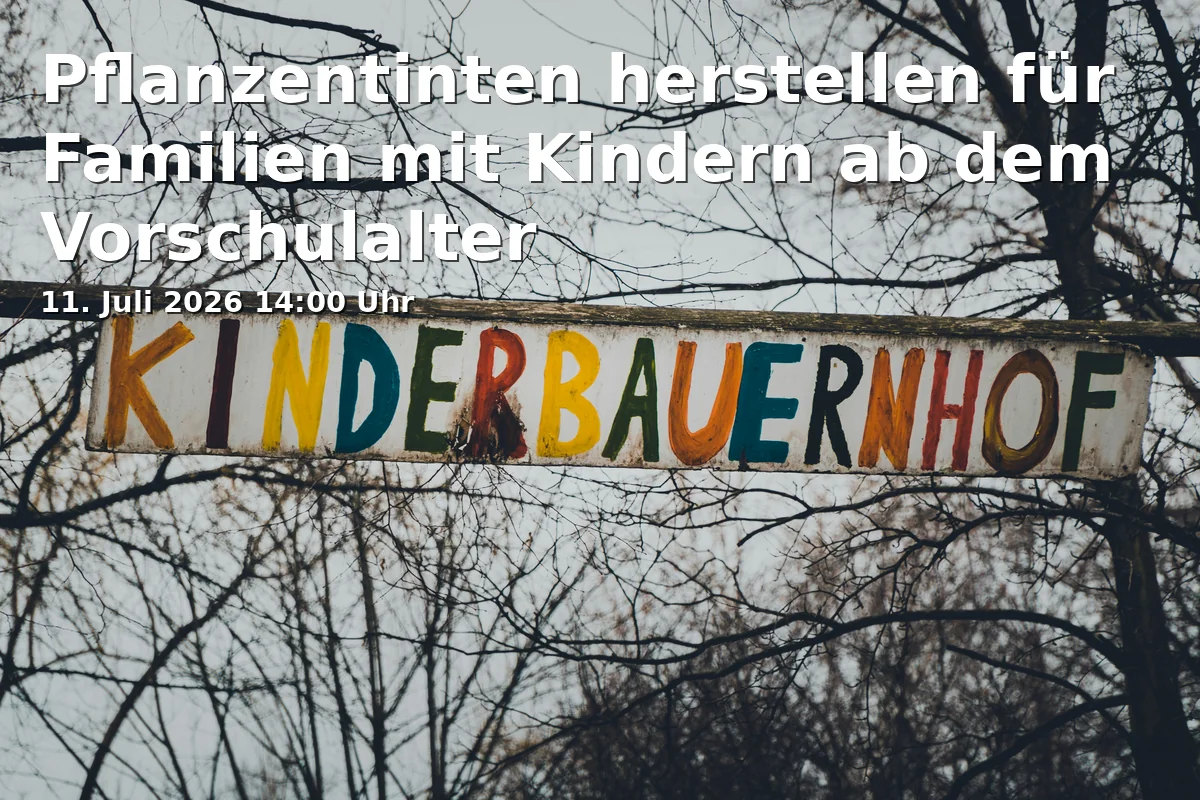
Making Plant Inks for Families with Children from Preschool Age
Experience, collect, and mix natural colors: In the family workshop in Bayreuth, children from preschool age discover creative plant inks. 11.07.2026, 40 euros. Join now! #FamilyExperience #Bayreuth

Painting and Printing with Plant Colors - for Families with Children
Discovering natural colors, creating fabrics, and marveling together: This family course in Bayreuth combines creativity and fun learning. 18.07.2026, 30 €. #FamilyTime
Frequently Asked Questions
Reviews
No reviews found