
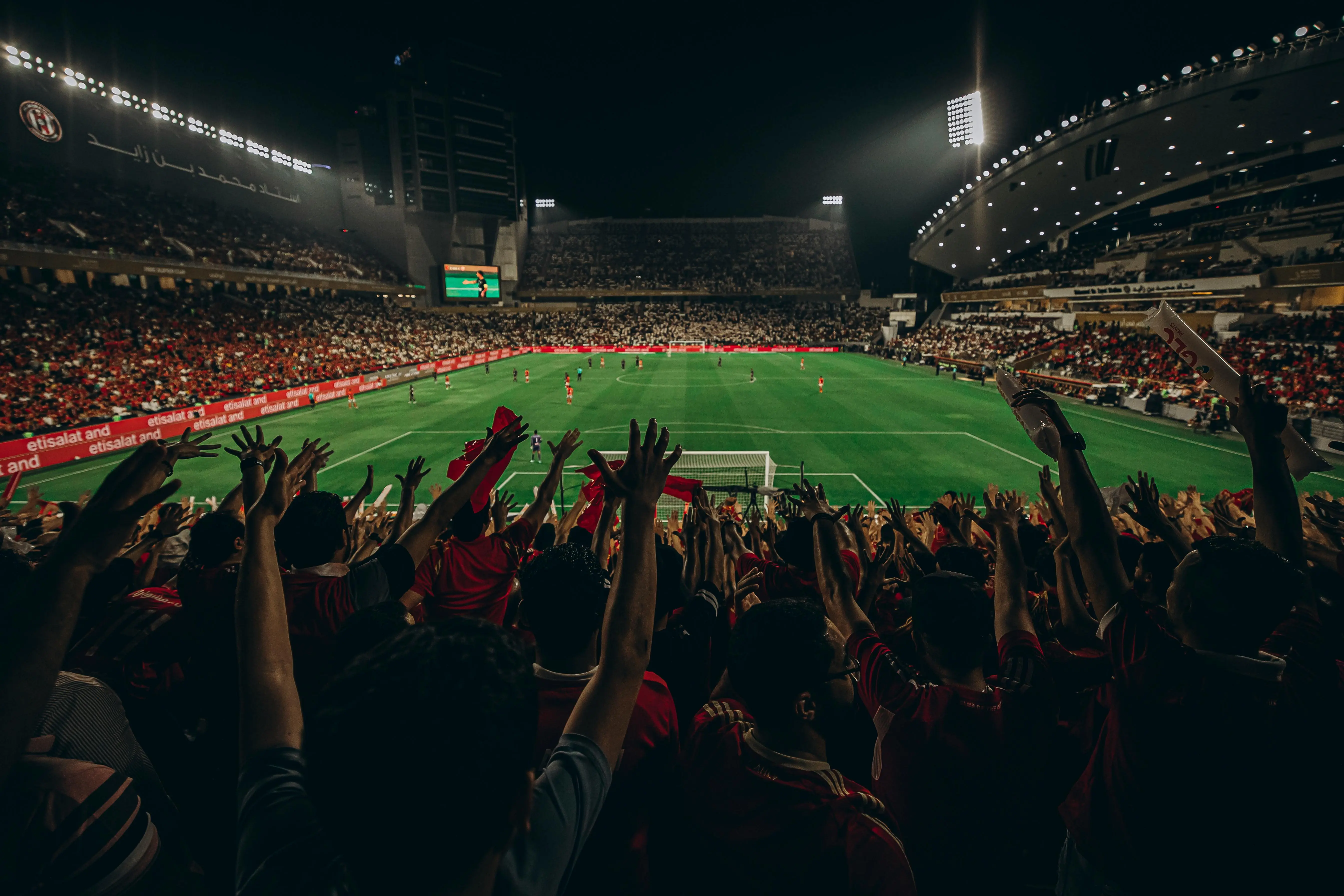
Regionalliga Debate with an Open Outcome
Regionalliga Reform: Why Bayreuth Relies on the Compass Model
SpVgg Bayreuth takes a clear stance in the reform debate about the Regionalliga: the club supports the Compass Model. From the perspective of Bayreuth's management, it is not just about a new division of groups, but above all about a fundamental question of sporting fairness – and about the economic framework conditions in the fourth-highest league.
For years, a contradiction has shaped the discussion: In Germany, there are currently five Regionalligas, which means five champions at the end of the season – but only four promotion spots to the 3rd league. This very design flaw keeps fueling the debate about a reorganization. A quick decision is still not in sight.
Why Bayreuth Supports the Compass Model
At the Hans-Walter-Wild-Stadion, the reform issue is seen as a topic that directly affects their own perspective: What is a championship title worth if it does not necessarily lead to promotion?
Managing Director Lorenz Röthlingshöfer openly formulates the central objection to the status quo: “Currently, it is possible that you cannot get promoted even though you are champions. That is of course a shame!” For Bayreuth, a reform is therefore primarily about strengthening the sporting principle: Whoever dominates a season should not fail at a subsequent hurdle that does not even exist elsewhere.
The Compass Model would reduce the number of Regionalligas from five to four. The clubs would not be permanently assigned according to association boundaries, but would be newly grouped each year based on the shortest travel distances – according to the concept, with the help of artificial intelligence. For Bayreuth, this is more than just an organizational idea: it would be an intervention in the competition conditions, directly influencing travel costs, opponent profiles, and thus revenues and sporting development.
Röthlingshöfer also sees economic potential in a different opponent structure. His expectation: Games against traditional clubs – he names Chemie Leipzig or Erzgebirge Aue – could bring more away fans to Bayreuth and thus enable additional ticket revenue.
In a league where budgets are often tight, such effects would not just be “nice to have,” but a factor that can create room for maneuver: for squad planning, infrastructure, and securing an entire season.
Team manager Sebastian Lattermann argues mainly from a sporting perspective. A higher, more consistent level already in the Regionalliga could make the transition to the 3rd league easier. His thought: “Maybe this jump will then be a little less difficult. Because if you compete with better teams for a whole season in the Regionalliga, the shock in the 3rd league after promotion might not be as big as if you compete with supposedly weaker teams,” says Lattermann.
Which Alternatives Are Still on the Table
Despite Bayreuth’s clear preference, the reform question remains open. As an alternative, the regional model is still being discussed. In this case, Bavaria, North, and Northeast would be merged into two new groups, while Southwest and West would remain.
The Bavarian Football Association (BFV) is, however, dampening expectations that the debate will soon focus on one of the known variants. President Christoph Kern said after a meeting of Bavarian clubs: “We agree that a broader view is needed.” The BFV wants to examine further possible solutions and not narrow the discussion to two proposals. At the same time, the association made it clear that it is not opposed to a solution with the goal “The champion must be promoted.”
From the Bavarian perspective, it also matters how reforms affect leagues beyond the Regionalliga. In the ongoing discussion, it was criticized that the ideas outlined so far in working groups have not sufficiently considered the third and fifth league levels. A reform that reorganizes promotion inevitably also affects relegation issues, scheduling logic, and the planning security of the clubs – and thus the entire pyramid.
In this context, Bavarian representatives introduced another model into the debate: After a preliminary round in all five leagues, a split could take place. The top clubs would play out their champions and promoted teams in four leagues; the teams from the lower half of the table would remain in regional structures and play relegation rounds there. This concept is now to be further discussed in a separate working group at the BFV.
All in all, much suggests that this is less about a short-term reorganization than about a longer negotiation process. Implementation would be possible at the earliest for the 2028/29 season.
Bayreuth Gains Breathing Room in Sporting Terms
While models, groups, and promotion paths are being debated at the association level, Bayreuth must above all stabilize the current season in day-to-day business. In the Regionalliga, SpVgg sent an important sporting signal: Bayreuth won 3:0 against DJK Vilzing.
The victory increased the gap to the relegation places and thus gave the team some breathing room in the fight for survival. This very parallel characterizes the situation in Bayreuth: The club is discussing structural fairness and long-term perspectives – and at the same time collecting the points that are decisive here and now.
Bayreuth has clearly stated its position on the Compass Model. Whether this will become a majority solution, however, remains open. For now, only one thing is certain: the reform debate will continue – and it will take time.
Frequently Asked Questions
Sources
- https://www.br.de/nachrichten/sport/leipzig-statt-vilzing-spvgg-bayreuth-befuerwortet-kompassmodell,VH7qtJq, Lasse Berger, Sat, 02 May 2026 09:18:35 GMT
- https://www.bayreuth-tourismus.de/hans-walter-wild-stadion/