
Pottenstein
Am Museum 5, 91278 Pottenstein, Deutschland
Franconian Switzerland Museum | Opening Hours & Admission Prices
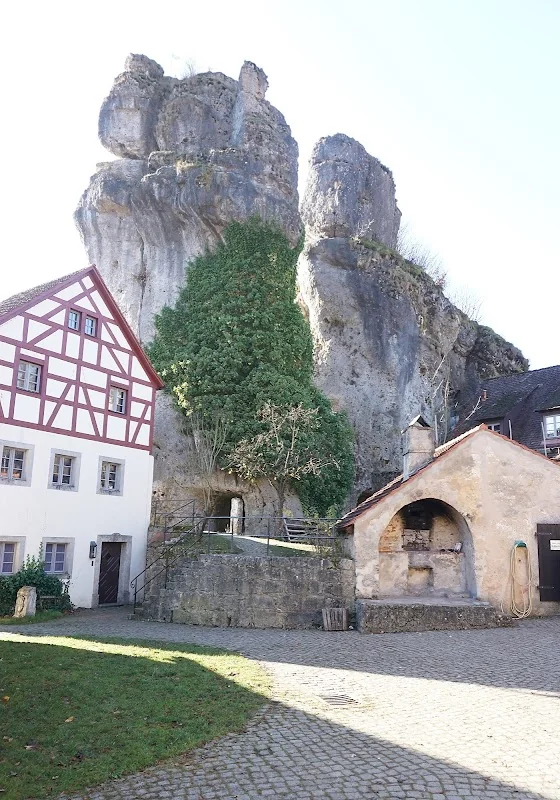
The Franconian Switzerland Museum in Tüchersfeld near Pottenstein is one of the most distinctive cultural sites in the region, as it brings together landscape, architecture, and collection in a rare density. The museum complex is located in the historic Jewish courtyard below the famous rock needles, precisely where the place unfolds its unmistakable effect: half-timbered houses from the 18th century, steeply rising rocks, and a house that does not tell the history of Franconian Switzerland abstractly but makes it spatially tangible. In 43 rooms, the museum provides a broad overview of the development of the region and connects earth history, archaeology, crafts, agriculture, traditional costumes, and Jewish history into a vivid overall picture. Thus, the Franconian Switzerland Museum is not only a destination for history enthusiasts but also for families, school classes, clubs, and anyone who truly wants to understand the region with its peculiarities. ([museen-in-bayern.de](https://museen-in-bayern.de/museen/detailseite-museum/fraenkische-schweiz-museum))
Opening Hours, Admission Prices, and Tickets
Anyone planning a visit should know the seasonal opening hours, as the museum operates clearly according to summer and winter rhythms. From April 1 to October 31, the house is open daily from 10:00 AM to 5:00 PM. From November 1 to March 31, winter opening hours apply on Sundays from 1:30 PM to 5:00 PM. Additionally, it is important that groups can come by arrangement even outside regular hours, which makes the museum particularly flexible for travel groups and organized visits. The official museum website also notes that it is closed on public holidays. For SEO-relevant planning, these details are crucial, as many visitors search for the terms Franconian Switzerland Museum opening hours or Franconian Switzerland Museum Tüchersfeld opening hours and primarily need reliable seasonal orientation. ([museen-in-bayern.de](https://museen-in-bayern.de/museen/detailseite-museum/fraenkische-schweiz-museum))
The admission prices are also interesting, as the museum is consciously calculated to be family- and group-friendly. The official museum website states a price of 3 euros for adults, children up to 16 years are free, groups of 15 or more pay 4 euros per person, and there are special conditions for school classes or youth. This pricing policy is a strong argument for anyone searching for Franconian Switzerland Museum admission prices or a rewarding destination for a day trip. Families traveling with children particularly benefit from the fact that admission for young visitors remains very low or free. Thus, the house fits well for spontaneous family outings, as well as for planned programs from schools, clubs, and travel groups. Nevertheless, a quick look at the current museum website before departure is important, as conditions can vary in detail, especially for special formats, group offers, or events. ([fsvf.de](https://www.fsvf.de/detail/id%3D5f57732c5f7f9b38066ef019))
Exhibition, Special Exhibition, and Thematic Focus
The permanent exhibition is structured in such a way that it not only shows individual epochs but also opens up the entire landscape of Franconian Switzerland in interconnected thematic fields. Earth history, archaeology, history, agriculture, traditional costumes, folk piety, and crafts are mentioned; the district page describes the range even more concretely, from the Stone Age through the Bronze Age and Iron Age to Celts, Germans, and Romans. This is particularly relevant for search queries like Franconian Switzerland Museum exhibition or Franconian Switzerland Museum Romans, as visitors can expect not only regional culture but also specific historical epochs. The collection is therefore not just any local museum but a carefully constructed regional museum that tells the history of Franconian Switzerland in a dense thematic framework. ([museen-in-bayern.de](https://museen-in-bayern.de/museen/detailseite-museum/fraenkische-schweiz-museum))
The museum is particularly strong where it connects concrete objects and living environments. Sources mention extraordinary fossils such as a rare, well-preserved marine crocodile, as well as evidence of human settlement since the Neanderthals, objects from the Middle Ages and the Thirty Years' War, workshops of old crafts, and regionally typical bridal crowns made of fine gold wire. This makes it clear why the museum performs so well with search terms like Franconian Switzerland Museum photos or Franconian Switzerland Museum exhibition: the rooms not only provide information but also very strong visual motifs and clear storytelling stations. Additionally, the original synagogue from the 18th century, which receives special weight within the tour, connects the Jewish history of the place with the entire museum visit. ([museen-in-bayern.de](https://museen-in-bayern.de/museen/detailseite-museum/fraenkische-schweiz-museum))
Special Exhibition 2026 and Annual Program at the Museum
An important search impulse today is almost always the special exhibition, and here the Franconian Switzerland Museum provides a strong argument. The official museum website currently lists the exhibition Ötzi – On the Hunt for Red Gold! for the period from May 22, 2026, to October 11, 2026. Additionally, an exhibition sheet describes that this show takes visitors back to the Copper Age around 3300 to 3000 BC, addressing a topic that fits excellently with the archaeological profile of the museum. Therefore, anyone searching for Franconian Switzerland Museum special exhibition will find here not a loose additional exhibition but a curated offering that expands the permanent exhibition with a very concrete European perspective. This combination of regional anchoring and supra-regional view is valuable for the SEO context. ([museen-in-bayern.de](https://museen-in-bayern.de/museen/detailseite-museum/fraenkische-schweiz-museum))
The museum also works with an annual program that goes beyond mere exhibitions and regularly revitalizes the place. The museum's website lists music events, Sunday tours, family days, crafts markets, restoration days, and evening stories by candlelight for 2026, among other things. This shows that the Franconian Switzerland Museum is not only a place for quiet contemplation but also an event venue with recurring formats for different target groups. For visitors, this means: those looking for a classic museum visit today can already return tomorrow and experience a different format. This is important for search intent because terms like program, events, or special exhibition in the context of regional museums usually indicate a dynamic calendar. The house meets this expectation with a mix of permanent offerings, special themes, and recurring experience days. ([museen-in-bayern.de](https://museen-in-bayern.de/museen/detailseite-museum/fraenkische-schweiz-museum))
Jewish Courtyard, Synagogue, and the History of the Place
The historical site itself is one of the strongest reasons for a visit. The Jewish courtyard of Tüchersfeld is a striking building complex from the 18th century, and the museum pages repeatedly emphasize that the Franconian Switzerland Museum is housed in a special monument ensemble. The buildings are located directly at the iconic rock needles, which have become a landmark for Tüchersfeld and the entire Franconian Switzerland. This creates an unusually strong impression for the visitor: the exhibition is not housed in a neutral museum building but in a grown place whose historical substance and natural location directly enhance the impact of the content. That is why the house is also so exciting from a cultural-historical perspective. Those interested in history, architectural culture, and landscape receive not only exhibits but also a very vivid environment. ([museen-in-bayern.de](https://museen-in-bayern.de/museen/detailseite-museum/fraenkische-schweiz-museum))
A special role is played by the synagogue from the 18th century. The museum's website describes it as an original synagogue that conveys information about the Jewish calendar and the life of a Jewish rural community. The image description mentions the year 1763, while other sources refer to the 18th century or the context of 1764; all sources agree that it is an extraordinarily important testimony to Jewish regional history. Thus, the Franconian Switzerland Museum is also a place where Jewish life in Franconian Switzerland remains visible and comprehensible. The exhibition therefore connects national historical, religious, and social perspectives and makes a visit more than just a mere collection visit. Especially for visitors searching for history, Jewish history, or the term Romans, the museum provides a broad historical depth that goes far beyond classic local history. ([museen-in-bayern.de](https://museen-in-bayern.de/museen/detailseite-museum/fraenkische-schweiz-museum))
Directions, Shuttle, and Parking at the Franconian Switzerland Museum
The journey is a central topic for many visitors because Tüchersfeld is idyllically located but still easily accessible. A tourist overview page mentions the route from the east via the A9 and from the west via the A73, further via the B470 to Tüchersfeld. The museum's page in the nature park adds that the house is well connected via public transport and the Franconian Switzerland region. For visitors without their own car, the cultural bus is particularly interesting: it runs from Behringersmühle station directly to the museum and back, taking about 5 minutes or around 6 kilometers. This shuttle is available on Sundays and public holidays between May 1 and October 31, whenever the Franconian Switzerland steam train is in operation. This makes the museum attractive for users of rail and leisure transport and fits well with search queries related to museum train, directions, or public transport. ([bamberg.info](https://www.bamberg.info/poi/fraenkische_schweiz-museum_tue-6267/))
Parking information is very clear: at the town exit towards Rackersberg, there is a public parking lot and a public bus parking lot; both are free according to the museum's website. This is an important advantage for families, tour buses, and groups, as the museum visit can begin without complicated parking searches. The region also describes additional parking spaces and bus parking options for excursion destinations in Pottenstein, but for the Franconian Switzerland Museum itself, the direct, free solution at the town exit is particularly relevant. Those who want to combine the day with several stops in the region can also combine the museum visit with other destinations in Pottenstein. This is important in the SEO context because many users searching for Franconian Switzerland Museum parking or Franconian Switzerland Museum directions expect not only an address but also uncomplicated day planning. This combination of clear road connections, free parking options, and shuttle services makes the house very comfortable for excursions. ([fsvf.de](https://www.fsvf.de/detail/id%3D5f57732c5f7f9b38066ef019))
Franconian Switzerland Museum with Children, School Classes, and Groups
The museum is explicitly family-friendly and suitable for groups. The official entries mention families, school classes, clubs, groups, hikers, and also individual visitors as particularly suitable target groups. For children, it is especially important that not only display boards are offered but also interactive stations and expedition sheets. In the museum documents, the house is described as a place where young visitors can discover playfully, and a group brochure also mentions age-appropriate expedition sheets and interactive stations for adults. These formats ensure that a visit does not feel dry but invites active exploration. Those searching for Franconian Switzerland Museum children or a family-friendly day destination will find here a very good mix of learning, movement, and discovery. The fact that children and teenagers are free depending on the tariff significantly lowers the entry barrier for families. ([fsvf.de](https://www.fsvf.de/detail/id%3D5f57732c5f7f9b38066ef019))
The house is also interesting for school classes and organized groups because the content is clearly structured and the visit formats are flexible. The museum's website states its own prices for groups and school classes, and it also offers visits for groups of 15 or more by arrangement outside regular opening hours. This is particularly practical for travel companies, teachers, and club chairpersons, as it makes it easier to integrate the journey and the museum tour into a daily plan. Additionally, there is a museum shop with regional products that rounds off the visit and fulfills the desire for a small memento of Franconian Switzerland. For visitors who want to take something home, this is a charming detail. Thus, the topic Franconian Switzerland Museum reviews or visitor experience quickly becomes a comprehensible added value: the house is not only informative but also logistically well-planned for groups and pedagogically sensibly structured for families. ([fsvf.de](https://www.fsvf.de/detail/id%3D5f57732c5f7f9b38066ef019))
Photos, View, and Why the Visit is Worthwhile
A significant reason why the Franconian Switzerland Museum is so often photographed and searched online is its location. The buildings are located directly at the striking rock needles of Tüchersfeld, and even the museum courtyard creates an image that is immediately associated with Franconian Switzerland. The nature park describes the museum as one of the most popular excursion destinations in the region and points out the special effect of the place. For search queries like Franconian Switzerland Museum photos, this is a strong signal, as hardly any other museum location combines half-timbering, rocks, and historical atmosphere so directly. Those who arrive here receive not only exhibition rooms but also motifs in the outdoor space: the courtyard, the half-timbered facades, the synagogue, the rock backdrop, and the view of an ensemble that goes far beyond the ordinary. This visual power makes the place interesting for social media and travel blogs. ([fsvf.de](https://www.fsvf.de/detail/id%3D5f57732c5f7f9b38066ef019))
Additionally, the museum is very broadly positioned in content and therefore appeals to various target groups simultaneously. Those interested in earth history will find fossils and geological references; those searching for Romans, the Middle Ages, or Jewish history will find their own points of connection; those who find crafts, traditional costumes, or folk piety exciting will encounter lovingly staged everyday culture. This mix is valuable for SEO and for real visitors alike, as the search intent is not reduced to a single thematic block. The Franconian Switzerland Museum functions as a cultural entry point into the entire region: it explains the landscape, shows its historical depth, and at the same time creates a desire for further excursion destinations around Pottenstein. Those looking for a place that bundles history, nature, and regional identity in one visit make a very good choice here. Ultimately, this is the core of what makes the museum so attractive: it is a visually strong, factually sound, and family-friendly regional museum in one of the most impressive settings in Franconia. ([museen-in-bayern.de](https://museen-in-bayern.de/museen/detailseite-museum/fraenkische-schweiz-museum))
Sources:
- Franconian Switzerland Museum - Expedition Sheet 13 Years
- Franconian Switzerland Museum - Collection Guidelines
- Franconian Switzerland Museum - Press Release Summer Opening Hours 2025
- City of Pottenstein - Information for Travel Groups 2026
- Museums in Bavaria - Franconian Switzerland Museum
- Museums in Bavaria - Ötzi, Special Exhibition 2026
- Bamberg Tourism - Franconian Switzerland Museum Tüchersfeld
Show moreShow less
Franconian Switzerland Museum | Opening Hours & Admission Prices
The Franconian Switzerland Museum in Tüchersfeld near Pottenstein is one of the most distinctive cultural sites in the region, as it brings together landscape, architecture, and collection in a rare density. The museum complex is located in the historic Jewish courtyard below the famous rock needles, precisely where the place unfolds its unmistakable effect: half-timbered houses from the 18th century, steeply rising rocks, and a house that does not tell the history of Franconian Switzerland abstractly but makes it spatially tangible. In 43 rooms, the museum provides a broad overview of the development of the region and connects earth history, archaeology, crafts, agriculture, traditional costumes, and Jewish history into a vivid overall picture. Thus, the Franconian Switzerland Museum is not only a destination for history enthusiasts but also for families, school classes, clubs, and anyone who truly wants to understand the region with its peculiarities. ([museen-in-bayern.de](https://museen-in-bayern.de/museen/detailseite-museum/fraenkische-schweiz-museum))
Opening Hours, Admission Prices, and Tickets
Anyone planning a visit should know the seasonal opening hours, as the museum operates clearly according to summer and winter rhythms. From April 1 to October 31, the house is open daily from 10:00 AM to 5:00 PM. From November 1 to March 31, winter opening hours apply on Sundays from 1:30 PM to 5:00 PM. Additionally, it is important that groups can come by arrangement even outside regular hours, which makes the museum particularly flexible for travel groups and organized visits. The official museum website also notes that it is closed on public holidays. For SEO-relevant planning, these details are crucial, as many visitors search for the terms Franconian Switzerland Museum opening hours or Franconian Switzerland Museum Tüchersfeld opening hours and primarily need reliable seasonal orientation. ([museen-in-bayern.de](https://museen-in-bayern.de/museen/detailseite-museum/fraenkische-schweiz-museum))
The admission prices are also interesting, as the museum is consciously calculated to be family- and group-friendly. The official museum website states a price of 3 euros for adults, children up to 16 years are free, groups of 15 or more pay 4 euros per person, and there are special conditions for school classes or youth. This pricing policy is a strong argument for anyone searching for Franconian Switzerland Museum admission prices or a rewarding destination for a day trip. Families traveling with children particularly benefit from the fact that admission for young visitors remains very low or free. Thus, the house fits well for spontaneous family outings, as well as for planned programs from schools, clubs, and travel groups. Nevertheless, a quick look at the current museum website before departure is important, as conditions can vary in detail, especially for special formats, group offers, or events. ([fsvf.de](https://www.fsvf.de/detail/id%3D5f57732c5f7f9b38066ef019))
Exhibition, Special Exhibition, and Thematic Focus
The permanent exhibition is structured in such a way that it not only shows individual epochs but also opens up the entire landscape of Franconian Switzerland in interconnected thematic fields. Earth history, archaeology, history, agriculture, traditional costumes, folk piety, and crafts are mentioned; the district page describes the range even more concretely, from the Stone Age through the Bronze Age and Iron Age to Celts, Germans, and Romans. This is particularly relevant for search queries like Franconian Switzerland Museum exhibition or Franconian Switzerland Museum Romans, as visitors can expect not only regional culture but also specific historical epochs. The collection is therefore not just any local museum but a carefully constructed regional museum that tells the history of Franconian Switzerland in a dense thematic framework. ([museen-in-bayern.de](https://museen-in-bayern.de/museen/detailseite-museum/fraenkische-schweiz-museum))
The museum is particularly strong where it connects concrete objects and living environments. Sources mention extraordinary fossils such as a rare, well-preserved marine crocodile, as well as evidence of human settlement since the Neanderthals, objects from the Middle Ages and the Thirty Years' War, workshops of old crafts, and regionally typical bridal crowns made of fine gold wire. This makes it clear why the museum performs so well with search terms like Franconian Switzerland Museum photos or Franconian Switzerland Museum exhibition: the rooms not only provide information but also very strong visual motifs and clear storytelling stations. Additionally, the original synagogue from the 18th century, which receives special weight within the tour, connects the Jewish history of the place with the entire museum visit. ([museen-in-bayern.de](https://museen-in-bayern.de/museen/detailseite-museum/fraenkische-schweiz-museum))
Special Exhibition 2026 and Annual Program at the Museum
An important search impulse today is almost always the special exhibition, and here the Franconian Switzerland Museum provides a strong argument. The official museum website currently lists the exhibition Ötzi – On the Hunt for Red Gold! for the period from May 22, 2026, to October 11, 2026. Additionally, an exhibition sheet describes that this show takes visitors back to the Copper Age around 3300 to 3000 BC, addressing a topic that fits excellently with the archaeological profile of the museum. Therefore, anyone searching for Franconian Switzerland Museum special exhibition will find here not a loose additional exhibition but a curated offering that expands the permanent exhibition with a very concrete European perspective. This combination of regional anchoring and supra-regional view is valuable for the SEO context. ([museen-in-bayern.de](https://museen-in-bayern.de/museen/detailseite-museum/fraenkische-schweiz-museum))
The museum also works with an annual program that goes beyond mere exhibitions and regularly revitalizes the place. The museum's website lists music events, Sunday tours, family days, crafts markets, restoration days, and evening stories by candlelight for 2026, among other things. This shows that the Franconian Switzerland Museum is not only a place for quiet contemplation but also an event venue with recurring formats for different target groups. For visitors, this means: those looking for a classic museum visit today can already return tomorrow and experience a different format. This is important for search intent because terms like program, events, or special exhibition in the context of regional museums usually indicate a dynamic calendar. The house meets this expectation with a mix of permanent offerings, special themes, and recurring experience days. ([museen-in-bayern.de](https://museen-in-bayern.de/museen/detailseite-museum/fraenkische-schweiz-museum))
Jewish Courtyard, Synagogue, and the History of the Place
The historical site itself is one of the strongest reasons for a visit. The Jewish courtyard of Tüchersfeld is a striking building complex from the 18th century, and the museum pages repeatedly emphasize that the Franconian Switzerland Museum is housed in a special monument ensemble. The buildings are located directly at the iconic rock needles, which have become a landmark for Tüchersfeld and the entire Franconian Switzerland. This creates an unusually strong impression for the visitor: the exhibition is not housed in a neutral museum building but in a grown place whose historical substance and natural location directly enhance the impact of the content. That is why the house is also so exciting from a cultural-historical perspective. Those interested in history, architectural culture, and landscape receive not only exhibits but also a very vivid environment. ([museen-in-bayern.de](https://museen-in-bayern.de/museen/detailseite-museum/fraenkische-schweiz-museum))
A special role is played by the synagogue from the 18th century. The museum's website describes it as an original synagogue that conveys information about the Jewish calendar and the life of a Jewish rural community. The image description mentions the year 1763, while other sources refer to the 18th century or the context of 1764; all sources agree that it is an extraordinarily important testimony to Jewish regional history. Thus, the Franconian Switzerland Museum is also a place where Jewish life in Franconian Switzerland remains visible and comprehensible. The exhibition therefore connects national historical, religious, and social perspectives and makes a visit more than just a mere collection visit. Especially for visitors searching for history, Jewish history, or the term Romans, the museum provides a broad historical depth that goes far beyond classic local history. ([museen-in-bayern.de](https://museen-in-bayern.de/museen/detailseite-museum/fraenkische-schweiz-museum))
Directions, Shuttle, and Parking at the Franconian Switzerland Museum
The journey is a central topic for many visitors because Tüchersfeld is idyllically located but still easily accessible. A tourist overview page mentions the route from the east via the A9 and from the west via the A73, further via the B470 to Tüchersfeld. The museum's page in the nature park adds that the house is well connected via public transport and the Franconian Switzerland region. For visitors without their own car, the cultural bus is particularly interesting: it runs from Behringersmühle station directly to the museum and back, taking about 5 minutes or around 6 kilometers. This shuttle is available on Sundays and public holidays between May 1 and October 31, whenever the Franconian Switzerland steam train is in operation. This makes the museum attractive for users of rail and leisure transport and fits well with search queries related to museum train, directions, or public transport. ([bamberg.info](https://www.bamberg.info/poi/fraenkische_schweiz-museum_tue-6267/))
Parking information is very clear: at the town exit towards Rackersberg, there is a public parking lot and a public bus parking lot; both are free according to the museum's website. This is an important advantage for families, tour buses, and groups, as the museum visit can begin without complicated parking searches. The region also describes additional parking spaces and bus parking options for excursion destinations in Pottenstein, but for the Franconian Switzerland Museum itself, the direct, free solution at the town exit is particularly relevant. Those who want to combine the day with several stops in the region can also combine the museum visit with other destinations in Pottenstein. This is important in the SEO context because many users searching for Franconian Switzerland Museum parking or Franconian Switzerland Museum directions expect not only an address but also uncomplicated day planning. This combination of clear road connections, free parking options, and shuttle services makes the house very comfortable for excursions. ([fsvf.de](https://www.fsvf.de/detail/id%3D5f57732c5f7f9b38066ef019))
Franconian Switzerland Museum with Children, School Classes, and Groups
The museum is explicitly family-friendly and suitable for groups. The official entries mention families, school classes, clubs, groups, hikers, and also individual visitors as particularly suitable target groups. For children, it is especially important that not only display boards are offered but also interactive stations and expedition sheets. In the museum documents, the house is described as a place where young visitors can discover playfully, and a group brochure also mentions age-appropriate expedition sheets and interactive stations for adults. These formats ensure that a visit does not feel dry but invites active exploration. Those searching for Franconian Switzerland Museum children or a family-friendly day destination will find here a very good mix of learning, movement, and discovery. The fact that children and teenagers are free depending on the tariff significantly lowers the entry barrier for families. ([fsvf.de](https://www.fsvf.de/detail/id%3D5f57732c5f7f9b38066ef019))
The house is also interesting for school classes and organized groups because the content is clearly structured and the visit formats are flexible. The museum's website states its own prices for groups and school classes, and it also offers visits for groups of 15 or more by arrangement outside regular opening hours. This is particularly practical for travel companies, teachers, and club chairpersons, as it makes it easier to integrate the journey and the museum tour into a daily plan. Additionally, there is a museum shop with regional products that rounds off the visit and fulfills the desire for a small memento of Franconian Switzerland. For visitors who want to take something home, this is a charming detail. Thus, the topic Franconian Switzerland Museum reviews or visitor experience quickly becomes a comprehensible added value: the house is not only informative but also logistically well-planned for groups and pedagogically sensibly structured for families. ([fsvf.de](https://www.fsvf.de/detail/id%3D5f57732c5f7f9b38066ef019))
Photos, View, and Why the Visit is Worthwhile
A significant reason why the Franconian Switzerland Museum is so often photographed and searched online is its location. The buildings are located directly at the striking rock needles of Tüchersfeld, and even the museum courtyard creates an image that is immediately associated with Franconian Switzerland. The nature park describes the museum as one of the most popular excursion destinations in the region and points out the special effect of the place. For search queries like Franconian Switzerland Museum photos, this is a strong signal, as hardly any other museum location combines half-timbering, rocks, and historical atmosphere so directly. Those who arrive here receive not only exhibition rooms but also motifs in the outdoor space: the courtyard, the half-timbered facades, the synagogue, the rock backdrop, and the view of an ensemble that goes far beyond the ordinary. This visual power makes the place interesting for social media and travel blogs. ([fsvf.de](https://www.fsvf.de/detail/id%3D5f57732c5f7f9b38066ef019))
Additionally, the museum is very broadly positioned in content and therefore appeals to various target groups simultaneously. Those interested in earth history will find fossils and geological references; those searching for Romans, the Middle Ages, or Jewish history will find their own points of connection; those who find crafts, traditional costumes, or folk piety exciting will encounter lovingly staged everyday culture. This mix is valuable for SEO and for real visitors alike, as the search intent is not reduced to a single thematic block. The Franconian Switzerland Museum functions as a cultural entry point into the entire region: it explains the landscape, shows its historical depth, and at the same time creates a desire for further excursion destinations around Pottenstein. Those looking for a place that bundles history, nature, and regional identity in one visit make a very good choice here. Ultimately, this is the core of what makes the museum so attractive: it is a visually strong, factually sound, and family-friendly regional museum in one of the most impressive settings in Franconia. ([museen-in-bayern.de](https://museen-in-bayern.de/museen/detailseite-museum/fraenkische-schweiz-museum))
Sources:
- Franconian Switzerland Museum - Expedition Sheet 13 Years
- Franconian Switzerland Museum - Collection Guidelines
- Franconian Switzerland Museum - Press Release Summer Opening Hours 2025
- City of Pottenstein - Information for Travel Groups 2026
- Museums in Bavaria - Franconian Switzerland Museum
- Museums in Bavaria - Ötzi, Special Exhibition 2026
- Bamberg Tourism - Franconian Switzerland Museum Tüchersfeld
Franconian Switzerland Museum | Opening Hours & Admission Prices
The Franconian Switzerland Museum in Tüchersfeld near Pottenstein is one of the most distinctive cultural sites in the region, as it brings together landscape, architecture, and collection in a rare density. The museum complex is located in the historic Jewish courtyard below the famous rock needles, precisely where the place unfolds its unmistakable effect: half-timbered houses from the 18th century, steeply rising rocks, and a house that does not tell the history of Franconian Switzerland abstractly but makes it spatially tangible. In 43 rooms, the museum provides a broad overview of the development of the region and connects earth history, archaeology, crafts, agriculture, traditional costumes, and Jewish history into a vivid overall picture. Thus, the Franconian Switzerland Museum is not only a destination for history enthusiasts but also for families, school classes, clubs, and anyone who truly wants to understand the region with its peculiarities. ([museen-in-bayern.de](https://museen-in-bayern.de/museen/detailseite-museum/fraenkische-schweiz-museum))
Opening Hours, Admission Prices, and Tickets
Anyone planning a visit should know the seasonal opening hours, as the museum operates clearly according to summer and winter rhythms. From April 1 to October 31, the house is open daily from 10:00 AM to 5:00 PM. From November 1 to March 31, winter opening hours apply on Sundays from 1:30 PM to 5:00 PM. Additionally, it is important that groups can come by arrangement even outside regular hours, which makes the museum particularly flexible for travel groups and organized visits. The official museum website also notes that it is closed on public holidays. For SEO-relevant planning, these details are crucial, as many visitors search for the terms Franconian Switzerland Museum opening hours or Franconian Switzerland Museum Tüchersfeld opening hours and primarily need reliable seasonal orientation. ([museen-in-bayern.de](https://museen-in-bayern.de/museen/detailseite-museum/fraenkische-schweiz-museum))
The admission prices are also interesting, as the museum is consciously calculated to be family- and group-friendly. The official museum website states a price of 3 euros for adults, children up to 16 years are free, groups of 15 or more pay 4 euros per person, and there are special conditions for school classes or youth. This pricing policy is a strong argument for anyone searching for Franconian Switzerland Museum admission prices or a rewarding destination for a day trip. Families traveling with children particularly benefit from the fact that admission for young visitors remains very low or free. Thus, the house fits well for spontaneous family outings, as well as for planned programs from schools, clubs, and travel groups. Nevertheless, a quick look at the current museum website before departure is important, as conditions can vary in detail, especially for special formats, group offers, or events. ([fsvf.de](https://www.fsvf.de/detail/id%3D5f57732c5f7f9b38066ef019))
Exhibition, Special Exhibition, and Thematic Focus
The permanent exhibition is structured in such a way that it not only shows individual epochs but also opens up the entire landscape of Franconian Switzerland in interconnected thematic fields. Earth history, archaeology, history, agriculture, traditional costumes, folk piety, and crafts are mentioned; the district page describes the range even more concretely, from the Stone Age through the Bronze Age and Iron Age to Celts, Germans, and Romans. This is particularly relevant for search queries like Franconian Switzerland Museum exhibition or Franconian Switzerland Museum Romans, as visitors can expect not only regional culture but also specific historical epochs. The collection is therefore not just any local museum but a carefully constructed regional museum that tells the history of Franconian Switzerland in a dense thematic framework. ([museen-in-bayern.de](https://museen-in-bayern.de/museen/detailseite-museum/fraenkische-schweiz-museum))
The museum is particularly strong where it connects concrete objects and living environments. Sources mention extraordinary fossils such as a rare, well-preserved marine crocodile, as well as evidence of human settlement since the Neanderthals, objects from the Middle Ages and the Thirty Years' War, workshops of old crafts, and regionally typical bridal crowns made of fine gold wire. This makes it clear why the museum performs so well with search terms like Franconian Switzerland Museum photos or Franconian Switzerland Museum exhibition: the rooms not only provide information but also very strong visual motifs and clear storytelling stations. Additionally, the original synagogue from the 18th century, which receives special weight within the tour, connects the Jewish history of the place with the entire museum visit. ([museen-in-bayern.de](https://museen-in-bayern.de/museen/detailseite-museum/fraenkische-schweiz-museum))
Special Exhibition 2026 and Annual Program at the Museum
An important search impulse today is almost always the special exhibition, and here the Franconian Switzerland Museum provides a strong argument. The official museum website currently lists the exhibition Ötzi – On the Hunt for Red Gold! for the period from May 22, 2026, to October 11, 2026. Additionally, an exhibition sheet describes that this show takes visitors back to the Copper Age around 3300 to 3000 BC, addressing a topic that fits excellently with the archaeological profile of the museum. Therefore, anyone searching for Franconian Switzerland Museum special exhibition will find here not a loose additional exhibition but a curated offering that expands the permanent exhibition with a very concrete European perspective. This combination of regional anchoring and supra-regional view is valuable for the SEO context. ([museen-in-bayern.de](https://museen-in-bayern.de/museen/detailseite-museum/fraenkische-schweiz-museum))
The museum also works with an annual program that goes beyond mere exhibitions and regularly revitalizes the place. The museum's website lists music events, Sunday tours, family days, crafts markets, restoration days, and evening stories by candlelight for 2026, among other things. This shows that the Franconian Switzerland Museum is not only a place for quiet contemplation but also an event venue with recurring formats for different target groups. For visitors, this means: those looking for a classic museum visit today can already return tomorrow and experience a different format. This is important for search intent because terms like program, events, or special exhibition in the context of regional museums usually indicate a dynamic calendar. The house meets this expectation with a mix of permanent offerings, special themes, and recurring experience days. ([museen-in-bayern.de](https://museen-in-bayern.de/museen/detailseite-museum/fraenkische-schweiz-museum))
Jewish Courtyard, Synagogue, and the History of the Place
The historical site itself is one of the strongest reasons for a visit. The Jewish courtyard of Tüchersfeld is a striking building complex from the 18th century, and the museum pages repeatedly emphasize that the Franconian Switzerland Museum is housed in a special monument ensemble. The buildings are located directly at the iconic rock needles, which have become a landmark for Tüchersfeld and the entire Franconian Switzerland. This creates an unusually strong impression for the visitor: the exhibition is not housed in a neutral museum building but in a grown place whose historical substance and natural location directly enhance the impact of the content. That is why the house is also so exciting from a cultural-historical perspective. Those interested in history, architectural culture, and landscape receive not only exhibits but also a very vivid environment. ([museen-in-bayern.de](https://museen-in-bayern.de/museen/detailseite-museum/fraenkische-schweiz-museum))
A special role is played by the synagogue from the 18th century. The museum's website describes it as an original synagogue that conveys information about the Jewish calendar and the life of a Jewish rural community. The image description mentions the year 1763, while other sources refer to the 18th century or the context of 1764; all sources agree that it is an extraordinarily important testimony to Jewish regional history. Thus, the Franconian Switzerland Museum is also a place where Jewish life in Franconian Switzerland remains visible and comprehensible. The exhibition therefore connects national historical, religious, and social perspectives and makes a visit more than just a mere collection visit. Especially for visitors searching for history, Jewish history, or the term Romans, the museum provides a broad historical depth that goes far beyond classic local history. ([museen-in-bayern.de](https://museen-in-bayern.de/museen/detailseite-museum/fraenkische-schweiz-museum))
Directions, Shuttle, and Parking at the Franconian Switzerland Museum
The journey is a central topic for many visitors because Tüchersfeld is idyllically located but still easily accessible. A tourist overview page mentions the route from the east via the A9 and from the west via the A73, further via the B470 to Tüchersfeld. The museum's page in the nature park adds that the house is well connected via public transport and the Franconian Switzerland region. For visitors without their own car, the cultural bus is particularly interesting: it runs from Behringersmühle station directly to the museum and back, taking about 5 minutes or around 6 kilometers. This shuttle is available on Sundays and public holidays between May 1 and October 31, whenever the Franconian Switzerland steam train is in operation. This makes the museum attractive for users of rail and leisure transport and fits well with search queries related to museum train, directions, or public transport. ([bamberg.info](https://www.bamberg.info/poi/fraenkische_schweiz-museum_tue-6267/))
Parking information is very clear: at the town exit towards Rackersberg, there is a public parking lot and a public bus parking lot; both are free according to the museum's website. This is an important advantage for families, tour buses, and groups, as the museum visit can begin without complicated parking searches. The region also describes additional parking spaces and bus parking options for excursion destinations in Pottenstein, but for the Franconian Switzerland Museum itself, the direct, free solution at the town exit is particularly relevant. Those who want to combine the day with several stops in the region can also combine the museum visit with other destinations in Pottenstein. This is important in the SEO context because many users searching for Franconian Switzerland Museum parking or Franconian Switzerland Museum directions expect not only an address but also uncomplicated day planning. This combination of clear road connections, free parking options, and shuttle services makes the house very comfortable for excursions. ([fsvf.de](https://www.fsvf.de/detail/id%3D5f57732c5f7f9b38066ef019))
Franconian Switzerland Museum with Children, School Classes, and Groups
The museum is explicitly family-friendly and suitable for groups. The official entries mention families, school classes, clubs, groups, hikers, and also individual visitors as particularly suitable target groups. For children, it is especially important that not only display boards are offered but also interactive stations and expedition sheets. In the museum documents, the house is described as a place where young visitors can discover playfully, and a group brochure also mentions age-appropriate expedition sheets and interactive stations for adults. These formats ensure that a visit does not feel dry but invites active exploration. Those searching for Franconian Switzerland Museum children or a family-friendly day destination will find here a very good mix of learning, movement, and discovery. The fact that children and teenagers are free depending on the tariff significantly lowers the entry barrier for families. ([fsvf.de](https://www.fsvf.de/detail/id%3D5f57732c5f7f9b38066ef019))
The house is also interesting for school classes and organized groups because the content is clearly structured and the visit formats are flexible. The museum's website states its own prices for groups and school classes, and it also offers visits for groups of 15 or more by arrangement outside regular opening hours. This is particularly practical for travel companies, teachers, and club chairpersons, as it makes it easier to integrate the journey and the museum tour into a daily plan. Additionally, there is a museum shop with regional products that rounds off the visit and fulfills the desire for a small memento of Franconian Switzerland. For visitors who want to take something home, this is a charming detail. Thus, the topic Franconian Switzerland Museum reviews or visitor experience quickly becomes a comprehensible added value: the house is not only informative but also logistically well-planned for groups and pedagogically sensibly structured for families. ([fsvf.de](https://www.fsvf.de/detail/id%3D5f57732c5f7f9b38066ef019))
Photos, View, and Why the Visit is Worthwhile
A significant reason why the Franconian Switzerland Museum is so often photographed and searched online is its location. The buildings are located directly at the striking rock needles of Tüchersfeld, and even the museum courtyard creates an image that is immediately associated with Franconian Switzerland. The nature park describes the museum as one of the most popular excursion destinations in the region and points out the special effect of the place. For search queries like Franconian Switzerland Museum photos, this is a strong signal, as hardly any other museum location combines half-timbering, rocks, and historical atmosphere so directly. Those who arrive here receive not only exhibition rooms but also motifs in the outdoor space: the courtyard, the half-timbered facades, the synagogue, the rock backdrop, and the view of an ensemble that goes far beyond the ordinary. This visual power makes the place interesting for social media and travel blogs. ([fsvf.de](https://www.fsvf.de/detail/id%3D5f57732c5f7f9b38066ef019))
Additionally, the museum is very broadly positioned in content and therefore appeals to various target groups simultaneously. Those interested in earth history will find fossils and geological references; those searching for Romans, the Middle Ages, or Jewish history will find their own points of connection; those who find crafts, traditional costumes, or folk piety exciting will encounter lovingly staged everyday culture. This mix is valuable for SEO and for real visitors alike, as the search intent is not reduced to a single thematic block. The Franconian Switzerland Museum functions as a cultural entry point into the entire region: it explains the landscape, shows its historical depth, and at the same time creates a desire for further excursion destinations around Pottenstein. Those looking for a place that bundles history, nature, and regional identity in one visit make a very good choice here. Ultimately, this is the core of what makes the museum so attractive: it is a visually strong, factually sound, and family-friendly regional museum in one of the most impressive settings in Franconia. ([museen-in-bayern.de](https://museen-in-bayern.de/museen/detailseite-museum/fraenkische-schweiz-museum))
Sources:
- Franconian Switzerland Museum - Expedition Sheet 13 Years
- Franconian Switzerland Museum - Collection Guidelines
- Franconian Switzerland Museum - Press Release Summer Opening Hours 2025
- City of Pottenstein - Information for Travel Groups 2026
- Museums in Bavaria - Franconian Switzerland Museum
- Museums in Bavaria - Ötzi, Special Exhibition 2026
- Bamberg Tourism - Franconian Switzerland Museum Tüchersfeld
Upcoming Events
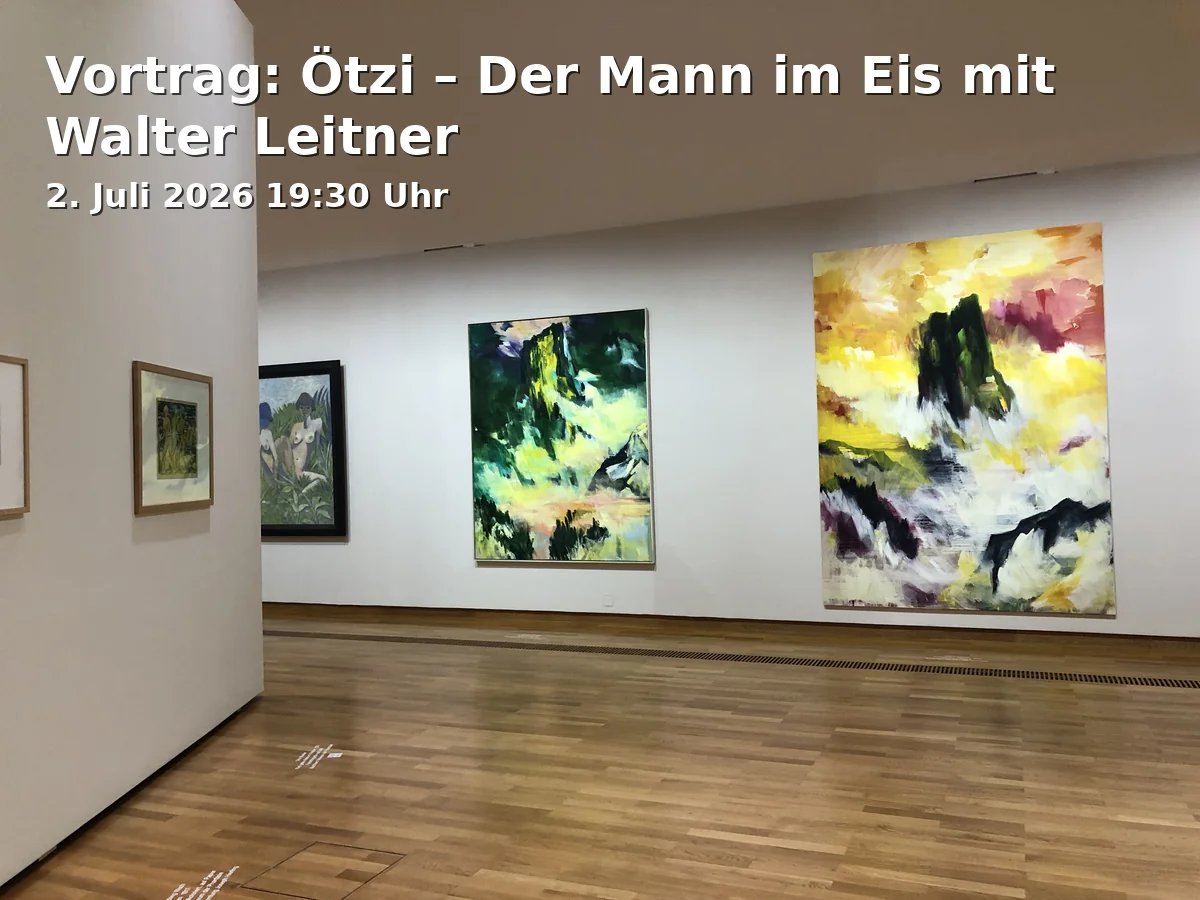
Lecture: Ötzi – The Man in Ice with Walter Leitner
An exciting evening at the Franconian Switzerland Museum Tüchersfeld: Walter Leitner talks about Ötzi, research, and puzzles of the Stone Age. 2.7.2026, free entry. #Ötzi #Reading

Music under Rocks
Experience the finest rock live in our museum courtyard! On Friday, July 17, three bands will play at FSMT!

Sunday Tour - Jewish Life
History you can touch in Tüchersfeld: The Sunday tour connects the Jewish courtyard, synagogue, and Franconian memory culture. 26.07.2026, 5 €. #FranconianSwitzerland

Family Day at the Franconian Switzerland Museum Tüchersfeld
Free family afternoon in Tüchersfeld: Creative stations, face painting, and a tour await at the Franconian Switzerland Museum. #FamilyTime #Tüchersfeld

Craftsmen's Market
Experience old craftsmanship, Franconian specialties, and vibrant market atmosphere in Tüchersfeld. On 19.09.2026 for 5 Euro. #FranconianSwitzerland

Restoration Day
A look behind the scenes at the Franconian Switzerland Museum Tüchersfeld: experience restoration, conservation, and museum practice live. Free on 18.10.2026. #Culture

Evening Stories by Candlelight
Candlelight, fairy tales, and museum flair: In Tüchersfeld, storytelling becomes a special experience. An evening for culture lovers who appreciate closeness and atmosphere. #TheaterEvening
Frequently Asked Questions
Reviews
Gijs' Reviews
31. October 2023
We were just curious about some high rocks, standing above the trees and a village. We parked the car and had a walk. It seems there was a museum, but it looked closed. After we found out, it wasn't we bought a ticket for 4 euro only. We ended up walking around for more than an hour. As the museum consists of several buildings, all with its own theme. There is much more to see than we expected, and all well displayed. It's fun for kids, as there are many stairs and hidden corners. There is a lot to see about the local prehistoric findings, metal and wood work, clothes and kitchen. Even art and religion has its place here. If you have time, visit this place. Just park below in the village, as up the hill there is limited parking space.
Rita Janušonė
5. November 2025
Very cozy and interesting museum, we spent 2 hours with the children to see everything.
Kevin Mark from New Zealand
20. September 2025
Beautiful country side.
Meryem Gocmen
16. August 2023
It was a nice museum which you can also see old traditional German houses. The surrounding is also pretty nice. However, there is no English translation, everything is written only in German. I would definitely like to see English translation too.
Erzsébet Kovács
9. July 2023
Very nice surroundings.