
Bayreuth
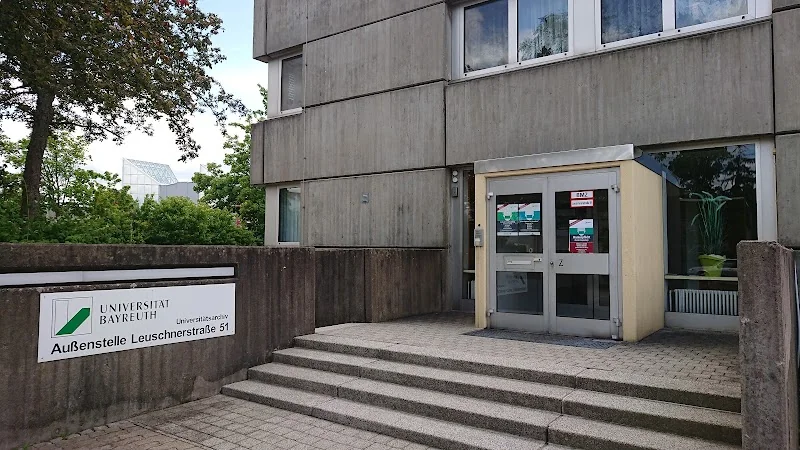
Leuschnerstraße 51, 95447 Bayreuth, Deutschland
University of Bayreuth University Archive | Collections & Directions
The University Archive Bayreuth is much more than a storage for old documents. It is the institutional memory of the University of Bayreuth, a workplace for research and administration, and at the same time a public point of contact for anyone interested in the history of the university, its predecessor institutions, or the various traces of university development. The archive sees itself as a state and corporate public archive of the University of Bayreuth. It preserves documents from administration, central service units, science, and research, and complements this collection with suitable non-official materials from the university's environment. Those looking for sources on the development of the campus, committees, faculties, chairs, students, or the history of the university will find a point of contact here with clear responsibilities and a precise archival structure. Particularly interesting is that the archive not only documents the recent history of higher education but also includes collections that date back long before the founding of the University of Bayreuth, thus revealing the historical background of the region and teacher education. This connection of present, administration, research, tradition, and memory makes the University Archive Bayreuth a place of special scientific and cultural value.
What is the University Archive Bayreuth?
The University Archive Bayreuth fulfills a central task within the university: it secures archival-worthy documents, processes them professionally, and makes them accessible according to the applicable usage rules. Its work follows the Bavarian Archive Act and thus serves several purposes at once. These include research and research support, the safeguarding of rights, the promotion of academic freedom, the establishment of regional identity, and communication between administration, science, and the public. This description of tasks is important because it shows that a university archive does not only work retrospectively but actively accompanies the present of the university. It ensures that relevant documents do not get lost but remain preserved in a structured form and can be found again if needed. This is where the practical value lies for students, researchers, staff, and external interested parties.
The archive's responsibilities encompass the documents of all institutions and organizational units under the roof of the University of Bayreuth. This concerns not only the central university administration but also faculties, deans, institutes, research facilities, and other entities. Additionally, there is the possibility of acquiring private archival materials if there is a public interest in them. Thus, the archive is open to materials that meaningfully complement the history of the university, its environment, or its impact in the region. In this way, a collection grows that not only reflects official processes but also provides insights into student life, scientific projects, public relations, and university culture. Therefore, those searching for the term University Bayreuth Archive do not mean just any storage but a professionally managed institution with clear rules, its own mandate, and a broad historical perspective.
The character as a public archive is particularly important. The University Archive is not exclusively intended for internal administration but is also open to citizens, students, teachers, and all other individuals with a legitimate interest. This makes the university visible as an open knowledge space. The archive is a place where the development of the university becomes traceable, where decisions are documented, and where scientific and university historical questions can be based on solid sources. Especially for research on the history, structure, and changes of the University of Bayreuth, the archive offers an indispensable access to original materials and archivally processed collections.
Usage, Finding Aids, and Reading Room in the University Archive
The use of the University Archive Bayreuth is possible for all interested parties, provided there is a legitimate interest. In practice, research begins with an initial conversation with the archive staff. It is clarified which documents might be relevant for the respective topic and whether the archive holds the appropriate collections. Subsequently, a usage application is filled out, based on which access is granted if possible. This procedure ensures transparency, protects sensitive documents, and simultaneously facilitates targeted research. Those preparing for archival work thus benefit from a careful clarification of topics in advance. The archive provides an electronic form for the usage application, which further simplifies the process.
To access specific archival materials, the archive's finding aids are used. These are the described aids that make collections, series, and individual documents searchable. The desired files or documents are requested from the archive staff using the order numbers provided in the finding aids and are then presented in the reading room. There are seven workstations with Wi-Fi access as well as a computer workstation available. This is particularly practical for anyone working on extensive sources on-site, taking notes, supplementing digital research, or comparing materials. For scientific work, such a reading room is often crucial, as it allows focused work on original sources and facilitates direct exchange with the archive team.
Another advantage is the professional structure of the finding aids themselves. The collections are not only available but systematically described and made accessible in various collecting and ordering units. This allows for targeted research of documents from university management, administration, faculties, or associations and collections. While some finding aids are still in progress, this shows that the archive is continuously processing and making its collections accessible. Therefore, those searching for terms like finding aids, usage, or reading room for the University Archive Bayreuth will find a clear workflow here: narrow down the topic, contact the archive, submit a usage application, check finding aids, order documents, and evaluate them in the reading room. This workflow is comprehensible, practical, and geared towards scientific use.
Even for individuals who are dealing with archival work for the first time, the procedure is easily understandable. The archive accompanies the research, provides tips on handling the collections, and ensures that the documents are made available in suitable form in the reading room. This support is particularly valuable for seminar papers, theses, historical research, or institutional questions regarding the University of Bayreuth. The University Archive thus fulfills not only a preserving function but also a mediating one. It translates the order of the tradition into practical accessibility and transforms a complex archival system into a usable research instrument.
Collections of the University of Bayreuth and its Predecessor Institutions
The collections of the University Archive Bayreuth are particularly interesting because they do not begin with the founding of the university in 1972. Rather, they extend back to older institutions of teacher education and higher education development. The official collections include the Teacher Training Institute Coburg, the Teacher Training Institute Bayreuth, the College for Teacher Education, the Women's Teacher Training Institute, the Institute for Teacher Education, the Pedagogical University Bayreuth, and finally the University of Bayreuth itself. Thus, the archive not only reflects the history of a single university but also the institutional predecessors from which the later university landscape developed. This is of significant value for research on the history of education and science in Upper Franconia.
The collection of the Teacher Training Institute Coburg includes documents from the period of 1888 to 1958 and traces back to the former Ernst-Albert Seminar. The Teacher Training Institute Bayreuth covers the years from 1895 to 1958 and later merged into the Pedagogical University Bayreuth. The Pedagogical University Bayreuth itself existed from 1958 to 1972, was affiliated with the University of Erlangen-Nuremberg, and was integrated into the University of Bayreuth in the 1970s. These historical development lines are not only interesting for specialists but also show how closely intertwined educational history, institutional change, and regional university development are. The University Archive makes these connections visible because it preserves not only individual documents but also entire contexts of tradition.
The collection of the University of Bayreuth itself includes documents from university management, central university administration, personnel files, examination records, student files, as well as materials from faculties, deans, chairs, institutes, and research facilities. This is supplemented by collections that are particularly enlightening for the history of the university. These include, for example, the collection of university history, press releases, press reviews, newsletters, reports, and other documentation that reflect the institutional self-image and public perception of the university. Digital records are also playing an increasingly important role. According to the archive, the electronic data of all students have been part of the continuously growing collection since the university's inception. This is a remarkable indication of how comprehensively a modern university archive must operate today.
Particularly valuable are also the supplementary non-official materials from the university's environment. The archive, for example, takes over collections and documentation as well as selected estates or deposit collections, provided there is a connection to the university, its history, or its activities. This can include photographs, correspondence, unpublished scientific works, documents from associations, and project documentation. In this way, contexts of tradition arise that connect the official administrative documents with additional perspectives. Therefore, anyone researching the history of the University of Bayreuth or interested in collections and sources will find a very broad material basis here, ranging from the founding phase through the development of the campus university to later scientific and cultural activities.
This diversity also makes the University Archive interesting for topics outside classical administrative history. The collections document not only decisions and structures but also life at the university, its publication culture, its communication channels, and its relationships with external institutions. Precisely because the archive unites materials from such diverse areas, it becomes an interface between historical research, institutional memory, and practical information seeking. For inquiries that cannot be exhausted in a single collection, the structure of the finding aids provides a good starting point for identifying the appropriate tradition.
History of the University of Bayreuth and the Establishment of the Archive
The history of the University of Bayreuth does not begin only with the first academic year but with a longer phase of political and regional groundwork. As early as 1969, the Bayreuth city council dealt with economic stagnation and emigration tendencies in northeastern Bavaria and advocated for the establishment of a university in Bayreuth. In 1970, a university association was founded, whose membership quickly grew. In July 1970, a parliamentary resolution led to the establishment of the next Bavarian state university in Bayreuth. In 1971, the Science Council recommended the inclusion of the university in the measures under the Higher Education Construction Promotion Act. With the decision of the Bavarian State Parliament at the end of 1971, the University of Bayreuth was finally established on January 1, 1972. Teaching and study operations began in 1975 with about 500 students. Today, the university is firmly anchored in the Bavarian, German, and international education and research landscape as a campus university with seven faculties.
This development is also central to the University Archive because the archival tradition must reflect the establishment and expansion of the university. The university's history clearly shows how closely structural development, research establishment, and institutional expansion were interconnected. The archive contributes to making this development traceable based on sources. It preserves not only formal decisions but also documents from daily administration and scientific life. Thus, the history of the University of Bayreuth can be experienced not as an abstract chronicle but as a concrete development with files, reports, photos, protocols, and collections. Particularly interesting is that the archival collections partially date back to the 19th century, thus making a longer historical line visible than the founding year of the university initially suggests.
The actual establishment of the archive as an in-house archive took place on March 1, 2013. Since then, the University of Bayreuth has been documenting its own history and administrative actions independently in its own archive. The location was found in the former Eichamt on Leuschnerstraße. There, the rooms were converted into a fully functional workplace with offices, a reading room, and a magazine after professional long-term measurements of humidity and temperature. A mobile shelving system is also included. The first full-time archive director was Karsten Kühnel. The first collections included documents from the founding president Klaus Dieter Wolff, extensive accessions from the central university administration's registry, photographs from the Iwalewahaus, and the archive of the student newspaper Der Tip. Thus, the archive early on relied on a broad, university-related tradition.
Since 2017, the full-time archive management has been with Dr. Lisa Witowski. Under her leadership, the collections have continued to grow. The archive now preserves not only the student data since the university's inception but also numerous older materials from predecessor institutions. It is also integrated into digital archival structures. Since 2023, a digital archive has existed in cooperation with other Bavarian universities and at the level of the chancellors' round, so that documents can be securely stored without media disruption. This development beautifully shows that the University Archive Bayreuth connects tradition and digital future. It preserves history not as a static memory but as an ongoing process of transmission, order, and accessibility.
Directions, Parking, and Opening Hours by Appointment
The University Archive Bayreuth is located at Leuschnerstraße 51 in 95447 Bayreuth. The visitor address is clearly marked, while the postal address leads to Universitätsstraße 30 in 95447 Bayreuth. For practical planning, it is also important that the opening hours are by appointment. Therefore, anyone wishing to visit the archive should contact in advance and arrange an appointment. This fits well with archival work, where documents often need to be specifically prepared, and personal coordination significantly improves research success.
The directions are also well described. The archive is about 2.3 kilometers from the main train station. With city bus lines 312 or 314, it can be reached from there in about 19 to 24 minutes; the stop is at Studiobühne. Those arriving by car should take the A9 exit Bayreuth-Süd and reach the archive heading west after about 4 kilometers. This information is particularly useful for those traveling from the region, from the university itself, or from outside. The location on Leuschnerstraße makes the archive easily accessible without having to forgo a visit in advance.
Another practical point is parking. According to official information, free parking is available. This is especially advantageous if longer research is planned, materials need to be transported, or multiple visits are planned. At the same time, it should be noted that the archive building is not barrier-free. This information is essential for the factual preparation of a visit, as it helps to realistically plan arrival and stay. In archival work, such details are not trivial but often determine how pleasant and efficient a visit is.
Therefore, those searching for the terms directions, parking, or opening hours of the University Archive Bayreuth receive clear and useful information. The combination of appointment scheduling, free parking, good public transport connections, and a clear address significantly facilitates access. For an archive that relies on individual research discussions and the provision of selected documents, this form of visitor organization is sensible and practical. It supports a concentrated, well-prepared use of the collections and makes the visit to the archive planable.
Estates, Document Management, and the Reference Library of the University Library
An important part of the work of the University Archive Bayreuth concerns not only the preservation of already existing files but also the consultation and acquisition of new documents. The archive advises the bodies and organizational units of the university on matters of document management and is the specialist office for all questions of archival science within the university. In this way, it takes on a preventive function: it helps to ensure that documents are managed in such a way in daily administration that they can later be meaningfully evaluated, assessed, and archived. This task is particularly relevant for the continuity and traceability of public administration. At the same time, it strengthens the historical transmission because important processes do not get lost in disorder but are preserved in an orderly manner.
The acquisition of estates and deposits also plays an important role. The archive can take over private archival materials if there is a public interest in them. Specifically mentioned are documents from private individuals, associations, and other legal entities that are or were closely related to the university, its history, or its activities. This can include unpublished scientific or artistic works, correspondence, personal documents, materials related to teaching and research activities, materials from external committees, associations, or institutions, as well as documents related to biography and professional development. The materials can exist in various forms, such as paper, printed materials, text files, emails, or analog and digital audio, image, and film sources. This allows the archive to respond to the real diversity of today's and historical transmission.
At the same time, the archive specifies what is generally not acquired. This includes, for example, books and other media published by publishers as well as research data that are still under public discussion. Here, too, it becomes clear that the archive does not simply collect everything but selects according to clear archival criteria. The decision on archival worthiness, the form of storage, and the provision of the archival materials lies with the University Archive. This creates reliability and ensures that the collections are preserved in a professionally suitable form. For anyone wishing to offer estates, deposits, or previous research materials, the archive is thus a competent contact.
Additionally, the archive maintains a reference library with about 450 media. This includes archival topics as well as literature on university and scientific history and is intended to facilitate work on the collections on-site. This reference collection can be researched through the catalog of the University Library Bayreuth; the location number is 176. This is a nice example of the networking between the University Archive and the University Library Bayreuth. Therefore, anyone wishing to further inform themselves about the history of the university, archival work, or related topics will find helpful access not only in the archive itself but also through the library infrastructure. Especially in the interplay between archive and library, a productive knowledge environment emerges in which sources, literature, and contextual material are meaningfully connected.
Sources:
- University Archive Bayreuth - Homepage
- University Archive Bayreuth - About the Archive
- University Archive Bayreuth - Service
- University Archive Bayreuth - Finding Aids
- University Archive Bayreuth - Contact & Directions
- Uni Bayreuth aktuell - The Archive of the University of Bayreuth turns 10 years old, 28.02.2023
- University of Bayreuth - History of the University
Show moreShow less
University of Bayreuth University Archive | Collections & Directions
The University Archive Bayreuth is much more than a storage for old documents. It is the institutional memory of the University of Bayreuth, a workplace for research and administration, and at the same time a public point of contact for anyone interested in the history of the university, its predecessor institutions, or the various traces of university development. The archive sees itself as a state and corporate public archive of the University of Bayreuth. It preserves documents from administration, central service units, science, and research, and complements this collection with suitable non-official materials from the university's environment. Those looking for sources on the development of the campus, committees, faculties, chairs, students, or the history of the university will find a point of contact here with clear responsibilities and a precise archival structure. Particularly interesting is that the archive not only documents the recent history of higher education but also includes collections that date back long before the founding of the University of Bayreuth, thus revealing the historical background of the region and teacher education. This connection of present, administration, research, tradition, and memory makes the University Archive Bayreuth a place of special scientific and cultural value.
What is the University Archive Bayreuth?
The University Archive Bayreuth fulfills a central task within the university: it secures archival-worthy documents, processes them professionally, and makes them accessible according to the applicable usage rules. Its work follows the Bavarian Archive Act and thus serves several purposes at once. These include research and research support, the safeguarding of rights, the promotion of academic freedom, the establishment of regional identity, and communication between administration, science, and the public. This description of tasks is important because it shows that a university archive does not only work retrospectively but actively accompanies the present of the university. It ensures that relevant documents do not get lost but remain preserved in a structured form and can be found again if needed. This is where the practical value lies for students, researchers, staff, and external interested parties.
The archive's responsibilities encompass the documents of all institutions and organizational units under the roof of the University of Bayreuth. This concerns not only the central university administration but also faculties, deans, institutes, research facilities, and other entities. Additionally, there is the possibility of acquiring private archival materials if there is a public interest in them. Thus, the archive is open to materials that meaningfully complement the history of the university, its environment, or its impact in the region. In this way, a collection grows that not only reflects official processes but also provides insights into student life, scientific projects, public relations, and university culture. Therefore, those searching for the term University Bayreuth Archive do not mean just any storage but a professionally managed institution with clear rules, its own mandate, and a broad historical perspective.
The character as a public archive is particularly important. The University Archive is not exclusively intended for internal administration but is also open to citizens, students, teachers, and all other individuals with a legitimate interest. This makes the university visible as an open knowledge space. The archive is a place where the development of the university becomes traceable, where decisions are documented, and where scientific and university historical questions can be based on solid sources. Especially for research on the history, structure, and changes of the University of Bayreuth, the archive offers an indispensable access to original materials and archivally processed collections.
Usage, Finding Aids, and Reading Room in the University Archive
The use of the University Archive Bayreuth is possible for all interested parties, provided there is a legitimate interest. In practice, research begins with an initial conversation with the archive staff. It is clarified which documents might be relevant for the respective topic and whether the archive holds the appropriate collections. Subsequently, a usage application is filled out, based on which access is granted if possible. This procedure ensures transparency, protects sensitive documents, and simultaneously facilitates targeted research. Those preparing for archival work thus benefit from a careful clarification of topics in advance. The archive provides an electronic form for the usage application, which further simplifies the process.
To access specific archival materials, the archive's finding aids are used. These are the described aids that make collections, series, and individual documents searchable. The desired files or documents are requested from the archive staff using the order numbers provided in the finding aids and are then presented in the reading room. There are seven workstations with Wi-Fi access as well as a computer workstation available. This is particularly practical for anyone working on extensive sources on-site, taking notes, supplementing digital research, or comparing materials. For scientific work, such a reading room is often crucial, as it allows focused work on original sources and facilitates direct exchange with the archive team.
Another advantage is the professional structure of the finding aids themselves. The collections are not only available but systematically described and made accessible in various collecting and ordering units. This allows for targeted research of documents from university management, administration, faculties, or associations and collections. While some finding aids are still in progress, this shows that the archive is continuously processing and making its collections accessible. Therefore, those searching for terms like finding aids, usage, or reading room for the University Archive Bayreuth will find a clear workflow here: narrow down the topic, contact the archive, submit a usage application, check finding aids, order documents, and evaluate them in the reading room. This workflow is comprehensible, practical, and geared towards scientific use.
Even for individuals who are dealing with archival work for the first time, the procedure is easily understandable. The archive accompanies the research, provides tips on handling the collections, and ensures that the documents are made available in suitable form in the reading room. This support is particularly valuable for seminar papers, theses, historical research, or institutional questions regarding the University of Bayreuth. The University Archive thus fulfills not only a preserving function but also a mediating one. It translates the order of the tradition into practical accessibility and transforms a complex archival system into a usable research instrument.
Collections of the University of Bayreuth and its Predecessor Institutions
The collections of the University Archive Bayreuth are particularly interesting because they do not begin with the founding of the university in 1972. Rather, they extend back to older institutions of teacher education and higher education development. The official collections include the Teacher Training Institute Coburg, the Teacher Training Institute Bayreuth, the College for Teacher Education, the Women's Teacher Training Institute, the Institute for Teacher Education, the Pedagogical University Bayreuth, and finally the University of Bayreuth itself. Thus, the archive not only reflects the history of a single university but also the institutional predecessors from which the later university landscape developed. This is of significant value for research on the history of education and science in Upper Franconia.
The collection of the Teacher Training Institute Coburg includes documents from the period of 1888 to 1958 and traces back to the former Ernst-Albert Seminar. The Teacher Training Institute Bayreuth covers the years from 1895 to 1958 and later merged into the Pedagogical University Bayreuth. The Pedagogical University Bayreuth itself existed from 1958 to 1972, was affiliated with the University of Erlangen-Nuremberg, and was integrated into the University of Bayreuth in the 1970s. These historical development lines are not only interesting for specialists but also show how closely intertwined educational history, institutional change, and regional university development are. The University Archive makes these connections visible because it preserves not only individual documents but also entire contexts of tradition.
The collection of the University of Bayreuth itself includes documents from university management, central university administration, personnel files, examination records, student files, as well as materials from faculties, deans, chairs, institutes, and research facilities. This is supplemented by collections that are particularly enlightening for the history of the university. These include, for example, the collection of university history, press releases, press reviews, newsletters, reports, and other documentation that reflect the institutional self-image and public perception of the university. Digital records are also playing an increasingly important role. According to the archive, the electronic data of all students have been part of the continuously growing collection since the university's inception. This is a remarkable indication of how comprehensively a modern university archive must operate today.
Particularly valuable are also the supplementary non-official materials from the university's environment. The archive, for example, takes over collections and documentation as well as selected estates or deposit collections, provided there is a connection to the university, its history, or its activities. This can include photographs, correspondence, unpublished scientific works, documents from associations, and project documentation. In this way, contexts of tradition arise that connect the official administrative documents with additional perspectives. Therefore, anyone researching the history of the University of Bayreuth or interested in collections and sources will find a very broad material basis here, ranging from the founding phase through the development of the campus university to later scientific and cultural activities.
This diversity also makes the University Archive interesting for topics outside classical administrative history. The collections document not only decisions and structures but also life at the university, its publication culture, its communication channels, and its relationships with external institutions. Precisely because the archive unites materials from such diverse areas, it becomes an interface between historical research, institutional memory, and practical information seeking. For inquiries that cannot be exhausted in a single collection, the structure of the finding aids provides a good starting point for identifying the appropriate tradition.
History of the University of Bayreuth and the Establishment of the Archive
The history of the University of Bayreuth does not begin only with the first academic year but with a longer phase of political and regional groundwork. As early as 1969, the Bayreuth city council dealt with economic stagnation and emigration tendencies in northeastern Bavaria and advocated for the establishment of a university in Bayreuth. In 1970, a university association was founded, whose membership quickly grew. In July 1970, a parliamentary resolution led to the establishment of the next Bavarian state university in Bayreuth. In 1971, the Science Council recommended the inclusion of the university in the measures under the Higher Education Construction Promotion Act. With the decision of the Bavarian State Parliament at the end of 1971, the University of Bayreuth was finally established on January 1, 1972. Teaching and study operations began in 1975 with about 500 students. Today, the university is firmly anchored in the Bavarian, German, and international education and research landscape as a campus university with seven faculties.
This development is also central to the University Archive because the archival tradition must reflect the establishment and expansion of the university. The university's history clearly shows how closely structural development, research establishment, and institutional expansion were interconnected. The archive contributes to making this development traceable based on sources. It preserves not only formal decisions but also documents from daily administration and scientific life. Thus, the history of the University of Bayreuth can be experienced not as an abstract chronicle but as a concrete development with files, reports, photos, protocols, and collections. Particularly interesting is that the archival collections partially date back to the 19th century, thus making a longer historical line visible than the founding year of the university initially suggests.
The actual establishment of the archive as an in-house archive took place on March 1, 2013. Since then, the University of Bayreuth has been documenting its own history and administrative actions independently in its own archive. The location was found in the former Eichamt on Leuschnerstraße. There, the rooms were converted into a fully functional workplace with offices, a reading room, and a magazine after professional long-term measurements of humidity and temperature. A mobile shelving system is also included. The first full-time archive director was Karsten Kühnel. The first collections included documents from the founding president Klaus Dieter Wolff, extensive accessions from the central university administration's registry, photographs from the Iwalewahaus, and the archive of the student newspaper Der Tip. Thus, the archive early on relied on a broad, university-related tradition.
Since 2017, the full-time archive management has been with Dr. Lisa Witowski. Under her leadership, the collections have continued to grow. The archive now preserves not only the student data since the university's inception but also numerous older materials from predecessor institutions. It is also integrated into digital archival structures. Since 2023, a digital archive has existed in cooperation with other Bavarian universities and at the level of the chancellors' round, so that documents can be securely stored without media disruption. This development beautifully shows that the University Archive Bayreuth connects tradition and digital future. It preserves history not as a static memory but as an ongoing process of transmission, order, and accessibility.
Directions, Parking, and Opening Hours by Appointment
The University Archive Bayreuth is located at Leuschnerstraße 51 in 95447 Bayreuth. The visitor address is clearly marked, while the postal address leads to Universitätsstraße 30 in 95447 Bayreuth. For practical planning, it is also important that the opening hours are by appointment. Therefore, anyone wishing to visit the archive should contact in advance and arrange an appointment. This fits well with archival work, where documents often need to be specifically prepared, and personal coordination significantly improves research success.
The directions are also well described. The archive is about 2.3 kilometers from the main train station. With city bus lines 312 or 314, it can be reached from there in about 19 to 24 minutes; the stop is at Studiobühne. Those arriving by car should take the A9 exit Bayreuth-Süd and reach the archive heading west after about 4 kilometers. This information is particularly useful for those traveling from the region, from the university itself, or from outside. The location on Leuschnerstraße makes the archive easily accessible without having to forgo a visit in advance.
Another practical point is parking. According to official information, free parking is available. This is especially advantageous if longer research is planned, materials need to be transported, or multiple visits are planned. At the same time, it should be noted that the archive building is not barrier-free. This information is essential for the factual preparation of a visit, as it helps to realistically plan arrival and stay. In archival work, such details are not trivial but often determine how pleasant and efficient a visit is.
Therefore, those searching for the terms directions, parking, or opening hours of the University Archive Bayreuth receive clear and useful information. The combination of appointment scheduling, free parking, good public transport connections, and a clear address significantly facilitates access. For an archive that relies on individual research discussions and the provision of selected documents, this form of visitor organization is sensible and practical. It supports a concentrated, well-prepared use of the collections and makes the visit to the archive planable.
Estates, Document Management, and the Reference Library of the University Library
An important part of the work of the University Archive Bayreuth concerns not only the preservation of already existing files but also the consultation and acquisition of new documents. The archive advises the bodies and organizational units of the university on matters of document management and is the specialist office for all questions of archival science within the university. In this way, it takes on a preventive function: it helps to ensure that documents are managed in such a way in daily administration that they can later be meaningfully evaluated, assessed, and archived. This task is particularly relevant for the continuity and traceability of public administration. At the same time, it strengthens the historical transmission because important processes do not get lost in disorder but are preserved in an orderly manner.
The acquisition of estates and deposits also plays an important role. The archive can take over private archival materials if there is a public interest in them. Specifically mentioned are documents from private individuals, associations, and other legal entities that are or were closely related to the university, its history, or its activities. This can include unpublished scientific or artistic works, correspondence, personal documents, materials related to teaching and research activities, materials from external committees, associations, or institutions, as well as documents related to biography and professional development. The materials can exist in various forms, such as paper, printed materials, text files, emails, or analog and digital audio, image, and film sources. This allows the archive to respond to the real diversity of today's and historical transmission.
At the same time, the archive specifies what is generally not acquired. This includes, for example, books and other media published by publishers as well as research data that are still under public discussion. Here, too, it becomes clear that the archive does not simply collect everything but selects according to clear archival criteria. The decision on archival worthiness, the form of storage, and the provision of the archival materials lies with the University Archive. This creates reliability and ensures that the collections are preserved in a professionally suitable form. For anyone wishing to offer estates, deposits, or previous research materials, the archive is thus a competent contact.
Additionally, the archive maintains a reference library with about 450 media. This includes archival topics as well as literature on university and scientific history and is intended to facilitate work on the collections on-site. This reference collection can be researched through the catalog of the University Library Bayreuth; the location number is 176. This is a nice example of the networking between the University Archive and the University Library Bayreuth. Therefore, anyone wishing to further inform themselves about the history of the university, archival work, or related topics will find helpful access not only in the archive itself but also through the library infrastructure. Especially in the interplay between archive and library, a productive knowledge environment emerges in which sources, literature, and contextual material are meaningfully connected.
Sources:
- University Archive Bayreuth - Homepage
- University Archive Bayreuth - About the Archive
- University Archive Bayreuth - Service
- University Archive Bayreuth - Finding Aids
- University Archive Bayreuth - Contact & Directions
- Uni Bayreuth aktuell - The Archive of the University of Bayreuth turns 10 years old, 28.02.2023
- University of Bayreuth - History of the University
University of Bayreuth University Archive | Collections & Directions
The University Archive Bayreuth is much more than a storage for old documents. It is the institutional memory of the University of Bayreuth, a workplace for research and administration, and at the same time a public point of contact for anyone interested in the history of the university, its predecessor institutions, or the various traces of university development. The archive sees itself as a state and corporate public archive of the University of Bayreuth. It preserves documents from administration, central service units, science, and research, and complements this collection with suitable non-official materials from the university's environment. Those looking for sources on the development of the campus, committees, faculties, chairs, students, or the history of the university will find a point of contact here with clear responsibilities and a precise archival structure. Particularly interesting is that the archive not only documents the recent history of higher education but also includes collections that date back long before the founding of the University of Bayreuth, thus revealing the historical background of the region and teacher education. This connection of present, administration, research, tradition, and memory makes the University Archive Bayreuth a place of special scientific and cultural value.
What is the University Archive Bayreuth?
The University Archive Bayreuth fulfills a central task within the university: it secures archival-worthy documents, processes them professionally, and makes them accessible according to the applicable usage rules. Its work follows the Bavarian Archive Act and thus serves several purposes at once. These include research and research support, the safeguarding of rights, the promotion of academic freedom, the establishment of regional identity, and communication between administration, science, and the public. This description of tasks is important because it shows that a university archive does not only work retrospectively but actively accompanies the present of the university. It ensures that relevant documents do not get lost but remain preserved in a structured form and can be found again if needed. This is where the practical value lies for students, researchers, staff, and external interested parties.
The archive's responsibilities encompass the documents of all institutions and organizational units under the roof of the University of Bayreuth. This concerns not only the central university administration but also faculties, deans, institutes, research facilities, and other entities. Additionally, there is the possibility of acquiring private archival materials if there is a public interest in them. Thus, the archive is open to materials that meaningfully complement the history of the university, its environment, or its impact in the region. In this way, a collection grows that not only reflects official processes but also provides insights into student life, scientific projects, public relations, and university culture. Therefore, those searching for the term University Bayreuth Archive do not mean just any storage but a professionally managed institution with clear rules, its own mandate, and a broad historical perspective.
The character as a public archive is particularly important. The University Archive is not exclusively intended for internal administration but is also open to citizens, students, teachers, and all other individuals with a legitimate interest. This makes the university visible as an open knowledge space. The archive is a place where the development of the university becomes traceable, where decisions are documented, and where scientific and university historical questions can be based on solid sources. Especially for research on the history, structure, and changes of the University of Bayreuth, the archive offers an indispensable access to original materials and archivally processed collections.
Usage, Finding Aids, and Reading Room in the University Archive
The use of the University Archive Bayreuth is possible for all interested parties, provided there is a legitimate interest. In practice, research begins with an initial conversation with the archive staff. It is clarified which documents might be relevant for the respective topic and whether the archive holds the appropriate collections. Subsequently, a usage application is filled out, based on which access is granted if possible. This procedure ensures transparency, protects sensitive documents, and simultaneously facilitates targeted research. Those preparing for archival work thus benefit from a careful clarification of topics in advance. The archive provides an electronic form for the usage application, which further simplifies the process.
To access specific archival materials, the archive's finding aids are used. These are the described aids that make collections, series, and individual documents searchable. The desired files or documents are requested from the archive staff using the order numbers provided in the finding aids and are then presented in the reading room. There are seven workstations with Wi-Fi access as well as a computer workstation available. This is particularly practical for anyone working on extensive sources on-site, taking notes, supplementing digital research, or comparing materials. For scientific work, such a reading room is often crucial, as it allows focused work on original sources and facilitates direct exchange with the archive team.
Another advantage is the professional structure of the finding aids themselves. The collections are not only available but systematically described and made accessible in various collecting and ordering units. This allows for targeted research of documents from university management, administration, faculties, or associations and collections. While some finding aids are still in progress, this shows that the archive is continuously processing and making its collections accessible. Therefore, those searching for terms like finding aids, usage, or reading room for the University Archive Bayreuth will find a clear workflow here: narrow down the topic, contact the archive, submit a usage application, check finding aids, order documents, and evaluate them in the reading room. This workflow is comprehensible, practical, and geared towards scientific use.
Even for individuals who are dealing with archival work for the first time, the procedure is easily understandable. The archive accompanies the research, provides tips on handling the collections, and ensures that the documents are made available in suitable form in the reading room. This support is particularly valuable for seminar papers, theses, historical research, or institutional questions regarding the University of Bayreuth. The University Archive thus fulfills not only a preserving function but also a mediating one. It translates the order of the tradition into practical accessibility and transforms a complex archival system into a usable research instrument.
Collections of the University of Bayreuth and its Predecessor Institutions
The collections of the University Archive Bayreuth are particularly interesting because they do not begin with the founding of the university in 1972. Rather, they extend back to older institutions of teacher education and higher education development. The official collections include the Teacher Training Institute Coburg, the Teacher Training Institute Bayreuth, the College for Teacher Education, the Women's Teacher Training Institute, the Institute for Teacher Education, the Pedagogical University Bayreuth, and finally the University of Bayreuth itself. Thus, the archive not only reflects the history of a single university but also the institutional predecessors from which the later university landscape developed. This is of significant value for research on the history of education and science in Upper Franconia.
The collection of the Teacher Training Institute Coburg includes documents from the period of 1888 to 1958 and traces back to the former Ernst-Albert Seminar. The Teacher Training Institute Bayreuth covers the years from 1895 to 1958 and later merged into the Pedagogical University Bayreuth. The Pedagogical University Bayreuth itself existed from 1958 to 1972, was affiliated with the University of Erlangen-Nuremberg, and was integrated into the University of Bayreuth in the 1970s. These historical development lines are not only interesting for specialists but also show how closely intertwined educational history, institutional change, and regional university development are. The University Archive makes these connections visible because it preserves not only individual documents but also entire contexts of tradition.
The collection of the University of Bayreuth itself includes documents from university management, central university administration, personnel files, examination records, student files, as well as materials from faculties, deans, chairs, institutes, and research facilities. This is supplemented by collections that are particularly enlightening for the history of the university. These include, for example, the collection of university history, press releases, press reviews, newsletters, reports, and other documentation that reflect the institutional self-image and public perception of the university. Digital records are also playing an increasingly important role. According to the archive, the electronic data of all students have been part of the continuously growing collection since the university's inception. This is a remarkable indication of how comprehensively a modern university archive must operate today.
Particularly valuable are also the supplementary non-official materials from the university's environment. The archive, for example, takes over collections and documentation as well as selected estates or deposit collections, provided there is a connection to the university, its history, or its activities. This can include photographs, correspondence, unpublished scientific works, documents from associations, and project documentation. In this way, contexts of tradition arise that connect the official administrative documents with additional perspectives. Therefore, anyone researching the history of the University of Bayreuth or interested in collections and sources will find a very broad material basis here, ranging from the founding phase through the development of the campus university to later scientific and cultural activities.
This diversity also makes the University Archive interesting for topics outside classical administrative history. The collections document not only decisions and structures but also life at the university, its publication culture, its communication channels, and its relationships with external institutions. Precisely because the archive unites materials from such diverse areas, it becomes an interface between historical research, institutional memory, and practical information seeking. For inquiries that cannot be exhausted in a single collection, the structure of the finding aids provides a good starting point for identifying the appropriate tradition.
History of the University of Bayreuth and the Establishment of the Archive
The history of the University of Bayreuth does not begin only with the first academic year but with a longer phase of political and regional groundwork. As early as 1969, the Bayreuth city council dealt with economic stagnation and emigration tendencies in northeastern Bavaria and advocated for the establishment of a university in Bayreuth. In 1970, a university association was founded, whose membership quickly grew. In July 1970, a parliamentary resolution led to the establishment of the next Bavarian state university in Bayreuth. In 1971, the Science Council recommended the inclusion of the university in the measures under the Higher Education Construction Promotion Act. With the decision of the Bavarian State Parliament at the end of 1971, the University of Bayreuth was finally established on January 1, 1972. Teaching and study operations began in 1975 with about 500 students. Today, the university is firmly anchored in the Bavarian, German, and international education and research landscape as a campus university with seven faculties.
This development is also central to the University Archive because the archival tradition must reflect the establishment and expansion of the university. The university's history clearly shows how closely structural development, research establishment, and institutional expansion were interconnected. The archive contributes to making this development traceable based on sources. It preserves not only formal decisions but also documents from daily administration and scientific life. Thus, the history of the University of Bayreuth can be experienced not as an abstract chronicle but as a concrete development with files, reports, photos, protocols, and collections. Particularly interesting is that the archival collections partially date back to the 19th century, thus making a longer historical line visible than the founding year of the university initially suggests.
The actual establishment of the archive as an in-house archive took place on March 1, 2013. Since then, the University of Bayreuth has been documenting its own history and administrative actions independently in its own archive. The location was found in the former Eichamt on Leuschnerstraße. There, the rooms were converted into a fully functional workplace with offices, a reading room, and a magazine after professional long-term measurements of humidity and temperature. A mobile shelving system is also included. The first full-time archive director was Karsten Kühnel. The first collections included documents from the founding president Klaus Dieter Wolff, extensive accessions from the central university administration's registry, photographs from the Iwalewahaus, and the archive of the student newspaper Der Tip. Thus, the archive early on relied on a broad, university-related tradition.
Since 2017, the full-time archive management has been with Dr. Lisa Witowski. Under her leadership, the collections have continued to grow. The archive now preserves not only the student data since the university's inception but also numerous older materials from predecessor institutions. It is also integrated into digital archival structures. Since 2023, a digital archive has existed in cooperation with other Bavarian universities and at the level of the chancellors' round, so that documents can be securely stored without media disruption. This development beautifully shows that the University Archive Bayreuth connects tradition and digital future. It preserves history not as a static memory but as an ongoing process of transmission, order, and accessibility.
Directions, Parking, and Opening Hours by Appointment
The University Archive Bayreuth is located at Leuschnerstraße 51 in 95447 Bayreuth. The visitor address is clearly marked, while the postal address leads to Universitätsstraße 30 in 95447 Bayreuth. For practical planning, it is also important that the opening hours are by appointment. Therefore, anyone wishing to visit the archive should contact in advance and arrange an appointment. This fits well with archival work, where documents often need to be specifically prepared, and personal coordination significantly improves research success.
The directions are also well described. The archive is about 2.3 kilometers from the main train station. With city bus lines 312 or 314, it can be reached from there in about 19 to 24 minutes; the stop is at Studiobühne. Those arriving by car should take the A9 exit Bayreuth-Süd and reach the archive heading west after about 4 kilometers. This information is particularly useful for those traveling from the region, from the university itself, or from outside. The location on Leuschnerstraße makes the archive easily accessible without having to forgo a visit in advance.
Another practical point is parking. According to official information, free parking is available. This is especially advantageous if longer research is planned, materials need to be transported, or multiple visits are planned. At the same time, it should be noted that the archive building is not barrier-free. This information is essential for the factual preparation of a visit, as it helps to realistically plan arrival and stay. In archival work, such details are not trivial but often determine how pleasant and efficient a visit is.
Therefore, those searching for the terms directions, parking, or opening hours of the University Archive Bayreuth receive clear and useful information. The combination of appointment scheduling, free parking, good public transport connections, and a clear address significantly facilitates access. For an archive that relies on individual research discussions and the provision of selected documents, this form of visitor organization is sensible and practical. It supports a concentrated, well-prepared use of the collections and makes the visit to the archive planable.
Estates, Document Management, and the Reference Library of the University Library
An important part of the work of the University Archive Bayreuth concerns not only the preservation of already existing files but also the consultation and acquisition of new documents. The archive advises the bodies and organizational units of the university on matters of document management and is the specialist office for all questions of archival science within the university. In this way, it takes on a preventive function: it helps to ensure that documents are managed in such a way in daily administration that they can later be meaningfully evaluated, assessed, and archived. This task is particularly relevant for the continuity and traceability of public administration. At the same time, it strengthens the historical transmission because important processes do not get lost in disorder but are preserved in an orderly manner.
The acquisition of estates and deposits also plays an important role. The archive can take over private archival materials if there is a public interest in them. Specifically mentioned are documents from private individuals, associations, and other legal entities that are or were closely related to the university, its history, or its activities. This can include unpublished scientific or artistic works, correspondence, personal documents, materials related to teaching and research activities, materials from external committees, associations, or institutions, as well as documents related to biography and professional development. The materials can exist in various forms, such as paper, printed materials, text files, emails, or analog and digital audio, image, and film sources. This allows the archive to respond to the real diversity of today's and historical transmission.
At the same time, the archive specifies what is generally not acquired. This includes, for example, books and other media published by publishers as well as research data that are still under public discussion. Here, too, it becomes clear that the archive does not simply collect everything but selects according to clear archival criteria. The decision on archival worthiness, the form of storage, and the provision of the archival materials lies with the University Archive. This creates reliability and ensures that the collections are preserved in a professionally suitable form. For anyone wishing to offer estates, deposits, or previous research materials, the archive is thus a competent contact.
Additionally, the archive maintains a reference library with about 450 media. This includes archival topics as well as literature on university and scientific history and is intended to facilitate work on the collections on-site. This reference collection can be researched through the catalog of the University Library Bayreuth; the location number is 176. This is a nice example of the networking between the University Archive and the University Library Bayreuth. Therefore, anyone wishing to further inform themselves about the history of the university, archival work, or related topics will find helpful access not only in the archive itself but also through the library infrastructure. Especially in the interplay between archive and library, a productive knowledge environment emerges in which sources, literature, and contextual material are meaningfully connected.
Sources:
- University Archive Bayreuth - Homepage
- University Archive Bayreuth - About the Archive
- University Archive Bayreuth - Service
- University Archive Bayreuth - Finding Aids
- University Archive Bayreuth - Contact & Directions
- Uni Bayreuth aktuell - The Archive of the University of Bayreuth turns 10 years old, 28.02.2023
- University of Bayreuth - History of the University
Upcoming Events
No events found
Frequently Asked Questions
Reviews
No reviews found