
Bayreuth
Kirchpl. 4, 95444 Bayreuth, Deutschland
Historical Museum Bayreuth | Opening Hours & Tickets
The Historical Museum Bayreuth is not a classic tourist destination that loudly and intrusively puts itself in the foreground. Rather, it is a place where Bayreuth tells its history quietly, deeply, and with astonishing vividness. Since 1996, the museum has been located in the Old Latin School at Kirchplatz, right next to the City Church, and thus in a building that is itself already a significant piece of city history. The house was re-conceived as a museum after the municipal collections were brought together here. Today, visitors experience a wealth of information about the 800-year history of Bayreuth and its surroundings, with a clear focus on the time of the margravial residence in the 17th and 18th centuries. Over three floors and 1200 square meters, a tour develops that ranges from urban development to culture, economy, and politics, as well as special collection areas. In addition, there are special exhibitions, events, and museum educational offerings that keep the house lively and create new access points time and again. So, anyone looking for opening hours, tickets, photos, or honest orientation for their first visit will find a museum here that does not archive history dryly but places it in an understandable and easily accessible urban context. ([historisches-museum-bayreuth.de](https://www.historisches-museum-bayreuth.de/))
Opening Hours, Admission Prices, and Tickets for the Historical Museum Bayreuth
For many visitors, the most important question is quite practical: When is the Historical Museum Bayreuth open, and what does admission cost? The official website provides clear and easily planable times for this. The museum is open from Tuesday to Sunday from 10 AM to 5 PM. On the two Christmas days, December 24 and 25, the house remains closed. For the New Year, there are adjusted times: On December 31, it is open from 10 AM to 2 PM, and on January 1 from 1 PM to 5 PM. Anyone planning a visit around holidays should definitely keep these deviating times in mind. The museum is also transparent about admission prices. Adults pay 2 euros, students 1 euro. Children under 6 years have free admission, as do school classes and members of the museum association. Reduced prices apply to students, people with disabilities, and retirees who pay 1 euro. For groups of 10 or more, the price is also 1 euro per person, and an additional 1 euro per person is added for guided tours. This keeps the museum visit deliberately low-threshold and easily calculable for families, school groups, and individual guests. On the website, this information is located directly next to the contact details, allowing visitors to plan with just a few glances. ([historisches-museum-bayreuth.de](https://www.historisches-museum-bayreuth.de/))
In connection with the keyword tickets, it is important to understand how the Historical Museum Bayreuth organizes its visits. Unlike large event locations, the house does not work with loud ticket sales, but with a simple, museum-typical access through the cash register, opening hours, and direct contact options. This fits the character of the house: factual, clear, and focused on the museum visit. Those who want to inform themselves in advance will find the museum's phone numbers and the email address of the house on the official site. This especially facilitates access for people arriving with a group, school, or a thematic focus. The official information also states that the house is a place with regular special exhibitions, so a ticket not only grants access to the permanent exhibition but can also unlock additional content depending on the time period. This is particularly interesting for guests who do not just want to take a short tour but are specifically looking for city history, residence time, or Bayreuth-specific themes. With the low prices, the visit remains attractive even for spontaneous guests. So, anyone looking for tickets for the Historical Museum Bayreuth should plan the visit more like an uncomplicated museum entry rather than a complex event with advance sales. This simplicity is part of the appeal. ([historisches-museum-bayreuth.de](https://www.historisches-museum-bayreuth.de/))
Directions and Parking at the Historical Museum Bayreuth
The location of the Historical Museum Bayreuth is one of its great advantages, as the house is situated right in the historical center at Kirchplatz 4, 95444 Bayreuth. Anyone who knows the old town immediately notices: The museum is not a marginal place, but sits exactly where city history, the city church, and historical paths intersect. This is pleasant for visitors because the museum visit can be easily combined with a walk through the city center. At the same time, the central location has a practical drawback, which the official website clearly states: There are no parking spaces at or around the house. Instead, the surrounding parking lots and parking garages in the city center should be used. This information is crucial for planning, as it prevents unnecessary detours and false expectations. Anyone arriving by car should therefore not look for parking spaces directly in front of the entrance but should combine the visit from the start with a city center parking space. Especially on weekends or during special exhibitions, it is worth planning a few extra minutes for the journey. Those who are on foot, on the other hand, benefit from the central location at Kirchplatz, which can be easily combined with other destinations in Bayreuth. Thus, a museum visit quickly becomes a small tour through the historical center of the city. ([historisches-museum-bayreuth.de](https://www.historisches-museum-bayreuth.de/museum/ueber-das-museum/))
For guests looking for parking at the Historical Museum Bayreuth or for the simplest possible access, the official communication is pleasantly direct. Instead of vague hints, the house refers to the parking options in the city center, making it clear that the location is intentionally urban. The museum does not see itself as an isolated attraction with its own parking lot but as part of the developed city center structure. This also has a special quality: Those arriving do not come to an interchangeable purpose-built building but to a place with historical depth. The immediate neighborhood to the city church further enhances this impression. The location is also attractive for cyclists and pedestrians because the museum is centrally located and easy to find. Anyone who likes to browse briefly before the visit can also combine the journey with a look at the official website and the contact page, where both the opening hours and the prices and travel information are collected. This makes orientation very simple. Especially for families traveling with children or for groups arriving together, this clear information is important. Because this turns a potential parking problem into a manageable part of the city center visit. ([historisches-museum-bayreuth.de](https://www.historisches-museum-bayreuth.de/kontakt/anfahrt-und-oeffnungszeiten/))
Photos and First Impressions of the Historical Museum Bayreuth
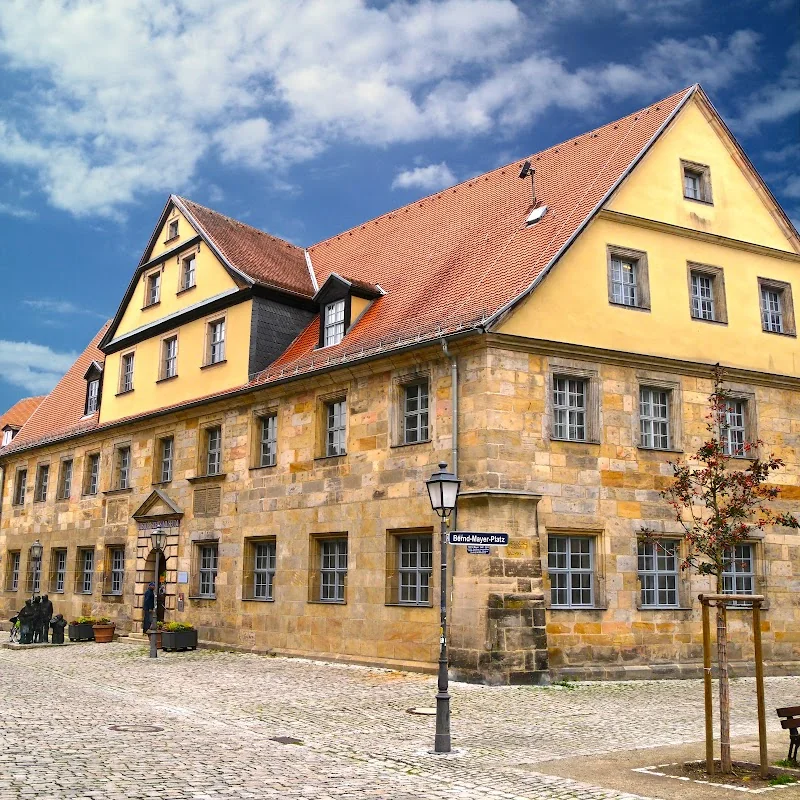
The keyword photos is no coincidence at the Historical Museum Bayreuth, as many visitors want to see in advance how the place looks, what the building looks like, and what atmosphere they can expect. The official website actually provides some very concrete visual impressions for this. On the museum's page, among other things, the main entrance, the flag on the house, the entrance at night, a bronze figure group at the entrance, and a figure in the museum courtyard are shown. These images are not mere decoration but convey the character of the house very well: historical, urban, and yet open to visitors. Even the first visual impression suggests that it is not just about exhibits behind glass but about a place with its own architectural and atmospheric presence. Especially for people who like to check through photos before their trip whether a destination fits their interests, such official images are very helpful. They show not only the facade but also the interplay between the historical building and museum use. It becomes clear that the Old Latin School itself is part of the visitor experience. Therefore, anyone looking for photos or images of the Historical Museum Bayreuth should definitely include the official website, as it provides a genuine, immediate impression without advertising exaggeration. ([historisches-museum-bayreuth.de](https://www.historisches-museum-bayreuth.de/museum/ueber-das-museum/))
The photos also serve a second function: They help to build realistic expectations for the visit. The Historical Museum Bayreuth presents itself as a house with historical character but also with a clear museum educational structure. This is evident in the image material as well as in the texts on the website. The entrance does not appear monumental in the sense of an opera house or festival but rather inviting, city-close, and consciously integrated into the old town. The night image conveys a calmer, almost contemplative atmosphere that fits well with the historical content of the house. The museum courtyard and the sculptural elements indicate that the visit is not only interesting inside but that the building itself and its surroundings also deserve attention. So, anyone looking for photos will find not just a few nice snapshots but a visual hint of what the museum is about: history, place, and collection belong together. For social media users or travelers who want to check in advance whether a museum is photographically interesting, this is a plus. And even for all those who are only briefly visiting Bayreuth, these images quickly convey that the museum is a quiet, authentic, and very well-embedded place in the city. ([historisches-museum-bayreuth.de](https://www.historisches-museum-bayreuth.de/museum/ueber-das-museum/))
History of the Old Latin School and the Museum
The real strength of the Historical Museum Bayreuth lies in its history, and this history begins long before its official museum use. The house is located in the Old Latin School, the oldest school building in Bayreuth. The current core of the building dates back to the 17th century, but as early as 1437, a predecessor building is mentioned in the accounts of the neighboring city church. This means: A building associated with education, urban life, and church environment stood at this location very early on. In the 16th century, the school operations were reorganized several times, and after the devastating city fires of 1605 and 1621, which destroyed large parts of Bayreuth, a representative new building for the Latin school was created. In 1664, Margrave Christian Ernst elevated the school to the High-Princely Illustrious Gymnasium Christian Ernestinum. The building remained a gymnasium until 1804, when it moved to another house due to lack of space. Later, from 1816, it served again as a school building, this time as a girls' school. It was not until 1875 that the use as a school ended definitively after the new Graserschule had been completed. This cleared the way for a completely different use, as from 1876 to 1988, the house was the Central Fire House. Only after that did the transformation into a museum begin. Since 1996, the Old Latin School has housed the Historical Museum Bayreuth. This sequence makes it clear how closely the place is connected to the history of the city. ([historisches-museum-bayreuth.de](https://www.historisches-museum-bayreuth.de/museum/ueber-das-museum/))
The history of the museum itself is also closely linked to the growing awareness of Bayreuth's cultural heritage. On December 5, 1894, the magistrate of the city of Bayreuth decided to establish a municipal museum. In the following years, a museum fund was established, and by 1911, a considerable collection had already formed through legacies, donations, and purchases. After World War I, the municipal collections were made publicly accessible in the rooms of the New Palace from 1924. However, the time of National Socialism brought a break, and after 1945, there were significant losses in the museum's collection due to vandalism and looting. In 1960, the municipal museum was reopened in the east wing of the New Palace. Later, from 1985 to 1996, the city museum used the Lüchauhaus as an exhibition space before the collections were merged and re-conceived as the Historical Museum Bayreuth after the renovation and conversion of the Old Latin School in 1996. This development not only shows a collection history but also a history of loss, reconstruction, and realignment. For this reason, the museum today is more than a classic city museum: it is itself a part of Bayreuth's historical memory culture. Therefore, when visiting the house, one sees not only exhibition objects but also the material traces of school history, fire house history, and museum development in one place. ([historisches-museum-bayreuth.de](https://www.historisches-museum-bayreuth.de/museum/ueber-das-museum/))
Exhibitions, Bayreuth Faience, and Museum Education
Content-wise, the Historical Museum Bayreuth focuses on the 800-year history of the city and its surroundings. The emphasis is on the time of Bayreuth as a residence city in the 17th and 18th centuries, that is, on the epoch in which political, cultural, and representative developments particularly shaped the city. However, the collection documents far more than just a single section. It addresses the essential aspects of urban development from economy and culture to major politics. This breadth makes the museum interesting for different visitor groups. A special focus is the private collection of Dr. Otto Burkhardt, which is displayed as a permanent loan in the house. According to the official representation, it includes what is probably the world's most extensive collection of Bayreuth faience from the manufactory St. Georgen, founded in 1715. For many visitors, this is one of the most exciting aspects of the museum, as local craft and art history condenses here in a remarkable way. In addition, there are regular special exhibitions that continually expand the offerings. For special exhibitions, three rooms with a total of 120 square meters are available on the ground floor. While this is not a huge event area, it provides a very sensible, flexible framework for changing themes. So, anyone looking for exhibitions at the Historical Museum Bayreuth will find not only a permanent exhibition but a house that regularly creates new occasions for a visit with changing content. ([historisches-museum-bayreuth.de](https://www.historisches-museum-bayreuth.de/))
Particularly attractive is that the museum does not limit itself to merely displaying objects. The website explicitly emphasizes the museum educational offerings, which are intended to connect generations. Here, city history is not only explained but made experienceable. This is also evident in the offerings for schools, groups, and interested visitors. On the school's page of the museum, it becomes clear that there are numerous points of connection for historical, social, political, technical, and artistic developments. Thus, the house is suitable not only for tourists but also for teaching, project seminars, and subject-related deepening. Additionally, the museum refers to other city historical and memory cultural contents, such as the Wilhelm-Leuschner Memorial or the online memorial book for the victims of National Socialism. This broadens the view beyond the mere museum space. Especially for a location like this, it is important because it does not function as an isolated place but as part of a larger urban memory landscape. Those looking for a museum with a genuine educational function are exactly right here. And those who want to understand Bayreuth better will gain very good access to the history, identity, and cultural development of the city through the combination of permanent exhibition, special exhibitions, and museum education. ([historisches-museum-bayreuth.de](https://www.historisches-museum-bayreuth.de/museum/?utm_source=openai))
Guided Tours, Group Offers, and Practical Visiting Tips
Anyone who wants to experience the Historical Museum Bayreuth more intensively should seriously consider the group and guided tour offers. The official website states a duration of 30 to 120 minutes for guided tours, depending on the topic and agreement. Groups are possible from 10 to a maximum of 25 people. This is an important note for school classes, club trips, or smaller travel groups, as this allows the visit to be well planned and adapted to the respective group. It is also particularly practical that no registration is usually required for regular open tours. So, anyone who comes spontaneously has a good chance of orienting themselves to a guided offer. The museum education explicitly sees itself as a bridge between people and city history. On the visit page, the house is described as a forum for all who want to get to know their city, their culture, their people, and their peculiarities and engage in conversation. This open attitude is pleasant because it does not academically isolate the visit but invites it. It also fits that the museum offers mobile seating, an elevator, and accessible restrooms. This is an important practical advantage for visitors with limited mobility. Even a dog parking space in the foyer is humorously mentioned. Overall, this shows a house that focuses on accessibility, conversation, and mediation. ([historisches-museum-bayreuth.de](https://www.historisches-museum-bayreuth.de/besuch/?utm_source=openai))
Practical visiting tips almost arise from this. First, it is worth checking the visit against the official opening hours, especially on holidays and around the New Year. Second, it is best to check the access in advance, as there are no parking spaces directly at the house. Third, groups should clarify early on whether they want a guided tour or wish to explore the house individually. Fourth, it is sensible to combine the visit with a look at the current special exhibitions, as the museum regularly sets new thematic accents. For example, in autumn 2026, the official website has announced the special exhibition Please Do Not Move! The Festivals in Focus of the Photographers for the period from August 2 to October 11, 2026. Such temporary themes can significantly enhance a visit as they complement the permanent exhibition with a current focus. And fifth, one should not only see the location at Kirchplatz as an address but as part of the experience: the museum is historically, centrally, and embedded in the old town. Anyone who wants to seriously discover Bayreuth will find a very good starting point here. The Historical Museum is thus not only a place for history-interested specialists but also for families, school groups, the curious, and guests who want to approach the city through its past. ([historisches-museum-bayreuth.de](https://www.historisches-museum-bayreuth.de/))
Why a Visit to the Historical Museum Bayreuth is Worth It
The Historical Museum Bayreuth combines many elements that make a good city museum: a significant historical property, a clearly focused collection, a comprehensible thematic emphasis, and a program that does not stop at the past. The Old Latin School itself is a strong argument for the visit because the building has absorbed education, urban use, and memory over centuries. At the same time, the exhibition is not merely regional embellishment but a seriously curated offering on the history of the city and its surroundings. Visitors gain insights into the margravial residence period, the development of Bayreuth from the Middle Ages to the present, and the cultural diversity that has shaped the place. The fact that the museum works with guided tours, educational offerings, and special exhibitions makes it attractive for repeat visits as well. Those who come today can return tomorrow for a different theme. This is precisely the strength of the house. It is not a museum that one simply ticks off once but a place where one understands Bayreuth in layers. This makes the visit particularly valuable for all those who do not settle for a superficial understanding of history. ([historisches-museum-bayreuth.de](https://www.historisches-museum-bayreuth.de/))
Also, for the search for photos, opening hours, tickets, directions, and reviews, the Historical Museum Bayreuth is a good example of a location with clear, trustworthy external communication. The official website provides the most important visitor data transparently and supplements it with images, service information, and educational offerings. This facilitates planning and reduces uncertainties. Those asking about reviews should additionally check the usual rating and map portals, as the museum itself focuses more on information than self-presentation. The actual added value lies in the visit on-site: in the interplay of house, collection, and city history. Particularly noteworthy is that the place remains accessible despite its historical depth. The prices are low, group offers are clearly described, and the city center location is easy to understand, even if one has to plan a bit in advance due to the lack of parking spaces at the house. This creates a very rounded overall picture. The Historical Museum Bayreuth is thus a good choice for all those who want not just to see Bayreuth but to understand it. And that is often the difference between a quick stop and a genuine cultural experience. ([historisches-museum-bayreuth.de](https://www.historisches-museum-bayreuth.de/kontakt/anfahrt-und-oeffnungszeiten/))
Sources:
Mehr anzeigenWeniger anzeigen
Historical Museum Bayreuth | Opening Hours & Tickets
The Historical Museum Bayreuth is not a classic tourist destination that loudly and intrusively puts itself in the foreground. Rather, it is a place where Bayreuth tells its history quietly, deeply, and with astonishing vividness. Since 1996, the museum has been located in the Old Latin School at Kirchplatz, right next to the City Church, and thus in a building that is itself already a significant piece of city history. The house was re-conceived as a museum after the municipal collections were brought together here. Today, visitors experience a wealth of information about the 800-year history of Bayreuth and its surroundings, with a clear focus on the time of the margravial residence in the 17th and 18th centuries. Over three floors and 1200 square meters, a tour develops that ranges from urban development to culture, economy, and politics, as well as special collection areas. In addition, there are special exhibitions, events, and museum educational offerings that keep the house lively and create new access points time and again. So, anyone looking for opening hours, tickets, photos, or honest orientation for their first visit will find a museum here that does not archive history dryly but places it in an understandable and easily accessible urban context. ([historisches-museum-bayreuth.de](https://www.historisches-museum-bayreuth.de/))
Opening Hours, Admission Prices, and Tickets for the Historical Museum Bayreuth
For many visitors, the most important question is quite practical: When is the Historical Museum Bayreuth open, and what does admission cost? The official website provides clear and easily planable times for this. The museum is open from Tuesday to Sunday from 10 AM to 5 PM. On the two Christmas days, December 24 and 25, the house remains closed. For the New Year, there are adjusted times: On December 31, it is open from 10 AM to 2 PM, and on January 1 from 1 PM to 5 PM. Anyone planning a visit around holidays should definitely keep these deviating times in mind. The museum is also transparent about admission prices. Adults pay 2 euros, students 1 euro. Children under 6 years have free admission, as do school classes and members of the museum association. Reduced prices apply to students, people with disabilities, and retirees who pay 1 euro. For groups of 10 or more, the price is also 1 euro per person, and an additional 1 euro per person is added for guided tours. This keeps the museum visit deliberately low-threshold and easily calculable for families, school groups, and individual guests. On the website, this information is located directly next to the contact details, allowing visitors to plan with just a few glances. ([historisches-museum-bayreuth.de](https://www.historisches-museum-bayreuth.de/))
In connection with the keyword tickets, it is important to understand how the Historical Museum Bayreuth organizes its visits. Unlike large event locations, the house does not work with loud ticket sales, but with a simple, museum-typical access through the cash register, opening hours, and direct contact options. This fits the character of the house: factual, clear, and focused on the museum visit. Those who want to inform themselves in advance will find the museum's phone numbers and the email address of the house on the official site. This especially facilitates access for people arriving with a group, school, or a thematic focus. The official information also states that the house is a place with regular special exhibitions, so a ticket not only grants access to the permanent exhibition but can also unlock additional content depending on the time period. This is particularly interesting for guests who do not just want to take a short tour but are specifically looking for city history, residence time, or Bayreuth-specific themes. With the low prices, the visit remains attractive even for spontaneous guests. So, anyone looking for tickets for the Historical Museum Bayreuth should plan the visit more like an uncomplicated museum entry rather than a complex event with advance sales. This simplicity is part of the appeal. ([historisches-museum-bayreuth.de](https://www.historisches-museum-bayreuth.de/))
Directions and Parking at the Historical Museum Bayreuth
The location of the Historical Museum Bayreuth is one of its great advantages, as the house is situated right in the historical center at Kirchplatz 4, 95444 Bayreuth. Anyone who knows the old town immediately notices: The museum is not a marginal place, but sits exactly where city history, the city church, and historical paths intersect. This is pleasant for visitors because the museum visit can be easily combined with a walk through the city center. At the same time, the central location has a practical drawback, which the official website clearly states: There are no parking spaces at or around the house. Instead, the surrounding parking lots and parking garages in the city center should be used. This information is crucial for planning, as it prevents unnecessary detours and false expectations. Anyone arriving by car should therefore not look for parking spaces directly in front of the entrance but should combine the visit from the start with a city center parking space. Especially on weekends or during special exhibitions, it is worth planning a few extra minutes for the journey. Those who are on foot, on the other hand, benefit from the central location at Kirchplatz, which can be easily combined with other destinations in Bayreuth. Thus, a museum visit quickly becomes a small tour through the historical center of the city. ([historisches-museum-bayreuth.de](https://www.historisches-museum-bayreuth.de/museum/ueber-das-museum/))
For guests looking for parking at the Historical Museum Bayreuth or for the simplest possible access, the official communication is pleasantly direct. Instead of vague hints, the house refers to the parking options in the city center, making it clear that the location is intentionally urban. The museum does not see itself as an isolated attraction with its own parking lot but as part of the developed city center structure. This also has a special quality: Those arriving do not come to an interchangeable purpose-built building but to a place with historical depth. The immediate neighborhood to the city church further enhances this impression. The location is also attractive for cyclists and pedestrians because the museum is centrally located and easy to find. Anyone who likes to browse briefly before the visit can also combine the journey with a look at the official website and the contact page, where both the opening hours and the prices and travel information are collected. This makes orientation very simple. Especially for families traveling with children or for groups arriving together, this clear information is important. Because this turns a potential parking problem into a manageable part of the city center visit. ([historisches-museum-bayreuth.de](https://www.historisches-museum-bayreuth.de/kontakt/anfahrt-und-oeffnungszeiten/))
Photos and First Impressions of the Historical Museum Bayreuth
The keyword photos is no coincidence at the Historical Museum Bayreuth, as many visitors want to see in advance how the place looks, what the building looks like, and what atmosphere they can expect. The official website actually provides some very concrete visual impressions for this. On the museum's page, among other things, the main entrance, the flag on the house, the entrance at night, a bronze figure group at the entrance, and a figure in the museum courtyard are shown. These images are not mere decoration but convey the character of the house very well: historical, urban, and yet open to visitors. Even the first visual impression suggests that it is not just about exhibits behind glass but about a place with its own architectural and atmospheric presence. Especially for people who like to check through photos before their trip whether a destination fits their interests, such official images are very helpful. They show not only the facade but also the interplay between the historical building and museum use. It becomes clear that the Old Latin School itself is part of the visitor experience. Therefore, anyone looking for photos or images of the Historical Museum Bayreuth should definitely include the official website, as it provides a genuine, immediate impression without advertising exaggeration. ([historisches-museum-bayreuth.de](https://www.historisches-museum-bayreuth.de/museum/ueber-das-museum/))
The photos also serve a second function: They help to build realistic expectations for the visit. The Historical Museum Bayreuth presents itself as a house with historical character but also with a clear museum educational structure. This is evident in the image material as well as in the texts on the website. The entrance does not appear monumental in the sense of an opera house or festival but rather inviting, city-close, and consciously integrated into the old town. The night image conveys a calmer, almost contemplative atmosphere that fits well with the historical content of the house. The museum courtyard and the sculptural elements indicate that the visit is not only interesting inside but that the building itself and its surroundings also deserve attention. So, anyone looking for photos will find not just a few nice snapshots but a visual hint of what the museum is about: history, place, and collection belong together. For social media users or travelers who want to check in advance whether a museum is photographically interesting, this is a plus. And even for all those who are only briefly visiting Bayreuth, these images quickly convey that the museum is a quiet, authentic, and very well-embedded place in the city. ([historisches-museum-bayreuth.de](https://www.historisches-museum-bayreuth.de/museum/ueber-das-museum/))
History of the Old Latin School and the Museum
The real strength of the Historical Museum Bayreuth lies in its history, and this history begins long before its official museum use. The house is located in the Old Latin School, the oldest school building in Bayreuth. The current core of the building dates back to the 17th century, but as early as 1437, a predecessor building is mentioned in the accounts of the neighboring city church. This means: A building associated with education, urban life, and church environment stood at this location very early on. In the 16th century, the school operations were reorganized several times, and after the devastating city fires of 1605 and 1621, which destroyed large parts of Bayreuth, a representative new building for the Latin school was created. In 1664, Margrave Christian Ernst elevated the school to the High-Princely Illustrious Gymnasium Christian Ernestinum. The building remained a gymnasium until 1804, when it moved to another house due to lack of space. Later, from 1816, it served again as a school building, this time as a girls' school. It was not until 1875 that the use as a school ended definitively after the new Graserschule had been completed. This cleared the way for a completely different use, as from 1876 to 1988, the house was the Central Fire House. Only after that did the transformation into a museum begin. Since 1996, the Old Latin School has housed the Historical Museum Bayreuth. This sequence makes it clear how closely the place is connected to the history of the city. ([historisches-museum-bayreuth.de](https://www.historisches-museum-bayreuth.de/museum/ueber-das-museum/))
The history of the museum itself is also closely linked to the growing awareness of Bayreuth's cultural heritage. On December 5, 1894, the magistrate of the city of Bayreuth decided to establish a municipal museum. In the following years, a museum fund was established, and by 1911, a considerable collection had already formed through legacies, donations, and purchases. After World War I, the municipal collections were made publicly accessible in the rooms of the New Palace from 1924. However, the time of National Socialism brought a break, and after 1945, there were significant losses in the museum's collection due to vandalism and looting. In 1960, the municipal museum was reopened in the east wing of the New Palace. Later, from 1985 to 1996, the city museum used the Lüchauhaus as an exhibition space before the collections were merged and re-conceived as the Historical Museum Bayreuth after the renovation and conversion of the Old Latin School in 1996. This development not only shows a collection history but also a history of loss, reconstruction, and realignment. For this reason, the museum today is more than a classic city museum: it is itself a part of Bayreuth's historical memory culture. Therefore, when visiting the house, one sees not only exhibition objects but also the material traces of school history, fire house history, and museum development in one place. ([historisches-museum-bayreuth.de](https://www.historisches-museum-bayreuth.de/museum/ueber-das-museum/))
Exhibitions, Bayreuth Faience, and Museum Education
Content-wise, the Historical Museum Bayreuth focuses on the 800-year history of the city and its surroundings. The emphasis is on the time of Bayreuth as a residence city in the 17th and 18th centuries, that is, on the epoch in which political, cultural, and representative developments particularly shaped the city. However, the collection documents far more than just a single section. It addresses the essential aspects of urban development from economy and culture to major politics. This breadth makes the museum interesting for different visitor groups. A special focus is the private collection of Dr. Otto Burkhardt, which is displayed as a permanent loan in the house. According to the official representation, it includes what is probably the world's most extensive collection of Bayreuth faience from the manufactory St. Georgen, founded in 1715. For many visitors, this is one of the most exciting aspects of the museum, as local craft and art history condenses here in a remarkable way. In addition, there are regular special exhibitions that continually expand the offerings. For special exhibitions, three rooms with a total of 120 square meters are available on the ground floor. While this is not a huge event area, it provides a very sensible, flexible framework for changing themes. So, anyone looking for exhibitions at the Historical Museum Bayreuth will find not only a permanent exhibition but a house that regularly creates new occasions for a visit with changing content. ([historisches-museum-bayreuth.de](https://www.historisches-museum-bayreuth.de/))
Particularly attractive is that the museum does not limit itself to merely displaying objects. The website explicitly emphasizes the museum educational offerings, which are intended to connect generations. Here, city history is not only explained but made experienceable. This is also evident in the offerings for schools, groups, and interested visitors. On the school's page of the museum, it becomes clear that there are numerous points of connection for historical, social, political, technical, and artistic developments. Thus, the house is suitable not only for tourists but also for teaching, project seminars, and subject-related deepening. Additionally, the museum refers to other city historical and memory cultural contents, such as the Wilhelm-Leuschner Memorial or the online memorial book for the victims of National Socialism. This broadens the view beyond the mere museum space. Especially for a location like this, it is important because it does not function as an isolated place but as part of a larger urban memory landscape. Those looking for a museum with a genuine educational function are exactly right here. And those who want to understand Bayreuth better will gain very good access to the history, identity, and cultural development of the city through the combination of permanent exhibition, special exhibitions, and museum education. ([historisches-museum-bayreuth.de](https://www.historisches-museum-bayreuth.de/museum/?utm_source=openai))
Guided Tours, Group Offers, and Practical Visiting Tips
Anyone who wants to experience the Historical Museum Bayreuth more intensively should seriously consider the group and guided tour offers. The official website states a duration of 30 to 120 minutes for guided tours, depending on the topic and agreement. Groups are possible from 10 to a maximum of 25 people. This is an important note for school classes, club trips, or smaller travel groups, as this allows the visit to be well planned and adapted to the respective group. It is also particularly practical that no registration is usually required for regular open tours. So, anyone who comes spontaneously has a good chance of orienting themselves to a guided offer. The museum education explicitly sees itself as a bridge between people and city history. On the visit page, the house is described as a forum for all who want to get to know their city, their culture, their people, and their peculiarities and engage in conversation. This open attitude is pleasant because it does not academically isolate the visit but invites it. It also fits that the museum offers mobile seating, an elevator, and accessible restrooms. This is an important practical advantage for visitors with limited mobility. Even a dog parking space in the foyer is humorously mentioned. Overall, this shows a house that focuses on accessibility, conversation, and mediation. ([historisches-museum-bayreuth.de](https://www.historisches-museum-bayreuth.de/besuch/?utm_source=openai))
Practical visiting tips almost arise from this. First, it is worth checking the visit against the official opening hours, especially on holidays and around the New Year. Second, it is best to check the access in advance, as there are no parking spaces directly at the house. Third, groups should clarify early on whether they want a guided tour or wish to explore the house individually. Fourth, it is sensible to combine the visit with a look at the current special exhibitions, as the museum regularly sets new thematic accents. For example, in autumn 2026, the official website has announced the special exhibition Please Do Not Move! The Festivals in Focus of the Photographers for the period from August 2 to October 11, 2026. Such temporary themes can significantly enhance a visit as they complement the permanent exhibition with a current focus. And fifth, one should not only see the location at Kirchplatz as an address but as part of the experience: the museum is historically, centrally, and embedded in the old town. Anyone who wants to seriously discover Bayreuth will find a very good starting point here. The Historical Museum is thus not only a place for history-interested specialists but also for families, school groups, the curious, and guests who want to approach the city through its past. ([historisches-museum-bayreuth.de](https://www.historisches-museum-bayreuth.de/))
Why a Visit to the Historical Museum Bayreuth is Worth It
The Historical Museum Bayreuth combines many elements that make a good city museum: a significant historical property, a clearly focused collection, a comprehensible thematic emphasis, and a program that does not stop at the past. The Old Latin School itself is a strong argument for the visit because the building has absorbed education, urban use, and memory over centuries. At the same time, the exhibition is not merely regional embellishment but a seriously curated offering on the history of the city and its surroundings. Visitors gain insights into the margravial residence period, the development of Bayreuth from the Middle Ages to the present, and the cultural diversity that has shaped the place. The fact that the museum works with guided tours, educational offerings, and special exhibitions makes it attractive for repeat visits as well. Those who come today can return tomorrow for a different theme. This is precisely the strength of the house. It is not a museum that one simply ticks off once but a place where one understands Bayreuth in layers. This makes the visit particularly valuable for all those who do not settle for a superficial understanding of history. ([historisches-museum-bayreuth.de](https://www.historisches-museum-bayreuth.de/))
Also, for the search for photos, opening hours, tickets, directions, and reviews, the Historical Museum Bayreuth is a good example of a location with clear, trustworthy external communication. The official website provides the most important visitor data transparently and supplements it with images, service information, and educational offerings. This facilitates planning and reduces uncertainties. Those asking about reviews should additionally check the usual rating and map portals, as the museum itself focuses more on information than self-presentation. The actual added value lies in the visit on-site: in the interplay of house, collection, and city history. Particularly noteworthy is that the place remains accessible despite its historical depth. The prices are low, group offers are clearly described, and the city center location is easy to understand, even if one has to plan a bit in advance due to the lack of parking spaces at the house. This creates a very rounded overall picture. The Historical Museum Bayreuth is thus a good choice for all those who want not just to see Bayreuth but to understand it. And that is often the difference between a quick stop and a genuine cultural experience. ([historisches-museum-bayreuth.de](https://www.historisches-museum-bayreuth.de/kontakt/anfahrt-und-oeffnungszeiten/))
Sources:
Upcoming Events

Exhibition "Please Do Not Move - The Festival in Focus of Photographers"

Bayreuth Crime Tour
City Tour along the City Wall

Industrial History in Bayreuth
Time Travel: Winter and Warmth - How Did People Get Through Winter in the Past?
Offender Locations
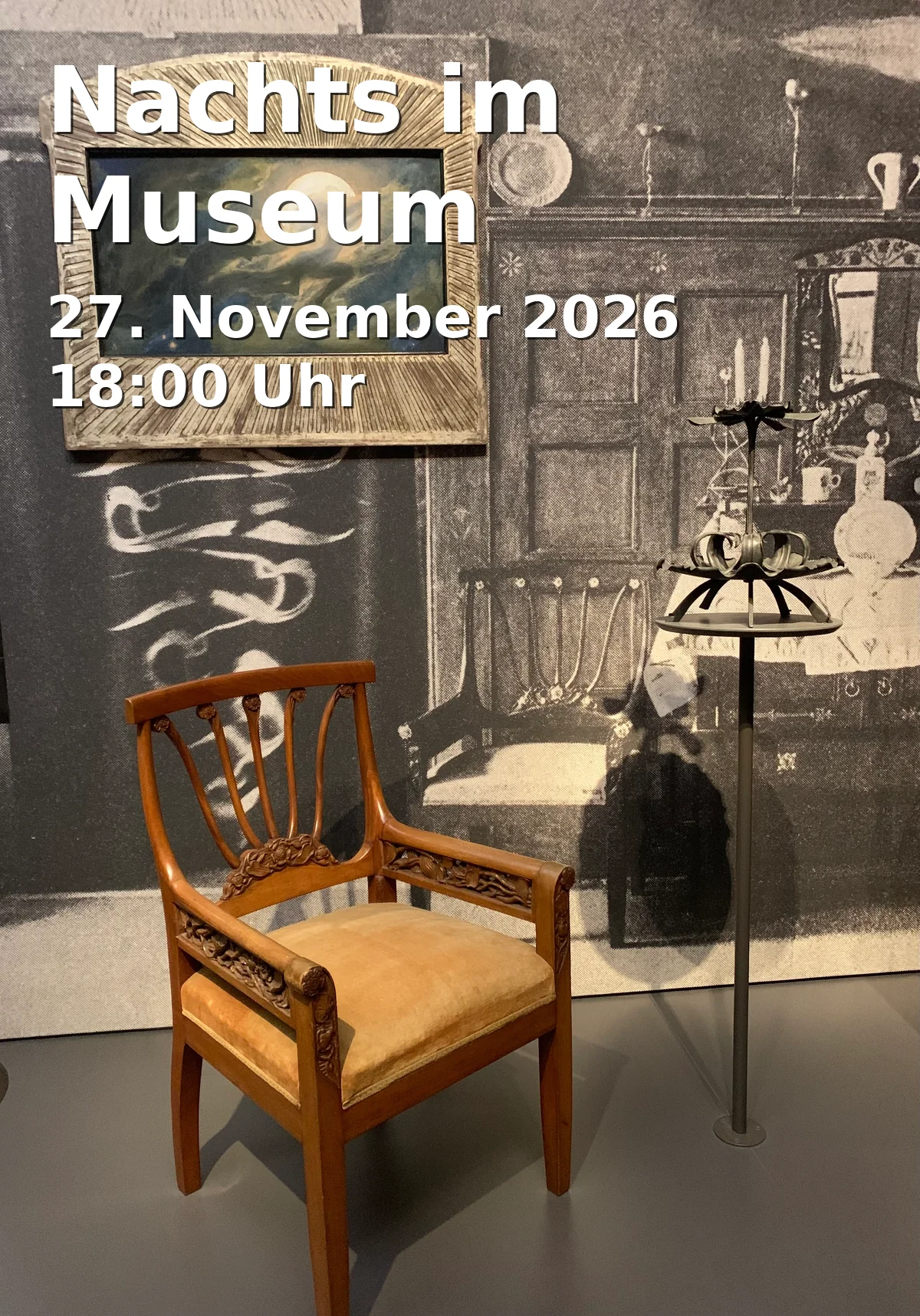
Nights at the Museum
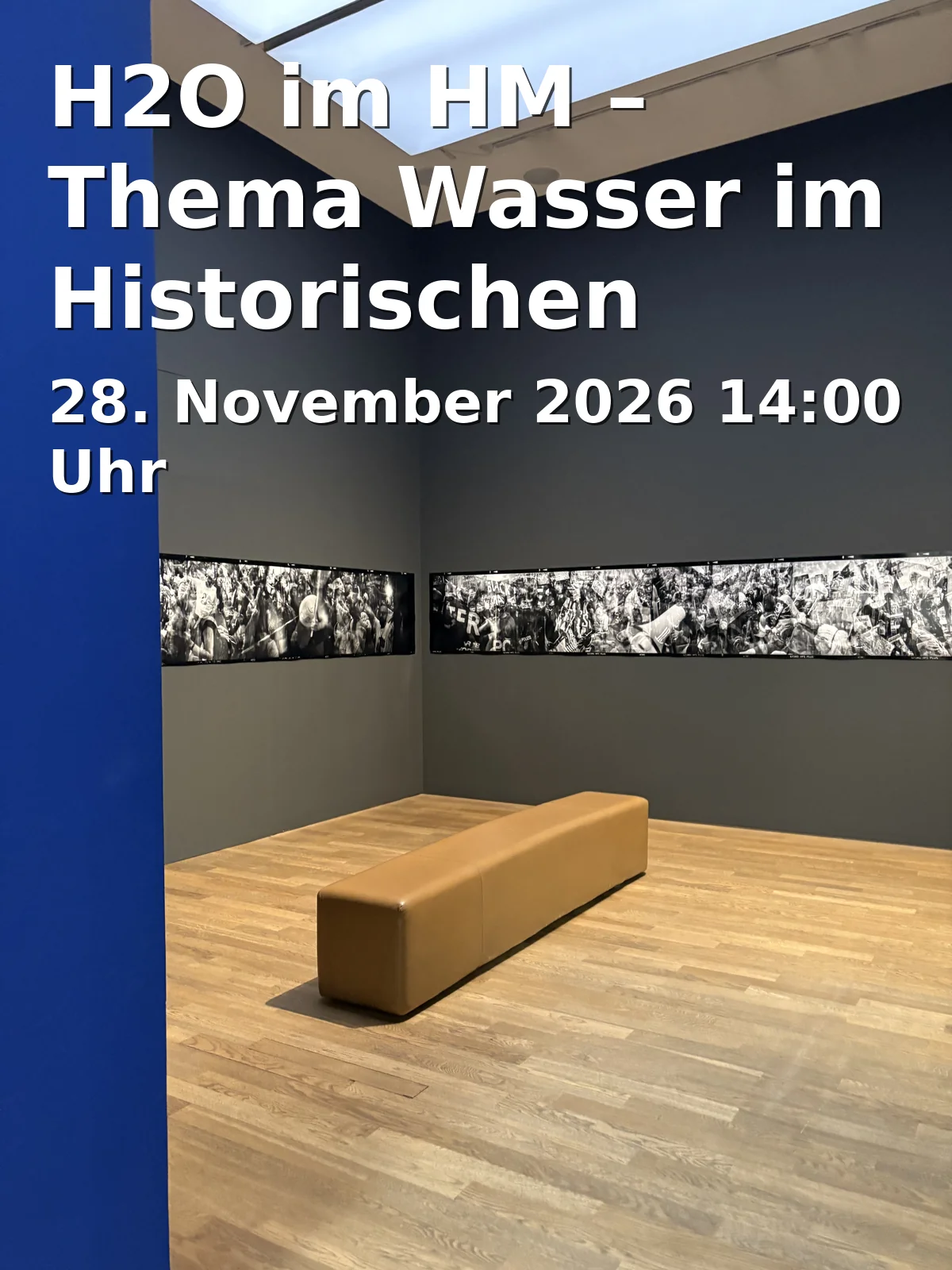
H2O in the HM – Topic Water in the Historical Museum – Children's Tour from 8 years

Curator Tour
Frequently Asked Questions
Reviews
Dave Ding
21. September 2018
The museum itself is good. But do remember to come out at least 5 minutes before it closes (it closes quite early and there was no announcement about closing up). I was locked in the museum 2 minutes before the official closing time and had to call the police to get me out. It’s a little bit disappointing after so many things happened.
Michael Harrison
16. April 2024
Small museum but with very powerful exhibits. I wish they had more explanation in English but still a very interesting visit.
Jan L
30. October 2019
If you want to know what is interesting about Bayreuth beyond Wagner, this is the place to go.
Angelo V.
31. December 2018
Absolutely a great place!
Oleksandr Plyska
31. December 2025
An interesting place that you must visit. It takes about two hours to see all the exhibits. Friendly staff, free entry on all floors! Highly recommended.