
Agnès Varda
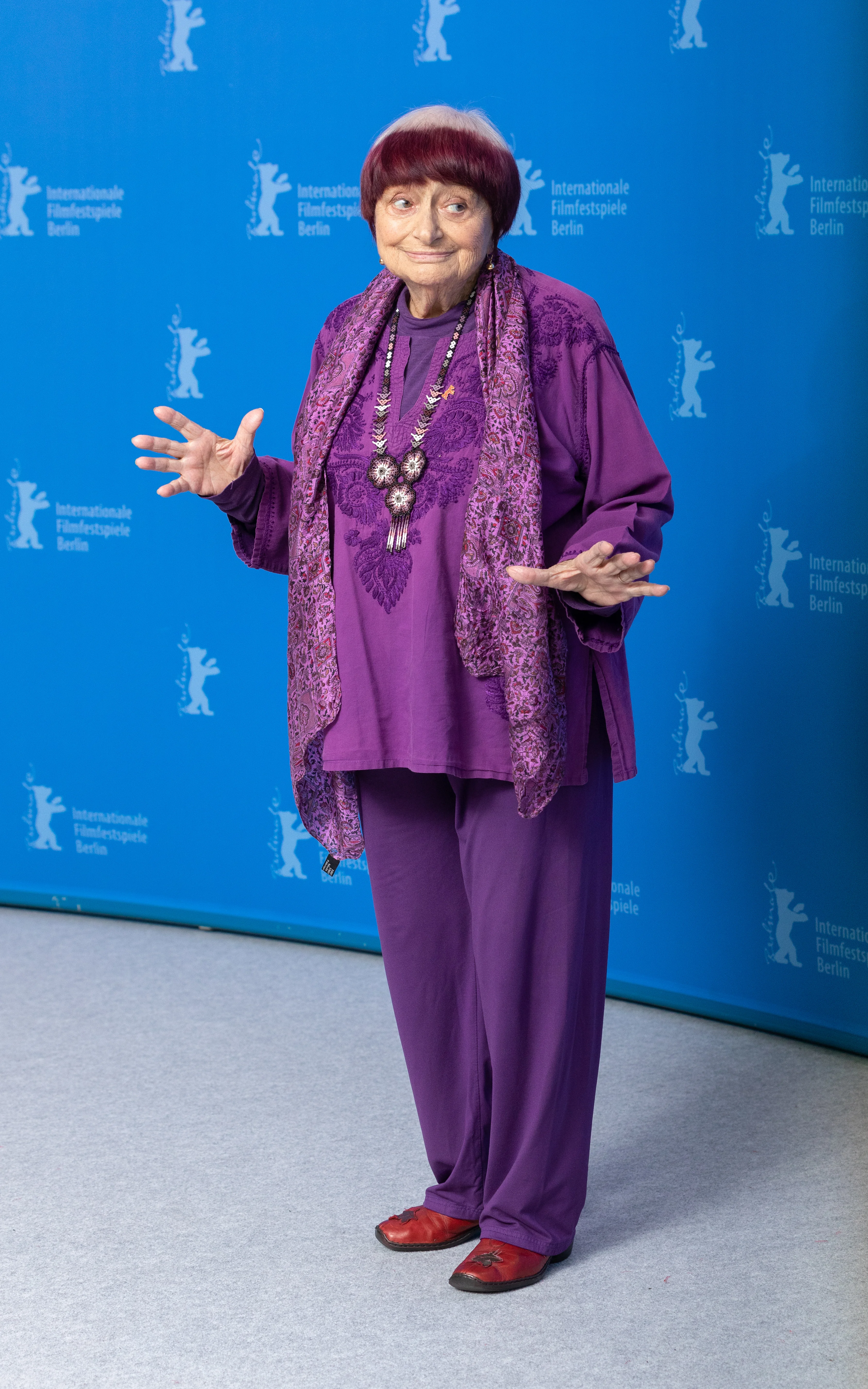
Image from Wikipedia
Image from Wikipedia
Agnès Varda – Pioneer of Modern Cinema, Photographer of the Moment
An Artist Between Nouvelle Vague, Documentary Film, and Visual Poetry
Agnès Varda, born on May 30, 1928, in Ixelles near Brussels and passed away on March 29, 2019, in Paris, is one of the most influential figures in modern French cinema. As a filmmaker, photographer, and installation artist, she combined personal memory, social observation, and formal boldness into an unmistakable body of work. Her debut La Pointe Courte established her as a precursor of the Nouvelle Vague and an author with a unique perspective on reality, time, and people. ([britannica.com](https://www.britannica.com/biography/Agnes-Varda?utm_source=openai))
Biographical Roots and Artistic Influence
Varda studied at the Sorbonne and the École du Louvre before working as a photographer and serving as the official photographer of the Théâtre National Populaire from 1951 to 1961. This combination of photographic precision and closeness to theater influenced her later cinematic style: attentive to faces, spaces, and gestures while remaining open to staging and improvisation. Her path into film was born from the practice of observation rather than an academic film canon; this is precisely what imparts an immediate freshness to her work. ([britannica.com](https://www.britannica.com/biography/Agnes-Varda?utm_source=openai))
The early trajectory of her career reveals an artist who never limited herself to a single medium. Photography, film, and later installation were not separate entities for Varda but engaged in a productive exchange. Her works set in Paris, Sète, California, or Noirmoutier transform places into spaces of memory and personal biography into artistic form. This blend of intimacy and worldview became her hallmark. ([britannica.com](https://www.britannica.com/biography/Agnes-Varda?utm_source=openai))
The Breakthrough: La Pointe Courte and Cléo de 5 à 7
With La Pointe Courte, her film career began in 1954, working against conventions from the start. The film combines a love story with the collective experience of a fishing village and utilizes a visual language that merges documentary sobriety with poetic construction. Britannica describes the work as a precursor to the Nouvelle Vague, and therein lies its historical significance: Varda developed a new form of storytelling before the movement ever received its name. ([britannica.com](https://www.britannica.com/biography/Agnes-Varda?utm_source=openai))
With Cléo de 5 à 7, she achieved international recognition in 1962. The film follows a singer during a nervous interlude, unfolding a precise portrait of female perception, urban movement, and existential uncertainty. Criterion describes the work as "seminal" and marks the official arrival of a director who avoids psychological clichés while remaining radically close to her characters. ([britannica.com](https://www.britannica.com/biography/Agnes-Varda?utm_source=openai))
Career Highlights Between Fiction and Documentary
In the 1960s and 1970s, Varda built an oeuvre that effortlessly transitioned between narrative and documentary film. Works such as Le Bonheur, Les Créatures, One Sings, the Other Doesn’t, and later Vagabond showcase her ability to translate social issues into concise cinematic forms. Particularly, One Sings, the Other Doesn’t is regarded as a feminist musical of lasting impact, while Vagabond, with its fragmented narrative style and sober gaze on marginality, stands among her boldest works. ([criterion.com](https://www.criterion.com/films/525-le-bonheur?utm_source=openai))
Her later documentaries solidified her reputation as an artist who viewed her own life not as a monument but as open material. The Gleaners and I, The Beaches of Agnès, and finally Varda by Agnès condense autobiographical reflection, formal experimentalism, and affectionate observations of everyday life. Criterion describes Varda by Agnès as a playful, deeply personal summary of a six-decade spanning career; this openness makes her late style so impressive. ([britannica.com](https://www.britannica.com/biography/Agnes-Varda?utm_source=openai))
Discography in a Broader Sense: Film Works, Editions, and Canon Formation
Although Agnès Varda did not leave behind a musical discography, her complete body of work behaves like a curated album of motifs, voices, and rhythms. The Criterion collection organizes her films into thematic spaces such as "Around Paris", "Rue Daguerre", "Her Body, Herself", or "No Shelter", thereby revealing the internal logic of her artistic development. This canon formation points to an exceptionally cohesive authorial perspective: from her early short films to her final film, Varda remains unmistakably Varda. ([criterion.com](https://www.criterion.com/boxsets/3432-the-complete-films-of-agnes-varda?utm_source=openai))
Key works include La Pointe Courte, Cléo de 5 à 7, Le Bonheur, Les Créatures, One Sings, the Other Doesn’t, Vagabond, The Gleaners and I, The Beaches of Agnès, and Faces Places. These works not only mark a filmography but also serve as an aesthetic archive of the 20th and early 21st centuries. Varda worked in black and white and color, in fiction and essay, in short and long form, always with a keen awareness of composition, gaze direction, and emotional economy. ([britannica.com](https://www.britannica.com/biography/Agnes-Varda?utm_source=openai))
Style, Aesthetics, and Artistic Development
Varda’s style merges documentary directness with poetic condensation. She did not observe social reality from a distance but with a strong empathy for outsiders, women, workers, travelers, and people at the margins of visibility. Her films often employ open forms, essayistic inserts, chance encounters, and a visual language derived from photography that reveals time in cinema. ([britannica.com](https://www.britannica.com/biography/Agnes-Varda?utm_source=openai))
Content-wise, her works revolve around female self-determination, labor, memory, aging, desire, and social inequality. Varda never sought smooth harmony; she was interested in tensions, fractures, and transitions. The fact that her work remains both political and playful, analytical and profoundly personal, makes her position in film history so unique. Cannes acknowledged this uniqueness with a number of significant awards and honors, including an Honorary Palme d'Or in 2015. ([festival-cannes.com](https://www.festival-cannes.com/en/2015/a-palme-dhonneur-to-agnes-varda/?utm_source=openai))
Critical Reception, Awards, and Cultural Influence
The reception of Agnès Varda is remarkably consistent: she is regarded as a central figure of the Nouvelle Vague, a pioneer of female authorship in cinema, and an artist with extraordinary formal independence. The Festival de Cannes emphasized her ability to shift from short film to feature film, from documentary to fiction, without losing her personal tone. Britannica also underlines her ranking as one of the most influential French directors of the 20th century. ([festival-cannes.com](https://www.festival-cannes.com/en/press/press-releases/agnes-varda-has-passed-away/?utm_source=openai))
Her influence extends far beyond France. Varda's later works inspired a new generation of filmmakers, artists, and essayists because they understand autobiography not as self-staging but as a method of thinking. Faces Places and Varda by Agnès demonstrate how vibrant her art remained until the end: curious, open, humorous, and marked by great formal consistency. The fact that her works continue to live on in retrospectives, museum projects, and curated editions confirms her lasting significance in cultural memory. ([criterion.com](https://www.criterion.com/films/30210-varda-by-agn-s?utm_source=openai))
Current Projects and Releases
As Agnès Varda passed away in 2019, there are no new projects, albums, or tours in the strict sense. The current relevance of her art arises through re-releases, retrospectives, restorations, and curated editions of her work. An example is the ongoing edition and presentation of her complete works by Criterion, as well as museum and press-related engagements with her photographs and installations. ([criterion.com](https://www.criterion.com/films/30210-varda-by-agn-s?utm_source=openai))
Voices of Fans
Since no officially verified social media channels for Agnès Varda have been found, this section is omitted entirely.
Conclusion: Why Agnès Varda Continues to Fascinate
Agnès Varda remains intriguing because she understood art not as a rigid form but as a living encounter. Her films and photographs connect precision, tenderness, and intellectual sharpness in a way that feels modern even today. Anyone discovering her work encounters an artist who expands cinema, shifts perspectives on women, and translates personal storytelling into a universal language. ([britannica.com](https://www.britannica.com/biography/Agnes-Varda?utm_source=openai))
Anyone interested in film history, visual language, and artistic freedom should not only read about Agnès Varda but also see her work. Her films unfold a presence on screen that is both light-footed and profound. An evening with her films feels less like a retrospective and more like an invitation to reconsider cinema. ([festival-cannes.com](https://www.festival-cannes.com/en/press/press-releases/agnes-varda-has-passed-away/?utm_source=openai))
Official Channels of Agnès Varda:
- Instagram: No official profile found
- Facebook: No official profile found
- YouTube: No official profile found
- Spotify: No official profile found
- TikTok: No official profile found
Sources:
- Britannica – Agnès Varda
- Festival de Cannes – Agnès Varda has passed away
- Festival de Cannes – A Palme d’honneur to Agnès Varda
- The Criterion Collection – The Complete Films of Agnès Varda
- The Criterion Collection – Varda by Agnès
- The Criterion Collection – Cléo from 5 to 7
- The Criterion Collection – Vagabond
- Wikipedia – Agnès Varda