
Camilla Nylund
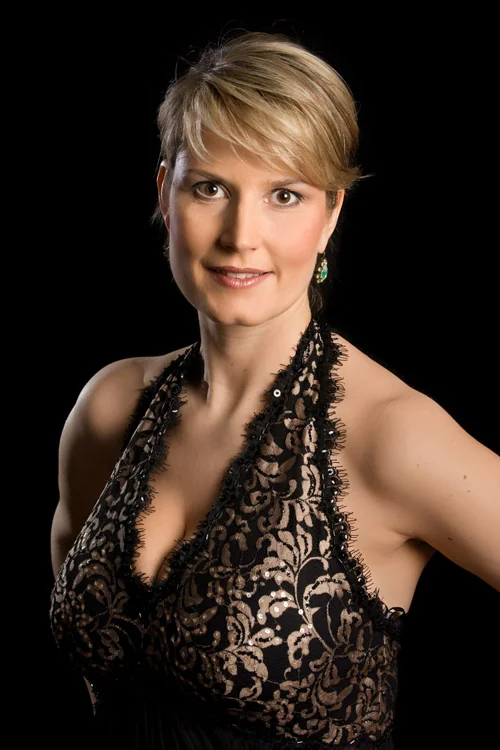
Image from Wikipedia
Image from Wikipedia
Camilla Nylund: The Dramatic Soprano Voice Between Wagner, Strauss, and International Opera Class
One of the Most Fascinating Sopranos of Her Generation
Camilla Nylund, born on June 11, 1968, in Vaasa, is one of the defining Finnish opera sopranos of today. Her artistic profile combines lyrical warmth with dramatic power, earning her an outstanding reputation particularly in the Wagner and Strauss repertoire. The Wikipedia entry describes her as a Finnish opera singer focusing on the dramatic soprano; her biography is marked by international guest performances, prestigious roles, and a long-standing presence on the major opera stages in Europe and the USA. ([de.wikipedia.org](https://de.wikipedia.org/wiki/Camilla_Nylund?utm_source=openai))
Biography: Origins, Education, and Artistic Influence
Nylund hails from Vaasa, Finland, and completed her early musical education with a clear focus on singing and opera. After studying in Turku and at the Salzburg Mozarteum, she laid the foundation for an international career characterized by stylistic discipline and vocal development. Early on, she received accolades at competitions; in 1995, she secured her first engagement at the Lower Saxony State Theatre in Hanover, before later becoming a permanent member of the ensemble at the Dresden Semperoper. ([lucernefestival.ch](https://www.lucernefestival.ch/de/programm/kuenstlerverzeichnis/camilla_nylund/3631))
This phase of education and early stage entry is crucial for understanding her career. Nylund's artistic development illustrates a soprano whose technique is geared not towards short-term impact but towards sustainable role development. Especially in the dramatic genre, where endurance, text understanding, and vocal control determine success or failure, this solid foundation is unmistakable. ([lucernefestival.ch](https://www.lucernefestival.ch/de/programm/kuenstlerverzeichnis/camilla_nylund/3631))
The Path from Hanover and Dresden to the Great International Stages
After her fixed engagements in Hanover and Dresden, Nylund developed into a sought-after guest artist worldwide. Her management's artist page cites performances at the Vienna State Opera, the Bavarian State Opera, the Metropolitan Opera New York, La Scala Milan, the Opéra Bastille, the Deutsche Oper Berlin, as well as at the Bayreuth and Salzburg Festivals. These milestones mark not only geographical reach but also a rare stylistic breadth within the classical opera repertoire. ([hilbert.de](https://www.hilbert.de/en/artists/singers/soprano/camilla-nylund/))
Her actual international breakthrough came in the 2004/05 season with role debuts as Elisabeth in Wagner's Tannhäuser, as Salome in Strauss's title role in Cologne, and as Leonore in Beethoven's Fidelio in Zurich. These three roles exemplify her artistic profile: a singer with a sense for grand lines, psychological intensity, and a voice that can both bloom heroically and maintain lyrical inner depth. ([de.wikipedia.org](https://de.wikipedia.org/wiki/Camilla_Nylund?utm_source=openai))
Wagner as the Artistic Center
Camilla Nylund's name is today inseparably linked with Richard Wagner. Her repertoire includes central female characters such as Elisabeth, Venus, Elsa, Sieglinde, Senta, Isolde, and Brünnhilde, and it is particularly in these roles that, according to her management, she has set artistic benchmarks. Bayreuth became a central place in her career: in 2011, she debuted there as Elisabeth, followed later by Eva, Elsa, Isolde, and Brünnhilde. ([hilbert.de](https://www.hilbert.de/en/artists/singers/soprano/camilla-nylund/))
Especially noteworthy is the development from lyric-dramatic soprano to high-dramatic Wagnerian roles. The inclusion of major roles like Isolde and the three Brünnhildes showcases a voice that has gained volume without losing its elegance and core sound. Reviews on her official website describe her sound as controlled, expressive, and rich in color; this mixture makes her particularly convincing in major Wagner roles. ([camillanylund.com](https://camillanylund.com/))
Strauss, Beethoven, and the Art of Vocal Characterization
In addition to Wagner, Richard Strauss forms a second center of her discography and stage art. Nylund has interpreted roles such as Salome, the Marschallin, Arabella, Chrysothemis, the Empress in Die Frau ohne Schatten, Ariadne, and Daphne. These roles demand not only vocal strength but, above all, differentiation in expression, nuance in legato, and an intelligent balance between emotional brilliance and textual precision. ([hilbert.de](https://www.hilbert.de/en/artists/singers/soprano/camilla-nylund/))
She also demonstrated her artistic range early on in Beethoven and Mozart roles. With Leonore in Fidelio, Idomeneo variations, and later concert repertoire such as the Ninth Symphony and Strauss's Four Last Songs, Nylund exhibits a repertoire consciousness that tightly intertwines opera and concert singing. Her specialty remains the grand vocal line: the ability to unite dramatic intensity and tonal cultivation in one breath. ([lucernefestival.ch](https://www.lucernefestival.ch/de/programm/kuenstlerverzeichnis/camilla_nylund/3631))
Current Projects and Artistic Presence 2024 to 2026
In recent seasons, Camilla Nylund remains a highly prominent artist. On her official website, Fidelio at the Bavarian State Opera is listed for 2026; furthermore, her calendar for the 2026/27 season includes roles such as Rosalinde, Marschallin, Marietta, Turandot, Senta, and Maddalena. Additionally, there will be concert performances of Wagner projects, guest appearances in Paris, Berlin, Dresden, Vienna, Shanghai, New York, and other international venues. ([hilbert.de](https://www.hilbert.de/en/artists/singers/soprano/camilla-nylund/))
In 2024, she returned to the Semperoper Dresden as Isolde. The official website documents this return as well as the continuation of her significant Wagner work in Zurich with Götterdämmerung. This illustrates a singer whose career is not focused on retrospective but on ongoing repertoire expansion and a deep engagement with the strongest roles of her specialty. ([camillanylund.com](https://www.camillanylund.com/news-and-press/?utm_source=openai))
Discography, Recordings, and Critical Reception
Her discography includes significant opera recordings and video productions, featuring works by Wagner, Strauss, Beethoven, Dvořák, and Korngold. AllMusic lists recordings such as Korngold's Die Tote Stadt and Weber's Der Freischütz, further demonstrating her stylistic range. The official website also highlights the Great American Songbook project, which was released as a DVD and CD by Naxos in 2022, showcasing Nylund in another sound universe between show tunes, orchestral arrangements, and musical nostalgia. ([allmusic.com](https://www.allmusic.com/artist/camilla-nylund-mn0002174932?utm_source=openai))
The critical reception is exceedingly strong. The official website quotes various publications such as the Süddeutsche Zeitung, Frankfurter Rundschau, Frankfurter Allgemeine, and Neue Zürcher Zeitung; recurring terms include vocal sovereignty, brilliance, control, and intensity of expression. Such reactions indicate that Nylund's art is recognized not only by opera audiences but also by specialized press as a benchmark for the dramatic soprano field. ([camillanylund.com](https://www.camillanylund.com/))
Awards and Cultural Recognition
Throughout her career, Camilla Nylund has received numerous honors. Major awards include the Christel Goltz Prize from the Semperoper Dresden, the Pro Finlandia Medal, the Finnish State Prize for Music, the title of Austrian Kammersängerin, and the Lotte Lehmann Memorial Ring. These honors underline her status as a singer of international authority, whose art transcends individual success roles. ([hilbert.de](https://www.hilbert.de/en/artists/singers/soprano/camilla-nylund/))
Institutionally, her significance is high: the repeated invitations to leading opera houses and festivals, coupled with roles like Brünnhilde, Isolde, Marschallin, or Ariadne, point to a singer who is firmly rooted in the operatic history of her generation. Her career represents continuity, stylistic awareness, and the rare combination of vocal beauty and dramatic authority. ([hilbert.de](https://www.hilbert.de/en/artists/singers/soprano/camilla-nylund/))
Style and Artistic Profile
Camilla Nylund is characterized by a clear stylistic line: a bright, focused soprano voice that unfolds power in the dramatic genre without developing hardness. Particularly the roles of Wagner and Strauss benefit from this blend of color, phrasing culture, and technical security. Her art thrives on controlled intensity, precise text treatment, and a stage presence that relies not on outward effects but on inner tension. ([camillanylund.com](https://www.camillanylund.com/))
Her ability to also excel in concert and song repertoire further enhances her profile. According to her management, German Romantic lieder is as much part of her musical focus as works by Scandinavian composers. This places her within a repertoire field that elegantly connects her Nordic heritage, her German education, and her international opera career. ([hilbert.de](https://www.hilbert.de/en/artists/singers/soprano/camilla-nylund/))
Cultural Influence and Significance for the Opera Field
Camilla Nylund is among the singers shaping the dramatic soprano field today. Her career exemplifies a generation of artists who view opera not as a rigid sequence of roles but as a living development. From the early lyric-dramatic repertoire to Brünnhilde and Isolde, she shows how voice, technique, and interpretative power can evolve artfully over decades. ([hilbert.de](https://www.hilbert.de/en/artists/singers/soprano/camilla-nylund/))
Her significance extends beyond individual premieres. She is a reliable presence at major houses, a style-conscious interpretative personality, and an artist whose name is associated with quality, depth of repertoire, and credibility. Anyone looking to understand contemporary opera art cannot overlook Camilla Nylund. ([hilbert.de](https://www.hilbert.de/en/artists/singers/soprano/camilla-nylund/))
Conclusion: Why Camilla Nylund Remains Particularly Exciting Today
Camilla Nylund combines vocal sovereignty, musical intelligence, and artistic maturity in a form that has become rare in opera. Her career narrates consistent development, brave role choices, and a voice that asserts itself with authority in the dramatic genre. For this reason, she remains one of the most exciting sopranos of her time. ([hilbert.de](https://www.hilbert.de/en/artists/singers/soprano/camilla-nylund/))
Experiencing her live means encountering opera at its highest level: concentrated, expressive, and supported by that unmistakable presence that makes great voices unforgettable. An evening with Camilla Nylund promises not only singing but musical drama in its noblest form. ([camillanylund.com](https://camillanylund.com/))
Official Channels of Camilla Nylund:
- Instagram: No official profile found
- Facebook: No official profile found
- YouTube: No official profile found
- Spotify: No official profile found
- TikTok: No official profile found