
Christoph Hein
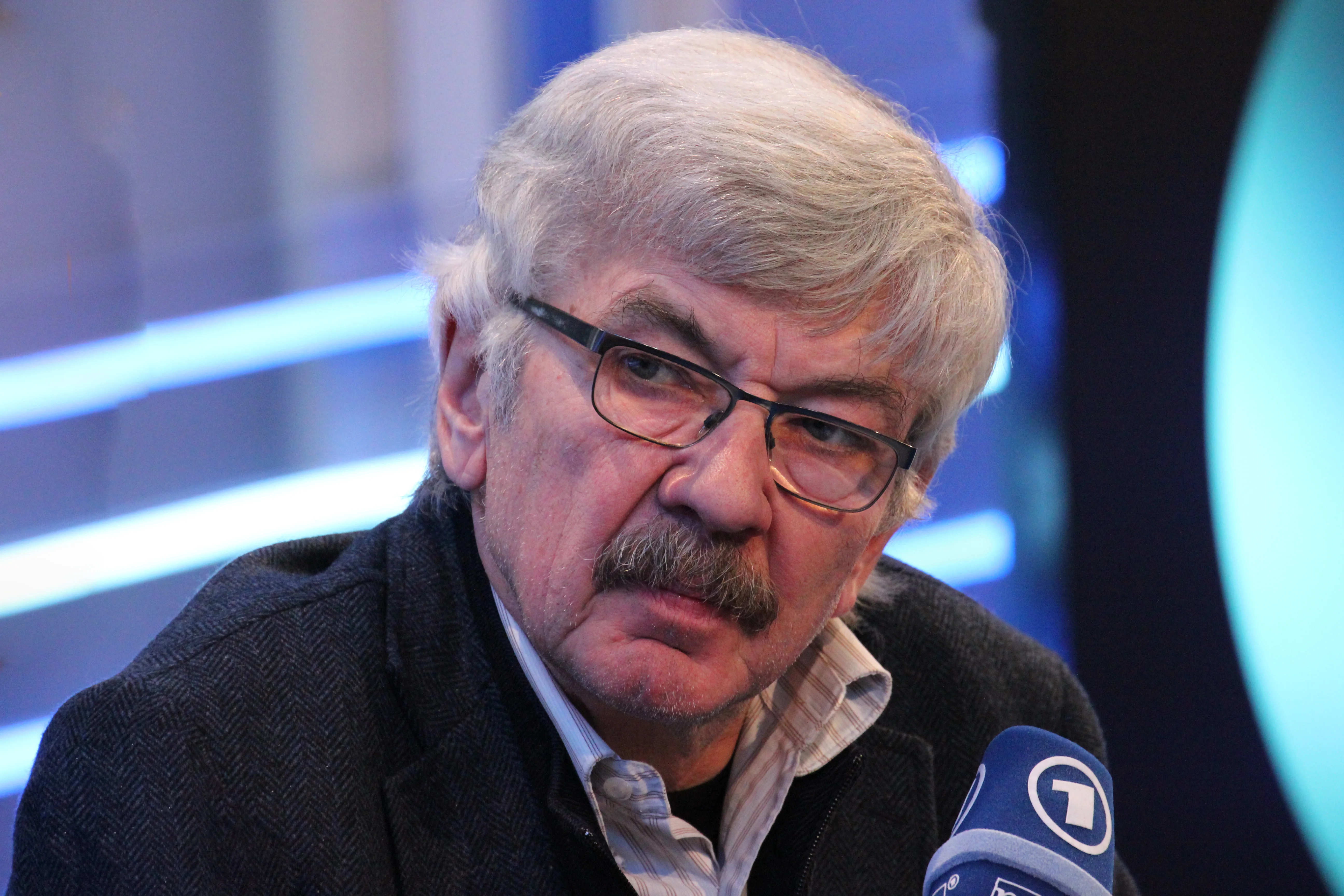
Image from Wikipedia
Image from Wikipedia
Christoph Hein – The Chronicler of German History and Master of Clear Prose
An Author Who Transforms History into Literature
Christoph Hein is one of the defining German authors of the present day. Born on April 8, 1944, in Heinzendorf in Silesia, he belongs to those writers whose work is closely tied to the fractures of the 20th century. His literature examines the German division, the GDR, the reunification, and the consequences of political upheaval with great precision.
Hein has been working as a freelance writer since 1979 and has established a firm place in the literary canon with his novels, novellas, short stories, plays, and essays. He became particularly well-known with the novella Der fremde Freund, which was published in 1982 in the GDR and a year later in the West under the title Drachenblut. This marked the beginning of his broad public recognition as one of the most important chroniclers of East German experience.
Biography: Origins, Influence, and Early Years
Christoph Hein was born in Silesia's Heinzendorf and grew up in Bad Düben after World War II. This biographical shift, the loss of home, and growing up in the post-war reality shape his writing to this day. His work repeatedly circles around origins, memory, guilt, and the struggles of continuing life under changed political orders.
Before his career as a freelance author, Hein worked in theater. He served as a dramaturgy assistant and later as a house author at the Berliner Volksbühne before fully dedicating himself to writing. These years in theater sharpened his perspective on dialogue, conflict, and social tension, qualities that also characterize his prose and plays.
The Literary Breakthrough with Der fremde Freund
Christoph Hein achieved his real breakthrough in the early 1980s with Der fremde Freund or Drachenblut. The novella struck a chord because it combined a revealing, psychologically precise, and simultaneously sober language with the depiction of an internally frozen life. As a result, Hein became known to a wide reading audience and emerged as an author who describes social realities without pathos and ideological distortion.
The success of this text marked a turning point in his musical career? No, rather in his literary career: It established him as a voice that presents East German living conditions and their moral contradictions with extraordinary clarity. The impact of this novella extends far beyond its immediate publication moment, as it is still considered a key text in the literary reception of the GDR.
Theater, Drama, and Political Diagnosis
Hein's dramas and adaptations significantly expand his literary profile. His plays frequently address historical upheavals, social tensions, and the question of how individuals live, fail, or assert themselves under political systems. Particularly in drama, his ability to shape historical material not merely as reconstruction but as living present is evident.
His work in theater combines linguistic precision with strong dramaturgical economy. Hein is less interested in grand gestures than in the subtle shifts in power dynamics, family structures, and social environments. This focus on detail makes his plays as connective as his novels.
Novels as Seismographs of the GDR and German Unity
In novels such as Horns Ende, Der Tangospieler, Willenbrock, Landnahme, and Das Narrenschiff, Hein unfolds a compelling chronicle of German history. His characters often live in zones of transition: between systems, between province and center, between individual biography and state order. This creates a literature of uncertainty, observation, and moral burden.
Hein is particularly strong when he narrates historical upheavals from the perspective of ordinary people. The GDR appears in his work neither as a nostalgic backdrop nor as a flat enemy image, but as a complex social system with contradictions, demands, and shattered hopes. It is precisely this accuracy that grants his work authority and cultural relevance.
Musical Development? No – Literary Language with Rhythm and Attitude
Although Christoph Hein is not a musician, his language has a distinct rhythm. His sentences are clearly structured, often concise, with a rugged elegance that avoids the superfluous. This creates a literary tension reminiscent of precise composition: every scene is well-placed, every line of dialogue serves a function.
Hein's style is cool in tone but not cold in effect. Behind the restraint lies an intense moral and historical observational capacity. This mixture of distance and empathy makes his texts enduringly readable and explains why he holds such a firm place in German-language literature.
Critical Reception, Impact, and Cultural Influence
Literary critics have repeatedly recognized Hein as one of the most important chroniclers of the GDR and the upheavals after 1989. His books are considered by many readers as keys to understanding East German experiential worlds because they are neither sentimental nor didactic. The press also emphasizes that he tells the history of the country with a rare combination of accuracy, sobriety, and moral vigilance.
Hein's cultural influence extends far beyond the immediate literary scene. His texts have been adapted into film, discussed, and included in the canon because they tackle central questions of German identity, state power, and personal integrity. Thus, he is not only a significant storyteller but also a defining intellectual of the Federal Republic.
Current Projects and Later Works
Even in old age, Christoph Hein remains present. In 2024 and 2025, he was again in the spotlight with new publications and talks, including Das Narrenschiff as well as other literary works and events. The current reception indicates that his work is not perceived as a finished chapter but as an ongoing engagement with German history.
His more recent texts demonstrate that Hein continues to seek the long historical arc. He writes about power, memory, and the blind spots of political systems with unbroken concentration. This tension in his late work is significant: it remains analytical, narratively sovereign, and thematically highly relevant.
Awards, Public Recognition, and Literary Weight
Christoph Hein has been honored numerous times and is regarded as one of the most important voices in German-language literature. In addition to recognition from critics and the public, he also held substantial institutional weight, such as serving as the president of the German PEN center. This role underlines his significance not only as an author but also as a public voice for literature and freedom of expression.
The awards and the ongoing presence of his books attest to the lasting impact of his work. Hein represents literature that does not simplify political reality, but rather renders it visible in all its contradictions. This very trait enhances the authority and timeless relevance of his work.
Conclusion: Why Christoph Hein Still Fascinates Today
Christoph Hein fascinates because he does not tell history decoratively but makes it experientially a conflict zone between individuals and systems. His books are precise, uncomfortable, and highly intelligent literary works. Anyone wishing to understand German contemporary history will find in his work one of the most reliable and compelling narrators.
His literature demands attention and rewards it with depth, clarity, and resonance. This is where its greatness lies: it shows not only what was but also how history continues to live in people. Those who experience Christoph Hein live, in readings or discussions, encounter an author who embodies great contemporary literature with a calm voice.
Official Channels of Christoph Hein:
- Instagram: no official profile found
- Facebook: no official profile found
- YouTube: no official profile found
- Spotify: no official profile found
- TikTok: no official profile found
Sources:
- Wikipedia – Christoph Hein
- Suhrkamp Verlag – Christoph Hein
- bpb – Christoph Hein: The GDR was ideologically, economically, and politically hopeless
- Deutschlandfunk Kultur – Christoph Hein in conversation about Das Narrenschiff
- SWR Kultur – Christoph Hein: Das Narrenschiff
- ARD Audiothek – Christoph Hein: A Life Between Literature, Resistance, and Contemporary History
- Chronik der Wende – Biography Christoph Hein