
Christoph Schlingensief
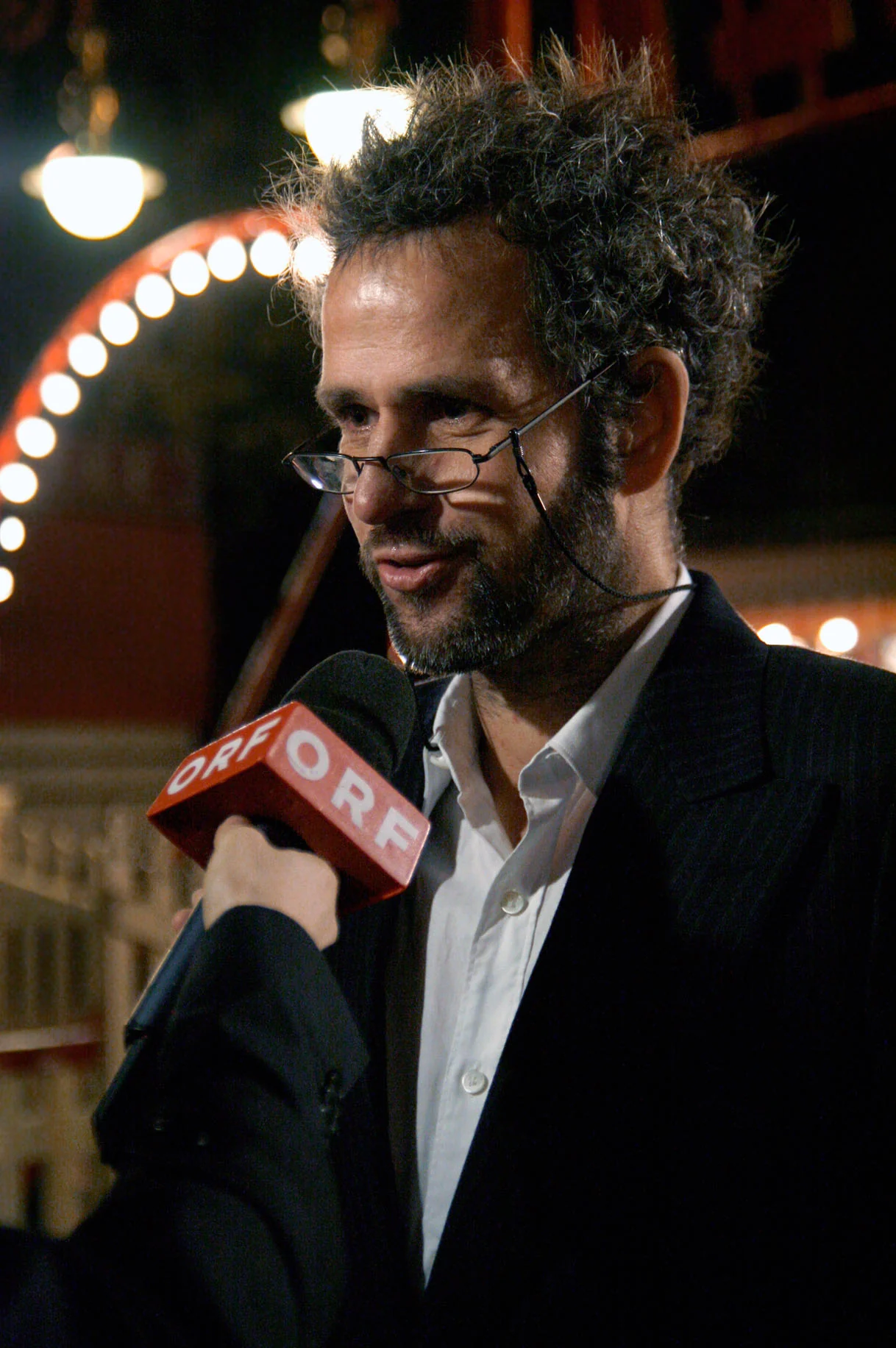
Image from Wikipedia
Image from Wikipedia
Christoph Schlingensief: The Radical Boundary Crosser Between Film, Stage, Opera, and Action
An Artist Who Changed German Culture with Force
Christoph Schlingensief was one of the most uncompromising German directors and performance artists of his generation. Born on October 24, 1960, in Oberhausen and died on August 21, 2010, in Berlin, he left behind a body of work that inimitably intertwined film, theater, opera, literature, and political performance. His biography reads like a chronicle of an artist who not only commented on public debates but deliberately challenged and reshaped them with his works. ([de.wikipedia.org](https://de.wikipedia.org/wiki/Christoph_Schlingensief?utm_source=openai))
For music lovers and cultural observers, Schlingensief is particularly fascinating because he never understood art as a finished form. His works operated with rhythm, provocation, noise, overload, and collective resonance; they often sounded like a musical assault on conventions, dramaturgy, and taste. It was especially in his closeness to opera, Fluxus, trash aesthetics, and activism that a work emerged that continues to resonate today. ([goethe.de](https://www.goethe.de/en/kul/flm/arc/fdb.cfm?filmdbId=1808112107470100000&utm_source=openai))
Biography: From the Oberhausen Family Home to Artistic Radicalism
Schlingensief grew up in Oberhausen and began his film work early on. After graduating from high school, he studied German philology, philosophy, and art history in Munich; this background shaped his later, highly reflective form of provocation as well as his tendency towards intellectual sharpness. The Deutsche Biographie describes him as a director, writer, filmmaker, theater director, opera director, action artist, and screenwriter—a remarkably dense array of roles that accurately encapsulates his overall work. ([deutsche-biographie.de](https://www.deutsche-biographie.de/120371715.html?utm_source=openai))
He worked against the expected from an early stage. The Goethe-Institut and the Kunstsammlung Nordrhein-Westfalen place his beginnings in experimental film, even before he established himself as a defining figure in theater and political action. His artistic profile was shaped by a determination not just to depict social conditions but to transform them into performative conflicts. ([goethe.de](https://www.goethe.de/en/kul/flm/arc/fdb.cfm?filmdbId=1808112107470100000&utm_source=openai))
The Breakthrough: Film, Provocation, and Early Recognition
Schlingensief received his first significant acclaim with the film Menu total in 1985. Prior to this, he had already worked on Tunguska; later came the so-called Germany Trilogy with 100 Years of Adolf Hitler, The German Chainsaw Massacre, and Terror 2000 between 1989 and 1992. These films made it clear that Schlingensief was not seeking a polished authorial pose, but rather an art form that productively employed shock, satire, and political friction. ([kunstsammlung.de](https://www.kunstsammlung.de/press/Press_kit_Christoph_Schlingensief_engl.pdf?utm_source=openai))
Especially in this phase, his aesthetic signature became evident: exaggeration, trash, grotesque humor, and a nearly musical montage of images, voices, and taboos. The Goethe-Institut describes his work as a mix of trash aesthetics, chaos, hysteria, and absurd-comic confrontation. His true strength lay precisely in making overload an aesthetic principle. ([goethe.de](https://www.goethe.de/ins/pl/pl/kul/ftm/zna/chs.html?utm_source=openai))
Theater as a Collective Event: Volksbühne, Documenta, and Political Play
In 1993, Schlingensief visibly emerged as a theater maker with 100 Years of CDU at the Volksbühne in Berlin. In 1997, he presented My Flesh, My Flesh, My Turnip – 48 Hours of Survival for Germany at documenta X. Such works demonstrate how he understood the stage as a social resonance space: not as a place of harmony, but as a laboratory for overload, participation, and political nervousness. ([kunstsammlung.de](https://www.kunstsammlung.de/press/Press_kit_Christoph_Schlingensief_engl.pdf?utm_source=openai))
His theater was never just acting, but a form of live composition of bodies, voices, media, and friction. Anyone who experienced Schlingensief encountered no conventional directing theater, but a radically open stage where the audience became part of the dramaturgy itself. His stage presence as an artist lay particularly in its unpredictability. ([goethe.de](https://www.goethe.de/en/kul/flm/arc/fdb.cfm?filmdbId=1808112107470100000&utm_source=openai))
Chance 2000 and Direct Interventions in Reality
In 1998, Schlingensief transformed art into a political experiment and founded the political party Chance 2000 for the Bundestag election campaign. The goal was to make visible those people overlooked in societal discourse. This connection of action, social criticism, and media overlay marks a core of his work: art not as commentary but as intervention in real power structures. ([kunstsammlung.de](https://www.kunstsammlung.de/press/Press_kit_Christoph_Schlingensief_engl.pdf?utm_source=openai))
Later projects like Please Love Austria and Freakstars 3000 continued this line and sharpened his reputation as an artist who tested institutions, the public, and media formats at their breaking points. The Vienna Festival and current exhibition texts emphasize how much his works interweave theater, film, installation, and action. ([ots.at](https://www.ots.at/presseaussendung/OTS_20260505_OTS0093/christoph-schlingensief-es-ist-nicht-mehr-mein-problem?utm_source=openai))
Opera, Music, and Sound as Artistic Expansion
Schlingensief remained closely connected to musical theater and also worked as an opera director. In the Deutsche Biographie and cultural-historical references, he is explicitly recognized as an opera director; Bayreuth counts his 2004 Parsifal as a significant milestone in directing history. For his work, opera was not a stage of representation but another field for crossing boundaries, image power, and emotional density. ([deutsche-biographie.de](https://www.deutsche-biographie.de/120371715.html?utm_source=openai))
Additionally, there is an early musical trace: at the beginning of his career, Schlingensief founded the band Vier Kaiserlein. This connection to the music scene indicates that his thinking was rhythmic, collective, and performative from the outset. Even though Schlingensief was not a musician in the classical sense, the sound of his works remains a crucial part of his artistic identity. ([welt.de](https://www.welt.de/kultur/article9310969/Vier-Kaiserlein-Schlingensief-Kaiserlein-der-Neuen-Deutschen-Welle.html?utm_source=openai))
Artistic Development: Between Fluxus, Theater, and Total Present
By the 2000s, it became evident how consistently Schlingensief expanded his form. The Goethe-Institut and the Kunstsammlung Nordrhein-Westfalen refer to works like Church of Fear and projects where autobiographical, political, and spiritual levels converged. His work increasingly revolved around guilt, redemption, illness, publicity, and the question of how art can respond to reality without tipping into mere illustration. ([kunstsammlung.de](https://www.kunstsammlung.de/press/Press_kit_Christoph_Schlingensief_engl.pdf?utm_source=openai))
Particularly impressive remains his ability to connect high and low forms, trash and seriousness, pathos and irony in the same composition. This gave his art a rare tension: it was intellectual but never cold; loud but never arbitrary; provocative but never empty. It is precisely this complexity that makes his artistic development so relevant for today's cultural debates. ([goethe.de](https://www.goethe.de/ins/pl/pl/kul/ftm/zna/chs.html?utm_source=openai))
Discography, Works, and Documented Reception
Schlingensief does not have a classic discography in the pop or rock sense; his work is instead distributed across films, theatrical works, books, radio plays, and opera productions. Nevertheless, sources like Wikipedia and the Goethe-Institut document individual audio and text publications, such as the spoken work I Know It Was Me, released in 2012. The reception of his work is furthered by documentaries, retrospectives, and catalogs. ([de.wikipedia.org](https://de.wikipedia.org/wiki/Christoph_Schlingensief?utm_source=openai))
Critical recognition remains broad to this day: newspapers and cultural institutions describe Schlingensief as an exceptional artist whose works have shaped German contemporary history. Retrospectives and exhibition texts emphasize his relevance as a figure between avant-garde, theater history, and political art. Even decades after his most important works, his name remains a reference point when it comes to radical forms of contemporary art. ([sueddeutsche.de](https://www.sueddeutsche.de/magazin/theater/christoph-schlingensief-leben-szm.89090?reduced=true&utm_source=openai))
Cultural Influence: Why Schlingensief Still Electrifies
Schlingensief's influence extends far beyond the stage. He shaped the idea that art can be uncomfortable, that it disturbs rather than soothes the public, and that the relationship between form and politics is never neutral. His works hold a fixed place in German cultural history because they repeatedly renegotiated the boundaries between art forms and social roles. ([goethe.de](https://www.goethe.de/en/kul/flm/arc/fdb.cfm?filmdbId=1808112107470100000&utm_source=openai))
Especially for an audience that understands music as energy, dramaturgy, and collective experience, Schlingensief remains exciting. His stages, films, and actions function like radical compositions: with breaks, intensifications, noise, silence, and emotional density. Observing his works does not present a smooth master narrative, but a vibrating archive of contemporary German culture. ([goethe.de](https://www.goethe.de/ins/pl/pl/kul/ftm/zna/chs.html?utm_source=openai))
Conclusion: An Artist Who Cannot Be Forgotten
Christoph Schlingensief was a boundary crosser who condensed film, theater, opera, action, and political intervention into a unique artistic language. His work continues to challenge today because it unites courage, pace, intelligence, and risk. Anyone who wants to understand how radical German-language culture can be cannot overlook Schlingensief. ([deutsche-biographie.de](https://www.deutsche-biographie.de/120371715.html?utm_source=openai))
It is precisely his restlessness, formal audacity, and pleasure in overload that make him so fascinating. A live experience of his works remains, wherever retrospectively possible, an intense encounter with an artist who understood art as an existential challenge. Schlingensief remains a name for all those who seek cultural boundary experiences. ([ots.at](https://www.ots.at/presseaussendung/OTS_20260505_OTS0093/christoph-schlingensief-es-ist-nicht-mehr-mein-problem?utm_source=openai))
Official Channels of Christoph Schlingensief:
- Instagram: No official profile found
- Facebook: No official profile found
- YouTube: No official profile found
- Spotify: No official profile found
- TikTok: No official profile found
Sources:
- Wikipedia – Christoph Schlingensief
- Deutsche Biographie – Schlingensief, Christoph
- Kunstsammlung Nordrhein-Westfalen – Press Kit Christoph Schlingensief. Kaprow City
- Goethe-Institut – Film catalogue: Christoph Schlingensief
- Goethe-Institut Poland – Christoph Schlingensief and His Films
- Portal Rheinische Geschichte – Christoph Maria Schlingensief
- Munzinger Biographie – Christoph Schlingensief
- WELT – Vier Kaiserlein, Schlingensief and the New German Wave
- Wikipedia: Image and text source