
Christoph Willibald Gluck
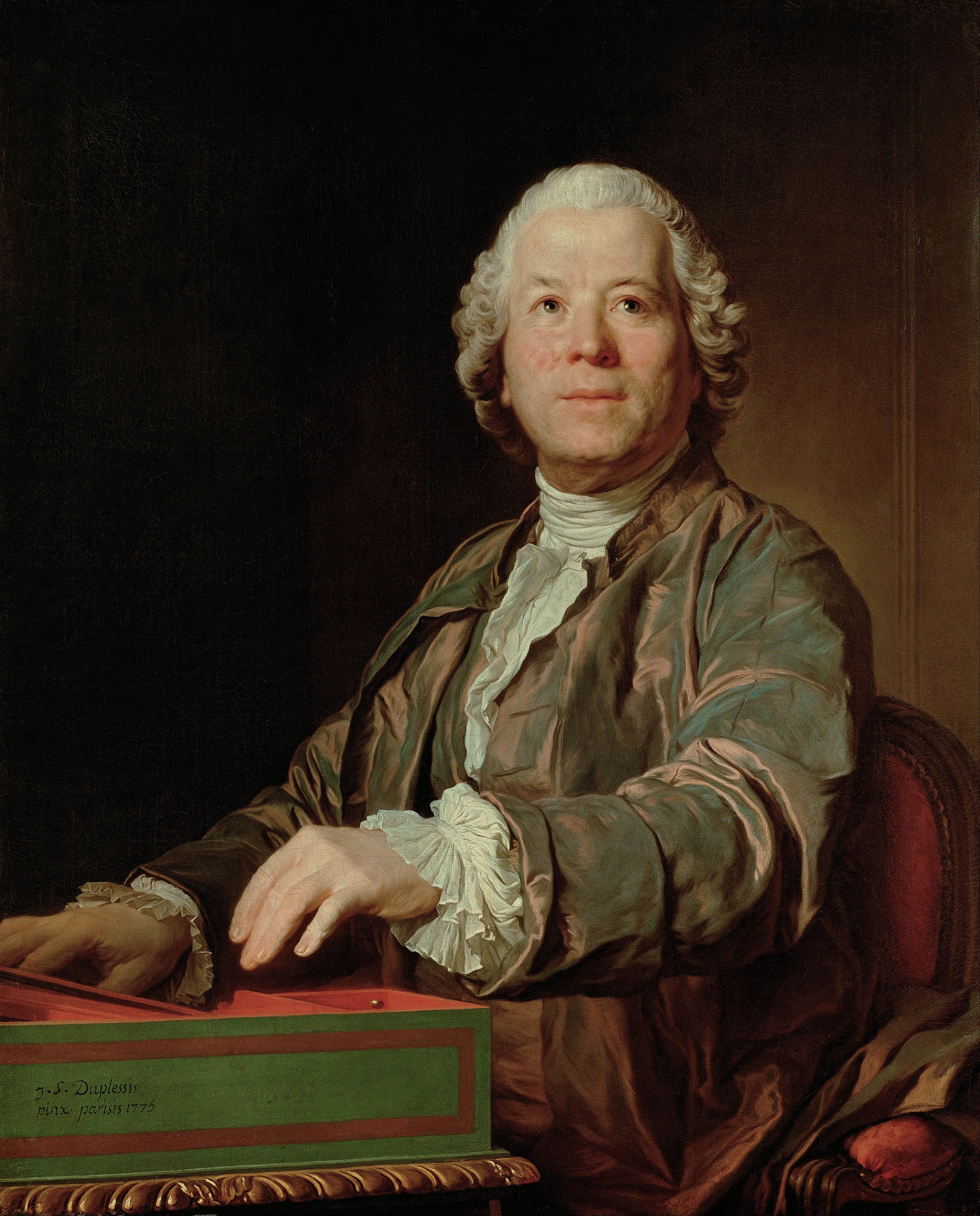
Image from Wikipedia
Image from Wikipedia
Christoph Willibald Gluck – the Opera Reformer between Baroque and Classical
A Composer Who Redefined Opera
Christoph Willibald Gluck is one of the most influential opera composers of the 18th century. Born on July 2, 1714, in Erasbach near Berching and died on November 15, 1787, in Vienna, he became a key figure in music history with works such as Orfeo ed Euridice, Alceste, Iphigénie en Aulide, and Iphigénie en Tauride. His name is synonymous with an operatic aesthetic that fused drama, text, and music more closely than what was common in the previously dominant opera seria. ([britannica.com](https://www.britannica.com/biography/Christoph-Willibald-Gluck))
Biography: From the Oberpfalz to Vienna
Early Years and Musical Influences
Gluck did not grow up in a musical family; he was the son of a forester. The complete works edition of Gluck describes his youth as being marked by tensions with his father, who intended for him to pursue a forestry career; however, his musical interests emerged early. His exposure to various places and cultural environments at a young age shaped his view of opera as a European art form. ([gluck-gesamtausgabe.de](https://www.gluck-gesamtausgabe.de/projekt/gluck/biographie.html))
Little is securely known about his early education, but sources tell of music lessons with school teachers and study years in Prague. It seems that he also turned to mathematical studies there before music eventually took him to Italy and later to Vienna. This dynamic early phase explains why Gluck never confined himself stylistically to a single national tradition. ([gluck-gesamtausgabe.de](https://www.gluck-gesamtausgabe.de/projekt/gluck/biographie.html))
The Path to the European Opera World
In the 1740s, Gluck began a productive opera career with early works such as Artaserse, Demetrio, La Semiramide riconosciuta, and Le cinesi. His list of compositions shows how steadily he established himself within the opera genre before the major reform works of the 1760s and 1770s solidified his historical role. Even these early works demonstrate an extraordinarily high work tempo and a secure mastery of Italian operatic forms. ([en.wikipedia.org](https://en.wikipedia.org/wiki/List_of_compositions_by_Christoph_Willibald_Gluck))
Vienna became crucial: there, Gluck found an important patron in Prince Joseph Friedrich of Sachsen-Hildburghausen and initially served as concertmaster, later as Kapellmeister. Support at the imperial court allowed him the space to refine his musical signature and present his operas to an educated, international audience. By this stage in Vienna, Gluck had become a composer of European stature. ([britannica.com](https://www.britannica.com/biography/Christoph-Willibald-Gluck))
The Breakthrough: Opera Reform as Artistic Revolution
Drama over Mere Virtuosity
Gluck is mainly famous as an opera reformer. He opposed the star logic of late Baroque opera seria, where vocal brilliance often took precedence over dramatic truth, and sought a closer unity of action, music, and expression. The Philharmonia Baroque Orchestra emphasizes that Gluck revolutionized opera at a turning point as late Baroque transitioned into early Classical. ([philharmonia.org](https://philharmonia.org/learn-and-listen/baroque-composers/christoph-willibald-gluck/))
His collaborations with Ranieri de’ Calzabigi, Gasparo Angiolini, and Giacomo Durazzo culminated in 1761 with the ballet pantomime Don Juan, forming a new connection between drama, pantomime, and music. In works like Orfeo ed Euridice and Alceste, spiritual truth, clear affections, and a tight dramatic architecture took center stage. This reduction to the essentials is what makes Gluck's music modern and immediately comprehensible even today. ([gluck-gesamtausgabe.de](https://www.gluck-gesamtausgabe.de/projekt/gluck/biographie.html))
Impact in Vienna and Paris
Gluck's operas generated considerable resonance and sparked a famous dispute in Paris between proponents of his aesthetic and defenders of the Italian opera led by Niccolò Piccinni. This debate illustrates how his works not only entertained but raised fundamental aesthetic questions. Gluck thus became a figure around whom the opera culture of his time reoriented. ([gluck-gesamtausgabe.de](https://www.gluck-gesamtausgabe.de/projekt/gluck/biographie.html))
His reception has not been confined to his own time. Even today, concert and festival programs highlight Gluck as a humanistic composer of international standing and emphasize the emotional power of his music. The Gluck Festival in Berching explicitly points out that his works touch on the "deeper reality of human existence" and continue to evoke enthusiasm. ([gluck-festspiele.de](https://gluck-festspiele.de/wp-content/uploads/2024/01/Gluck_Programmvorschau.pdf))
Discography and Musical Legacy
The Central Operas and Their Place in the Repertoire
Gluck's core works include Orfeo ed Euridice in the Vienna version of 1762 as well as the later Paris version, in addition to Alceste (1767), Paride ed Elena (1770), Iphigénie en Aulide (1774), and Iphigénie en Tauride (1779). These works mark the pinnacle of his operatic output and still serve as the starting point for any serious engagement with his discography. Their prevalence in performances and recordings demonstrates how enduring his reform ideas have shaped the repertoire. ([britannica.com](https://www.britannica.com/biography/Christoph-Willibald-Gluck))
In addition to operas, his oeuvre includes instrumental music, ballet music, church music, as well as songs and odes. The complete works edition of Gluck refers to the psalm De profundis clamavi and to settings of texts by Friedrich Gottlieb Klopstock in the 1770s. This shows a compositional breadth that extends beyond opera, even though his fame clearly rests on music theater. ([gluck-gesamtausgabe.de](https://www.gluck-gesamtausgabe.de/projekt/gluck/biographie.html))
Reception History and Critical Assessment
In music history, Gluck is regarded as a bridge figure between late Baroque and Classical. The cultural foundation describes him as a composer who significantly advanced the handling of language, the psychological interpretation of themes, the reduction of secco recitative, and the unity of dramatic forms. His sustainable influence lies exactly in this: he made opera denser, more coherent, and more humanly immediate. ([kulturstiftung.org](https://kulturstiftung.org/biographien/gluck-christoph-willibald-2))
Modern research and current repertoire activity confirm this role. Recent editorial and festival-related activities, such as the ongoing complete works edition of Gluck as well as current festival programs and publishing announcements, show that Gluck is not treated as a museum classic, but as a vibrant reference point for music theater. His works continue to be a challenge and a promise of artistic clarity for performers and audiences alike. ([gluck-gesamtausgabe.de](https://www.gluck-gesamtausgabe.de/projekt/gluck/biographie.html))
Style, Dramaturgy, and Cultural Impact
Gluck's style combines melodic simplicity with dramatic precision. Instead of overflowing ornamentation, he employs focused emotions, clear scene architecture, and a closer relationship between orchestra, choir, and action. This concentration on expression and rhetorical truth made his operas models for later composers who took music theater seriously as a dramatic art form. ([kulturstiftung.org](https://kulturstiftung.org/biographien/gluck-christoph-willibald-2))
His significance extends into contemporary operatic practice. Festivals, specialized ensembles, and historically informed performances regularly showcase Gluck's music as a model for organic music theater, where composition, text, and stage effect merge seamlessly. Listening to Gluck is not just an experience of an 18th-century work, but of the moment when opera becomes a psychologically dense artistic space. ([gluck-festspiele.de](https://gluck-festspiele.de/wp-content/uploads/2024/01/Gluck_Programmvorschau.pdf))
Conclusion: Why Christoph Willibald Gluck Continues to Fascinate Today
Christoph Willibald Gluck remains captivating because he renewed opera from the inside out. He combined musical elegance with dramatic truthfulness, creating an aesthetic that is still regarded as a benchmark today. Anyone interested in music history, artistic development, and the emergence of modern music drama will find Gluck to be one of the most fascinating figures of the 18th century. ([britannica.com](https://www.britannica.com/biography/Christoph-Willibald-Gluck))
His operas deserve the live experience, as they unleash their full power in performance: in the interplay of voice, orchestra, stage, and emotion. Gluck is not just a name for connoisseurs, but a composer whose works allow the emotional depth and formal clarity of opera to be experienced anew even today. ([gluck-festspiele.de](https://gluck-festspiele.de/wp-content/uploads/2024/01/Gluck_Programmvorschau.pdf))
Official Channels of Christoph Willibald Gluck:
- Instagram: no official profile found
- Facebook: no official profile found
- YouTube: no official profile found
- Spotify: no official profile found
- TikTok: no official profile found
Sources:
- Britannica – Christoph Willibald Gluck
- Gluck Complete Works Edition – Biography
- Philharmonia Baroque Orchestra & Chorale – Christoph Willibald Gluck
- Gluck Festival 2024 – Program Preview
- Cultural Foundation – Christoph Willibald Gluck
- Wikipedia – List of compositions by Christoph Willibald Gluck
- Wikipedia – Christoph Willibald Gluck