
François Ozon
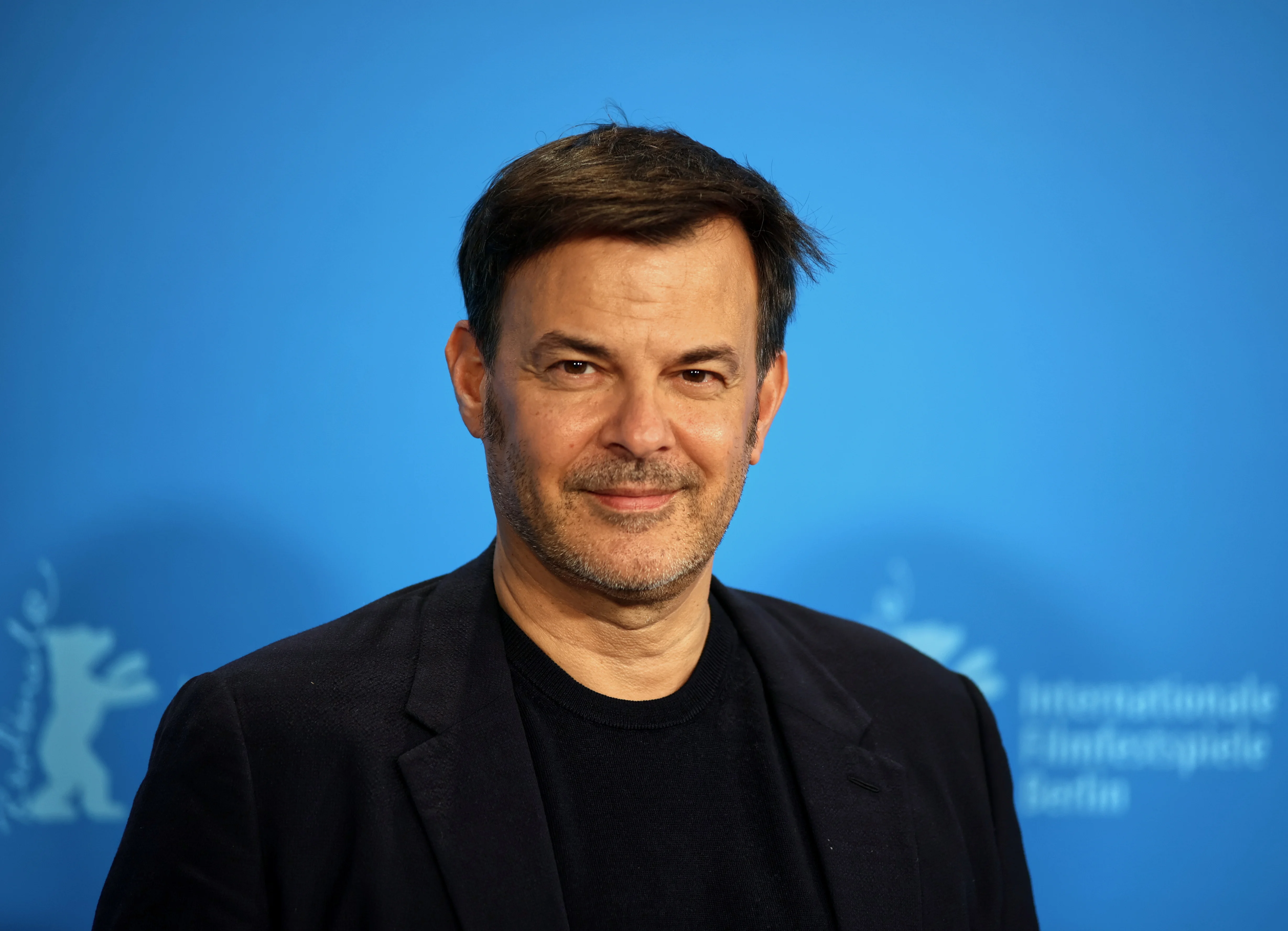
Image from Wikipedia
Image from Wikipedia
François Ozon: The Elegant Provocateur of French Auteur Cinema
A Director Who Breaks Genre Boundaries and Tells Intimate Stories with Style, Tempo, and Precision
François Ozon, born on November 15, 1967, in Paris, is one of the most productive and distinctive filmmakers in French cinema. As a director, screenwriter, and producer, he has established a reputation as a versatile auteur who combines melodrama, thriller, comedy, and psychological chamber plays with a keen sense of rhythm, visual composition, and emotional tension. His films often revolve around desire, identity, family secrets, grief, and the uncertainty of perception. ([francois-ozon.fr](https://www.francois-ozon.fr/?utm_source=openai))
Biographical Roots and Artistic Influence
Ozon studied film science at the University of Paris I and subsequently attended the prestigious film school La Fémis, where he laid the groundwork for his later dual role as director and author. This academic and craft training explains the formal control that characterizes many of his works: clear dramaturgy, precise casting, and a strong interest in the composition of images. Early on, he combined cinematic reflection with a desire to play with expectations and conventions. ([munzinger.de](https://www.munzinger.de/register/portrait/biographien/francois%2Bozon/00/24066?utm_source=openai))
His career did not begin with a linear rise but with a series of films that garnered attention in the festival circuit and quickly established him as a unique voice. The tone of his works is often light and ironic, but it deliberately tips into darker psychological realms. It is precisely this mixture of levity and depth that constitutes a significant part of his artistic profile. ([munzinger.de](https://www.munzinger.de/register/portrait/biographien/francois%2Bozon/00/24066?utm_source=openai))
The Breakthrough with Bold and Restless Feature Films
Ozon's feature film debut Sitcom brought him early into the spotlight at the Cannes Film Festival in 1998, making it clear that here was a director working with a sense of provocation, formal awareness, and dark humor. He solidified his international breakthrough with Under the Sand, a quiet, intense drama about loss, memory, and the fragility of a relationship. This work demonstrated that Ozon is not confined to a single tone, but rather shapes emotional nuances with stylistic elegance. ([munzinger.de](https://www.munzinger.de/register/portrait/biographien/francois%2Bozon/00/24066?utm_source=openai))
In the following years, he evolved into a director who tackles large themes within small, closely observed frameworks. His films are often psychologically dense and simultaneously formally playful; they utilize music, set design, costumes, and color dramaturgy not just as decoration, but as narrative tools. This combination earned him a reputation both in France and internationally as a popular yet demanding auteur filmmaker. ([en.wikipedia.org](https://en.wikipedia.org/wiki/Fran%C3%A7ois_Ozon?utm_source=openai))
Style, Themes, and Cinematic Signature
Ozon works with a remarkable stylistic range: sometimes cool and controlled, sometimes sensual and cheerful, sometimes openly melodramatic. Recurring motifs include sexual identity, shifting truths, social masks, desire, and the tension between surface and inner experience. His films are often praised for their aesthetic beauty, their satirical undertone, and their free engagement with human sexuality. ([en.wikipedia.org](https://en.wikipedia.org/wiki/Fran%C3%A7ois_Ozon?utm_source=openai))
A central feature of his art is the casting. Ozon repeatedly works with striking actors whose presence he intentionally juxtaposes against familiar role patterns. This creates films that are both precisely constructed and open to ambiguity. Whether in intimate drama, ensemble films, or literary adaptations: his direction thrives on controlled tempo, psychological tension, and a keen sense of the moment when a character tips. ([allocine.fr](https://www.allocine.fr/personne/fichepersonne-17705/biographie/?utm_source=openai))
Filmography? No: A Remarkable Filmography with Iconic Highlights
Since François Ozon is not a musician, but a filmmaker, his body of work consists not of a discography but of a multifaceted filmography. Key works frequently mentioned include 8 Women, Swimming Pool, The Jewel, In His House, Frantz, Thank God, Summer of '85, Peter von Kant, My Fabulous Crime, and The Stranger. These titles mark different phases of his development and show how consistently he experiments with new forms, genres, and perspectives. ([munzinger.de](https://www.munzinger.de/register/portrait/biographien/francois%2Bozon/00/24066?utm_source=openai))
8 Women and Swimming Pool were particularly well-received internationally and contribute significantly to Ozon's standing as one of the most important French directors of the present. His films often combine audience success with festival resonance, which is by no means a matter of course in arthouse cinema. This balance of accessibility and formal sophistication explains his lasting influence on European auteur cinema. ([en.wikipedia.org](https://en.wikipedia.org/wiki/Fran%C3%A7ois_Ozon?utm_source=openai))
Critical Reception, Awards, and Festival Presence
International critics have praised Ozon for years for his versatility and the way he transforms familiar material into new fields of tension. He is regularly present at festivals; his works have screened in Cannes, Berlin, and San Sebastián, where they have won or been nominated for numerous awards. The Académie des César has multiple nominations for his work, and his name has long been a fixture in the vocabulary of contemporary French cinema. ([academie-cinema.org](https://www.academie-cinema.org/personnes/177213/?utm_source=openai))
It is particularly noteworthy that Ozon cannot be reduced to a single major award. Instead, his authority stems from the consistency of his work, his presence at festivals over decades, and his ability to continually explore new themes. Critics see him as a director who continues the tradition of French cinema with a modern perspective on desire, social roles, and narrative uncertainty. ([rottentomatoes.com](https://www.rottentomatoes.com/celebrity/francois_ozon?utm_source=openai))
Current Projects and Later Phase with New Maturity
Even in the 2020s, Ozon remains productive and thematically flexible. His official site mentions recent and upcoming projects such as Quand vient l’automne, L’Étranger, and a film slated for 2027 with the working title Le Mal est fait; the site also highlights his extraordinary productivity with 25 feature films and 18 short films. This confirms a work rhythm that has become rare in European auteur cinema. ([francois-ozon.fr](https://www.francois-ozon.fr/?utm_source=openai))
Interviews and recent press reports also show a director who continues to speak very consciously about female characters, aging, desire, and societal perception. These themes run like a red thread through his work and give even the newer films their emotional and political tension. Ozon remains not only a stylistically reliable but also a keenly insightful filmmaker regarding contemporary issues. ([elpais.com](https://elpais.com/icon/cultura/2024-12-28/francois-ozon-el-proceso-del-guion-no-me-gusta-nada-cuando-recibo-un-premio-por-ello-me-resulta-deprimente.html?utm_source=openai))
Cultural Influence and Film Historical Significance
François Ozon belongs to that generation of French directors who liberated auteur cinema from the reputation of heavy seriousness and gave it lightness, irony, and narrative fluidity. His films combine classic storytelling with a modern sensitivity to gender images, social masks, and psychological ambiguity. This is precisely what defines his importance for contemporary European cinema. ([en.wikipedia.org](https://en.wikipedia.org/wiki/Fran%C3%A7ois_Ozon?utm_source=openai))
His influence is also evident in the way he elegantly subverts genre expectations. The audience never receives merely a pure melodrama, never just a crime film, never solely a literary adaptation, but a precisely crafted mix of emotion, style, and intellectual openness. This signature makes Ozon a director whose work is not simply consumed but continually reinterpreted. ([francois-ozon.fr](https://www.francois-ozon.fr/?utm_source=openai))
Conclusion: Why François Ozon Continues to Fascinate
François Ozon fascinates because he understands cinema as a living space of transformation. His films are elegant, bold, often surprisingly light, and yet full of psychological depth. Engaging with his work offers an auteur cinema that never seems rigid but evolves with each new piece and opens new perspectives on love, identity, and loss. ([francois-ozon.fr](https://www.francois-ozon.fr/?utm_source=openai))
This mix of formal sovereignty, emotional force, and cultural relevance makes him one of the most exciting directors of his generation. His films deserve to be experienced on the big screen, where their imagery, atmosphere, and subtle shifts can fully unfold their power. Experiencing François Ozon live in cinema means discovering French auteur cinema in its most intelligent and sensual form. ([rottentomatoes.com](https://www.rottentomatoes.com/celebrity/francois_ozon?utm_source=openai))
Official Channels of François Ozon:
- Instagram: No official profile found
- Facebook: No official profile found
- YouTube: No official profile found
- Spotify: No official profile found
- TikTok: No official profile found