
Georg Büchner
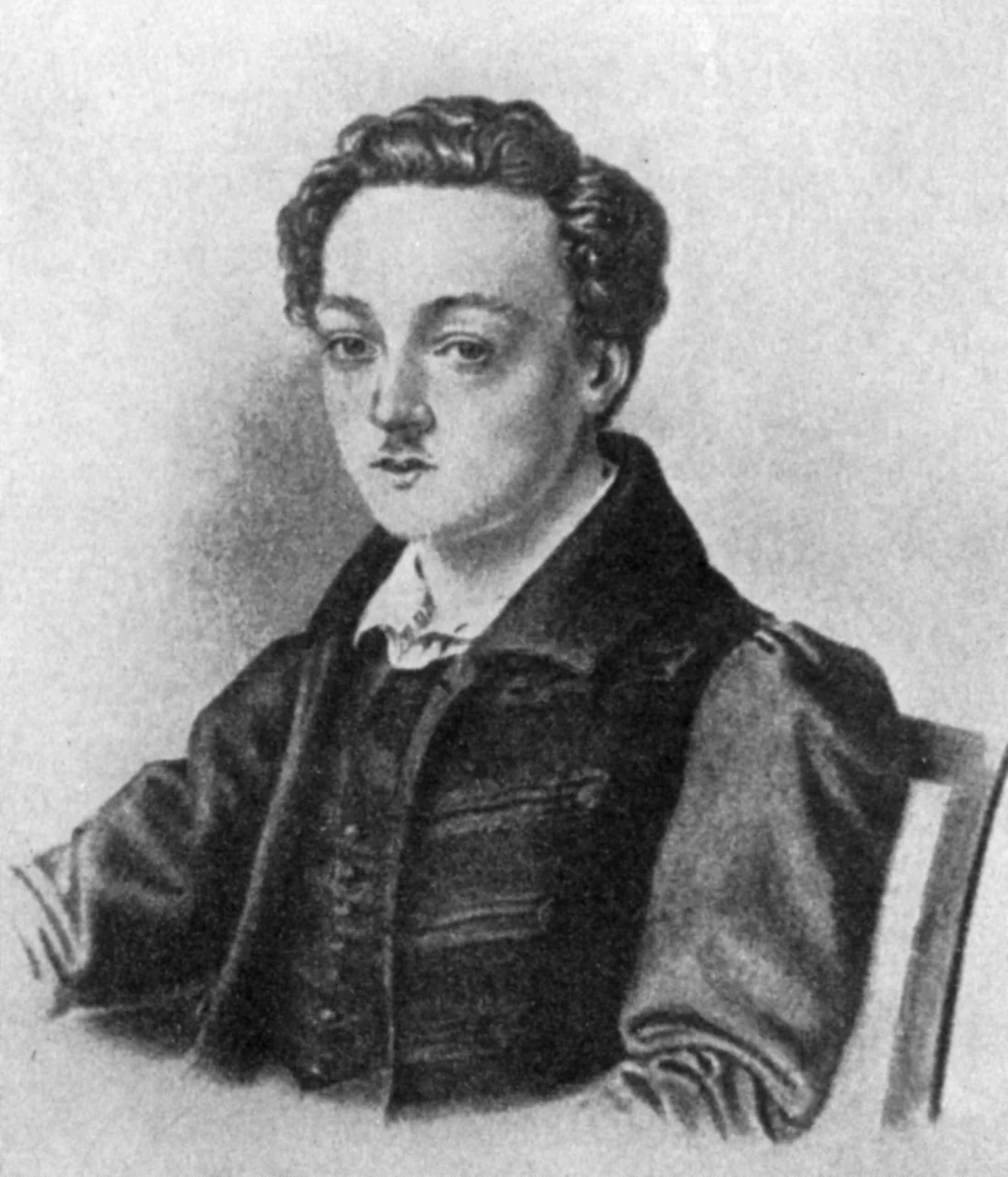
Image from Wikipedia
Image from Wikipedia
Georg Büchner – The Radical Classic of the Vormärz Whose Work Still Electrifies Today
A Life Between Science, Revolution, and Literary Explosiveness
Georg Büchner, born on October 17, 1813, in Goddelau and died on February 19, 1837, in Zurich, is one of the most extraordinary voices in German literature. Although his body of work remains slender, he left a profound mark with a rare combination of political radicalism, medical observational skills, and linguistic precision, shaping entire epochs of German-language literature. He worked simultaneously as a writer, physician, natural scientist, and revolutionary, and is considered one of the most significant authors of the Vormärz. ([de.wikipedia.org](https://de.wikipedia.org/wiki/Georg_B%C3%BCchner?utm_source=openai))
Background, Education, and Early Views on Society
Büchner grew up as the eldest son in an educated family; his father was a doctor, and Georg himself initially pursued an academic career. He studied comparative anatomy in Strasbourg and later moved to Gießen, where he joined a radical political freedom movement. This blend of natural science and political thought is central to his work: it sharpened his insight into social reality, physical existence, and psychological states of crisis. ([goethe.de](https://www.goethe.de/ins/no/de/m/kul/kuf/uak/per.cfm?personId=6624&utm_source=openai))
Büchner's extraordinary intellectual scope became evident early on. In addition to his medical studies, he engaged with philosophy and scientific research while simultaneously analyzing the political oppression of his time. The literary and revolutionary Büchner are not opposites but two sides of the same attitude: the will to describe reality unvarnished and not to embellish power dynamics. ([deutsche-biographie.de](https://www.deutsche-biographie.de/sfz6306.html?utm_source=openai))
Revolutionary Breakthrough with the “Hessian Landboten”
In 1834, Büchner published the pamphlet Der hessische Landbote, a stirring political text that called the rural population to resist exploitation and oppression. The pamphlet made him a wanted man; in 1835, he fled to Strasbourg to avoid arrest. This step marked the dramatic turning point of his brief biography: from student to political fugitive, from observer of society to a determined opponent of its order. ([goethe.de](https://www.goethe.de/ins/no/de/m/kul/kuf/uak/per.cfm?personId=6624&utm_source=openai))
It is precisely during this phase that Büchner's significance intensifies. His texts are created under the pressure of exile, surveillance, and intellectual haste, yet they never feel rushed. On the contrary, they combine revolutionary energy with formal control, sharp characterization, and a modern understanding of language as a precise tool for societal analysis. Therefore, Büchner is still read today not just as an author, but as a cultural seismograph of his time. ([deutsche-biographie.de](https://www.deutsche-biographie.de/sfz6306.html?language=en&utm_source=openai))
Key Works: Dantons Tod, Lenz, Leonce und Lena, Woyzeck
Büchner’s central works include the drama Dantons Tod from 1835, the narrative Lenz, the comedy Leonce und Lena, and the fragment Woyzeck. Dantons Tod was published in 1835 and showcases Büchner's ability to merge historical material with political acuity and psychological depth. Lenz and Leonce und Lena were created around 1836 and reveal a second side to his writing: satirical, form-conscious, playful, yet never unpolitical. ([goethe.de](https://www.goethe.de/ins/no/de/m/kul/kuf/uak/per.cfm?personId=6624&utm_source=openai))
Woyzeck occupies a special place. The fragment, published in an edited version only in 1879, later became a key text of modernity and is considered a pivotal new beginning in the history of German-language drama. The focus on social distress, psychological disarray, and existential violence continues to resonate in modern theater and has profoundly influenced later naturalists and expressionists. ([de.wikipedia.org](https://de.wikipedia.org/wiki/Georg_B%C3%BCchner?utm_source=openai))
Style, Language, and Artistic Development
Büchner's style is characterized by an extraordinary economy of expression. He employs abrupt shifts in perspective, precise observation, and a language that does not embellish social reality but rather dissects it. His medical training sharpened his awareness of the body, illness, and strain; his political experiences yielded a literature that ruthlessly juxtaposes power, misery, and dignity. ([de.wikipedia.org](https://de.wikipedia.org/wiki/Georg_B%C3%BCchner?utm_source=openai))
It is in this that his modernity lies. Later readers and authors found in Büchner a language that transcends its context of origin: concise, nervous, precise, yet imbued with great poetic power. German biographies and Goethe Institute materials emphasize that his work, though barely received during his lifetime, was later recognized as stylistically ahead of its time and groundbreaking. ([deutsche-biographie.de](https://www.deutsche-biographie.de/sfz6306.html?language=en&utm_source=openai))
Impact History and Cultural Influence
Büchner's legacy is immense. His dramas influenced naturalism, expressionism, and the further evolution of European theater; Woyzeck became a reference text for later generations. Even the fact that his works reached a wider audience only much later amplified their cult status: late fame turned Büchner into an author whose radicalism was not dulled by canonization but continually unfolded anew. ([en.wikipedia.org](https://en.wikipedia.org/wiki/Georg_B%C3%BCchner?utm_source=openai))
Institutionally, his name is still very much present today. The Georg Büchner Prize is one of the most important literary awards in the German-speaking world and demonstrates how closely Büchner's name remains connected with literary excellence, linguistic innovation, and societal relevance. The continued life of his work in theater, research, and translation confirms his status as an author of enduring authority. ([goethe.de](https://www.goethe.de/ins/hu/hu/kul/sup/irodalmi-dijak/24985608.html?utm_source=openai))
Why Georg Büchner Continues to Fascinate Today
Georg Büchner captivates because in just 23 years of life, he unleashed a literary and political energy that many long careers lack. He fused rebellion with analysis, humanity with harshness, and scientific exactness with artistic force. Those who read Büchner or experience him on stage do not encounter a historical monument, but an author who continually questions the present. ([de.wikipedia.org](https://de.wikipedia.org/wiki/Georg_B%C3%BCchner?utm_source=openai))
For this reason, engaging with his work in theater, schools, and research remains worthwhile today. Büchner remains compelling because he depicts social reality with uncompromising clarity while simultaneously finding a language that generates the highest literary tension. His work deserves to be continually rediscovered – in the reading room, on stage, and in every engagement with political art. ([deutsche-biographie.de](https://www.deutsche-biographie.de/sfz6306.html?language=en&utm_source=openai))
Official Channels of Georg Büchner:
- Instagram: No official profile found
- Facebook: No official profile found
- YouTube: No official profile found
- Spotify: No official profile found
- TikTok: No official profile found
Sources:
Upcoming Events
CANCELLED: Leonce and Lena
Leonce and Lena: Open Air Performance in Bayreuth
WOYZECK by Büchner