
Hansjörg Albrecht
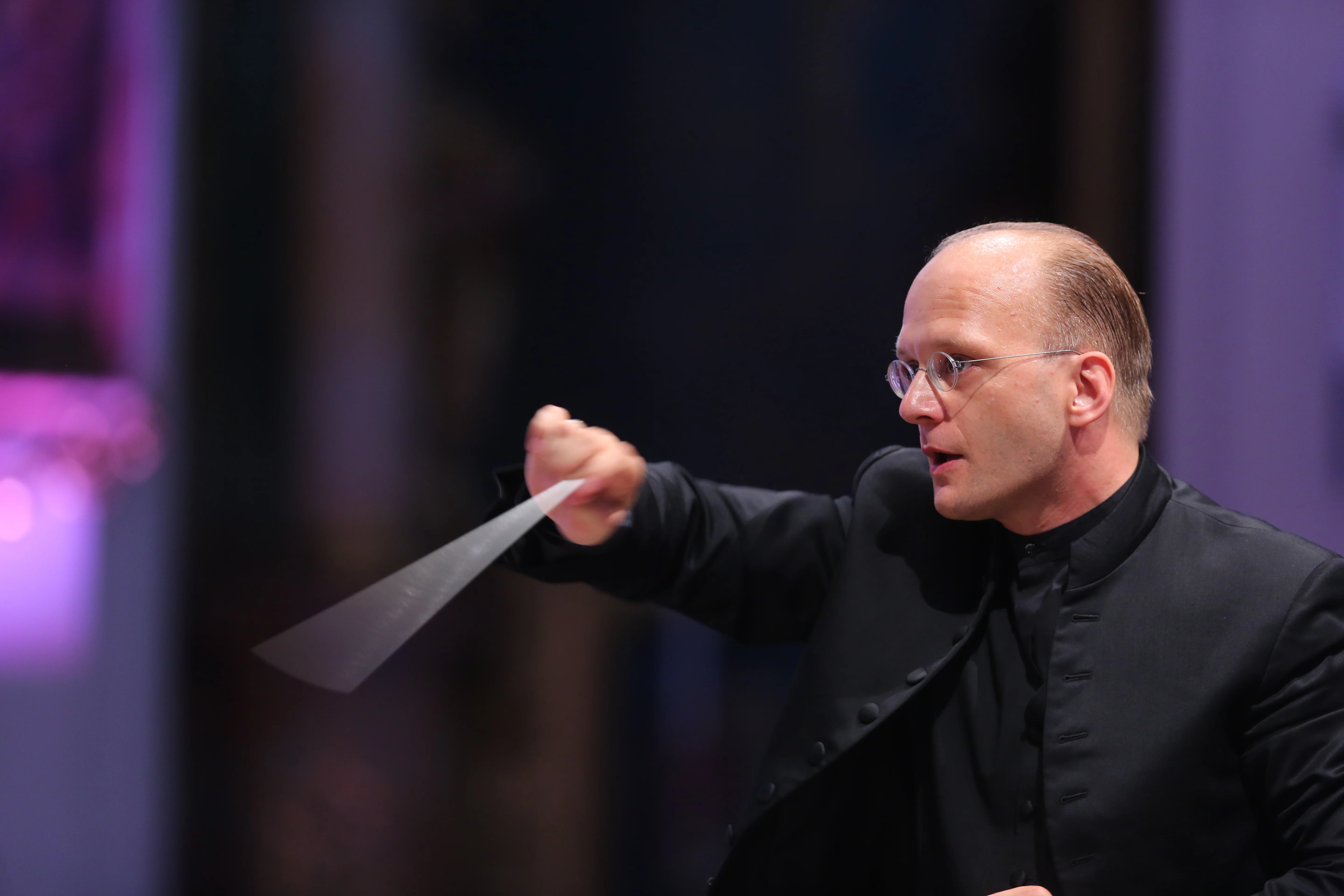
Image from Wikipedia
Image from Wikipedia
Hansjörg Albrecht – The Conductor, Organist, and Sound Architect between Bach, Bruckner, and Contemporary Music
An artist with dual talents, international prominence, and an extraordinary depth of repertoire
Hansjörg Albrecht, born in 1972 in Freiberg, belongs to that rare generation of musicians who feel at home on two stages: at the conductor's podium and at the organ. Since the 2023/24 season, he has been shaping the Carl Philipp Emanuel Bach Academy Hamburg, the eponymous choir, and the International Bach Festival Hamburg as its Artistic Director. His musical career merges historical performance practice, significant choral-symphonic literature, and the search for new sound perspectives into a clearly defined artistic profile. ([hansjoerg-albrecht.com](https://www.hansjoerg-albrecht.com/biography))
Biographical roots and musical influence
Albrecht was born in Saxony and has developed into a musician who not only preserves the central German Bach tradition but also translates it into the present. The Wikipedia text refers to his activities as conductor, organist, and harpsichordist; the biographies on his official and institutional profiles expand this picture with an extraordinary range of concert activities in Europe, Russia, the USA, and Asia. It is precisely this international presence that makes his artist biography so remarkable: it is based not on a single role model but on a consistent dual competence. ([de.wikipedia.org](https://de.wikipedia.org/wiki/Hansj%C3%B6rg_Albrecht))
His closeness to Bach, the Viennese Classical period, and the music of the 18th century is particularly formative. The official biography describes him as a passionate Bach specialist who works simultaneously between archival material and new creations. This formulation captures the essence of his artistic development: Albrecht thinks with historical awareness, yet never remains in the museum, instead opening the repertoire for premieres, rediscoveries, and new sonic interpretations. ([hansjoerg-albrecht.com](https://www.hansjoerg-albrecht.com/biography))
Career and artistic breakthrough
A decisive chapter of his career was his leadership of the Munich Bach Choir and the Munich Bach Orchestra from 2005 until the end of the 2022/2023 season. During this time, he established himself as an interpreter of great sacred and oratorio works, but also as a conductor with a sense for rarely performed scores. The official website even names him as Karl Richter's successor in the artistic direction of the Munich Bach Choir and Bach Orchestra until 2023. ([de.wikipedia.org](https://de.wikipedia.org/wiki/Hansj%C3%B6rg_Albrecht))
His profile further sharpened through collaboration with international orchestras and soloists. Sources mention collaborations with Dorothee Oberlinger, Arabella Steinbacher, Sharon Kam, Simone Kermes, Klaus Florian Vogt, and Michael Volle, as well as performances with leading ensembles in Turin, Naples, Prague, Moscow, Munich, and Hamburg. Thus, Albrecht operates at the intersection of concert hall, cathedral, and opera house—a space where his stage presence and stylistic flexibility are particularly evident. ([de.wikipedia.org](https://de.wikipedia.org/wiki/Hansj%C3%B6rg_Albrecht))
Organ artistry, transcription, and the idea of orchestral sound on keyboard instruments
As an organist, Hansjörg Albrecht is one of the few internationally present artists who thinks about this instrument not only soloistically but also in dialogue with the orchestra. The official biography emphasizes his specialization in the combination of organ and orchestra and highlights that he has secured a place among the virtuosos of his instrument through numerous transcriptions. This aspect represents a significant part of his artistic signature: he understands the organ as an orchestral thinking tool, not merely as a liturgical accompanying instrument. ([hansjoerg-albrecht.com](https://www.hansjoerg-albrecht.com/biography))
This attitude is particularly evident in his repertoire, which ranges from Bach to Messiaen and contemporary music. Official sources mention world and first performances of works by Thierry Escaich, Philipp Maintz, Rodion Shchedrin, and Enjott Schneider. Thus, Albrecht positions himself as a musician who intertwines historical depth and contemporary relevance rather than opposing them. ([hansjoerg-albrecht.com](https://www.hansjoerg-albrecht.com/biography))
Discography: From Wagner to Bruckner, from Baroque to Romantic Monumentality
Hansjörg Albrecht's discography reveals an exceptionally consistent programmatic approach. On his Wikipedia page, a selection includes Bach, Brahms, Mahler, Walter Braunfels, Enjott Schneider, Hans Rott, Handel, and Wagner; his work with the Oehms Classics label began in 2006 and includes over 30 to 40 CDs, depending on the source. This repertoire is not a hodgepodge but a curated panorama of German and European music history. ([de.wikipedia.org](https://de.wikipedia.org/wiki/Hansj%C3%B6rg_Albrecht))
Particular attention has been drawn to his engagement with Richard Wagner and Anton Bruckner. The official website points to Wagner projects and the series of Bruckner organ transcriptions; recent releases “The Bruckner Symphonies, Vol. 9” and “Vol. 10 - Organ Transcriptions” are appearing on Apple Music. This visibility demonstrates how much Albrecht expands the organ repertoire into symphonic dimensions and establishes transcription as an independent art form. ([hansjoerg-albrecht.com](https://www.hansjoerg-albrecht.com/discography-1))
This work has also been met with critical acclaim. The official biography mentions a Grammy nomination for his recording of Holst's “The Planets” in organ transcription; the Arena biography adds that “The Ring Without Words” was included in the list of the best recordings for the German Record Critics' Award. Crescendo also recognized him in 2024 as one of the leading Bruckner interpreters. These are not mere footnotes, but solid markers of an artistic authority in the international classical scene. ([hansjoerg-albrecht.com](https://www.hansjoerg-albrecht.com/biography))
Musical development and interpretative profile
Albrecht's musical development can be described as a movement between historical precision and large-scale sound thinking. The Dresden Philharmonic emphasizes that he stands out as a specialist in historically informed performance practice, particularly in Bach and the Viennese Classical period, while also favoring major choral symphonic works and world premieres. This tension between stylistic fidelity and creative openness is central to his career. ([dresdnerphilharmonie.de](https://www.dresdnerphilharmonie.de/de/dresdner-philharmonie/biografien/hansjoerg-albrecht/))
His artistic thinking is strongly influenced by the idea of arrangement and orchestration. When Albrecht transcribes symphonies for organ or places Wagner in new sound contexts, it is not merely about adaptation but about an aesthetic commentary on music history. This, in turn, represents his authority: he negotiates repertoire not only as an interpreter but also as a creative musical thinker. ([de.wikipedia.org](https://de.wikipedia.org/wiki/Hansj%C3%B6rg_Albrecht))
Current projects and releases 2024/2025
Currently, Hansjörg Albrecht is working on several major project lines. The official website mentions “100 Years Karl Richter 2026,” the “Bruckner Project,” “Bach Reloaded,” and “Wagner-Pèlerinage.” His schedule lists concerts and festival appearances in Ottobeuren, Eisenach, Bautzen, Freiberg, Marienberg, and Bayreuth for 2026, demonstrating the vibrant continuation of his concert activities. ([hansjoerg-albrecht.com](https://www.hansjoerg-albrecht.com/karlrichter))
Particularly important is the Bruckner series: in 2025, “The Bruckner Symphonies, Vol. 10 - Organ Transcriptions” will be released on Apple Music, while the official releases page documents the project as an ongoing release line. Simultaneously, work on Bach and Wagner programs remains active. Albrecht, therefore, combines repertoire preservation with discographic continuity and current concert practice—signs of sustainable artistic planning. ([music.apple.com](https://music.apple.com/de/artist/hansj%C3%B6rg-albrecht/219953302))
Cultural influence and significance for today’s classical scene
Hansjörg Albrecht exemplifies a modern classical artist who productively dissolves the boundaries between conducting, organ playing, harpsichord performance, and musicological research. His role as Artistic Director of the International Online Organ Festival under UNESCO patronage and the Munich Bach Festival 2025 shows that he is not only interpreting but also shaping institutions and formats. As a result, his work gains cultural-political relevance beyond mere concert life. ([hansjoerg-albrecht.com](https://www.hansjoerg-albrecht.com/biography))
Additionally, his role in the rediscovery of forgotten composers like Hans Rott and Walter Braunfels is significant. Sources explicitly mention these names as part of his repertoire and programming direction. Thus, Albrecht contributes to the expansion of the canon and demonstrates how alive historical music becomes when presented with research, thoughtful dramaturgy, and interpretative passion. ([de.wikipedia.org](https://de.wikipedia.org/wiki/Hansj%C3%B6rg_Albrecht))
Conclusion: Why Hansjörg Albrecht remains so fascinating
Hansjörg Albrecht is captivating because he embodies multiple musical roles at the highest level: conductor, organist, harpsichordist, project designer, and style-conscious curator of a vast repertoire. His career stands for substance over effect, historical depth over mere reproduction, and a stage presence that emerges from knowledge, discipline, and sonic imagination. Following his work means experiencing an artist who does not merely manage music history but makes it audible anew. ([hansjoerg-albrecht.com](https://www.hansjoerg-albrecht.com/biography))
This energy unfolds most strongly in live performances. Whether at the organ, in the concert hall, or with choir and orchestra: Hansjörg Albrecht represents musical intensity, interpretative clarity, and a repertoire ranging from Bach to Bruckner, from Wagner to contemporary music. Experiencing him live means listening to a musician who not only knows tradition but transforms it into the present. ([hansjoerg-albrecht.com](https://www.hansjoerg-albrecht.com/schedule))
Official channels of Hansjörg Albrecht:
- Instagram: https://www.instagram.com/hansjoergalbrecht/
- Facebook: https://www.facebook.com/hansjoergalbrecht.official
- YouTube: No official profile found
- Spotify: https://open.spotify.com/artist/1GsfJVd0ory63rsmNs3Ogc?si=iRQDRTusSpqQCQJ4I2FU-A
- TikTok: No official profile found
Sources:
- Hansjörg Albrecht - Official Website
- Hansjörg Albrecht - Biography
- Hansjörg Albrecht - Releases
- Hansjörg Albrecht - Discography
- Hansjörg Albrecht - Schedule
- Hansjörg Albrecht - 100 Years Karl Richter 2026
- Apple Music - Hansjörg Albrecht
- Dresden Philharmonic - Biography Hansjörg Albrecht
- Wikipedia: Hansjörg Albrecht