
Moritz Eggert
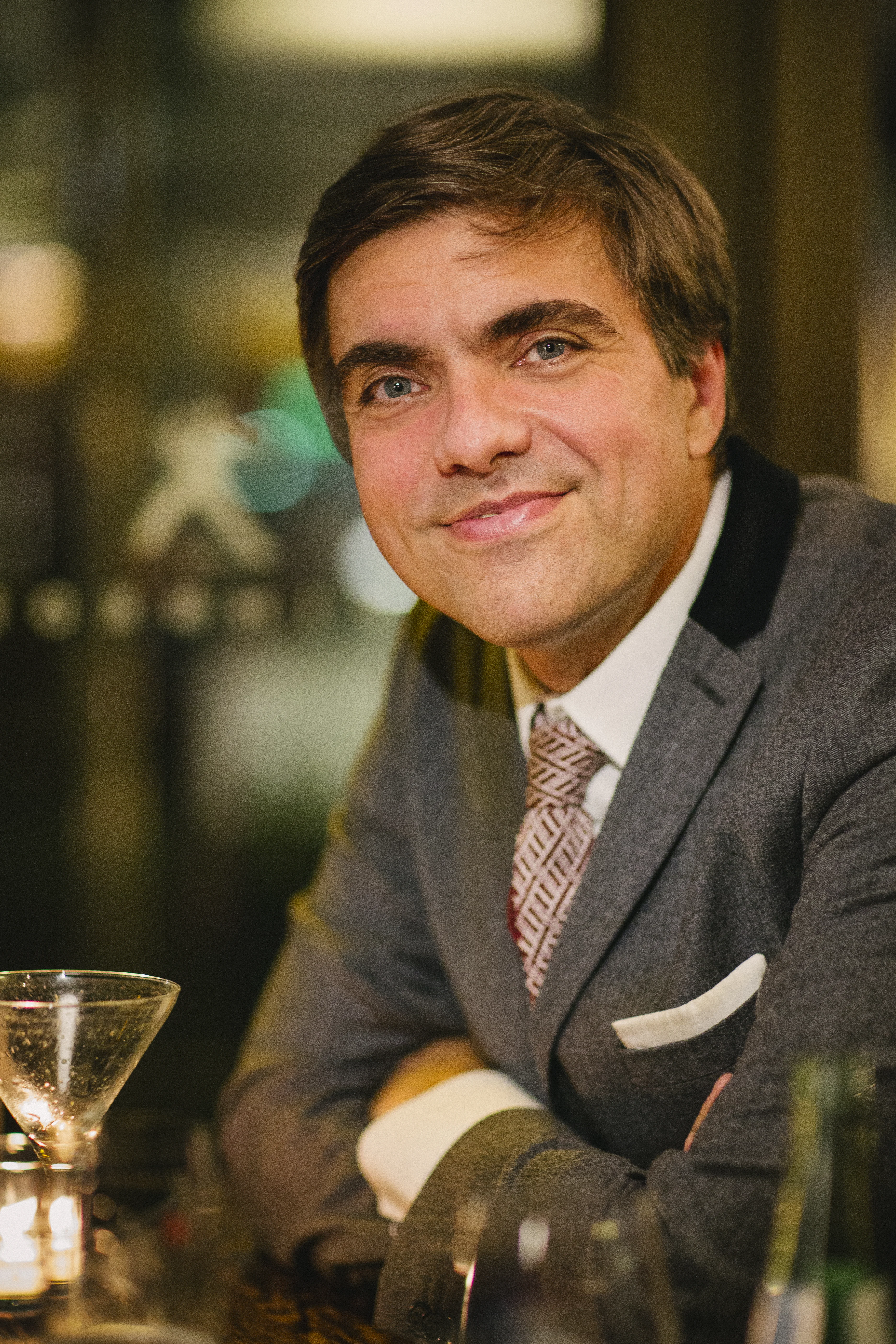
Image from Wikipedia
Image from Wikipedia
Moritz Eggert – the uncompromising sound thinker between concert hall, stage, and the present
A German composer, pianist, and boundary pusher with a distinctive signature
Moritz Eggert, born on November 25, 1965, in Heidelberg, is one of the most versatile voices in contemporary music in Germany. As a composer and pianist, he combines virtuosity with curiosity, theatrical energy with analytical sharpness, and a marked pleasure in risk-taking with a clear compositional profile. His work does not fit into stylistic boxes; instead, it consistently seeks friction between new music, music theatre, performance, and cultural commentary. ([de.wikipedia.org](https://de.wikipedia.org/wiki/Moritz_Eggert))
Early influences: From school bands to new music
Eggert's musical journey did not begin in the ivory tower of academia, but early in the practice of playing, listening, and experimenting. Growing up in Heidelberg, Mannheim, and Frankfurt am Main, he played keyboard in rock and jazz ensembles as a schoolboy; at the same time, he received early piano and composition lessons at Dr. Hoch’s Conservatory in Frankfurt. This dual movement of popular energy and classical education continues to shape his artistic development today. ([moritzeggert.de](https://www.moritzeggert.de/wp-content/uploads/2022/10/BROSCH.pdf))
After initial studies with Wolfgang Wagenhäuser and Claus Kühnl, as well as piano studies with Leonard Hokanson, his path led him in 1986 to Munich to study with Wilhelm Killmayer, later with Raymund Havenith and Hans-Jürgen von Bose. A year as a postgraduate student at the Guildhall School of Music and Drama in London with Robert Saxton further sharpened his perspective on international compositional practice. Early on, a musician emerged who not only interprets but also thinks musically in all its breadth. ([de.wikipedia.org](https://de.wikipedia.org/wiki/Moritz_Eggert))
The breakthrough: Independence instead of adaptation
Eggert's artistic breakthrough stems less from a single success and more from a consistent aesthetic attitude. Even his early works sought the unconventional, the performative, and the tension between form and action. This is particularly evident in the piano cycle Hämmerklavier, which from Eggert's perspective became not only piano music but a laboratory for questioning the instrument itself. The pieces shifted the boundaries between playing technique, physicality, and stage events. ([nmz.de](https://www.nmz.de/menschen/portraets/keine-kindersaerge-keine-c-dur-idylle))
This attitude made him a composer who stands out in contemporary musical life: not as a custodian of a style but as an inventor of situations. The early Hämmerklavier pieces incorporated performance elements, unconventional playing instructions, and a direct questioning of classical piano playing. This developed into a trademark that continues to accompany Eggert's name today. ([nmz.de](https://www.nmz.de/menschen/portraets/keine-kindersaerge-keine-c-dur-idylle))
Works and work thinking: Opera, oratorio, song, and experiment
Eggert's oeuvre is exceptionally broad. The official work profile lists nearly 300 pieces, including 19 full-length operas as well as ballets, dance and music theatre works, orchestral works, chamber music, vocal and choral music, songs, church music, experimental and electronic music, concert works, children’s and youth works, film, radio, and audio play music, as well as open-air projects. This abundance does not represent mere eclecticism but rather a composer who understands different formats as different modes of musical narrative. ([moritzeggert.de](https://www.moritzeggert.de/wp-content/uploads/2022/10/BROSCH.pdf))
Eggert is particularly strongly rooted in music theatre. Wikipedia lists among his most famous works Die Schnecke with Hans Neuenfels, the football oratorio Die Tiefe des Raumes, the opera Freax with Hannah Dübgen, and the collage Vom zarten Pol from 22 Mozart operas for the opening concert of the Salzburg Festival. Such projects show a composer who treats music not as a finished form but as a cultural event with theatrical, social, and media dimensions. ([de.wikipedia.org](https://de.wikipedia.org/wiki/Moritz_Eggert))
Musical development: Virtuosity, humor, and boundary crossing
Eggert's music thrives on contrasts. It can be virtuosic, brutally pointed, ironic, lyrical, or deliberately exaggerated; yet it always remains transparent in its construction. The new music newspaper describes how Eggert avoids clichés of the scene and pursues an "atopic," place-less music that eludes categorization. In this lies a core of his artistic identity: a refusal to pit complexity against comprehensibility. ([nmz.de](https://www.nmz.de/menschen/portraets/keine-kindersaerge-keine-c-dur-idylle))
In interviews and texts, Eggert defends the presence of living composers in the classical music industry and emphasizes that music requires both clarity and fascination and inspiration. His aesthetics thus appear both open and resolute: open to rock, jazz, electronics, and theatre, resolute in demanding that contemporary music must not stagnate in self-referentiality. This combination of practice and reflection makes him an important cultural and political player. ([nmz.de](https://www.nmz.de/menschen/portraets/keine-kindersaerge-keine-c-dur-idylle))
Awards, authority, and institutional presence
Eggert has received numerous awards, including the composition prize of the Easter Festival Salzburg, the Schneider-Schott Music Prize Mainz, the first prize at the "Ad Referendum" competition in Montreal, the Siemens Promotion Prize, the Alexander Zemlinsky Prize, and the Louis Spohr Prize. Additionally, he has had residencies and honors in Paris, Rome, and Rochester, underscoring his international visibility. These milestones mark not only recognition but also a sustainable anchoring in the professional field of new music. ([de.wikipedia.org](https://de.wikipedia.org/wiki/Moritz_Eggert))
Institutionally, Eggert holds significant weight as well: since 2010, he has been a professor of composition at the Hochschule für Musik und Theater München, he served on the board of the German Composers' Association, and in 2020 was elected president of the German Composers' Association, a position he held until 2026. These roles establish him as an authority who not only writes and performs but also actively shapes the discourse in music politics. ([de.wikipedia.org](https://de.wikipedia.org/wiki/Moritz_Eggert))
Current projects and artistic presence
Eggert remains present in recent news. His official website features updates for 2025 and 2026 regarding performances, discussions, and new works, including a renewed engagement with the football oratorio Die Tiefe des Raumes in a new version, as well as announcements of publications and concerts. At the same time, he is involved in debates surrounding the GEMA reform and publicly discusses the effects of reduced funding for E-music on Germany's music landscape. ([moritzeggert.de](https://www.moritzeggert.de/aktuell/))
The official website also points to newer video and music projects such as One Woman Band and planned or published works such as the interactive video opera Kairosis. This demonstrates that Eggert continues to think across mediums, integrating video, concert, opera, and digital public spaces. His artistic development thus remains not historical but explicitly contemporary. ([moritzeggert.de](https://www.moritzeggert.de/home/))
Cultural influence: Between avant-garde, public presence, and provocation
Eggert's cultural influence goes beyond scores. He writes as a blogger and publicist, commenting on cultural policy questions and runs the "Bad Blog of Musick," which is regarded as a particularly influential voice in contemporary music in Germany. This creates a rare profile: composer, performer, author, and mediator in one person. ([moritzeggert.de](https://www.moritzeggert.de/wp-content/uploads/2022/10/BROSCH.pdf))
His influence also lies in the openness of his thinking. Eggert sees composition as a living practice, not as a museological discipline. The combination of humor, sharpness, theatrical instinct, and craftsmanship makes him a figure who renders new music more accessible, contentious, and public. For many listeners, this is precisely where the unique fascination lies: Eggert does not just compose works; he generates friction, movement, and attention. ([nmz.de](https://www.nmz.de/menschen/portraets/keine-kindersaerge-keine-c-dur-idylle))
Conclusion: Why Moritz Eggert remains so exciting
Moritz Eggert represents a musical career that never settles for a comfortable status quo. His stage presence, artistic development, and enormous stylistic range make him one of the most prominent German composers of his generation. Those who experience his music encounter not only high compositional quality but also attitude, wit, energy, and relevance to the present. ([moritzeggert.de](https://www.moritzeggert.de/wp-content/uploads/2022/10/BROSCH.pdf))
In live performance, this music unfolds its full effect: as a physical event, as an intellectual challenge, and as an emotionally charged encounter with an extremely distinctive handwriting. Moritz Eggert remains exciting because he not only criticizes conventions but also productively transcends them. Anyone wishing to hear contemporary music at its best should witness him on stage. ([nmz.de](https://www.nmz.de/menschen/portraets/keine-kindersaerge-keine-c-dur-idylle))
Official channels of Moritz Eggert:
- Instagram: No official profile found
- Facebook: No official profile found
- YouTube: No official profile found
- Spotify: No official profile found
- TikTok: No official profile found