
Tony Bennett
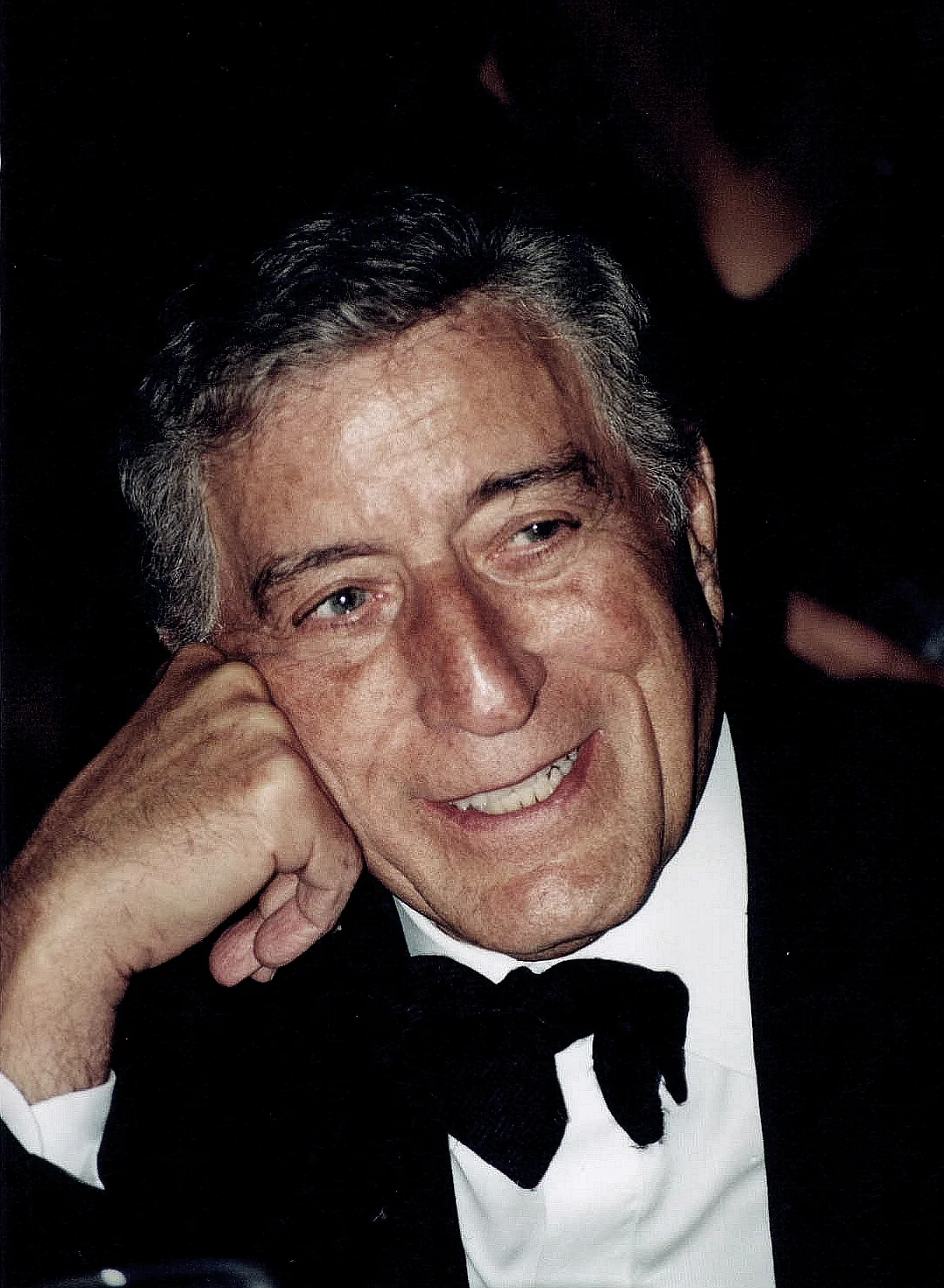
Image from Wikipedia
Image from Wikipedia
Tony Bennett – The Timeless Voice of the Great American Songbook
A Jazz and Pop Original Between Elegance, Emotion, and Global Career
Tony Bennett, born Anthony Dominick Benedetto on August 3, 1926, in Astoria, Queens, and died on July 21, 2023, in New York, was considered one of the most influential voices in American music for decades. As a jazz singer and entertainer, he combined interpretive sophistication with an astonishingly long music career that spanned from the early 1950s to the 21st century. His name symbolizes stylish presence, melodic clarity, and the art of not only singing standards but revitalizing them. ([britannica.com](https://www.britannica.com/biography/Tony-Bennett))
With over 50 million records sold and 19 Grammy Awards, Bennett became one of the most popular figures in American entertainment culture. His signature song "I Left My Heart in San Francisco" made him internationally renowned and permanently anchored him in the canon of the Great American Songbook. His ability to reach a younger audience through re-recordings and collaborations starting in the 1980s demonstrated the remarkable flexibility of his artistic evolution. ([tonybennett.com](https://www.tonybennett.com/bio.php?utm_source=openai))
From Astoria to the Big Stages: The Early Years
Bennett grew up in Astoria as the son of Italian immigrants and found early access to music and painting. During World War II, he served in the U.S. Army and performed in Europe with military bands; afterward, he studied singing at the American Theatre Wing School. His first nightclub appearance dates back to 1946, but the pivotal career boost came in 1949 when Bob Hope heard him and gave him the stage name Tony Bennett. ([tonybennett.com](https://www.tonybennett.com/bio.php))
This name change marked more than just a career moment: It symbolized the transition from a talented New York singer to a marketable star nationwide. Bennett's early performances in Greenwich Village and at the Paramount Theatre quickly led to a contract with Columbia Records. His breakthrough with "Boulevard of Broken Dreams" in 1951 opened a series of successes that made him a staple of the radio and record markets in the U.S. ([britannica.com](https://www.britannica.com/biography/Tony-Bennett))
The Breakthrough in the 1950s: Chart Successes and Vocal Elegance
In the early 1950s, Bennett achieved great success with songs like "Because of You," "Cold, Cold Heart," "Stranger in Paradise," "Just in Time," and "Rags to Riches." The official biography lists 24 titles in the Top 40, placing him among the defining voices of the American mainstream from an early stage. Crucially, it was not just popularity but his ability to imbue every melody with controlled warmth and a jazz-influenced phrasing. ([tonybennett.com](https://www.tonybennett.com/bio.php))
His artistry lay in the balance between technical sovereignty and emotional directness. Bennett interpreted standards with a calm that required no showmanship, and therein lay his authority as a singer. Britannica describes him as one of the greatest vocal stylists of jazz and pop; this classification explains why his name has retained its significance far beyond pure nostalgia. ([britannica.com](https://www.britannica.com/biography/Tony-Bennett))
“I Left My Heart in San Francisco”: The Song That Changed Everything
With "I Left My Heart in San Francisco," Bennett achieved the status of a lasting classic. The song became his trademark and earned him two Grammy Awards while encapsulating his interpretative artistry in a single piece: melancholy, grandeur, and restraint. Few other titles define an artist's aesthetic as precisely as this one evergreen. ([tonybennett.com](https://www.tonybennett.com/bio.php))
The long-term influence of this recording is evident in that Bennett not only preserved the American standard repertoire but actively translated it into pop culture. His voice transformed familiar songs into new narratives, and therein lies a core of his cultural impact. He did not sing against the spirit of the times but transcended it by prioritizing musical substance over fleeting trends. ([tonybennett.com](https://www.tonybennett.com/bio.php))
Return and Renaissance: Late Career with New Brilliance
After phases of commercial fluctuation, Bennett returned with renewed strength. In 1986, he signed with Columbia again and released "The Art of Excellence," a highly regarded album that reaffirmed his artistic relevance. Subsequent accolades for "Stepping Out," "Perfectly Frank," and "MTV Unplugged" made it clear that his music career did not get stuck in the rearview mirror of fame. ([tonybennett.com](https://www.tonybennett.com/bio.php))
The repositioning in the 1990s was particularly significant. With "MTV Unplugged," Bennett won the Grammy for Record of the Year in 1995 and reached a younger audience without diluting his style. This phase proved his extraordinary stage presence: he never appeared as a relic, but rather as a vibrant mediator between tradition and the present. ([tonybennett.com](https://www.tonybennett.com/bio.php))
Discography: A Body of Historical Breadth
Tony Bennett's discography includes 61 studio albums, 11 live albums, 33 compilations, 82 singles, three video albums, and 22 music videos. Almost all albums were released under Columbia Records, underscoring the long connection between the artist and the label. Among the commercially strongest releases are "I Left My Heart in San Francisco," "MTV Unplugged: Tony Bennett," "Duets: An American Classic," and "Duets II," which achieved platinum status in the U.S. ([en.wikipedia.org](https://en.wikipedia.org/wiki/Tony_Bennett_discography))
The range of this catalog spans from early pop and jazz recordings to standards and late collaborative albums. The fact that Bennett made it to the charts with new albums in the 1950s, 1960s, 1970s, 1980s, 1990s, and early 2000s demonstrates an unusual longevity in his career. His discography is therefore not only extensive but a documented piece of American music history. ([tonybennett.com](https://www.tonybennett.com/bio.php))
Collaborations, Awards, and New Audience Segments
A particularly notable late point in his career was the duet strategy. "Duets: An American Classic" was released in 2006 for his 80th birthday and featured collaborations with Paul McCartney, Elton John, Barbra Streisand, and Bono; the album won three Grammys and was one of the best-selling CDs of the year. "Duets II" debuted at No. 1 on the Billboard album charts in 2011, making Bennett, at age 85, the oldest artist to have a number-one album at that time. ([tonybennett.com](https://www.tonybennett.com/bio.php))
This duet phase was more than a marketing concept. Bennett connected generations, genres, and listening habits without losing his vocal identity. His collaboration with Lady Gaga on "Cheek to Cheek" and later "Love for Sale" brought him substantial attention again; "Cheek to Cheek" debuted at No. 1 on the Billboard Top 200, and "Love for Sale" was designated as his last studio album. ([tonybennett.com](https://www.tonybennett.com/bio.php))
Style, Interpretation, and Cultural Influence
Bennett was appreciated for his interpretive precision and clear tone. He was one of those singers who do not paint over lyrics but rather elaborate on them, revealing the dramatic core of a song. His affinity for the Great American Songbook, his understanding of jazz, and his controlled phrasing made him a benchmark for generations of vocalists. ([britannica.com](https://www.britannica.com/biography/Tony-Bennett))
His cultural influence extends far beyond sales figures. Bennett brought standards into pop history, preserved classic American songwriting from disappearing from the mainstream, and showed that style is not a question of age. Awards like the Kennedy Center Honor, the NEA Jazz Master title, and the Billboard Century Award mark this authority, as do his presence in critics' lists and music press honors. ([tonybennett.com](https://www.tonybennett.com/bio.php?utm_source=openai))
Current Classification and Legacy
No new artistic releases by Tony Bennett are documented for 2024 and 2025; current reports and event announcements instead focus on retrospectives, tributes, and the ongoing appreciation of his oeuvre. This fits a figure whose work has long seemed independent of new releases. His name remains present in official archives, tribute programs, and on the website. ([tonybennett.com](https://www.tonybennett.com/?utm_source=openai))
In this lies the tension of his legacy: Tony Bennett was never just a classic crooner but a vibrant guardian of musical quality who renewed the American repertoire over decades. Anyone who listens to his recordings encounters a voice that brings discipline, emotion, and elegance into rare balance. Experiencing Tony Bennett live today can only be done through the historical echo of his concerts and recordings – but especially there, his greatness unfolds to this day with undiminished strength. ([tonybennett.com](https://www.tonybennett.com/bio.php))
Voices of the Fans
On the official channels, Tony Bennett remains synonymous for many listeners with dignity, musical class, and timeless emotion. The resonance surrounding his last collaborations and the ongoing legacy show that his name continues to be associated with gratitude and respect. These reactions can be read as a lasting appreciation of an artist figure that has connected generations. ([tonybennett.com](https://www.tonybennett.com/))
Official Channels of Tony Bennett:
- Instagram: https://www.instagram.com/itstonybennett
- Facebook: https://www.facebook.com/tonybennett
- YouTube: https://www.youtube.com/user/tonybennettVEVO
- Spotify: No official profile found
- TikTok: No official profile found
Sources:
- Tony Bennett – The Official Site
- Tony Bennett – Biography (Official Site)
- Tony Bennett Discography – Wikipedia
- Britannica – Tony Bennett
- Wikipedia: Tony Bennett – Image and Text Source
- Official Charts – Tony Bennett and Lady Gaga announce Love for Sale
- Pitchfork – Lady Gaga and Tony Bennett Detail New Album Love for Sale
- Tony Bennett – The Official Site (Social Links)