
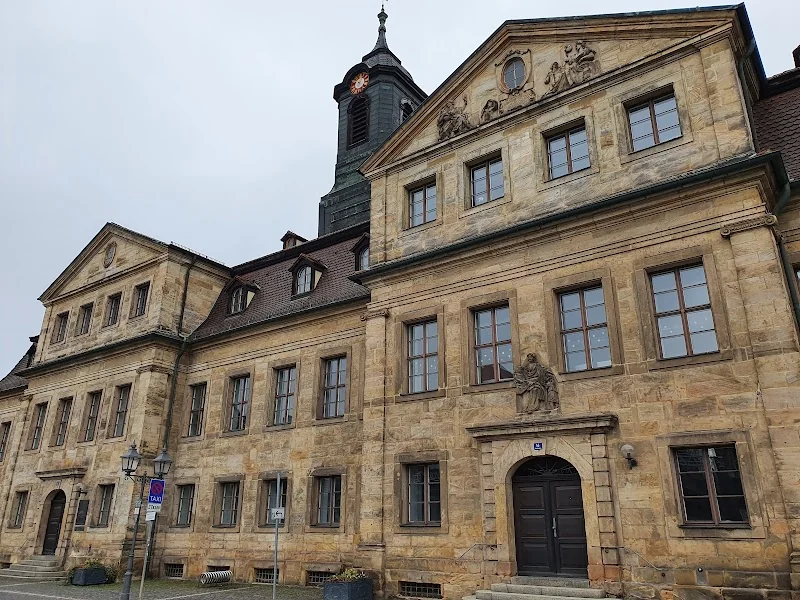
Bayreuth
Altstadt, 95445 Bayreuth-Saas, Deutschland
Old Town Bayreuth | History & Access
The Old Town in Bayreuth is not a classic event venue, but a developed district with its own identity, historical depth, and a very practical everyday function. Those looking for Old Town Bayreuth will find a neighborhood that lies between the city center, residential areas, green spaces, and local supply, and which clearly differs from the historical old town in the narrower sense. City documents show that the current district of Old Town can be traced back to the older village of Altenstadt, which once lay about two kilometers southwest of today's city center. At the same time, Bayreuth itself is a city with a long development history, whose early structure is still traceable in the city layout. This is exactly why Old Town Bayreuth is interesting: it connects past and present, residential area and meeting point, quiet neighborhood and good accessibility. For visitors seeking practical information such as access, parking, public transport, leisure, and local peculiarities, this district offers more than just an address. It is an example of how Bayreuth brings together developed settlement structures, municipal development, and neighborhood supply. ([bayreuth.de](https://www.bayreuth.de/wp-content/uploads/2015/06/Kap_2.pdf))
Where does Old Town Bayreuth come from?
The history of Old Town Bayreuth does not begin with a single building, but with an older settlement history. According to municipal planning documents, the village of Altenstadt, which today corresponds to the district of Old Town, was located about two kilometers southwest of today's Bayreuth city center. Bayreuth grew alongside this village and at the intersection of important road axes. The city history of present-day Bayreuth describes that the early settlement developed at a then West-East road and a secondary North-South road. This location was crucial for development, as traffic, trade, and settlement formation mutually reinforced each other early on. The Counts of Andechs were also significant for the city founders, and the oldest surviving document mentioning Bayreuth dates back to 1194. The place was referred to as Civitas in 1231, indicating an already established urban structure. The city from the original period has largely retained its layout, with the wide market and the southern side streets. Thus, the Old Town as a present-day district not only carries a name but also refers to an older settlement reality that existed in the development of Bayreuth before the actual modern city. Therefore, those visiting the Old Town are moving in an area that is historically closer to the beginnings of Bayreuth than the name might suggest at first glance. ([bayreuth.de](https://www.bayreuth.de/wp-content/uploads/2015/06/Kap_2.pdf))
At the same time, the city history shows how closely Bayreuth is connected to its historical axis and its later expansion. The current district of Old Town was not located in the medieval core of the city center but developed outside of it as an independent settlement area. This location explains why the neighborhood still feels different today than the densely built city center. The Old Town is less a backdrop of representative facades than a developed living space with residential houses, open spaces, and a functional neighborhood. In Bayreuth's long-term development, this is important: while the city center was shaped by the market, town hall, churches, and urban representation, the Old Town emerged as an older settlement area with a more rural origin. This makes it exciting for today's perception, as it tells of the phase in which Bayreuth formed from several settlement cores. For SEO and local orientation, not only the location is relevant, but also the historical context that makes the Old Town a part of Bayreuth's identity. Those searching for Old Town Bayreuth, history, or district structure will find a place where development and memory intertwine. ([bayreuth.de](https://www.bayreuth.de/wp-content/uploads/2015/06/Kap_2.pdf))
What makes Menzelplatz the district center?
Menzelplatz is one of the most important anchor points in Old Town Bayreuth because it is where living, quality of stay, and community meet. The municipal documents describe the area between Schwindstraße and Justus-Liebig-Straße as a region with an extensive building stock of GEWOG, characterized by multi-family housing, outdoor spaces, play and sports facilities, as well as access and parking areas. It is clear: Menzelplatz is not just a street name, but a functioning district center. For many residents, it is a place where people meet, children play, and daily life is organized. A meeting café at Menzelplatz explicitly serves as a social meeting point. The city planning also sees the area as a site for moderate densification to create affordable housing and to future-proof the existing structures. This combination of housing construction, social function, and green space makes Menzelplatz a typical example of modern inner development. The neighborhood should not be densified without losing its qualities; rather, open spaces should be enhanced, and the quality of stay should be strengthened. This is characteristic of Old Town Bayreuth: not spectacular, but close to everyday life, vibrant, and well-organized. ([online-dienste.bayreuth.de](https://online-dienste.bayreuth.de/sessionnet/buergerinfo/getfile.asp?id=67831&type=do))
From an urban planning perspective, Menzelplatz also plays a key role. The development plan procedure for the residential area between Justus-Liebig-Straße and Schwindstraße has been expedited because the area is already being used intensively and is considered an inner development area. The planning aims to secure the existing structures while also gently further developing them. Particularly important is the handling of open spaces: green areas and tree stocks shape the area, some trees are protected, and a children's and youth playground is also included. Additionally, the traffic access is provided via Menzelplatz, Holbeinstraße, Schwindstraße, and Lenbachstraße. The district parking garage is connected via Cranachstraße, allowing the parking needs to be bundled. The average height of the area is about 345 meters above NHN, and the topography gently slopes from Schwindstraße to Justus-Liebig-Straße. This may sound sober, but it is important for the quality of stay as it shows how carefully the neighborhood is being developed. Menzelplatz thus exemplifies a Bayreuth urban area that understands itself as a place to live, a social meeting point, and a green open space at the same time. ([online-dienste.bayreuth.de](https://online-dienste.bayreuth.de/sessionnet/buergerinfo/getfile.asp?id=67831&type=do))
What does the Old Town pool in Bayreuth offer?
The Old Town pool is one of the most prominent leisure offerings in the district and significantly contributes to the identity of Old Town Bayreuth. The city describes the outdoor pool as a traditional facility that has been open every summer since 1909. It is located on Fantaisiestraße and is part of the eponymous district. Particularly noteworthy is that admission is free. This makes the pool a low-threshold offer for families, children, teenagers, and anyone looking for uncomplicated refreshment in the warm months. The pool measures 10 by 20 meters, making it relatively compact, but the total area of around 14,000 square meters, the shady trees, and the large playground give the pool a calm, green atmosphere. The city emphasizes that the Old Town pool embodies a piece of Bayreuth's local color and has been particularly important for families with children for many decades. Especially in a district like Old Town, which primarily functions as a residential area, such an outdoor pool is more than just a leisure backdrop. It is a social meeting point that connects everyday life and relaxation in the summer. When users search for Old Town Bayreuth, leisure, or parking, the Old Town pool is therefore one of the central hits, as the quality of the neighborhood is immediately tangible here. ([bayreuth.de](https://www.bayreuth.de/altstadtbad-startet-in-die-freibadsaison/))
There are also concrete, visitor-relevant facts regarding the recent development of the pool. In recent years, the city has repeatedly invested in renovation and enhancement. In 2024, responsibility was transferred to the city gardening office, which, together with the municipal building office, has given the pool a new look. Among other things, the outer fence was renewed, fallen trees were replaced, the pathways were made more accessible, and two parking spaces for people with disabilities were created with access from Bamberger Straße. A new entrance for bicycles and strollers was also established there. Additionally, two changing rooms were set up, and the sunbathing area was leveled and reseeded. For the 2025 outdoor pool season, the city announced further improvements: the entire play area was redesigned, weekend opening hours were adjusted, and the pool opens on Saturdays, Sundays, and holidays from 10 a.m. onwards. In late summer 2025, visitor numbers of nearly 500 guests on good days were even reported, underscoring its continued popularity. In practice, this means: those visiting the Old Town pool will not find a large sports arena, but a traditional, family-friendly neighborhood pool with free admission, easy pathways, and a clear focus on relaxation and community. ([bayreuth.de](https://www.bayreuth.de/altstadtbad-startet-in-die-freibadsaison/))
How do access, public transport, and parking work?
The connectivity of Old Town Bayreuth is an important advantage because the district is easily accessible for both residents and visitors. Bayreuth belongs to the transport association Greater Nuremberg, and the city adopted its first local transport plan in 2025, which aims to steer the development of public transport in the city area. At the same time, the city emphasizes its role as a founding member of the working group of bicycle-friendly municipalities in Bavaria, thus focusing on local mobility and cycling. For the Old Town, it is particularly relevant that the local transport plan connects the Old Town traffic zone with the central stop Jakobshof. This shows that the area is not isolated but integrated into an urban line network. Other nearby stops and connections are also part of the local mobility framework, such as the axes around Menzelplatz and Schwindstraße. For visitors, this means: those arriving by public transport can reach the Old Town via the regular Bayreuth bus network, which is integrated into the city transport and regional network. The city also generally recommends buses, trains, bicycles, and parking options as needed for the city center area. For a district like Old Town, this is good news because short distances and flexible mobility count in everyday life here. ([bayreuth.de](https://www.bayreuth.de/rathaus-buergerservice/verkehr-oepnv/))
The parking situation is also comparatively pragmatically solved. In the neighborhood itself, the parking needs are bundled through the parking garage on Cranachstraße; additionally, there are above-ground parking spaces. This structure is typical for a residential area that has grown and now has to accommodate both residential and leisure uses. For the Old Town pool, two more practical details come into play: the city has created two parking spaces for people with disabilities with access from Bamberger Straße, and a new access for bicycles and strollers has also been established there. This is particularly helpful for families and guests with mobility restrictions. Additionally, the city of Bayreuth refers in its general transport offer to attractive parking garages and on-street parking options near the city center, as well as mobile parking in municipal fee areas. Therefore, it is important for Old Town Bayreuth itself: parking is possible, but the urban planning logic rather emphasizes bundled parking spaces, short distances, and a good mix of walking, cycling, and bus. Those specifically searching for access, parking, or public transport will find in the Old Town a district that is functional without being over-staged. ([online-dienste.bayreuth.de](https://online-dienste.bayreuth.de/sessionnet/buergerinfo/getfile.asp?id=67831&type=do))
Why is the Old Town considered a practical residential location?
Old Town Bayreuth is essentially a residential and neighborhood location, and therein lies its strength. Urban development designates the area of Old Town / Bamberger Straße as a local supply center, which is particularly important for everyday supply in the district. At the same time, planning documents around Menzelplatz show that the area is classified as a general residential area or pure residential area. This makes it clear that the Old Town is primarily a place for living, community, and short distances. The open spaces, tree stocks, and the children's and youth playground ensure that not only is there construction, but also living. The city aims to bring together inner development, climate adaptation, and quality of stay. This is particularly sensible for a district like Old Town, where the balance between dense use and a residential atmosphere is crucial. Those looking in Bayreuth for not an event venue, but a functioning district will find in the Old Town an example of how municipal planning and everyday life intertwine. The neighborhood remains a place where one lives, shops, lets children play, goes to the outdoor pool, and organizes the day without long distances. ([bayreuth.de](https://www.bayreuth.de/rathaus-buergerservice/planen-bauen/konzepte/nahversorgung/))
In the larger context of Bayreuth, the Old Town fits into a city that focuses on good accessibility and thoughtful infrastructure. Bayreuth itself covers 6,692 hectares, is situated at an elevation of 345 meters, and has a dense road network. The city's transport policy promotes bicycle-friendliness, public transport, and short distances, while the local supply concepts aim to secure the qualities of the individual districts. Against this background, Old Town Bayreuth is less a tourist hotspot than a reliable part of urban reality. It connects historical origins with modern living quality, green spaces, social function, and a free outdoor pool. This mixture ensures that the district remains relevant for different target groups: for residents, for families, for people with mobility needs, and for all those who want to experience Bayreuth not only as a city of great cultural addresses but also as a city of developed neighborhoods. Therefore, those who want to get to know Old Town Bayreuth better should pay less attention to spectacular buzzwords and more to the quiet but essential elements: Menzelplatz, local supply, Old Town pool, good connections, and a history that reaches back to the origins of Bayreuth. ([bayreuth.de](https://www.bayreuth.de/rathaus-buergerservice/stadtverwaltung/zahlen-fakten-2/stadtgebiet/))
Sources:
- Bayreuth.de – Bayreuth City History
- Bayreuth.de – Old Town Pool Starts the Outdoor Pool Season
- Bayreuth.de – Old Town Pool Opens on May 31
- Bayreuth.de – Local Transport Plan City of Bayreuth 2025
- Bayreuth.de – Local Supply Concept 2025
- Bayreuth.de – Development Plan Procedure No. 3/25 Old Town / Menzelplatz
Mehr anzeigenWeniger anzeigen
Old Town Bayreuth | History & Access
The Old Town in Bayreuth is not a classic event venue, but a developed district with its own identity, historical depth, and a very practical everyday function. Those looking for Old Town Bayreuth will find a neighborhood that lies between the city center, residential areas, green spaces, and local supply, and which clearly differs from the historical old town in the narrower sense. City documents show that the current district of Old Town can be traced back to the older village of Altenstadt, which once lay about two kilometers southwest of today's city center. At the same time, Bayreuth itself is a city with a long development history, whose early structure is still traceable in the city layout. This is exactly why Old Town Bayreuth is interesting: it connects past and present, residential area and meeting point, quiet neighborhood and good accessibility. For visitors seeking practical information such as access, parking, public transport, leisure, and local peculiarities, this district offers more than just an address. It is an example of how Bayreuth brings together developed settlement structures, municipal development, and neighborhood supply. ([bayreuth.de](https://www.bayreuth.de/wp-content/uploads/2015/06/Kap_2.pdf))
Where does Old Town Bayreuth come from?
The history of Old Town Bayreuth does not begin with a single building, but with an older settlement history. According to municipal planning documents, the village of Altenstadt, which today corresponds to the district of Old Town, was located about two kilometers southwest of today's Bayreuth city center. Bayreuth grew alongside this village and at the intersection of important road axes. The city history of present-day Bayreuth describes that the early settlement developed at a then West-East road and a secondary North-South road. This location was crucial for development, as traffic, trade, and settlement formation mutually reinforced each other early on. The Counts of Andechs were also significant for the city founders, and the oldest surviving document mentioning Bayreuth dates back to 1194. The place was referred to as Civitas in 1231, indicating an already established urban structure. The city from the original period has largely retained its layout, with the wide market and the southern side streets. Thus, the Old Town as a present-day district not only carries a name but also refers to an older settlement reality that existed in the development of Bayreuth before the actual modern city. Therefore, those visiting the Old Town are moving in an area that is historically closer to the beginnings of Bayreuth than the name might suggest at first glance. ([bayreuth.de](https://www.bayreuth.de/wp-content/uploads/2015/06/Kap_2.pdf))
At the same time, the city history shows how closely Bayreuth is connected to its historical axis and its later expansion. The current district of Old Town was not located in the medieval core of the city center but developed outside of it as an independent settlement area. This location explains why the neighborhood still feels different today than the densely built city center. The Old Town is less a backdrop of representative facades than a developed living space with residential houses, open spaces, and a functional neighborhood. In Bayreuth's long-term development, this is important: while the city center was shaped by the market, town hall, churches, and urban representation, the Old Town emerged as an older settlement area with a more rural origin. This makes it exciting for today's perception, as it tells of the phase in which Bayreuth formed from several settlement cores. For SEO and local orientation, not only the location is relevant, but also the historical context that makes the Old Town a part of Bayreuth's identity. Those searching for Old Town Bayreuth, history, or district structure will find a place where development and memory intertwine. ([bayreuth.de](https://www.bayreuth.de/wp-content/uploads/2015/06/Kap_2.pdf))
What makes Menzelplatz the district center?
Menzelplatz is one of the most important anchor points in Old Town Bayreuth because it is where living, quality of stay, and community meet. The municipal documents describe the area between Schwindstraße and Justus-Liebig-Straße as a region with an extensive building stock of GEWOG, characterized by multi-family housing, outdoor spaces, play and sports facilities, as well as access and parking areas. It is clear: Menzelplatz is not just a street name, but a functioning district center. For many residents, it is a place where people meet, children play, and daily life is organized. A meeting café at Menzelplatz explicitly serves as a social meeting point. The city planning also sees the area as a site for moderate densification to create affordable housing and to future-proof the existing structures. This combination of housing construction, social function, and green space makes Menzelplatz a typical example of modern inner development. The neighborhood should not be densified without losing its qualities; rather, open spaces should be enhanced, and the quality of stay should be strengthened. This is characteristic of Old Town Bayreuth: not spectacular, but close to everyday life, vibrant, and well-organized. ([online-dienste.bayreuth.de](https://online-dienste.bayreuth.de/sessionnet/buergerinfo/getfile.asp?id=67831&type=do))
From an urban planning perspective, Menzelplatz also plays a key role. The development plan procedure for the residential area between Justus-Liebig-Straße and Schwindstraße has been expedited because the area is already being used intensively and is considered an inner development area. The planning aims to secure the existing structures while also gently further developing them. Particularly important is the handling of open spaces: green areas and tree stocks shape the area, some trees are protected, and a children's and youth playground is also included. Additionally, the traffic access is provided via Menzelplatz, Holbeinstraße, Schwindstraße, and Lenbachstraße. The district parking garage is connected via Cranachstraße, allowing the parking needs to be bundled. The average height of the area is about 345 meters above NHN, and the topography gently slopes from Schwindstraße to Justus-Liebig-Straße. This may sound sober, but it is important for the quality of stay as it shows how carefully the neighborhood is being developed. Menzelplatz thus exemplifies a Bayreuth urban area that understands itself as a place to live, a social meeting point, and a green open space at the same time. ([online-dienste.bayreuth.de](https://online-dienste.bayreuth.de/sessionnet/buergerinfo/getfile.asp?id=67831&type=do))
What does the Old Town pool in Bayreuth offer?
The Old Town pool is one of the most prominent leisure offerings in the district and significantly contributes to the identity of Old Town Bayreuth. The city describes the outdoor pool as a traditional facility that has been open every summer since 1909. It is located on Fantaisiestraße and is part of the eponymous district. Particularly noteworthy is that admission is free. This makes the pool a low-threshold offer for families, children, teenagers, and anyone looking for uncomplicated refreshment in the warm months. The pool measures 10 by 20 meters, making it relatively compact, but the total area of around 14,000 square meters, the shady trees, and the large playground give the pool a calm, green atmosphere. The city emphasizes that the Old Town pool embodies a piece of Bayreuth's local color and has been particularly important for families with children for many decades. Especially in a district like Old Town, which primarily functions as a residential area, such an outdoor pool is more than just a leisure backdrop. It is a social meeting point that connects everyday life and relaxation in the summer. When users search for Old Town Bayreuth, leisure, or parking, the Old Town pool is therefore one of the central hits, as the quality of the neighborhood is immediately tangible here. ([bayreuth.de](https://www.bayreuth.de/altstadtbad-startet-in-die-freibadsaison/))
There are also concrete, visitor-relevant facts regarding the recent development of the pool. In recent years, the city has repeatedly invested in renovation and enhancement. In 2024, responsibility was transferred to the city gardening office, which, together with the municipal building office, has given the pool a new look. Among other things, the outer fence was renewed, fallen trees were replaced, the pathways were made more accessible, and two parking spaces for people with disabilities were created with access from Bamberger Straße. A new entrance for bicycles and strollers was also established there. Additionally, two changing rooms were set up, and the sunbathing area was leveled and reseeded. For the 2025 outdoor pool season, the city announced further improvements: the entire play area was redesigned, weekend opening hours were adjusted, and the pool opens on Saturdays, Sundays, and holidays from 10 a.m. onwards. In late summer 2025, visitor numbers of nearly 500 guests on good days were even reported, underscoring its continued popularity. In practice, this means: those visiting the Old Town pool will not find a large sports arena, but a traditional, family-friendly neighborhood pool with free admission, easy pathways, and a clear focus on relaxation and community. ([bayreuth.de](https://www.bayreuth.de/altstadtbad-startet-in-die-freibadsaison/))
How do access, public transport, and parking work?
The connectivity of Old Town Bayreuth is an important advantage because the district is easily accessible for both residents and visitors. Bayreuth belongs to the transport association Greater Nuremberg, and the city adopted its first local transport plan in 2025, which aims to steer the development of public transport in the city area. At the same time, the city emphasizes its role as a founding member of the working group of bicycle-friendly municipalities in Bavaria, thus focusing on local mobility and cycling. For the Old Town, it is particularly relevant that the local transport plan connects the Old Town traffic zone with the central stop Jakobshof. This shows that the area is not isolated but integrated into an urban line network. Other nearby stops and connections are also part of the local mobility framework, such as the axes around Menzelplatz and Schwindstraße. For visitors, this means: those arriving by public transport can reach the Old Town via the regular Bayreuth bus network, which is integrated into the city transport and regional network. The city also generally recommends buses, trains, bicycles, and parking options as needed for the city center area. For a district like Old Town, this is good news because short distances and flexible mobility count in everyday life here. ([bayreuth.de](https://www.bayreuth.de/rathaus-buergerservice/verkehr-oepnv/))
The parking situation is also comparatively pragmatically solved. In the neighborhood itself, the parking needs are bundled through the parking garage on Cranachstraße; additionally, there are above-ground parking spaces. This structure is typical for a residential area that has grown and now has to accommodate both residential and leisure uses. For the Old Town pool, two more practical details come into play: the city has created two parking spaces for people with disabilities with access from Bamberger Straße, and a new access for bicycles and strollers has also been established there. This is particularly helpful for families and guests with mobility restrictions. Additionally, the city of Bayreuth refers in its general transport offer to attractive parking garages and on-street parking options near the city center, as well as mobile parking in municipal fee areas. Therefore, it is important for Old Town Bayreuth itself: parking is possible, but the urban planning logic rather emphasizes bundled parking spaces, short distances, and a good mix of walking, cycling, and bus. Those specifically searching for access, parking, or public transport will find in the Old Town a district that is functional without being over-staged. ([online-dienste.bayreuth.de](https://online-dienste.bayreuth.de/sessionnet/buergerinfo/getfile.asp?id=67831&type=do))
Why is the Old Town considered a practical residential location?
Old Town Bayreuth is essentially a residential and neighborhood location, and therein lies its strength. Urban development designates the area of Old Town / Bamberger Straße as a local supply center, which is particularly important for everyday supply in the district. At the same time, planning documents around Menzelplatz show that the area is classified as a general residential area or pure residential area. This makes it clear that the Old Town is primarily a place for living, community, and short distances. The open spaces, tree stocks, and the children's and youth playground ensure that not only is there construction, but also living. The city aims to bring together inner development, climate adaptation, and quality of stay. This is particularly sensible for a district like Old Town, where the balance between dense use and a residential atmosphere is crucial. Those looking in Bayreuth for not an event venue, but a functioning district will find in the Old Town an example of how municipal planning and everyday life intertwine. The neighborhood remains a place where one lives, shops, lets children play, goes to the outdoor pool, and organizes the day without long distances. ([bayreuth.de](https://www.bayreuth.de/rathaus-buergerservice/planen-bauen/konzepte/nahversorgung/))
In the larger context of Bayreuth, the Old Town fits into a city that focuses on good accessibility and thoughtful infrastructure. Bayreuth itself covers 6,692 hectares, is situated at an elevation of 345 meters, and has a dense road network. The city's transport policy promotes bicycle-friendliness, public transport, and short distances, while the local supply concepts aim to secure the qualities of the individual districts. Against this background, Old Town Bayreuth is less a tourist hotspot than a reliable part of urban reality. It connects historical origins with modern living quality, green spaces, social function, and a free outdoor pool. This mixture ensures that the district remains relevant for different target groups: for residents, for families, for people with mobility needs, and for all those who want to experience Bayreuth not only as a city of great cultural addresses but also as a city of developed neighborhoods. Therefore, those who want to get to know Old Town Bayreuth better should pay less attention to spectacular buzzwords and more to the quiet but essential elements: Menzelplatz, local supply, Old Town pool, good connections, and a history that reaches back to the origins of Bayreuth. ([bayreuth.de](https://www.bayreuth.de/rathaus-buergerservice/stadtverwaltung/zahlen-fakten-2/stadtgebiet/))
Sources:
- Bayreuth.de – Bayreuth City History
- Bayreuth.de – Old Town Pool Starts the Outdoor Pool Season
- Bayreuth.de – Old Town Pool Opens on May 31
- Bayreuth.de – Local Transport Plan City of Bayreuth 2025
- Bayreuth.de – Local Supply Concept 2025
- Bayreuth.de – Development Plan Procedure No. 3/25 Old Town / Menzelplatz
Old Town Bayreuth | History & Access
The Old Town in Bayreuth is not a classic event venue, but a developed district with its own identity, historical depth, and a very practical everyday function. Those looking for Old Town Bayreuth will find a neighborhood that lies between the city center, residential areas, green spaces, and local supply, and which clearly differs from the historical old town in the narrower sense. City documents show that the current district of Old Town can be traced back to the older village of Altenstadt, which once lay about two kilometers southwest of today's city center. At the same time, Bayreuth itself is a city with a long development history, whose early structure is still traceable in the city layout. This is exactly why Old Town Bayreuth is interesting: it connects past and present, residential area and meeting point, quiet neighborhood and good accessibility. For visitors seeking practical information such as access, parking, public transport, leisure, and local peculiarities, this district offers more than just an address. It is an example of how Bayreuth brings together developed settlement structures, municipal development, and neighborhood supply. ([bayreuth.de](https://www.bayreuth.de/wp-content/uploads/2015/06/Kap_2.pdf))
Where does Old Town Bayreuth come from?
The history of Old Town Bayreuth does not begin with a single building, but with an older settlement history. According to municipal planning documents, the village of Altenstadt, which today corresponds to the district of Old Town, was located about two kilometers southwest of today's Bayreuth city center. Bayreuth grew alongside this village and at the intersection of important road axes. The city history of present-day Bayreuth describes that the early settlement developed at a then West-East road and a secondary North-South road. This location was crucial for development, as traffic, trade, and settlement formation mutually reinforced each other early on. The Counts of Andechs were also significant for the city founders, and the oldest surviving document mentioning Bayreuth dates back to 1194. The place was referred to as Civitas in 1231, indicating an already established urban structure. The city from the original period has largely retained its layout, with the wide market and the southern side streets. Thus, the Old Town as a present-day district not only carries a name but also refers to an older settlement reality that existed in the development of Bayreuth before the actual modern city. Therefore, those visiting the Old Town are moving in an area that is historically closer to the beginnings of Bayreuth than the name might suggest at first glance. ([bayreuth.de](https://www.bayreuth.de/wp-content/uploads/2015/06/Kap_2.pdf))
At the same time, the city history shows how closely Bayreuth is connected to its historical axis and its later expansion. The current district of Old Town was not located in the medieval core of the city center but developed outside of it as an independent settlement area. This location explains why the neighborhood still feels different today than the densely built city center. The Old Town is less a backdrop of representative facades than a developed living space with residential houses, open spaces, and a functional neighborhood. In Bayreuth's long-term development, this is important: while the city center was shaped by the market, town hall, churches, and urban representation, the Old Town emerged as an older settlement area with a more rural origin. This makes it exciting for today's perception, as it tells of the phase in which Bayreuth formed from several settlement cores. For SEO and local orientation, not only the location is relevant, but also the historical context that makes the Old Town a part of Bayreuth's identity. Those searching for Old Town Bayreuth, history, or district structure will find a place where development and memory intertwine. ([bayreuth.de](https://www.bayreuth.de/wp-content/uploads/2015/06/Kap_2.pdf))
What makes Menzelplatz the district center?
Menzelplatz is one of the most important anchor points in Old Town Bayreuth because it is where living, quality of stay, and community meet. The municipal documents describe the area between Schwindstraße and Justus-Liebig-Straße as a region with an extensive building stock of GEWOG, characterized by multi-family housing, outdoor spaces, play and sports facilities, as well as access and parking areas. It is clear: Menzelplatz is not just a street name, but a functioning district center. For many residents, it is a place where people meet, children play, and daily life is organized. A meeting café at Menzelplatz explicitly serves as a social meeting point. The city planning also sees the area as a site for moderate densification to create affordable housing and to future-proof the existing structures. This combination of housing construction, social function, and green space makes Menzelplatz a typical example of modern inner development. The neighborhood should not be densified without losing its qualities; rather, open spaces should be enhanced, and the quality of stay should be strengthened. This is characteristic of Old Town Bayreuth: not spectacular, but close to everyday life, vibrant, and well-organized. ([online-dienste.bayreuth.de](https://online-dienste.bayreuth.de/sessionnet/buergerinfo/getfile.asp?id=67831&type=do))
From an urban planning perspective, Menzelplatz also plays a key role. The development plan procedure for the residential area between Justus-Liebig-Straße and Schwindstraße has been expedited because the area is already being used intensively and is considered an inner development area. The planning aims to secure the existing structures while also gently further developing them. Particularly important is the handling of open spaces: green areas and tree stocks shape the area, some trees are protected, and a children's and youth playground is also included. Additionally, the traffic access is provided via Menzelplatz, Holbeinstraße, Schwindstraße, and Lenbachstraße. The district parking garage is connected via Cranachstraße, allowing the parking needs to be bundled. The average height of the area is about 345 meters above NHN, and the topography gently slopes from Schwindstraße to Justus-Liebig-Straße. This may sound sober, but it is important for the quality of stay as it shows how carefully the neighborhood is being developed. Menzelplatz thus exemplifies a Bayreuth urban area that understands itself as a place to live, a social meeting point, and a green open space at the same time. ([online-dienste.bayreuth.de](https://online-dienste.bayreuth.de/sessionnet/buergerinfo/getfile.asp?id=67831&type=do))
What does the Old Town pool in Bayreuth offer?
The Old Town pool is one of the most prominent leisure offerings in the district and significantly contributes to the identity of Old Town Bayreuth. The city describes the outdoor pool as a traditional facility that has been open every summer since 1909. It is located on Fantaisiestraße and is part of the eponymous district. Particularly noteworthy is that admission is free. This makes the pool a low-threshold offer for families, children, teenagers, and anyone looking for uncomplicated refreshment in the warm months. The pool measures 10 by 20 meters, making it relatively compact, but the total area of around 14,000 square meters, the shady trees, and the large playground give the pool a calm, green atmosphere. The city emphasizes that the Old Town pool embodies a piece of Bayreuth's local color and has been particularly important for families with children for many decades. Especially in a district like Old Town, which primarily functions as a residential area, such an outdoor pool is more than just a leisure backdrop. It is a social meeting point that connects everyday life and relaxation in the summer. When users search for Old Town Bayreuth, leisure, or parking, the Old Town pool is therefore one of the central hits, as the quality of the neighborhood is immediately tangible here. ([bayreuth.de](https://www.bayreuth.de/altstadtbad-startet-in-die-freibadsaison/))
There are also concrete, visitor-relevant facts regarding the recent development of the pool. In recent years, the city has repeatedly invested in renovation and enhancement. In 2024, responsibility was transferred to the city gardening office, which, together with the municipal building office, has given the pool a new look. Among other things, the outer fence was renewed, fallen trees were replaced, the pathways were made more accessible, and two parking spaces for people with disabilities were created with access from Bamberger Straße. A new entrance for bicycles and strollers was also established there. Additionally, two changing rooms were set up, and the sunbathing area was leveled and reseeded. For the 2025 outdoor pool season, the city announced further improvements: the entire play area was redesigned, weekend opening hours were adjusted, and the pool opens on Saturdays, Sundays, and holidays from 10 a.m. onwards. In late summer 2025, visitor numbers of nearly 500 guests on good days were even reported, underscoring its continued popularity. In practice, this means: those visiting the Old Town pool will not find a large sports arena, but a traditional, family-friendly neighborhood pool with free admission, easy pathways, and a clear focus on relaxation and community. ([bayreuth.de](https://www.bayreuth.de/altstadtbad-startet-in-die-freibadsaison/))
How do access, public transport, and parking work?
The connectivity of Old Town Bayreuth is an important advantage because the district is easily accessible for both residents and visitors. Bayreuth belongs to the transport association Greater Nuremberg, and the city adopted its first local transport plan in 2025, which aims to steer the development of public transport in the city area. At the same time, the city emphasizes its role as a founding member of the working group of bicycle-friendly municipalities in Bavaria, thus focusing on local mobility and cycling. For the Old Town, it is particularly relevant that the local transport plan connects the Old Town traffic zone with the central stop Jakobshof. This shows that the area is not isolated but integrated into an urban line network. Other nearby stops and connections are also part of the local mobility framework, such as the axes around Menzelplatz and Schwindstraße. For visitors, this means: those arriving by public transport can reach the Old Town via the regular Bayreuth bus network, which is integrated into the city transport and regional network. The city also generally recommends buses, trains, bicycles, and parking options as needed for the city center area. For a district like Old Town, this is good news because short distances and flexible mobility count in everyday life here. ([bayreuth.de](https://www.bayreuth.de/rathaus-buergerservice/verkehr-oepnv/))
The parking situation is also comparatively pragmatically solved. In the neighborhood itself, the parking needs are bundled through the parking garage on Cranachstraße; additionally, there are above-ground parking spaces. This structure is typical for a residential area that has grown and now has to accommodate both residential and leisure uses. For the Old Town pool, two more practical details come into play: the city has created two parking spaces for people with disabilities with access from Bamberger Straße, and a new access for bicycles and strollers has also been established there. This is particularly helpful for families and guests with mobility restrictions. Additionally, the city of Bayreuth refers in its general transport offer to attractive parking garages and on-street parking options near the city center, as well as mobile parking in municipal fee areas. Therefore, it is important for Old Town Bayreuth itself: parking is possible, but the urban planning logic rather emphasizes bundled parking spaces, short distances, and a good mix of walking, cycling, and bus. Those specifically searching for access, parking, or public transport will find in the Old Town a district that is functional without being over-staged. ([online-dienste.bayreuth.de](https://online-dienste.bayreuth.de/sessionnet/buergerinfo/getfile.asp?id=67831&type=do))
Why is the Old Town considered a practical residential location?
Old Town Bayreuth is essentially a residential and neighborhood location, and therein lies its strength. Urban development designates the area of Old Town / Bamberger Straße as a local supply center, which is particularly important for everyday supply in the district. At the same time, planning documents around Menzelplatz show that the area is classified as a general residential area or pure residential area. This makes it clear that the Old Town is primarily a place for living, community, and short distances. The open spaces, tree stocks, and the children's and youth playground ensure that not only is there construction, but also living. The city aims to bring together inner development, climate adaptation, and quality of stay. This is particularly sensible for a district like Old Town, where the balance between dense use and a residential atmosphere is crucial. Those looking in Bayreuth for not an event venue, but a functioning district will find in the Old Town an example of how municipal planning and everyday life intertwine. The neighborhood remains a place where one lives, shops, lets children play, goes to the outdoor pool, and organizes the day without long distances. ([bayreuth.de](https://www.bayreuth.de/rathaus-buergerservice/planen-bauen/konzepte/nahversorgung/))
In the larger context of Bayreuth, the Old Town fits into a city that focuses on good accessibility and thoughtful infrastructure. Bayreuth itself covers 6,692 hectares, is situated at an elevation of 345 meters, and has a dense road network. The city's transport policy promotes bicycle-friendliness, public transport, and short distances, while the local supply concepts aim to secure the qualities of the individual districts. Against this background, Old Town Bayreuth is less a tourist hotspot than a reliable part of urban reality. It connects historical origins with modern living quality, green spaces, social function, and a free outdoor pool. This mixture ensures that the district remains relevant for different target groups: for residents, for families, for people with mobility needs, and for all those who want to experience Bayreuth not only as a city of great cultural addresses but also as a city of developed neighborhoods. Therefore, those who want to get to know Old Town Bayreuth better should pay less attention to spectacular buzzwords and more to the quiet but essential elements: Menzelplatz, local supply, Old Town pool, good connections, and a history that reaches back to the origins of Bayreuth. ([bayreuth.de](https://www.bayreuth.de/rathaus-buergerservice/stadtverwaltung/zahlen-fakten-2/stadtgebiet/))
Sources:
- Bayreuth.de – Bayreuth City History
- Bayreuth.de – Old Town Pool Starts the Outdoor Pool Season
- Bayreuth.de – Old Town Pool Opens on May 31
- Bayreuth.de – Local Transport Plan City of Bayreuth 2025
- Bayreuth.de – Local Supply Concept 2025
- Bayreuth.de – Development Plan Procedure No. 3/25 Old Town / Menzelplatz
Upcoming Events
Small Arts Saturdays in Bayreuth's City Center
Bayreuth laughs under the open sky: The Small Arts Saturdays bring free comedy and live art to the city center. August 1, 2026, from 11:00 AM. #Bayreuth
Play Festival for Families at Altstadtbad
Experience a day full of fun at the play festival in Altstadtbad Bayreuth. Play stations and activities for the whole family await you.
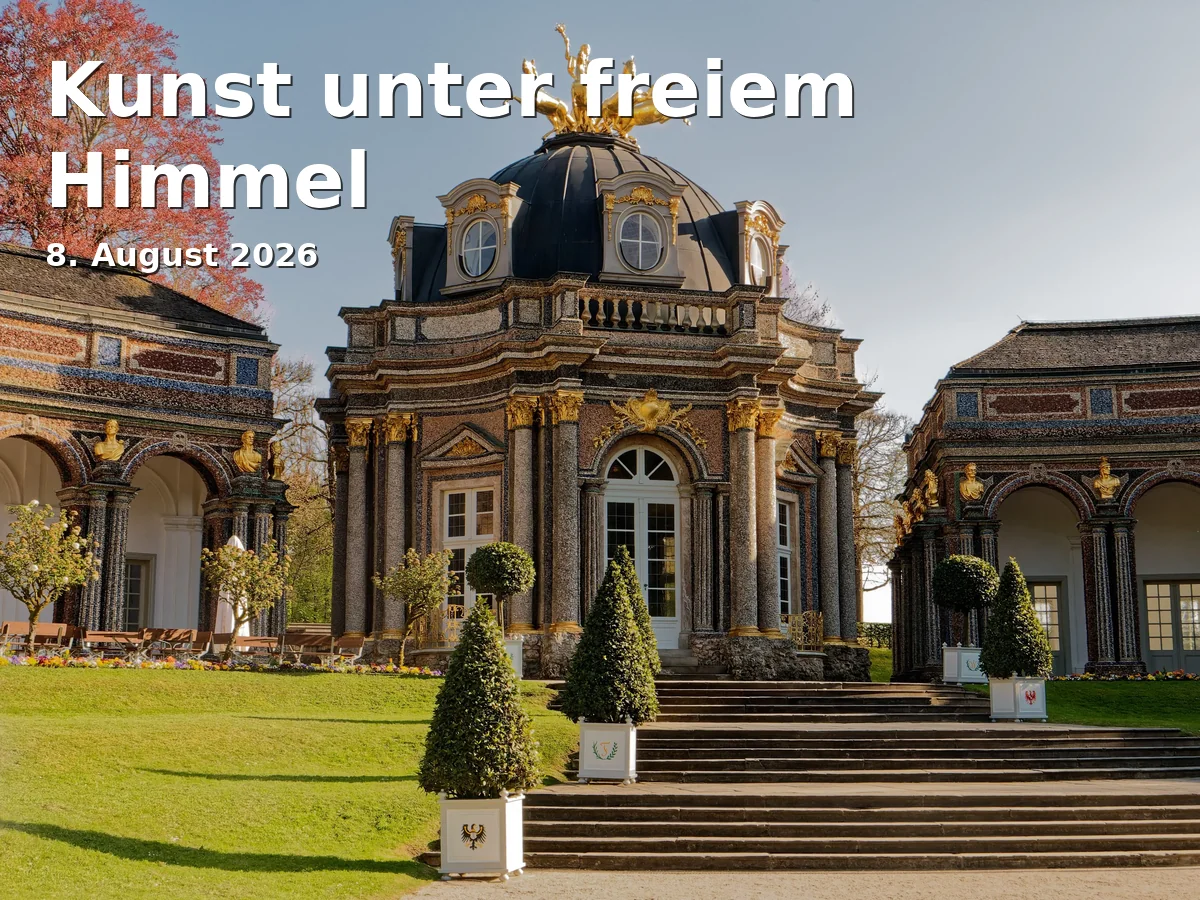
Art in the Open Air
Discover the fascinating art in Bayreuth's public spaces on a guided tour on August 8, 2026.
Frequently Asked Questions
Reviews
No reviews found