
Bayreuth
Ludwigstraße 21, 95444 Bayreuth, Deutschland
Archaeological Museum | Opening Hours & Directions
The Archaeological Museum Bayreuth is a compact, yet exceptionally rich institution for all those who want to experience early history not just by reading, but through originals. It is located in the Italian Wing of the New Palace, making it part of one of the most impressive historical ensembles in the city. The official entry describes the museum as a place with finds from the Paleolithic to the Middle Ages, collected by the Historical Society for Upper Franconia since its founding in 1827. Thus, the museum connects local collection work, regional archaeology, and a clear reference to Upper Franconia, the Franconian Switzerland, and the Bayreuth surroundings. For those searching for an archaeological museum in Bayreuth, inquiring about opening hours, admission, directions, or parking, this institution is a very good address because it brings history, location, and visiting practices within easy reach. ([bayreuth-tourismus.de](https://www.bayreuth-tourismus.de/sehenswertes/museen/archaeologisches-museum/))
Opening Hours, Admission, and Tours for Your Museum Visit
Anyone wishing to visit the Archaeological Museum Bayreuth should be aware of the official visiting hours: The museum's website states that Saturdays from 11 AM to 3 PM are the regular opening hours. Admission costs 1.00 Euro, reduced 0.50 Euro. This is remarkably low for a specialized museum with original archaeological finds and a historical location in the New Palace, making the visit particularly easy to plan. Also important for practice: Group tours and tours for school classes are available by arrangement. So, if you come with a class, an association, a travel group, or a private interest group, you can organize the visit in advance and tailor it to the content. Especially for a location that does not focus on mass operations but on substantial communication, this scheduling solution is a clear advantage. The contact page of the Historical Society for Upper Franconia also mentions a lecture hall, making the museum interesting for lectures and in-depth communication. ([bayreuth-tourismus.de](https://www.bayreuth-tourismus.de/sehenswertes/museen/archaeologisches-museum/))
The combination of manageable opening hours and a low admission price is SEO-relevant because search queries related to archaeological museum Bayreuth opening hours and archaeological museum Bayreuth admission typically express a quick, concrete visitor need. This need is exactly what the museum fulfills. It is not a huge day program, but rather a focused cultural appointment that can be easily combined with other stops in Bayreuth. Those planning a visit on Saturday can still include the city center, the New Palace itself, or other museums in the city afterward. The official mention of tours for school classes and groups also shows that the museum works with a pedagogical orientation and does not only have individual short visits in mind. For travelers looking for a substantive, calm, and historically grounded program point, this is very good news. ([bayreuth-tourismus.de](https://www.bayreuth-tourismus.de/sehenswertes/museen/archaeologisches-museum/))
Location in the New Palace, Directions, and Parking in Bayreuth
The Archaeological Museum is located in the Italian Wing of the New Palace. This location is important for orientation in Bayreuth, as the site is situated in a historically and urbanistically prominent environment. The official entry states the contact address as Ludwigstraße 25 b, 95444 Bayreuth. This clearly places the museum in the city center area, in immediate proximity to other cultural destinations. For directions, it is particularly helpful that the Bavarian Palace Administration mentions the bus to Sternplatz for the New Palace and refers to the Bayreuth city center for parking questions. The city of Bayreuth, in turn, states that there are over 6,000 public and private parking spaces available within 500 meters of the city center. Therefore, those arriving by car will find a dense network of parking options in the center, even though no dedicated parking space is designated for the museum itself. ([bayreuth-tourismus.de](https://www.bayreuth-tourismus.de/sehenswertes/museen/archaeologisches-museum/))
Especially for the search terms archaeological museum bayreuth directions and archaeological museum bayreuth parking, this combination of city center location and general parking infrastructure is crucial. The city of Bayreuth describes the city center as an area with parking garages, underground parking, public parking spaces, and street-side parking areas. Additionally, mobile parking via EasyPark is offered, which can simplify the stay for visitors. Even though the museum itself is small and specialized, it is located in an urban environment where short walking distances work well. Therefore, those with limited time in Bayreuth can easily combine a museum visit with a city center walk. The proximity to other attractions makes the location particularly attractive: The museum is not an isolated purpose-built structure on the edge of the city, but part of a cultural center that can be easily accessed on foot. ([bayreuth.de](https://www.bayreuth.de/rathaus-buergerservice/verkehr-oepnv/parken-in-der-innenstadt/))
Moreover, the location in the vicinity of the New Palace is also perceived as part of the Bayreuth Cultural Route beyond the city limits. For visitors, this means that the journey is not only practical but also scenically and historically interesting. The New Palace and its surroundings are among the most famous historical sites in the city, and those who take the path to the Archaeological Museum are also moving through a part of Bayreuth where architecture, garden art, and museums are closely interconnected. The mention of bus connections and city center parking is therefore more than a formality: it shows that a visit to the museum fits well into an urban day plan. This makes the museum interesting for tourists who want to discover Bayreuth's culture compactly. ([bayreuth.de](https://www.bayreuth.de/rathaus-buergerservice/verkehr-oepnv/parken-in-der-innenstadt/))
Exhibition, Collection, and Special Finds from Upper Franconia
The exhibition contents of the Archaeological Museum Bayreuth are the actual heart of the institution. In eight rooms, finds from the Paleolithic to the Middle Ages are displayed. The collection primarily comes from eastern Upper Franconia, with the Franconian Switzerland and the Bayreuth surroundings highlighted as regional focuses. The museum thus documents not only a long time span but also a clearly defined landscape and find history. Those interested in early settlement traces, regional developments, and material culture will receive a clear, comprehensible overview here. The museum is therefore not just a mere collection of objects, but a regional narrative that is fed by genuine finds and a long tradition of collecting. ([bayreuth-tourismus.de](https://www.bayreuth-tourismus.de/sehenswertes/museen/archaeologisches-museum/))
Highlights of the exhibition include Neolithic stone axes from Dressendorf, Bindlach, and Glashütten, a jadeite axe from Haßlach, and a flint dagger from Tröbersdorf. Additionally, over 80 clay vessels from the Hallstatt period are mentioned, which form a particularly impressive group for the early Iron Age in Upper Franconia. Furthermore, exquisitely crafted bronze jewelry from Drosendorf near Hollfeld is included, such as bird-headed brooches with stylized waterfowl and a pair of bronze rings with strongly stylized animal heads. These pieces are important from an SEO perspective because they demonstrate the thematic depth of the museum: Those searching for Hallstatt period Upper Franconia or archaeological original finds in Bayreuth will encounter concrete objects that go far beyond a general museum description. ([bayreuth-tourismus.de](https://www.bayreuth-tourismus.de/sehenswertes/museen/archaeologisches-museum/))
The museum is particularly strong where it connects find history and illustrative communication. The numerous text and display boards provide extensive information according to the official description. The exhibition is complemented by reconstructions of a loom, a stone drill, and an original sliding mill. This creates an experimental area that not only explains early technology and everyday culture but also makes it visible. For visitors, this means: The museum shows not only the finished results of archaeological work but also the working methods, tools, and production forms that played a role in the everyday life of past eras. This is where its particular strength lies. It is a museum of small, precise insights that forms a credible journey through time from originals, reconstructions, and understandable communication. ([bayreuth-tourismus.de](https://www.bayreuth-tourismus.de/sehenswertes/museen/archaeologisches-museum/))
From a search engine perspective, the terms finds from the Paleolithic to the Middle Ages, Hallstatt period Upper Franconia, and archaeological museum bayreuth children fit particularly well here, as they summarize both the temporal framework and the type of presentation. The exhibition does not appear overloaded but rather concentrated. Eight rooms are sufficient to outline a clear path through the prehistory and early history of the region. For many visitors, this clarity is pleasant: One receives concentrated knowledge, genuine finds, and a comprehensible structure without being distracted by too many topics. The combination of regional origin, significant individual objects, and well-explained matters makes the visit interesting even for repeat visitors. Those who are truly interested in Upper Franconia's early history can take away much more than just a first impression here. ([bayreuth-tourismus.de](https://www.bayreuth-tourismus.de/sehenswertes/museen/archaeologisches-museum/))
The Building in the Italian Wing of the New Palace and Its Historical Context
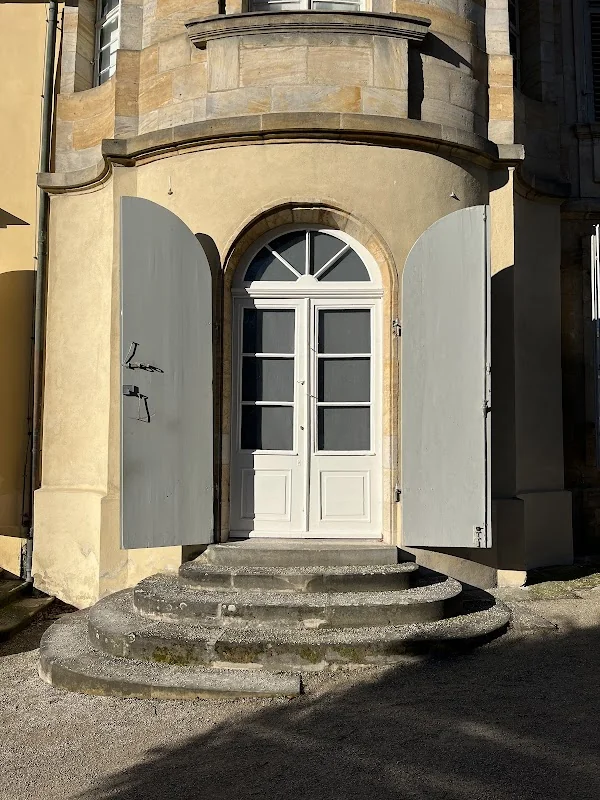
The Archaeological Museum is interesting not only because of its collection but also because of its location. It is situated in the Italian Wing of the New Palace, which was built in 1759/60. An hunting room is integrated into the exhibition spaces, characterized by naturalistic stuccos by J. B. Pedrozzi. This architectural and craftsmanship embedding adds an additional layer to the museum visit: One moves not only among archaeological objects but also in a space that is itself part of the court and construction history of Bayreuth. This is a strong unique selling point because the location historically enriches the exhibition theme without overshadowing it. ([bayreuth-tourismus.de](https://www.bayreuth-tourismus.de/sehenswertes/museen/archaeologisches-museum/))
The Bavarian Palace Administration describes the New Palace as a place of various museum areas and simultaneously refers to barrier-free access and visitor information for people with disabilities. For the museum and the palace area, level, barrier-free paved paths to the main entrance are mentioned, as well as a separate step-free access to the ticket area and shop, as well as other important areas that are accessible by elevator. Although this information refers to the New Palace as a whole and not to a single showcase of the Archaeological Museum, it is still helpful for visit planning as it categorizes the historical site as fundamentally accessible. Those traveling with mobility restrictions should check the details in advance but can assume that the location is not completely unprepared for accessibility. ([bayreuth-wilhelmine.de](https://www.bayreuth-wilhelmine.de/deutsch/tourist/mobilitaet_neues-schloss.htm?utm_source=openai))
The surroundings of the New Palace also contribute to the visit experience. The Palace Administration points out the Court Garden, whose basic features are still recognizable and whose parterre was reconstructed in front of the south wing in 1990. This makes it clear that the museum is embedded in an ensemble that connects architecture, garden space, and court history. Therefore, those interested in Bayreuth will find several layers in a compact area: the palace, the court garden, the archaeological museum, and other exhibition areas. This interplay makes the location so valuable for cultural travelers. The museum is not a single room but part of a historical overall composition that keeps Bayreuth visible as a residence city. ([schloesser.bayern.de](https://www.schloesser.bayern.de/deutsch/schloss/objekte/bay_ns.htm))
Visiting Tips for Families, School Classes, and History Fans
For families and younger visitors, the Archaeological Museum Bayreuth is particularly interesting because of its experimental area. The official text emphasizes that reconstructions of a loom, a stone drill, and a sliding mill complement the exhibition and that this area is particularly the highlight of the museum visit for children. This is an important point because many museums seem only limitedly accessible to children. Here it is different: By understanding tools and work steps, early history becomes vivid and comprehensible. Therefore, those traveling with children will find a compact, well-focused station that connects knowledge and experience. This is also very interesting for school classes, as the content can be easily linked to teaching topics on prehistory, Iron Age, or regional history. ([bayreuth-tourismus.de](https://www.bayreuth-tourismus.de/sehenswertes/museen/archaeologisches-museum/))
The proximity to the Prehistoric Museum Upper Franconia is also a practical advantage. The official Bayreuth Tourism points out that the Prehistoric Museum can be visited almost directly next to the Archaeological Museum. Therefore, if you plan a whole cultural morning or afternoon, you can combine early human history and earth history in immediate proximity. This is equally attractive for families, school groups, and culture-interested travelers, as the content complements each other well. The Archaeological Museum itself remains the place for the material culture of humans, while the Prehistoric Museum spans the much longer perspective of earth history. Together, this creates a clever, thematically strong program. ([bayreuth-tourismus.de](https://www.bayreuth-tourismus.de/sehenswertes/museen/archaeologisches-museum/))
Also, the institution behind the museum is interesting for visitors: The Historical Society for Upper Franconia e. V. is the sponsor, with Norbert Hübsch in charge. This shows that the institution is based on civic and research-oriented association work, not on an anonymous large enterprise. Such structures are often a good sign for specialized collections because they establish a connection to the region, research, and local memory culture. For visitors, this usually means a consciously curated, content-focused offering. Those looking for an authentic museum with regional roots will find exactly that here: no staging for its own sake, but an institution focused on sources, finds, and communication. ([bayreuth-tourismus.de](https://www.bayreuth-tourismus.de/sehenswertes/museen/archaeologisches-museum/))
Practically speaking, the visit can be easily combined with other Bayreuth stations. The city center is within walking distance, parking is widely available, and the New Palace is located in an area that is perfect for cultural walks. Thus, the Archaeological Museum is suitable for both targeted individual visits and as a component in a larger Bayreuth day. Therefore, those looking for a museum with archaeological depth, historical location, and manageable time investment will find themselves very well placed here. The combination of Saturday opening hours, low admission prices, tours by arrangement, and a strong regional profile makes this institution a recommended address for history enthusiasts. ([bayreuth-tourismus.de](https://www.bayreuth-tourismus.de/sehenswertes/museen/archaeologisches-museum/))
Sources:
Mehr anzeigenWeniger anzeigen
Archaeological Museum | Opening Hours & Directions
The Archaeological Museum Bayreuth is a compact, yet exceptionally rich institution for all those who want to experience early history not just by reading, but through originals. It is located in the Italian Wing of the New Palace, making it part of one of the most impressive historical ensembles in the city. The official entry describes the museum as a place with finds from the Paleolithic to the Middle Ages, collected by the Historical Society for Upper Franconia since its founding in 1827. Thus, the museum connects local collection work, regional archaeology, and a clear reference to Upper Franconia, the Franconian Switzerland, and the Bayreuth surroundings. For those searching for an archaeological museum in Bayreuth, inquiring about opening hours, admission, directions, or parking, this institution is a very good address because it brings history, location, and visiting practices within easy reach. ([bayreuth-tourismus.de](https://www.bayreuth-tourismus.de/sehenswertes/museen/archaeologisches-museum/))
Opening Hours, Admission, and Tours for Your Museum Visit
Anyone wishing to visit the Archaeological Museum Bayreuth should be aware of the official visiting hours: The museum's website states that Saturdays from 11 AM to 3 PM are the regular opening hours. Admission costs 1.00 Euro, reduced 0.50 Euro. This is remarkably low for a specialized museum with original archaeological finds and a historical location in the New Palace, making the visit particularly easy to plan. Also important for practice: Group tours and tours for school classes are available by arrangement. So, if you come with a class, an association, a travel group, or a private interest group, you can organize the visit in advance and tailor it to the content. Especially for a location that does not focus on mass operations but on substantial communication, this scheduling solution is a clear advantage. The contact page of the Historical Society for Upper Franconia also mentions a lecture hall, making the museum interesting for lectures and in-depth communication. ([bayreuth-tourismus.de](https://www.bayreuth-tourismus.de/sehenswertes/museen/archaeologisches-museum/))
The combination of manageable opening hours and a low admission price is SEO-relevant because search queries related to archaeological museum Bayreuth opening hours and archaeological museum Bayreuth admission typically express a quick, concrete visitor need. This need is exactly what the museum fulfills. It is not a huge day program, but rather a focused cultural appointment that can be easily combined with other stops in Bayreuth. Those planning a visit on Saturday can still include the city center, the New Palace itself, or other museums in the city afterward. The official mention of tours for school classes and groups also shows that the museum works with a pedagogical orientation and does not only have individual short visits in mind. For travelers looking for a substantive, calm, and historically grounded program point, this is very good news. ([bayreuth-tourismus.de](https://www.bayreuth-tourismus.de/sehenswertes/museen/archaeologisches-museum/))
Location in the New Palace, Directions, and Parking in Bayreuth
The Archaeological Museum is located in the Italian Wing of the New Palace. This location is important for orientation in Bayreuth, as the site is situated in a historically and urbanistically prominent environment. The official entry states the contact address as Ludwigstraße 25 b, 95444 Bayreuth. This clearly places the museum in the city center area, in immediate proximity to other cultural destinations. For directions, it is particularly helpful that the Bavarian Palace Administration mentions the bus to Sternplatz for the New Palace and refers to the Bayreuth city center for parking questions. The city of Bayreuth, in turn, states that there are over 6,000 public and private parking spaces available within 500 meters of the city center. Therefore, those arriving by car will find a dense network of parking options in the center, even though no dedicated parking space is designated for the museum itself. ([bayreuth-tourismus.de](https://www.bayreuth-tourismus.de/sehenswertes/museen/archaeologisches-museum/))
Especially for the search terms archaeological museum bayreuth directions and archaeological museum bayreuth parking, this combination of city center location and general parking infrastructure is crucial. The city of Bayreuth describes the city center as an area with parking garages, underground parking, public parking spaces, and street-side parking areas. Additionally, mobile parking via EasyPark is offered, which can simplify the stay for visitors. Even though the museum itself is small and specialized, it is located in an urban environment where short walking distances work well. Therefore, those with limited time in Bayreuth can easily combine a museum visit with a city center walk. The proximity to other attractions makes the location particularly attractive: The museum is not an isolated purpose-built structure on the edge of the city, but part of a cultural center that can be easily accessed on foot. ([bayreuth.de](https://www.bayreuth.de/rathaus-buergerservice/verkehr-oepnv/parken-in-der-innenstadt/))
Moreover, the location in the vicinity of the New Palace is also perceived as part of the Bayreuth Cultural Route beyond the city limits. For visitors, this means that the journey is not only practical but also scenically and historically interesting. The New Palace and its surroundings are among the most famous historical sites in the city, and those who take the path to the Archaeological Museum are also moving through a part of Bayreuth where architecture, garden art, and museums are closely interconnected. The mention of bus connections and city center parking is therefore more than a formality: it shows that a visit to the museum fits well into an urban day plan. This makes the museum interesting for tourists who want to discover Bayreuth's culture compactly. ([bayreuth.de](https://www.bayreuth.de/rathaus-buergerservice/verkehr-oepnv/parken-in-der-innenstadt/))
Exhibition, Collection, and Special Finds from Upper Franconia
The exhibition contents of the Archaeological Museum Bayreuth are the actual heart of the institution. In eight rooms, finds from the Paleolithic to the Middle Ages are displayed. The collection primarily comes from eastern Upper Franconia, with the Franconian Switzerland and the Bayreuth surroundings highlighted as regional focuses. The museum thus documents not only a long time span but also a clearly defined landscape and find history. Those interested in early settlement traces, regional developments, and material culture will receive a clear, comprehensible overview here. The museum is therefore not just a mere collection of objects, but a regional narrative that is fed by genuine finds and a long tradition of collecting. ([bayreuth-tourismus.de](https://www.bayreuth-tourismus.de/sehenswertes/museen/archaeologisches-museum/))
Highlights of the exhibition include Neolithic stone axes from Dressendorf, Bindlach, and Glashütten, a jadeite axe from Haßlach, and a flint dagger from Tröbersdorf. Additionally, over 80 clay vessels from the Hallstatt period are mentioned, which form a particularly impressive group for the early Iron Age in Upper Franconia. Furthermore, exquisitely crafted bronze jewelry from Drosendorf near Hollfeld is included, such as bird-headed brooches with stylized waterfowl and a pair of bronze rings with strongly stylized animal heads. These pieces are important from an SEO perspective because they demonstrate the thematic depth of the museum: Those searching for Hallstatt period Upper Franconia or archaeological original finds in Bayreuth will encounter concrete objects that go far beyond a general museum description. ([bayreuth-tourismus.de](https://www.bayreuth-tourismus.de/sehenswertes/museen/archaeologisches-museum/))
The museum is particularly strong where it connects find history and illustrative communication. The numerous text and display boards provide extensive information according to the official description. The exhibition is complemented by reconstructions of a loom, a stone drill, and an original sliding mill. This creates an experimental area that not only explains early technology and everyday culture but also makes it visible. For visitors, this means: The museum shows not only the finished results of archaeological work but also the working methods, tools, and production forms that played a role in the everyday life of past eras. This is where its particular strength lies. It is a museum of small, precise insights that forms a credible journey through time from originals, reconstructions, and understandable communication. ([bayreuth-tourismus.de](https://www.bayreuth-tourismus.de/sehenswertes/museen/archaeologisches-museum/))
From a search engine perspective, the terms finds from the Paleolithic to the Middle Ages, Hallstatt period Upper Franconia, and archaeological museum bayreuth children fit particularly well here, as they summarize both the temporal framework and the type of presentation. The exhibition does not appear overloaded but rather concentrated. Eight rooms are sufficient to outline a clear path through the prehistory and early history of the region. For many visitors, this clarity is pleasant: One receives concentrated knowledge, genuine finds, and a comprehensible structure without being distracted by too many topics. The combination of regional origin, significant individual objects, and well-explained matters makes the visit interesting even for repeat visitors. Those who are truly interested in Upper Franconia's early history can take away much more than just a first impression here. ([bayreuth-tourismus.de](https://www.bayreuth-tourismus.de/sehenswertes/museen/archaeologisches-museum/))
The Building in the Italian Wing of the New Palace and Its Historical Context
The Archaeological Museum is interesting not only because of its collection but also because of its location. It is situated in the Italian Wing of the New Palace, which was built in 1759/60. An hunting room is integrated into the exhibition spaces, characterized by naturalistic stuccos by J. B. Pedrozzi. This architectural and craftsmanship embedding adds an additional layer to the museum visit: One moves not only among archaeological objects but also in a space that is itself part of the court and construction history of Bayreuth. This is a strong unique selling point because the location historically enriches the exhibition theme without overshadowing it. ([bayreuth-tourismus.de](https://www.bayreuth-tourismus.de/sehenswertes/museen/archaeologisches-museum/))
The Bavarian Palace Administration describes the New Palace as a place of various museum areas and simultaneously refers to barrier-free access and visitor information for people with disabilities. For the museum and the palace area, level, barrier-free paved paths to the main entrance are mentioned, as well as a separate step-free access to the ticket area and shop, as well as other important areas that are accessible by elevator. Although this information refers to the New Palace as a whole and not to a single showcase of the Archaeological Museum, it is still helpful for visit planning as it categorizes the historical site as fundamentally accessible. Those traveling with mobility restrictions should check the details in advance but can assume that the location is not completely unprepared for accessibility. ([bayreuth-wilhelmine.de](https://www.bayreuth-wilhelmine.de/deutsch/tourist/mobilitaet_neues-schloss.htm?utm_source=openai))
The surroundings of the New Palace also contribute to the visit experience. The Palace Administration points out the Court Garden, whose basic features are still recognizable and whose parterre was reconstructed in front of the south wing in 1990. This makes it clear that the museum is embedded in an ensemble that connects architecture, garden space, and court history. Therefore, those interested in Bayreuth will find several layers in a compact area: the palace, the court garden, the archaeological museum, and other exhibition areas. This interplay makes the location so valuable for cultural travelers. The museum is not a single room but part of a historical overall composition that keeps Bayreuth visible as a residence city. ([schloesser.bayern.de](https://www.schloesser.bayern.de/deutsch/schloss/objekte/bay_ns.htm))
Visiting Tips for Families, School Classes, and History Fans
For families and younger visitors, the Archaeological Museum Bayreuth is particularly interesting because of its experimental area. The official text emphasizes that reconstructions of a loom, a stone drill, and a sliding mill complement the exhibition and that this area is particularly the highlight of the museum visit for children. This is an important point because many museums seem only limitedly accessible to children. Here it is different: By understanding tools and work steps, early history becomes vivid and comprehensible. Therefore, those traveling with children will find a compact, well-focused station that connects knowledge and experience. This is also very interesting for school classes, as the content can be easily linked to teaching topics on prehistory, Iron Age, or regional history. ([bayreuth-tourismus.de](https://www.bayreuth-tourismus.de/sehenswertes/museen/archaeologisches-museum/))
The proximity to the Prehistoric Museum Upper Franconia is also a practical advantage. The official Bayreuth Tourism points out that the Prehistoric Museum can be visited almost directly next to the Archaeological Museum. Therefore, if you plan a whole cultural morning or afternoon, you can combine early human history and earth history in immediate proximity. This is equally attractive for families, school groups, and culture-interested travelers, as the content complements each other well. The Archaeological Museum itself remains the place for the material culture of humans, while the Prehistoric Museum spans the much longer perspective of earth history. Together, this creates a clever, thematically strong program. ([bayreuth-tourismus.de](https://www.bayreuth-tourismus.de/sehenswertes/museen/archaeologisches-museum/))
Also, the institution behind the museum is interesting for visitors: The Historical Society for Upper Franconia e. V. is the sponsor, with Norbert Hübsch in charge. This shows that the institution is based on civic and research-oriented association work, not on an anonymous large enterprise. Such structures are often a good sign for specialized collections because they establish a connection to the region, research, and local memory culture. For visitors, this usually means a consciously curated, content-focused offering. Those looking for an authentic museum with regional roots will find exactly that here: no staging for its own sake, but an institution focused on sources, finds, and communication. ([bayreuth-tourismus.de](https://www.bayreuth-tourismus.de/sehenswertes/museen/archaeologisches-museum/))
Practically speaking, the visit can be easily combined with other Bayreuth stations. The city center is within walking distance, parking is widely available, and the New Palace is located in an area that is perfect for cultural walks. Thus, the Archaeological Museum is suitable for both targeted individual visits and as a component in a larger Bayreuth day. Therefore, those looking for a museum with archaeological depth, historical location, and manageable time investment will find themselves very well placed here. The combination of Saturday opening hours, low admission prices, tours by arrangement, and a strong regional profile makes this institution a recommended address for history enthusiasts. ([bayreuth-tourismus.de](https://www.bayreuth-tourismus.de/sehenswertes/museen/archaeologisches-museum/))
Sources:
Archaeological Museum | Opening Hours & Directions
The Archaeological Museum Bayreuth is a compact, yet exceptionally rich institution for all those who want to experience early history not just by reading, but through originals. It is located in the Italian Wing of the New Palace, making it part of one of the most impressive historical ensembles in the city. The official entry describes the museum as a place with finds from the Paleolithic to the Middle Ages, collected by the Historical Society for Upper Franconia since its founding in 1827. Thus, the museum connects local collection work, regional archaeology, and a clear reference to Upper Franconia, the Franconian Switzerland, and the Bayreuth surroundings. For those searching for an archaeological museum in Bayreuth, inquiring about opening hours, admission, directions, or parking, this institution is a very good address because it brings history, location, and visiting practices within easy reach. ([bayreuth-tourismus.de](https://www.bayreuth-tourismus.de/sehenswertes/museen/archaeologisches-museum/))
Opening Hours, Admission, and Tours for Your Museum Visit
Anyone wishing to visit the Archaeological Museum Bayreuth should be aware of the official visiting hours: The museum's website states that Saturdays from 11 AM to 3 PM are the regular opening hours. Admission costs 1.00 Euro, reduced 0.50 Euro. This is remarkably low for a specialized museum with original archaeological finds and a historical location in the New Palace, making the visit particularly easy to plan. Also important for practice: Group tours and tours for school classes are available by arrangement. So, if you come with a class, an association, a travel group, or a private interest group, you can organize the visit in advance and tailor it to the content. Especially for a location that does not focus on mass operations but on substantial communication, this scheduling solution is a clear advantage. The contact page of the Historical Society for Upper Franconia also mentions a lecture hall, making the museum interesting for lectures and in-depth communication. ([bayreuth-tourismus.de](https://www.bayreuth-tourismus.de/sehenswertes/museen/archaeologisches-museum/))
The combination of manageable opening hours and a low admission price is SEO-relevant because search queries related to archaeological museum Bayreuth opening hours and archaeological museum Bayreuth admission typically express a quick, concrete visitor need. This need is exactly what the museum fulfills. It is not a huge day program, but rather a focused cultural appointment that can be easily combined with other stops in Bayreuth. Those planning a visit on Saturday can still include the city center, the New Palace itself, or other museums in the city afterward. The official mention of tours for school classes and groups also shows that the museum works with a pedagogical orientation and does not only have individual short visits in mind. For travelers looking for a substantive, calm, and historically grounded program point, this is very good news. ([bayreuth-tourismus.de](https://www.bayreuth-tourismus.de/sehenswertes/museen/archaeologisches-museum/))
Location in the New Palace, Directions, and Parking in Bayreuth
The Archaeological Museum is located in the Italian Wing of the New Palace. This location is important for orientation in Bayreuth, as the site is situated in a historically and urbanistically prominent environment. The official entry states the contact address as Ludwigstraße 25 b, 95444 Bayreuth. This clearly places the museum in the city center area, in immediate proximity to other cultural destinations. For directions, it is particularly helpful that the Bavarian Palace Administration mentions the bus to Sternplatz for the New Palace and refers to the Bayreuth city center for parking questions. The city of Bayreuth, in turn, states that there are over 6,000 public and private parking spaces available within 500 meters of the city center. Therefore, those arriving by car will find a dense network of parking options in the center, even though no dedicated parking space is designated for the museum itself. ([bayreuth-tourismus.de](https://www.bayreuth-tourismus.de/sehenswertes/museen/archaeologisches-museum/))
Especially for the search terms archaeological museum bayreuth directions and archaeological museum bayreuth parking, this combination of city center location and general parking infrastructure is crucial. The city of Bayreuth describes the city center as an area with parking garages, underground parking, public parking spaces, and street-side parking areas. Additionally, mobile parking via EasyPark is offered, which can simplify the stay for visitors. Even though the museum itself is small and specialized, it is located in an urban environment where short walking distances work well. Therefore, those with limited time in Bayreuth can easily combine a museum visit with a city center walk. The proximity to other attractions makes the location particularly attractive: The museum is not an isolated purpose-built structure on the edge of the city, but part of a cultural center that can be easily accessed on foot. ([bayreuth.de](https://www.bayreuth.de/rathaus-buergerservice/verkehr-oepnv/parken-in-der-innenstadt/))
Moreover, the location in the vicinity of the New Palace is also perceived as part of the Bayreuth Cultural Route beyond the city limits. For visitors, this means that the journey is not only practical but also scenically and historically interesting. The New Palace and its surroundings are among the most famous historical sites in the city, and those who take the path to the Archaeological Museum are also moving through a part of Bayreuth where architecture, garden art, and museums are closely interconnected. The mention of bus connections and city center parking is therefore more than a formality: it shows that a visit to the museum fits well into an urban day plan. This makes the museum interesting for tourists who want to discover Bayreuth's culture compactly. ([bayreuth.de](https://www.bayreuth.de/rathaus-buergerservice/verkehr-oepnv/parken-in-der-innenstadt/))
Exhibition, Collection, and Special Finds from Upper Franconia
The exhibition contents of the Archaeological Museum Bayreuth are the actual heart of the institution. In eight rooms, finds from the Paleolithic to the Middle Ages are displayed. The collection primarily comes from eastern Upper Franconia, with the Franconian Switzerland and the Bayreuth surroundings highlighted as regional focuses. The museum thus documents not only a long time span but also a clearly defined landscape and find history. Those interested in early settlement traces, regional developments, and material culture will receive a clear, comprehensible overview here. The museum is therefore not just a mere collection of objects, but a regional narrative that is fed by genuine finds and a long tradition of collecting. ([bayreuth-tourismus.de](https://www.bayreuth-tourismus.de/sehenswertes/museen/archaeologisches-museum/))
Highlights of the exhibition include Neolithic stone axes from Dressendorf, Bindlach, and Glashütten, a jadeite axe from Haßlach, and a flint dagger from Tröbersdorf. Additionally, over 80 clay vessels from the Hallstatt period are mentioned, which form a particularly impressive group for the early Iron Age in Upper Franconia. Furthermore, exquisitely crafted bronze jewelry from Drosendorf near Hollfeld is included, such as bird-headed brooches with stylized waterfowl and a pair of bronze rings with strongly stylized animal heads. These pieces are important from an SEO perspective because they demonstrate the thematic depth of the museum: Those searching for Hallstatt period Upper Franconia or archaeological original finds in Bayreuth will encounter concrete objects that go far beyond a general museum description. ([bayreuth-tourismus.de](https://www.bayreuth-tourismus.de/sehenswertes/museen/archaeologisches-museum/))
The museum is particularly strong where it connects find history and illustrative communication. The numerous text and display boards provide extensive information according to the official description. The exhibition is complemented by reconstructions of a loom, a stone drill, and an original sliding mill. This creates an experimental area that not only explains early technology and everyday culture but also makes it visible. For visitors, this means: The museum shows not only the finished results of archaeological work but also the working methods, tools, and production forms that played a role in the everyday life of past eras. This is where its particular strength lies. It is a museum of small, precise insights that forms a credible journey through time from originals, reconstructions, and understandable communication. ([bayreuth-tourismus.de](https://www.bayreuth-tourismus.de/sehenswertes/museen/archaeologisches-museum/))
From a search engine perspective, the terms finds from the Paleolithic to the Middle Ages, Hallstatt period Upper Franconia, and archaeological museum bayreuth children fit particularly well here, as they summarize both the temporal framework and the type of presentation. The exhibition does not appear overloaded but rather concentrated. Eight rooms are sufficient to outline a clear path through the prehistory and early history of the region. For many visitors, this clarity is pleasant: One receives concentrated knowledge, genuine finds, and a comprehensible structure without being distracted by too many topics. The combination of regional origin, significant individual objects, and well-explained matters makes the visit interesting even for repeat visitors. Those who are truly interested in Upper Franconia's early history can take away much more than just a first impression here. ([bayreuth-tourismus.de](https://www.bayreuth-tourismus.de/sehenswertes/museen/archaeologisches-museum/))
The Building in the Italian Wing of the New Palace and Its Historical Context
The Archaeological Museum is interesting not only because of its collection but also because of its location. It is situated in the Italian Wing of the New Palace, which was built in 1759/60. An hunting room is integrated into the exhibition spaces, characterized by naturalistic stuccos by J. B. Pedrozzi. This architectural and craftsmanship embedding adds an additional layer to the museum visit: One moves not only among archaeological objects but also in a space that is itself part of the court and construction history of Bayreuth. This is a strong unique selling point because the location historically enriches the exhibition theme without overshadowing it. ([bayreuth-tourismus.de](https://www.bayreuth-tourismus.de/sehenswertes/museen/archaeologisches-museum/))
The Bavarian Palace Administration describes the New Palace as a place of various museum areas and simultaneously refers to barrier-free access and visitor information for people with disabilities. For the museum and the palace area, level, barrier-free paved paths to the main entrance are mentioned, as well as a separate step-free access to the ticket area and shop, as well as other important areas that are accessible by elevator. Although this information refers to the New Palace as a whole and not to a single showcase of the Archaeological Museum, it is still helpful for visit planning as it categorizes the historical site as fundamentally accessible. Those traveling with mobility restrictions should check the details in advance but can assume that the location is not completely unprepared for accessibility. ([bayreuth-wilhelmine.de](https://www.bayreuth-wilhelmine.de/deutsch/tourist/mobilitaet_neues-schloss.htm?utm_source=openai))
The surroundings of the New Palace also contribute to the visit experience. The Palace Administration points out the Court Garden, whose basic features are still recognizable and whose parterre was reconstructed in front of the south wing in 1990. This makes it clear that the museum is embedded in an ensemble that connects architecture, garden space, and court history. Therefore, those interested in Bayreuth will find several layers in a compact area: the palace, the court garden, the archaeological museum, and other exhibition areas. This interplay makes the location so valuable for cultural travelers. The museum is not a single room but part of a historical overall composition that keeps Bayreuth visible as a residence city. ([schloesser.bayern.de](https://www.schloesser.bayern.de/deutsch/schloss/objekte/bay_ns.htm))
Visiting Tips for Families, School Classes, and History Fans
For families and younger visitors, the Archaeological Museum Bayreuth is particularly interesting because of its experimental area. The official text emphasizes that reconstructions of a loom, a stone drill, and a sliding mill complement the exhibition and that this area is particularly the highlight of the museum visit for children. This is an important point because many museums seem only limitedly accessible to children. Here it is different: By understanding tools and work steps, early history becomes vivid and comprehensible. Therefore, those traveling with children will find a compact, well-focused station that connects knowledge and experience. This is also very interesting for school classes, as the content can be easily linked to teaching topics on prehistory, Iron Age, or regional history. ([bayreuth-tourismus.de](https://www.bayreuth-tourismus.de/sehenswertes/museen/archaeologisches-museum/))
The proximity to the Prehistoric Museum Upper Franconia is also a practical advantage. The official Bayreuth Tourism points out that the Prehistoric Museum can be visited almost directly next to the Archaeological Museum. Therefore, if you plan a whole cultural morning or afternoon, you can combine early human history and earth history in immediate proximity. This is equally attractive for families, school groups, and culture-interested travelers, as the content complements each other well. The Archaeological Museum itself remains the place for the material culture of humans, while the Prehistoric Museum spans the much longer perspective of earth history. Together, this creates a clever, thematically strong program. ([bayreuth-tourismus.de](https://www.bayreuth-tourismus.de/sehenswertes/museen/archaeologisches-museum/))
Also, the institution behind the museum is interesting for visitors: The Historical Society for Upper Franconia e. V. is the sponsor, with Norbert Hübsch in charge. This shows that the institution is based on civic and research-oriented association work, not on an anonymous large enterprise. Such structures are often a good sign for specialized collections because they establish a connection to the region, research, and local memory culture. For visitors, this usually means a consciously curated, content-focused offering. Those looking for an authentic museum with regional roots will find exactly that here: no staging for its own sake, but an institution focused on sources, finds, and communication. ([bayreuth-tourismus.de](https://www.bayreuth-tourismus.de/sehenswertes/museen/archaeologisches-museum/))
Practically speaking, the visit can be easily combined with other Bayreuth stations. The city center is within walking distance, parking is widely available, and the New Palace is located in an area that is perfect for cultural walks. Thus, the Archaeological Museum is suitable for both targeted individual visits and as a component in a larger Bayreuth day. Therefore, those looking for a museum with archaeological depth, historical location, and manageable time investment will find themselves very well placed here. The combination of Saturday opening hours, low admission prices, tours by arrangement, and a strong regional profile makes this institution a recommended address for history enthusiasts. ([bayreuth-tourismus.de](https://www.bayreuth-tourismus.de/sehenswertes/museen/archaeologisches-museum/))
Sources:
Frequently Asked Questions
Reviews
No reviews found