
Bayreuth
95445 Bayreuth, Deutschland
Bayreuth Gartenstadt | Real Estate & Buying a House
Bayreuth Gartenstadt is a district that impresses at first glance primarily with its tranquility, greenery, and a very clear residential location. Those looking for photos, real estate, buying a house, Wendelhöfen, or the connection to the garden exhibition area are usually not interested in a classic event address, but rather in a neighborhood with a special character. This is exactly what makes the Gartenstadt in Bayreuth so exciting: it is located at one of the most prominent spots in the city, directly at the Green Hill, close to the Festival Park, and with direct connections to the green axes that shape Bayreuth as a city. The name sounds friendly and open, even though the historical emergence of the district is more complex than a romantic garden city ideal. Today, the area still stands for a mix of quality of living, history, green integration, and good orientation in the city. ([de.wikipedia.org](https://de.wikipedia.org/wiki/Gartenstadt_%28Bayreuth%29))
Location, Character, and Orientation in Bayreuth
The Gartenstadt is located on the western flank of the Green Hill and is thus spatially closely connected to one of the most well-known areas of Bayreuth. To the east, the Festival Park adjoins, while Feustelstraße towards the city center forms an important orientation line. In the vicinity, there is also the extensive grounds of the district hospital as well as the northern development boundary at the foot of the Hohen Warte. Particularly defining is the wide green strip parallel to Dr.-Hans-Richter-Straße, which divides the Gartenstadt into a northern and a southern area. This structure ensures that the district does not appear as a closed grid, but rather as a quiet, green-divided residential area with clear transitions. Those who know Bayreuth will immediately recognize the proximity to the cultural and scenic highlights of the city. ([de.wikipedia.org](https://de.wikipedia.org/wiki/Gartenstadt_%28Bayreuth%29))
The classification within the urban structure is also important: In Bayreuth, the area is visible together with Wendelhöfen in official and urban contexts, among other things as a city district or as a traffic cell Wendelhöfen/Northern Gartenstadt. For the search for real estate or buying a house, this is relevant because the location is not just a name on a map, but an area with actual administrative integration, neighborhood structure, and traffic classification. The Gartenstadt is thus neither an arbitrary peripheral area nor a pure transit zone. It is located in an urban, but green-shaped part of Bayreuth, which is close to the city center and the Festival Hill, while still retaining much of the character of a quiet residential neighborhood. This combination explains why the area is attractive to many people who want to be close to the city but do not want to forgo a relaxed living environment. ([bayreuth.de](https://www.bayreuth.de/ehrung-fuer-verdiente-distriktvorsteher/))
History of the Gartenstadt in Wendelhöfen
The present Gartenstadt dates back to a planned settlement development from the 1930s. In December 1935, a new settlement area was designated below the Richard Wagner Festival House, and construction began as early as the beginning of 1936. The area was largely developed on previously agricultural land of the Strangshof on Cottenbacher Straße in Wendelhöfen. The emergence was therefore not spontaneous growth, but a conscious urban planning decision. Two basic types of similar houses were designed for the architecture, which mainly differed in size. The district was conceived from the beginning as a uniform settlement, whose appearance was meant to combine order and design intent. Even though the historical background must be critically assessed today, this planned origin explains why the Gartenstadt still leaves an unusually clear, homogeneous, and at the same time representative impression. ([de.wikipedia.org](https://de.wikipedia.org/wiki/Gartenstadt_%28Bayreuth%29))
Architecturally, individual houses with gardens were built on relatively generous plots of around 600 to 900 square meters. The district was designed for wealthier classes and was long considered one of the more expensive settlements in Bayreuth. In World War II, the southern area was significantly destroyed; after 1945, many houses were temporarily used by US military personnel, which gave the district a special atmosphere until the 1980s. This development is important for understanding the Gartenstadt today: the area is not an anonymous new development, but a grown residential environment with historical depth, architectural coherence, and a very clear connection to Bayreuth's city and settlement history. Therefore, those looking for Wendelhöfen or Bayreuth Gartenstadt will encounter a district whose current quality of living is closely linked to its origins and its architectural basic forms. ([de.wikipedia.org](https://de.wikipedia.org/wiki/Gartenstadt_%28Bayreuth%29))
Real Estate, Buying a House, and the Living Experience on Site
The search terms real estate Bayreuth Gartenstadt and buying a house Bayreuth Gartenstadt are no coincidence. The Gartenstadt has historically developed as a residential area with individual houses, gardens, and a clear structure, and this fundamental idea continues to resonate in the urban landscape today. In a district located on the western flank of the Green Hill and characterized by green spaces and residential tranquility, a living experience is created that is distinctly different from densely built-up city center locations. For many interested parties, this is attractive because urban proximity and a comparatively quiet environment come together here. The historical reputation as an exclusive celebrity settlement further enhances this impression. Even though a district changes over the decades, the basic logic remains: here one lives in an area that has been consciously designed for quality of living and spatial generosity. ([de.wikipedia.org](https://de.wikipedia.org/wiki/Gartenstadt_%28Bayreuth%29))
Therefore, anyone interested in a property should consider the Gartenstadt as a neighborhood with a special profile. It is not a place for loud event density, but a district with a quiet character, green connection, and good access to Bayreuth's cultural highlights. The proximity to the Festival Park, the Green Hill, and the green connections towards Eremitage and the city center makes the location even more interesting. Especially for buyers looking for a combination of residential tranquility, city access, and a representative environment, this area is a natural choice. The limited size of the district, its historical homogeneity, and the clearly recognizable settlement structure also ensure that the district has a very distinct market character. In search queries related to buying a house or real estate, the Gartenstadt is therefore often perceived as a high-quality, grown residential area, not as an arbitrary address in the urban area. ([de.wikipedia.org](https://de.wikipedia.org/wiki/Gartenstadt_%28Bayreuth%29))
Photos, Architecture, and Typical Impressions
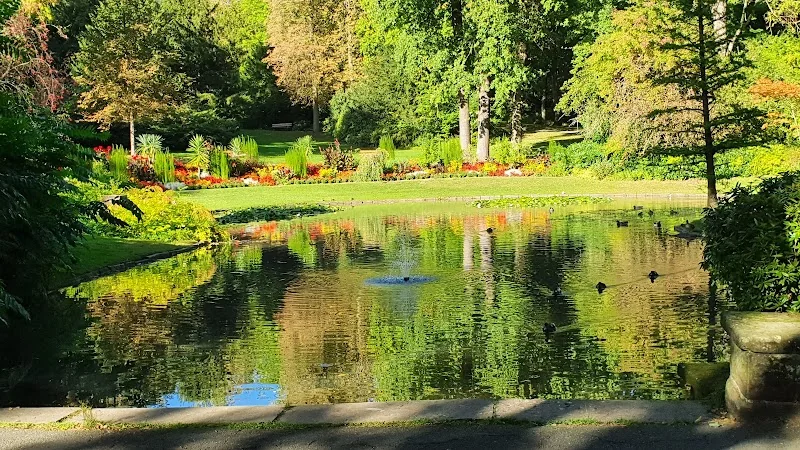
When it comes to photos of Bayreuth Gartenstadt, the quiet residential streets and architectural coherence stand out. Particularly typical are streets like Gontardstraße in the northern core area, Feustelstraße, Friedelind-Wagner-Straße, and Adolf-von-Groß-Straße. The villas on Rheingold- and Parsifalstraße also symbolize the district. Those who want to capture the area photographically will find motifs that do not rely on monumentality but rather on an elegant mix of residential architecture, greenery, and spatial tranquility. The wide green strip in the middle of the Gartenstadt is a strong visual motif as it makes the structure of the district visible while simultaneously explaining its character. ([de.wikipedia.org](https://de.wikipedia.org/wiki/Gartenstadt_%28Bayreuth%29))
The Gartenstadt often appears particularly interesting photographically because it consists not only of houses but of an interplay of street scenes, vegetation, and location reference. In the background, the Festival Park and the Green Hill play an important role, so that even unspectacular sightlines gain a clear spatial depth. The architecture is deliberately uniform but not monotonous: the historical house forms, the gardens, and the small differences between the buildings create a calm but varied picture. This is precisely why many people search for Bayreuth Gartenstadt photos when they want to get an impression of a potential place of residence in advance. The motifs are not spectacular in a tourist sense, but they convey very well what the district stands for: for scale, residential culture, and a close connection to the green urban landscape. ([de.wikipedia.org](https://de.wikipedia.org/wiki/Gartenstadt_%28Bayreuth%29))
Access, Public Transport, and Connection to the Garden Exhibition Area
Those searching for access Bayreuth Gartenstadt or public transport Gartenstadt Bayreuth primarily want to know how well the district is connected in everyday life. The local transport plan of the city of Bayreuth makes an important statement in this regard: In the traffic cell Wendelhöfen/Northern Gartenstadt, there is no direct connection to public transport on Sundays, while from the further away stop Gartenstadt, lines 305 and 321 operate throughout the day. During the week, the situation is significantly better, and the city describes the quality of public transport overall as sufficient to good, especially during peak traffic times. For residents, this means: the Gartenstadt is not an isolated area, but the accessibility depends noticeably on the day of the week and travel time. ([bayreuth.de](https://www.bayreuth.de/wp-content/uploads/2025/02/166-Nahverkehrsplan_Stadt_Bayreuth_2025.pdf))
The term garden exhibition area is primarily associated in Bayreuth with the green spatial planning of the state garden show and is not identical to the Gartenstadt as a residential district. This distinction is important for orientation because Bayreuth's green connections and circular paths link the city center, Hofgarten, and Eremitage directly. The urban landscape has been sustainably shaped by these paths and by the state garden show in 2016. Therefore, those coming from the Gartenstadt will find several defining green spaces and cultural-historical destinations in close proximity, even if the residential quarter itself is not the garden exhibition area. For search queries related to Bayreuth garden exhibition area, this distinction is central: the Gartenstadt is close to important green connections, but is primarily an independent district with a residential function. ([bayreuth.de](https://www.bayreuth.de/rathaus-buergerservice/planen-bauen/konzepte/landesgartenschau/konzept/erschliessung-und-rundwege/))
Green Spaces, Festival Hill, and Leisure around the Gartenstadt
The strength of the Gartenstadt lies not only in its residential location but also in its integration into Bayreuth's green system. The city's gardening office is responsible for the maintenance, preservation, and development of urban greenery, including parks, green spaces, ecological greenways, and the tree population in the Festival Park. This Festival Park is particularly significant for the Gartenstadt because it directly adjoins the district and marks the spatial transition between living and culture. The office also refers to the Festival Hill as a 19-hectare park area in the north of the city, as well as other green places like Wilhelminenaue and Röhrensee. This makes Bayreuth overall appear as a city where greenery is not just decorative but forms a real structural principle. ([bayreuth.de](https://www.bayreuth.de/rathaus-buergerservice/stadtverwaltung/referate-aemter/aemter-a-z/stadtgartenamt/))
For residents and interested parties, this has very concrete consequences: walks, short distances to parks, and an open city character are part of everyday life here. The Gartenstadt benefits from the fact that Bayreuth's green paths and cultural sites are closely intertwined. The proximity to Eremitage, Hofgarten, and the historical garden spaces of the city gives the district a special quality of location. Those searching for Bayreuth garden often mean exactly this combination of Gartenstadt, park proximity, culture, and residential tranquility. The Gartenstadt is thus a good example of how Bayreuth as a city functions: not as a loud metropolis, but as a place with clear neighborhoods, distinctive green spaces, and a strong connection between history, nature, and everyday life. For real estate interested parties as well as city explorers, this creates a very coherent overall picture. ([bayreuth.de](https://www.bayreuth.de/rathaus-buergerservice/planen-bauen/konzepte/landesgartenschau/konzept/erschliessung-und-rundwege/))
Sources:
Mehr anzeigenWeniger anzeigen
Bayreuth Gartenstadt | Real Estate & Buying a House
Bayreuth Gartenstadt is a district that impresses at first glance primarily with its tranquility, greenery, and a very clear residential location. Those looking for photos, real estate, buying a house, Wendelhöfen, or the connection to the garden exhibition area are usually not interested in a classic event address, but rather in a neighborhood with a special character. This is exactly what makes the Gartenstadt in Bayreuth so exciting: it is located at one of the most prominent spots in the city, directly at the Green Hill, close to the Festival Park, and with direct connections to the green axes that shape Bayreuth as a city. The name sounds friendly and open, even though the historical emergence of the district is more complex than a romantic garden city ideal. Today, the area still stands for a mix of quality of living, history, green integration, and good orientation in the city. ([de.wikipedia.org](https://de.wikipedia.org/wiki/Gartenstadt_%28Bayreuth%29))
Location, Character, and Orientation in Bayreuth
The Gartenstadt is located on the western flank of the Green Hill and is thus spatially closely connected to one of the most well-known areas of Bayreuth. To the east, the Festival Park adjoins, while Feustelstraße towards the city center forms an important orientation line. In the vicinity, there is also the extensive grounds of the district hospital as well as the northern development boundary at the foot of the Hohen Warte. Particularly defining is the wide green strip parallel to Dr.-Hans-Richter-Straße, which divides the Gartenstadt into a northern and a southern area. This structure ensures that the district does not appear as a closed grid, but rather as a quiet, green-divided residential area with clear transitions. Those who know Bayreuth will immediately recognize the proximity to the cultural and scenic highlights of the city. ([de.wikipedia.org](https://de.wikipedia.org/wiki/Gartenstadt_%28Bayreuth%29))
The classification within the urban structure is also important: In Bayreuth, the area is visible together with Wendelhöfen in official and urban contexts, among other things as a city district or as a traffic cell Wendelhöfen/Northern Gartenstadt. For the search for real estate or buying a house, this is relevant because the location is not just a name on a map, but an area with actual administrative integration, neighborhood structure, and traffic classification. The Gartenstadt is thus neither an arbitrary peripheral area nor a pure transit zone. It is located in an urban, but green-shaped part of Bayreuth, which is close to the city center and the Festival Hill, while still retaining much of the character of a quiet residential neighborhood. This combination explains why the area is attractive to many people who want to be close to the city but do not want to forgo a relaxed living environment. ([bayreuth.de](https://www.bayreuth.de/ehrung-fuer-verdiente-distriktvorsteher/))
History of the Gartenstadt in Wendelhöfen
The present Gartenstadt dates back to a planned settlement development from the 1930s. In December 1935, a new settlement area was designated below the Richard Wagner Festival House, and construction began as early as the beginning of 1936. The area was largely developed on previously agricultural land of the Strangshof on Cottenbacher Straße in Wendelhöfen. The emergence was therefore not spontaneous growth, but a conscious urban planning decision. Two basic types of similar houses were designed for the architecture, which mainly differed in size. The district was conceived from the beginning as a uniform settlement, whose appearance was meant to combine order and design intent. Even though the historical background must be critically assessed today, this planned origin explains why the Gartenstadt still leaves an unusually clear, homogeneous, and at the same time representative impression. ([de.wikipedia.org](https://de.wikipedia.org/wiki/Gartenstadt_%28Bayreuth%29))
Architecturally, individual houses with gardens were built on relatively generous plots of around 600 to 900 square meters. The district was designed for wealthier classes and was long considered one of the more expensive settlements in Bayreuth. In World War II, the southern area was significantly destroyed; after 1945, many houses were temporarily used by US military personnel, which gave the district a special atmosphere until the 1980s. This development is important for understanding the Gartenstadt today: the area is not an anonymous new development, but a grown residential environment with historical depth, architectural coherence, and a very clear connection to Bayreuth's city and settlement history. Therefore, those looking for Wendelhöfen or Bayreuth Gartenstadt will encounter a district whose current quality of living is closely linked to its origins and its architectural basic forms. ([de.wikipedia.org](https://de.wikipedia.org/wiki/Gartenstadt_%28Bayreuth%29))
Real Estate, Buying a House, and the Living Experience on Site
The search terms real estate Bayreuth Gartenstadt and buying a house Bayreuth Gartenstadt are no coincidence. The Gartenstadt has historically developed as a residential area with individual houses, gardens, and a clear structure, and this fundamental idea continues to resonate in the urban landscape today. In a district located on the western flank of the Green Hill and characterized by green spaces and residential tranquility, a living experience is created that is distinctly different from densely built-up city center locations. For many interested parties, this is attractive because urban proximity and a comparatively quiet environment come together here. The historical reputation as an exclusive celebrity settlement further enhances this impression. Even though a district changes over the decades, the basic logic remains: here one lives in an area that has been consciously designed for quality of living and spatial generosity. ([de.wikipedia.org](https://de.wikipedia.org/wiki/Gartenstadt_%28Bayreuth%29))
Therefore, anyone interested in a property should consider the Gartenstadt as a neighborhood with a special profile. It is not a place for loud event density, but a district with a quiet character, green connection, and good access to Bayreuth's cultural highlights. The proximity to the Festival Park, the Green Hill, and the green connections towards Eremitage and the city center makes the location even more interesting. Especially for buyers looking for a combination of residential tranquility, city access, and a representative environment, this area is a natural choice. The limited size of the district, its historical homogeneity, and the clearly recognizable settlement structure also ensure that the district has a very distinct market character. In search queries related to buying a house or real estate, the Gartenstadt is therefore often perceived as a high-quality, grown residential area, not as an arbitrary address in the urban area. ([de.wikipedia.org](https://de.wikipedia.org/wiki/Gartenstadt_%28Bayreuth%29))
Photos, Architecture, and Typical Impressions
When it comes to photos of Bayreuth Gartenstadt, the quiet residential streets and architectural coherence stand out. Particularly typical are streets like Gontardstraße in the northern core area, Feustelstraße, Friedelind-Wagner-Straße, and Adolf-von-Groß-Straße. The villas on Rheingold- and Parsifalstraße also symbolize the district. Those who want to capture the area photographically will find motifs that do not rely on monumentality but rather on an elegant mix of residential architecture, greenery, and spatial tranquility. The wide green strip in the middle of the Gartenstadt is a strong visual motif as it makes the structure of the district visible while simultaneously explaining its character. ([de.wikipedia.org](https://de.wikipedia.org/wiki/Gartenstadt_%28Bayreuth%29))
The Gartenstadt often appears particularly interesting photographically because it consists not only of houses but of an interplay of street scenes, vegetation, and location reference. In the background, the Festival Park and the Green Hill play an important role, so that even unspectacular sightlines gain a clear spatial depth. The architecture is deliberately uniform but not monotonous: the historical house forms, the gardens, and the small differences between the buildings create a calm but varied picture. This is precisely why many people search for Bayreuth Gartenstadt photos when they want to get an impression of a potential place of residence in advance. The motifs are not spectacular in a tourist sense, but they convey very well what the district stands for: for scale, residential culture, and a close connection to the green urban landscape. ([de.wikipedia.org](https://de.wikipedia.org/wiki/Gartenstadt_%28Bayreuth%29))
Access, Public Transport, and Connection to the Garden Exhibition Area
Those searching for access Bayreuth Gartenstadt or public transport Gartenstadt Bayreuth primarily want to know how well the district is connected in everyday life. The local transport plan of the city of Bayreuth makes an important statement in this regard: In the traffic cell Wendelhöfen/Northern Gartenstadt, there is no direct connection to public transport on Sundays, while from the further away stop Gartenstadt, lines 305 and 321 operate throughout the day. During the week, the situation is significantly better, and the city describes the quality of public transport overall as sufficient to good, especially during peak traffic times. For residents, this means: the Gartenstadt is not an isolated area, but the accessibility depends noticeably on the day of the week and travel time. ([bayreuth.de](https://www.bayreuth.de/wp-content/uploads/2025/02/166-Nahverkehrsplan_Stadt_Bayreuth_2025.pdf))
The term garden exhibition area is primarily associated in Bayreuth with the green spatial planning of the state garden show and is not identical to the Gartenstadt as a residential district. This distinction is important for orientation because Bayreuth's green connections and circular paths link the city center, Hofgarten, and Eremitage directly. The urban landscape has been sustainably shaped by these paths and by the state garden show in 2016. Therefore, those coming from the Gartenstadt will find several defining green spaces and cultural-historical destinations in close proximity, even if the residential quarter itself is not the garden exhibition area. For search queries related to Bayreuth garden exhibition area, this distinction is central: the Gartenstadt is close to important green connections, but is primarily an independent district with a residential function. ([bayreuth.de](https://www.bayreuth.de/rathaus-buergerservice/planen-bauen/konzepte/landesgartenschau/konzept/erschliessung-und-rundwege/))
Green Spaces, Festival Hill, and Leisure around the Gartenstadt
The strength of the Gartenstadt lies not only in its residential location but also in its integration into Bayreuth's green system. The city's gardening office is responsible for the maintenance, preservation, and development of urban greenery, including parks, green spaces, ecological greenways, and the tree population in the Festival Park. This Festival Park is particularly significant for the Gartenstadt because it directly adjoins the district and marks the spatial transition between living and culture. The office also refers to the Festival Hill as a 19-hectare park area in the north of the city, as well as other green places like Wilhelminenaue and Röhrensee. This makes Bayreuth overall appear as a city where greenery is not just decorative but forms a real structural principle. ([bayreuth.de](https://www.bayreuth.de/rathaus-buergerservice/stadtverwaltung/referate-aemter/aemter-a-z/stadtgartenamt/))
For residents and interested parties, this has very concrete consequences: walks, short distances to parks, and an open city character are part of everyday life here. The Gartenstadt benefits from the fact that Bayreuth's green paths and cultural sites are closely intertwined. The proximity to Eremitage, Hofgarten, and the historical garden spaces of the city gives the district a special quality of location. Those searching for Bayreuth garden often mean exactly this combination of Gartenstadt, park proximity, culture, and residential tranquility. The Gartenstadt is thus a good example of how Bayreuth as a city functions: not as a loud metropolis, but as a place with clear neighborhoods, distinctive green spaces, and a strong connection between history, nature, and everyday life. For real estate interested parties as well as city explorers, this creates a very coherent overall picture. ([bayreuth.de](https://www.bayreuth.de/rathaus-buergerservice/planen-bauen/konzepte/landesgartenschau/konzept/erschliessung-und-rundwege/))
Sources:
Bayreuth Gartenstadt | Real Estate & Buying a House
Bayreuth Gartenstadt is a district that impresses at first glance primarily with its tranquility, greenery, and a very clear residential location. Those looking for photos, real estate, buying a house, Wendelhöfen, or the connection to the garden exhibition area are usually not interested in a classic event address, but rather in a neighborhood with a special character. This is exactly what makes the Gartenstadt in Bayreuth so exciting: it is located at one of the most prominent spots in the city, directly at the Green Hill, close to the Festival Park, and with direct connections to the green axes that shape Bayreuth as a city. The name sounds friendly and open, even though the historical emergence of the district is more complex than a romantic garden city ideal. Today, the area still stands for a mix of quality of living, history, green integration, and good orientation in the city. ([de.wikipedia.org](https://de.wikipedia.org/wiki/Gartenstadt_%28Bayreuth%29))
Location, Character, and Orientation in Bayreuth
The Gartenstadt is located on the western flank of the Green Hill and is thus spatially closely connected to one of the most well-known areas of Bayreuth. To the east, the Festival Park adjoins, while Feustelstraße towards the city center forms an important orientation line. In the vicinity, there is also the extensive grounds of the district hospital as well as the northern development boundary at the foot of the Hohen Warte. Particularly defining is the wide green strip parallel to Dr.-Hans-Richter-Straße, which divides the Gartenstadt into a northern and a southern area. This structure ensures that the district does not appear as a closed grid, but rather as a quiet, green-divided residential area with clear transitions. Those who know Bayreuth will immediately recognize the proximity to the cultural and scenic highlights of the city. ([de.wikipedia.org](https://de.wikipedia.org/wiki/Gartenstadt_%28Bayreuth%29))
The classification within the urban structure is also important: In Bayreuth, the area is visible together with Wendelhöfen in official and urban contexts, among other things as a city district or as a traffic cell Wendelhöfen/Northern Gartenstadt. For the search for real estate or buying a house, this is relevant because the location is not just a name on a map, but an area with actual administrative integration, neighborhood structure, and traffic classification. The Gartenstadt is thus neither an arbitrary peripheral area nor a pure transit zone. It is located in an urban, but green-shaped part of Bayreuth, which is close to the city center and the Festival Hill, while still retaining much of the character of a quiet residential neighborhood. This combination explains why the area is attractive to many people who want to be close to the city but do not want to forgo a relaxed living environment. ([bayreuth.de](https://www.bayreuth.de/ehrung-fuer-verdiente-distriktvorsteher/))
History of the Gartenstadt in Wendelhöfen
The present Gartenstadt dates back to a planned settlement development from the 1930s. In December 1935, a new settlement area was designated below the Richard Wagner Festival House, and construction began as early as the beginning of 1936. The area was largely developed on previously agricultural land of the Strangshof on Cottenbacher Straße in Wendelhöfen. The emergence was therefore not spontaneous growth, but a conscious urban planning decision. Two basic types of similar houses were designed for the architecture, which mainly differed in size. The district was conceived from the beginning as a uniform settlement, whose appearance was meant to combine order and design intent. Even though the historical background must be critically assessed today, this planned origin explains why the Gartenstadt still leaves an unusually clear, homogeneous, and at the same time representative impression. ([de.wikipedia.org](https://de.wikipedia.org/wiki/Gartenstadt_%28Bayreuth%29))
Architecturally, individual houses with gardens were built on relatively generous plots of around 600 to 900 square meters. The district was designed for wealthier classes and was long considered one of the more expensive settlements in Bayreuth. In World War II, the southern area was significantly destroyed; after 1945, many houses were temporarily used by US military personnel, which gave the district a special atmosphere until the 1980s. This development is important for understanding the Gartenstadt today: the area is not an anonymous new development, but a grown residential environment with historical depth, architectural coherence, and a very clear connection to Bayreuth's city and settlement history. Therefore, those looking for Wendelhöfen or Bayreuth Gartenstadt will encounter a district whose current quality of living is closely linked to its origins and its architectural basic forms. ([de.wikipedia.org](https://de.wikipedia.org/wiki/Gartenstadt_%28Bayreuth%29))
Real Estate, Buying a House, and the Living Experience on Site
The search terms real estate Bayreuth Gartenstadt and buying a house Bayreuth Gartenstadt are no coincidence. The Gartenstadt has historically developed as a residential area with individual houses, gardens, and a clear structure, and this fundamental idea continues to resonate in the urban landscape today. In a district located on the western flank of the Green Hill and characterized by green spaces and residential tranquility, a living experience is created that is distinctly different from densely built-up city center locations. For many interested parties, this is attractive because urban proximity and a comparatively quiet environment come together here. The historical reputation as an exclusive celebrity settlement further enhances this impression. Even though a district changes over the decades, the basic logic remains: here one lives in an area that has been consciously designed for quality of living and spatial generosity. ([de.wikipedia.org](https://de.wikipedia.org/wiki/Gartenstadt_%28Bayreuth%29))
Therefore, anyone interested in a property should consider the Gartenstadt as a neighborhood with a special profile. It is not a place for loud event density, but a district with a quiet character, green connection, and good access to Bayreuth's cultural highlights. The proximity to the Festival Park, the Green Hill, and the green connections towards Eremitage and the city center makes the location even more interesting. Especially for buyers looking for a combination of residential tranquility, city access, and a representative environment, this area is a natural choice. The limited size of the district, its historical homogeneity, and the clearly recognizable settlement structure also ensure that the district has a very distinct market character. In search queries related to buying a house or real estate, the Gartenstadt is therefore often perceived as a high-quality, grown residential area, not as an arbitrary address in the urban area. ([de.wikipedia.org](https://de.wikipedia.org/wiki/Gartenstadt_%28Bayreuth%29))
Photos, Architecture, and Typical Impressions
When it comes to photos of Bayreuth Gartenstadt, the quiet residential streets and architectural coherence stand out. Particularly typical are streets like Gontardstraße in the northern core area, Feustelstraße, Friedelind-Wagner-Straße, and Adolf-von-Groß-Straße. The villas on Rheingold- and Parsifalstraße also symbolize the district. Those who want to capture the area photographically will find motifs that do not rely on monumentality but rather on an elegant mix of residential architecture, greenery, and spatial tranquility. The wide green strip in the middle of the Gartenstadt is a strong visual motif as it makes the structure of the district visible while simultaneously explaining its character. ([de.wikipedia.org](https://de.wikipedia.org/wiki/Gartenstadt_%28Bayreuth%29))
The Gartenstadt often appears particularly interesting photographically because it consists not only of houses but of an interplay of street scenes, vegetation, and location reference. In the background, the Festival Park and the Green Hill play an important role, so that even unspectacular sightlines gain a clear spatial depth. The architecture is deliberately uniform but not monotonous: the historical house forms, the gardens, and the small differences between the buildings create a calm but varied picture. This is precisely why many people search for Bayreuth Gartenstadt photos when they want to get an impression of a potential place of residence in advance. The motifs are not spectacular in a tourist sense, but they convey very well what the district stands for: for scale, residential culture, and a close connection to the green urban landscape. ([de.wikipedia.org](https://de.wikipedia.org/wiki/Gartenstadt_%28Bayreuth%29))
Access, Public Transport, and Connection to the Garden Exhibition Area
Those searching for access Bayreuth Gartenstadt or public transport Gartenstadt Bayreuth primarily want to know how well the district is connected in everyday life. The local transport plan of the city of Bayreuth makes an important statement in this regard: In the traffic cell Wendelhöfen/Northern Gartenstadt, there is no direct connection to public transport on Sundays, while from the further away stop Gartenstadt, lines 305 and 321 operate throughout the day. During the week, the situation is significantly better, and the city describes the quality of public transport overall as sufficient to good, especially during peak traffic times. For residents, this means: the Gartenstadt is not an isolated area, but the accessibility depends noticeably on the day of the week and travel time. ([bayreuth.de](https://www.bayreuth.de/wp-content/uploads/2025/02/166-Nahverkehrsplan_Stadt_Bayreuth_2025.pdf))
The term garden exhibition area is primarily associated in Bayreuth with the green spatial planning of the state garden show and is not identical to the Gartenstadt as a residential district. This distinction is important for orientation because Bayreuth's green connections and circular paths link the city center, Hofgarten, and Eremitage directly. The urban landscape has been sustainably shaped by these paths and by the state garden show in 2016. Therefore, those coming from the Gartenstadt will find several defining green spaces and cultural-historical destinations in close proximity, even if the residential quarter itself is not the garden exhibition area. For search queries related to Bayreuth garden exhibition area, this distinction is central: the Gartenstadt is close to important green connections, but is primarily an independent district with a residential function. ([bayreuth.de](https://www.bayreuth.de/rathaus-buergerservice/planen-bauen/konzepte/landesgartenschau/konzept/erschliessung-und-rundwege/))
Green Spaces, Festival Hill, and Leisure around the Gartenstadt
The strength of the Gartenstadt lies not only in its residential location but also in its integration into Bayreuth's green system. The city's gardening office is responsible for the maintenance, preservation, and development of urban greenery, including parks, green spaces, ecological greenways, and the tree population in the Festival Park. This Festival Park is particularly significant for the Gartenstadt because it directly adjoins the district and marks the spatial transition between living and culture. The office also refers to the Festival Hill as a 19-hectare park area in the north of the city, as well as other green places like Wilhelminenaue and Röhrensee. This makes Bayreuth overall appear as a city where greenery is not just decorative but forms a real structural principle. ([bayreuth.de](https://www.bayreuth.de/rathaus-buergerservice/stadtverwaltung/referate-aemter/aemter-a-z/stadtgartenamt/))
For residents and interested parties, this has very concrete consequences: walks, short distances to parks, and an open city character are part of everyday life here. The Gartenstadt benefits from the fact that Bayreuth's green paths and cultural sites are closely intertwined. The proximity to Eremitage, Hofgarten, and the historical garden spaces of the city gives the district a special quality of location. Those searching for Bayreuth garden often mean exactly this combination of Gartenstadt, park proximity, culture, and residential tranquility. The Gartenstadt is thus a good example of how Bayreuth as a city functions: not as a loud metropolis, but as a place with clear neighborhoods, distinctive green spaces, and a strong connection between history, nature, and everyday life. For real estate interested parties as well as city explorers, this creates a very coherent overall picture. ([bayreuth.de](https://www.bayreuth.de/rathaus-buergerservice/planen-bauen/konzepte/landesgartenschau/konzept/erschliessung-und-rundwege/))
Sources:
Upcoming Events
No events found
Frequently Asked Questions
Reviews
No reviews found