
Gefrees
Stein 32, 95482 Gefrees, Deutschland
Burg Stein | Opening Hours & Tours
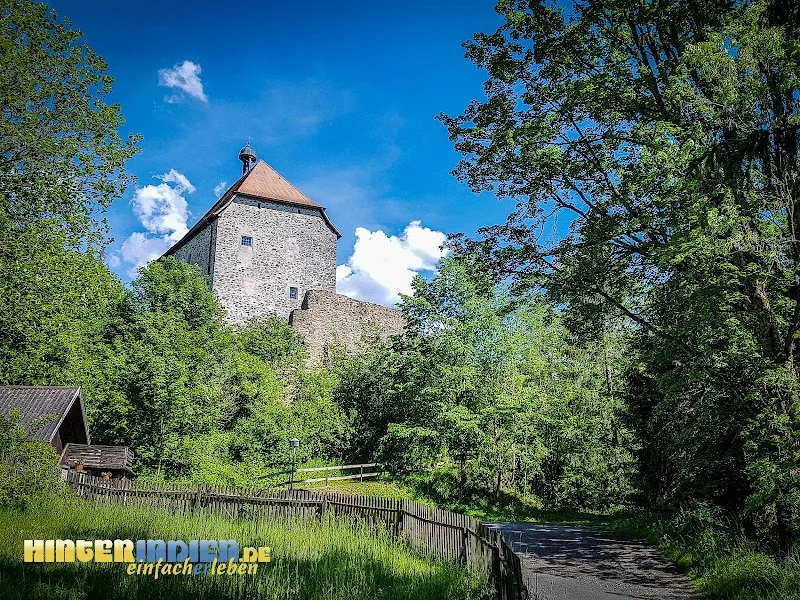
Burg Stein in Gefrees is today primarily known as the Burgkapelle St. Michael, but behind the name lies a significantly older structure: a hill castle in the Ölschnitztal, situated on a protruding rocky spur above the valley, of which only the palas and chapel are preserved in remarkable form. Those searching for a place where Franconian history, quiet architecture, and a still-lived ecclesiastical purpose come together will find an unusually dense ensemble here. The official site describes the structure as the last remnant of the former nearly 1000-year-old Burg Stein; the House of Bavarian History places the current castle complex in a historical and architectural context and states that it is freely accessible, except for the only limited access to the palas. ([burgkapelle-stein.de](https://burgkapelle-stein.de/))
Opening Hours, Tours, and Free Visits
For many visitors, the first practical point is the question of opening hours, and here Burg Stein offers a clear, seasonally organized arrangement. The Burgkapelle Stein is open from Pentecost to Thanksgiving on Sundays between 3 PM and 5 PM, additionally by appointment. This is not a large standard operation with daily mass tourism, but a consciously maintained access that preserves the character of the place. Those who wish to experience the site in peace benefit from this limited but reliable opening time, as it fits well with a historical ensemble that focuses on atmosphere rather than speed. The opening hours also indicate that the Burgkapelle is not an anonymous exhibition space, but a place that is kept alive through volunteer work and ecclesiastical use. ([burgkapelle-stein.de](https://burgkapelle-stein.de/))
Especially valuable for guests interested in history are the individual tours. Between Pentecost and Thanksgiving, club members are available on Sundays from 3 PM to 5 PM for questions and personal tours. This is a real advantage for such a place because one does not only look at walls and rooms but also receives narratives, details, and connections that do not become apparent when merely passing by. The Friends of the Burgkapelle Stein e.V. was founded in 2003 to support the Evangelical Church Community of Bad Berneck in preserving, visiting, and utilizing the historic building. This background explains why the visit feels so approachable: Burg Stein is not just a monument, but a well-maintained historical site with dedicated care. So, those searching for Burgkapelle Stein opening hours or tours will find here a combination of planned visiting time and personal mediation. ([burgkapelle-stein.de](https://burgkapelle-stein.de/))
History of Burg Stein: From the First Mention to the Chapel St. Michael
The history of Burg Stein dates back deep into the Middle Ages and begins with several historically significant stages. The House of Bavarian History cites the first mention of the place Stein as early as 1028, while the first reliable evidence of the castle does not exist before 1342. In this year, the Hirschbergers, who were appointed with the consent of the Bishop of Bamberg, declared that they had built the fortress. From 1343, the Sparneckers resided in the castle and significantly expanded it. This early phase is important because it shows that Burg Stein was not just a picturesque remnant, but a structure of genuine territorial and sovereign significance. The official castle chapel site also refers to a roughly 1000-year history and thus to a long continuity that still shapes the place today. ([hdbg.eu](https://hdbg.eu/burgen/detail/burg-stein/200))
The following centuries brought changes of ownership, upheavals, and renovations. The historical milestones include the year 1363, when the knight Rüdiger von Sparneck became the new lord of the castle, who had a chapel built, the remains of which can still be seen at the eastern edge of the site. The castle chapel was consecrated in 1377; in 1485 and 1495, there were conflicts, imprisonment, negotiations, and finally the sale to the Margrave of Brandenburg. The year 1529 marks a significant turning point with the Reformation, before new uses and the renovation of the preserved building parts into the Chapel St. Michael followed in 1684 and 1686. From 1693, the Burgkapelle was used as a filial church, where regular services were held at the command of the Margrave. Particularly exciting is the find from 2011: a heavily damaged church postil from 1588 was discovered in the chapel, restored, and securely stored due to its rarity. This shows how closely intertwined building history, piety history, and memory culture are at this place. ([burgkapelle-stein.de](https://burgkapelle-stein.de/geschichtliche-meilensteine-der-burg-stein/))
Directions and Parking at Burg Stein in Gefrees
For directions, the location is crucial. Burg Stein is located in the district of Stein in the town of Gefrees, at the address Stein 32, 95482 Gefrees, in the Ölschnitztal between Gefrees and Bad Berneck. This location is not only scenically attractive but also historically consistent: the castle sits on a protruding spur above the valley, commanding exactly that position typical for a medieval fortification. Those searching for directions to Burg Stein receive two levels of information: a practical destination address and an impressive geographical embedding. The tourism site for Gefrees describes the place as a medium-sized mountain town in a wooded area on the northwestern edge of the Fichtelgebirge and names the Burgkapelle Stein as one of the noteworthy stops in the wild romantic Ölschnitztal. This makes the journey attractive for day-trippers who want to combine their visit with a drive through the region. ([burgkapelle-stein.de](https://burgkapelle-stein.de/))
Parking at Burg Stein is pleasantly uncomplicated. The House of Bavarian History mentions free parking spaces below the former castle. This is a real advantage for families, older visitors, or guests with limited time, as the visit begins without a long search for parking. At the same time, this solution fits the character of the site: one does not park in the middle of a tourist setup, but reaches a historical place that is experienced from a developed village and valley structure. Those researching parking at Burg Stein or free visits find a very clear answer: the site is generally freely accessible, only the palas is limited in access, and the paths to the Burgkapelle are well-planned due to the available parking options. Combined with the location in the Ölschnitztal, a visit sequence emerges that is relaxed, clear, and atmospheric. This makes the place interesting for spontaneous stops as well as for targeted cultural trips. ([hdbg.eu](https://hdbg.eu/burgen/detail/burg-stein/200))
Services, Weddings, and Cultural Events
Burg Stein is not only a historical building but also a place still used for ecclesiastical purposes. In the Burgkapelle Stein, which is managed as a filial church of the parish of Bad Berneck, regular festive services are held on Good Friday, Easter Monday, Pentecost Monday, Thanksgiving, and the 2nd Christmas holiday. This gives the site a liveliness that is no longer found in many castle ruins. Particularly impressive is the Ascension Day service in the castle courtyard, which is celebrated outdoors in good weather and is followed by a cozy gathering with bratwurst, beer, coffee, and cake. This connection of spiritual celebration, village reference, and hospitable atmosphere shows that Burg Stein is not a museum-like frozen place but a social meeting point with a grown tradition. The summer months are not quiet either: usually, a monthly evening service is offered. ([burgkapelle-stein.de](https://burgkapelle-stein.de/))
Among the special occasions is the Hubertus Mass, which has been established for several years and usually takes place on the first Saturday in November, musically accompanied by hunting horn players. Equally significant are the Christmas Eve service, the New Year's Eve evening service, and the fact that couples can marry in the Burgkapelle if they contact the parish office in Bad Berneck. The House of Bavarian History adds that the Burgkapelle St. Michael can also be used for Protestant baptisms and weddings and that services are held on special occasions. For the keyword perspective, this is important because Burg Stein is not only searched under history and opening hours but also under topics like services, weddings, and events. Here, the site has a clear added value: it is not just worth seeing but is integrated into the annual cycle of a community. ([burgkapelle-stein.de](https://burgkapelle-stein.de/ein-startseiten-abschnitt/?utm_source=openai))
Architecture, Palas, and Chapel St. Michael
Architecturally, Burg Stein is an extraordinary mix of castle remnants and ecclesiastical reuse. The official website describes the preserved palas as a three-story building that was converted into a chapel in the late 17th century. The House of Bavarian History adds that the visible castle complex today was built around 1342 and consisted of a ring wall, a rectangular residential tower or keep, and an outer bailey. Particularly important is the note that the structure pushes into the rocky outcrop above the Ölschnitztal and is significantly elevated from there. Only a few wall remnants remain from the southern outer bailey and the bastioned zwinger, while the elevated main castle with its three-story main building and a renewed half-hip roof still shapes the image today. Thus, it is already visible at first glance that this is not just any arbitrary ruin, but a topographically very deliberately positioned castle site. ([hdbg.eu](https://hdbg.eu/burgen/detail/burg-stein/200))
Even inside, the special quality of the place is evident. The official website speaks of the powerful beams and the creaking of the floorboards that transport visitors to a bygone time. At the same time, the church space has been preserved in its original state, giving the chapel a quiet, almost intimate effect. The House of Bavarian History mentions the heavy wooden beam ceiling of the ground floor, a round arch portal in the basement, and several slit windows from the construction period around 1342. Additionally, an organ is of significance: it was built in 1847 by the Munich organ builder Maerz and moved to Stein by Steinmeyer in 1886. Such details make the Burgkapelle particularly interesting for architecture and monument enthusiasts because various historical layers remain readable here. Thus, those visiting Burg Stein experience not only historical walls but a space where use, preservation, and renovation have become traceable over centuries. ([burgkapelle-stein.de](https://burgkapelle-stein.de/))
Gefrees, Fichtelgebirge, and the Special Visitor Experience
A visit to Burg Stein fits well into the larger context of Gefrees and the Fichtelgebirge. The tourism site describes Gefrees as a medium-sized mountain town in a wooded area on the northwestern edge of the Fichtelgebirge and mentions, alongside the Burgkapelle Stein, the cemetery chapel from 1594 with grave monuments from Gothic and Baroque times, as well as the Künneth House in the Margrave Baroque style. This is useful for travelers, as a visit to the castle can easily develop into a small tour through the local and cultural history. The region does not appear overloaded but grounded: historical buildings, valley spaces, forest landscapes, and village structures interconnect. This is a strong reason why Burg Stein remains so interesting as a search term. The site appeals to people who do not just want to tick off a sight but are looking for a place with silence, context, and history. ([frankentourismus.de](https://www.frankentourismus.de/orte/gefrees-194/))
Moreover, Burg Stein fits very well with excursions that combine nature and culture. The location in the wild romantic Ölschnitztal makes the place attractive for hikers, walkers, and visitors who prefer to experience Franconian history in the field rather than in a museum. The official website emphasizes that the massive castle walls invite you to linger on hot summer days, and this formulation describes the character of the site very well: the place is quiet but not empty; old but not disconnected; historical but not unapproachable. The combination of free access, seasonal tours, free parking, and regular services makes Burg Stein a rare example of how a castle complex can be meaningfully used today. Those searching for Burg Stein Gefrees, Burgkapelle Stein, or Burg Stein freely accessible usually want exactly this mix of practical information and real experience. And this is precisely what this place delivers in a convincing manner. ([burgkapelle-stein.de](https://burgkapelle-stein.de/ein-startseiten-abschnitt/?utm_source=openai))
Sources:
Mehr anzeigenWeniger anzeigen
Burg Stein | Opening Hours & Tours
Burg Stein in Gefrees is today primarily known as the Burgkapelle St. Michael, but behind the name lies a significantly older structure: a hill castle in the Ölschnitztal, situated on a protruding rocky spur above the valley, of which only the palas and chapel are preserved in remarkable form. Those searching for a place where Franconian history, quiet architecture, and a still-lived ecclesiastical purpose come together will find an unusually dense ensemble here. The official site describes the structure as the last remnant of the former nearly 1000-year-old Burg Stein; the House of Bavarian History places the current castle complex in a historical and architectural context and states that it is freely accessible, except for the only limited access to the palas. ([burgkapelle-stein.de](https://burgkapelle-stein.de/))
Opening Hours, Tours, and Free Visits
For many visitors, the first practical point is the question of opening hours, and here Burg Stein offers a clear, seasonally organized arrangement. The Burgkapelle Stein is open from Pentecost to Thanksgiving on Sundays between 3 PM and 5 PM, additionally by appointment. This is not a large standard operation with daily mass tourism, but a consciously maintained access that preserves the character of the place. Those who wish to experience the site in peace benefit from this limited but reliable opening time, as it fits well with a historical ensemble that focuses on atmosphere rather than speed. The opening hours also indicate that the Burgkapelle is not an anonymous exhibition space, but a place that is kept alive through volunteer work and ecclesiastical use. ([burgkapelle-stein.de](https://burgkapelle-stein.de/))
Especially valuable for guests interested in history are the individual tours. Between Pentecost and Thanksgiving, club members are available on Sundays from 3 PM to 5 PM for questions and personal tours. This is a real advantage for such a place because one does not only look at walls and rooms but also receives narratives, details, and connections that do not become apparent when merely passing by. The Friends of the Burgkapelle Stein e.V. was founded in 2003 to support the Evangelical Church Community of Bad Berneck in preserving, visiting, and utilizing the historic building. This background explains why the visit feels so approachable: Burg Stein is not just a monument, but a well-maintained historical site with dedicated care. So, those searching for Burgkapelle Stein opening hours or tours will find here a combination of planned visiting time and personal mediation. ([burgkapelle-stein.de](https://burgkapelle-stein.de/))
History of Burg Stein: From the First Mention to the Chapel St. Michael
The history of Burg Stein dates back deep into the Middle Ages and begins with several historically significant stages. The House of Bavarian History cites the first mention of the place Stein as early as 1028, while the first reliable evidence of the castle does not exist before 1342. In this year, the Hirschbergers, who were appointed with the consent of the Bishop of Bamberg, declared that they had built the fortress. From 1343, the Sparneckers resided in the castle and significantly expanded it. This early phase is important because it shows that Burg Stein was not just a picturesque remnant, but a structure of genuine territorial and sovereign significance. The official castle chapel site also refers to a roughly 1000-year history and thus to a long continuity that still shapes the place today. ([hdbg.eu](https://hdbg.eu/burgen/detail/burg-stein/200))
The following centuries brought changes of ownership, upheavals, and renovations. The historical milestones include the year 1363, when the knight Rüdiger von Sparneck became the new lord of the castle, who had a chapel built, the remains of which can still be seen at the eastern edge of the site. The castle chapel was consecrated in 1377; in 1485 and 1495, there were conflicts, imprisonment, negotiations, and finally the sale to the Margrave of Brandenburg. The year 1529 marks a significant turning point with the Reformation, before new uses and the renovation of the preserved building parts into the Chapel St. Michael followed in 1684 and 1686. From 1693, the Burgkapelle was used as a filial church, where regular services were held at the command of the Margrave. Particularly exciting is the find from 2011: a heavily damaged church postil from 1588 was discovered in the chapel, restored, and securely stored due to its rarity. This shows how closely intertwined building history, piety history, and memory culture are at this place. ([burgkapelle-stein.de](https://burgkapelle-stein.de/geschichtliche-meilensteine-der-burg-stein/))
Directions and Parking at Burg Stein in Gefrees
For directions, the location is crucial. Burg Stein is located in the district of Stein in the town of Gefrees, at the address Stein 32, 95482 Gefrees, in the Ölschnitztal between Gefrees and Bad Berneck. This location is not only scenically attractive but also historically consistent: the castle sits on a protruding spur above the valley, commanding exactly that position typical for a medieval fortification. Those searching for directions to Burg Stein receive two levels of information: a practical destination address and an impressive geographical embedding. The tourism site for Gefrees describes the place as a medium-sized mountain town in a wooded area on the northwestern edge of the Fichtelgebirge and names the Burgkapelle Stein as one of the noteworthy stops in the wild romantic Ölschnitztal. This makes the journey attractive for day-trippers who want to combine their visit with a drive through the region. ([burgkapelle-stein.de](https://burgkapelle-stein.de/))
Parking at Burg Stein is pleasantly uncomplicated. The House of Bavarian History mentions free parking spaces below the former castle. This is a real advantage for families, older visitors, or guests with limited time, as the visit begins without a long search for parking. At the same time, this solution fits the character of the site: one does not park in the middle of a tourist setup, but reaches a historical place that is experienced from a developed village and valley structure. Those researching parking at Burg Stein or free visits find a very clear answer: the site is generally freely accessible, only the palas is limited in access, and the paths to the Burgkapelle are well-planned due to the available parking options. Combined with the location in the Ölschnitztal, a visit sequence emerges that is relaxed, clear, and atmospheric. This makes the place interesting for spontaneous stops as well as for targeted cultural trips. ([hdbg.eu](https://hdbg.eu/burgen/detail/burg-stein/200))
Services, Weddings, and Cultural Events
Burg Stein is not only a historical building but also a place still used for ecclesiastical purposes. In the Burgkapelle Stein, which is managed as a filial church of the parish of Bad Berneck, regular festive services are held on Good Friday, Easter Monday, Pentecost Monday, Thanksgiving, and the 2nd Christmas holiday. This gives the site a liveliness that is no longer found in many castle ruins. Particularly impressive is the Ascension Day service in the castle courtyard, which is celebrated outdoors in good weather and is followed by a cozy gathering with bratwurst, beer, coffee, and cake. This connection of spiritual celebration, village reference, and hospitable atmosphere shows that Burg Stein is not a museum-like frozen place but a social meeting point with a grown tradition. The summer months are not quiet either: usually, a monthly evening service is offered. ([burgkapelle-stein.de](https://burgkapelle-stein.de/))
Among the special occasions is the Hubertus Mass, which has been established for several years and usually takes place on the first Saturday in November, musically accompanied by hunting horn players. Equally significant are the Christmas Eve service, the New Year's Eve evening service, and the fact that couples can marry in the Burgkapelle if they contact the parish office in Bad Berneck. The House of Bavarian History adds that the Burgkapelle St. Michael can also be used for Protestant baptisms and weddings and that services are held on special occasions. For the keyword perspective, this is important because Burg Stein is not only searched under history and opening hours but also under topics like services, weddings, and events. Here, the site has a clear added value: it is not just worth seeing but is integrated into the annual cycle of a community. ([burgkapelle-stein.de](https://burgkapelle-stein.de/ein-startseiten-abschnitt/?utm_source=openai))
Architecture, Palas, and Chapel St. Michael
Architecturally, Burg Stein is an extraordinary mix of castle remnants and ecclesiastical reuse. The official website describes the preserved palas as a three-story building that was converted into a chapel in the late 17th century. The House of Bavarian History adds that the visible castle complex today was built around 1342 and consisted of a ring wall, a rectangular residential tower or keep, and an outer bailey. Particularly important is the note that the structure pushes into the rocky outcrop above the Ölschnitztal and is significantly elevated from there. Only a few wall remnants remain from the southern outer bailey and the bastioned zwinger, while the elevated main castle with its three-story main building and a renewed half-hip roof still shapes the image today. Thus, it is already visible at first glance that this is not just any arbitrary ruin, but a topographically very deliberately positioned castle site. ([hdbg.eu](https://hdbg.eu/burgen/detail/burg-stein/200))
Even inside, the special quality of the place is evident. The official website speaks of the powerful beams and the creaking of the floorboards that transport visitors to a bygone time. At the same time, the church space has been preserved in its original state, giving the chapel a quiet, almost intimate effect. The House of Bavarian History mentions the heavy wooden beam ceiling of the ground floor, a round arch portal in the basement, and several slit windows from the construction period around 1342. Additionally, an organ is of significance: it was built in 1847 by the Munich organ builder Maerz and moved to Stein by Steinmeyer in 1886. Such details make the Burgkapelle particularly interesting for architecture and monument enthusiasts because various historical layers remain readable here. Thus, those visiting Burg Stein experience not only historical walls but a space where use, preservation, and renovation have become traceable over centuries. ([burgkapelle-stein.de](https://burgkapelle-stein.de/))
Gefrees, Fichtelgebirge, and the Special Visitor Experience
A visit to Burg Stein fits well into the larger context of Gefrees and the Fichtelgebirge. The tourism site describes Gefrees as a medium-sized mountain town in a wooded area on the northwestern edge of the Fichtelgebirge and mentions, alongside the Burgkapelle Stein, the cemetery chapel from 1594 with grave monuments from Gothic and Baroque times, as well as the Künneth House in the Margrave Baroque style. This is useful for travelers, as a visit to the castle can easily develop into a small tour through the local and cultural history. The region does not appear overloaded but grounded: historical buildings, valley spaces, forest landscapes, and village structures interconnect. This is a strong reason why Burg Stein remains so interesting as a search term. The site appeals to people who do not just want to tick off a sight but are looking for a place with silence, context, and history. ([frankentourismus.de](https://www.frankentourismus.de/orte/gefrees-194/))
Moreover, Burg Stein fits very well with excursions that combine nature and culture. The location in the wild romantic Ölschnitztal makes the place attractive for hikers, walkers, and visitors who prefer to experience Franconian history in the field rather than in a museum. The official website emphasizes that the massive castle walls invite you to linger on hot summer days, and this formulation describes the character of the site very well: the place is quiet but not empty; old but not disconnected; historical but not unapproachable. The combination of free access, seasonal tours, free parking, and regular services makes Burg Stein a rare example of how a castle complex can be meaningfully used today. Those searching for Burg Stein Gefrees, Burgkapelle Stein, or Burg Stein freely accessible usually want exactly this mix of practical information and real experience. And this is precisely what this place delivers in a convincing manner. ([burgkapelle-stein.de](https://burgkapelle-stein.de/ein-startseiten-abschnitt/?utm_source=openai))
Sources:
Burg Stein | Opening Hours & Tours
Burg Stein in Gefrees is today primarily known as the Burgkapelle St. Michael, but behind the name lies a significantly older structure: a hill castle in the Ölschnitztal, situated on a protruding rocky spur above the valley, of which only the palas and chapel are preserved in remarkable form. Those searching for a place where Franconian history, quiet architecture, and a still-lived ecclesiastical purpose come together will find an unusually dense ensemble here. The official site describes the structure as the last remnant of the former nearly 1000-year-old Burg Stein; the House of Bavarian History places the current castle complex in a historical and architectural context and states that it is freely accessible, except for the only limited access to the palas. ([burgkapelle-stein.de](https://burgkapelle-stein.de/))
Opening Hours, Tours, and Free Visits
For many visitors, the first practical point is the question of opening hours, and here Burg Stein offers a clear, seasonally organized arrangement. The Burgkapelle Stein is open from Pentecost to Thanksgiving on Sundays between 3 PM and 5 PM, additionally by appointment. This is not a large standard operation with daily mass tourism, but a consciously maintained access that preserves the character of the place. Those who wish to experience the site in peace benefit from this limited but reliable opening time, as it fits well with a historical ensemble that focuses on atmosphere rather than speed. The opening hours also indicate that the Burgkapelle is not an anonymous exhibition space, but a place that is kept alive through volunteer work and ecclesiastical use. ([burgkapelle-stein.de](https://burgkapelle-stein.de/))
Especially valuable for guests interested in history are the individual tours. Between Pentecost and Thanksgiving, club members are available on Sundays from 3 PM to 5 PM for questions and personal tours. This is a real advantage for such a place because one does not only look at walls and rooms but also receives narratives, details, and connections that do not become apparent when merely passing by. The Friends of the Burgkapelle Stein e.V. was founded in 2003 to support the Evangelical Church Community of Bad Berneck in preserving, visiting, and utilizing the historic building. This background explains why the visit feels so approachable: Burg Stein is not just a monument, but a well-maintained historical site with dedicated care. So, those searching for Burgkapelle Stein opening hours or tours will find here a combination of planned visiting time and personal mediation. ([burgkapelle-stein.de](https://burgkapelle-stein.de/))
History of Burg Stein: From the First Mention to the Chapel St. Michael
The history of Burg Stein dates back deep into the Middle Ages and begins with several historically significant stages. The House of Bavarian History cites the first mention of the place Stein as early as 1028, while the first reliable evidence of the castle does not exist before 1342. In this year, the Hirschbergers, who were appointed with the consent of the Bishop of Bamberg, declared that they had built the fortress. From 1343, the Sparneckers resided in the castle and significantly expanded it. This early phase is important because it shows that Burg Stein was not just a picturesque remnant, but a structure of genuine territorial and sovereign significance. The official castle chapel site also refers to a roughly 1000-year history and thus to a long continuity that still shapes the place today. ([hdbg.eu](https://hdbg.eu/burgen/detail/burg-stein/200))
The following centuries brought changes of ownership, upheavals, and renovations. The historical milestones include the year 1363, when the knight Rüdiger von Sparneck became the new lord of the castle, who had a chapel built, the remains of which can still be seen at the eastern edge of the site. The castle chapel was consecrated in 1377; in 1485 and 1495, there were conflicts, imprisonment, negotiations, and finally the sale to the Margrave of Brandenburg. The year 1529 marks a significant turning point with the Reformation, before new uses and the renovation of the preserved building parts into the Chapel St. Michael followed in 1684 and 1686. From 1693, the Burgkapelle was used as a filial church, where regular services were held at the command of the Margrave. Particularly exciting is the find from 2011: a heavily damaged church postil from 1588 was discovered in the chapel, restored, and securely stored due to its rarity. This shows how closely intertwined building history, piety history, and memory culture are at this place. ([burgkapelle-stein.de](https://burgkapelle-stein.de/geschichtliche-meilensteine-der-burg-stein/))
Directions and Parking at Burg Stein in Gefrees
For directions, the location is crucial. Burg Stein is located in the district of Stein in the town of Gefrees, at the address Stein 32, 95482 Gefrees, in the Ölschnitztal between Gefrees and Bad Berneck. This location is not only scenically attractive but also historically consistent: the castle sits on a protruding spur above the valley, commanding exactly that position typical for a medieval fortification. Those searching for directions to Burg Stein receive two levels of information: a practical destination address and an impressive geographical embedding. The tourism site for Gefrees describes the place as a medium-sized mountain town in a wooded area on the northwestern edge of the Fichtelgebirge and names the Burgkapelle Stein as one of the noteworthy stops in the wild romantic Ölschnitztal. This makes the journey attractive for day-trippers who want to combine their visit with a drive through the region. ([burgkapelle-stein.de](https://burgkapelle-stein.de/))
Parking at Burg Stein is pleasantly uncomplicated. The House of Bavarian History mentions free parking spaces below the former castle. This is a real advantage for families, older visitors, or guests with limited time, as the visit begins without a long search for parking. At the same time, this solution fits the character of the site: one does not park in the middle of a tourist setup, but reaches a historical place that is experienced from a developed village and valley structure. Those researching parking at Burg Stein or free visits find a very clear answer: the site is generally freely accessible, only the palas is limited in access, and the paths to the Burgkapelle are well-planned due to the available parking options. Combined with the location in the Ölschnitztal, a visit sequence emerges that is relaxed, clear, and atmospheric. This makes the place interesting for spontaneous stops as well as for targeted cultural trips. ([hdbg.eu](https://hdbg.eu/burgen/detail/burg-stein/200))
Services, Weddings, and Cultural Events
Burg Stein is not only a historical building but also a place still used for ecclesiastical purposes. In the Burgkapelle Stein, which is managed as a filial church of the parish of Bad Berneck, regular festive services are held on Good Friday, Easter Monday, Pentecost Monday, Thanksgiving, and the 2nd Christmas holiday. This gives the site a liveliness that is no longer found in many castle ruins. Particularly impressive is the Ascension Day service in the castle courtyard, which is celebrated outdoors in good weather and is followed by a cozy gathering with bratwurst, beer, coffee, and cake. This connection of spiritual celebration, village reference, and hospitable atmosphere shows that Burg Stein is not a museum-like frozen place but a social meeting point with a grown tradition. The summer months are not quiet either: usually, a monthly evening service is offered. ([burgkapelle-stein.de](https://burgkapelle-stein.de/))
Among the special occasions is the Hubertus Mass, which has been established for several years and usually takes place on the first Saturday in November, musically accompanied by hunting horn players. Equally significant are the Christmas Eve service, the New Year's Eve evening service, and the fact that couples can marry in the Burgkapelle if they contact the parish office in Bad Berneck. The House of Bavarian History adds that the Burgkapelle St. Michael can also be used for Protestant baptisms and weddings and that services are held on special occasions. For the keyword perspective, this is important because Burg Stein is not only searched under history and opening hours but also under topics like services, weddings, and events. Here, the site has a clear added value: it is not just worth seeing but is integrated into the annual cycle of a community. ([burgkapelle-stein.de](https://burgkapelle-stein.de/ein-startseiten-abschnitt/?utm_source=openai))
Architecture, Palas, and Chapel St. Michael
Architecturally, Burg Stein is an extraordinary mix of castle remnants and ecclesiastical reuse. The official website describes the preserved palas as a three-story building that was converted into a chapel in the late 17th century. The House of Bavarian History adds that the visible castle complex today was built around 1342 and consisted of a ring wall, a rectangular residential tower or keep, and an outer bailey. Particularly important is the note that the structure pushes into the rocky outcrop above the Ölschnitztal and is significantly elevated from there. Only a few wall remnants remain from the southern outer bailey and the bastioned zwinger, while the elevated main castle with its three-story main building and a renewed half-hip roof still shapes the image today. Thus, it is already visible at first glance that this is not just any arbitrary ruin, but a topographically very deliberately positioned castle site. ([hdbg.eu](https://hdbg.eu/burgen/detail/burg-stein/200))
Even inside, the special quality of the place is evident. The official website speaks of the powerful beams and the creaking of the floorboards that transport visitors to a bygone time. At the same time, the church space has been preserved in its original state, giving the chapel a quiet, almost intimate effect. The House of Bavarian History mentions the heavy wooden beam ceiling of the ground floor, a round arch portal in the basement, and several slit windows from the construction period around 1342. Additionally, an organ is of significance: it was built in 1847 by the Munich organ builder Maerz and moved to Stein by Steinmeyer in 1886. Such details make the Burgkapelle particularly interesting for architecture and monument enthusiasts because various historical layers remain readable here. Thus, those visiting Burg Stein experience not only historical walls but a space where use, preservation, and renovation have become traceable over centuries. ([burgkapelle-stein.de](https://burgkapelle-stein.de/))
Gefrees, Fichtelgebirge, and the Special Visitor Experience
A visit to Burg Stein fits well into the larger context of Gefrees and the Fichtelgebirge. The tourism site describes Gefrees as a medium-sized mountain town in a wooded area on the northwestern edge of the Fichtelgebirge and mentions, alongside the Burgkapelle Stein, the cemetery chapel from 1594 with grave monuments from Gothic and Baroque times, as well as the Künneth House in the Margrave Baroque style. This is useful for travelers, as a visit to the castle can easily develop into a small tour through the local and cultural history. The region does not appear overloaded but grounded: historical buildings, valley spaces, forest landscapes, and village structures interconnect. This is a strong reason why Burg Stein remains so interesting as a search term. The site appeals to people who do not just want to tick off a sight but are looking for a place with silence, context, and history. ([frankentourismus.de](https://www.frankentourismus.de/orte/gefrees-194/))
Moreover, Burg Stein fits very well with excursions that combine nature and culture. The location in the wild romantic Ölschnitztal makes the place attractive for hikers, walkers, and visitors who prefer to experience Franconian history in the field rather than in a museum. The official website emphasizes that the massive castle walls invite you to linger on hot summer days, and this formulation describes the character of the site very well: the place is quiet but not empty; old but not disconnected; historical but not unapproachable. The combination of free access, seasonal tours, free parking, and regular services makes Burg Stein a rare example of how a castle complex can be meaningfully used today. Those searching for Burg Stein Gefrees, Burgkapelle Stein, or Burg Stein freely accessible usually want exactly this mix of practical information and real experience. And this is precisely what this place delivers in a convincing manner. ([burgkapelle-stein.de](https://burgkapelle-stein.de/ein-startseiten-abschnitt/?utm_source=openai))
Sources:
Upcoming Events
No events found
Frequently Asked Questions
Reviews
S13PH4N
19. May 2019
A lovely little chapel in an idyllic location. We were there for a wedding. We really appreciated that there are toilets in the building, which is very convenient, especially with kids. Note: To get to the chapel, you have to climb some steps up a steep staircase.
BERNHARD ROTTMANN
10. November 2024
We had the Hubertus mass there. A very dignified and impressive place, this castle chapel. Always worth a visit.
BBlomster
7. June 2025
A wonderful place, the castle chapel is definitely worth a visit! The grounds and the building are maintained and cared for by a volunteer association!
Hildegard Havenith
5. January 2026
Castle church. Evangelical service with choir singing from the Sängerfreunde Wasserknoden.
Thorsten Ochs
9. June 2021
Super beautiful chapel #Brug #Stein. After a few minutes' walk from the parking lot, you reach the Bugkapelle Stein. The property is locked and can only be viewed with a guided tour. After a few steps, you find yourself in the courtyard. The beautiful chapel itself is located on the first floor, which can only be accessed via a wooden staircase inside.