
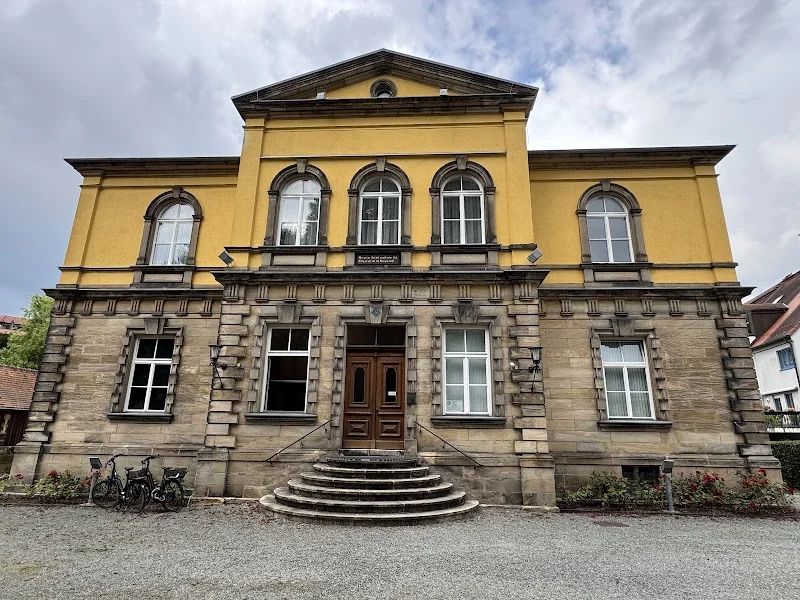
Bayreuth
Im Hofgarten 1, 95444 Bayreuth, Deutschland
German Freemason Museum e.V. | Opening Hours & Admission
The German Freemason Museum e.V. in Bayreuth is not an ordinary museum, but a specialized museum with a clear scientific focus and an exceptionally concentrated collection on the history and culture of Freemasonry. Those who enter the address Im Hofgarten 1 encounter not a loud world of experiences, but a place of research, remembrance, and careful presentation of a traditional theme. The house sees itself as a custodian, documenter, and mediator of Masonic artifacts, certificates, and prints from the time of the origins of Freemasonry in Germany to the present. At the same time, it invites visitors to trace the history of the brotherhood, its understanding of order and ritual, as well as its internal customs in a walkable exhibition. This combination of museum, library, archive, and research is what gives the place its special charm. Thus, Bayreuth has a sight that combines cultural curiosity, historical depth, and quiet discovery. ([freimaurermuseum.de](https://www.freimaurermuseum.de/))
History of the German Freemason Museum in Bayreuth
The history of the museum begins early and is closely linked to the commitment of individual Bayreuth Freemasons. As early as 1902, the foundation stone was laid when Georg von Niehrenheim proposed the collected items in the house of the Bayreuth lodge as the basis for a dedicated Freemason museum. From a collection of everyday objects and exhibits, a significant exhibition gradually developed, which was further expanded with the support of the Grand Lodge. When Dr. Bernhard Beyer took over the management in 1912, the museum grew to become the third largest of its kind by 1930. This early development is important because it shows that Bayreuth was a center of Masonic remembrance and research long before the current museum profile. Another milestone was the establishment of a German Masonic library after the Freemason lodge Eleusis provided its entire library for confidentiality. This step created a collection and research site that went far beyond a mere exhibition. The Nazi dictatorship then brought a deep cut: in 1935, Freemasonry was banned, the museum was looted, and many irreplaceable pieces were lost. The reconstruction after the war is all the more remarkable, in which Beyer and his successors worked with great commitment. Today, the museum is maintained by the association German Freemason Museum e.V., which was registered in the association register in 1954. Thus, at the end of a long development, there stands a house that not only preserves tradition but also actively continues it scientifically. ([freimaurermuseum.de](https://www.freimaurermuseum.de/ueber-das-museum/))
For SEO relevance, this history is a central advantage, as search queries for german freemason museum bayreuth, freemason museum bayreuth, or german freemason museum e.v. directly tap into this historical depth. The museum did not become interesting as a tourist attraction only recently, but has emerged from an organically grown history of research and collection. The current structure also shows this: the collection was significantly expanded again after the war and now even exceeds its scope before 1935. According to the museum's website, the photo collection includes 1,600 items, the stock of lodge badges and medals 1,700 pieces, and further objects made of crystal, porcelain, ceramics, and Masonic clothing more than 1,000 items. In addition, there are 20,000 member directories and an archive with 2,000 numbers. Such numbers clearly indicate that this is a museum with substantial substance and not just a mere showcase. For visitors, this means: those who want to understand the history of Freemasonry in Germany will find a condensed, professionally serious entry point in Bayreuth. The house is thus equally a place of remembrance, a research facility, and a cultural special destination. ([freimaurermuseum.de](https://www.freimaurermuseum.de/ueber-das-museum/))
Exhibition, Collection, and Special Exhibits
The exhibition of the German Freemason Museum is walkable and designed so that visitors can not only view representative objects related to Freemasonry but also contextualize them. The focus is on the historical development of the brotherhood from the construction lodge activities to speculative Freemasonry, its understanding of order and ritual, and the internal customs surrounding admission procedures and social gatherings. This makes the exhibition particularly accessible, as it remains readable not only for specialists but also for culturally historically interested guests. The objects displayed in Bayreuth range from Masonic everyday items and certificates to jewelry, medals, and aprons, as well as ritual carpets, copper engravings, oil and lithographic works. Such areas of collection are not only aesthetically interesting but also explain the symbolic language and social practice of a centuries-old movement. Especially in a city like Bayreuth, which is itself rich in cultural historical sites, this museum acts as a concentrated counterpoint to the grand opera and residence history: less glamorous in outward appearance but extremely dense in content. The museum's website also emphasizes that visitors are welcome, whether as profane or initiated. This inclusive claim is remarkable because it does not isolate the place but opens it up in a dialogue-oriented manner. Those searching for photos, history, or Freemasonry will therefore find not only individual objects here but a coherent narrative about origin, symbolic world, and self-understanding. ([freimaurermuseum.de](https://www.freimaurermuseum.de/))
The house is particularly strong in the connection between object culture and knowledge transfer. The collection does not simply consist of things but bears the traces of lodge life, historical documentation, and remembrance culture. The fact that the Bayreuth lodge Eleusis contributed its library to the collection explains why the museum's logic still revolves around literature, documents, and research today. The scientific networking with the University Library of Bayreuth and the University of Poznań further underscores the claim not only to show but also to analyze. This gives the museum special relevance for search queries such as german freemason museum photos or german freemason lexicon: here it is about image sources, collection objects, and the systematic recording of Masonic culture. The place functions almost like a living lexicon, where exhibits, texts, and archives interact. For visitors, this is attractive because they can not only walk through rooms but also follow themes. For SEO, it is relevant because this combination of depth of collection, research, and historical authenticity meets the search intent of many users. The museum is thus a place where learning, wonder, and historical contextualization seamlessly intertwine. ([freimaurermuseum.de](https://www.freimaurermuseum.de/))
Library, Archive, and Research in the Freemason Museum
The heart of the German Freemason Museum is its library. The museum's website describes it as unique and as a central place for researching Masonic literature, which has grown since its founding over 100 years ago. At the same time, it is scientifically networked, among others with the University Library in Bayreuth and in Poznań. This connection makes the house much more than an exhibition space: it is a research site where historical literature, member directories, documents, and archival material are brought together. According to museum information, the library currently comprises 16,500 volumes. The archive contains around 2,000 numbers, and in addition, 20,000 member directories from many lodges from the beginning of German Freemasonry in 1757 to the present are available. For historians, genealogists, and cultural scientists, this is an extraordinary treasure trove. The museum description also emphasizes that the archive preserves evidence of the history and fraternal shaping of all German Freemason lodges. This makes it clear that the collection is not only interesting for specialists but also has a broad cultural historical value. However, the library is not publicly accessible in the free sense; books can be made available with timely prior notice. This mixture of accessibility and scientific order makes the place credible and high-quality. Those searching for library, archive, or freemason museum e.v. will therefore find in Bayreuth a house that not only exhibits knowledge but also structures it systematically. ([freimaurermuseum.de](https://www.freimaurermuseum.de/))
For the content positioning in the search environment, this area is particularly important because it clearly makes the competence of the house visible. Many museums tell history; the German Freemason Museum archives it at the same time. The numbers from the museum's website show the dimension of this claim: 1,600 photos, copper engravings, and images, 1,700 lodge badges and medals, over 1,000 further exhibits made of crystal, porcelain, ceramics, and clothing, plus 20,000 member directories. Those interested in Masonic symbolism, development lines, or regional lodge history will find here a source base that is almost unique in Germany. The note on the scientific publication activity of the association also fits this. Already on the homepage, the preservation, research, documentation, and publication are named as core tasks. This means in practice: the museum is not only a place for a one-time visit but also a reference point for later research, in-depth work, and thematic collaboration. For visitors, this makes the atmosphere particularly concentrated and calm. For the content evaluation of the location, this means: Bayreuth offers with the Freemason Museum a place that does not use the keywords archive, library, and history as buzzwords but truly fills them with content. ([freimaurermuseum.de](https://www.freimaurermuseum.de/))
Opening Hours, Admission, and Planning Your Visit
Those planning a visit will find clear and reliable visiting hours. According to the museum's website, the German Freemason Museum is open Tuesday to Friday from 10:00 AM to 12:00 PM and from 2:00 PM to 5:00 PM, Saturday from 10:00 AM to 12:00 PM, and Sunday from 1:00 PM to 4:00 PM. Additionally, a visit by appointment is possible, and on holidays, one should inquire in advance. This structure is pleasant for a museum day because it allows for both spontaneous visits and planned appointments. Admission is €4.00. This makes the house very accessible and family-friendly compared to many specialized cultural places. The Bayreuth tourism website also confirms this information and additionally refers to the profile of the museum as a place with historical depth and as a research center. Therefore, those searching for opening hours or admission will find directly reliable information. For visitor planning, it is also important that the museum does not rely on a short-lived event format but rather on quiet, concentrated viewing. This makes it suitable for culturally historically interested guests, for school classes with thematic relevance, for individual travelers, and for people looking for an alternative to classic glossy museum experiences. The low admission price increases the likelihood that even a short detour into the Hofgarten remains worthwhile. ([freimaurermuseum.de](https://www.freimaurermuseum.de/ueber-das-museum/))
In the search intent, there is often also a desire for practical orientation: Is a visit worthwhile, how much time should one plan, and is the museum open? The official information provides a clear answer to this. The fixed time slots allow for a museum visit to be easily combined with a walk through the Hofgarten or with other sights in the Bayreuth city center. The surrounding area is particularly rich in cultural history: the Hofgarten is located in the heart of the Margrave city and borders other well-known destinations such as the Haus Wahnfried. The museum itself thus benefits from a location that is not isolated but embedded. So, if one brings a little time, they can incorporate the visit into a small cultural route. In SEO language, the search terms opening hours, admission, and museum bayreuth are therefore particularly important because they directly match user intent. The house reliably fulfills these informational questions without unnecessary hurdles. Additionally, it is noteworthy that the museum also remains open for scientific or professional appointments. This makes it appealing to both classic visitors and those who want to delve deeper into the subject matter. This openness, combined with the low admission and clear times, makes planning uncomplicated and attractive. ([freimaurermuseum.de](https://www.freimaurermuseum.de/ueber-das-museum/))
Location in Hofgarten, Directions, and Parking in Bayreuth
The museum is located very centrally in the Bayreuth Hofgarten, specifically in the building or at the location Im Hofgarten 1, 95444 Bayreuth. The Bayreuth tourism website describes the place as a sight directly on the Mailbahnallee in the Hofgarten, next to the fruit quarter and within walking distance to the Haus Wahnfried. Thus, the museum is situated in a culturally particularly dense environment that can be easily explored on foot. For practical visits, this location is an advantage because one can combine the museum visit with a walk in the green and with other historical points. The city describes the Hofgarten as a connection between nature and cultural space, and right there, the Freemason Museum is a quiet but significant building block. So, if one searches for directions or Im Hofgarten 1, they will find a house that is located in an attractive city center and simultaneously benefits from the park-like surroundings. This combination of central and quiet is ideal for a museum. It facilitates orientation and makes the visit pleasant even without extensive prior knowledge. Additionally, the Bayreuth city center points to a good parking situation with parking garages, underground garages, and more than 6,000 public and private parking spaces. This is helpful for all those arriving by car. ([freimaurermuseum.de](https://www.freimaurermuseum.de/ueber-das-museum/))
Even though the museum itself does not have a separate parking page on its official sites, the general infrastructure of the city center is very useful for visitors. Bayreuth Tourism explains that there are parking garages, underground garages, and numerous parking spaces available in the city center. Additionally, the usual signs for times and maximum parking duration apply; on weekdays and Saturdays between 8:00 AM and 7:00 PM, parking is usually chargeable. For the search intent parking, this is important orientation. Those who want to combine the visit with another walk in the Hofgarten can make good use of the city center structure. The museum is also integrated into the tourist route on foot, as the Hofgarten is connected to other sights. The Bayreuth city map also marks the museum as a fixed point in the city's sights network. From an SEO perspective, this is valuable because users often not only ask about the destination itself but also about accessibility. The German Freemason Museum fulfills this requirement very well through its central location. It is thus not a remote specialty place but a well-integrated component of the Bayreuth city center. Therefore, those planning a visit should not only check the opening hours but also consider the Hofgarten as part of the program. This makes the museum visit significantly more rounded. ([bayreuth-tourismus.de](https://www.bayreuth-tourismus.de/innenstadt/parken/))
Virtual Tour, Group Visits, and Special Insights
A modern advantage of the house is the possibility of a virtual tour. According to the museum's website, the German Freemason Museum can be visited both as part of individual visits and as guided tours on the occasion of lodge evenings or as group tours with up to 60 participants virtually. Even the temple on the museum level can be virtually accessed, which can normally be used by traveling lodges as soon as conditions allow. This form of mediation significantly expands access. It is particularly interesting for people who cannot be on-site immediately, for thematic groups, for research contexts, or for visitors who want to gain an impression in advance. In search queries related to virtual tour or freemason museum e.v., this need for flexible accessibility becomes evident. The museum responds to this with an offer that goes beyond the classic visit. At the same time, the virtual component underscores the scientific and documentary character of the house. Because a museum that also opens its spaces digitally shows that it is not only focused on presence but also on mediation and reach. For visitors, this is a plus in service, and for the brand, a plus in visibility. ([freimaurermuseum.de](https://www.freimaurermuseum.de/virtuelle-fuehrung/?utm_source=openai))
Additionally, it is interesting that the museum confidently formulates its special position both historically and institutionally. It was the initiator of the Working Group of European Freemason Museums in 1989, now AMMLA, and maintains contact with Masonic and scientific institutions worldwide within this network. This is a clear indication that Bayreuth is not just a local exhibition site but has also been integrated into international professional contexts. For the content perception of the location, this means: the house connects a regional address with supra-regional relevance. This combination makes it exciting for cultural travelers, researchers, and thematically interested visitors. Those searching for german freemason museum, freemason museum, or german freemason lexicon expect a well-founded, serious offer with substantial background. Bayreuth fulfills this expectation through collection, archive, library, and forms of mediation. Thus, a comprehensive picture emerges that goes far beyond the question of photos or opening hours. It is about a house that makes history visible, enables research, and respectfully introduces visitors into a multifaceted thematic space. For this reason, the German Freemason Museum e.V. is a true specialty address in Bayreuth. ([freimaurermuseum.de](https://www.freimaurermuseum.de/))
Sources:
Mehr anzeigenWeniger anzeigen
German Freemason Museum e.V. | Opening Hours & Admission
The German Freemason Museum e.V. in Bayreuth is not an ordinary museum, but a specialized museum with a clear scientific focus and an exceptionally concentrated collection on the history and culture of Freemasonry. Those who enter the address Im Hofgarten 1 encounter not a loud world of experiences, but a place of research, remembrance, and careful presentation of a traditional theme. The house sees itself as a custodian, documenter, and mediator of Masonic artifacts, certificates, and prints from the time of the origins of Freemasonry in Germany to the present. At the same time, it invites visitors to trace the history of the brotherhood, its understanding of order and ritual, as well as its internal customs in a walkable exhibition. This combination of museum, library, archive, and research is what gives the place its special charm. Thus, Bayreuth has a sight that combines cultural curiosity, historical depth, and quiet discovery. ([freimaurermuseum.de](https://www.freimaurermuseum.de/))
History of the German Freemason Museum in Bayreuth
The history of the museum begins early and is closely linked to the commitment of individual Bayreuth Freemasons. As early as 1902, the foundation stone was laid when Georg von Niehrenheim proposed the collected items in the house of the Bayreuth lodge as the basis for a dedicated Freemason museum. From a collection of everyday objects and exhibits, a significant exhibition gradually developed, which was further expanded with the support of the Grand Lodge. When Dr. Bernhard Beyer took over the management in 1912, the museum grew to become the third largest of its kind by 1930. This early development is important because it shows that Bayreuth was a center of Masonic remembrance and research long before the current museum profile. Another milestone was the establishment of a German Masonic library after the Freemason lodge Eleusis provided its entire library for confidentiality. This step created a collection and research site that went far beyond a mere exhibition. The Nazi dictatorship then brought a deep cut: in 1935, Freemasonry was banned, the museum was looted, and many irreplaceable pieces were lost. The reconstruction after the war is all the more remarkable, in which Beyer and his successors worked with great commitment. Today, the museum is maintained by the association German Freemason Museum e.V., which was registered in the association register in 1954. Thus, at the end of a long development, there stands a house that not only preserves tradition but also actively continues it scientifically. ([freimaurermuseum.de](https://www.freimaurermuseum.de/ueber-das-museum/))
For SEO relevance, this history is a central advantage, as search queries for german freemason museum bayreuth, freemason museum bayreuth, or german freemason museum e.v. directly tap into this historical depth. The museum did not become interesting as a tourist attraction only recently, but has emerged from an organically grown history of research and collection. The current structure also shows this: the collection was significantly expanded again after the war and now even exceeds its scope before 1935. According to the museum's website, the photo collection includes 1,600 items, the stock of lodge badges and medals 1,700 pieces, and further objects made of crystal, porcelain, ceramics, and Masonic clothing more than 1,000 items. In addition, there are 20,000 member directories and an archive with 2,000 numbers. Such numbers clearly indicate that this is a museum with substantial substance and not just a mere showcase. For visitors, this means: those who want to understand the history of Freemasonry in Germany will find a condensed, professionally serious entry point in Bayreuth. The house is thus equally a place of remembrance, a research facility, and a cultural special destination. ([freimaurermuseum.de](https://www.freimaurermuseum.de/ueber-das-museum/))
Exhibition, Collection, and Special Exhibits
The exhibition of the German Freemason Museum is walkable and designed so that visitors can not only view representative objects related to Freemasonry but also contextualize them. The focus is on the historical development of the brotherhood from the construction lodge activities to speculative Freemasonry, its understanding of order and ritual, and the internal customs surrounding admission procedures and social gatherings. This makes the exhibition particularly accessible, as it remains readable not only for specialists but also for culturally historically interested guests. The objects displayed in Bayreuth range from Masonic everyday items and certificates to jewelry, medals, and aprons, as well as ritual carpets, copper engravings, oil and lithographic works. Such areas of collection are not only aesthetically interesting but also explain the symbolic language and social practice of a centuries-old movement. Especially in a city like Bayreuth, which is itself rich in cultural historical sites, this museum acts as a concentrated counterpoint to the grand opera and residence history: less glamorous in outward appearance but extremely dense in content. The museum's website also emphasizes that visitors are welcome, whether as profane or initiated. This inclusive claim is remarkable because it does not isolate the place but opens it up in a dialogue-oriented manner. Those searching for photos, history, or Freemasonry will therefore find not only individual objects here but a coherent narrative about origin, symbolic world, and self-understanding. ([freimaurermuseum.de](https://www.freimaurermuseum.de/))
The house is particularly strong in the connection between object culture and knowledge transfer. The collection does not simply consist of things but bears the traces of lodge life, historical documentation, and remembrance culture. The fact that the Bayreuth lodge Eleusis contributed its library to the collection explains why the museum's logic still revolves around literature, documents, and research today. The scientific networking with the University Library of Bayreuth and the University of Poznań further underscores the claim not only to show but also to analyze. This gives the museum special relevance for search queries such as german freemason museum photos or german freemason lexicon: here it is about image sources, collection objects, and the systematic recording of Masonic culture. The place functions almost like a living lexicon, where exhibits, texts, and archives interact. For visitors, this is attractive because they can not only walk through rooms but also follow themes. For SEO, it is relevant because this combination of depth of collection, research, and historical authenticity meets the search intent of many users. The museum is thus a place where learning, wonder, and historical contextualization seamlessly intertwine. ([freimaurermuseum.de](https://www.freimaurermuseum.de/))
Library, Archive, and Research in the Freemason Museum
The heart of the German Freemason Museum is its library. The museum's website describes it as unique and as a central place for researching Masonic literature, which has grown since its founding over 100 years ago. At the same time, it is scientifically networked, among others with the University Library in Bayreuth and in Poznań. This connection makes the house much more than an exhibition space: it is a research site where historical literature, member directories, documents, and archival material are brought together. According to museum information, the library currently comprises 16,500 volumes. The archive contains around 2,000 numbers, and in addition, 20,000 member directories from many lodges from the beginning of German Freemasonry in 1757 to the present are available. For historians, genealogists, and cultural scientists, this is an extraordinary treasure trove. The museum description also emphasizes that the archive preserves evidence of the history and fraternal shaping of all German Freemason lodges. This makes it clear that the collection is not only interesting for specialists but also has a broad cultural historical value. However, the library is not publicly accessible in the free sense; books can be made available with timely prior notice. This mixture of accessibility and scientific order makes the place credible and high-quality. Those searching for library, archive, or freemason museum e.v. will therefore find in Bayreuth a house that not only exhibits knowledge but also structures it systematically. ([freimaurermuseum.de](https://www.freimaurermuseum.de/))
For the content positioning in the search environment, this area is particularly important because it clearly makes the competence of the house visible. Many museums tell history; the German Freemason Museum archives it at the same time. The numbers from the museum's website show the dimension of this claim: 1,600 photos, copper engravings, and images, 1,700 lodge badges and medals, over 1,000 further exhibits made of crystal, porcelain, ceramics, and clothing, plus 20,000 member directories. Those interested in Masonic symbolism, development lines, or regional lodge history will find here a source base that is almost unique in Germany. The note on the scientific publication activity of the association also fits this. Already on the homepage, the preservation, research, documentation, and publication are named as core tasks. This means in practice: the museum is not only a place for a one-time visit but also a reference point for later research, in-depth work, and thematic collaboration. For visitors, this makes the atmosphere particularly concentrated and calm. For the content evaluation of the location, this means: Bayreuth offers with the Freemason Museum a place that does not use the keywords archive, library, and history as buzzwords but truly fills them with content. ([freimaurermuseum.de](https://www.freimaurermuseum.de/))
Opening Hours, Admission, and Planning Your Visit
Those planning a visit will find clear and reliable visiting hours. According to the museum's website, the German Freemason Museum is open Tuesday to Friday from 10:00 AM to 12:00 PM and from 2:00 PM to 5:00 PM, Saturday from 10:00 AM to 12:00 PM, and Sunday from 1:00 PM to 4:00 PM. Additionally, a visit by appointment is possible, and on holidays, one should inquire in advance. This structure is pleasant for a museum day because it allows for both spontaneous visits and planned appointments. Admission is €4.00. This makes the house very accessible and family-friendly compared to many specialized cultural places. The Bayreuth tourism website also confirms this information and additionally refers to the profile of the museum as a place with historical depth and as a research center. Therefore, those searching for opening hours or admission will find directly reliable information. For visitor planning, it is also important that the museum does not rely on a short-lived event format but rather on quiet, concentrated viewing. This makes it suitable for culturally historically interested guests, for school classes with thematic relevance, for individual travelers, and for people looking for an alternative to classic glossy museum experiences. The low admission price increases the likelihood that even a short detour into the Hofgarten remains worthwhile. ([freimaurermuseum.de](https://www.freimaurermuseum.de/ueber-das-museum/))
In the search intent, there is often also a desire for practical orientation: Is a visit worthwhile, how much time should one plan, and is the museum open? The official information provides a clear answer to this. The fixed time slots allow for a museum visit to be easily combined with a walk through the Hofgarten or with other sights in the Bayreuth city center. The surrounding area is particularly rich in cultural history: the Hofgarten is located in the heart of the Margrave city and borders other well-known destinations such as the Haus Wahnfried. The museum itself thus benefits from a location that is not isolated but embedded. So, if one brings a little time, they can incorporate the visit into a small cultural route. In SEO language, the search terms opening hours, admission, and museum bayreuth are therefore particularly important because they directly match user intent. The house reliably fulfills these informational questions without unnecessary hurdles. Additionally, it is noteworthy that the museum also remains open for scientific or professional appointments. This makes it appealing to both classic visitors and those who want to delve deeper into the subject matter. This openness, combined with the low admission and clear times, makes planning uncomplicated and attractive. ([freimaurermuseum.de](https://www.freimaurermuseum.de/ueber-das-museum/))
Location in Hofgarten, Directions, and Parking in Bayreuth
The museum is located very centrally in the Bayreuth Hofgarten, specifically in the building or at the location Im Hofgarten 1, 95444 Bayreuth. The Bayreuth tourism website describes the place as a sight directly on the Mailbahnallee in the Hofgarten, next to the fruit quarter and within walking distance to the Haus Wahnfried. Thus, the museum is situated in a culturally particularly dense environment that can be easily explored on foot. For practical visits, this location is an advantage because one can combine the museum visit with a walk in the green and with other historical points. The city describes the Hofgarten as a connection between nature and cultural space, and right there, the Freemason Museum is a quiet but significant building block. So, if one searches for directions or Im Hofgarten 1, they will find a house that is located in an attractive city center and simultaneously benefits from the park-like surroundings. This combination of central and quiet is ideal for a museum. It facilitates orientation and makes the visit pleasant even without extensive prior knowledge. Additionally, the Bayreuth city center points to a good parking situation with parking garages, underground garages, and more than 6,000 public and private parking spaces. This is helpful for all those arriving by car. ([freimaurermuseum.de](https://www.freimaurermuseum.de/ueber-das-museum/))
Even though the museum itself does not have a separate parking page on its official sites, the general infrastructure of the city center is very useful for visitors. Bayreuth Tourism explains that there are parking garages, underground garages, and numerous parking spaces available in the city center. Additionally, the usual signs for times and maximum parking duration apply; on weekdays and Saturdays between 8:00 AM and 7:00 PM, parking is usually chargeable. For the search intent parking, this is important orientation. Those who want to combine the visit with another walk in the Hofgarten can make good use of the city center structure. The museum is also integrated into the tourist route on foot, as the Hofgarten is connected to other sights. The Bayreuth city map also marks the museum as a fixed point in the city's sights network. From an SEO perspective, this is valuable because users often not only ask about the destination itself but also about accessibility. The German Freemason Museum fulfills this requirement very well through its central location. It is thus not a remote specialty place but a well-integrated component of the Bayreuth city center. Therefore, those planning a visit should not only check the opening hours but also consider the Hofgarten as part of the program. This makes the museum visit significantly more rounded. ([bayreuth-tourismus.de](https://www.bayreuth-tourismus.de/innenstadt/parken/))
Virtual Tour, Group Visits, and Special Insights
A modern advantage of the house is the possibility of a virtual tour. According to the museum's website, the German Freemason Museum can be visited both as part of individual visits and as guided tours on the occasion of lodge evenings or as group tours with up to 60 participants virtually. Even the temple on the museum level can be virtually accessed, which can normally be used by traveling lodges as soon as conditions allow. This form of mediation significantly expands access. It is particularly interesting for people who cannot be on-site immediately, for thematic groups, for research contexts, or for visitors who want to gain an impression in advance. In search queries related to virtual tour or freemason museum e.v., this need for flexible accessibility becomes evident. The museum responds to this with an offer that goes beyond the classic visit. At the same time, the virtual component underscores the scientific and documentary character of the house. Because a museum that also opens its spaces digitally shows that it is not only focused on presence but also on mediation and reach. For visitors, this is a plus in service, and for the brand, a plus in visibility. ([freimaurermuseum.de](https://www.freimaurermuseum.de/virtuelle-fuehrung/?utm_source=openai))
Additionally, it is interesting that the museum confidently formulates its special position both historically and institutionally. It was the initiator of the Working Group of European Freemason Museums in 1989, now AMMLA, and maintains contact with Masonic and scientific institutions worldwide within this network. This is a clear indication that Bayreuth is not just a local exhibition site but has also been integrated into international professional contexts. For the content perception of the location, this means: the house connects a regional address with supra-regional relevance. This combination makes it exciting for cultural travelers, researchers, and thematically interested visitors. Those searching for german freemason museum, freemason museum, or german freemason lexicon expect a well-founded, serious offer with substantial background. Bayreuth fulfills this expectation through collection, archive, library, and forms of mediation. Thus, a comprehensive picture emerges that goes far beyond the question of photos or opening hours. It is about a house that makes history visible, enables research, and respectfully introduces visitors into a multifaceted thematic space. For this reason, the German Freemason Museum e.V. is a true specialty address in Bayreuth. ([freimaurermuseum.de](https://www.freimaurermuseum.de/))
Sources:
German Freemason Museum e.V. | Opening Hours & Admission
The German Freemason Museum e.V. in Bayreuth is not an ordinary museum, but a specialized museum with a clear scientific focus and an exceptionally concentrated collection on the history and culture of Freemasonry. Those who enter the address Im Hofgarten 1 encounter not a loud world of experiences, but a place of research, remembrance, and careful presentation of a traditional theme. The house sees itself as a custodian, documenter, and mediator of Masonic artifacts, certificates, and prints from the time of the origins of Freemasonry in Germany to the present. At the same time, it invites visitors to trace the history of the brotherhood, its understanding of order and ritual, as well as its internal customs in a walkable exhibition. This combination of museum, library, archive, and research is what gives the place its special charm. Thus, Bayreuth has a sight that combines cultural curiosity, historical depth, and quiet discovery. ([freimaurermuseum.de](https://www.freimaurermuseum.de/))
History of the German Freemason Museum in Bayreuth
The history of the museum begins early and is closely linked to the commitment of individual Bayreuth Freemasons. As early as 1902, the foundation stone was laid when Georg von Niehrenheim proposed the collected items in the house of the Bayreuth lodge as the basis for a dedicated Freemason museum. From a collection of everyday objects and exhibits, a significant exhibition gradually developed, which was further expanded with the support of the Grand Lodge. When Dr. Bernhard Beyer took over the management in 1912, the museum grew to become the third largest of its kind by 1930. This early development is important because it shows that Bayreuth was a center of Masonic remembrance and research long before the current museum profile. Another milestone was the establishment of a German Masonic library after the Freemason lodge Eleusis provided its entire library for confidentiality. This step created a collection and research site that went far beyond a mere exhibition. The Nazi dictatorship then brought a deep cut: in 1935, Freemasonry was banned, the museum was looted, and many irreplaceable pieces were lost. The reconstruction after the war is all the more remarkable, in which Beyer and his successors worked with great commitment. Today, the museum is maintained by the association German Freemason Museum e.V., which was registered in the association register in 1954. Thus, at the end of a long development, there stands a house that not only preserves tradition but also actively continues it scientifically. ([freimaurermuseum.de](https://www.freimaurermuseum.de/ueber-das-museum/))
For SEO relevance, this history is a central advantage, as search queries for german freemason museum bayreuth, freemason museum bayreuth, or german freemason museum e.v. directly tap into this historical depth. The museum did not become interesting as a tourist attraction only recently, but has emerged from an organically grown history of research and collection. The current structure also shows this: the collection was significantly expanded again after the war and now even exceeds its scope before 1935. According to the museum's website, the photo collection includes 1,600 items, the stock of lodge badges and medals 1,700 pieces, and further objects made of crystal, porcelain, ceramics, and Masonic clothing more than 1,000 items. In addition, there are 20,000 member directories and an archive with 2,000 numbers. Such numbers clearly indicate that this is a museum with substantial substance and not just a mere showcase. For visitors, this means: those who want to understand the history of Freemasonry in Germany will find a condensed, professionally serious entry point in Bayreuth. The house is thus equally a place of remembrance, a research facility, and a cultural special destination. ([freimaurermuseum.de](https://www.freimaurermuseum.de/ueber-das-museum/))
Exhibition, Collection, and Special Exhibits
The exhibition of the German Freemason Museum is walkable and designed so that visitors can not only view representative objects related to Freemasonry but also contextualize them. The focus is on the historical development of the brotherhood from the construction lodge activities to speculative Freemasonry, its understanding of order and ritual, and the internal customs surrounding admission procedures and social gatherings. This makes the exhibition particularly accessible, as it remains readable not only for specialists but also for culturally historically interested guests. The objects displayed in Bayreuth range from Masonic everyday items and certificates to jewelry, medals, and aprons, as well as ritual carpets, copper engravings, oil and lithographic works. Such areas of collection are not only aesthetically interesting but also explain the symbolic language and social practice of a centuries-old movement. Especially in a city like Bayreuth, which is itself rich in cultural historical sites, this museum acts as a concentrated counterpoint to the grand opera and residence history: less glamorous in outward appearance but extremely dense in content. The museum's website also emphasizes that visitors are welcome, whether as profane or initiated. This inclusive claim is remarkable because it does not isolate the place but opens it up in a dialogue-oriented manner. Those searching for photos, history, or Freemasonry will therefore find not only individual objects here but a coherent narrative about origin, symbolic world, and self-understanding. ([freimaurermuseum.de](https://www.freimaurermuseum.de/))
The house is particularly strong in the connection between object culture and knowledge transfer. The collection does not simply consist of things but bears the traces of lodge life, historical documentation, and remembrance culture. The fact that the Bayreuth lodge Eleusis contributed its library to the collection explains why the museum's logic still revolves around literature, documents, and research today. The scientific networking with the University Library of Bayreuth and the University of Poznań further underscores the claim not only to show but also to analyze. This gives the museum special relevance for search queries such as german freemason museum photos or german freemason lexicon: here it is about image sources, collection objects, and the systematic recording of Masonic culture. The place functions almost like a living lexicon, where exhibits, texts, and archives interact. For visitors, this is attractive because they can not only walk through rooms but also follow themes. For SEO, it is relevant because this combination of depth of collection, research, and historical authenticity meets the search intent of many users. The museum is thus a place where learning, wonder, and historical contextualization seamlessly intertwine. ([freimaurermuseum.de](https://www.freimaurermuseum.de/))
Library, Archive, and Research in the Freemason Museum
The heart of the German Freemason Museum is its library. The museum's website describes it as unique and as a central place for researching Masonic literature, which has grown since its founding over 100 years ago. At the same time, it is scientifically networked, among others with the University Library in Bayreuth and in Poznań. This connection makes the house much more than an exhibition space: it is a research site where historical literature, member directories, documents, and archival material are brought together. According to museum information, the library currently comprises 16,500 volumes. The archive contains around 2,000 numbers, and in addition, 20,000 member directories from many lodges from the beginning of German Freemasonry in 1757 to the present are available. For historians, genealogists, and cultural scientists, this is an extraordinary treasure trove. The museum description also emphasizes that the archive preserves evidence of the history and fraternal shaping of all German Freemason lodges. This makes it clear that the collection is not only interesting for specialists but also has a broad cultural historical value. However, the library is not publicly accessible in the free sense; books can be made available with timely prior notice. This mixture of accessibility and scientific order makes the place credible and high-quality. Those searching for library, archive, or freemason museum e.v. will therefore find in Bayreuth a house that not only exhibits knowledge but also structures it systematically. ([freimaurermuseum.de](https://www.freimaurermuseum.de/))
For the content positioning in the search environment, this area is particularly important because it clearly makes the competence of the house visible. Many museums tell history; the German Freemason Museum archives it at the same time. The numbers from the museum's website show the dimension of this claim: 1,600 photos, copper engravings, and images, 1,700 lodge badges and medals, over 1,000 further exhibits made of crystal, porcelain, ceramics, and clothing, plus 20,000 member directories. Those interested in Masonic symbolism, development lines, or regional lodge history will find here a source base that is almost unique in Germany. The note on the scientific publication activity of the association also fits this. Already on the homepage, the preservation, research, documentation, and publication are named as core tasks. This means in practice: the museum is not only a place for a one-time visit but also a reference point for later research, in-depth work, and thematic collaboration. For visitors, this makes the atmosphere particularly concentrated and calm. For the content evaluation of the location, this means: Bayreuth offers with the Freemason Museum a place that does not use the keywords archive, library, and history as buzzwords but truly fills them with content. ([freimaurermuseum.de](https://www.freimaurermuseum.de/))
Opening Hours, Admission, and Planning Your Visit
Those planning a visit will find clear and reliable visiting hours. According to the museum's website, the German Freemason Museum is open Tuesday to Friday from 10:00 AM to 12:00 PM and from 2:00 PM to 5:00 PM, Saturday from 10:00 AM to 12:00 PM, and Sunday from 1:00 PM to 4:00 PM. Additionally, a visit by appointment is possible, and on holidays, one should inquire in advance. This structure is pleasant for a museum day because it allows for both spontaneous visits and planned appointments. Admission is €4.00. This makes the house very accessible and family-friendly compared to many specialized cultural places. The Bayreuth tourism website also confirms this information and additionally refers to the profile of the museum as a place with historical depth and as a research center. Therefore, those searching for opening hours or admission will find directly reliable information. For visitor planning, it is also important that the museum does not rely on a short-lived event format but rather on quiet, concentrated viewing. This makes it suitable for culturally historically interested guests, for school classes with thematic relevance, for individual travelers, and for people looking for an alternative to classic glossy museum experiences. The low admission price increases the likelihood that even a short detour into the Hofgarten remains worthwhile. ([freimaurermuseum.de](https://www.freimaurermuseum.de/ueber-das-museum/))
In the search intent, there is often also a desire for practical orientation: Is a visit worthwhile, how much time should one plan, and is the museum open? The official information provides a clear answer to this. The fixed time slots allow for a museum visit to be easily combined with a walk through the Hofgarten or with other sights in the Bayreuth city center. The surrounding area is particularly rich in cultural history: the Hofgarten is located in the heart of the Margrave city and borders other well-known destinations such as the Haus Wahnfried. The museum itself thus benefits from a location that is not isolated but embedded. So, if one brings a little time, they can incorporate the visit into a small cultural route. In SEO language, the search terms opening hours, admission, and museum bayreuth are therefore particularly important because they directly match user intent. The house reliably fulfills these informational questions without unnecessary hurdles. Additionally, it is noteworthy that the museum also remains open for scientific or professional appointments. This makes it appealing to both classic visitors and those who want to delve deeper into the subject matter. This openness, combined with the low admission and clear times, makes planning uncomplicated and attractive. ([freimaurermuseum.de](https://www.freimaurermuseum.de/ueber-das-museum/))
Location in Hofgarten, Directions, and Parking in Bayreuth
The museum is located very centrally in the Bayreuth Hofgarten, specifically in the building or at the location Im Hofgarten 1, 95444 Bayreuth. The Bayreuth tourism website describes the place as a sight directly on the Mailbahnallee in the Hofgarten, next to the fruit quarter and within walking distance to the Haus Wahnfried. Thus, the museum is situated in a culturally particularly dense environment that can be easily explored on foot. For practical visits, this location is an advantage because one can combine the museum visit with a walk in the green and with other historical points. The city describes the Hofgarten as a connection between nature and cultural space, and right there, the Freemason Museum is a quiet but significant building block. So, if one searches for directions or Im Hofgarten 1, they will find a house that is located in an attractive city center and simultaneously benefits from the park-like surroundings. This combination of central and quiet is ideal for a museum. It facilitates orientation and makes the visit pleasant even without extensive prior knowledge. Additionally, the Bayreuth city center points to a good parking situation with parking garages, underground garages, and more than 6,000 public and private parking spaces. This is helpful for all those arriving by car. ([freimaurermuseum.de](https://www.freimaurermuseum.de/ueber-das-museum/))
Even though the museum itself does not have a separate parking page on its official sites, the general infrastructure of the city center is very useful for visitors. Bayreuth Tourism explains that there are parking garages, underground garages, and numerous parking spaces available in the city center. Additionally, the usual signs for times and maximum parking duration apply; on weekdays and Saturdays between 8:00 AM and 7:00 PM, parking is usually chargeable. For the search intent parking, this is important orientation. Those who want to combine the visit with another walk in the Hofgarten can make good use of the city center structure. The museum is also integrated into the tourist route on foot, as the Hofgarten is connected to other sights. The Bayreuth city map also marks the museum as a fixed point in the city's sights network. From an SEO perspective, this is valuable because users often not only ask about the destination itself but also about accessibility. The German Freemason Museum fulfills this requirement very well through its central location. It is thus not a remote specialty place but a well-integrated component of the Bayreuth city center. Therefore, those planning a visit should not only check the opening hours but also consider the Hofgarten as part of the program. This makes the museum visit significantly more rounded. ([bayreuth-tourismus.de](https://www.bayreuth-tourismus.de/innenstadt/parken/))
Virtual Tour, Group Visits, and Special Insights
A modern advantage of the house is the possibility of a virtual tour. According to the museum's website, the German Freemason Museum can be visited both as part of individual visits and as guided tours on the occasion of lodge evenings or as group tours with up to 60 participants virtually. Even the temple on the museum level can be virtually accessed, which can normally be used by traveling lodges as soon as conditions allow. This form of mediation significantly expands access. It is particularly interesting for people who cannot be on-site immediately, for thematic groups, for research contexts, or for visitors who want to gain an impression in advance. In search queries related to virtual tour or freemason museum e.v., this need for flexible accessibility becomes evident. The museum responds to this with an offer that goes beyond the classic visit. At the same time, the virtual component underscores the scientific and documentary character of the house. Because a museum that also opens its spaces digitally shows that it is not only focused on presence but also on mediation and reach. For visitors, this is a plus in service, and for the brand, a plus in visibility. ([freimaurermuseum.de](https://www.freimaurermuseum.de/virtuelle-fuehrung/?utm_source=openai))
Additionally, it is interesting that the museum confidently formulates its special position both historically and institutionally. It was the initiator of the Working Group of European Freemason Museums in 1989, now AMMLA, and maintains contact with Masonic and scientific institutions worldwide within this network. This is a clear indication that Bayreuth is not just a local exhibition site but has also been integrated into international professional contexts. For the content perception of the location, this means: the house connects a regional address with supra-regional relevance. This combination makes it exciting for cultural travelers, researchers, and thematically interested visitors. Those searching for german freemason museum, freemason museum, or german freemason lexicon expect a well-founded, serious offer with substantial background. Bayreuth fulfills this expectation through collection, archive, library, and forms of mediation. Thus, a comprehensive picture emerges that goes far beyond the question of photos or opening hours. It is about a house that makes history visible, enables research, and respectfully introduces visitors into a multifaceted thematic space. For this reason, the German Freemason Museum e.V. is a true specialty address in Bayreuth. ([freimaurermuseum.de](https://www.freimaurermuseum.de/))
Sources:
Upcoming Events
No events found
Frequently Asked Questions
Reviews
david antoun
6. October 2024
One floor of exhibitions, small, explains the history of the group and its beginning in Bavaria alongside all the rituals and symbols used. A room next to the main blue chamber shows how the meeting happens. Entrance fees only with cash.
Ole Bruch
2. April 2019
A small but very well maintained collection of masonic exhibits.
Irina Pramatarova
25. August 2019
For the people that are interested in this it is a must see. Right in the garden of the castle. It can't be missed.
John
21. December 2023
Last time I was in Germany, I visited this museum. It was outside of normal business hours, but the gentleman that answered the door saw my Masonic ring and let my son and I go on an unguided tour. Fascinating place!
Alyona Kovalets
26. February 2019
Everything in German language, but you can ask about English version of all information.