
Bayreuth
Am Schießhaus, 95445 Bayreuth-Schießhaus, Deutschland
Festival Park Parsifalstraße | Parking & Photos
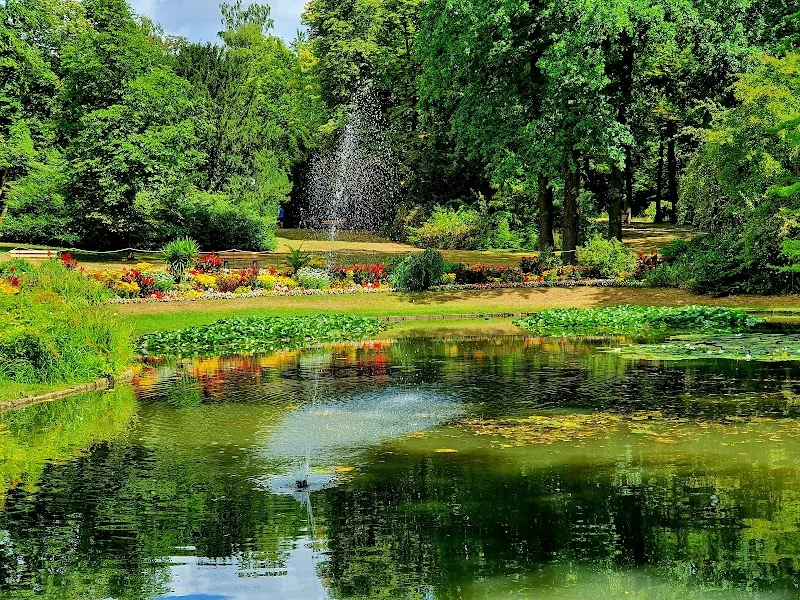
The Festival Park on the Green Hill in Bayreuth is much more than a green backdrop in front of the famous Festival House. It is a place where music history, garden art, and an unusually quiet urban space meet. The park is open all day, year-round, and free of charge, and especially during the festival season and on warm summer evenings, it reveals its atmosphere. Those who stroll here see not only flowers but a carefully composed environment of summer flowers, roses, perennials, and distinctive trees. This very mix makes the Festival Park attractive to visitors looking for pictures, enjoying a quiet moment before the performance, or experiencing the connection between the Bayreuth Festival and the landscape. ([bayreuth-tourismus.de](https://www.bayreuth-tourismus.de/sehenswertes/gaerten-und-parks/festspielpark/))
Parking at the Festival House and the Right Access
Anyone visiting the Festival Park or the Festival House during performance times should plan their arrival by car early. Bayreuth is very well accessible via the A9; from the north, the Bayreuth-Nord exit is recommended, and from the south, Bayreuth-Süd. The official visitor guidance indicates that high traffic volumes are to be expected around the Festival Hill. Therefore, it is wise not to arrive just before the performance begins but to allow some buffer time so that parking remains relaxed and the walk to the destination can be done without time pressure. This reserve is especially important for guests who want to photograph the park or take a stroll. ([bayreuther-festspiele.de](https://www.bayreuther-festspiele.de/karten-service/anreise-parksituation/))
Parking spaces B and C are available for visitors. The fee is a flat rate of 10 euros per day and is collected directly at the entrance by municipal parking attendants. The traffic regulation during the festival season is particularly important: The festival access via Siegfried-Wagner-Allee and the road Festspielhügel is completely closed two hours before the performance begins until about one hour after the performance ends. Access to the parking areas is then only via Tristanstraße or Tannhäuserstraße coming from the Grünen Baum as well as via the road An der Bürgerreuth. Knowing these routes saves time, stress, and unnecessary detours. ([bayreuther-festspiele.de](https://www.bayreuther-festspiele.de/karten-service/anreise-parksituation/))
Practical solutions are also available for electric cars. Parking lot B has three mobile AC charging stations with a total of six charging spots. Charging is possible in various ways, such as via QR code with credit card or Apple Pay, through roaming charging cards, or via the app of the respective roaming provider. This shows that the visitor guidance at the Festival Hill is not only geared towards classic parking spaces but also towards modern mobility. So, anyone who wants to combine a visit to the Festival Park with a longer journey, an evening appointment, or a possible photo stop benefits from this infrastructure. ([bayreuther-festspiele.de](https://www.bayreuther-festspiele.de/karten-service/anreise-parksituation/))
There are additional facilities for visitors with mobility impairments. The Festival House points out separate, free parking spaces for severely disabled people with an official parking permit. In conjunction with the other barrier-free offerings of the house, it becomes clear that a visit to the Green Hill should be well planned not only for opera lovers but also for guests with special needs. Anyone who wants to combine a performance with a walk in the Festival Park should still think about their personal schedule early on to ensure that arrival, parking, and the way to the house remain calm and comfortable. ([bayreuther-festspiele.de](https://www.bayreuther-festspiele.de/en/tickets-service/accessibility/))
Photos, Flowers, and Atmosphere in the Festival Park
The most common reason for inquiries about Festival Park photos is quickly explained: The park provides strong motifs. Particularly characteristic is the large floral emblem in front of the Festival House, which consists of more than 10,000 summer flowers and incorporates the family crest of the Wagner family. This area is not only a decorative detail but also a visual center of the entire ensemble. Additionally, the location directly in front of the Festival House emphasizes the contrast between architecture, lawns, and flower plantings. Those looking for pictures of Festival Park Parsifalstraße or Bayreuth will find exactly that mix of representation and nature that makes the place so distinctive. ([bayreuth-tourismus.de](https://www.bayreuth-tourismus.de/sehenswertes/gaerten-und-parks/festspielpark/))
The vegetation is also interesting for visitors with a camera or smartphone. In spring, rhododendrons and azaleas attract many enthusiasts of this plant group. This is complemented by roses, perennials, and generous summer flower beds that give the park a different appearance depending on the season. The official description also mentions prehistoric and mountain giant sequoias, flowering dogwoods, wingnuts, and ginkgo trees. These are not interchangeable park plants but distinctive elements that give the Festival Park structure and recognizability. This mix of color, growth form, and light offers very good conditions, especially for close-ups, detail photos, and atmospheric images. ([bayreuth-tourismus.de](https://www.bayreuth-tourismus.de/sehenswertes/gaerten-und-parks/festspielpark/))
According to the official description, the park is particularly impressive on beautiful summer evenings during the festival season. Then, the special atmosphere comes into its own because the paths become quieter, the flower beds stand in warm light, and the Festival House dominates the background even more strongly. In various places, memorial and information boards are also set up to commemorate former singers and musicians who have participated in the Bayreuth Festival. Therefore, those taking photos should not only pay attention to the large overall view but also to these quieter details, as they tell the story of the place in small. ([bayreuth-tourismus.de](https://www.bayreuth-tourismus.de/sehenswertes/gaerten-und-parks/festspielpark/))
History of the Festival Park and the Bayreuth Festival House
The Festival Park is hardly understandable without the Festival House. The house was built on the Green Hill, the foundation stone was laid there in 1872, and the first festivals were opened in 1876. Richard Wagner wanted a dedicated festival house for his works after the idea of a special place for the music-dramatic work could no longer be shaken from his mind. The Bayreuth myth, which is now associated with the name of the city, begins precisely in this tension between artistic ambition, architectural planning, and cultural assertiveness. The park complements this historical ensemble because it frames the stage not only architecturally but also landscape-wise. ([bayreuth-tourismus.de](https://www.bayreuth-tourismus.de/sehenswertes/richard-wagner/festspielhaus/))
The Bayreuth Festival itself traditionally begins in the last week of July and lasts until the end of August. About 30 performances are given each season, with approximately 2,000 spectators each, and a high percentage of the guests come from abroad. This explains why the Festival Park is not just a local city park but part of an internationally recognized cultural site. Anyone traveling in Bayreuth feels at this place that classical music unfolds here not in just any building but in a clearly staged environment. Thus, the park is not merely a decorative forecourt but a visible part of the festival experience. ([bayreuth-tourismus.de](https://www.bayreuth-tourismus.de/sehenswertes/richard-wagner/festspielhaus/))
The significance of the park is also underscored by the fact that it is freely, year-round, and all-day accessible. This open character makes it a place where the history of the Green Hill can also be experienced outside of the festival weeks. While performances only take place within a limited time frame, the park remains available all year round, making the festival atmosphere understandable even when no curtain is rising. For visitors, this means: Those seeking history, tranquility, and photo motifs can experience the place independently of the performance schedule and still remain very close to the great tradition. ([bayreuth-tourismus.de](https://www.bayreuth-tourismus.de/sehenswertes/gaerten-und-parks/festspielpark/))
Festival House, Acoustics, and Tours
A key reason for the fascination with the Festival Park is the house that towers over it. The Festival House has 1,937 seats, all directly oriented towards the stage. This follows ancient models and avoids the classic opera logic with side boxes that would fragment the view and listening experience. This clear concentration on the stage is a central feature of the house and a reason why the place is considered a special opera stage worldwide. Thus, when visiting the park, one is not standing in front of just any cultural building, but in front of a house with a very specific architectural idea. ([bayreuth-tourismus.de](https://www.bayreuth-tourismus.de/sehenswertes/richard-wagner/festspielhaus/))
The acoustics are also legendary. The official description highlights the wooden construction of the auditorium and the orchestra pit, which is up to twelve meters deep, through which the sound of the concealed orchestra reaches the hall indirectly. This construction ensures that singers in Bayreuth are better understood than in many other places. The orchestra is largely seated not in front but under the stage, creating a special connection between the stage and the audience. For visitors who only want to take photos, this may initially seem like technical information, but it explains why the place is so charged far beyond the Festival Park. ([bayreuth-tourismus.de](https://www.bayreuth-tourismus.de/sehenswertes/richard-wagner/festspielhaus/))
Those who want to see more can participate in a guided tour. The official 45-minute tour takes visitors through the foyer, the King's building, the auditorium, and, if possible, through the orchestra pit. This quickly transforms the external view into an insight into the dramaturgy of the house from the inside. The Festival House is located at Festspielhügel 1-2 in Bayreuth, and the visit can be ideally combined with a walk in the park. This creates a complete impression: first the outer atmosphere with flowers, paths, and memorial plaques, then stepping into an interior that carries on the festival tradition with a very unique architecture. ([bayreuth-tourismus.de](https://www.bayreuth-tourismus.de/sehenswertes/richard-wagner/festspielhaus/))
Access by Car, Bus, and Walking Path to the Green Hill
In addition to access by car, public transportation also plays an important role. The official public transport connection to the Festival House is via bus line 305 from the ZOH via Hohe Warte. You can get off either at Gartenstadt, at the foot of the Green Hill, or directly at Am Festspielhaus. For many visitors, this is a pleasant option if they do not want to drive themselves or search for a parking space. Especially in summer weather, the combination of bus ride and short walk is a relaxed way to reach the place, as it automatically increases the anticipation for the park and the house. ([bayreuth-tourismus.de](https://www.bayreuth-tourismus.de/sehenswertes/richard-wagner/festspielhaus/))
The walking path is also part of the experience. Those who get off at the Gartenstadt stop approach the Festival House on foot and experience the Green Hill as an actual elevation, not just as a name. This fits well with the character of the Festival Park, which is designed not for quick passage but for calm perception. The area thus acts as a consciously set threshold between the city and the festival world. Many visitors associate this path with their first impression: first the everyday life in Bayreuth, then slowly transitioning into a place where music, architecture, and garden design are closely related. ([bayreuth-tourismus.de](https://www.bayreuth-tourismus.de/sehenswertes/richard-wagner/festspielhaus/))
For travelers with time, a look at the additional offerings in the park is also worthwhile. In the summer months, flower walks of one to two hours can be arranged as desired. This is particularly interesting if you want to get to know the place not just briefly but consciously. The combination of park, house, and guided tour makes the Green Hill a destination that can be visited both briefly and extensively. Those arriving in the afternoon can first experience the park, then get to know the Festival House from the outside and inside, and finally round off the visit with a leisurely return to the city. ([bayreuth-tourismus.de](https://www.bayreuth-tourismus.de/sehenswertes/gaerten-und-parks/festspielpark/))
Practical Tips for Visiting, Accessibility, and Festival Time
The most important practical recommendation remains: Arrive early. The official notices explicitly emphasize that high traffic volumes are to be expected around the Festival Hill. Anyone wanting to take photos in the Festival Park before a performance should therefore plan enough time and have the parking fee ready. This way, you can avoid stress at the entrance and start your visit in peace. Especially during the festival season, this planning is doubly worthwhile because the park then reveals its special atmosphere while many other guests are also on the way. ([bayreuther-festspiele.de](https://www.bayreuther-festspiele.de/karten-service/anreise-parksituation/))
There are also important notes for guests with limited mobility. The Festival House offers up to six wheelchair spaces in the orchestra and a free space for an accompanying person, provided appropriate proof is available. Additionally, there are barrier-free offerings such as ground-level, accessible restrooms, an elevator in the right east stairwell, and additional spaces for visitors with limited mobility. This information shows that a visit to the Green Hill is not only culturally but also organizationally thought out in a differentiated way. Those who inform themselves in advance can plan their stay in the park and house much more relaxed. ([bayreuth-tourismus.de](https://www.bayreuther-festspiele.de/en/tickets-service/accessibility/))
In the end, it is precisely the combination of openness and uniqueness that makes the charm of the Festival Park. It is free, accessible year-round, and yet closely connected to a house that only lives at certain times and is recognized worldwide. Those searching for Festival Park Parsifalstraße photos, parking at the Festival House, or images of the Green Hill are actually looking for a place where Bayreuth condenses its most well-known cultural identity. This park delivers exactly that: flowers, tranquility, memory, architecture, and an immediate forecourt for one of the most famous opera houses in the world. ([bayreuth-tourismus.de](https://www.bayreuth-tourismus.de/sehenswertes/gaerten-und-parks/festspielpark/))
Sources:
Mehr anzeigenWeniger anzeigen
Festival Park Parsifalstraße | Parking & Photos
The Festival Park on the Green Hill in Bayreuth is much more than a green backdrop in front of the famous Festival House. It is a place where music history, garden art, and an unusually quiet urban space meet. The park is open all day, year-round, and free of charge, and especially during the festival season and on warm summer evenings, it reveals its atmosphere. Those who stroll here see not only flowers but a carefully composed environment of summer flowers, roses, perennials, and distinctive trees. This very mix makes the Festival Park attractive to visitors looking for pictures, enjoying a quiet moment before the performance, or experiencing the connection between the Bayreuth Festival and the landscape. ([bayreuth-tourismus.de](https://www.bayreuth-tourismus.de/sehenswertes/gaerten-und-parks/festspielpark/))
Parking at the Festival House and the Right Access
Anyone visiting the Festival Park or the Festival House during performance times should plan their arrival by car early. Bayreuth is very well accessible via the A9; from the north, the Bayreuth-Nord exit is recommended, and from the south, Bayreuth-Süd. The official visitor guidance indicates that high traffic volumes are to be expected around the Festival Hill. Therefore, it is wise not to arrive just before the performance begins but to allow some buffer time so that parking remains relaxed and the walk to the destination can be done without time pressure. This reserve is especially important for guests who want to photograph the park or take a stroll. ([bayreuther-festspiele.de](https://www.bayreuther-festspiele.de/karten-service/anreise-parksituation/))
Parking spaces B and C are available for visitors. The fee is a flat rate of 10 euros per day and is collected directly at the entrance by municipal parking attendants. The traffic regulation during the festival season is particularly important: The festival access via Siegfried-Wagner-Allee and the road Festspielhügel is completely closed two hours before the performance begins until about one hour after the performance ends. Access to the parking areas is then only via Tristanstraße or Tannhäuserstraße coming from the Grünen Baum as well as via the road An der Bürgerreuth. Knowing these routes saves time, stress, and unnecessary detours. ([bayreuther-festspiele.de](https://www.bayreuther-festspiele.de/karten-service/anreise-parksituation/))
Practical solutions are also available for electric cars. Parking lot B has three mobile AC charging stations with a total of six charging spots. Charging is possible in various ways, such as via QR code with credit card or Apple Pay, through roaming charging cards, or via the app of the respective roaming provider. This shows that the visitor guidance at the Festival Hill is not only geared towards classic parking spaces but also towards modern mobility. So, anyone who wants to combine a visit to the Festival Park with a longer journey, an evening appointment, or a possible photo stop benefits from this infrastructure. ([bayreuther-festspiele.de](https://www.bayreuther-festspiele.de/karten-service/anreise-parksituation/))
There are additional facilities for visitors with mobility impairments. The Festival House points out separate, free parking spaces for severely disabled people with an official parking permit. In conjunction with the other barrier-free offerings of the house, it becomes clear that a visit to the Green Hill should be well planned not only for opera lovers but also for guests with special needs. Anyone who wants to combine a performance with a walk in the Festival Park should still think about their personal schedule early on to ensure that arrival, parking, and the way to the house remain calm and comfortable. ([bayreuther-festspiele.de](https://www.bayreuther-festspiele.de/en/tickets-service/accessibility/))
Photos, Flowers, and Atmosphere in the Festival Park
The most common reason for inquiries about Festival Park photos is quickly explained: The park provides strong motifs. Particularly characteristic is the large floral emblem in front of the Festival House, which consists of more than 10,000 summer flowers and incorporates the family crest of the Wagner family. This area is not only a decorative detail but also a visual center of the entire ensemble. Additionally, the location directly in front of the Festival House emphasizes the contrast between architecture, lawns, and flower plantings. Those looking for pictures of Festival Park Parsifalstraße or Bayreuth will find exactly that mix of representation and nature that makes the place so distinctive. ([bayreuth-tourismus.de](https://www.bayreuth-tourismus.de/sehenswertes/gaerten-und-parks/festspielpark/))
The vegetation is also interesting for visitors with a camera or smartphone. In spring, rhododendrons and azaleas attract many enthusiasts of this plant group. This is complemented by roses, perennials, and generous summer flower beds that give the park a different appearance depending on the season. The official description also mentions prehistoric and mountain giant sequoias, flowering dogwoods, wingnuts, and ginkgo trees. These are not interchangeable park plants but distinctive elements that give the Festival Park structure and recognizability. This mix of color, growth form, and light offers very good conditions, especially for close-ups, detail photos, and atmospheric images. ([bayreuth-tourismus.de](https://www.bayreuth-tourismus.de/sehenswertes/gaerten-und-parks/festspielpark/))
According to the official description, the park is particularly impressive on beautiful summer evenings during the festival season. Then, the special atmosphere comes into its own because the paths become quieter, the flower beds stand in warm light, and the Festival House dominates the background even more strongly. In various places, memorial and information boards are also set up to commemorate former singers and musicians who have participated in the Bayreuth Festival. Therefore, those taking photos should not only pay attention to the large overall view but also to these quieter details, as they tell the story of the place in small. ([bayreuth-tourismus.de](https://www.bayreuth-tourismus.de/sehenswertes/gaerten-und-parks/festspielpark/))
History of the Festival Park and the Bayreuth Festival House
The Festival Park is hardly understandable without the Festival House. The house was built on the Green Hill, the foundation stone was laid there in 1872, and the first festivals were opened in 1876. Richard Wagner wanted a dedicated festival house for his works after the idea of a special place for the music-dramatic work could no longer be shaken from his mind. The Bayreuth myth, which is now associated with the name of the city, begins precisely in this tension between artistic ambition, architectural planning, and cultural assertiveness. The park complements this historical ensemble because it frames the stage not only architecturally but also landscape-wise. ([bayreuth-tourismus.de](https://www.bayreuth-tourismus.de/sehenswertes/richard-wagner/festspielhaus/))
The Bayreuth Festival itself traditionally begins in the last week of July and lasts until the end of August. About 30 performances are given each season, with approximately 2,000 spectators each, and a high percentage of the guests come from abroad. This explains why the Festival Park is not just a local city park but part of an internationally recognized cultural site. Anyone traveling in Bayreuth feels at this place that classical music unfolds here not in just any building but in a clearly staged environment. Thus, the park is not merely a decorative forecourt but a visible part of the festival experience. ([bayreuth-tourismus.de](https://www.bayreuth-tourismus.de/sehenswertes/richard-wagner/festspielhaus/))
The significance of the park is also underscored by the fact that it is freely, year-round, and all-day accessible. This open character makes it a place where the history of the Green Hill can also be experienced outside of the festival weeks. While performances only take place within a limited time frame, the park remains available all year round, making the festival atmosphere understandable even when no curtain is rising. For visitors, this means: Those seeking history, tranquility, and photo motifs can experience the place independently of the performance schedule and still remain very close to the great tradition. ([bayreuth-tourismus.de](https://www.bayreuth-tourismus.de/sehenswertes/gaerten-und-parks/festspielpark/))
Festival House, Acoustics, and Tours
A key reason for the fascination with the Festival Park is the house that towers over it. The Festival House has 1,937 seats, all directly oriented towards the stage. This follows ancient models and avoids the classic opera logic with side boxes that would fragment the view and listening experience. This clear concentration on the stage is a central feature of the house and a reason why the place is considered a special opera stage worldwide. Thus, when visiting the park, one is not standing in front of just any cultural building, but in front of a house with a very specific architectural idea. ([bayreuth-tourismus.de](https://www.bayreuth-tourismus.de/sehenswertes/richard-wagner/festspielhaus/))
The acoustics are also legendary. The official description highlights the wooden construction of the auditorium and the orchestra pit, which is up to twelve meters deep, through which the sound of the concealed orchestra reaches the hall indirectly. This construction ensures that singers in Bayreuth are better understood than in many other places. The orchestra is largely seated not in front but under the stage, creating a special connection between the stage and the audience. For visitors who only want to take photos, this may initially seem like technical information, but it explains why the place is so charged far beyond the Festival Park. ([bayreuth-tourismus.de](https://www.bayreuth-tourismus.de/sehenswertes/richard-wagner/festspielhaus/))
Those who want to see more can participate in a guided tour. The official 45-minute tour takes visitors through the foyer, the King's building, the auditorium, and, if possible, through the orchestra pit. This quickly transforms the external view into an insight into the dramaturgy of the house from the inside. The Festival House is located at Festspielhügel 1-2 in Bayreuth, and the visit can be ideally combined with a walk in the park. This creates a complete impression: first the outer atmosphere with flowers, paths, and memorial plaques, then stepping into an interior that carries on the festival tradition with a very unique architecture. ([bayreuth-tourismus.de](https://www.bayreuth-tourismus.de/sehenswertes/richard-wagner/festspielhaus/))
Access by Car, Bus, and Walking Path to the Green Hill
In addition to access by car, public transportation also plays an important role. The official public transport connection to the Festival House is via bus line 305 from the ZOH via Hohe Warte. You can get off either at Gartenstadt, at the foot of the Green Hill, or directly at Am Festspielhaus. For many visitors, this is a pleasant option if they do not want to drive themselves or search for a parking space. Especially in summer weather, the combination of bus ride and short walk is a relaxed way to reach the place, as it automatically increases the anticipation for the park and the house. ([bayreuth-tourismus.de](https://www.bayreuth-tourismus.de/sehenswertes/richard-wagner/festspielhaus/))
The walking path is also part of the experience. Those who get off at the Gartenstadt stop approach the Festival House on foot and experience the Green Hill as an actual elevation, not just as a name. This fits well with the character of the Festival Park, which is designed not for quick passage but for calm perception. The area thus acts as a consciously set threshold between the city and the festival world. Many visitors associate this path with their first impression: first the everyday life in Bayreuth, then slowly transitioning into a place where music, architecture, and garden design are closely related. ([bayreuth-tourismus.de](https://www.bayreuth-tourismus.de/sehenswertes/richard-wagner/festspielhaus/))
For travelers with time, a look at the additional offerings in the park is also worthwhile. In the summer months, flower walks of one to two hours can be arranged as desired. This is particularly interesting if you want to get to know the place not just briefly but consciously. The combination of park, house, and guided tour makes the Green Hill a destination that can be visited both briefly and extensively. Those arriving in the afternoon can first experience the park, then get to know the Festival House from the outside and inside, and finally round off the visit with a leisurely return to the city. ([bayreuth-tourismus.de](https://www.bayreuth-tourismus.de/sehenswertes/gaerten-und-parks/festspielpark/))
Practical Tips for Visiting, Accessibility, and Festival Time
The most important practical recommendation remains: Arrive early. The official notices explicitly emphasize that high traffic volumes are to be expected around the Festival Hill. Anyone wanting to take photos in the Festival Park before a performance should therefore plan enough time and have the parking fee ready. This way, you can avoid stress at the entrance and start your visit in peace. Especially during the festival season, this planning is doubly worthwhile because the park then reveals its special atmosphere while many other guests are also on the way. ([bayreuther-festspiele.de](https://www.bayreuther-festspiele.de/karten-service/anreise-parksituation/))
There are also important notes for guests with limited mobility. The Festival House offers up to six wheelchair spaces in the orchestra and a free space for an accompanying person, provided appropriate proof is available. Additionally, there are barrier-free offerings such as ground-level, accessible restrooms, an elevator in the right east stairwell, and additional spaces for visitors with limited mobility. This information shows that a visit to the Green Hill is not only culturally but also organizationally thought out in a differentiated way. Those who inform themselves in advance can plan their stay in the park and house much more relaxed. ([bayreuth-tourismus.de](https://www.bayreuther-festspiele.de/en/tickets-service/accessibility/))
In the end, it is precisely the combination of openness and uniqueness that makes the charm of the Festival Park. It is free, accessible year-round, and yet closely connected to a house that only lives at certain times and is recognized worldwide. Those searching for Festival Park Parsifalstraße photos, parking at the Festival House, or images of the Green Hill are actually looking for a place where Bayreuth condenses its most well-known cultural identity. This park delivers exactly that: flowers, tranquility, memory, architecture, and an immediate forecourt for one of the most famous opera houses in the world. ([bayreuth-tourismus.de](https://www.bayreuth-tourismus.de/sehenswertes/gaerten-und-parks/festspielpark/))
Sources:
Festival Park Parsifalstraße | Parking & Photos
The Festival Park on the Green Hill in Bayreuth is much more than a green backdrop in front of the famous Festival House. It is a place where music history, garden art, and an unusually quiet urban space meet. The park is open all day, year-round, and free of charge, and especially during the festival season and on warm summer evenings, it reveals its atmosphere. Those who stroll here see not only flowers but a carefully composed environment of summer flowers, roses, perennials, and distinctive trees. This very mix makes the Festival Park attractive to visitors looking for pictures, enjoying a quiet moment before the performance, or experiencing the connection between the Bayreuth Festival and the landscape. ([bayreuth-tourismus.de](https://www.bayreuth-tourismus.de/sehenswertes/gaerten-und-parks/festspielpark/))
Parking at the Festival House and the Right Access
Anyone visiting the Festival Park or the Festival House during performance times should plan their arrival by car early. Bayreuth is very well accessible via the A9; from the north, the Bayreuth-Nord exit is recommended, and from the south, Bayreuth-Süd. The official visitor guidance indicates that high traffic volumes are to be expected around the Festival Hill. Therefore, it is wise not to arrive just before the performance begins but to allow some buffer time so that parking remains relaxed and the walk to the destination can be done without time pressure. This reserve is especially important for guests who want to photograph the park or take a stroll. ([bayreuther-festspiele.de](https://www.bayreuther-festspiele.de/karten-service/anreise-parksituation/))
Parking spaces B and C are available for visitors. The fee is a flat rate of 10 euros per day and is collected directly at the entrance by municipal parking attendants. The traffic regulation during the festival season is particularly important: The festival access via Siegfried-Wagner-Allee and the road Festspielhügel is completely closed two hours before the performance begins until about one hour after the performance ends. Access to the parking areas is then only via Tristanstraße or Tannhäuserstraße coming from the Grünen Baum as well as via the road An der Bürgerreuth. Knowing these routes saves time, stress, and unnecessary detours. ([bayreuther-festspiele.de](https://www.bayreuther-festspiele.de/karten-service/anreise-parksituation/))
Practical solutions are also available for electric cars. Parking lot B has three mobile AC charging stations with a total of six charging spots. Charging is possible in various ways, such as via QR code with credit card or Apple Pay, through roaming charging cards, or via the app of the respective roaming provider. This shows that the visitor guidance at the Festival Hill is not only geared towards classic parking spaces but also towards modern mobility. So, anyone who wants to combine a visit to the Festival Park with a longer journey, an evening appointment, or a possible photo stop benefits from this infrastructure. ([bayreuther-festspiele.de](https://www.bayreuther-festspiele.de/karten-service/anreise-parksituation/))
There are additional facilities for visitors with mobility impairments. The Festival House points out separate, free parking spaces for severely disabled people with an official parking permit. In conjunction with the other barrier-free offerings of the house, it becomes clear that a visit to the Green Hill should be well planned not only for opera lovers but also for guests with special needs. Anyone who wants to combine a performance with a walk in the Festival Park should still think about their personal schedule early on to ensure that arrival, parking, and the way to the house remain calm and comfortable. ([bayreuther-festspiele.de](https://www.bayreuther-festspiele.de/en/tickets-service/accessibility/))
Photos, Flowers, and Atmosphere in the Festival Park
The most common reason for inquiries about Festival Park photos is quickly explained: The park provides strong motifs. Particularly characteristic is the large floral emblem in front of the Festival House, which consists of more than 10,000 summer flowers and incorporates the family crest of the Wagner family. This area is not only a decorative detail but also a visual center of the entire ensemble. Additionally, the location directly in front of the Festival House emphasizes the contrast between architecture, lawns, and flower plantings. Those looking for pictures of Festival Park Parsifalstraße or Bayreuth will find exactly that mix of representation and nature that makes the place so distinctive. ([bayreuth-tourismus.de](https://www.bayreuth-tourismus.de/sehenswertes/gaerten-und-parks/festspielpark/))
The vegetation is also interesting for visitors with a camera or smartphone. In spring, rhododendrons and azaleas attract many enthusiasts of this plant group. This is complemented by roses, perennials, and generous summer flower beds that give the park a different appearance depending on the season. The official description also mentions prehistoric and mountain giant sequoias, flowering dogwoods, wingnuts, and ginkgo trees. These are not interchangeable park plants but distinctive elements that give the Festival Park structure and recognizability. This mix of color, growth form, and light offers very good conditions, especially for close-ups, detail photos, and atmospheric images. ([bayreuth-tourismus.de](https://www.bayreuth-tourismus.de/sehenswertes/gaerten-und-parks/festspielpark/))
According to the official description, the park is particularly impressive on beautiful summer evenings during the festival season. Then, the special atmosphere comes into its own because the paths become quieter, the flower beds stand in warm light, and the Festival House dominates the background even more strongly. In various places, memorial and information boards are also set up to commemorate former singers and musicians who have participated in the Bayreuth Festival. Therefore, those taking photos should not only pay attention to the large overall view but also to these quieter details, as they tell the story of the place in small. ([bayreuth-tourismus.de](https://www.bayreuth-tourismus.de/sehenswertes/gaerten-und-parks/festspielpark/))
History of the Festival Park and the Bayreuth Festival House
The Festival Park is hardly understandable without the Festival House. The house was built on the Green Hill, the foundation stone was laid there in 1872, and the first festivals were opened in 1876. Richard Wagner wanted a dedicated festival house for his works after the idea of a special place for the music-dramatic work could no longer be shaken from his mind. The Bayreuth myth, which is now associated with the name of the city, begins precisely in this tension between artistic ambition, architectural planning, and cultural assertiveness. The park complements this historical ensemble because it frames the stage not only architecturally but also landscape-wise. ([bayreuth-tourismus.de](https://www.bayreuth-tourismus.de/sehenswertes/richard-wagner/festspielhaus/))
The Bayreuth Festival itself traditionally begins in the last week of July and lasts until the end of August. About 30 performances are given each season, with approximately 2,000 spectators each, and a high percentage of the guests come from abroad. This explains why the Festival Park is not just a local city park but part of an internationally recognized cultural site. Anyone traveling in Bayreuth feels at this place that classical music unfolds here not in just any building but in a clearly staged environment. Thus, the park is not merely a decorative forecourt but a visible part of the festival experience. ([bayreuth-tourismus.de](https://www.bayreuth-tourismus.de/sehenswertes/richard-wagner/festspielhaus/))
The significance of the park is also underscored by the fact that it is freely, year-round, and all-day accessible. This open character makes it a place where the history of the Green Hill can also be experienced outside of the festival weeks. While performances only take place within a limited time frame, the park remains available all year round, making the festival atmosphere understandable even when no curtain is rising. For visitors, this means: Those seeking history, tranquility, and photo motifs can experience the place independently of the performance schedule and still remain very close to the great tradition. ([bayreuth-tourismus.de](https://www.bayreuth-tourismus.de/sehenswertes/gaerten-und-parks/festspielpark/))
Festival House, Acoustics, and Tours
A key reason for the fascination with the Festival Park is the house that towers over it. The Festival House has 1,937 seats, all directly oriented towards the stage. This follows ancient models and avoids the classic opera logic with side boxes that would fragment the view and listening experience. This clear concentration on the stage is a central feature of the house and a reason why the place is considered a special opera stage worldwide. Thus, when visiting the park, one is not standing in front of just any cultural building, but in front of a house with a very specific architectural idea. ([bayreuth-tourismus.de](https://www.bayreuth-tourismus.de/sehenswertes/richard-wagner/festspielhaus/))
The acoustics are also legendary. The official description highlights the wooden construction of the auditorium and the orchestra pit, which is up to twelve meters deep, through which the sound of the concealed orchestra reaches the hall indirectly. This construction ensures that singers in Bayreuth are better understood than in many other places. The orchestra is largely seated not in front but under the stage, creating a special connection between the stage and the audience. For visitors who only want to take photos, this may initially seem like technical information, but it explains why the place is so charged far beyond the Festival Park. ([bayreuth-tourismus.de](https://www.bayreuth-tourismus.de/sehenswertes/richard-wagner/festspielhaus/))
Those who want to see more can participate in a guided tour. The official 45-minute tour takes visitors through the foyer, the King's building, the auditorium, and, if possible, through the orchestra pit. This quickly transforms the external view into an insight into the dramaturgy of the house from the inside. The Festival House is located at Festspielhügel 1-2 in Bayreuth, and the visit can be ideally combined with a walk in the park. This creates a complete impression: first the outer atmosphere with flowers, paths, and memorial plaques, then stepping into an interior that carries on the festival tradition with a very unique architecture. ([bayreuth-tourismus.de](https://www.bayreuth-tourismus.de/sehenswertes/richard-wagner/festspielhaus/))
Access by Car, Bus, and Walking Path to the Green Hill
In addition to access by car, public transportation also plays an important role. The official public transport connection to the Festival House is via bus line 305 from the ZOH via Hohe Warte. You can get off either at Gartenstadt, at the foot of the Green Hill, or directly at Am Festspielhaus. For many visitors, this is a pleasant option if they do not want to drive themselves or search for a parking space. Especially in summer weather, the combination of bus ride and short walk is a relaxed way to reach the place, as it automatically increases the anticipation for the park and the house. ([bayreuth-tourismus.de](https://www.bayreuth-tourismus.de/sehenswertes/richard-wagner/festspielhaus/))
The walking path is also part of the experience. Those who get off at the Gartenstadt stop approach the Festival House on foot and experience the Green Hill as an actual elevation, not just as a name. This fits well with the character of the Festival Park, which is designed not for quick passage but for calm perception. The area thus acts as a consciously set threshold between the city and the festival world. Many visitors associate this path with their first impression: first the everyday life in Bayreuth, then slowly transitioning into a place where music, architecture, and garden design are closely related. ([bayreuth-tourismus.de](https://www.bayreuth-tourismus.de/sehenswertes/richard-wagner/festspielhaus/))
For travelers with time, a look at the additional offerings in the park is also worthwhile. In the summer months, flower walks of one to two hours can be arranged as desired. This is particularly interesting if you want to get to know the place not just briefly but consciously. The combination of park, house, and guided tour makes the Green Hill a destination that can be visited both briefly and extensively. Those arriving in the afternoon can first experience the park, then get to know the Festival House from the outside and inside, and finally round off the visit with a leisurely return to the city. ([bayreuth-tourismus.de](https://www.bayreuth-tourismus.de/sehenswertes/gaerten-und-parks/festspielpark/))
Practical Tips for Visiting, Accessibility, and Festival Time
The most important practical recommendation remains: Arrive early. The official notices explicitly emphasize that high traffic volumes are to be expected around the Festival Hill. Anyone wanting to take photos in the Festival Park before a performance should therefore plan enough time and have the parking fee ready. This way, you can avoid stress at the entrance and start your visit in peace. Especially during the festival season, this planning is doubly worthwhile because the park then reveals its special atmosphere while many other guests are also on the way. ([bayreuther-festspiele.de](https://www.bayreuther-festspiele.de/karten-service/anreise-parksituation/))
There are also important notes for guests with limited mobility. The Festival House offers up to six wheelchair spaces in the orchestra and a free space for an accompanying person, provided appropriate proof is available. Additionally, there are barrier-free offerings such as ground-level, accessible restrooms, an elevator in the right east stairwell, and additional spaces for visitors with limited mobility. This information shows that a visit to the Green Hill is not only culturally but also organizationally thought out in a differentiated way. Those who inform themselves in advance can plan their stay in the park and house much more relaxed. ([bayreuth-tourismus.de](https://www.bayreuther-festspiele.de/en/tickets-service/accessibility/))
In the end, it is precisely the combination of openness and uniqueness that makes the charm of the Festival Park. It is free, accessible year-round, and yet closely connected to a house that only lives at certain times and is recognized worldwide. Those searching for Festival Park Parsifalstraße photos, parking at the Festival House, or images of the Green Hill are actually looking for a place where Bayreuth condenses its most well-known cultural identity. This park delivers exactly that: flowers, tranquility, memory, architecture, and an immediate forecourt for one of the most famous opera houses in the world. ([bayreuth-tourismus.de](https://www.bayreuth-tourismus.de/sehenswertes/gaerten-und-parks/festspielpark/))
Sources:
Upcoming Events
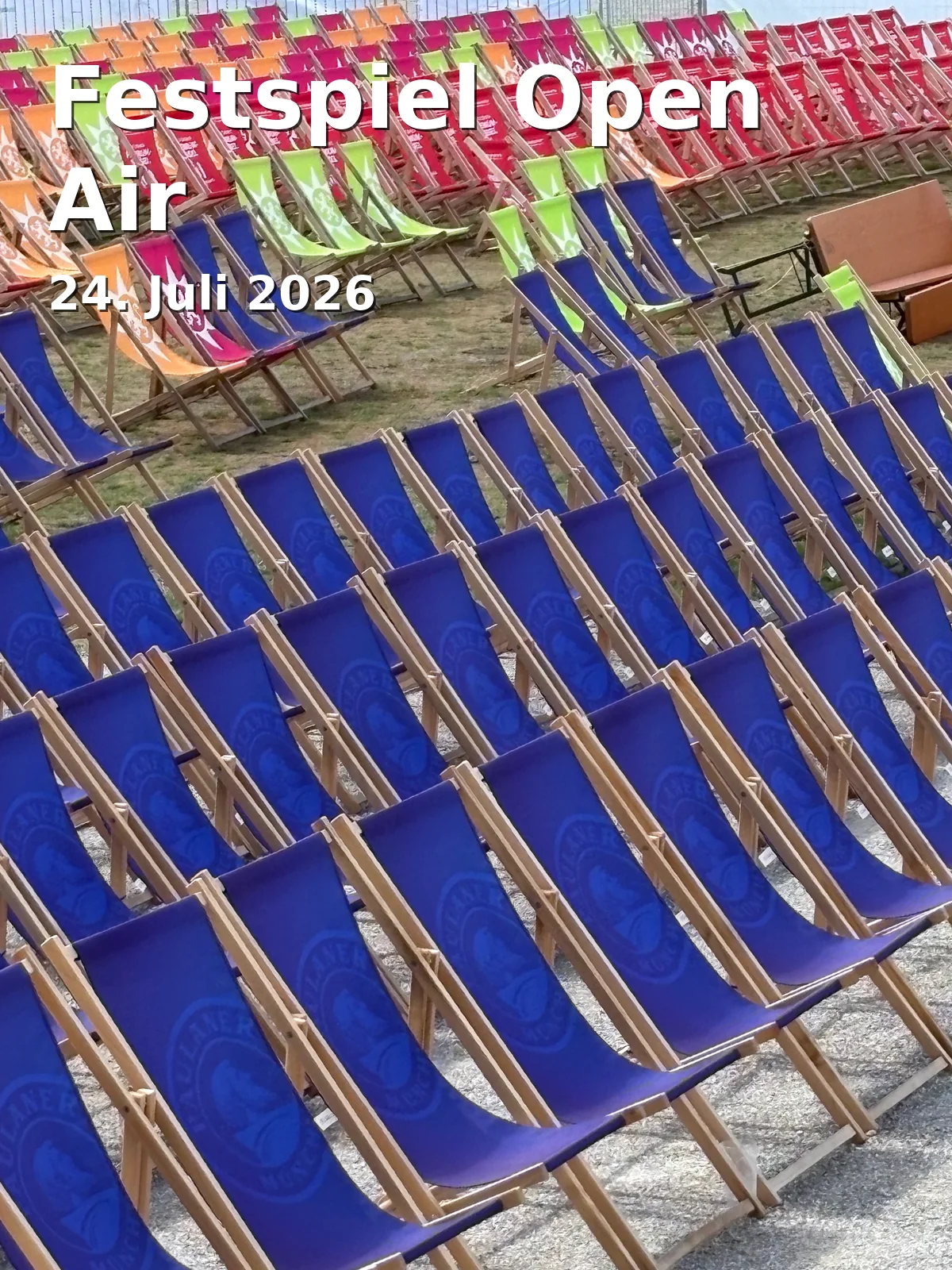
Festival Open Air
Celebrate the anniversary year of the Bayreuth Festival with an unforgettable open-air experience in the festival park.
Festival Open-Air 2026 in Bayreuth: Free Concert at the Green Hill
Bayreuth becomes an open-air moment full of summer magic at the Green Hill. Free in the Festival Park, on 24.07.2026 at 8:00 PM. #Bayreuth #OpenAir
Frequently Asked Questions
Reviews
Sonja
6. September 2022
To me it is a very boring park. Not bad at all though.
Sandeep Soni
28. May 2021
Nice place for walk any time.
AlechenuTV.
1. November 2022
A place I will sure visit again.
Moritz Küssner
25. July 2024
A very beautiful romantic park with a small pond and direct access to the festival house. My personal highlight there is the festival open air in July (see pictures).
Stephan Krüger
25. July 2025
Wagner Open Air 2025 is always a delight. 🥰🎻🪈🥁📺🎙🎤🎶🎼🎺💯🎵👌🤓🎛👍😁