
Bayreuth
Festspielhügel 6, 95445 Bayreuth, Deutschland
Green Hill Food Court | Festival House & Parking
The name Green Hill Food Court best fits as a culinary designation for the Festival Hill area in Bayreuth, where gastronomy, culture, and the special character of the Green Hill overlap. The official pages of the Bayreuth Festival refer to the Wahn Food Court, the Green Hill Kitchen, the Festival Beer Garden, and other enjoyment stations on the festival grounds. Additionally, there is the famous Festival House, the expansive Festival Park, and the atmosphere of a place that has been globally associated with Richard Wagner since 1876. Therefore, those searching for a modern, easily memorable term like Green Hill Food Court find themselves right in the middle of a historical cultural space where eating, arriving, waiting for the performance to begin, and experiencing the festival season are closely intertwined. This very mix makes the location interesting for visitors: not as an ordinary snack point, but as part of a carefully staged festival where culinary arts, architecture, and landscape together create a stage. ([bayreuther-festspiele.de](https://www.bayreuther-festspiele.de/karten-service/gastronomisches-angebot/))
Wahn Food Court and Green Hill Kitchen: Culinary Delights at the Green Hill
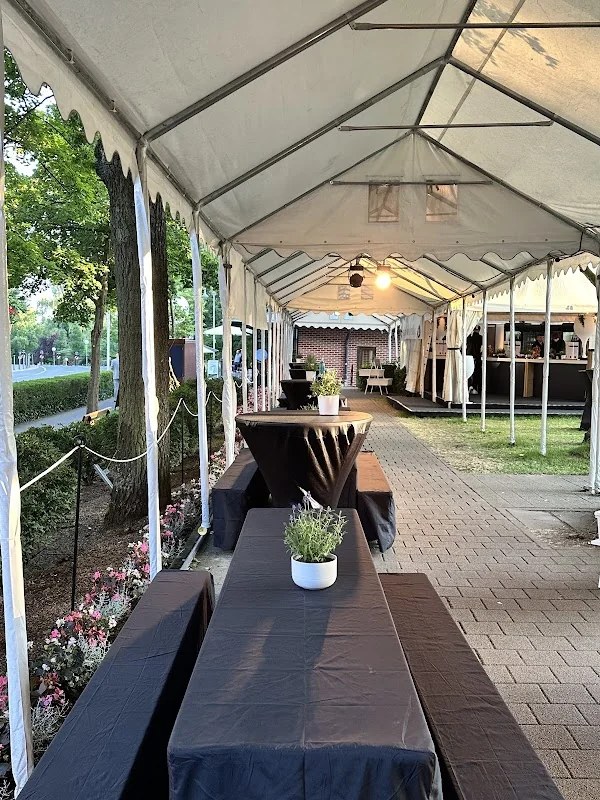
The gastronomic side of the Bayreuth Festival clearly shows how strongly the catering is integrated into the overall picture. The Bayreuth Festival states that wahnfood GmbH from Bayreuth takes care of guests from two hours before the performance, during the intermissions, and also after the performance. Several culinary areas are offered on the festival grounds. Among them are the Geldermann Champagne Bars, the Wahn Food Court with various enjoyment stations, the Festival Beer Garden on the left side of the Festival House, the See-Food Bar Flying Dutchman, the main restaurant Green Hill Kitchen, and the gourmet restaurant 1813 with table service and a shady terrace. This is important in practice because the term Green Hill Food Court does not only refer to a single establishment, but to a gastronomic system surrounding the festival. Visitors can choose between faster, station-based food, quieter seating areas, and more formal service, depending on their preferences. This fits the rhythm of the festival, where many guests arrive before the performance, consciously use the intermission, and do not leave immediately after the final applause but let the evening wind down on the grounds. ([bayreuther-festspiele.de](https://www.bayreuther-festspiele.de/karten-service/gastronomisches-angebot/))
Especially exciting is the way the official description transforms the culinary space into an experience world. The Wahn Food Court does not sound like a mere food distribution point, but rather like a market and festival atmosphere with several stations for different tastes. The Green Hill Kitchen, in turn, is described as the main restaurant with an all-inclusive offer for both intermissions via a buffet marketplace. This is attractive for visitors who want to spend their break in a planned and unhurried manner. At the same time, the Festival Beer Garden points to a more traditional festival culture with Franconian specialties under trees, while the See-Food Bar and the gourmet restaurant 1813 complement the spectrum upwards and downwards. This very range makes the location relevant for search queries like green hill kitchen, wahn food court, and green hill food court. Those visiting Bayreuth during the festival season receive not only sustenance on the grounds but a coordinated gastronomic dramaturgy that extends the opera evening and keeps the place lively even between performances. Reservations, pre-orders, and further details are managed through the festival's gastronomy platform, according to the official site. ([bayreuther-festspiele.de](https://www.bayreuther-festspiele.de/karten-service/gastronomisches-angebot/))
The current context is also important: The festival itself does not think of its grounds in isolation, but as a cohesive experience space. This means that eating and drinking are not hidden at the edge of the area but are visibly and consciously integrated into the paths, squares, and lounge areas. For first-time visitors, this is helpful. They can arrive early, orient themselves, choose a clear meeting point before the performance, and then use the break without stress. For regular guests, this mix of planability and festive staging is part of the appeal of Bayreuth. The Green Hill Food Court is thus less a classic single address than a search term for what festival gastronomy is today: diverse, locally anchored, and closely connected to the rhythm of the performances. ([bayreuther-festspiele.de](https://www.bayreuther-festspiele.de/karten-service/gastronomisches-angebot/))
Access and Parking at the Festival Hill in Bayreuth
The journey to the Festival Hill is described very concretely on the official pages, as high traffic is regularly to be expected around the performances. Those arriving by car can reach Bayreuth via the A9 Munich-Nuremberg-Bayreuth-Berlin. From the north, the Bayreuth-North exit is recommended, and from the south, Bayreuth-South. Visitors should then follow the signs to the Festival House. It is also important that the festival access via Siegfried-Wagner-Allee and the street Festspielhügel is closed around the performance. The official travel page explains that this route is completely closed to traffic two hours before the performance begins until about one hour after the performance ends. Access to the parking lots is instead via Tristanstraße, Tannhäuserstraße, and An der Bürgerreuth. Particularly in an environment like Festspielhügel 6, this information is crucial because incorrect access routes can quickly lead to detours and loss of time. Those who arrive on time park more relaxed, have less stress at the ticket control, and can already start the evening calmly before the performance begins. ([bayreuther-festspiele.de](https://www.bayreuther-festspiele.de/karten-service/anreise-parksituation/?utm_source=openai))
The city of Bayreuth also explicitly recommends having the parking fee ready as accurately as possible and not arriving just before the start, as traffic around the hill can be heavy. For visitors with mobility-related restrictions, there are special regulations, and for certain vehicles like taxis or rental cars with special permits, there are specific access options. Additionally, the city points out that on certain days, parking bans apply in the adjacent streets, and improperly parked vehicles may be towed. Public transport connections are also clear: The Bayreuth tourism site mentions bus line 305 on the route ZOH-Hohe Warte, with stops at Gartenstadt or Am Festspielhaus. This makes the Festival Hill easily accessible even without a car, which is a real plus, especially on sold-out evenings or during events in the Festival Park. Therefore, when planning the journey, one should not only consider the distance but always keep the event calendar in mind. This is especially true during festival times when the entire area transforms from the character of a normal city street into a strictly organized cultural space. ([bayreuther-festspiele.de](https://www.bayreuther-festspiele.de/karten-service/anreise-parksituation/?utm_source=openai))
From an SEO perspective, the search terms parking festival house, access festival hill, and bus line 305 are strong because they cover real visitor questions. People do not search abstractly for the address but for orientation: Where can I drive in, where do I park correctly, how far is the way, and what alternatives do I have without a car? The official pages provide reliable answers to these questions. Furthermore, the traffic situation is not static but is tied to performance days and open-air events. Therefore, those planning their visit professionally always check the specific event in advance. This is particularly sensible in Bayreuth because the Festival House, the Festival Park, and the gastronomic areas are closely linked during the season. The journey is thus not just a logistical preliminary stage but part of the overall experience at the Green Hill. ([bayreuther-festspiele.de](https://www.bayreuther-festspiele.de/karten-service/anreise-parksituation/?utm_source=openai))
Seating Plan, Seats, and Acoustics in the Bayreuth Festival House
The Bayreuth Festival House is not just any venue but one of the most significant opera stages in Europe. The official description emphasizes the amphitheater-like construction that provides good visibility for all seats, the dark wooden hall, and the concealed orchestra that shapes the special acoustics. Technically, the house has 1,937 seats in the auditorium; the orchestra pit can accommodate up to 110 musicians depending on the work. For visitors looking for seating plans, seats, or the best sightlines, this combination is relevant. The architecture is designed for a shared listening experience, not for representative splendor. This also explains why the house is still strongly associated with the idea of the Gesamtkunstwerk. The official Bayreuth site also states that the Festival House attracts around 58,000 guests annually. This highlights the significance of the place in the international cultural calendar. Therefore, anyone attending an event at the Festival Hill is in a space that is historically, acoustically, and organizationally designed for maximum occupancy and special expectations. ([bayreuther-festspiele.de](https://www.bayreuther-festspiele.de/festspiele/festspielhaus/))
The history is also remarkable and important for search intent. The foundation stone was laid in 1872, and the first festival began in 1876 with the Rheingold. The Bayreuth tourism site adds that the house has been the cultural center for engagement with Wagner's music in the summer since 1876, and the festival traditionally begins in the last week of July and lasts until the end of August. For today's visitor, this is useful because they can understand the building not just as a backdrop but as a living performance space. Additionally, the house can be visited outside the festival season as part of guided tours. These tours last about 45 minutes and show the foyer, the King's Building, the auditorium, and the orchestra pit whenever possible. Therefore, those searching for seating plan festival house, tickets festival house, or tours festival house are actually looking for a better understanding of the space: How is the house structured, which areas are visible, and how is the special effect created? The answer lies in the architecture itself. Wagner and architect Otto Brückwald chose simplicity, clarity, and functionality. This resulted in a house that is still considered extraordinary today. ([bayreuther-festspiele.de](https://www.bayreuther-festspiele.de/festspiele/festspielhaus/))
The quality of the experience also includes that the house has been continuously developed technically and structurally without losing its character. The technical specifications mention a main stage with 730 square meters, a width of 32 meters, and a depth of 23 meters, as well as the height to the grid ceiling and a reverberation time of 1.5 seconds. For the average visitor, these numbers are not the first things they notice, but they explain why sound and spatial effects are often highlighted in Bayreuth. The architectural history is also thoroughly documented, from the construction in 1872 to later renovations and restorations. This does not make the place museum-like in the narrow sense but shows it as a continuously maintained cultural heritage. Therefore, those thinking of the Green Hill Food Court should always read the term in connection with the Festival House: The gastronomic offer here is part of a large, acoustically and architecturally unique overall concept. ([bayreuther-festspiele.de](https://www.bayreuther-festspiele.de/festspiele/festspielhaus/))
Festival Park on the Green Hill: Peace, Flowers, and Open-Air
The Festival Park is a central argument for why the Green Hill is associated not only with performances but also with quality of stay. The official tourism site describes the 19-hectare park area in the north of the city as a place that is accessible free of charge all year round. In the late 1920s, the core of the park received its current form according to plans by landscape architect Gustav Allinger; further expansions were added in the 1970s. In the park, visitors find quiet islands like the rock garden, the new northeast section, and the romantically situated water lily pond. This structure is important because it shows that the Festival Hill is not just a backdrop for the festival but an independent landscape space. Therefore, in the search logic of green hill food court or festival park bayreuth, there is more than just gastronomy: people often want to know how a short walk, a waiting moment, or a photo stop can be arranged before or after eating. The Festival Park provides the ideal answer. It is open, well-maintained, and strongly linked to the festival identity. ([bayreuth-tourismus.de](https://www.bayreuth-tourismus.de/sehenswertes/gaerten-und-parks/festspielpark/))
Especially impressive is the floral and plant language of the park. In front of the Festival House, an emblem made up of over 10,000 summer flowers forms the family crest of the Wagner family. Additionally, there are rhododendrons, azaleas, roses, perennials, and striking tree species such as prehistoric and mountain giant sequoias, flowering dogwoods, wingnuts, and ginkgo. This is not only decorative but creates a strong visual profile that distinguishes Bayreuth from many other opera locations. The tourism site also points out that the park reveals its special atmosphere especially on beautiful summer evenings during the festival season. This is where the connection to the food court search term becomes clear: those who grab something to eat before the performance or change locations during the intermission do not simply experience a functional space but a staging of green, light, architecture, and movement. For the year 2026, the anniversary level will be added: Bayreuth celebrates 150 years of the Bayreuth Festival, and 150 stages are announced throughout the city as part of the anniversary program. Additionally, a festival open-air event is planned in the Festival Park on July 24, 2026. Thus, the park remains a place where culture and leisure are not separated but interwoven. ([bayreuth-tourismus.de](https://www.bayreuth-tourismus.de/sehenswertes/gaerten-und-parks/festspielpark/))
For visitors, this means: The Festival Park is not just an accessory but part of the actual Bayreuth experience. Those who arrive there feel even before entering the house that the festival season is a special time of year. The green area provides orientation, peace, and atmosphere. It is ideal for short distances between parking, gastronomy, and performance, but also for those who simply want to let the hill and its history take effect. This is exactly why the term Green Hill Food Court works so well as a search term: it connects food with the specific place on the Green Hill where the culinary, landscape, and cultural experience comes together. ([bayreuth-tourismus.de](https://www.bayreuth-tourismus.de/sehenswertes/gaerten-und-parks/festspielpark/))
Guided Tours, Tickets, and Visitor Information around the Festival House
Those who want to experience the Festival House not just from the outside have good opportunities for an in-depth visit. The Bayreuth tourism site explains that tours of the Festival House last about 45 minutes and include the foyer, King's Building, auditorium, and orchestra pit whenever possible. Tickets can be purchased online in advance or directly on-site from the tour guide; however, only physical tickets are available on-site, and cash should be brought. For visitors who want to plan their Bayreuth trip neatly, this is useful information. The house is accessible outside the festival season, while during the season, the focus understandably lies on the performances. Therefore, those searching for tickets festival house, tours festival house, or program bayreuth festival are usually looking for more than just an event ticket. They want to truly understand the house, its rooms, and its function in the context of the festival. This is exactly what the tours are designed for. They create proximity to a place that is often perceived only as a legendary facade, acoustic icon, or hard-to-access opera machine. ([bayreuth-tourismus.de](https://www.bayreuth-tourismus.de/sehenswertes/richard-wagner/festspielhaus/))
The event calendar itself is also central to planning. The official page for the Bayreuth Festival 2026 mentions a festival open-air event in the Festival Park on July 24, 2026, as well as the start of the program immediately afterward. Overall, the festival season is designed as a dense cultural program with operas, special formats, and the anniversary of 150 years of the Bayreuth Festival. For visitors, this means they will experience the location in a very special year. The combination of anniversary, historical stage, modern gastronomy, and park landscape is strong enough to make the place relevant beyond the individual evening program. When someone searches for Green Hill Food Court, the actual user question is usually: What can I meaningfully do there before, during, and after the performance? The answer is: eat, walk, discover the house, use the break, and shape the evening in a clearly organized cultural space. This is exactly why the program, tours, and gastronomy are so closely intertwined here. ([bayreuth-tourismus.de](https://www.bayreuth-tourismus.de/en/richard-wagner-opera-festival/))
Additionally, Bayreuth consciously presents its cultural environment. This means: visitors not only find the actual venue but also orientation regarding access, bus lines, parking, opening hours, and tourist offers. This is particularly important for the Green Hill Food Court because the place should not be viewed in isolation. It functions in conjunction with the Festival House, the Festival Park, and the city of Bayreuth. Those who book early, clarify the journey, and consciously plan the break experience the place more relaxed and intensely. Thus, a simple search for food on the Green Hill becomes a well-structured festival visit. ([bayreuth-tourismus.de](https://www.bayreuth-tourismus.de/sehenswertes/richard-wagner/festspielhaus/))
Accessibility, Service, and Practical Planning for Your Visit
The Bayreuth Festival has described concrete solutions for visitors with limited mobility and for hearing-impaired guests. In the Festival House, there are a total of up to 6 wheelchair spaces available in the stalls on the left and right, each with a free seat for an accompanying person, provided appropriate proof is available. Additionally, there are up to 20 edge seats per performance for visitors with limited mobility, as well as accessible restrooms on ground-level accessible floors. An elevator in the East staircase facilitates access to the box, balcony, and gallery on the right side. Furthermore, starting in 2024, an induction system for hearing-impaired individuals will be installed, which will be available in rows 9 to 13 with more than 200 seats. This shows that the house connects its historical substance with modern service offerings. For planning, this is particularly helpful because the visit remains well-preparable despite the traditional architecture. Those needing assistance can also find direct contact options at the festival. ([bayreuther-festspiele.de](https://www.bayreuther-festspiele.de/karten-service/barrierefreiheit/))
Additional details are also important for access. For severely disabled individuals with an official parking permit, designated free parking spaces are available, and regulated access windows exist for taxi or BRK mobility services. At the same time, the official accessibility page points out that the website is not fully accessible, but there are alternatives and contact paths. For visitors, this mainly means: It is worth not only looking at the actual evening date but also considering the complete logistics. This includes access, parking, the way from the car or bus to the entrance, possible accompanying persons, and how much time one wants to plan before a performance. This is particularly sensible at the Green Hill because the process is consciously regulated, and the paths around the performances can be heavily frequented. Those who arrive relaxed can better utilize the gastronomic offer, have more time for the Festival Park, and can experience the evening at the Green Hill Food Court or in the vicinity of the Festival House much more calmly. ([bayreuther-festspiele.de](https://www.bayreuther-festspiele.de/karten-service/barrierefreiheit/))
In summary, the location is not just a name on the map but a cultural hub with clear rules, strong offerings, and a high quality of stay. The Green Hill Food Court is thus best understood as a modern search and experience term: an entry into Bayreuth's festival world, where gastronomy, architecture, park landscape, and visitor organization come together in a compact space. Those who think of these four levels together will get much more out of their visit. ([bayreuther-festspiele.de](https://www.bayreuther-festspiele.de/karten-service/gastronomisches-angebot/))
Sources:
Mehr anzeigenWeniger anzeigen
Green Hill Food Court | Festival House & Parking
The name Green Hill Food Court best fits as a culinary designation for the Festival Hill area in Bayreuth, where gastronomy, culture, and the special character of the Green Hill overlap. The official pages of the Bayreuth Festival refer to the Wahn Food Court, the Green Hill Kitchen, the Festival Beer Garden, and other enjoyment stations on the festival grounds. Additionally, there is the famous Festival House, the expansive Festival Park, and the atmosphere of a place that has been globally associated with Richard Wagner since 1876. Therefore, those searching for a modern, easily memorable term like Green Hill Food Court find themselves right in the middle of a historical cultural space where eating, arriving, waiting for the performance to begin, and experiencing the festival season are closely intertwined. This very mix makes the location interesting for visitors: not as an ordinary snack point, but as part of a carefully staged festival where culinary arts, architecture, and landscape together create a stage. ([bayreuther-festspiele.de](https://www.bayreuther-festspiele.de/karten-service/gastronomisches-angebot/))
Wahn Food Court and Green Hill Kitchen: Culinary Delights at the Green Hill
The gastronomic side of the Bayreuth Festival clearly shows how strongly the catering is integrated into the overall picture. The Bayreuth Festival states that wahnfood GmbH from Bayreuth takes care of guests from two hours before the performance, during the intermissions, and also after the performance. Several culinary areas are offered on the festival grounds. Among them are the Geldermann Champagne Bars, the Wahn Food Court with various enjoyment stations, the Festival Beer Garden on the left side of the Festival House, the See-Food Bar Flying Dutchman, the main restaurant Green Hill Kitchen, and the gourmet restaurant 1813 with table service and a shady terrace. This is important in practice because the term Green Hill Food Court does not only refer to a single establishment, but to a gastronomic system surrounding the festival. Visitors can choose between faster, station-based food, quieter seating areas, and more formal service, depending on their preferences. This fits the rhythm of the festival, where many guests arrive before the performance, consciously use the intermission, and do not leave immediately after the final applause but let the evening wind down on the grounds. ([bayreuther-festspiele.de](https://www.bayreuther-festspiele.de/karten-service/gastronomisches-angebot/))
Especially exciting is the way the official description transforms the culinary space into an experience world. The Wahn Food Court does not sound like a mere food distribution point, but rather like a market and festival atmosphere with several stations for different tastes. The Green Hill Kitchen, in turn, is described as the main restaurant with an all-inclusive offer for both intermissions via a buffet marketplace. This is attractive for visitors who want to spend their break in a planned and unhurried manner. At the same time, the Festival Beer Garden points to a more traditional festival culture with Franconian specialties under trees, while the See-Food Bar and the gourmet restaurant 1813 complement the spectrum upwards and downwards. This very range makes the location relevant for search queries like green hill kitchen, wahn food court, and green hill food court. Those visiting Bayreuth during the festival season receive not only sustenance on the grounds but a coordinated gastronomic dramaturgy that extends the opera evening and keeps the place lively even between performances. Reservations, pre-orders, and further details are managed through the festival's gastronomy platform, according to the official site. ([bayreuther-festspiele.de](https://www.bayreuther-festspiele.de/karten-service/gastronomisches-angebot/))
The current context is also important: The festival itself does not think of its grounds in isolation, but as a cohesive experience space. This means that eating and drinking are not hidden at the edge of the area but are visibly and consciously integrated into the paths, squares, and lounge areas. For first-time visitors, this is helpful. They can arrive early, orient themselves, choose a clear meeting point before the performance, and then use the break without stress. For regular guests, this mix of planability and festive staging is part of the appeal of Bayreuth. The Green Hill Food Court is thus less a classic single address than a search term for what festival gastronomy is today: diverse, locally anchored, and closely connected to the rhythm of the performances. ([bayreuther-festspiele.de](https://www.bayreuther-festspiele.de/karten-service/gastronomisches-angebot/))
Access and Parking at the Festival Hill in Bayreuth
The journey to the Festival Hill is described very concretely on the official pages, as high traffic is regularly to be expected around the performances. Those arriving by car can reach Bayreuth via the A9 Munich-Nuremberg-Bayreuth-Berlin. From the north, the Bayreuth-North exit is recommended, and from the south, Bayreuth-South. Visitors should then follow the signs to the Festival House. It is also important that the festival access via Siegfried-Wagner-Allee and the street Festspielhügel is closed around the performance. The official travel page explains that this route is completely closed to traffic two hours before the performance begins until about one hour after the performance ends. Access to the parking lots is instead via Tristanstraße, Tannhäuserstraße, and An der Bürgerreuth. Particularly in an environment like Festspielhügel 6, this information is crucial because incorrect access routes can quickly lead to detours and loss of time. Those who arrive on time park more relaxed, have less stress at the ticket control, and can already start the evening calmly before the performance begins. ([bayreuther-festspiele.de](https://www.bayreuther-festspiele.de/karten-service/anreise-parksituation/?utm_source=openai))
The city of Bayreuth also explicitly recommends having the parking fee ready as accurately as possible and not arriving just before the start, as traffic around the hill can be heavy. For visitors with mobility-related restrictions, there are special regulations, and for certain vehicles like taxis or rental cars with special permits, there are specific access options. Additionally, the city points out that on certain days, parking bans apply in the adjacent streets, and improperly parked vehicles may be towed. Public transport connections are also clear: The Bayreuth tourism site mentions bus line 305 on the route ZOH-Hohe Warte, with stops at Gartenstadt or Am Festspielhaus. This makes the Festival Hill easily accessible even without a car, which is a real plus, especially on sold-out evenings or during events in the Festival Park. Therefore, when planning the journey, one should not only consider the distance but always keep the event calendar in mind. This is especially true during festival times when the entire area transforms from the character of a normal city street into a strictly organized cultural space. ([bayreuther-festspiele.de](https://www.bayreuther-festspiele.de/karten-service/anreise-parksituation/?utm_source=openai))
From an SEO perspective, the search terms parking festival house, access festival hill, and bus line 305 are strong because they cover real visitor questions. People do not search abstractly for the address but for orientation: Where can I drive in, where do I park correctly, how far is the way, and what alternatives do I have without a car? The official pages provide reliable answers to these questions. Furthermore, the traffic situation is not static but is tied to performance days and open-air events. Therefore, those planning their visit professionally always check the specific event in advance. This is particularly sensible in Bayreuth because the Festival House, the Festival Park, and the gastronomic areas are closely linked during the season. The journey is thus not just a logistical preliminary stage but part of the overall experience at the Green Hill. ([bayreuther-festspiele.de](https://www.bayreuther-festspiele.de/karten-service/anreise-parksituation/?utm_source=openai))
Seating Plan, Seats, and Acoustics in the Bayreuth Festival House
The Bayreuth Festival House is not just any venue but one of the most significant opera stages in Europe. The official description emphasizes the amphitheater-like construction that provides good visibility for all seats, the dark wooden hall, and the concealed orchestra that shapes the special acoustics. Technically, the house has 1,937 seats in the auditorium; the orchestra pit can accommodate up to 110 musicians depending on the work. For visitors looking for seating plans, seats, or the best sightlines, this combination is relevant. The architecture is designed for a shared listening experience, not for representative splendor. This also explains why the house is still strongly associated with the idea of the Gesamtkunstwerk. The official Bayreuth site also states that the Festival House attracts around 58,000 guests annually. This highlights the significance of the place in the international cultural calendar. Therefore, anyone attending an event at the Festival Hill is in a space that is historically, acoustically, and organizationally designed for maximum occupancy and special expectations. ([bayreuther-festspiele.de](https://www.bayreuther-festspiele.de/festspiele/festspielhaus/))
The history is also remarkable and important for search intent. The foundation stone was laid in 1872, and the first festival began in 1876 with the Rheingold. The Bayreuth tourism site adds that the house has been the cultural center for engagement with Wagner's music in the summer since 1876, and the festival traditionally begins in the last week of July and lasts until the end of August. For today's visitor, this is useful because they can understand the building not just as a backdrop but as a living performance space. Additionally, the house can be visited outside the festival season as part of guided tours. These tours last about 45 minutes and show the foyer, the King's Building, the auditorium, and the orchestra pit whenever possible. Therefore, those searching for seating plan festival house, tickets festival house, or tours festival house are actually looking for a better understanding of the space: How is the house structured, which areas are visible, and how is the special effect created? The answer lies in the architecture itself. Wagner and architect Otto Brückwald chose simplicity, clarity, and functionality. This resulted in a house that is still considered extraordinary today. ([bayreuther-festspiele.de](https://www.bayreuther-festspiele.de/festspiele/festspielhaus/))
The quality of the experience also includes that the house has been continuously developed technically and structurally without losing its character. The technical specifications mention a main stage with 730 square meters, a width of 32 meters, and a depth of 23 meters, as well as the height to the grid ceiling and a reverberation time of 1.5 seconds. For the average visitor, these numbers are not the first things they notice, but they explain why sound and spatial effects are often highlighted in Bayreuth. The architectural history is also thoroughly documented, from the construction in 1872 to later renovations and restorations. This does not make the place museum-like in the narrow sense but shows it as a continuously maintained cultural heritage. Therefore, those thinking of the Green Hill Food Court should always read the term in connection with the Festival House: The gastronomic offer here is part of a large, acoustically and architecturally unique overall concept. ([bayreuther-festspiele.de](https://www.bayreuther-festspiele.de/festspiele/festspielhaus/))
Festival Park on the Green Hill: Peace, Flowers, and Open-Air
The Festival Park is a central argument for why the Green Hill is associated not only with performances but also with quality of stay. The official tourism site describes the 19-hectare park area in the north of the city as a place that is accessible free of charge all year round. In the late 1920s, the core of the park received its current form according to plans by landscape architect Gustav Allinger; further expansions were added in the 1970s. In the park, visitors find quiet islands like the rock garden, the new northeast section, and the romantically situated water lily pond. This structure is important because it shows that the Festival Hill is not just a backdrop for the festival but an independent landscape space. Therefore, in the search logic of green hill food court or festival park bayreuth, there is more than just gastronomy: people often want to know how a short walk, a waiting moment, or a photo stop can be arranged before or after eating. The Festival Park provides the ideal answer. It is open, well-maintained, and strongly linked to the festival identity. ([bayreuth-tourismus.de](https://www.bayreuth-tourismus.de/sehenswertes/gaerten-und-parks/festspielpark/))
Especially impressive is the floral and plant language of the park. In front of the Festival House, an emblem made up of over 10,000 summer flowers forms the family crest of the Wagner family. Additionally, there are rhododendrons, azaleas, roses, perennials, and striking tree species such as prehistoric and mountain giant sequoias, flowering dogwoods, wingnuts, and ginkgo. This is not only decorative but creates a strong visual profile that distinguishes Bayreuth from many other opera locations. The tourism site also points out that the park reveals its special atmosphere especially on beautiful summer evenings during the festival season. This is where the connection to the food court search term becomes clear: those who grab something to eat before the performance or change locations during the intermission do not simply experience a functional space but a staging of green, light, architecture, and movement. For the year 2026, the anniversary level will be added: Bayreuth celebrates 150 years of the Bayreuth Festival, and 150 stages are announced throughout the city as part of the anniversary program. Additionally, a festival open-air event is planned in the Festival Park on July 24, 2026. Thus, the park remains a place where culture and leisure are not separated but interwoven. ([bayreuth-tourismus.de](https://www.bayreuth-tourismus.de/sehenswertes/gaerten-und-parks/festspielpark/))
For visitors, this means: The Festival Park is not just an accessory but part of the actual Bayreuth experience. Those who arrive there feel even before entering the house that the festival season is a special time of year. The green area provides orientation, peace, and atmosphere. It is ideal for short distances between parking, gastronomy, and performance, but also for those who simply want to let the hill and its history take effect. This is exactly why the term Green Hill Food Court works so well as a search term: it connects food with the specific place on the Green Hill where the culinary, landscape, and cultural experience comes together. ([bayreuth-tourismus.de](https://www.bayreuth-tourismus.de/sehenswertes/gaerten-und-parks/festspielpark/))
Guided Tours, Tickets, and Visitor Information around the Festival House
Those who want to experience the Festival House not just from the outside have good opportunities for an in-depth visit. The Bayreuth tourism site explains that tours of the Festival House last about 45 minutes and include the foyer, King's Building, auditorium, and orchestra pit whenever possible. Tickets can be purchased online in advance or directly on-site from the tour guide; however, only physical tickets are available on-site, and cash should be brought. For visitors who want to plan their Bayreuth trip neatly, this is useful information. The house is accessible outside the festival season, while during the season, the focus understandably lies on the performances. Therefore, those searching for tickets festival house, tours festival house, or program bayreuth festival are usually looking for more than just an event ticket. They want to truly understand the house, its rooms, and its function in the context of the festival. This is exactly what the tours are designed for. They create proximity to a place that is often perceived only as a legendary facade, acoustic icon, or hard-to-access opera machine. ([bayreuth-tourismus.de](https://www.bayreuth-tourismus.de/sehenswertes/richard-wagner/festspielhaus/))
The event calendar itself is also central to planning. The official page for the Bayreuth Festival 2026 mentions a festival open-air event in the Festival Park on July 24, 2026, as well as the start of the program immediately afterward. Overall, the festival season is designed as a dense cultural program with operas, special formats, and the anniversary of 150 years of the Bayreuth Festival. For visitors, this means they will experience the location in a very special year. The combination of anniversary, historical stage, modern gastronomy, and park landscape is strong enough to make the place relevant beyond the individual evening program. When someone searches for Green Hill Food Court, the actual user question is usually: What can I meaningfully do there before, during, and after the performance? The answer is: eat, walk, discover the house, use the break, and shape the evening in a clearly organized cultural space. This is exactly why the program, tours, and gastronomy are so closely intertwined here. ([bayreuth-tourismus.de](https://www.bayreuth-tourismus.de/en/richard-wagner-opera-festival/))
Additionally, Bayreuth consciously presents its cultural environment. This means: visitors not only find the actual venue but also orientation regarding access, bus lines, parking, opening hours, and tourist offers. This is particularly important for the Green Hill Food Court because the place should not be viewed in isolation. It functions in conjunction with the Festival House, the Festival Park, and the city of Bayreuth. Those who book early, clarify the journey, and consciously plan the break experience the place more relaxed and intensely. Thus, a simple search for food on the Green Hill becomes a well-structured festival visit. ([bayreuth-tourismus.de](https://www.bayreuth-tourismus.de/sehenswertes/richard-wagner/festspielhaus/))
Accessibility, Service, and Practical Planning for Your Visit
The Bayreuth Festival has described concrete solutions for visitors with limited mobility and for hearing-impaired guests. In the Festival House, there are a total of up to 6 wheelchair spaces available in the stalls on the left and right, each with a free seat for an accompanying person, provided appropriate proof is available. Additionally, there are up to 20 edge seats per performance for visitors with limited mobility, as well as accessible restrooms on ground-level accessible floors. An elevator in the East staircase facilitates access to the box, balcony, and gallery on the right side. Furthermore, starting in 2024, an induction system for hearing-impaired individuals will be installed, which will be available in rows 9 to 13 with more than 200 seats. This shows that the house connects its historical substance with modern service offerings. For planning, this is particularly helpful because the visit remains well-preparable despite the traditional architecture. Those needing assistance can also find direct contact options at the festival. ([bayreuther-festspiele.de](https://www.bayreuther-festspiele.de/karten-service/barrierefreiheit/))
Additional details are also important for access. For severely disabled individuals with an official parking permit, designated free parking spaces are available, and regulated access windows exist for taxi or BRK mobility services. At the same time, the official accessibility page points out that the website is not fully accessible, but there are alternatives and contact paths. For visitors, this mainly means: It is worth not only looking at the actual evening date but also considering the complete logistics. This includes access, parking, the way from the car or bus to the entrance, possible accompanying persons, and how much time one wants to plan before a performance. This is particularly sensible at the Green Hill because the process is consciously regulated, and the paths around the performances can be heavily frequented. Those who arrive relaxed can better utilize the gastronomic offer, have more time for the Festival Park, and can experience the evening at the Green Hill Food Court or in the vicinity of the Festival House much more calmly. ([bayreuther-festspiele.de](https://www.bayreuther-festspiele.de/karten-service/barrierefreiheit/))
In summary, the location is not just a name on the map but a cultural hub with clear rules, strong offerings, and a high quality of stay. The Green Hill Food Court is thus best understood as a modern search and experience term: an entry into Bayreuth's festival world, where gastronomy, architecture, park landscape, and visitor organization come together in a compact space. Those who think of these four levels together will get much more out of their visit. ([bayreuther-festspiele.de](https://www.bayreuther-festspiele.de/karten-service/gastronomisches-angebot/))
Sources:
Green Hill Food Court | Festival House & Parking
The name Green Hill Food Court best fits as a culinary designation for the Festival Hill area in Bayreuth, where gastronomy, culture, and the special character of the Green Hill overlap. The official pages of the Bayreuth Festival refer to the Wahn Food Court, the Green Hill Kitchen, the Festival Beer Garden, and other enjoyment stations on the festival grounds. Additionally, there is the famous Festival House, the expansive Festival Park, and the atmosphere of a place that has been globally associated with Richard Wagner since 1876. Therefore, those searching for a modern, easily memorable term like Green Hill Food Court find themselves right in the middle of a historical cultural space where eating, arriving, waiting for the performance to begin, and experiencing the festival season are closely intertwined. This very mix makes the location interesting for visitors: not as an ordinary snack point, but as part of a carefully staged festival where culinary arts, architecture, and landscape together create a stage. ([bayreuther-festspiele.de](https://www.bayreuther-festspiele.de/karten-service/gastronomisches-angebot/))
Wahn Food Court and Green Hill Kitchen: Culinary Delights at the Green Hill
The gastronomic side of the Bayreuth Festival clearly shows how strongly the catering is integrated into the overall picture. The Bayreuth Festival states that wahnfood GmbH from Bayreuth takes care of guests from two hours before the performance, during the intermissions, and also after the performance. Several culinary areas are offered on the festival grounds. Among them are the Geldermann Champagne Bars, the Wahn Food Court with various enjoyment stations, the Festival Beer Garden on the left side of the Festival House, the See-Food Bar Flying Dutchman, the main restaurant Green Hill Kitchen, and the gourmet restaurant 1813 with table service and a shady terrace. This is important in practice because the term Green Hill Food Court does not only refer to a single establishment, but to a gastronomic system surrounding the festival. Visitors can choose between faster, station-based food, quieter seating areas, and more formal service, depending on their preferences. This fits the rhythm of the festival, where many guests arrive before the performance, consciously use the intermission, and do not leave immediately after the final applause but let the evening wind down on the grounds. ([bayreuther-festspiele.de](https://www.bayreuther-festspiele.de/karten-service/gastronomisches-angebot/))
Especially exciting is the way the official description transforms the culinary space into an experience world. The Wahn Food Court does not sound like a mere food distribution point, but rather like a market and festival atmosphere with several stations for different tastes. The Green Hill Kitchen, in turn, is described as the main restaurant with an all-inclusive offer for both intermissions via a buffet marketplace. This is attractive for visitors who want to spend their break in a planned and unhurried manner. At the same time, the Festival Beer Garden points to a more traditional festival culture with Franconian specialties under trees, while the See-Food Bar and the gourmet restaurant 1813 complement the spectrum upwards and downwards. This very range makes the location relevant for search queries like green hill kitchen, wahn food court, and green hill food court. Those visiting Bayreuth during the festival season receive not only sustenance on the grounds but a coordinated gastronomic dramaturgy that extends the opera evening and keeps the place lively even between performances. Reservations, pre-orders, and further details are managed through the festival's gastronomy platform, according to the official site. ([bayreuther-festspiele.de](https://www.bayreuther-festspiele.de/karten-service/gastronomisches-angebot/))
The current context is also important: The festival itself does not think of its grounds in isolation, but as a cohesive experience space. This means that eating and drinking are not hidden at the edge of the area but are visibly and consciously integrated into the paths, squares, and lounge areas. For first-time visitors, this is helpful. They can arrive early, orient themselves, choose a clear meeting point before the performance, and then use the break without stress. For regular guests, this mix of planability and festive staging is part of the appeal of Bayreuth. The Green Hill Food Court is thus less a classic single address than a search term for what festival gastronomy is today: diverse, locally anchored, and closely connected to the rhythm of the performances. ([bayreuther-festspiele.de](https://www.bayreuther-festspiele.de/karten-service/gastronomisches-angebot/))
Access and Parking at the Festival Hill in Bayreuth
The journey to the Festival Hill is described very concretely on the official pages, as high traffic is regularly to be expected around the performances. Those arriving by car can reach Bayreuth via the A9 Munich-Nuremberg-Bayreuth-Berlin. From the north, the Bayreuth-North exit is recommended, and from the south, Bayreuth-South. Visitors should then follow the signs to the Festival House. It is also important that the festival access via Siegfried-Wagner-Allee and the street Festspielhügel is closed around the performance. The official travel page explains that this route is completely closed to traffic two hours before the performance begins until about one hour after the performance ends. Access to the parking lots is instead via Tristanstraße, Tannhäuserstraße, and An der Bürgerreuth. Particularly in an environment like Festspielhügel 6, this information is crucial because incorrect access routes can quickly lead to detours and loss of time. Those who arrive on time park more relaxed, have less stress at the ticket control, and can already start the evening calmly before the performance begins. ([bayreuther-festspiele.de](https://www.bayreuther-festspiele.de/karten-service/anreise-parksituation/?utm_source=openai))
The city of Bayreuth also explicitly recommends having the parking fee ready as accurately as possible and not arriving just before the start, as traffic around the hill can be heavy. For visitors with mobility-related restrictions, there are special regulations, and for certain vehicles like taxis or rental cars with special permits, there are specific access options. Additionally, the city points out that on certain days, parking bans apply in the adjacent streets, and improperly parked vehicles may be towed. Public transport connections are also clear: The Bayreuth tourism site mentions bus line 305 on the route ZOH-Hohe Warte, with stops at Gartenstadt or Am Festspielhaus. This makes the Festival Hill easily accessible even without a car, which is a real plus, especially on sold-out evenings or during events in the Festival Park. Therefore, when planning the journey, one should not only consider the distance but always keep the event calendar in mind. This is especially true during festival times when the entire area transforms from the character of a normal city street into a strictly organized cultural space. ([bayreuther-festspiele.de](https://www.bayreuther-festspiele.de/karten-service/anreise-parksituation/?utm_source=openai))
From an SEO perspective, the search terms parking festival house, access festival hill, and bus line 305 are strong because they cover real visitor questions. People do not search abstractly for the address but for orientation: Where can I drive in, where do I park correctly, how far is the way, and what alternatives do I have without a car? The official pages provide reliable answers to these questions. Furthermore, the traffic situation is not static but is tied to performance days and open-air events. Therefore, those planning their visit professionally always check the specific event in advance. This is particularly sensible in Bayreuth because the Festival House, the Festival Park, and the gastronomic areas are closely linked during the season. The journey is thus not just a logistical preliminary stage but part of the overall experience at the Green Hill. ([bayreuther-festspiele.de](https://www.bayreuther-festspiele.de/karten-service/anreise-parksituation/?utm_source=openai))
Seating Plan, Seats, and Acoustics in the Bayreuth Festival House
The Bayreuth Festival House is not just any venue but one of the most significant opera stages in Europe. The official description emphasizes the amphitheater-like construction that provides good visibility for all seats, the dark wooden hall, and the concealed orchestra that shapes the special acoustics. Technically, the house has 1,937 seats in the auditorium; the orchestra pit can accommodate up to 110 musicians depending on the work. For visitors looking for seating plans, seats, or the best sightlines, this combination is relevant. The architecture is designed for a shared listening experience, not for representative splendor. This also explains why the house is still strongly associated with the idea of the Gesamtkunstwerk. The official Bayreuth site also states that the Festival House attracts around 58,000 guests annually. This highlights the significance of the place in the international cultural calendar. Therefore, anyone attending an event at the Festival Hill is in a space that is historically, acoustically, and organizationally designed for maximum occupancy and special expectations. ([bayreuther-festspiele.de](https://www.bayreuther-festspiele.de/festspiele/festspielhaus/))
The history is also remarkable and important for search intent. The foundation stone was laid in 1872, and the first festival began in 1876 with the Rheingold. The Bayreuth tourism site adds that the house has been the cultural center for engagement with Wagner's music in the summer since 1876, and the festival traditionally begins in the last week of July and lasts until the end of August. For today's visitor, this is useful because they can understand the building not just as a backdrop but as a living performance space. Additionally, the house can be visited outside the festival season as part of guided tours. These tours last about 45 minutes and show the foyer, the King's Building, the auditorium, and the orchestra pit whenever possible. Therefore, those searching for seating plan festival house, tickets festival house, or tours festival house are actually looking for a better understanding of the space: How is the house structured, which areas are visible, and how is the special effect created? The answer lies in the architecture itself. Wagner and architect Otto Brückwald chose simplicity, clarity, and functionality. This resulted in a house that is still considered extraordinary today. ([bayreuther-festspiele.de](https://www.bayreuther-festspiele.de/festspiele/festspielhaus/))
The quality of the experience also includes that the house has been continuously developed technically and structurally without losing its character. The technical specifications mention a main stage with 730 square meters, a width of 32 meters, and a depth of 23 meters, as well as the height to the grid ceiling and a reverberation time of 1.5 seconds. For the average visitor, these numbers are not the first things they notice, but they explain why sound and spatial effects are often highlighted in Bayreuth. The architectural history is also thoroughly documented, from the construction in 1872 to later renovations and restorations. This does not make the place museum-like in the narrow sense but shows it as a continuously maintained cultural heritage. Therefore, those thinking of the Green Hill Food Court should always read the term in connection with the Festival House: The gastronomic offer here is part of a large, acoustically and architecturally unique overall concept. ([bayreuther-festspiele.de](https://www.bayreuther-festspiele.de/festspiele/festspielhaus/))
Festival Park on the Green Hill: Peace, Flowers, and Open-Air
The Festival Park is a central argument for why the Green Hill is associated not only with performances but also with quality of stay. The official tourism site describes the 19-hectare park area in the north of the city as a place that is accessible free of charge all year round. In the late 1920s, the core of the park received its current form according to plans by landscape architect Gustav Allinger; further expansions were added in the 1970s. In the park, visitors find quiet islands like the rock garden, the new northeast section, and the romantically situated water lily pond. This structure is important because it shows that the Festival Hill is not just a backdrop for the festival but an independent landscape space. Therefore, in the search logic of green hill food court or festival park bayreuth, there is more than just gastronomy: people often want to know how a short walk, a waiting moment, or a photo stop can be arranged before or after eating. The Festival Park provides the ideal answer. It is open, well-maintained, and strongly linked to the festival identity. ([bayreuth-tourismus.de](https://www.bayreuth-tourismus.de/sehenswertes/gaerten-und-parks/festspielpark/))
Especially impressive is the floral and plant language of the park. In front of the Festival House, an emblem made up of over 10,000 summer flowers forms the family crest of the Wagner family. Additionally, there are rhododendrons, azaleas, roses, perennials, and striking tree species such as prehistoric and mountain giant sequoias, flowering dogwoods, wingnuts, and ginkgo. This is not only decorative but creates a strong visual profile that distinguishes Bayreuth from many other opera locations. The tourism site also points out that the park reveals its special atmosphere especially on beautiful summer evenings during the festival season. This is where the connection to the food court search term becomes clear: those who grab something to eat before the performance or change locations during the intermission do not simply experience a functional space but a staging of green, light, architecture, and movement. For the year 2026, the anniversary level will be added: Bayreuth celebrates 150 years of the Bayreuth Festival, and 150 stages are announced throughout the city as part of the anniversary program. Additionally, a festival open-air event is planned in the Festival Park on July 24, 2026. Thus, the park remains a place where culture and leisure are not separated but interwoven. ([bayreuth-tourismus.de](https://www.bayreuth-tourismus.de/sehenswertes/gaerten-und-parks/festspielpark/))
For visitors, this means: The Festival Park is not just an accessory but part of the actual Bayreuth experience. Those who arrive there feel even before entering the house that the festival season is a special time of year. The green area provides orientation, peace, and atmosphere. It is ideal for short distances between parking, gastronomy, and performance, but also for those who simply want to let the hill and its history take effect. This is exactly why the term Green Hill Food Court works so well as a search term: it connects food with the specific place on the Green Hill where the culinary, landscape, and cultural experience comes together. ([bayreuth-tourismus.de](https://www.bayreuth-tourismus.de/sehenswertes/gaerten-und-parks/festspielpark/))
Guided Tours, Tickets, and Visitor Information around the Festival House
Those who want to experience the Festival House not just from the outside have good opportunities for an in-depth visit. The Bayreuth tourism site explains that tours of the Festival House last about 45 minutes and include the foyer, King's Building, auditorium, and orchestra pit whenever possible. Tickets can be purchased online in advance or directly on-site from the tour guide; however, only physical tickets are available on-site, and cash should be brought. For visitors who want to plan their Bayreuth trip neatly, this is useful information. The house is accessible outside the festival season, while during the season, the focus understandably lies on the performances. Therefore, those searching for tickets festival house, tours festival house, or program bayreuth festival are usually looking for more than just an event ticket. They want to truly understand the house, its rooms, and its function in the context of the festival. This is exactly what the tours are designed for. They create proximity to a place that is often perceived only as a legendary facade, acoustic icon, or hard-to-access opera machine. ([bayreuth-tourismus.de](https://www.bayreuth-tourismus.de/sehenswertes/richard-wagner/festspielhaus/))
The event calendar itself is also central to planning. The official page for the Bayreuth Festival 2026 mentions a festival open-air event in the Festival Park on July 24, 2026, as well as the start of the program immediately afterward. Overall, the festival season is designed as a dense cultural program with operas, special formats, and the anniversary of 150 years of the Bayreuth Festival. For visitors, this means they will experience the location in a very special year. The combination of anniversary, historical stage, modern gastronomy, and park landscape is strong enough to make the place relevant beyond the individual evening program. When someone searches for Green Hill Food Court, the actual user question is usually: What can I meaningfully do there before, during, and after the performance? The answer is: eat, walk, discover the house, use the break, and shape the evening in a clearly organized cultural space. This is exactly why the program, tours, and gastronomy are so closely intertwined here. ([bayreuth-tourismus.de](https://www.bayreuth-tourismus.de/en/richard-wagner-opera-festival/))
Additionally, Bayreuth consciously presents its cultural environment. This means: visitors not only find the actual venue but also orientation regarding access, bus lines, parking, opening hours, and tourist offers. This is particularly important for the Green Hill Food Court because the place should not be viewed in isolation. It functions in conjunction with the Festival House, the Festival Park, and the city of Bayreuth. Those who book early, clarify the journey, and consciously plan the break experience the place more relaxed and intensely. Thus, a simple search for food on the Green Hill becomes a well-structured festival visit. ([bayreuth-tourismus.de](https://www.bayreuth-tourismus.de/sehenswertes/richard-wagner/festspielhaus/))
Accessibility, Service, and Practical Planning for Your Visit
The Bayreuth Festival has described concrete solutions for visitors with limited mobility and for hearing-impaired guests. In the Festival House, there are a total of up to 6 wheelchair spaces available in the stalls on the left and right, each with a free seat for an accompanying person, provided appropriate proof is available. Additionally, there are up to 20 edge seats per performance for visitors with limited mobility, as well as accessible restrooms on ground-level accessible floors. An elevator in the East staircase facilitates access to the box, balcony, and gallery on the right side. Furthermore, starting in 2024, an induction system for hearing-impaired individuals will be installed, which will be available in rows 9 to 13 with more than 200 seats. This shows that the house connects its historical substance with modern service offerings. For planning, this is particularly helpful because the visit remains well-preparable despite the traditional architecture. Those needing assistance can also find direct contact options at the festival. ([bayreuther-festspiele.de](https://www.bayreuther-festspiele.de/karten-service/barrierefreiheit/))
Additional details are also important for access. For severely disabled individuals with an official parking permit, designated free parking spaces are available, and regulated access windows exist for taxi or BRK mobility services. At the same time, the official accessibility page points out that the website is not fully accessible, but there are alternatives and contact paths. For visitors, this mainly means: It is worth not only looking at the actual evening date but also considering the complete logistics. This includes access, parking, the way from the car or bus to the entrance, possible accompanying persons, and how much time one wants to plan before a performance. This is particularly sensible at the Green Hill because the process is consciously regulated, and the paths around the performances can be heavily frequented. Those who arrive relaxed can better utilize the gastronomic offer, have more time for the Festival Park, and can experience the evening at the Green Hill Food Court or in the vicinity of the Festival House much more calmly. ([bayreuther-festspiele.de](https://www.bayreuther-festspiele.de/karten-service/barrierefreiheit/))
In summary, the location is not just a name on the map but a cultural hub with clear rules, strong offerings, and a high quality of stay. The Green Hill Food Court is thus best understood as a modern search and experience term: an entry into Bayreuth's festival world, where gastronomy, architecture, park landscape, and visitor organization come together in a compact space. Those who think of these four levels together will get much more out of their visit. ([bayreuther-festspiele.de](https://www.bayreuther-festspiele.de/karten-service/gastronomisches-angebot/))
Sources:
Frequently Asked Questions
Reviews
No reviews found