
Bayreuth
Bismarckstraße 3, 95444 Bayreuth, Deutschland
Löhehaus | Courses, Hall & Teaching Kitchen
The Löhehaus in Bayreuth is a place that not only has an address but also a clear purpose: It serves as an educational site, meeting point, and space for encounters. Those looking for Löhehaus Bayreuth are usually not searching for a traditional event venue with ticket logic, but rather a vibrant place for courses, seminars, family offerings, discussions, and practical education. This is exactly what the building at Bismarckstraße 3 stands for. It is part of the Evangelical Family Education Center plus Multi-Generational House Bayreuth and is thus closely connected with offerings for families, parents, children, seniors, and people in various life situations. The house is also interesting as a monument and as a renovated existing building because it combines historical substance with a clearly modern use. From the perspective of search intent, the Löhehaus is therefore a location of high relevance for terms like courses, hall, teaching kitchen, seminar room, access, parking, and barrier-free access. These themes shape the profile of the house and make it a firmly anchored place of learning and togetherness in Bayreuth. ([fbs.bayreuth.org](https://www.fbs.bayreuth.org/infos/ueber-uns/))
Courses, Seminars, and Intergenerational Offers
The content strength of the Löhehaus lies in its versatility. The Family Education Center describes on its own website that traditionally, sewing and cooking courses, pottery and ceramics courses, as well as mini-club courses for parents and children took place at the Löhehaus. This historical use is important because it shows what the building became known for over many years: practical, everyday, and simultaneously qualified educational offerings. Today, the spectrum extends significantly further. The Multi-Generational House in Bayreuth lists, among other things, lectures and seminars, childbirth preparation and follow-up, family activities, flea markets, parent-child courses, intergenerational offers, creative courses, gymnastics and relaxation, meeting points for single parents, tutoring for children with a migration background, as well as language courses for mothers. This means that the Löhehaus is not reduced to a single target group, but is consciously positioned as an open house for different life phases and needs. For visitors, this means: It is not just about programming, but about concrete support, exchange, and everyday practice. This makes the place feel less like an anonymous space and more like a social hub where education, family, and community intersect. ([fbs.bayreuth.org](https://www.fbs.bayreuth.org/infos/ueber-uns/))
Particularly relevant is the Löhehaus also because of its intergenerational character. The city of Bayreuth describes the Multi-Generational House as centrally located and as an institution that promotes intergenerational togetherness through courses, meeting points, counseling, open groups, and projects. This fits perfectly with the profile of the Löhehaus: Here, family education, counseling, open meeting points, and practical learning formats come together. The Family Education Center also reports that after the renovation, the house is used by many groups, circles, and choirs and can reach about 350 people weekly. This is not a random number but a clear signal that the house is indeed heavily frequented in everyday life. So, those searching for Löhehaus Bayreuth program, Löhehaus events, or Löhehaus family offerings actually encounter a house that does not consist of a single flagship event but of many small, continuous offerings. This continuity is important for a Multi-Generational House: regular groups, reliable courses, and an environment where people can meet not just for one appointment but repeatedly. ([fbs.bayreuth.org](https://www.fbs.bayreuth.org/infos/ueber-uns/))
Teaching Kitchen, Hall, and Other Rooms in the Löhehaus
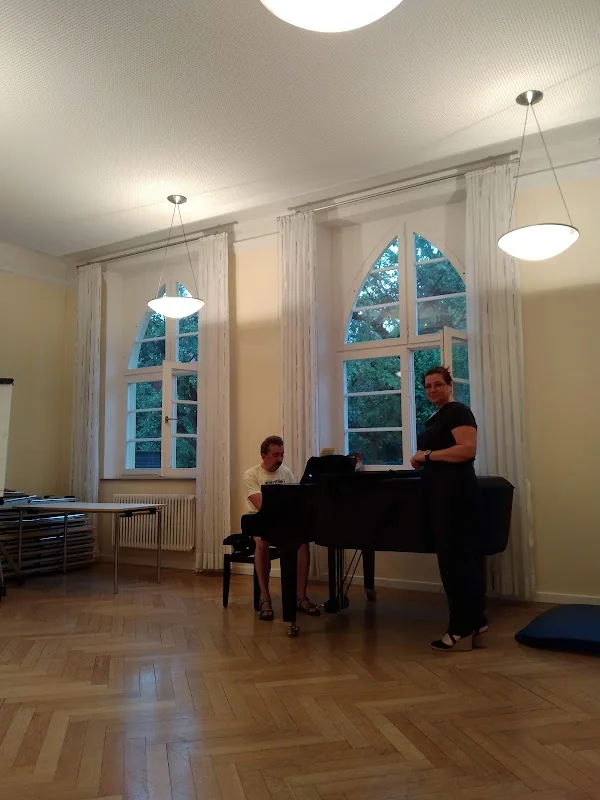
The rooms in the Löhehaus are very well adapted to this type of use. In the official information from the Family Education Center, the ground floor is described as having a light-flooded hall where musical offerings, confirmation classes, gymnastics and yoga courses, lectures, and seminars take place. Right next to it, there is a seminar room and a kitchen belonging to the hall. This is practical for users because events can not only take place side by side but also complement each other meaningfully in content. For example, a lecture can be combined with a subsequent discussion in the seminar room while a movement or music course takes place in the hall. The kitchen, in turn, opens up another area of topics that is particularly important for cooking courses, nutritional education, and practical family education. In the historical descriptions of the Family Education Center, the teaching kitchen in the Löhehaus is even explicitly mentioned as a place for a well-known course offering in the city. So, those searching for Löhehaus teaching kitchen or Löhehaus hall are looking for exactly this mix of practicality and pedagogical function. The house is not a neutral multipurpose room but is deliberately organized so that learning, cooking, moving, speaking, and meeting can be interconnected. ([fbs.bayreuth.org](https://www.fbs.bayreuth.org/infos/ueber-uns/))
Among the special qualities of the rooms is also the connection of tradition and adaptation. The Bavarian Chamber of Architects describes a historical partition wall between the large and small hall as part of the general renovation, thus referring to a structural feature that was consciously preserved and newly interpreted. This shows: The space is not only functional but carries history within it. The information from the Family Education Center also mentions an adjacent seminar room, a kitchen for the hall, and further uses such as language courses with childcare. This is complemented by a practical look at the other areas of the house: On the first floor, there has been and still is a well-equipped teaching kitchen, a dining room, a balcony terrace, and a large room for sewing and tailoring courses with several machines. Historically, there was also a pottery studio with kilns and a workshop in the basement, which had to be closed in 2022 for fire safety reasons. This makes it clear that the Löhehaus is much more than just a hall. It is a structured learning house with several functional levels where educational offerings, practical courses, and social meeting points can be organized very precisely. ([fbs.bayreuth.org](https://www.fbs.bayreuth.org/infos/ueber-uns/))
History, Naming, and General Renovation
The history of the Löhehaus is closely linked to its naming and its later renovation. The house was named after Pastor Wilhelm Löhe, who lived from 1808 to 1872 and played a significant role in the evangelical diaconate. The Family Education Center points out that the building is owned by the Evangelical Gesamtkirchengemeinde Bayreuth and that the Löhehaus, like the Storchenhaus, belongs to a church-shaped building complex that is deliberately used for educational and community purposes. Particularly important is the turning point of the years 2011 and 2012: According to the Family Education Center, the general renovation began at that time, and the Bavarian Chamber of Architects documents its completion in December 2012. During this period, the building was not simply cosmetically repaired but fundamentally renewed. The Chamber of Architects describes the project as the renovation of a single monument with a newly designed barrier-free access situation. This is particularly relevant for search queries like Löhehaus renovation or Löhehaus history, because it concerns a house that has not only been used but has been consciously preserved and further developed. The result is a place that retains its historical identity while simultaneously allowing for modern, open use. ([fbs.bayreuth.org](https://www.fbs.bayreuth.org/infos/ueber-uns/))
Architecturally, this mixture of existing structure and reorganization is also evident. The Bavarian Chamber of Architects names BECHER & PARTNER as the interior design and refers to a historically grown structure with main access, partition wall in the hall, and monument preservation integration. This is important for the perception of the building because it explains why the house does not appear like a new building: It has been modernized in a way that takes the existing building into account. For everyday use, this is an advantage because rooms, paths, and accesses are now clearer and more comfortable than before the renovation. At the same time, the character of an older house is preserved, which gives the building a special atmosphere. The Family Education Center describes a popular meeting point for very different groups after the renovation. This is precisely the strength of the Löhehaus: It is not a museum monument but a lively place whose historical substance is actively used. This combination of monument, educational site, and meeting house makes the house unique in Bayreuth and explains why it repeatedly appears as a stable reference point in local searches. ([fbs.bayreuth.org](https://www.fbs.bayreuth.org/infos/ueber-uns/))
Location in Bayreuth, Access, and Parking
For practical use, the location of the Löhehaus is a great advantage. The house is located at Bismarckstraße 3 in Bayreuth and is described by the city itself as a centrally located institution. So, whether attending a course, a counseling session, or an event, one will find the house not on the outskirts of the city but in a well-accessible location. This is particularly important for families, older people, and anyone who regularly comes to appointments. The city of Bayreuth mentions over 6,000 public and private parking spaces within 500 meters around the city center. Thus, the parking situation in the center is comparatively well organized despite the urban location. Additionally, Bayreuth offers the option of mobile parking via an app, which simplifies the practical process for drivers. For search queries like Löhehaus access or Löhehaus parking, one thing is particularly relevant: The house is centrally located, and there is a wide selection of parking options in the immediate urban environment. This does not solve every detail of individual access but answers the most important question quite reliably: Visiting the Löhehaus is generally well-planned in Bayreuth. ([byak.de](https://www.byak.de/planen-und-bauen/projekt/generalsanierung-loehehaus-bayreuth.html))
Even without a large parking facility directly at the building, the location in the city center is a practical advantage because the house can be combined with many other errands. This could be an appointment in the city center, a visit to other social institutions, or simply attending a course. Especially for regular offerings, a central location is often more important than a huge parking lot right at the door, as it saves trips and makes participation easier for different target groups. The city of Bayreuth emphasizes that parking garages, underground garages, parking spaces, and street-side parking spaces are available in the city center. Additionally, there is the option to pay fees digitally. For the Löhehaus, this means in practice: It benefits from the urban infrastructure without needing an isolated special location. Those visiting the house are moving within the developed urban area and can easily combine the route with public or private offerings around. From an SEO perspective, this information is important because people searching for a location are not only looking for content but also for accessibility, practicality, and orientation value. The Löhehaus clearly meets this expectation with its central location. ([bayreuth.de](https://www.bayreuth.de/rathaus-buergerservice/leben-in-bayreuth/senioren/mehrgenerationenhaus/))
Accessibility, Current Use, and Suitable Target Groups
Another central point is accessibility. The Bavarian Chamber of Architects explicitly describes the renovation of the Löhehaus as a reorganization with a barrier-free access situation. This is not only architecturally interesting but crucial for the everyday lives of many users. A house that hosts courses, meeting points, lectures, and family offerings must be open to as many people as possible. That is why the renovated access situation is a strong quality feature. The Family Education Center also reports that after the renovation, the house is used by many groups, circles, and choirs, and that about 350 people come together there weekly. This indicates that the Löhehaus does not merely exist as an event address but lives on a weekly basis. Those coming here find no anonymous shell but a house with recurring appointments, established groups, and a clear social function. For people searching for Löhehaus family offerings, Löhehaus seminar room, or Löhehaus barrier-free, this is very important information: The place is designed for participation and regularity. ([fbs.bayreuth.org](https://www.fbs.bayreuth.org/infos/ueber-uns/))
In terms of content, the house is aimed at very diverse target groups. The city of Bayreuth mentions, among other things, parent-child courses, meeting points for single parents, language courses for mothers, intergenerational offers, gymnastics and relaxation, creative courses, tutoring for children with a migration background, and service offerings for people of all ages. This aligns with the historical information from the Family Education Center, which refers to sewing, cooking, pottery, and mini-club courses. From this information, it becomes clear: The Löhehaus is not a house for a single scene but an open place for families, couples, single parents, grandparents, newcomers, volunteers, and people seeking community. This is why it appears in searches in so many different variants. Some search for the place itself, others for programs, yet others for rooms or practical matters like parking and access. The appropriate answer to all these search patterns is: The Löhehaus is a lively educational and meeting house in Bayreuth with church affiliation, modern use, and a clear orientation towards people who want to learn, exchange, and be active together. ([fbs.bayreuth.org](https://www.fbs.bayreuth.org/infos/ueber-uns/))
Sources:
Mehr anzeigenWeniger anzeigen
Löhehaus | Courses, Hall & Teaching Kitchen
The Löhehaus in Bayreuth is a place that not only has an address but also a clear purpose: It serves as an educational site, meeting point, and space for encounters. Those looking for Löhehaus Bayreuth are usually not searching for a traditional event venue with ticket logic, but rather a vibrant place for courses, seminars, family offerings, discussions, and practical education. This is exactly what the building at Bismarckstraße 3 stands for. It is part of the Evangelical Family Education Center plus Multi-Generational House Bayreuth and is thus closely connected with offerings for families, parents, children, seniors, and people in various life situations. The house is also interesting as a monument and as a renovated existing building because it combines historical substance with a clearly modern use. From the perspective of search intent, the Löhehaus is therefore a location of high relevance for terms like courses, hall, teaching kitchen, seminar room, access, parking, and barrier-free access. These themes shape the profile of the house and make it a firmly anchored place of learning and togetherness in Bayreuth. ([fbs.bayreuth.org](https://www.fbs.bayreuth.org/infos/ueber-uns/))
Courses, Seminars, and Intergenerational Offers
The content strength of the Löhehaus lies in its versatility. The Family Education Center describes on its own website that traditionally, sewing and cooking courses, pottery and ceramics courses, as well as mini-club courses for parents and children took place at the Löhehaus. This historical use is important because it shows what the building became known for over many years: practical, everyday, and simultaneously qualified educational offerings. Today, the spectrum extends significantly further. The Multi-Generational House in Bayreuth lists, among other things, lectures and seminars, childbirth preparation and follow-up, family activities, flea markets, parent-child courses, intergenerational offers, creative courses, gymnastics and relaxation, meeting points for single parents, tutoring for children with a migration background, as well as language courses for mothers. This means that the Löhehaus is not reduced to a single target group, but is consciously positioned as an open house for different life phases and needs. For visitors, this means: It is not just about programming, but about concrete support, exchange, and everyday practice. This makes the place feel less like an anonymous space and more like a social hub where education, family, and community intersect. ([fbs.bayreuth.org](https://www.fbs.bayreuth.org/infos/ueber-uns/))
Particularly relevant is the Löhehaus also because of its intergenerational character. The city of Bayreuth describes the Multi-Generational House as centrally located and as an institution that promotes intergenerational togetherness through courses, meeting points, counseling, open groups, and projects. This fits perfectly with the profile of the Löhehaus: Here, family education, counseling, open meeting points, and practical learning formats come together. The Family Education Center also reports that after the renovation, the house is used by many groups, circles, and choirs and can reach about 350 people weekly. This is not a random number but a clear signal that the house is indeed heavily frequented in everyday life. So, those searching for Löhehaus Bayreuth program, Löhehaus events, or Löhehaus family offerings actually encounter a house that does not consist of a single flagship event but of many small, continuous offerings. This continuity is important for a Multi-Generational House: regular groups, reliable courses, and an environment where people can meet not just for one appointment but repeatedly. ([fbs.bayreuth.org](https://www.fbs.bayreuth.org/infos/ueber-uns/))
Teaching Kitchen, Hall, and Other Rooms in the Löhehaus
The rooms in the Löhehaus are very well adapted to this type of use. In the official information from the Family Education Center, the ground floor is described as having a light-flooded hall where musical offerings, confirmation classes, gymnastics and yoga courses, lectures, and seminars take place. Right next to it, there is a seminar room and a kitchen belonging to the hall. This is practical for users because events can not only take place side by side but also complement each other meaningfully in content. For example, a lecture can be combined with a subsequent discussion in the seminar room while a movement or music course takes place in the hall. The kitchen, in turn, opens up another area of topics that is particularly important for cooking courses, nutritional education, and practical family education. In the historical descriptions of the Family Education Center, the teaching kitchen in the Löhehaus is even explicitly mentioned as a place for a well-known course offering in the city. So, those searching for Löhehaus teaching kitchen or Löhehaus hall are looking for exactly this mix of practicality and pedagogical function. The house is not a neutral multipurpose room but is deliberately organized so that learning, cooking, moving, speaking, and meeting can be interconnected. ([fbs.bayreuth.org](https://www.fbs.bayreuth.org/infos/ueber-uns/))
Among the special qualities of the rooms is also the connection of tradition and adaptation. The Bavarian Chamber of Architects describes a historical partition wall between the large and small hall as part of the general renovation, thus referring to a structural feature that was consciously preserved and newly interpreted. This shows: The space is not only functional but carries history within it. The information from the Family Education Center also mentions an adjacent seminar room, a kitchen for the hall, and further uses such as language courses with childcare. This is complemented by a practical look at the other areas of the house: On the first floor, there has been and still is a well-equipped teaching kitchen, a dining room, a balcony terrace, and a large room for sewing and tailoring courses with several machines. Historically, there was also a pottery studio with kilns and a workshop in the basement, which had to be closed in 2022 for fire safety reasons. This makes it clear that the Löhehaus is much more than just a hall. It is a structured learning house with several functional levels where educational offerings, practical courses, and social meeting points can be organized very precisely. ([fbs.bayreuth.org](https://www.fbs.bayreuth.org/infos/ueber-uns/))
History, Naming, and General Renovation
The history of the Löhehaus is closely linked to its naming and its later renovation. The house was named after Pastor Wilhelm Löhe, who lived from 1808 to 1872 and played a significant role in the evangelical diaconate. The Family Education Center points out that the building is owned by the Evangelical Gesamtkirchengemeinde Bayreuth and that the Löhehaus, like the Storchenhaus, belongs to a church-shaped building complex that is deliberately used for educational and community purposes. Particularly important is the turning point of the years 2011 and 2012: According to the Family Education Center, the general renovation began at that time, and the Bavarian Chamber of Architects documents its completion in December 2012. During this period, the building was not simply cosmetically repaired but fundamentally renewed. The Chamber of Architects describes the project as the renovation of a single monument with a newly designed barrier-free access situation. This is particularly relevant for search queries like Löhehaus renovation or Löhehaus history, because it concerns a house that has not only been used but has been consciously preserved and further developed. The result is a place that retains its historical identity while simultaneously allowing for modern, open use. ([fbs.bayreuth.org](https://www.fbs.bayreuth.org/infos/ueber-uns/))
Architecturally, this mixture of existing structure and reorganization is also evident. The Bavarian Chamber of Architects names BECHER & PARTNER as the interior design and refers to a historically grown structure with main access, partition wall in the hall, and monument preservation integration. This is important for the perception of the building because it explains why the house does not appear like a new building: It has been modernized in a way that takes the existing building into account. For everyday use, this is an advantage because rooms, paths, and accesses are now clearer and more comfortable than before the renovation. At the same time, the character of an older house is preserved, which gives the building a special atmosphere. The Family Education Center describes a popular meeting point for very different groups after the renovation. This is precisely the strength of the Löhehaus: It is not a museum monument but a lively place whose historical substance is actively used. This combination of monument, educational site, and meeting house makes the house unique in Bayreuth and explains why it repeatedly appears as a stable reference point in local searches. ([fbs.bayreuth.org](https://www.fbs.bayreuth.org/infos/ueber-uns/))
Location in Bayreuth, Access, and Parking
For practical use, the location of the Löhehaus is a great advantage. The house is located at Bismarckstraße 3 in Bayreuth and is described by the city itself as a centrally located institution. So, whether attending a course, a counseling session, or an event, one will find the house not on the outskirts of the city but in a well-accessible location. This is particularly important for families, older people, and anyone who regularly comes to appointments. The city of Bayreuth mentions over 6,000 public and private parking spaces within 500 meters around the city center. Thus, the parking situation in the center is comparatively well organized despite the urban location. Additionally, Bayreuth offers the option of mobile parking via an app, which simplifies the practical process for drivers. For search queries like Löhehaus access or Löhehaus parking, one thing is particularly relevant: The house is centrally located, and there is a wide selection of parking options in the immediate urban environment. This does not solve every detail of individual access but answers the most important question quite reliably: Visiting the Löhehaus is generally well-planned in Bayreuth. ([byak.de](https://www.byak.de/planen-und-bauen/projekt/generalsanierung-loehehaus-bayreuth.html))
Even without a large parking facility directly at the building, the location in the city center is a practical advantage because the house can be combined with many other errands. This could be an appointment in the city center, a visit to other social institutions, or simply attending a course. Especially for regular offerings, a central location is often more important than a huge parking lot right at the door, as it saves trips and makes participation easier for different target groups. The city of Bayreuth emphasizes that parking garages, underground garages, parking spaces, and street-side parking spaces are available in the city center. Additionally, there is the option to pay fees digitally. For the Löhehaus, this means in practice: It benefits from the urban infrastructure without needing an isolated special location. Those visiting the house are moving within the developed urban area and can easily combine the route with public or private offerings around. From an SEO perspective, this information is important because people searching for a location are not only looking for content but also for accessibility, practicality, and orientation value. The Löhehaus clearly meets this expectation with its central location. ([bayreuth.de](https://www.bayreuth.de/rathaus-buergerservice/leben-in-bayreuth/senioren/mehrgenerationenhaus/))
Accessibility, Current Use, and Suitable Target Groups
Another central point is accessibility. The Bavarian Chamber of Architects explicitly describes the renovation of the Löhehaus as a reorganization with a barrier-free access situation. This is not only architecturally interesting but crucial for the everyday lives of many users. A house that hosts courses, meeting points, lectures, and family offerings must be open to as many people as possible. That is why the renovated access situation is a strong quality feature. The Family Education Center also reports that after the renovation, the house is used by many groups, circles, and choirs, and that about 350 people come together there weekly. This indicates that the Löhehaus does not merely exist as an event address but lives on a weekly basis. Those coming here find no anonymous shell but a house with recurring appointments, established groups, and a clear social function. For people searching for Löhehaus family offerings, Löhehaus seminar room, or Löhehaus barrier-free, this is very important information: The place is designed for participation and regularity. ([fbs.bayreuth.org](https://www.fbs.bayreuth.org/infos/ueber-uns/))
In terms of content, the house is aimed at very diverse target groups. The city of Bayreuth mentions, among other things, parent-child courses, meeting points for single parents, language courses for mothers, intergenerational offers, gymnastics and relaxation, creative courses, tutoring for children with a migration background, and service offerings for people of all ages. This aligns with the historical information from the Family Education Center, which refers to sewing, cooking, pottery, and mini-club courses. From this information, it becomes clear: The Löhehaus is not a house for a single scene but an open place for families, couples, single parents, grandparents, newcomers, volunteers, and people seeking community. This is why it appears in searches in so many different variants. Some search for the place itself, others for programs, yet others for rooms or practical matters like parking and access. The appropriate answer to all these search patterns is: The Löhehaus is a lively educational and meeting house in Bayreuth with church affiliation, modern use, and a clear orientation towards people who want to learn, exchange, and be active together. ([fbs.bayreuth.org](https://www.fbs.bayreuth.org/infos/ueber-uns/))
Sources:
Löhehaus | Courses, Hall & Teaching Kitchen
The Löhehaus in Bayreuth is a place that not only has an address but also a clear purpose: It serves as an educational site, meeting point, and space for encounters. Those looking for Löhehaus Bayreuth are usually not searching for a traditional event venue with ticket logic, but rather a vibrant place for courses, seminars, family offerings, discussions, and practical education. This is exactly what the building at Bismarckstraße 3 stands for. It is part of the Evangelical Family Education Center plus Multi-Generational House Bayreuth and is thus closely connected with offerings for families, parents, children, seniors, and people in various life situations. The house is also interesting as a monument and as a renovated existing building because it combines historical substance with a clearly modern use. From the perspective of search intent, the Löhehaus is therefore a location of high relevance for terms like courses, hall, teaching kitchen, seminar room, access, parking, and barrier-free access. These themes shape the profile of the house and make it a firmly anchored place of learning and togetherness in Bayreuth. ([fbs.bayreuth.org](https://www.fbs.bayreuth.org/infos/ueber-uns/))
Courses, Seminars, and Intergenerational Offers
The content strength of the Löhehaus lies in its versatility. The Family Education Center describes on its own website that traditionally, sewing and cooking courses, pottery and ceramics courses, as well as mini-club courses for parents and children took place at the Löhehaus. This historical use is important because it shows what the building became known for over many years: practical, everyday, and simultaneously qualified educational offerings. Today, the spectrum extends significantly further. The Multi-Generational House in Bayreuth lists, among other things, lectures and seminars, childbirth preparation and follow-up, family activities, flea markets, parent-child courses, intergenerational offers, creative courses, gymnastics and relaxation, meeting points for single parents, tutoring for children with a migration background, as well as language courses for mothers. This means that the Löhehaus is not reduced to a single target group, but is consciously positioned as an open house for different life phases and needs. For visitors, this means: It is not just about programming, but about concrete support, exchange, and everyday practice. This makes the place feel less like an anonymous space and more like a social hub where education, family, and community intersect. ([fbs.bayreuth.org](https://www.fbs.bayreuth.org/infos/ueber-uns/))
Particularly relevant is the Löhehaus also because of its intergenerational character. The city of Bayreuth describes the Multi-Generational House as centrally located and as an institution that promotes intergenerational togetherness through courses, meeting points, counseling, open groups, and projects. This fits perfectly with the profile of the Löhehaus: Here, family education, counseling, open meeting points, and practical learning formats come together. The Family Education Center also reports that after the renovation, the house is used by many groups, circles, and choirs and can reach about 350 people weekly. This is not a random number but a clear signal that the house is indeed heavily frequented in everyday life. So, those searching for Löhehaus Bayreuth program, Löhehaus events, or Löhehaus family offerings actually encounter a house that does not consist of a single flagship event but of many small, continuous offerings. This continuity is important for a Multi-Generational House: regular groups, reliable courses, and an environment where people can meet not just for one appointment but repeatedly. ([fbs.bayreuth.org](https://www.fbs.bayreuth.org/infos/ueber-uns/))
Teaching Kitchen, Hall, and Other Rooms in the Löhehaus
The rooms in the Löhehaus are very well adapted to this type of use. In the official information from the Family Education Center, the ground floor is described as having a light-flooded hall where musical offerings, confirmation classes, gymnastics and yoga courses, lectures, and seminars take place. Right next to it, there is a seminar room and a kitchen belonging to the hall. This is practical for users because events can not only take place side by side but also complement each other meaningfully in content. For example, a lecture can be combined with a subsequent discussion in the seminar room while a movement or music course takes place in the hall. The kitchen, in turn, opens up another area of topics that is particularly important for cooking courses, nutritional education, and practical family education. In the historical descriptions of the Family Education Center, the teaching kitchen in the Löhehaus is even explicitly mentioned as a place for a well-known course offering in the city. So, those searching for Löhehaus teaching kitchen or Löhehaus hall are looking for exactly this mix of practicality and pedagogical function. The house is not a neutral multipurpose room but is deliberately organized so that learning, cooking, moving, speaking, and meeting can be interconnected. ([fbs.bayreuth.org](https://www.fbs.bayreuth.org/infos/ueber-uns/))
Among the special qualities of the rooms is also the connection of tradition and adaptation. The Bavarian Chamber of Architects describes a historical partition wall between the large and small hall as part of the general renovation, thus referring to a structural feature that was consciously preserved and newly interpreted. This shows: The space is not only functional but carries history within it. The information from the Family Education Center also mentions an adjacent seminar room, a kitchen for the hall, and further uses such as language courses with childcare. This is complemented by a practical look at the other areas of the house: On the first floor, there has been and still is a well-equipped teaching kitchen, a dining room, a balcony terrace, and a large room for sewing and tailoring courses with several machines. Historically, there was also a pottery studio with kilns and a workshop in the basement, which had to be closed in 2022 for fire safety reasons. This makes it clear that the Löhehaus is much more than just a hall. It is a structured learning house with several functional levels where educational offerings, practical courses, and social meeting points can be organized very precisely. ([fbs.bayreuth.org](https://www.fbs.bayreuth.org/infos/ueber-uns/))
History, Naming, and General Renovation
The history of the Löhehaus is closely linked to its naming and its later renovation. The house was named after Pastor Wilhelm Löhe, who lived from 1808 to 1872 and played a significant role in the evangelical diaconate. The Family Education Center points out that the building is owned by the Evangelical Gesamtkirchengemeinde Bayreuth and that the Löhehaus, like the Storchenhaus, belongs to a church-shaped building complex that is deliberately used for educational and community purposes. Particularly important is the turning point of the years 2011 and 2012: According to the Family Education Center, the general renovation began at that time, and the Bavarian Chamber of Architects documents its completion in December 2012. During this period, the building was not simply cosmetically repaired but fundamentally renewed. The Chamber of Architects describes the project as the renovation of a single monument with a newly designed barrier-free access situation. This is particularly relevant for search queries like Löhehaus renovation or Löhehaus history, because it concerns a house that has not only been used but has been consciously preserved and further developed. The result is a place that retains its historical identity while simultaneously allowing for modern, open use. ([fbs.bayreuth.org](https://www.fbs.bayreuth.org/infos/ueber-uns/))
Architecturally, this mixture of existing structure and reorganization is also evident. The Bavarian Chamber of Architects names BECHER & PARTNER as the interior design and refers to a historically grown structure with main access, partition wall in the hall, and monument preservation integration. This is important for the perception of the building because it explains why the house does not appear like a new building: It has been modernized in a way that takes the existing building into account. For everyday use, this is an advantage because rooms, paths, and accesses are now clearer and more comfortable than before the renovation. At the same time, the character of an older house is preserved, which gives the building a special atmosphere. The Family Education Center describes a popular meeting point for very different groups after the renovation. This is precisely the strength of the Löhehaus: It is not a museum monument but a lively place whose historical substance is actively used. This combination of monument, educational site, and meeting house makes the house unique in Bayreuth and explains why it repeatedly appears as a stable reference point in local searches. ([fbs.bayreuth.org](https://www.fbs.bayreuth.org/infos/ueber-uns/))
Location in Bayreuth, Access, and Parking
For practical use, the location of the Löhehaus is a great advantage. The house is located at Bismarckstraße 3 in Bayreuth and is described by the city itself as a centrally located institution. So, whether attending a course, a counseling session, or an event, one will find the house not on the outskirts of the city but in a well-accessible location. This is particularly important for families, older people, and anyone who regularly comes to appointments. The city of Bayreuth mentions over 6,000 public and private parking spaces within 500 meters around the city center. Thus, the parking situation in the center is comparatively well organized despite the urban location. Additionally, Bayreuth offers the option of mobile parking via an app, which simplifies the practical process for drivers. For search queries like Löhehaus access or Löhehaus parking, one thing is particularly relevant: The house is centrally located, and there is a wide selection of parking options in the immediate urban environment. This does not solve every detail of individual access but answers the most important question quite reliably: Visiting the Löhehaus is generally well-planned in Bayreuth. ([byak.de](https://www.byak.de/planen-und-bauen/projekt/generalsanierung-loehehaus-bayreuth.html))
Even without a large parking facility directly at the building, the location in the city center is a practical advantage because the house can be combined with many other errands. This could be an appointment in the city center, a visit to other social institutions, or simply attending a course. Especially for regular offerings, a central location is often more important than a huge parking lot right at the door, as it saves trips and makes participation easier for different target groups. The city of Bayreuth emphasizes that parking garages, underground garages, parking spaces, and street-side parking spaces are available in the city center. Additionally, there is the option to pay fees digitally. For the Löhehaus, this means in practice: It benefits from the urban infrastructure without needing an isolated special location. Those visiting the house are moving within the developed urban area and can easily combine the route with public or private offerings around. From an SEO perspective, this information is important because people searching for a location are not only looking for content but also for accessibility, practicality, and orientation value. The Löhehaus clearly meets this expectation with its central location. ([bayreuth.de](https://www.bayreuth.de/rathaus-buergerservice/leben-in-bayreuth/senioren/mehrgenerationenhaus/))
Accessibility, Current Use, and Suitable Target Groups
Another central point is accessibility. The Bavarian Chamber of Architects explicitly describes the renovation of the Löhehaus as a reorganization with a barrier-free access situation. This is not only architecturally interesting but crucial for the everyday lives of many users. A house that hosts courses, meeting points, lectures, and family offerings must be open to as many people as possible. That is why the renovated access situation is a strong quality feature. The Family Education Center also reports that after the renovation, the house is used by many groups, circles, and choirs, and that about 350 people come together there weekly. This indicates that the Löhehaus does not merely exist as an event address but lives on a weekly basis. Those coming here find no anonymous shell but a house with recurring appointments, established groups, and a clear social function. For people searching for Löhehaus family offerings, Löhehaus seminar room, or Löhehaus barrier-free, this is very important information: The place is designed for participation and regularity. ([fbs.bayreuth.org](https://www.fbs.bayreuth.org/infos/ueber-uns/))
In terms of content, the house is aimed at very diverse target groups. The city of Bayreuth mentions, among other things, parent-child courses, meeting points for single parents, language courses for mothers, intergenerational offers, gymnastics and relaxation, creative courses, tutoring for children with a migration background, and service offerings for people of all ages. This aligns with the historical information from the Family Education Center, which refers to sewing, cooking, pottery, and mini-club courses. From this information, it becomes clear: The Löhehaus is not a house for a single scene but an open place for families, couples, single parents, grandparents, newcomers, volunteers, and people seeking community. This is why it appears in searches in so many different variants. Some search for the place itself, others for programs, yet others for rooms or practical matters like parking and access. The appropriate answer to all these search patterns is: The Löhehaus is a lively educational and meeting house in Bayreuth with church affiliation, modern use, and a clear orientation towards people who want to learn, exchange, and be active together. ([fbs.bayreuth.org](https://www.fbs.bayreuth.org/infos/ueber-uns/))
Sources:
Frequently Asked Questions
Reviews
No reviews found