
Bayreuth
Am Schießhaus, 95445 Bayreuth, Deutschland
Parking Festspielhaus | Parking & Access Bayreuth
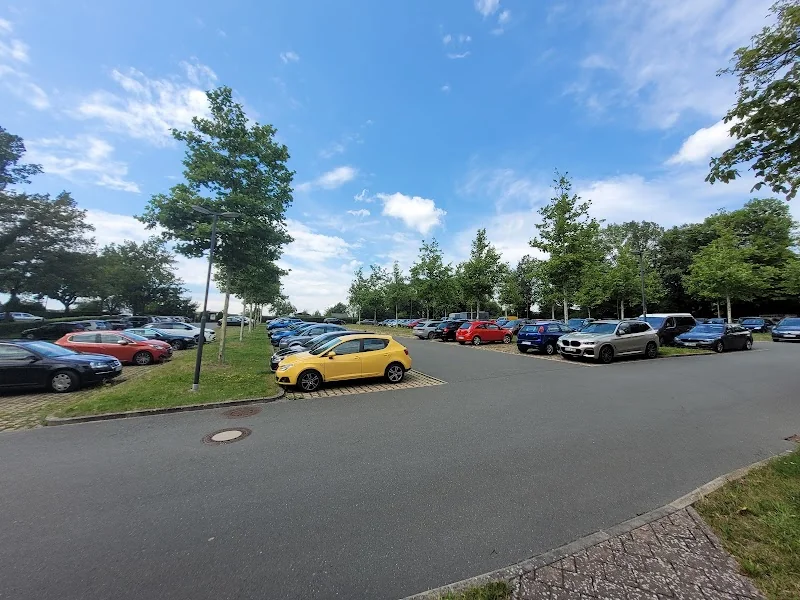
The parking lot Festspielhaus in Bayreuth is the first concrete contact for many visitors with the Festspielhügel, before the view turns to the famous Bayreuth Festspielhaus. Those traveling to performances, tours, or summer events on the hill need a clear idea of where to park, which access routes apply, and how much time to plan for the journey up. The official visitor information of the Bayreuth Festival refers to large public parking areas above the house, a flat parking fee during the general rehearsals and festival period, and a traffic situation that is consciously regulated due to high visitor numbers. For this reason, this place is more than just a simple parking lot: it is part of a precisely organized cultural experience that millions of music lovers associate with Bayreuth. At the same time, the Festspielhaus itself stands for architecture, sound, and history of world-class. ([bayreuther-festspiele.de](https://www.bayreuther-festspiele.de/karten-service/haeufig-gestellte-fragen/?utm_source=openai))
Visitors interested in the parking lot Festspielhaus Bayreuth mainly have three questions: How do I get there, where do I park my car, and what do I need to consider on site? The official pages provide surprisingly clear answers. They mention the arrival via the A9 motorway, describe the access via Tristanstraße, Tannhäuserstraße, and An der Bürgerreuth, and warn of the closures of the Festspielauffahrt around the performances. Practical points include the current parking fee of 10 euros per day, charging stations for electric vehicles in parking lot B, and designated parking spaces for people with disabilities. Those who know this information in advance can plan their visit more relaxed and avoid stress right before entry. Especially during the festival season, it is worthwhile to arrive early enough and check the route in advance. ([bayreuther-festspiele.de](https://www.bayreuther-festspiele.de/karten-service/anreise-parksituation/))
Parking at the Festspielhaus Bayreuth: Visitor Parking, Fees, and Orientation
Parking at the Festspielhaus Bayreuth follows a clear system tailored to the visitor flows during the festival season. The festival speaks of large public parking areas above the Festspielhaus and specifically mentions the visitor parking lots B and C. During the general rehearsals and festival period, a flat fee of 10 euros per day is currently charged for these areas. It is especially important that the parking lot does not function like any downtown parking space, but is part of a controlled visitor concept. Those who arrive late will encounter more traffic, more searching, and less calm. In contrast, those who arrive with a bit of time buffer benefit from better orientation, shorter walking distances, and an overall more pleasant start to the evening. The official information suggests viewing the parking lot Festspielhaus not in isolation but as the first building block of the entire event visit. ([bayreuther-festspiele.de](https://www.bayreuther-festspiele.de/karten-service/anreise-parksituation/))
It is particularly relevant that the festival explicitly points out high traffic volumes around the Festspielhügel during arrival. Therefore, they recommend arriving in good time before the performance begins and having the parking fee ready if possible. This recommendation is not a minor note, but a practical key for a smooth process. Those searching for the parking lot Festspielhaus Bayreuth should also note that the main access routes do not lead through the hill but via the designated access roads. This is important for visitors who may be coming to Bayreuth for the first time or are not yet familiar with the historical setting and the special location of the house. Thus, the parking lot is not just a parking space but a piece of finely tuned visitor logistics. ([bayreuther-festspiele.de](https://www.bayreuther-festspiele.de/karten-service/anreise-parksituation/))
The search terms related to the parking lot also show what visitors should pay attention to: parking, access, parking fees, visitor parking, and specific orientation at the Festspielhügel. These topics dominate the official visitor information and explain why the subject is in such high demand. The hill is a concentrated event space during the season, where several needs meet simultaneously: punctual arrival, orderly parking areas, short distances, clear signage, and a calm arrival before a performance that is often experienced as a special event. Therefore, those researching the parking lot Festspielhaus Bayreuth are actually looking for more than just a parking space. They seek a reliable route into an evening that should already start well with parking. ([bayreuther-festspiele.de](https://www.bayreuther-festspiele.de/karten-service/anreise-parksituation/))
Access to the Festspielhaus Bayreuth: Access, Closures, and Traffic Times
The official access to the Festspielhaus Bayreuth is relatively well described. Bayreuth is located directly on the A9 Munich-Nuremberg-Bayreuth-Berlin. From the north, the visitor information recommends the exit Bayreuth-Nord, and from the south, the exit Bayreuth-Süd. After that, follow the signs towards the city center or directly to the Festspielhaus. For drivers arriving via the A9, it is important to note that the Festspielauffahrt via Siegfried-Wagner-Allee and the street Festspielhügel will be completely closed to traffic around the performance times. Access to the parking lots is instead via Tristanstraße, Tannhäuserstraße, and An der Bürgerreuth. This regulation shows how strongly the traffic management at the Festspielhügel is focused on safe and orderly visitor guidance. ([bayreuther-festspiele.de](https://www.bayreuther-festspiele.de/karten-service/anreise-parksituation/))
The festival recommends visitors arriving from the A9 Bayreuth-Nord to turn at Riedinger Straße or at Grünen Baum and follow the directions to the Festspielhaus. This specific advice is particularly useful in practice as it shortens the often most difficult phase of arrival: getting into the right lane and finding the entrance to the visitor parking lots. At the same time, the official site makes it clear that high traffic volumes are to be expected around the Festspielhügel. Therefore, those heading to the parking lot Festspielhaus Bayreuth should not leave shortly before the performance begins but consciously build in a time buffer. This also leaves room for possible delays, for the walk from the car to the entrance, and for a calm arrival before the event. ([bayreuther-festspiele.de](https://www.bayreuther-festspiele.de/karten-service/anreise-parksituation/))
Additionally, the visitor information points out possible delays on the A9 towards Hof, Dresden, and Berlin and asks to consider potential traffic times in travel planning. This is a classic case where good preparation saves money and nerves, as those who plan too tightly experience unnecessary pressure right before a special opera performance. The right access is therefore not just a matter of navigation but also of daily planning. Those who heed the official signage, know the access routes, and take the traffic around the hill seriously arrive much more relaxed. For the parking lot Festspielhaus, the simple rule applies: better to start a little earlier than to spend the last minutes searching for a parking space and stressing. ([bayreuther-festspiele.de](https://www.bayreuther-festspiele.de/karten-service/haeufig-gestellte-fragen/))
Barrier-free Parking and E-Charging at the Parking Lot Festspielhaus
A significant advantage of the parking lot Festspielhaus Bayreuth is that the official visitor information not only mentions general parking spaces but also offers concrete solutions for special needs. For severely disabled individuals with an official disabled parking permit, separate, free parking spaces are designated. The festival refers to parking lot A for this, and in a special exception case, also to parking lot B. This shows that accessibility at the Festspielhügel is not a minor aspect but is explicitly considered. Those who rely on a short and safe path from the car to the house find here a clear structure instead of a vague recommendation. Especially during highly frequented performances, this is an important contribution to a more relaxed visit. ([bayreuther-festspiele.de](https://www.bayreuther-festspiele.de/karten-service/barrierefreiheit/))
There are also provisions for e-mobility. Parking lot B has three mobile alternating current charging stations with a total of six charging spaces for electric vehicles. The festival also mentions the access methods for charging: ad-hoc charging via QR code, roaming charging card, or app from a roaming provider. For many visitors, this is a practical detail as the charging time can be combined with the stay at the Festspielhaus. Thus, the parking lot becomes not just a stopping place but a functional part of the journey. Those traveling electrically can therefore combine their visit with realistic charging planning and do not have to search for separate infrastructure in the city area. Especially during cultural evenings of longer duration, this is a real added value. ([bayreuther-festspiele.de](https://www.bayreuther-festspiele.de/karten-service/anreise-parksituation/))
The accessibility of the house itself complements this parking concept. The official site mentions up to six wheelchair spaces in the parterre left and right, as well as companion seats with appropriate proof, up to 20 edge seats for visitors with limited mobility, barrier-free toilets, and an elevator for parts of the audience. Additionally, the Bavarian Red Cross can be contacted if needed. For visitors, this means: The parking lot should not be thought of in isolation from the building but as part of a continuous visitor chain from the parking space to the seat. This is why the category Festspielhaus Bayreuth barrier-free is an important search term and not just an additional note. Those who know the official infrastructure plan their visit more safely and comfortably. ([bayreuther-festspiele.de](https://www.bayreuther-festspiele.de/karten-service/barrierefreiheit/))
The Bayreuth Festspielhaus: History, Architecture, and Special Acoustics
The parking lot Festspielhaus gains its significance only when one understands what this house stands for. The Bayreuth Festspielhaus was built from 1872 to 1876, with the first groundbreaking on April 29, 1872, and the laying of the foundation stone on May 22, 1872. The official construction history names Otto Brückwald as the architect and notes that the first festival began with Rheingold in 1876. Richard Wagner did not want a pompous theater but a place for concentrated listening. This fundamental idea can still be felt today in the amphitheater-like structure, the dark wood of the hall, and the concealed orchestra pit. The official site describes that this construction creates a unique acoustics and attracts around 58,000 guests annually. Therefore, when arriving at the parking lot Festspielhaus, one does not simply enter an event center but the foyer of one of the most symbolically significant opera houses in the world. ([bayreuther-festspiele.de](https://www.bayreuther-festspiele.de/festspiele/festspielhaus/))
The technical data also show why the Festspielhaus is so special. The auditorium has 1,937 seats, the orchestra pit accommodates up to 110 musicians, the main stage measures 730 square meters, and the reverberation time is indicated as 1.5 seconds. These figures are not only interesting for professionals but also explain why Bayreuth exerts such a strong attraction as a cultural location. Additionally, there is a long history of structural adaptations, renovations, and expansions, for example, after World War II or in later renovation phases. The house has thus been modernized repeatedly without abandoning its idea. This connection of historical form and technical maintenance makes the place so attractive and explains why the surrounding parking areas are so heavily frequented during the season. ([bayreuther-festspiele.de](https://www.bayreuther-festspiele.de/festspiele/festspielhaus/))
Particularly formative is the mix of history and present. The Festspielhaus was damaged by a storm in 1939, no festivals took place from 1945 to 1950, and for the reopening in 1951, the building was in poor condition. This was followed by decades of renovations and renewals, including measures to improve infrastructure and accessibility. Today, the house is not only a monument but a vibrant performance venue that welcomes its visitors with a very special atmosphere. Therefore, when parking at the parking lot Festspielhaus Bayreuth, one stands at the beginning of a cultural ritual: arriving, orienting, walking up the hill, and only then entering the actual space of experience. This dramaturgy makes Bayreuth so distinctive. ([bayreuther-festspiele.de](https://www.bayreuther-festspiele.de/festspiele/festspielhaus/))
Festspielhügel 2026: Programs, Open Air, and Visitor Flows
In 2026, the Festspielhügel will be particularly in focus, as Bayreuth celebrates the 150th festival season and refers to an extensive program with Wagner productions, concerts, and special events. The official program page mentions, among other things, the Festspiel-Open-Air 2026. For visitors to the parking lot Festspielhaus, this is relevant because the hill will be lively not only due to the opera performances during these weeks but also through additional outdoor events. This means: more people, more movement, and an even greater need for clear traffic management. Therefore, those specifically heading to the parking lot should always keep the program situation in mind. Especially for events with free admission, visitor influx is harder to plan than for classical opera evenings. ([bayreuther-festspiele.de](https://www.bayreuther-festspiele.de/en/?utm_source=openai))
It is particularly interesting that the festival orchestra will perform on the hill in front of the Festspielhaus on July 24 and August 2, 2026, and parking on these days is free according to the official announcement. Additionally, there is the choir open-air on August 1, 2026, in the Festspielpark. This is important information for parking search as the situation can change significantly depending on the event. On normal performance days, the usual visitor regulations apply, while different procedures may apply on open-air days. Therefore, those preparing for the parking lot Festspielhaus Bayreuth should not only pay attention to the address but also to the specific event date. This way, a simple access becomes a smart plan that aligns with the official rules of the respective day. ([bayreuther-festspiele.de](https://www.bayreuther-festspiele.de/en/programme/programme/festspiel-open-air/?utm_source=openai))
The cultural context is particularly strong in 2026. The Bayreuth Festival refers to its international attention and that the location has been closely associated with Richard Wagner and his music since 1876. Because this anniversary year is so strongly perceived, the importance of the infrastructure around the Festspielhaus increases. The parking lot on the hill is therefore not only practical but part of the staging of the visit. Those who arrive on time experience not only a concert or an opera but also the special calm before the sound. For SEO purposes, this connection is important: If someone searches for parking Festspielhaus Bayreuth, there is often a desire for an uncomplicated, well-timed visit at the center of an extraordinary cultural event. ([bayreuther-festspiele.de](https://www.bayreuther-festspiele.de/en/?utm_source=openai))
Practical Tips for the Visit: Taxi, Train, Break, and Stress-Free Planning
In addition to the car, the official visitor information also mentions other travel options. Bayreuth is connected by train to the hub of Nuremberg, and there are also long-distance bus connections and a well-described public transport network. For guests who do not wish to use the parking lot Festspielhaus or whose arrival time is flexible, this can be a sensible alternative. Especially during the festival season, it is worthwhile to look at the entire daily schedule: If you know when the event starts, when the entry control begins, and how long the walk from the parking lot takes, the arrival can be planned much more relaxed. The festival also recommends arriving early enough and adhering to the official notices. This sounds simple, but in a highly frequented cultural space, it is the most important point at all. ([bayreuther-festspiele.de](https://www.bayreuther-festspiele.de/karten-service/haeufig-gestellte-fragen/?utm_source=openai))
There are also clear rules for taxis and mobility services. The festival describes a taxi stand in front of the Festspielhaus and a separate entrance for taxi and BRK mobility services via Siegfried-Wagner-Allee. This shows that the hill is organized not only for private cars but also for visitors who rely on other means. For families, older guests, or people with limited mobility, this is an important component of planning. Those visiting the Festspielhaus can also expect that the processes are geared towards punctuality and calm. Therefore, it is advisable not to leave the arrival to the last moment but to see parking, the path, and entry as a connected chain. ([bayreuther-festspiele.de](https://www.bayreuther-festspiele.de/karten-service/anreise-parksituation/))
Finally, it is worth taking a look at the entire visitor experience. The festival refers in its FAQs to the fact that there is no fixed dress code, that temperatures in the house can rise from parterre to gallery, and that gastronomic offerings are available on the premises during the breaks. For many visitors, this mix of organization and atmosphere is part of the charm of the evening. Therefore, the parking lot Festspielhaus Bayreuth is not an isolated topic but the first step into a very precisely timed experience. Those who plan early, know the access routes, keep an eye on the parking fee, and utilize the official information on trains, taxis, and accessibility start the festival evening much more relaxed. This is what good visit planning is all about. ([bayreuther-festspiele.de](https://www.bayreuther-festspiele.de/karten-service/haeufig-gestellte-fragen/))
Sources:
Mehr anzeigenWeniger anzeigen
Parking Festspielhaus | Parking & Access Bayreuth
The parking lot Festspielhaus in Bayreuth is the first concrete contact for many visitors with the Festspielhügel, before the view turns to the famous Bayreuth Festspielhaus. Those traveling to performances, tours, or summer events on the hill need a clear idea of where to park, which access routes apply, and how much time to plan for the journey up. The official visitor information of the Bayreuth Festival refers to large public parking areas above the house, a flat parking fee during the general rehearsals and festival period, and a traffic situation that is consciously regulated due to high visitor numbers. For this reason, this place is more than just a simple parking lot: it is part of a precisely organized cultural experience that millions of music lovers associate with Bayreuth. At the same time, the Festspielhaus itself stands for architecture, sound, and history of world-class. ([bayreuther-festspiele.de](https://www.bayreuther-festspiele.de/karten-service/haeufig-gestellte-fragen/?utm_source=openai))
Visitors interested in the parking lot Festspielhaus Bayreuth mainly have three questions: How do I get there, where do I park my car, and what do I need to consider on site? The official pages provide surprisingly clear answers. They mention the arrival via the A9 motorway, describe the access via Tristanstraße, Tannhäuserstraße, and An der Bürgerreuth, and warn of the closures of the Festspielauffahrt around the performances. Practical points include the current parking fee of 10 euros per day, charging stations for electric vehicles in parking lot B, and designated parking spaces for people with disabilities. Those who know this information in advance can plan their visit more relaxed and avoid stress right before entry. Especially during the festival season, it is worthwhile to arrive early enough and check the route in advance. ([bayreuther-festspiele.de](https://www.bayreuther-festspiele.de/karten-service/anreise-parksituation/))
Parking at the Festspielhaus Bayreuth: Visitor Parking, Fees, and Orientation
Parking at the Festspielhaus Bayreuth follows a clear system tailored to the visitor flows during the festival season. The festival speaks of large public parking areas above the Festspielhaus and specifically mentions the visitor parking lots B and C. During the general rehearsals and festival period, a flat fee of 10 euros per day is currently charged for these areas. It is especially important that the parking lot does not function like any downtown parking space, but is part of a controlled visitor concept. Those who arrive late will encounter more traffic, more searching, and less calm. In contrast, those who arrive with a bit of time buffer benefit from better orientation, shorter walking distances, and an overall more pleasant start to the evening. The official information suggests viewing the parking lot Festspielhaus not in isolation but as the first building block of the entire event visit. ([bayreuther-festspiele.de](https://www.bayreuther-festspiele.de/karten-service/anreise-parksituation/))
It is particularly relevant that the festival explicitly points out high traffic volumes around the Festspielhügel during arrival. Therefore, they recommend arriving in good time before the performance begins and having the parking fee ready if possible. This recommendation is not a minor note, but a practical key for a smooth process. Those searching for the parking lot Festspielhaus Bayreuth should also note that the main access routes do not lead through the hill but via the designated access roads. This is important for visitors who may be coming to Bayreuth for the first time or are not yet familiar with the historical setting and the special location of the house. Thus, the parking lot is not just a parking space but a piece of finely tuned visitor logistics. ([bayreuther-festspiele.de](https://www.bayreuther-festspiele.de/karten-service/anreise-parksituation/))
The search terms related to the parking lot also show what visitors should pay attention to: parking, access, parking fees, visitor parking, and specific orientation at the Festspielhügel. These topics dominate the official visitor information and explain why the subject is in such high demand. The hill is a concentrated event space during the season, where several needs meet simultaneously: punctual arrival, orderly parking areas, short distances, clear signage, and a calm arrival before a performance that is often experienced as a special event. Therefore, those researching the parking lot Festspielhaus Bayreuth are actually looking for more than just a parking space. They seek a reliable route into an evening that should already start well with parking. ([bayreuther-festspiele.de](https://www.bayreuther-festspiele.de/karten-service/anreise-parksituation/))
Access to the Festspielhaus Bayreuth: Access, Closures, and Traffic Times
The official access to the Festspielhaus Bayreuth is relatively well described. Bayreuth is located directly on the A9 Munich-Nuremberg-Bayreuth-Berlin. From the north, the visitor information recommends the exit Bayreuth-Nord, and from the south, the exit Bayreuth-Süd. After that, follow the signs towards the city center or directly to the Festspielhaus. For drivers arriving via the A9, it is important to note that the Festspielauffahrt via Siegfried-Wagner-Allee and the street Festspielhügel will be completely closed to traffic around the performance times. Access to the parking lots is instead via Tristanstraße, Tannhäuserstraße, and An der Bürgerreuth. This regulation shows how strongly the traffic management at the Festspielhügel is focused on safe and orderly visitor guidance. ([bayreuther-festspiele.de](https://www.bayreuther-festspiele.de/karten-service/anreise-parksituation/))
The festival recommends visitors arriving from the A9 Bayreuth-Nord to turn at Riedinger Straße or at Grünen Baum and follow the directions to the Festspielhaus. This specific advice is particularly useful in practice as it shortens the often most difficult phase of arrival: getting into the right lane and finding the entrance to the visitor parking lots. At the same time, the official site makes it clear that high traffic volumes are to be expected around the Festspielhügel. Therefore, those heading to the parking lot Festspielhaus Bayreuth should not leave shortly before the performance begins but consciously build in a time buffer. This also leaves room for possible delays, for the walk from the car to the entrance, and for a calm arrival before the event. ([bayreuther-festspiele.de](https://www.bayreuther-festspiele.de/karten-service/anreise-parksituation/))
Additionally, the visitor information points out possible delays on the A9 towards Hof, Dresden, and Berlin and asks to consider potential traffic times in travel planning. This is a classic case where good preparation saves money and nerves, as those who plan too tightly experience unnecessary pressure right before a special opera performance. The right access is therefore not just a matter of navigation but also of daily planning. Those who heed the official signage, know the access routes, and take the traffic around the hill seriously arrive much more relaxed. For the parking lot Festspielhaus, the simple rule applies: better to start a little earlier than to spend the last minutes searching for a parking space and stressing. ([bayreuther-festspiele.de](https://www.bayreuther-festspiele.de/karten-service/haeufig-gestellte-fragen/))
Barrier-free Parking and E-Charging at the Parking Lot Festspielhaus
A significant advantage of the parking lot Festspielhaus Bayreuth is that the official visitor information not only mentions general parking spaces but also offers concrete solutions for special needs. For severely disabled individuals with an official disabled parking permit, separate, free parking spaces are designated. The festival refers to parking lot A for this, and in a special exception case, also to parking lot B. This shows that accessibility at the Festspielhügel is not a minor aspect but is explicitly considered. Those who rely on a short and safe path from the car to the house find here a clear structure instead of a vague recommendation. Especially during highly frequented performances, this is an important contribution to a more relaxed visit. ([bayreuther-festspiele.de](https://www.bayreuther-festspiele.de/karten-service/barrierefreiheit/))
There are also provisions for e-mobility. Parking lot B has three mobile alternating current charging stations with a total of six charging spaces for electric vehicles. The festival also mentions the access methods for charging: ad-hoc charging via QR code, roaming charging card, or app from a roaming provider. For many visitors, this is a practical detail as the charging time can be combined with the stay at the Festspielhaus. Thus, the parking lot becomes not just a stopping place but a functional part of the journey. Those traveling electrically can therefore combine their visit with realistic charging planning and do not have to search for separate infrastructure in the city area. Especially during cultural evenings of longer duration, this is a real added value. ([bayreuther-festspiele.de](https://www.bayreuther-festspiele.de/karten-service/anreise-parksituation/))
The accessibility of the house itself complements this parking concept. The official site mentions up to six wheelchair spaces in the parterre left and right, as well as companion seats with appropriate proof, up to 20 edge seats for visitors with limited mobility, barrier-free toilets, and an elevator for parts of the audience. Additionally, the Bavarian Red Cross can be contacted if needed. For visitors, this means: The parking lot should not be thought of in isolation from the building but as part of a continuous visitor chain from the parking space to the seat. This is why the category Festspielhaus Bayreuth barrier-free is an important search term and not just an additional note. Those who know the official infrastructure plan their visit more safely and comfortably. ([bayreuther-festspiele.de](https://www.bayreuther-festspiele.de/karten-service/barrierefreiheit/))
The Bayreuth Festspielhaus: History, Architecture, and Special Acoustics
The parking lot Festspielhaus gains its significance only when one understands what this house stands for. The Bayreuth Festspielhaus was built from 1872 to 1876, with the first groundbreaking on April 29, 1872, and the laying of the foundation stone on May 22, 1872. The official construction history names Otto Brückwald as the architect and notes that the first festival began with Rheingold in 1876. Richard Wagner did not want a pompous theater but a place for concentrated listening. This fundamental idea can still be felt today in the amphitheater-like structure, the dark wood of the hall, and the concealed orchestra pit. The official site describes that this construction creates a unique acoustics and attracts around 58,000 guests annually. Therefore, when arriving at the parking lot Festspielhaus, one does not simply enter an event center but the foyer of one of the most symbolically significant opera houses in the world. ([bayreuther-festspiele.de](https://www.bayreuther-festspiele.de/festspiele/festspielhaus/))
The technical data also show why the Festspielhaus is so special. The auditorium has 1,937 seats, the orchestra pit accommodates up to 110 musicians, the main stage measures 730 square meters, and the reverberation time is indicated as 1.5 seconds. These figures are not only interesting for professionals but also explain why Bayreuth exerts such a strong attraction as a cultural location. Additionally, there is a long history of structural adaptations, renovations, and expansions, for example, after World War II or in later renovation phases. The house has thus been modernized repeatedly without abandoning its idea. This connection of historical form and technical maintenance makes the place so attractive and explains why the surrounding parking areas are so heavily frequented during the season. ([bayreuther-festspiele.de](https://www.bayreuther-festspiele.de/festspiele/festspielhaus/))
Particularly formative is the mix of history and present. The Festspielhaus was damaged by a storm in 1939, no festivals took place from 1945 to 1950, and for the reopening in 1951, the building was in poor condition. This was followed by decades of renovations and renewals, including measures to improve infrastructure and accessibility. Today, the house is not only a monument but a vibrant performance venue that welcomes its visitors with a very special atmosphere. Therefore, when parking at the parking lot Festspielhaus Bayreuth, one stands at the beginning of a cultural ritual: arriving, orienting, walking up the hill, and only then entering the actual space of experience. This dramaturgy makes Bayreuth so distinctive. ([bayreuther-festspiele.de](https://www.bayreuther-festspiele.de/festspiele/festspielhaus/))
Festspielhügel 2026: Programs, Open Air, and Visitor Flows
In 2026, the Festspielhügel will be particularly in focus, as Bayreuth celebrates the 150th festival season and refers to an extensive program with Wagner productions, concerts, and special events. The official program page mentions, among other things, the Festspiel-Open-Air 2026. For visitors to the parking lot Festspielhaus, this is relevant because the hill will be lively not only due to the opera performances during these weeks but also through additional outdoor events. This means: more people, more movement, and an even greater need for clear traffic management. Therefore, those specifically heading to the parking lot should always keep the program situation in mind. Especially for events with free admission, visitor influx is harder to plan than for classical opera evenings. ([bayreuther-festspiele.de](https://www.bayreuther-festspiele.de/en/?utm_source=openai))
It is particularly interesting that the festival orchestra will perform on the hill in front of the Festspielhaus on July 24 and August 2, 2026, and parking on these days is free according to the official announcement. Additionally, there is the choir open-air on August 1, 2026, in the Festspielpark. This is important information for parking search as the situation can change significantly depending on the event. On normal performance days, the usual visitor regulations apply, while different procedures may apply on open-air days. Therefore, those preparing for the parking lot Festspielhaus Bayreuth should not only pay attention to the address but also to the specific event date. This way, a simple access becomes a smart plan that aligns with the official rules of the respective day. ([bayreuther-festspiele.de](https://www.bayreuther-festspiele.de/en/programme/programme/festspiel-open-air/?utm_source=openai))
The cultural context is particularly strong in 2026. The Bayreuth Festival refers to its international attention and that the location has been closely associated with Richard Wagner and his music since 1876. Because this anniversary year is so strongly perceived, the importance of the infrastructure around the Festspielhaus increases. The parking lot on the hill is therefore not only practical but part of the staging of the visit. Those who arrive on time experience not only a concert or an opera but also the special calm before the sound. For SEO purposes, this connection is important: If someone searches for parking Festspielhaus Bayreuth, there is often a desire for an uncomplicated, well-timed visit at the center of an extraordinary cultural event. ([bayreuther-festspiele.de](https://www.bayreuther-festspiele.de/en/?utm_source=openai))
Practical Tips for the Visit: Taxi, Train, Break, and Stress-Free Planning
In addition to the car, the official visitor information also mentions other travel options. Bayreuth is connected by train to the hub of Nuremberg, and there are also long-distance bus connections and a well-described public transport network. For guests who do not wish to use the parking lot Festspielhaus or whose arrival time is flexible, this can be a sensible alternative. Especially during the festival season, it is worthwhile to look at the entire daily schedule: If you know when the event starts, when the entry control begins, and how long the walk from the parking lot takes, the arrival can be planned much more relaxed. The festival also recommends arriving early enough and adhering to the official notices. This sounds simple, but in a highly frequented cultural space, it is the most important point at all. ([bayreuther-festspiele.de](https://www.bayreuther-festspiele.de/karten-service/haeufig-gestellte-fragen/?utm_source=openai))
There are also clear rules for taxis and mobility services. The festival describes a taxi stand in front of the Festspielhaus and a separate entrance for taxi and BRK mobility services via Siegfried-Wagner-Allee. This shows that the hill is organized not only for private cars but also for visitors who rely on other means. For families, older guests, or people with limited mobility, this is an important component of planning. Those visiting the Festspielhaus can also expect that the processes are geared towards punctuality and calm. Therefore, it is advisable not to leave the arrival to the last moment but to see parking, the path, and entry as a connected chain. ([bayreuther-festspiele.de](https://www.bayreuther-festspiele.de/karten-service/anreise-parksituation/))
Finally, it is worth taking a look at the entire visitor experience. The festival refers in its FAQs to the fact that there is no fixed dress code, that temperatures in the house can rise from parterre to gallery, and that gastronomic offerings are available on the premises during the breaks. For many visitors, this mix of organization and atmosphere is part of the charm of the evening. Therefore, the parking lot Festspielhaus Bayreuth is not an isolated topic but the first step into a very precisely timed experience. Those who plan early, know the access routes, keep an eye on the parking fee, and utilize the official information on trains, taxis, and accessibility start the festival evening much more relaxed. This is what good visit planning is all about. ([bayreuther-festspiele.de](https://www.bayreuther-festspiele.de/karten-service/haeufig-gestellte-fragen/))
Sources:
Parking Festspielhaus | Parking & Access Bayreuth
The parking lot Festspielhaus in Bayreuth is the first concrete contact for many visitors with the Festspielhügel, before the view turns to the famous Bayreuth Festspielhaus. Those traveling to performances, tours, or summer events on the hill need a clear idea of where to park, which access routes apply, and how much time to plan for the journey up. The official visitor information of the Bayreuth Festival refers to large public parking areas above the house, a flat parking fee during the general rehearsals and festival period, and a traffic situation that is consciously regulated due to high visitor numbers. For this reason, this place is more than just a simple parking lot: it is part of a precisely organized cultural experience that millions of music lovers associate with Bayreuth. At the same time, the Festspielhaus itself stands for architecture, sound, and history of world-class. ([bayreuther-festspiele.de](https://www.bayreuther-festspiele.de/karten-service/haeufig-gestellte-fragen/?utm_source=openai))
Visitors interested in the parking lot Festspielhaus Bayreuth mainly have three questions: How do I get there, where do I park my car, and what do I need to consider on site? The official pages provide surprisingly clear answers. They mention the arrival via the A9 motorway, describe the access via Tristanstraße, Tannhäuserstraße, and An der Bürgerreuth, and warn of the closures of the Festspielauffahrt around the performances. Practical points include the current parking fee of 10 euros per day, charging stations for electric vehicles in parking lot B, and designated parking spaces for people with disabilities. Those who know this information in advance can plan their visit more relaxed and avoid stress right before entry. Especially during the festival season, it is worthwhile to arrive early enough and check the route in advance. ([bayreuther-festspiele.de](https://www.bayreuther-festspiele.de/karten-service/anreise-parksituation/))
Parking at the Festspielhaus Bayreuth: Visitor Parking, Fees, and Orientation
Parking at the Festspielhaus Bayreuth follows a clear system tailored to the visitor flows during the festival season. The festival speaks of large public parking areas above the Festspielhaus and specifically mentions the visitor parking lots B and C. During the general rehearsals and festival period, a flat fee of 10 euros per day is currently charged for these areas. It is especially important that the parking lot does not function like any downtown parking space, but is part of a controlled visitor concept. Those who arrive late will encounter more traffic, more searching, and less calm. In contrast, those who arrive with a bit of time buffer benefit from better orientation, shorter walking distances, and an overall more pleasant start to the evening. The official information suggests viewing the parking lot Festspielhaus not in isolation but as the first building block of the entire event visit. ([bayreuther-festspiele.de](https://www.bayreuther-festspiele.de/karten-service/anreise-parksituation/))
It is particularly relevant that the festival explicitly points out high traffic volumes around the Festspielhügel during arrival. Therefore, they recommend arriving in good time before the performance begins and having the parking fee ready if possible. This recommendation is not a minor note, but a practical key for a smooth process. Those searching for the parking lot Festspielhaus Bayreuth should also note that the main access routes do not lead through the hill but via the designated access roads. This is important for visitors who may be coming to Bayreuth for the first time or are not yet familiar with the historical setting and the special location of the house. Thus, the parking lot is not just a parking space but a piece of finely tuned visitor logistics. ([bayreuther-festspiele.de](https://www.bayreuther-festspiele.de/karten-service/anreise-parksituation/))
The search terms related to the parking lot also show what visitors should pay attention to: parking, access, parking fees, visitor parking, and specific orientation at the Festspielhügel. These topics dominate the official visitor information and explain why the subject is in such high demand. The hill is a concentrated event space during the season, where several needs meet simultaneously: punctual arrival, orderly parking areas, short distances, clear signage, and a calm arrival before a performance that is often experienced as a special event. Therefore, those researching the parking lot Festspielhaus Bayreuth are actually looking for more than just a parking space. They seek a reliable route into an evening that should already start well with parking. ([bayreuther-festspiele.de](https://www.bayreuther-festspiele.de/karten-service/anreise-parksituation/))
Access to the Festspielhaus Bayreuth: Access, Closures, and Traffic Times
The official access to the Festspielhaus Bayreuth is relatively well described. Bayreuth is located directly on the A9 Munich-Nuremberg-Bayreuth-Berlin. From the north, the visitor information recommends the exit Bayreuth-Nord, and from the south, the exit Bayreuth-Süd. After that, follow the signs towards the city center or directly to the Festspielhaus. For drivers arriving via the A9, it is important to note that the Festspielauffahrt via Siegfried-Wagner-Allee and the street Festspielhügel will be completely closed to traffic around the performance times. Access to the parking lots is instead via Tristanstraße, Tannhäuserstraße, and An der Bürgerreuth. This regulation shows how strongly the traffic management at the Festspielhügel is focused on safe and orderly visitor guidance. ([bayreuther-festspiele.de](https://www.bayreuther-festspiele.de/karten-service/anreise-parksituation/))
The festival recommends visitors arriving from the A9 Bayreuth-Nord to turn at Riedinger Straße or at Grünen Baum and follow the directions to the Festspielhaus. This specific advice is particularly useful in practice as it shortens the often most difficult phase of arrival: getting into the right lane and finding the entrance to the visitor parking lots. At the same time, the official site makes it clear that high traffic volumes are to be expected around the Festspielhügel. Therefore, those heading to the parking lot Festspielhaus Bayreuth should not leave shortly before the performance begins but consciously build in a time buffer. This also leaves room for possible delays, for the walk from the car to the entrance, and for a calm arrival before the event. ([bayreuther-festspiele.de](https://www.bayreuther-festspiele.de/karten-service/anreise-parksituation/))
Additionally, the visitor information points out possible delays on the A9 towards Hof, Dresden, and Berlin and asks to consider potential traffic times in travel planning. This is a classic case where good preparation saves money and nerves, as those who plan too tightly experience unnecessary pressure right before a special opera performance. The right access is therefore not just a matter of navigation but also of daily planning. Those who heed the official signage, know the access routes, and take the traffic around the hill seriously arrive much more relaxed. For the parking lot Festspielhaus, the simple rule applies: better to start a little earlier than to spend the last minutes searching for a parking space and stressing. ([bayreuther-festspiele.de](https://www.bayreuther-festspiele.de/karten-service/haeufig-gestellte-fragen/))
Barrier-free Parking and E-Charging at the Parking Lot Festspielhaus
A significant advantage of the parking lot Festspielhaus Bayreuth is that the official visitor information not only mentions general parking spaces but also offers concrete solutions for special needs. For severely disabled individuals with an official disabled parking permit, separate, free parking spaces are designated. The festival refers to parking lot A for this, and in a special exception case, also to parking lot B. This shows that accessibility at the Festspielhügel is not a minor aspect but is explicitly considered. Those who rely on a short and safe path from the car to the house find here a clear structure instead of a vague recommendation. Especially during highly frequented performances, this is an important contribution to a more relaxed visit. ([bayreuther-festspiele.de](https://www.bayreuther-festspiele.de/karten-service/barrierefreiheit/))
There are also provisions for e-mobility. Parking lot B has three mobile alternating current charging stations with a total of six charging spaces for electric vehicles. The festival also mentions the access methods for charging: ad-hoc charging via QR code, roaming charging card, or app from a roaming provider. For many visitors, this is a practical detail as the charging time can be combined with the stay at the Festspielhaus. Thus, the parking lot becomes not just a stopping place but a functional part of the journey. Those traveling electrically can therefore combine their visit with realistic charging planning and do not have to search for separate infrastructure in the city area. Especially during cultural evenings of longer duration, this is a real added value. ([bayreuther-festspiele.de](https://www.bayreuther-festspiele.de/karten-service/anreise-parksituation/))
The accessibility of the house itself complements this parking concept. The official site mentions up to six wheelchair spaces in the parterre left and right, as well as companion seats with appropriate proof, up to 20 edge seats for visitors with limited mobility, barrier-free toilets, and an elevator for parts of the audience. Additionally, the Bavarian Red Cross can be contacted if needed. For visitors, this means: The parking lot should not be thought of in isolation from the building but as part of a continuous visitor chain from the parking space to the seat. This is why the category Festspielhaus Bayreuth barrier-free is an important search term and not just an additional note. Those who know the official infrastructure plan their visit more safely and comfortably. ([bayreuther-festspiele.de](https://www.bayreuther-festspiele.de/karten-service/barrierefreiheit/))
The Bayreuth Festspielhaus: History, Architecture, and Special Acoustics
The parking lot Festspielhaus gains its significance only when one understands what this house stands for. The Bayreuth Festspielhaus was built from 1872 to 1876, with the first groundbreaking on April 29, 1872, and the laying of the foundation stone on May 22, 1872. The official construction history names Otto Brückwald as the architect and notes that the first festival began with Rheingold in 1876. Richard Wagner did not want a pompous theater but a place for concentrated listening. This fundamental idea can still be felt today in the amphitheater-like structure, the dark wood of the hall, and the concealed orchestra pit. The official site describes that this construction creates a unique acoustics and attracts around 58,000 guests annually. Therefore, when arriving at the parking lot Festspielhaus, one does not simply enter an event center but the foyer of one of the most symbolically significant opera houses in the world. ([bayreuther-festspiele.de](https://www.bayreuther-festspiele.de/festspiele/festspielhaus/))
The technical data also show why the Festspielhaus is so special. The auditorium has 1,937 seats, the orchestra pit accommodates up to 110 musicians, the main stage measures 730 square meters, and the reverberation time is indicated as 1.5 seconds. These figures are not only interesting for professionals but also explain why Bayreuth exerts such a strong attraction as a cultural location. Additionally, there is a long history of structural adaptations, renovations, and expansions, for example, after World War II or in later renovation phases. The house has thus been modernized repeatedly without abandoning its idea. This connection of historical form and technical maintenance makes the place so attractive and explains why the surrounding parking areas are so heavily frequented during the season. ([bayreuther-festspiele.de](https://www.bayreuther-festspiele.de/festspiele/festspielhaus/))
Particularly formative is the mix of history and present. The Festspielhaus was damaged by a storm in 1939, no festivals took place from 1945 to 1950, and for the reopening in 1951, the building was in poor condition. This was followed by decades of renovations and renewals, including measures to improve infrastructure and accessibility. Today, the house is not only a monument but a vibrant performance venue that welcomes its visitors with a very special atmosphere. Therefore, when parking at the parking lot Festspielhaus Bayreuth, one stands at the beginning of a cultural ritual: arriving, orienting, walking up the hill, and only then entering the actual space of experience. This dramaturgy makes Bayreuth so distinctive. ([bayreuther-festspiele.de](https://www.bayreuther-festspiele.de/festspiele/festspielhaus/))
Festspielhügel 2026: Programs, Open Air, and Visitor Flows
In 2026, the Festspielhügel will be particularly in focus, as Bayreuth celebrates the 150th festival season and refers to an extensive program with Wagner productions, concerts, and special events. The official program page mentions, among other things, the Festspiel-Open-Air 2026. For visitors to the parking lot Festspielhaus, this is relevant because the hill will be lively not only due to the opera performances during these weeks but also through additional outdoor events. This means: more people, more movement, and an even greater need for clear traffic management. Therefore, those specifically heading to the parking lot should always keep the program situation in mind. Especially for events with free admission, visitor influx is harder to plan than for classical opera evenings. ([bayreuther-festspiele.de](https://www.bayreuther-festspiele.de/en/?utm_source=openai))
It is particularly interesting that the festival orchestra will perform on the hill in front of the Festspielhaus on July 24 and August 2, 2026, and parking on these days is free according to the official announcement. Additionally, there is the choir open-air on August 1, 2026, in the Festspielpark. This is important information for parking search as the situation can change significantly depending on the event. On normal performance days, the usual visitor regulations apply, while different procedures may apply on open-air days. Therefore, those preparing for the parking lot Festspielhaus Bayreuth should not only pay attention to the address but also to the specific event date. This way, a simple access becomes a smart plan that aligns with the official rules of the respective day. ([bayreuther-festspiele.de](https://www.bayreuther-festspiele.de/en/programme/programme/festspiel-open-air/?utm_source=openai))
The cultural context is particularly strong in 2026. The Bayreuth Festival refers to its international attention and that the location has been closely associated with Richard Wagner and his music since 1876. Because this anniversary year is so strongly perceived, the importance of the infrastructure around the Festspielhaus increases. The parking lot on the hill is therefore not only practical but part of the staging of the visit. Those who arrive on time experience not only a concert or an opera but also the special calm before the sound. For SEO purposes, this connection is important: If someone searches for parking Festspielhaus Bayreuth, there is often a desire for an uncomplicated, well-timed visit at the center of an extraordinary cultural event. ([bayreuther-festspiele.de](https://www.bayreuther-festspiele.de/en/?utm_source=openai))
Practical Tips for the Visit: Taxi, Train, Break, and Stress-Free Planning
In addition to the car, the official visitor information also mentions other travel options. Bayreuth is connected by train to the hub of Nuremberg, and there are also long-distance bus connections and a well-described public transport network. For guests who do not wish to use the parking lot Festspielhaus or whose arrival time is flexible, this can be a sensible alternative. Especially during the festival season, it is worthwhile to look at the entire daily schedule: If you know when the event starts, when the entry control begins, and how long the walk from the parking lot takes, the arrival can be planned much more relaxed. The festival also recommends arriving early enough and adhering to the official notices. This sounds simple, but in a highly frequented cultural space, it is the most important point at all. ([bayreuther-festspiele.de](https://www.bayreuther-festspiele.de/karten-service/haeufig-gestellte-fragen/?utm_source=openai))
There are also clear rules for taxis and mobility services. The festival describes a taxi stand in front of the Festspielhaus and a separate entrance for taxi and BRK mobility services via Siegfried-Wagner-Allee. This shows that the hill is organized not only for private cars but also for visitors who rely on other means. For families, older guests, or people with limited mobility, this is an important component of planning. Those visiting the Festspielhaus can also expect that the processes are geared towards punctuality and calm. Therefore, it is advisable not to leave the arrival to the last moment but to see parking, the path, and entry as a connected chain. ([bayreuther-festspiele.de](https://www.bayreuther-festspiele.de/karten-service/anreise-parksituation/))
Finally, it is worth taking a look at the entire visitor experience. The festival refers in its FAQs to the fact that there is no fixed dress code, that temperatures in the house can rise from parterre to gallery, and that gastronomic offerings are available on the premises during the breaks. For many visitors, this mix of organization and atmosphere is part of the charm of the evening. Therefore, the parking lot Festspielhaus Bayreuth is not an isolated topic but the first step into a very precisely timed experience. Those who plan early, know the access routes, keep an eye on the parking fee, and utilize the official information on trains, taxis, and accessibility start the festival evening much more relaxed. This is what good visit planning is all about. ([bayreuther-festspiele.de](https://www.bayreuther-festspiele.de/karten-service/haeufig-gestellte-fragen/))
Sources:
Upcoming Events
No events found
Frequently Asked Questions
Reviews
Macarena Palma
24. August 2025
Spacious and safe. €10 from 1 PM was perfect to start the day getting to know the area and then going to the Wagner festival.
Hippek der Grosse
31. August 2020
I'm very excited and I liked everything a lot 👍😎👍. The parking lot is very large 👍👍 and free 👍👍, open 24 hours. Very clean and well-maintained 👍👍. Great location, just (100 meters) from the festival house. Public toilet nearby 👍. Everything is well organized, I give it five strong stars ⭐⭐⭐⭐⭐... absolutely recommendable....
L. TH
26. May 2023
Great parking spot, a shady place for our car, the walk to the city center from here goes downhill and takes about 20 minutes. It couldn't be more perfect.
B. “Bettinorth” S.
17. August 2024
Great parking at the festival house for cars and not too large vehicles. Unfortunately, it wasn't suitable for us with a motorhome. But we found an alternative. Here you can park carefree, visit the festival, grab your picnic during breaks, etc., and you're always close to the action. With a view of the green hill. Have fun!!
Anke B.O.
23. August 2024
Very good parking option for cars and small motorhomes. During the Bayreuth Festival from 1 PM, only with a ticket for the respective performance and a €10 parking fee. The parking attendants are very nice and helpful.