
Edith Fischer
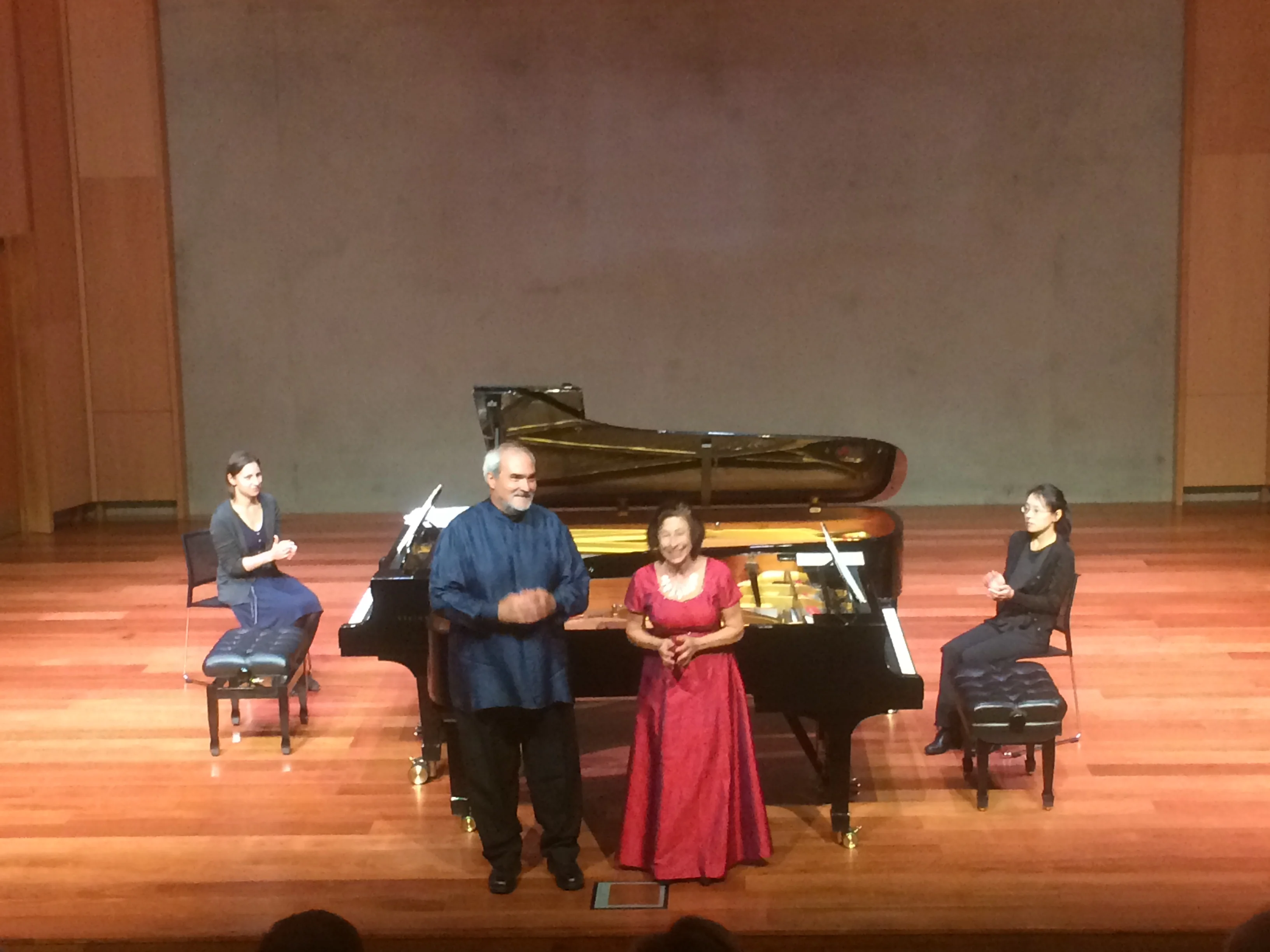
Image from Wikipedia
Image from Wikipedia
Edith Fischer – the great Chilean pianist between Beethoven, Arrau, and a global concert career
An artist with rare authority at the piano
Edith Fischer is one of the most prominent pianists from Chile and belongs to those musicians whose artistic development extends well beyond a national career. Born in 1935 in Santiago de Chile, she grew up in a musical environment that provided her with a serious and disciplined approach to classical music from an early age. As a child, she already emerged as a soloist and developed into an interpreter of remarkable maturity, whose stage presence and musical clarity continue to set standards to this day. ([radio.uchile.cl](https://radio.uchile.cl/2019/12/25/edith-fischer-la-musica-verdaderamente-importante-llega-nadie-queda-indiferente/))
Biographical roots: Music as a family tradition
Fischer's life path is closely linked to a highly musical family. Her mother Elena Waiss was a pianist and harpsichordist, her father Zoltan Fischer played viola; her siblings and other relatives were also musically active. This family background not only created a technical foundation but also an attitude: music as serious daily work and as a cultural responsibility. This origin is particularly audible in her later interpretations, as Fischer combines emotional depth with formal clarity and stylistic rigor. ([radio.uchile.cl](https://radio.uchile.cl/2019/12/25/edith-fischer-la-musica-verdaderamente-importante-llega-nadie-queda-indiferente/))
She made her debut as a soloist at the age of twelve with the Orquesta Sinfónica Nacional de Chile under Hermann Scherchen. This early performance marked not a random success, but the beginning of a career characterized by remarkable consistency. Fischer herself reports that this encounter with Scherchen and Mozart permanently shaped her view of the repertoire. The child prodigy did not become merely a virtuoso but a musician who always thought about form, sound, and responsibility for the character of the work. ([radio.uchile.cl](https://radio.uchile.cl/2019/12/25/edith-fischer-la-musica-verdaderamente-importante-llega-nadie-queda-indiferente/))
The decisive school: Claudio Arrau and international maturation
A central turning point in Fischer's musical career was her further development with Claudio Arrau in New York. Between 1952 and 1954, she studied with the legendary Chilean pianist, whose influence continues to be evident in her artistic attitude. Even today, Fischer emphasizes Arrau's blend of discipline, respect, and independence of thought. This school shaped a pianist who never relies on effects but unfolds the musical text with analytical precision and inner tension. ([en.wikipedia.org](https://en.wikipedia.org/wiki/Edith_Fischer?utm_source=openai))
The maturity of this training was also evident in the awards Fischer won in Europe. Particularly significant were the Dinu Lipatti Prize in London and the First Prize at the International Music Competition in Munich. Such successes anchored her in international concert life and opened doors to performances in the musical capitals of Europe, North and South America, Japan, India, and the Middle East. Her career thus evolved into a truly global concert path. ([noticias.udec.cl](https://noticias.udec.cl/udec-inviste-a-pianista-edith-fischer-como-visita-distinguida-reconociendo-su-vinculo-historico-con-la-institucion/))
Repertoire and concert practice: Beethoven as a life project
Edith Fischer is particularly known for her interpretations of Beethoven. Her cyclical performance of all 32 Beethoven Sonatas, which she has presented live twelve times, is especially highlighted. This number not only illustrates her technical resilience but also her intellectual closeness to a repertoire that demands the highest structural penetration. Fischer approaches Beethoven not as a monument but as a living thought space in which architecture, expressiveness, and dramatic development are inseparably connected. ([en.wikipedia.org](https://en.wikipedia.org/wiki/Edith_Fischer?utm_source=openai))
In addition, her repertoire includes the complete piano works of Maurice Ravel as well as large parts of chamber music literature. This breadth showcases a pianist who confidently mediates between classical formal rigor and colorful sound imagination. In her interpretation, technique never stands out as an end in itself; it always serves the clarity of the line, the transparency of the phrase, and a controlled yet emotionally intense expression. A significant part of her authority as an artist lies precisely in this. ([sipiano.com](https://sipiano.com/project/fischer-edith/?lang=en))
A life on the grand stages of the world
Fischer's international career has taken her to stages in Europe, North and South America, Japan, India, and the Middle East. She has performed with orchestras, given solo concerts, and concurrently cultivated chamber music, which holds a firm place in her artistic thinking. Particularly remarkable is that she returned to Chile and has since remained actively present in the cultural life of her homeland. This connects her cosmopolitanism with local roots – a rare profile in classical music. ([sipiano.com](https://sipiano.com/project/fischer-edith/?lang=en))
In her later years, Fischer continued to remain prominent: she was honored as a soloist in Chile, performed at anniversary concerts, and remained a vibrant concert personality well into old age. The Teatro Regional del Maule honored her in 2025 with a concert for her 90th birthday, where she was announced again as a soloist. Such programs emphasize that Fischer is not treated as a historical figure but as an active musician with ongoing relevance. ([teatroregional.cl](https://www.teatroregional.cl/archivo/24564))
Discography, documentation, and critical reception
The discography documented on her official website points to a career that extends beyond the concert hall. While the current web collection does not contain a complete list of works, the recordings and the visible repertoire show a preference for Beethoven, Schumann, Chopin, Diabelli, and other cornerstones of the romantic and classical canon. Fischer's artistic identity arises from this connection between concert practice and documented repertoire culture. ([edithfischer.cl](https://edithfischer.cl/))
The critical reception consistently highlights her concentration, inner order, and interpretative sovereignty. In a review quoted on the SIPiano site, her interpretation of the Diabelli Variations is described as characterized by authority, vitality, and constructive thought. From other sources, it is also evident that Fischer does not cultivate an exterior virtuoso aesthetic but an interpretive stance that imparts spiritual depth and clear dramaturgy to the work. ([sipiano.com](https://sipiano.com/project/fischer-edith/?lang=en))
Festival work, pedagogy, and cultural influence
A significant part of Fischer's cultural influence lies beyond the solo recital. In 1990, she co-founded the International Piano Week in Blonay with Jorge Pepi-Alos, which still serves as a forum for piano and chamber music cultivation today. The event combines concert culture, young talent promotion, and the aim to also present rarely performed works in demanding programs. In doing so, Fischer has not only played but has created an institution. ([sipiano.com](https://sipiano.com/le-festival/))
Additionally, her pedagogical work is noteworthy. She founded the Cercle Lémanique d’Études Musicales in Switzerland and took on the transmission of the pianistic legacy of her teacher Claudio Arrau for many years. Here, her authority is particularly evident: she does not see music as an instrument for a career but as cultural continuity. Her being awarded the Chilean National Music Prize in 2022 impressively confirms this life achievement. ([sipiano.com](https://sipiano.com/project/fischer-edith/?lang=en))
Conclusion: A living legend of piano art
Edith Fischer fascinates with the rare connection of technical mastery, historical depth, and intellectual independence. Her music career tells of early maturity, international recognition, pedagogical responsibility, and an unbroken stage presence that remains palpable even in old age. Those who experience her art encounter a pianist who not only plays but embodies musical history. A live concert with Edith Fischer remains, therefore, an encounter with lived interpretative culture. ([radio.uchile.cl](https://radio.uchile.cl/2019/12/25/edith-fischer-la-musica-verdaderamente-importante-llega-nadie-queda-indiferente/))
Official channels of Edith Fischer:
- Instagram: no official profile found
- Facebook: no official profile found
- YouTube: https://www.youtube.com/channel/UCt_vt9FVXVMNplkB91ERjqA
- Spotify: https://open.spotify.com/artist/5nRqbZ91QjJIHIxSjJ3omI?si=9cf69d0faf2c41c2
- TikTok: no official profile found