
Fernando Arrabal
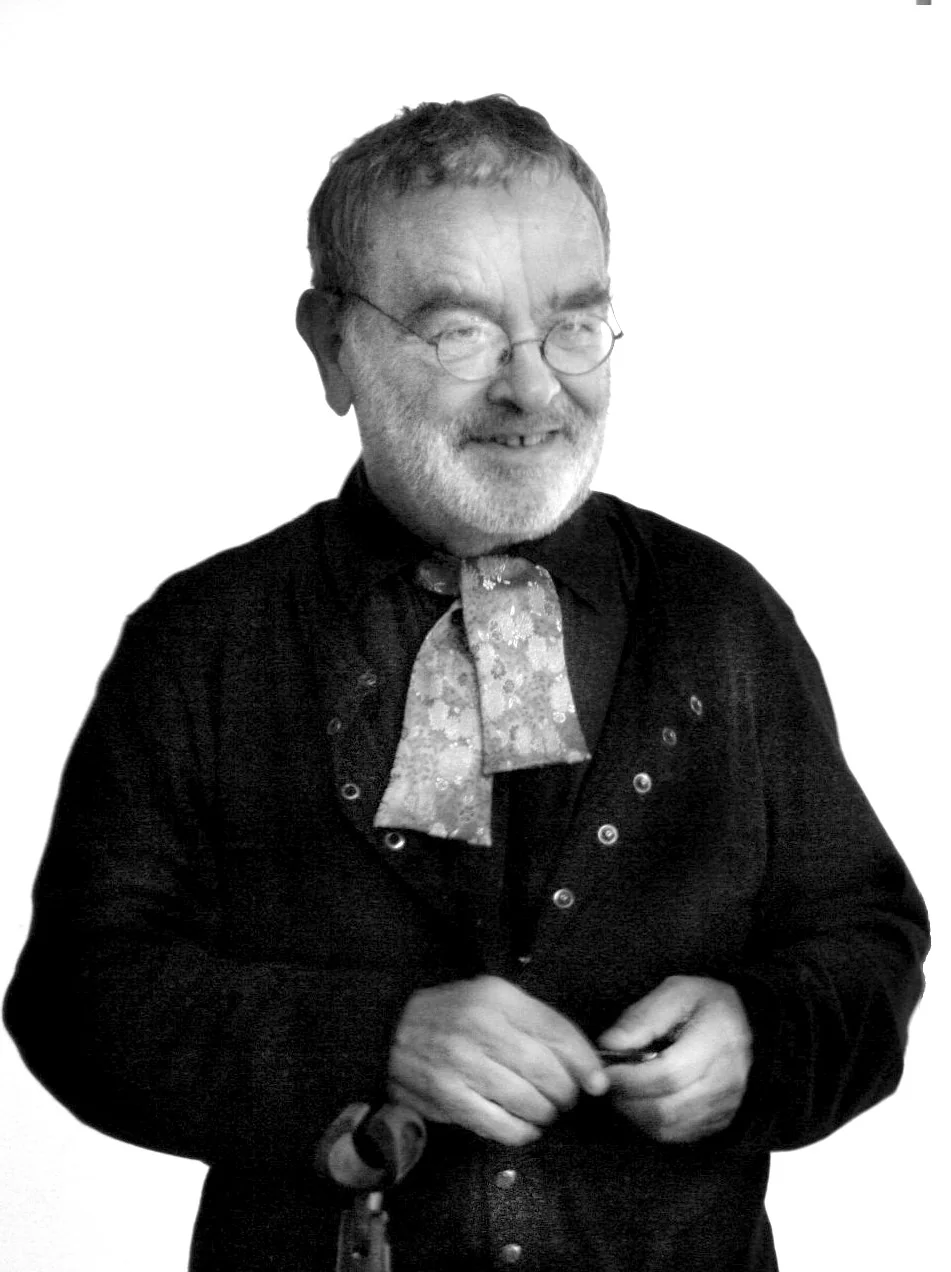
Image from Wikipedia
Image from Wikipedia
Fernando Arrabal: The Radical Master of Absurd Theater Between Exile, Poetry, and Provocation
An Author Who Engages the Theater in a State of Electric Unrest
Fernando Arrabal Terán, born on August 11, 1932, in Melilla, is among the most influential Spanish-French writers, poets, and playwrights of the 20th and 21st centuries. His work represents a theater that does not soothe humanity but challenges it: absurd, poetic, politically charged, and full of existential explosive power. Even his early biography is closely linked with rupture, exile, and artistic friction, from which Arrabal fashioned a distinctive voice. ([arrabalfernando.com](https://arrabalfernando.com/biografia/?utm_source=openai))
Biography: Childhood, Exile, and the Birth of a Radical Artistic Stance
Arrabal learned to read and write in Ciudad Rodrigo; later, his path led him to Madrid before he left Spain in the mid-1950s to settle in Paris. There, he developed nearly all of his work while his texts remained banned in Spain during the Franco dictatorship. For Arrabal, exile became not only a biographical stage but also an aesthetic prerequisite: distance, injury, and resistance flowed directly into his literature and theater. ([arrabalfernando.com](https://arrabalfernando.com/biografia/?utm_source=openai))
The experience of violence and political repression deeply shaped his artistic development. Studies and portraits of his work emphasize that his early plays were significantly influenced by Samuel Beckett and Eugène Ionesco and emerged from a traumatic historical context. However, Arrabal did not merely replicate these influences but transformed them into his own provocative language, which later became recognized as a core of “Teatro Pánico.” ([signosliterarios.izt.uam.mx](https://signosliterarios.izt.uam.mx/index.php/SL/article/view/255?utm_source=openai))
The Breakthrough: Theater of the Absurd, Pánico, and International Recognition
His breakthrough occurred through theater, which established itself in Paris and internationally, earning him a reputation as a radical innovator. Critical portraits describe him as one of the most significant representatives of absurd theater and as a co-founder of Movimiento Pánico alongside Alejandro Jodorowsky and Roland Topor. This Pánico philosophy combined surrealist, dadaist, and pataphysical impulses with a calculated disruption of the audience. ([arrabalfernando.com](https://arrabalfernando.com/?utm_source=openai))
In interviews and cultural journalism, Arrabal is depicted as an extraordinary figure of the European postwar avant-garde, having connections with greats such as Buñuel, Dalí, Picasso, Breton, and Warhol. The international press early on recognized him as an author with enormous productivity and strong stage presence, deliberately blurring the boundaries between literature, theater, visual arts, and film. It is precisely this crossing of boundaries that makes his career so exciting and difficult to reduce to a single genre. ([culturamas.es](https://www.culturamas.es/2011/04/12/entrevista-a-fernando-arrabal/?utm_source=openai))
Work Profile: Between Drama, Novels, Essays, Film, and Visual Art
Arrabal is not only a playwright but also a novelist, poet, essayist, and filmmaker. His official website explicitly categorizes his areas of creation into poetry, novels, letters and manifestos, bibliophilia, cinema, theater, and art. This diversity is not a side aspect but the actual driving force of his artistic identity: Arrabal thinks in forms, overlays, and disruptions, not in narrow disciplines. ([arrabalfernando.com](https://arrabalfernando.com/?utm_source=openai))
Particularly striking is his approach to theater as a space of confusion, terror, Eros, and liberation. Biographical and literary scholarly sources describe his plays as works where childlike perception, absurdity, and anarchic energy interplay. Works such as Pic-nic, El triciclo, or Fando y Lis have become reference points for a theater that does not simply narrate but generates states. ([biografiasyvidas.com](https://www.biografiasyvidas.com/biografia/a/arrabal.htm?utm_source=openai))
Current Projects and Late Productivity
Even at an advanced age, Arrabal remains productive. His official website points to recent publications like Trazos iluminados, released in 2023 in Spain, as well as the novel Un gozo para siempre, also published in 2023. The website also features a current affairs section that continues to present Arrabal as an active author, whose work does not appear complete but continually produces new text and art forms. ([arrabalfernando.com](https://arrabalfernando.com/?utm_source=openai))
The recent press has continued to accompany him with interviews and portraits, including coverage of media appearances and new releases. RTVE reported in 2025 on an appearance at “La Revuelta” and referred to his status as an acclaimed writer and playwright many times over. This underscores that Arrabal remains no archival figure but a living part of the European cultural landscape. ([rtve.es](https://www.rtve.es/play/noticias/20250117/quien-es-fernando-arrabal-invitado-revuelta-broncano-16-enero/16409709.shtml?utm_source=openai))
Discography, Filmography, and Critical Reception
As a musician, Fernando Arrabal is not categorized; a classical discography does not exist based on the available sources. Instead, he has an extensive filmography and significant work in the field of experimental cinema. His official website lists seven feature films that he realized himself, including Viva la muerte, J’irai comme un cheval fou, L’Arbre de Guernica, L’Odyssée de la Pacifique, and Le Cimetière des voitures. ([arrabalfernando.com](https://arrabalfernando.com/cinema-2/?utm_source=openai))
In addition, numerous works by other directors have been adapted from his materials, such as Fando et Lis by Alejandro Jodorowsky or Le Grand cérémonial by Pierre-Alain Jolivet. Critical reception describes him as an author whose plays are received and performed worldwide, but in Spain have long suffered under political censorship. It is precisely from this tension between exile and international recognition that his cultural stature arises. ([arrabalfernando.com](https://arrabalfernando.com/cinema-2/?utm_source=openai))
The awards and honors underscore this authority. Notable mentions include the Premio Nacional de Teatro, the Premio Castilla y León de las Letras 2023, the Premio Nadal, the Premio Espasa, the Grand Prix du Théâtre from the Académie Française, and several other major awards. In reception, Arrabal is therefore not only read as an idiosyncratic stylist but as one of the key European authors of modernity. ([es.wikipedia.org](https://es.wikipedia.org/wiki/Fernando_Arrabal?utm_source=openai))
Style and Artistic Signature: Surrealism, Dada, Poetry of Disruption
Arrabal's style is characterized by surrealist and dadaist impulses that he translates into a very personal poetics. The official website describes his work as a mix of Surrealism, Dadaism, Pánico, and Patafysics, while critical texts characterize him as an author with a world full of amorality, cruelty, eroticism, and deliberate irritation. This signature makes his texts simultaneously disturbing and fascinating. ([arrabalfernando.com](https://arrabalfernando.com/?utm_source=openai))
His plays work with exaggeration, black humor, symbolic density, and an imagery that often resembles a fever dream. It is precisely here that his strength lies: Arrabal does not articulate a smooth message but creates friction between language, body, power, and imagination. For readers and theater audiences, this results in a work that can ignite anew continuously. ([signosliterarios.izt.uam.mx](https://signosliterarios.izt.uam.mx/index.php/SL/article/view/255?utm_source=openai))
Cultural Influence: An Author Between Spain, France, and the Global Stage
Fernando Arrabal has profoundly influenced European theater history because he has understood the view of the absurd not as a fashion but as a method of understanding. His combination of political experience, poetic radicality, and aesthetic transgression has influenced the perception of modern Spanish theater as well as international avant-garde thinking. He belongs to the authors whose work is not only read but placed in art historical contexts. ([signosliterarios.izt.uam.mx](https://signosliterarios.izt.uam.mx/index.php/SL/article/view/255?utm_source=openai))
His presence in literature, theater, film, and art demonstrates a rare creative breadth. The official website documents drawings, collages, plastic poems, portraits, and other works that make Arrabal's thinking visible as an interdisciplinary total project. This connection of text and image, stage and object, of ironic exaggeration and existential seriousness, is a fundamental reason for his lasting significance. ([arrabalfernando.com](https://arrabalfernando.com/art/?utm_source=openai))
Conclusion: Why Fernando Arrabal Continues to Electrify
Fernando Arrabal is compelling because his work is never comfortable and never appears complete. He has created a lifelong body of work from exile, conflict, and artistic freedom that uncompromisingly connects theater, literature, film, and visual art. Those who experience Arrabal encounter not a museum classic but an author who continues to stir, irritate, and excite audiences to this day. His plays and texts deserve to be rediscovered, read, and performed repeatedly. ([arrabalfernando.com](https://arrabalfernando.com/?utm_source=openai))
A live experience with Arrabal's theater or one of his adaptations remains more than just a cultural appointment: it is a meeting with European avant-garde in its most vivid form. Anyone wishing to understand his work should not only read but directly experience the tension of the stage, the power of the imagery, and the intellectual resistance. This is where the enduring fascination of an artist who has transformed the absurd into art lies. ([biografiasyvidas.com](https://www.biografiasyvidas.com/biografia/a/arrabal.htm?utm_source=openai))
Official Channels of Fernando Arrabal:
- Instagram: no official profile found
- Facebook: no official profile found
- YouTube: no official profile found
- Spotify: no official profile found
- TikTok: no official profile found
Sources:
- Arrabal Fernando - Official Website
- Arrabal Fernando - Biography
- Arrabal Fernando - Current Affairs
- Arrabal Fernando - Cinema
- Arrabal Fernando - Art
- Arrabal Fernando - Legal Mentions
- Wikipedia - Fernando Arrabal
- Wikipedia (es) - Fernando Arrabal
- Biografías y Vidas - Fernando Arrabal
- Signos Literarios - A Childhood in Chains: Fernando Arrabal and his Theater of the Absurd
- El País - Fernando Arrabal: “Neither Picasso nor I Forgive Spain”
- RTVE - Talking with Fernando Arrabal
- RTVE - Fernando Arrabal on La Revuelta
Upcoming Events
FANDO AND LIS by Fernando Arrabal
Visit 'FANDO AND LIS' at Südflügel, Kassel and experience absurd theater at its finest.
FANDO AND LIS by Fernando Arrabal
Visit the AktionsTheaterKassel and experience Fernando Arrabal's Fando and Lis, a metaphor for love and happiness.