
Gerd Köster
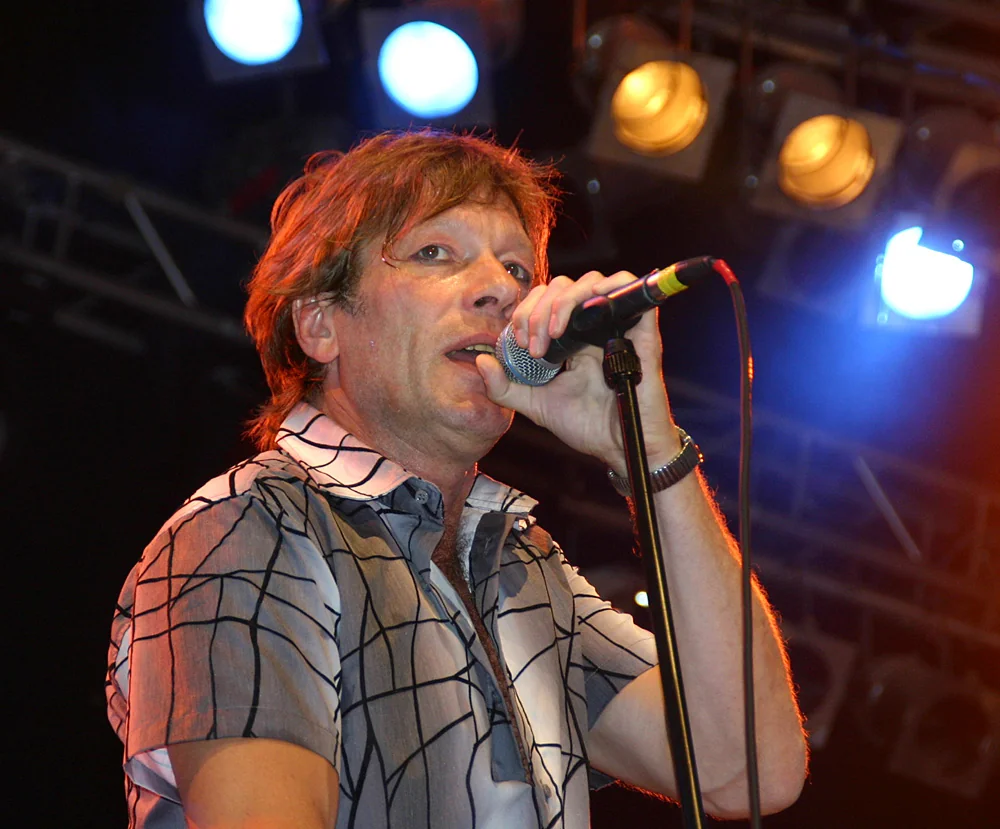
Image from Wikipedia
Image from Wikipedia
Gerd Köster: The Voice of Cologne, Stage Poet, and Influential Figure of the Cologne Music Scene
An Artist Between Raspy Voice, Dialect, and Theater Stage
Gerd Köster, born on January 5, 1957, in Cologne, is one of the most distinctive voices in the history of Cologne music. As a singer, speaker, and actor, he has crafted an artistic identity over decades that transcends the usual image of a dialect musician. His career is closely tied to Cologne, but its artistic reach extends from rock to song interpretation to readings, audiobooks, and theater. ([de.wikipedia.org](https://de.wikipedia.org/wiki/Gerd_K%C3%B6ster))
Köster's collaboration with Frank Hocker has been particularly influential, as they performed together in various formations for many years. This partnership not only shaped Köster's musical profile but also his public perception as a cultivated, rough, and at the same time humorous chronicler of the Rhineland. After Hocker's death in October 2023, Köster continued with their shared songs in a new lineup, keeping a central thread of his work alive. ([gerd-koester.de](https://www.gerd-koester.de/musikgeschichte))
Early Years and the Entry into the Cologne Scene
Köster grew up in Cologne and was drawn to music early on, influenced by rock, stage energy, and a strong local connection. A significant biographical impulse was his early enthusiasm for the Rolling Stones; in a Cologne publication, he describes the moment with a portable radio and "Satisfaction" as a decisive trigger. Before he became known as a frontman, he stood behind the bar of the pub "Out" in Cologne's Südstadt for many years – alongside his cousin Gaby Köster, who later gained fame herself. ([koelsch-akademie.de](https://www.koelsch-akademie.de/fileadmin/user_upload/www.koelsch-akademie.de/Klaaf-Hefte/pdf-Dateien/Klaaf_2-2010.pdf?utm_source=openai))
The professional debut began in 1979 when Köster spontaneously stepped in as the frontman for the anarcho-rock band Schroeder Roadshow. This band phase laid the foundation for his later music career, which always balanced a rough rock attitude with linguistic precision. His appearance at the Anti-WAAhnsinns Festival in 1986 also shows that Köster was recognized early on in a culturally and politically charged environment. ([filmhaus-koeln.de](https://filmhaus-koeln.de/event/gerd-koester-solo-oder-im-team))
Schroeder Roadshow and the Development of a Unique Sound
With Schroeder Roadshow, Köster worked in the 1980s on a jagged, energetic live aesthetic. The band's discography includes, among others, Live in Tokio (1980), Deutschland Deutschland (1981), Wir lieben das Land (1982), Hurra (1984), and Live beim Rennen (1988). These releases mark the phase in which Köster sharpened his stage presence and sense for direct, unadorned performance. ([de.wikipedia.org](https://de.wikipedia.org/wiki/Gerd_K%C3%B6ster))
Even at this stage, a constant of his later work can be observed: Köster focused on character, attitude, and linguistic sharpness rather than on polished pop confection. In the Cologne music scene, this developed into a credibility that set him apart from many colleagues. His career evolved not as a leap into the mainstream but as a persistent developing of a distinctive artistic language. ([de.wikipedia.org](https://de.wikipedia.org/wiki/Gerd_K%C3%B6ster))
The Piano Has Been Drinking: Tom Waits in Kölsch
In 1988, Köster, together with Frank Hocker, founded the legendary formation The Piano Has Been Drinking, reinterpreting Tom Waits' songs in Kölsch dialect. This is one of the central reasons for his cult status: Köster translated not only texts but also transferred an entire aesthetic of night, pub, fringe-zone poetry, and rough pathos into the Rhineland language. The specialized press describes this blend as pure Gossenkölsch with a charming rasp voice. ([folker.de](https://www.folker.de/Artikel.php?art=Koester&ausgabe=201705))
The discography from this phase includes the debut The Piano Has Been Drinking (1990), followed by Nachtgedanken (1991), Der Märchenprinz (1992), the MCD Dat Klavier dat hät jesoffe (1993), as well as Live 1989-1993 (1993). These releases made it clear that Köster was not merely interpreting, but creating an own repertoire and a unique tone. His aspiration was never to simply cover but to translate culturally. ([de.wikipedia.org](https://de.wikipedia.org/wiki/Gerd_K%C3%B6ster))
Solo Work, Readings, and Expanding the Artistic Profile
After his time with the band, Köster further developed his solo career and released several projects under his own name. These albums include Alles im Griff (1994), Der Tanz um den heiligen Bim Bam (1995), Gerd Köster und… live im Küppers Klub (1999), as well as Power Boulevard / Alles von Dir. Concurrently, he worked as a speaker, moderator, and audiobook performer, including works by Jonathan Stroud, Nick Hornby, John Niven, and Christoph Gottwald. ([de.wikipedia.org](https://de.wikipedia.org/wiki/Gerd_K%C3%B6ster))
This expansion of his artistic profile is crucial for placing Köster. He did not stop at being a classic singer but used his voice as a narrative instrument, a character tool, and a medium between literature and music. The fact that he celebrated his 25th stage anniversary in 2005 together with Frank Hocker further underscores the continuity of this development, as does his work for WDR 5 and other Cologne cultural formats. ([de.wikipedia.org](https://de.wikipedia.org/wiki/Gerd_K%C3%B6ster))
Köster & Hocker: The Heart of the Later Years
Since 1996, Köster has been touring with Frank Hocker as Köster/Hocker, a constellation that notably shaped his later perception. Their collaboration is documented on the official website as a decades-long concert and release biography, oscillating between reading, theater, dialect songs, and live performance. The duo represented a close musical chemistry, timing, wit, and a deep rooting in Cologne's cultural life. ([qultor.de](https://www.qultor.de/veranstaltungen/gerd-koester-liest-joerg-fauser))
The discography of Köster/Hocker is extensive and stylistically diverse. The official website lists, among others, Dreckelije Krätzje, Final verseucht, Frisch, Jedrisse, Baby, Se singe all vum Himmel, Kumm Jangk, A`S kla?, and Fremde Feddere; Fremde Feddere also reached chart position 87 in Germany. This made it clear that dialect music in the Köster cosmos functions not as a niche product but as a serious, audience-bearing art form. ([de.wikipedia.org](https://de.wikipedia.org/wiki/Gerd_K%C3%B6ster))
Current Projects, Theater, and the Continuation of the Songs
The recent phase of his career is characterized by continuity despite loss. The official website states that after Frank Hocker's death on October 12, 2023, Köster will continue the concerts scheduled for 2024 as "Köster & Weggefährten," along with Helmut Krumminga, Buddy Sacher, and rotating drummers. Additionally, the new program Stabil nervös is mentioned, which started in May and continues the shared stage energy in a changed form. ([gerd-koester.de](https://www.gerd-koester.de/musikgeschichte))
Köster remained present in the theater as well. The website mentions roles in Automatenbuffet by Anna Gmeyner and in Der Unbeugsame - der Widerstand des Karl Küpper by Tilmann Strasser, with the latter production recording over 20 sold-out performances in 2022/23. In addition, there are readings, audiobooks, and download formats, including stories about Edgar Wallace, Sherlock Holmes, and Father Brown, as well as the live format Dieser Durst… - Geschichten über Alkohol. Köster's art remains consciously cross-genre. ([gerd-koester.de](https://www.gerd-koester.de/musikgeschichte))
Style, Voice, and Cultural Influence
Köster's hallmark is a voice that does not smoothen but tells: rough, strong, close to the spoken word yet musically precise. Particularly in the Kölsch dialect, this voice unfolds a special effect as it conveys everyday proximity, melancholy, and comedy simultaneously. The Folker described him as an artist who gained cult status in the Rhineland metropolis with his rasping voice and Tom Waits adaptation. ([folker.de](https://www.folker.de/Artikel.php?art=Koester&ausgabe=201705))
Culturally, Köster serves as a link between rock culture, the Cologne dialect, literary language, and urban stage art. His collaboration on formats like the Trude-Herr-Revue, his reading activities, his role in audiobooks, and his political commitment with the AG Arsch huh for tolerance and diversity reveal an artist who translates attitude into action. Köster's influence lies not only in individual hits but in strengthening an entire local storytelling tradition. ([gerd-koester.de](https://www.gerd-koester.de/musikgeschichte?utm_source=openai))
Discography and Major Milestones at a Glance
Major milestones include the early phase with Schroeder Roadshow, the defining Tom Waits period with The Piano Has Been Drinking, the solo albums of the 1990s, and the later, long collaboration with Frank Hocker. The official website also documents more recent releases such as the vinyl single Schäng `21 and the double album Stabil Nervös – Live an der Mosel, which is presented as the last joint album with Frank Hocker. These releases condense the career into a biography of songs, readings, and live moments. ([gerd-koester.de](https://www.gerd-koester.de/musikgeschichte))
As an audiobook narrator, Köster has also set standards. On his website, he lists among others High Fidelity, Tod und Teufel, and Populärmusik aus Vittula; for the latter, he was nominated for the German Audiobook Prize. This expands his profile from music to linguistic art, further strengthening his authority as a versatile cultural artist. ([gerd-koester.de](https://www.gerd-koester.de/?utm_source=openai))
Conclusion: Why Gerd Köster Remains Fascinating to This Day
Gerd Köster is fascinating because he does not merely sing about Cologne but linguistically and musically condenses it. His career combines rock, dialect, theater, audiobooks, and readings into a credible whole that thrives on experience, individuality, and cultural precision. Encountering Köster means not meeting an interchangeable frontman but a presence-filled storyteller with wit and genuine artistic substance. ([filmhaus-koeln.de](https://filmhaus-koeln.de/event/gerd-koester-solo-oder-im-team))
Especially live, this art unfolds its full power: in the mix of voice, timing, humor, and Rhineland directness. Anyone wanting to understand how vibrant Kölsch music can be beyond clichés should experience Gerd Köster on stage. There, biography turns into music, language into attitude, and an evening into a piece of Cologne cultural history. ([gerd-koester.de](https://www.gerd-koester.de/musikgeschichte))
Official Channels of Gerd Köster:
- Instagram: No official profile found
- Facebook: No official profile found
- YouTube: No official profile found
- Spotify: No official profile found
- TikTok: No official profile found
Sources:
- Gerd Köster – Official Website
- Gerd Köster – Music Stories / Career Chronology
- Gerd Köster – Discography
- Gerd Köster – Singer / Current Information
- Gerd Köster – Imprint
- Filmhaus Köln – Gerd Köster: Solo or in a Team!
- Kölner Musikladen – Köster & Hocker
- Folker – Article on Gerd Köster
- Qultor – Gerd Köster Reads Jörg Fauser
- Wikipedia: Gerd Köster