
Goethes Erben
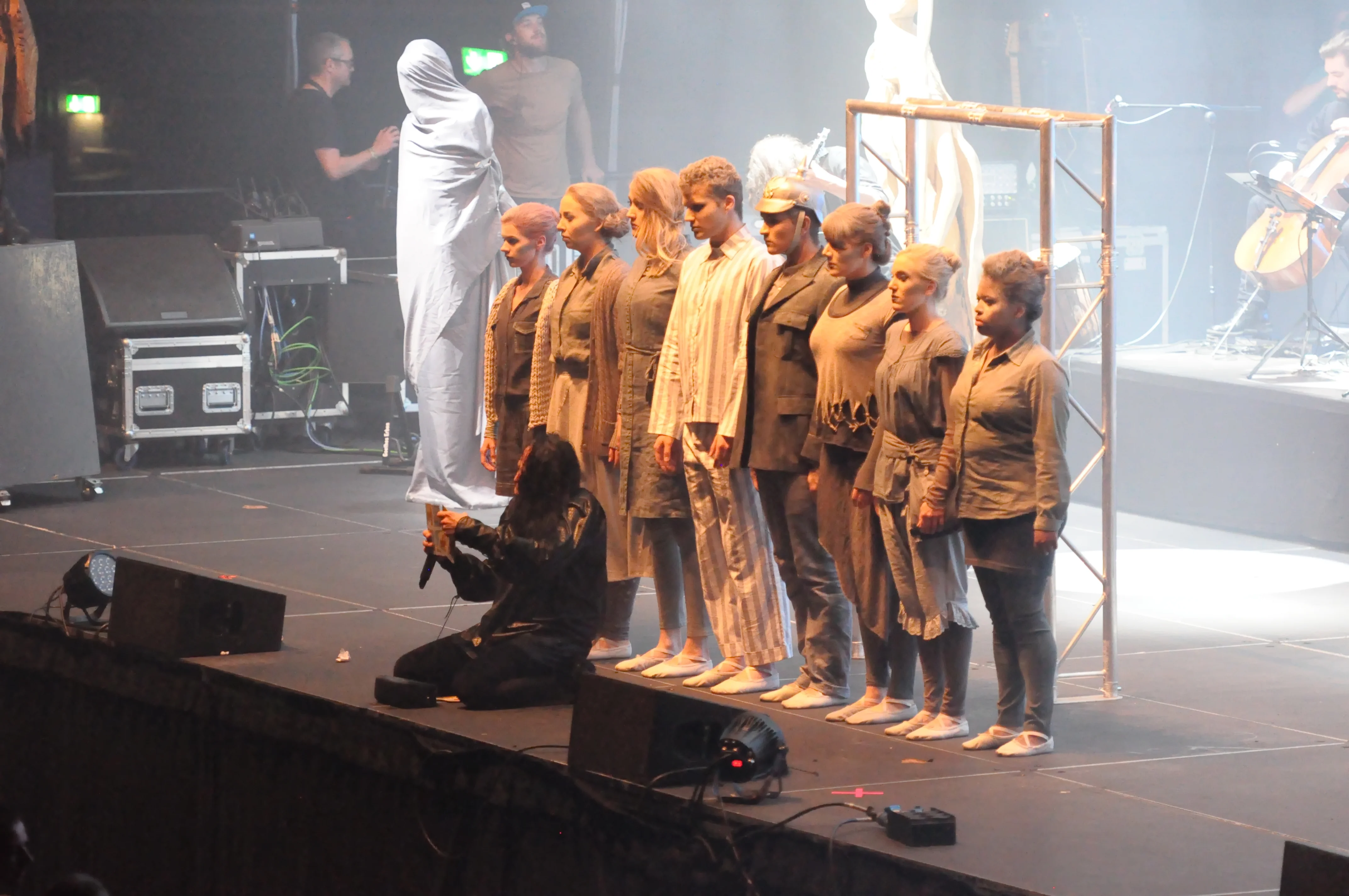
Image from Wikipedia
Image from Wikipedia
Goethes Erben – the German music theater between Dark Wave, avant-garde, and poetic impact
Goethes Erben: A band that rethinks language, scene, and stage art
Goethes Erben is one of the most unique formations in German music history. Since its founding in 1989 by Oswald Henke and Peter Seipt in Bayreuth, the band has combined spoken word, dark soundscapes, and a strong theatrical stage presence into a work that transcends classical Gothic or Dark-Wave aesthetics. The fundamental idea has always been radical and clear: to not only set German texts to music but to place them at the center of a musical staging. ([munzinger.de](https://www.munzinger.de/register/portrait/biographien/goethes%20erben/02/1294))
It was precisely from this that the special status of Goethes Erben arose in the early 1990s, when the band became one of the defining names in the German Dark-Wave and Gothic movement. Later, the artistic focus shifted towards rock, avant-garde, and electronically influenced forms, without giving up the core: intense lyrics, dramatic arrangements, and a stage presence that perceives concerts as music theater. ([munzinger.de](https://www.munzinger.de/register/portrait/biographien/goethes%20erben/02/1294))
The beginnings in Bayreuth: Language art as a musical concept
The story of Goethes Erben begins with an artistic idea that was rarely pursued so consistently in the German-speaking world at the time. Oswald Henke and Peter Seipt developed a form of music in which spoken word, narrative concentration, and atmospheric composition merge closely together. Early demos such as Der Spiegel, dessen Weg durch stumme Zeugen zum Ende führt set a first sign in this direction in 1990. ([munzinger.de](https://www.munzinger.de/register/portrait/biographien/goethes%20erben/02/1294))
The band name itself refers to this literarily charged way of thinking: Not just a reference to Goethe as a cultural icon, but a symbol for the transmission of language, thoughts, and forms of expression. Consequently, the group was often described not just as a band but as a musical project with its own aesthetic claim. This self-positioning explains why Goethes Erben continues to be perceived today as boundary crossers between music, performance, and poetry. ([munzinger.de](https://www.munzinger.de/register/portrait/biographien/goethes%20erben/02/1294))
Breakthrough and scene shaping: The early 1990s
Early on, Goethes Erben managed to establish themselves as a distinctive voice in the then-growing Gothic and Dark-Wave scene. After initial releases and live experiences, the band restructured in 1991 when Mindy Kumbalek and Conny Rühl joined, making the project fit for the stage again. On August 31, 1991, the group returned to the stage for the first time, sharpening the theatrical form that later became a trademark. ([de.wikipedia.org](https://de.wikipedia.org/wiki/Goethes_Erben))
The early years were characterized not only by artistic breakthrough but also by tensions. Peter Seipt left the formation after the debut concert and later founded The Seer, while Oswald Henke continued to develop the project with changing collaborators. The fact that Goethes Erben endured despite such breaks speaks to the clear authority of the artistic concept and the consistency with which Henke pursued the vision of a German-language music theater. ([de.wikipedia.org](https://de.wikipedia.org/wiki/Goethes_Erben))
Between Gothic, avant-garde, and rock: The stylistic shift
In the 1990s, Goethes Erben was among the most important bands of the German Gothic movement but was never reduced to a single genre. The music increasingly opened up to rock structures, avant-garde ideas, and later also electronic colors. This shift shaped the band over the years and made it interesting for listeners seeking not only dark romance but also compositional risk-taking. ([munzinger.de](https://www.munzinger.de/register/portrait/biographien/goethes%20erben/02/1294))
The live staging remained central. Performances by Goethes Erben are described as music theater, where light, dramaturgy, and projections stand equally alongside the music. The audience becomes part of the performance, and this is where the special quality of this band lies: It delivers not just songs but events. The sound palette ranges from industrial and electronic to piano miniatures and string arrangements. ([regioactive.de](https://www.regioactive.de/konzert/goethes-erben-dystopie-frisst-empathie-bochum-bahnhof-langendreer-2026-10-23-tickets-6jz5Mjgtz2))
Discography: Important albums, singles, and the defining release
The discography of Goethes Erben shows a band that has never relied solely on pure nostalgia. Among the defining studio albums are Das Sterben ist ästhetisch bunt, Der Traum an die Erinnerung, Tote Augen sehen Leben, the oft-referred to Blau Goethes Erben, Schach ist nicht das Leben, Gewaltberechtigt?, Nichts bleibt wie es war, Dazwischen, Am Abgrund, Flüchtige Küsse, Elemente, and X. This work is complemented by live albums, compilations, EPs, and video albums that document the project as a long-term evolved art form. ([de.wikipedia.org](https://de.wikipedia.org/wiki/Goethes_Erben/Diskografie))
The band’s most successful release is the single Glasgarten, a collaboration with Peter Heppner, which reached number 62 on the German singles chart. The album Blaue Album, known among fans, also holds a special position as it represents Henke's personal favorite album and has attained a mythical status in the scene. Such milestones show how Goethes Erben have carved their own path between subculture, artistic autonomy, and occasional chart presence. ([de.wikipedia.org](https://de.wikipedia.org/wiki/Goethes_Erben/Diskografie))
Critical reception and cultural influence
From the start, the band was not only listened to but discussed. Munzinger categorizes Goethes Erben as an ensemble that placed spoken word at the center of its music and was among the most important acts of the German Dark-Wave and Gothic movement until the mid-1990s. Other sources also describe the group as style-defining, emphasizing the importance for a German-language music theater that set standards in the scene. ([munzinger.de](https://www.munzinger.de/register/portrait/biographien/goethes%20erben/02/1294))
However, the reception has never been one-dimensional. The early success in the scene was juxtaposed with commercial setbacks, such as with Schach ist nicht das Leben, whose sales figures did not meet expectations. This tension between ideationally strong art and limited market logic is part of the history of Goethes Erben and explains why the band is still considered cultic, uncompromising, and aesthetically serious today. ([de.wikipedia.org](https://de.wikipedia.org/wiki/Goethes_Erben))
Current projects, tours, and recent releases
Even decades after its formation, Goethes Erben remains active and present in the live context. A Europe tour titled Dystopie frisst Empathie is scheduled for 2025 and 2026, taking place in several blocks and designed as an episodic staging of its own past. This context also references the tenth studio album X and a digital single titled Das Ende ist da. ([regioactive.de](https://www.regioactive.de/konzert/goethes-erben-dystopie-frisst-empathie-bochum-bahnhof-langendreer-2026-10-23-tickets-6jz5Mjgtz2))
The current live orientation emphasizes not just a mere repetition of the known but the compression of the existing work into a new stage narrative. Goethes Erben continues to present their songs in changing setlists and with a dramaturgy that marks each concert as a unique event. Thus, the band remains not a museum piece but a living art form with contemporary relevance. ([regioactive.de](https://www.regioactive.de/konzert/goethes-erben-dystopie-frisst-empathie-bochum-bahnhof-langendreer-2026-10-23-tickets-6jz5Mjgtz2))
Style, language, and emotional signature
The special appeal of Goethes Erben lies in the connection between language and sound. The lyrics are not just an accessory but a structuring element of the compositions; they bear the emotional weight, shape images, and lend the music a literary depth. This concentration on the German spoken word distinguishes the band from many contemporaries and explains its lasting impact in the alternative scene. ([munzinger.de](https://www.munzinger.de/register/portrait/biographien/goethes%20erben/02/1294))
Musically, the project navigates between dark gestures of pathos, industrial hardness, and delicate, chamber-music moments. The development from early Dark-Wave works to rock- and avant-garde-influenced releases shows a high level of artistic flexibility. Therefore, Goethes Erben represents a music career in which concept, composition, and stage presence are always considered together. ([de.wikipedia.org](https://de.wikipedia.org/wiki/Goethes_Erben))
Conclusion: Why Goethes Erben continue to fascinate today
Goethes Erben are compelling because they have never lowered their expectations of German pop and subculture. The band combines poetic lyrics, dark sound architecture, and intense music theater into a unique artistic language that has grown over decades. Anyone interested in Gothic, Dark Wave, avant-garde, and performative live art will find a work of exceptional consistency here. ([munzinger.de](https://www.munzinger.de/register/portrait/biographien/goethes%20erben/02/1294))
It is especially live that this music unveils its full effect. Goethes Erben are not a band for casual consumption but for immersing oneself in a carefully constructed overall image of voice, sound, light, and emotion. Those who have the opportunity should experience this music theater on stage, as a concert becomes an artistic event there. ([regioactive.de](https://www.regioactive.de/konzert/goethes-erben-dystopie-frisst-empathie-bochum-bahnhof-langendreer-2026-10-23-tickets-6jz5Mjgtz2))
Official channels of Goethes Erben:
- Instagram: no official profile found
- Facebook: no official profile found
- YouTube: no official profile found
- Spotify: https://open.spotify.com/artist/0A2GCCzshGWVQft8AibIuH
- TikTok: no official profile found