
Grave Digger
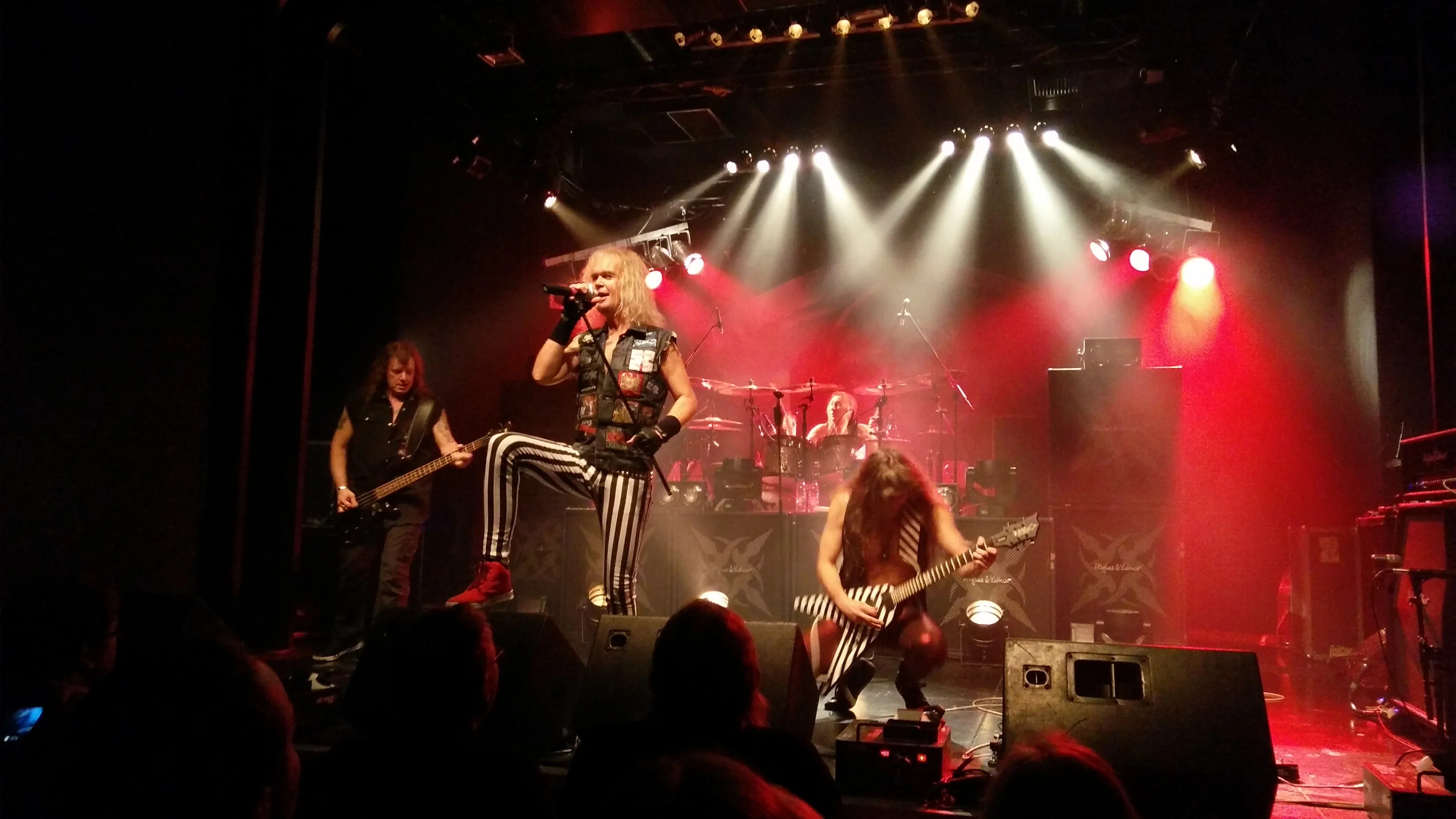
Image from Wikipedia
Image from Wikipedia
Grave Digger: The Indestructible Grave Diggers of German Heavy Metal
A band that has been shaping Teutonic Metal with thunderous riffs, historical imagery, and an iron stage presence since 1980
Grave Digger is one of the defining names in German Heavy Metal and Power Metal. Founded in 1980 in Gladbeck, the band, led by frontman Chris Boltendahl, evolved from an early speed metal formation into a genre-defining institution with distinctive concept albums, powerful anthems, and an unmistakable identity within the European metal canon. ([de.wikipedia.org](https://de.wikipedia.org/wiki/Grave_Digger))
The core of this musical career is continuity through change: lineup changes, comebacks, and stylistic shifts have never been a weakness but rather the driving force behind a long artistic development. Grave Digger combines raw power, historical themes, and anthemic melodies into a sound that stands its ground on both major festival stages and studio albums with narrative ambition. ([www1.wdr.de](https://www1.wdr.de/fernsehen/rockpalast/bands/ueber-grave-digger-100.html))
The Beginnings in Gladbeck and Early Breakthrough
The story of Grave Digger begins in the early 1980s in the Ruhr area, as the German metal scene was just forming its own language. With their debut album Heavy Metal Breakdown released in 1984, the band made an initial statement that established them as an uncompromising, energetic force in the hard and speed metal scene of that time. They quickly followed with Witch Hunter and War Games, albums that tightened their sound and catapulted the band to the forefront of Teutonic Metal. ([de.wikipedia.org](https://de.wikipedia.org/wiki/Grave_Digger))
Even at this early stage, the band's trademark was evident: a mix of hardness, directness, and melodic sensibility. AllMusic describes Grave Digger as part of the German Teutonic thrash and speed metal movement, which later integrated Bay Area influences and melodic power metal. This friction produced the band's characteristic pull: powerful but never one-dimensional. ([allmusic.com](https://www.allmusic.com/artist/grave-digger-mn0000739916))
Separation, Reunion, and the Return with New Force
The late 1980s were marked by upheavals. After a commercially weaker excursion as Digger and the subsequent disbandment, the band returned in 1991 and regained their former strength with The Reaper. This reunion marked not a nostalgic regression but a determined restart with a sharper profile, harder songwriting, and a recognizable band character. ([de.wikipedia.org](https://de.wikipedia.org/wiki/Grave_Digger))
Grave Digger also made an impact live. Tours with names like Helloween, Celtic Frost, and later Manowar underscored the band's position in the European metal ecosystem. WDR Rockpalast summarizes this career as a story of regular tours, numerous lineup changes, and multiple comebacks, highlighting the enormous resilience of this band’s biography. ([de.wikipedia.org](https://de.wikipedia.org/wiki/Grave_Digger))
Concept Albums, Historical Themes, and the Grand Narrative Arc
With Tunes of War, which began in 1996, Grave Digger entered a phase where they developed their strongest artistic signature: the concept album as an epic form. Scottish history, the Knights Templar, and the Arthurian legend became themes that were explored both content-wise and sonically. Knights of the Cross and Excalibur completed this medieval trilogy and elevated Grave Digger beyond just being a heavy metal band: they became narrative artists with riffing might. ([de.wikipedia.org](https://de.wikipedia.org/wiki/Grave_Digger))
Later albums such as The Grave Digger, Rheingold, and The Last Supper demonstrated the ambition to think of metal as a dramatic format. While the references to Edgar Allan Poe and Wagner sharpened the literary dimension, the press repeatedly emphasized the combination of classical narrative drama and powerful production. RockHard explicitly names Tunes of War, The Clans Will Rise Again, and Fields of Blood as central works in their discography. ([allmusic.com](https://www.allmusic.com/artist/grave-digger-mn0000739916))
The Sound: Between Tradition, Pathos, and Modern Hardness
Musically, Grave Digger thrives on a clear, direct production that aims straight for the gut, distinctive choruses, and guitar work that feels both old-school and stadium-ready. The band began as a speed metal act, but in the 1990s opened up to more melodic and power metal forms. Yet, the core remained hard, compact, and historically aware. ([allmusic.com](https://www.allmusic.com/artist/grave-digger-mn0000739916))
Particularly striking is the ability to transform tradition into modern forms. The band never sounds museum-like, but rather like a formation that uses its past as a source of energy. Napalm Records describes Grave Digger as one of the most influential and pioneering bands in the German heavy metal scene, whose sound remains both modern and timeless. ([label.napalmrecords.com](https://label.napalmrecords.com/grave-digger))
Discography, Awards, and Reception in the Music Press
The band's discography includes numerous studio albums, live releases, and anniversary editions. Key milestones include Heavy Metal Breakdown (1984), Witch Hunter (1985), War Games (1986), The Reaper (1993), Heart of Darkness (1995), Tunes of War (1996), Rheingold (2003), The Last Supper (2005), Liberty or Death (2007), Ballads of a Hangman (2009), The Clans Will Rise Again (2010), Return of the Reaper (2014), Healed by Metal (2017), Fields of Blood (2020), Symbol of Eternity (2022), and Bone Collector (2025). ([de.wikipedia.org](https://de.wikipedia.org/wiki/Grave_Digger))
The critical reception particularly highlights the classic albums of the early 1980s, the Scottish-influenced phase of the 1990s, and the late concept works. AllMusic places the band among the elite metal institutions in Germany, while RockHard attributes a high importance to the historically charged cycles within the overall aesthetic of their work. The band has also made notable chart appearances in Germany, Austria, and Switzerland with later releases such as Ballads of a Hangman, The Clans Will Rise Again, and other studio albums. ([allmusic.com](https://www.allmusic.com/artist/grave-digger-mn0000739916))
Current Projects: Bone Collector, New Singles, and a New Era
2024 and 2025 are clearly marked for Grave Digger by new releases. The official band website lists the singles Hell Is My Purgatory and The Grave Is Yours from 2024, as well as Bark To Hell, Hellfire Crusade, and Bone Collector from 2025. This showcases the band entering a new phase, focusing more on classic trademarks and compact hardness. ([grave-digger.de](https://www.grave-digger.de/))
The band itself describes Bone Collector as an album without keyboard passages, a return to long-dormant trademarks, and a manifesto of German heavy metal. At the same time, the lineup is clearly defined: Chris Boltendahl, Tobias Kersting, Jens Becker, and Marcus Kniep form the current quartet that performs with raw, honest, and yet catchy energy. ([grave-digger.de](https://www.grave-digger.de/))
Cultural Influence and Lasting Significance
Grave Digger has earned a place in the cultural memory of metal not just for delivering loud music but for building their own imagery. The Reaper, the medieval themes, and the Scottish narratives shape an identity that remains instantly recognizable in the history of German metal. This aesthetic made the band a brand that has accompanied fans across generations. ([de.wikipedia.org](https://de.wikipedia.org/wiki/Grave_Digger))
Their influence extends far beyond individual hits. Grave Digger represents a form of heavy metal that combines tradition, historical references, and live power without getting lost in mere nostalgia. This is precisely where the enduring fascination lies: a band that knows its genre, masters its codes, and has consistently developed them over decades. ([label.napalmrecords.com](https://label.napalmrecords.com/grave-digger))
Conclusion: A Monument of German Heavy Metal
Grave Digger is exciting because they function as both a band history and a musical entity. They combine a long music career, a clear signature style, and historically charged songwriting into a discography that is hard to overlook in German metal. Anyone experiencing Grave Digger live receives not just a nostalgia show but a robust, authentic, and still vital metal presence. ([www1.wdr.de](https://www1.wdr.de/fernsehen/rockpalast/bands/ueber-grave-digger-100.html))
Especially the blend of classics, new songs, and uncompromising stage presence makes this band so strong. Grave Digger sounds like experience, attitude, and unbroken energy. That’s exactly why every performance is worth it: as a journey through the history of Teutonic metal and as proof that genuine heavy metal substance never loses its impact. ([rockhard.de](https://www.rockhard.de/bands/grave-digger))
Official Channels of Grave Digger:
- Instagram: no official profile found
- Facebook: no official profile found
- YouTube: no official profile found
- Spotify: no official profile found
- TikTok: no official profile found
Sources:
Upcoming Events
Grave Digger - Legends Never Die Tour 27 in Bochum
Bochum will be loud: Grave Digger brings their Legends Never Die Tour 27 to the RuhrCongress. Classics, new anthems, and hard-hitting support acts await. #HeavyMetal
GRAVE DIGGER & Special Guest MOTORJESUS + Support WARWOLF - LEGENDS NEVER DIE TOUR '27
Bochum gets a relentless Metal Night: Grave Digger, Motorjesus, and Warwolf at RuhrCongress. 13.02.2027, from 47.50 €. #HeavyMetal