
Graveworm
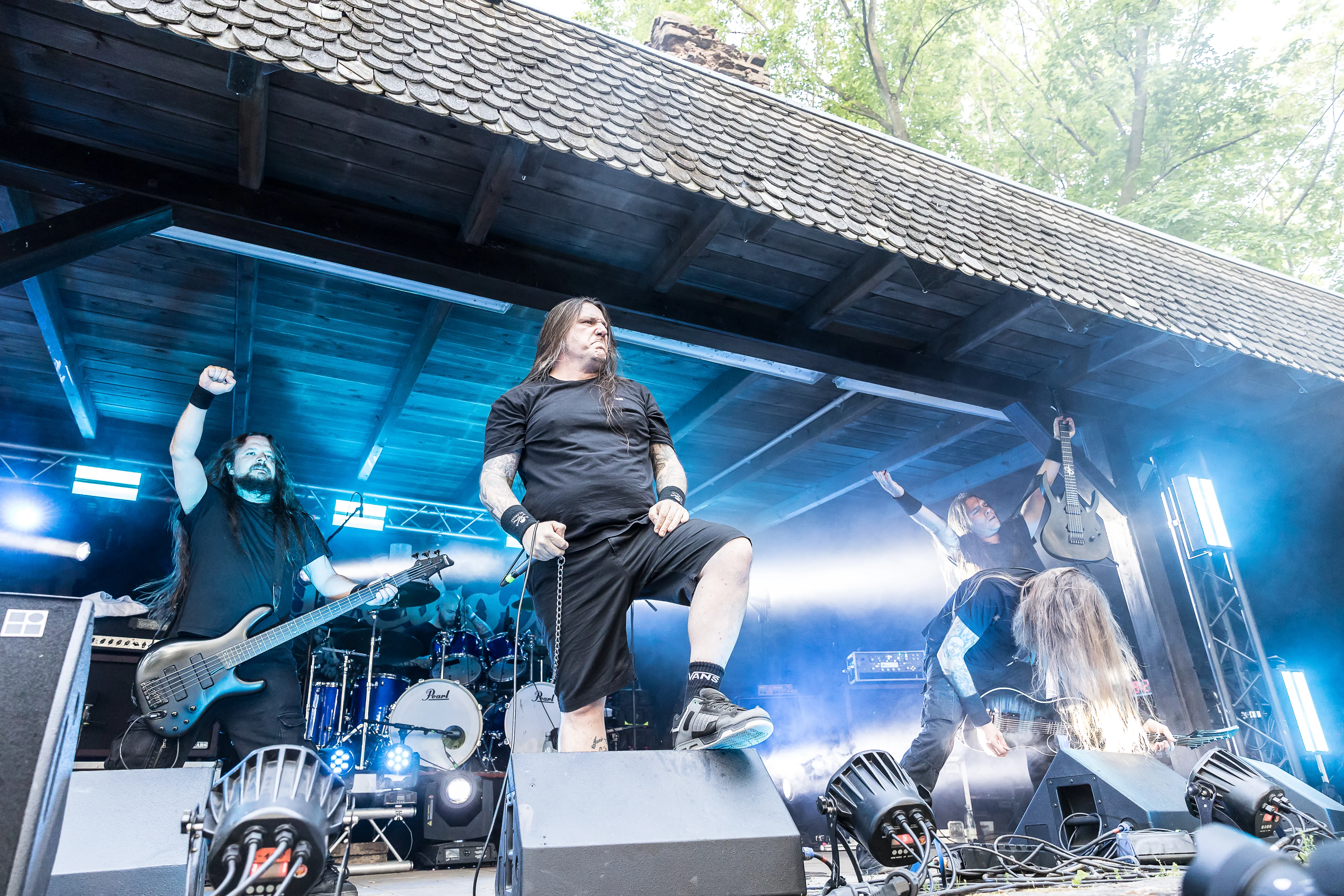
Image from Wikipedia
Image from Wikipedia
Graveworm – the dark force from South Tyrol between Symphonic Black Metal and Gothic Metal
Graveworm: A band that shapes darkness, melody, and extreme energy into a unique language
Graveworm is one of the most distinctive extreme metal formations from Italy, originating from Bruneck in South Tyrol. Since their formation in 1992, the band has built a career marked by early recognizable potential, international stage presence, and a consistent musical development. Their sound combines symphonic black metal elements, melodic heaviness, and gothic atmosphere into a profile that is as respected in the European metal underground as it is on large festival stages. ([en.wikipedia.org](https://en.wikipedia.org/wiki/Graveworm))
The beginnings: A live moment that changed everything
Graveworm's early journey began with a remarkable immediate response on stage: Even before the release of a demo, the band received a record contract with Serenades Records after a powerful live performance near their hometown. In 1997, their first EP Eternal Winds was released, followed by early touring work and the first album phase with When Daylight’s Gone. Even at this stage, the band's central principle emerged: Graveworm never relied solely on heaviness but instead on a dense atmosphere supported by keyboard layers, melodic guitar lines, and dark dramaturgy. ([gravewormofficial.com](https://www.gravewormofficial.com/band?utm_source=openai))
The early years were also marked by a remarkable networking within the European scene. Graveworm toured with Crematory, Therion, and Lake of Tears, released the EP Underneath the Crescent Moon in 1998, and performed at the Wacken Open Air alongside scene giants like Children of Bodom, Cradle of Filth, and Vader. This constellation made the band visible early on and clearly positioned them within the tension field of gothic metal, symphonic black metal, and melodic extremity. ([en.wikipedia.org](https://en.wikipedia.org/wiki/Graveworm))
Career and breakthrough: From Italian underground to international festival presence
With their second album As the Angels Reach the Beauty and the follow-up Scourge of Malice, Graveworm sharpened their profile further. The band increasingly shifted the focus towards black metal without sacrificing catchy refrains and dramatic expansiveness. Scourge of Malice brought them their first headlining tour and was retrospectively seen as a key work because it established the band as a significant force within European extreme metal. ([en.wikipedia.org](https://en.wikipedia.org/wiki/Graveworm))
In 2002, the band transitioned to Nuclear Blast, a step that had a signaling effect on their international recognition. With Engraved in Black, Graveworm reached a new audience; the album remained in the German charts for several weeks, opening up opportunities for festivals and tours that further solidified their position. During this phase, it became clear that Graveworm always viewed their music as a fluid form: Between black metal aggression, gothic melancholy, and melodic finesse, a style emerged that never felt static. ([gravewormofficial.com](https://www.gravewormofficial.com/band?utm_source=openai))
Musical development: Heaviness, melody, and dark dramaturgy
Graveworm evolved their sound from early gothic metal towards a harder, more complex black metal language. The album (N)utopia deepened this connection between aggression and catchiness, while Collateral Defect and Diabolical Figures further explored the mix of thrash, death, black, and gothic influences. Notably, the band never pigeonholed themselves into a single genre but always focused on composition, arrangement, and atmosphere. ([en.wikipedia.org](https://en.wikipedia.org/wiki/Graveworm))
Later releases also attest to this continuity. Fragments of Death was released in 2011, Ascending Hate in 2015, and Killing Innocence in 2023 as their tenth official studio album. The official band portrayal emphasizes the stylistic range of the group, describing Ascending Hate as a particularly versatile work where black metal, death metal, thrash, and gothic metal coexist. This complexity keeps Graveworm relevant today: The band does not remain nostalgic, but keeps their sound in motion. ([en.wikipedia.org](https://en.wikipedia.org/wiki/Graveworm))
Discography: The most important albums and remarkable milestones
Graveworm's discography includes, according to Wikipedia, ten studio albums, starting from When Daylight’s Gone (1997) and As the Angels Reach the Beauty (1999) to Scourge of Malice (2001), Engraved in Black (2003), (N)utopia (2005), Collateral Defect (2007), Diabolical Figures (2009), Fragments of Death (2011), Ascending Hate (2015), and Killing Innocence (2023). The catalog is complemented by the early EPs Eternal Winds and Underneath the Crescent Moon. ([en.wikipedia.org](https://en.wikipedia.org/wiki/Graveworm))
On Spotify, Scourge of Malice remains one of the central releases in the catalog, while tracks like Hateful Design, Fear of the Dark, and (N)Utopia are among the popular songs. The platform specifically categorizes Graveworm as a band with “sophisticated gothic-symphonic black metal albums” and references influences from scene giants like Dimmu Borgir and Cradle of Filth. This classification aligns with the band’s history: Graveworm combines atmospheric density with a clear tendency toward hymnic structures. ([open.spotify.com](https://open.spotify.com/artist/4XJZ7zUJzQuayqyAVJowKX?utm_source=openai))
Critical reception and cultural influence
The critical reception of Graveworm is closely linked to the development of the European extreme metal scene. AllMusic describes the band as creators of “very sophisticated gothic-symphonic black metal albums,” a judgment that highlights their compositional sophistication and stylistic balance between heaviness and atmosphere. In the metal scene itself, Graveworm is also regarded as a name that might not revolutionize the genre but has consistently condensed and refined it over the years. ([en.wikipedia.org](https://en.wikipedia.org/wiki/Graveworm))
The cultural influence is particularly evident in the band's consistency and international live activity. Graveworm has toured and performed shows in Europe, North America, and Asia, including the 2006 Metal Crusaders Tour with two Canadian and 27 U.S. concerts, as well as later performances in South Korea, Mexico, Russia, and China. This global presence proves that the band is much more than a regional secret: they have established themselves as a reliable international force in symphonic black metal. ([salto.bz](https://salto.bz/de/article/21032025/worldwide))
Line-up and artistic continuity
The line-up of Graveworm has changed multiple times over the years, but several constants continue to shape the image today. Stefan Fiori has been the frontman since 1992, Stefan Unterpertinger returned as guitarist and keyboardist after a hiatus, Eric Righi has been responsible for guitar work since 2001, and Florian Reiner has been active on bass since 2011. Since 2024, Julian Niederkofler has been on drums, continuing the long drumming tradition of the band. ([en.wikipedia.org](https://en.wikipedia.org/wiki/Graveworm))
It is precisely this personnel stability at the core that enables the characteristic development of the band. Graveworm does not sound like a fleeting adjustment, but rather like a culmination of stage experience, a lived music career, and an aesthetic that has refined itself over decades. In the extreme metal landscape, this is a value in itself: No fleeting trends emerge here, but a recognizable body of work. ([en.wikipedia.org](https://en.wikipedia.org/wiki/Graveworm))
Current projects and releases
Recent developments include the release of Killing Innocence in 2023 and the band's ongoing live activity in 2026. The official website lists performances for summer 2026, including appearances at the Heimburger Metalnacht Festival, the Free & Easy Festival in Munich, and the Kaltenbach Open Air in Spital am Semmering. At the same time, a recent report points to a China tour in 2025 and indicates that the band keeps their current material present internationally. ([gravewormofficial.com](https://www.gravewormofficial.com/))
Thus, Graveworm remains an active live band with a clear identity in the present. The combination of newer material, festival presence, and worldwide tours demonstrates that the group derives its relevance not from a single classic but from ongoing artistic practice. For listeners seeking symphonic black metal with melodic depth, Graveworm remains a name of substance. ([gravewormofficial.com](https://www.gravewormofficial.com/))
Conclusion: Why Graveworm remains exciting
Graveworm fascinates through consistency, adaptability, and a clear sonic signature. The band from South Tyrol combines darkness with melody, extreme energy with careful arrangement, and international experience with a distinctive European profile. Those who want to understand how symphonic black metal can endure over decades will find in Graveworm a compelling example. Live, this music unleashes its full impact – a visit is worthwhile for all who love intense stage presence and dark soundscapes. ([en.wikipedia.org](https://en.wikipedia.org/wiki/Graveworm))
Official channels of Graveworm:
- Instagram: https://www.instagram.com/gravewormofficial/
- Facebook: https://www.facebook.com/gravewormofficial
- YouTube: No official profile found
- Spotify: https://open.spotify.com/artist/4XJZ7zUJzQuayqyAVJowKX
- TikTok: No official profile found
Sources:
- Graveworm Official Website
- Graveworm Band Information
- Graveworm Contact / Management
- Wikipedia: Graveworm
- AllMusic – Graveworm Biography
- Spotify – Graveworm
- Instagram – Graveworm
- Facebook – Graveworm
- SALTO – Graveworm Worldwide
- AFM Records – Graveworm: We Are the Resistance
- Wikipedia: Image and text source