
Melina Mercouri
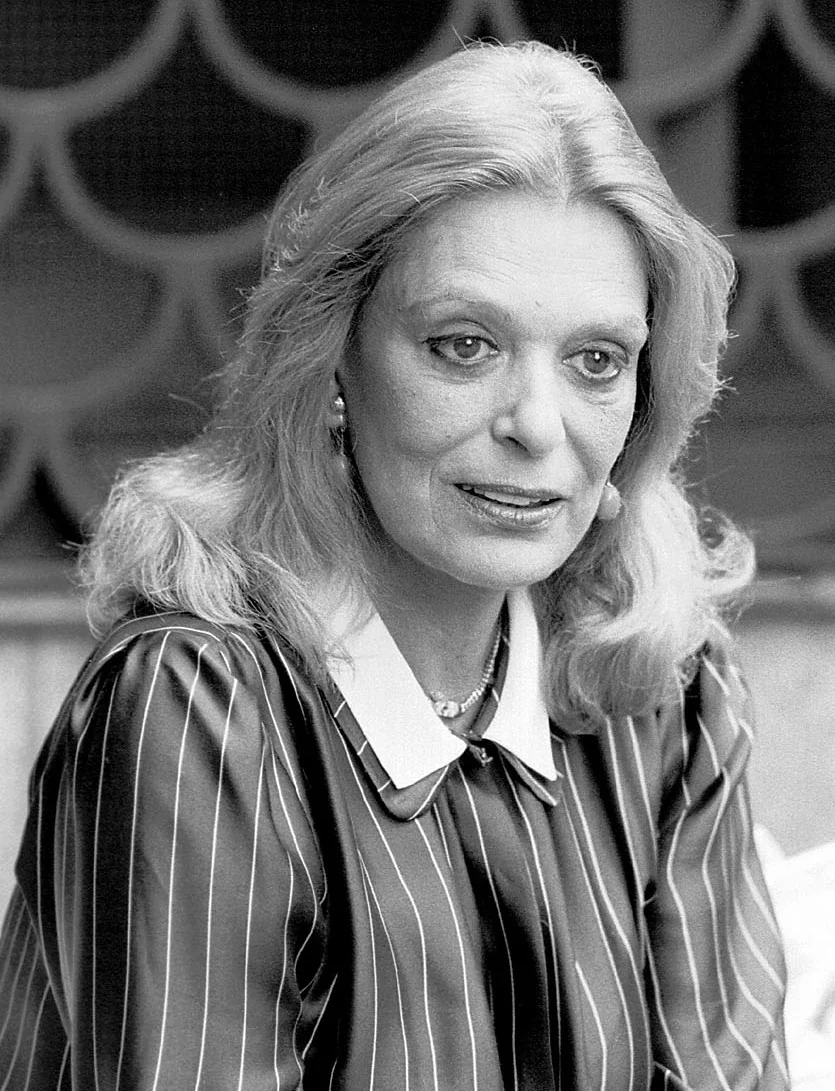
Image from Wikipedia
Image from Wikipedia
Melina Mercouri: The Greek Icon Between Canvas, Song, and Political Passion
An Artist Who Shone Far Beyond Her Time
Melina Mercouri belonged to that rare generation of artists whose impact was not limited to a single medium. She was an actress, singer, and politician – and in each of these roles, she possessed a presence that is unforgettable. Born in Athens as Maria Amalia Merkouri, she became an international symbol of Greek culture, the voice of a confident, modern Hellenism, and an uncompromising political figure. ([de.wikipedia.org](https://de.wikipedia.org/wiki/Melina_Mercouri))
Her name stands for a music career that blossomed from film, for a stage presence marked by strong expression, and for an artistic evolution in which charisma, attitude, and singing became inseparable. It was precisely this connection that made Melina Mercouri an exceptional figure: a woman who not only interpreted culture but embodied it. Her radiance influenced European post-war culture as much as international cinema. ([melinamercourifoundation.com](https://melinamercourifoundation.com/en/melina-mercouri/biography-2/))
Early Years in Athens: Background, Education, and First Steps on Stage
Melina Mercouri was born on October 18, 1920, in Athens, into a politically and socially influential family. From an early age, theater, language, and public expression shaped her path; she took acting lessons and aimed for a career that connected the stage with public life. Sources describe her as trilingual, able to perform in Greek, English, and French – an advantage that significantly propelled her international career. ([universalmusic.fr](https://www.universalmusic.fr/artistes/20000142387))
Her first artistic successes came in theater. In 1953, she received the Marika Kotopouli Prize, and after her return to Greece in 1955, she performed at the Kotopouli-Rex Theater in classic plays such as Shakespeare's "Macbeth" and Anouilh's "L'Alouette." These years laid the foundation for the dramatic authority that later characterized her film and musical performances. ([melinamercourifoundation.com](https://melinamercourifoundation.com/en/melina-mercouri/biography-2/))
The Breakthrough in Film: Stella and the International Triumph with "Never on Sunday"
Mercouri made her film debut in 1955 in "Stella" directed by Michalis Cacoyannis. The film garnered her attention in Greece and opened the door to international productions. In Cannes, she met Jules Dassin, with whom she would not only share her private life but also a significant part of her artistic career. ([melinamercourifoundation.com](https://melinamercourifoundation.com/en/melina-mercouri/biography-2/))
The real international breakthrough came in 1960 with Jules Dassin's "Never on Sunday" ("Sonntags… nie!"). Mercouri played a free-spirited prostitute in Piraeus, sang the title songs with her unmistakable voice, and won the award for Best Actress in Cannes; the film also received several Oscar nominations. AllMusic describes her in this context as "the last Greek goddess" and emphasizes her successful work as a singer in multiple languages. ([melinamercourifoundation.com](https://melinamercourifoundation.com/en/melina-mercouri/biography-2/))
The Singer Melina Mercouri: Chanson, Greek Melody, and International Resonance
Although she became famous primarily as an actress and political activist, her musical work is central to her artistic profile. Her recordings combined Greek tonal colors with chanson, theater songs, and internationally comprehensible forms of vocal expression. In particular, "Les enfants du Pirée" or "Ein Schiff wird kommen" became a worldwide hit and established Mercouri's reputation as a singer. ([de.wikipedia.org](https://de.wikipedia.org/wiki/Melina_Mercouri))
Her discography is closely linked to her film roles, yet therein lies her uniqueness. On albums and singles, she appears as a singer of emotional, often dramatic interpretations, emphasizing personality, timbre, and character rather than striving for perfectionistic virtuosity. The German Wikipedia lists albums including "Melina Mercouri sings Chansons," "Melina Mercouri sings in Greek," "mélina – L’oeillet rouge," "Si Melina…," and "Je suis grecque." Among her singles, "Les enfants du Pirée" and "Les bateaux de Samos" stand out. ([de.wikipedia.org](https://de.wikipedia.org/wiki/Melina_Mercouri))
Style and Artistic Signature: Expression Over Perfection
Mercouri's singing was never simply decorative but rather dramaturgical. Her voice served not just as a melody carrier but for character depiction: rough, present, immediate, and driven by a stage intelligence rooted in her acting craft. It is precisely for this reason that she fit so convincingly into works that oscillated between folk proximity, melodrama, and political symbolism. ([melinamercourifoundation.com](https://melinamercourifoundation.com/en/melina-mercouri/biography-2/))
In the musical context, Melina Mercouri represents a fusion of Greek identity and international style awareness. Her songs and film songs were released in several languages, enhancing her role as a cultural mediator. Universal Music France describes her as a Greek actress and singer who could work in Greek, English, and French and gained worldwide recognition with "Les Enfants du Pirée." ([universalmusic.fr](https://www.universalmusic.fr/artistes/20000142387))
Political Passion: Culture as a Stance
Melina Mercouri's career cannot be understood without its political dimension. During the military dictatorship beginning in 1967, she went into exile and used her international fame to fight against the regime worldwide. She became the public voice of resistance, intertwining art with political morality in a manner that remains extraordinary in European post-war history. ([melinamercourifoundation.com](https://melinamercourifoundation.com/en/melina-mercouri/biography-2/))
After the return of democracy in 1974, she began a political career, became a parliament member in 1977, and later served twice as Minister of Culture. The foundation bearing her name continues to keep her cultural legacy alive, and the Melina Mercouri Prize commemorates her dedication to cultural landscapes and the preservation of cultural memory. Her day of death, March 6, is observed in Greece as a day of remembrance, during which public museums and archaeological sites grant free admission. ([melinamercourifoundation.com](https://melinamercourifoundation.com/en/melina-mercouri/biography-2/))
Critical Reception and Cultural Influence
The reception of Melina Mercouri is remarkably uniformly respectful. Contemporary and later sources emphasize her magnetic aura, her international impact, and her ability to unite acting, singing, and political messages in a single public figure. AllMusic highlights that she was successful not only as an actress but also as a singer in multiple languages; the foundation refers to her strong connection between stage, cinema, and social engagement. ([allmusic.com](https://www.allmusic.com/artist/melina-mercouri-mn0000343111))
Her cultural influence extends beyond individual hits. With "Never on Sunday," she became a global image of Greece in the 20th century, while also serving as a counterpoint to a purely folkloric stereotype: Mercouri embodied dignity, sensuality, and intellectual authority. Her discography and filmography demonstrate that she was an artist who did not separate popularity from depth. ([de.wikipedia.org](https://de.wikipedia.org/wiki/Melina_Mercouri))
Current Projects and Legacy
Since Melina Mercouri passed away in 1994, there are no current musical projects in the strict sense. However, her legacy continues institutionally and culturally: through the Melina Mercouri Foundation, the award named after her, and the ongoing presence of her films, songs, and political texts. Her autobiography "I Was Born a Greek" also remains an important document of her self-interpretation. ([de.wikipedia.org](https://de.wikipedia.org/wiki/Melina_Mercouri))
It is precisely in this lasting impact that her modernity lies. Mercouri is not a figure to be locked away in an archive; she lives on in the memory of a cultural policy that began with personality, and in an art that connected stance with emotion. Those who hear and see her films, recordings, and speeches today encounter an artist of remarkable presence. ([melinamercourifoundation.com](https://melinamercourifoundation.com/en/melina-mercouri/biography-2/))
Conclusion: Why Melina Mercouri Continues to Fascinate
Melina Mercouri remains intriguing because she was more than a star: she was a cultural event. Her music career, film roles, and political engagement merge into a body of work that has shaped European cultural history. Between Greek theater, international cinema, and cultural political responsibility, the profile of a woman emerged who opened doors with her voice, gaze, and conviction. ([melinamercourifoundation.com](https://melinamercourifoundation.com/en/melina-mercouri/biography-2/))
Anyone interested in great stage personalities, chanson, film history, and cultural identity will find in Melina Mercouri one of the most fascinating figures of the 20th century. Her recordings and films illustrate how art becomes a stance. Her work deserves to be rediscovered time and again – on the screen, in music, and in the vibrant memory of an extraordinary woman. ([de.wikipedia.org](https://de.wikipedia.org/wiki/Melina_Mercouri))
Official Channels of Melina Mercouri:
- Instagram: No official profile found
- Facebook: No official profile found
- YouTube: No official profile found
- Spotify: No official profile found
- TikTok: No official profile found