
Wassily Kandinsky
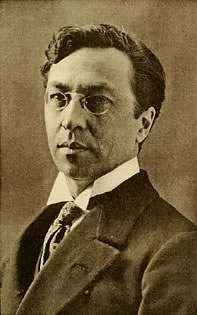
Image from Wikipedia
Image from Wikipedia
Wassily Kandinsky: The Visionary of Abstract Art and Architect of Inner Imagery
An Artist Who Freed Painting from the Visible World
Wassily Kandinsky is considered one of the most influential artists of modern times. The painter, graphic artist, and art theorist born in Moscow shaped Expressionism, co-founded Der Blaue Reiter, and is regarded as one of the key pioneers of abstract art. His work fundamentally changed the perception of color, form, and composition, turning pictorial space into a place of spiritual tension and rhythmic movement. ([britannica.com](https://www.britannica.com/biography/Wassily-Kandinsky?utm_source=openai))
His life's journey took him from Russia to Munich in Germany and later to France, where he lived until his death in 1944 in Neuilly-sur-Seine. Kandinsky was not only an artist but also a sharp-minded theorist who understood art as an expression of an inner necessity. It is this connection of practice and theory that makes him a key figure in art history to this day. ([britannica.com](https://www.britannica.com/biography/Wassily-Kandinsky?utm_source=openai))
Biography: From Lawyer to Radical Renovator of Painting
Kandinsky was born on December 16, 1866, in Moscow and initially took a different path. He studied law and economics before leaving a secure academic career in 1896 to begin his artistic education at the Academy of Fine Arts in Munich. This marked the beginning of a career that would profoundly influence the European avant-garde. ([britannica.com](https://www.britannica.com/biography/Wassily-Kandinsky?utm_source=openai))
In Munich, he joined the artistic upheaval of those years, quickly emerging as a central figure in modern painting. Together with Franz Marc, he founded the editorial community Der Blaue Reiter, whose first exhibition opened in Munich in 1911. Prior to that, Kandinsky had served as the chairman of the New Artist Association Munich, from which this legendary group emerged. ([britannica.com](https://www.britannica.com/biography/Wassily-Kandinsky?utm_source=openai))
His biography is closely linked to the significant upheavals of the early 20th century. After World War I, he worked in the Weimar Republic as a teacher at the Bauhaus, the influential institution that rethought form, function, and artistic theory. He later lived in France, moving there in 1933 after the dissolution of the Bauhaus, where he created his later works. ([britannica.com](https://www.britannica.com/biography/Wassily-Kandinsky?utm_source=openai))
The Breakthrough to Abstraction: Color as a Spiritual Force
Kandinsky's artistic breakthrough lies in his consistent departure from representational art. Museums and research describe him as one of the first creators of pure abstraction, who detached from the image of the visible world and instead understood line, shape, and color as independent vehicles of expression. MoMA explicitly shows Kandinsky's development as a journey from figurative to abstract painting, emphasizing his central role in the history of abstraction. ([moma.org](https://www.moma.org/calendar/exhibitions/448?locale=en&utm_source=openai))
What is important here is not only the formal innovation but also the spiritual dimension of his work. Kandinsky sought an art that not only represented but made inner states audible and visible; hence his painting is considered highly composed, almost musical in structure. This idea of a resonant art became a guiding motif of the avant-garde and established him as a theorist of the visible. ([en.wikipedia.org](https://en.wikipedia.org/wiki/Wassily_Kandinsky?utm_source=openai))
Research today also differentiates Kandinsky's self-image as the supposed inventor of the first abstract painting. While he referred to himself as the creator of the first abstract image, recent art historical work points out that Hilma af Klint created an early series of abstract works as early as 1906; furthermore, Kandinsky's major work Die zehn Größten, Nr. 2, Kindheit, Gruppe I is dated to 1907. His status as a pioneer remains intact but is placed in a more historically precise context. ([en.wikipedia.org](https://en.wikipedia.org/wiki/Wassily_Kandinsky?utm_source=openai))
The Blaue Reiter Environment: Avant-Garde as an Artistic Community
With Der Blaue Reiter, Kandinsky created not only an artists' group but also a spiritual laboratory of modernity. The community, which opened its first exhibition in Munich in 1911, combined painting, theory, and open exchange about art, spirituality, and perception. It was precisely this networking that made Der Blaue Reiter a catalyst for Expressionism and for later forms of modernity. ([britannica.com](https://www.britannica.com/biography/Wassily-Kandinsky?utm_source=openai))
The artistic context of his Munich years was shaped by travel, encounters, and stylistic condensation. The Guggenheim describes how Kandinsky traveled from 1904 with Gabriele Münter to places such as Venice, Paris, Amsterdam, Tunisia, and Russia before he returned to work in Munich in 1908. During this phase, he increasingly distanced himself from landscape representation, gradually approaching abstraction. ([guggenheim.org](https://www.guggenheim.org/exhibition/kandinsky-before-abstraction-1901-1911?utm_source=openai))
The significance of these years also lies in the productive tension between observation and reduction. Kandinsky transformed impulses from Art Nouveau, folk motifs, and European modernism into a pictorial language that increasingly relied on inner laws. Thus, a body of work emerged that not only appeared modern but also redefined the conditions of modern art itself. ([fristartmuseum.org](https://fristartmuseum.org/exhibition/kandinsky-a-retrospective/?utm_source=openai))
Bauhaus and Later Work: Order, Geometry, and Spiritual Clarity
At the Bauhaus, Kandinsky developed his art towards greater formal clarity. While earlier works were more characterized by gestural energy and emotional density, his later work shifted towards geometric motifs and more precise compositions. The Frist Art Museum analysis describes this development as a movement from expressive gesture to more controlled forms and proportions. ([fristartmuseum.org](https://fristartmuseum.org/exhibition/kandinsky-a-retrospective/?utm_source=openai))
The Bauhaus period also underscores his dual role as a practitioner and theorist. Kandinsky systematically examined formal elements and linked this analysis with an intuitive understanding of composition and color dynamics. This is where the lasting modernity of his approach lies: in his works, structure and sensation do not oppose each other but together create tension. ([nortonsimon.org](https://www.nortonsimon.org/exhibitions/1980-1989/kandinsky-paintings-and-graphics-retrospective-of-kandinsky-s-bauhaus-years-?utm_source=openai))
After the closure of the Bauhaus in 1933, he continued his career in France, where he created a late, refined pictorial language. His last German works were considered "degenerate" by National Socialist cultural policy, which further intensified the political poignancy of his art. Kandinsky's later style shows how he understood the abstract form as an open experiment until the very end. ([britannica.com](https://www.britannica.com/biography/Wassily-Kandinsky?utm_source=openai))
Important Works, Reception, and Art Historical Impact
Some of Kandinsky's most discussed works include compositions that are repeatedly highlighted in exhibitions and museum collections as key works of abstraction. MoMA dedicated an exhibition to him that traced his development from figurative to abstract painting and emphasized his central position in art history. International museum texts from LACMA, Guggenheim, and MACBA also categorize him as a pioneer of radical abstraction. ([moma.org](https://www.moma.org/calendar/exhibitions/448?locale=en&utm_source=openai))
His influence extends far beyond Expressionism. MACBA highlights that Kandinsky is seen as a precursor to later movements such as Lyrical Abstraction, Tachisme, and Abstract Expressionism. This illustrates that his art not only marks a historical episode but provides a lasting model for the evolution of non-representational painting. ([macba.cat](https://www.macba.cat/en/exhibitions/the-revolution-of-pictorial-language/?utm_source=openai))
Critics especially value Kandinsky's ability to translate spiritual ideas into an independent pictorial order. His works connect color, form, rhythm, and construction so precisely that they resemble visual scores. It is precisely this synthesis that continues to make him a reference point for art theory and for all who understand abstraction not as a renunciation but as the highest condensation. ([kupferstich-kabinett.skd.museum](https://kupferstich-kabinett.skd.museum/en/exhibitions/the-trend-towards-abstraction-kandinsky-and-modernism-around-1910/?utm_source=openai))
Current Projects and Publications
As a deceased artist, Wassily Kandinsky does not have current projects, new albums, tours, or publications in a contemporary sense. However, his presence remains alive through retrospectives, collection presentations, and scholarly reinterpretations that regularly reframe his work. This ongoing exhibition history demonstrates how relevant his oeuvre continues to be. ([fristartmuseum.org](https://fristartmuseum.org/exhibition/kandinsky-a-retrospective/?utm_source=openai))
Conclusion: Why Kandinsky Continues to Fascinate Today
Wassily Kandinsky remains captivating because he transformed painting from the realm of depiction into an autonomous, spiritually charged language. His biography tells of courage, theoretical consistency, and stylistic radicalism, while his works reflect an unwavering drive towards inner truth. Anyone wishing to understand modern art cannot overlook Kandinsky. ([britannica.com](https://www.britannica.com/biography/Wassily-Kandinsky?utm_source=openai))
His work challenges us to not only see color but to experience it. This is where his lasting greatness lies: Kandinsky has given art a new sound, a new dynamics, and a new freedom. His paintings deserve immediate encounters in museums, where their full tension between form, rhythm, and spirit is most potent. ([kupferstich-kabinett.skd.museum](https://kupferstich-kabinett.skd.museum/en/exhibitions/the-trend-towards-abstraction-kandinsky-and-modernism-around-1910/?utm_source=openai))
Official Channels of Wassily Kandinsky:
- Instagram: No official profile found
- Facebook: No official profile found
- YouTube: No official profile found
- Spotify: No official profile found
- TikTok: No official profile found
Sources:
- Britannica – Wassily Kandinsky: Biography, Abstract Art, Paintings, Style, & Facts
- Guggenheim – Kandinsky Before Abstraction, 1901–1911
- MoMA – Kandinsky: Compositions
- LACMA – Form in Fragments: Abstraction in German Art, 1906–1925
- MACBA – The Revolution of Pictorial Language
- Kupferstich-Kabinett – The Trend towards Abstraction. Kandinsky and Modernism around 1910
- Frist Art Museum – Kandinsky: A Retrospective
- Wikipedia – Wassily Kandinsky